Chinese rug weaving has a history spanning centuries, originally evolving from local traditions that prioritised both functional utility and artistic expression. While early examples were often created for temple or imperial use, the craft has since adapted to incorporate a diverse range of floral and symbolic motifs that are now recognised globally for their balance and elegance.
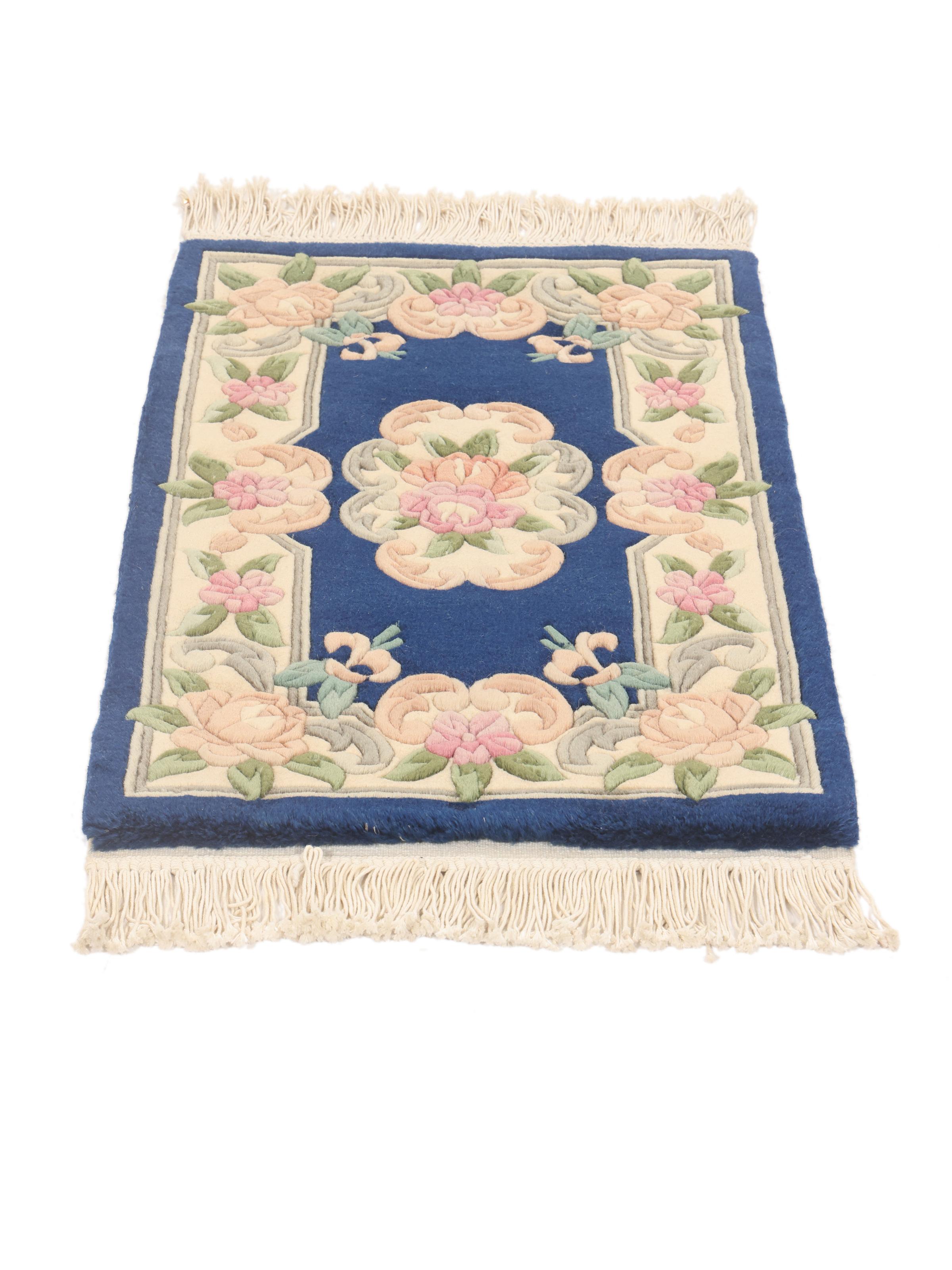
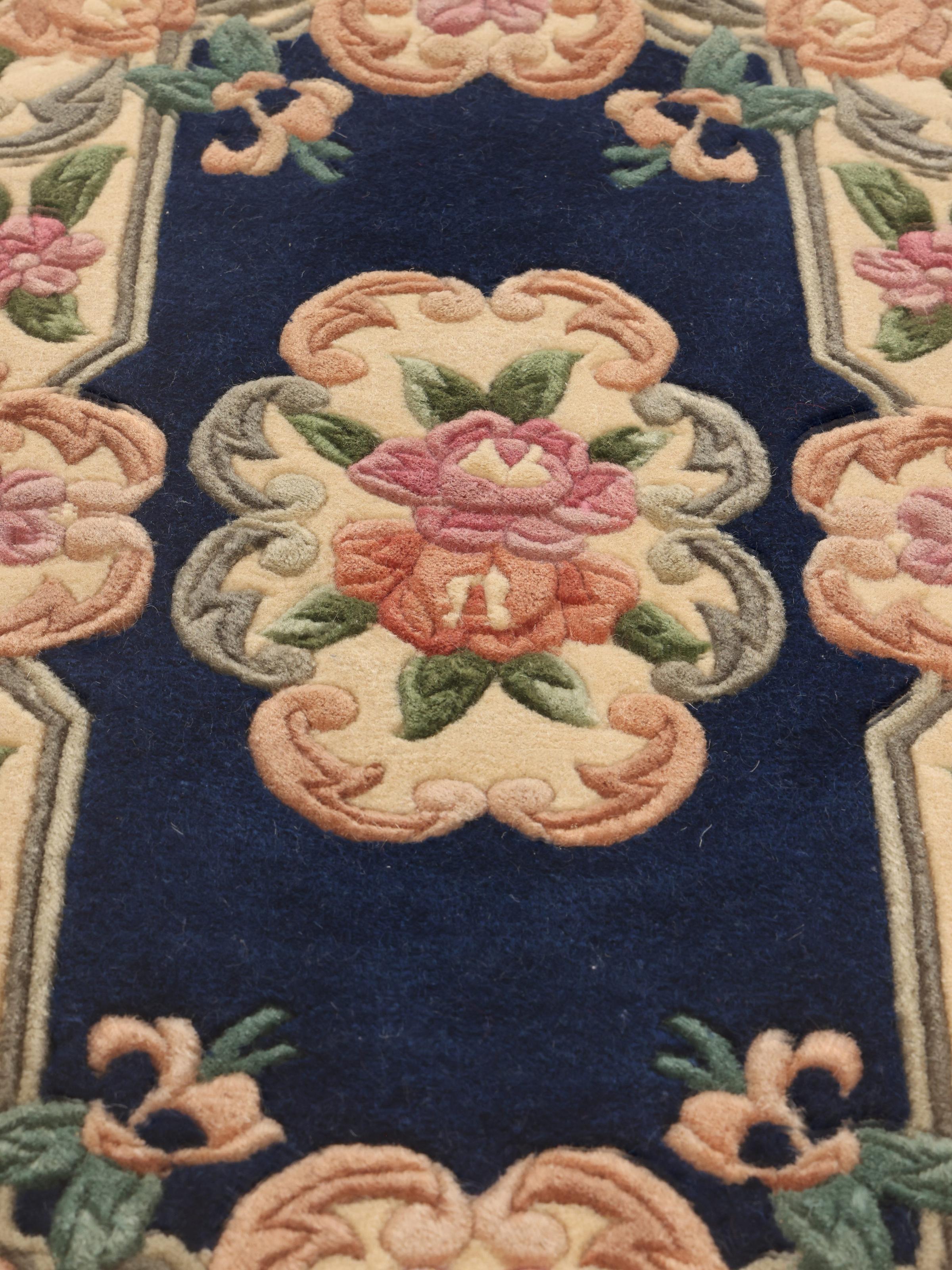
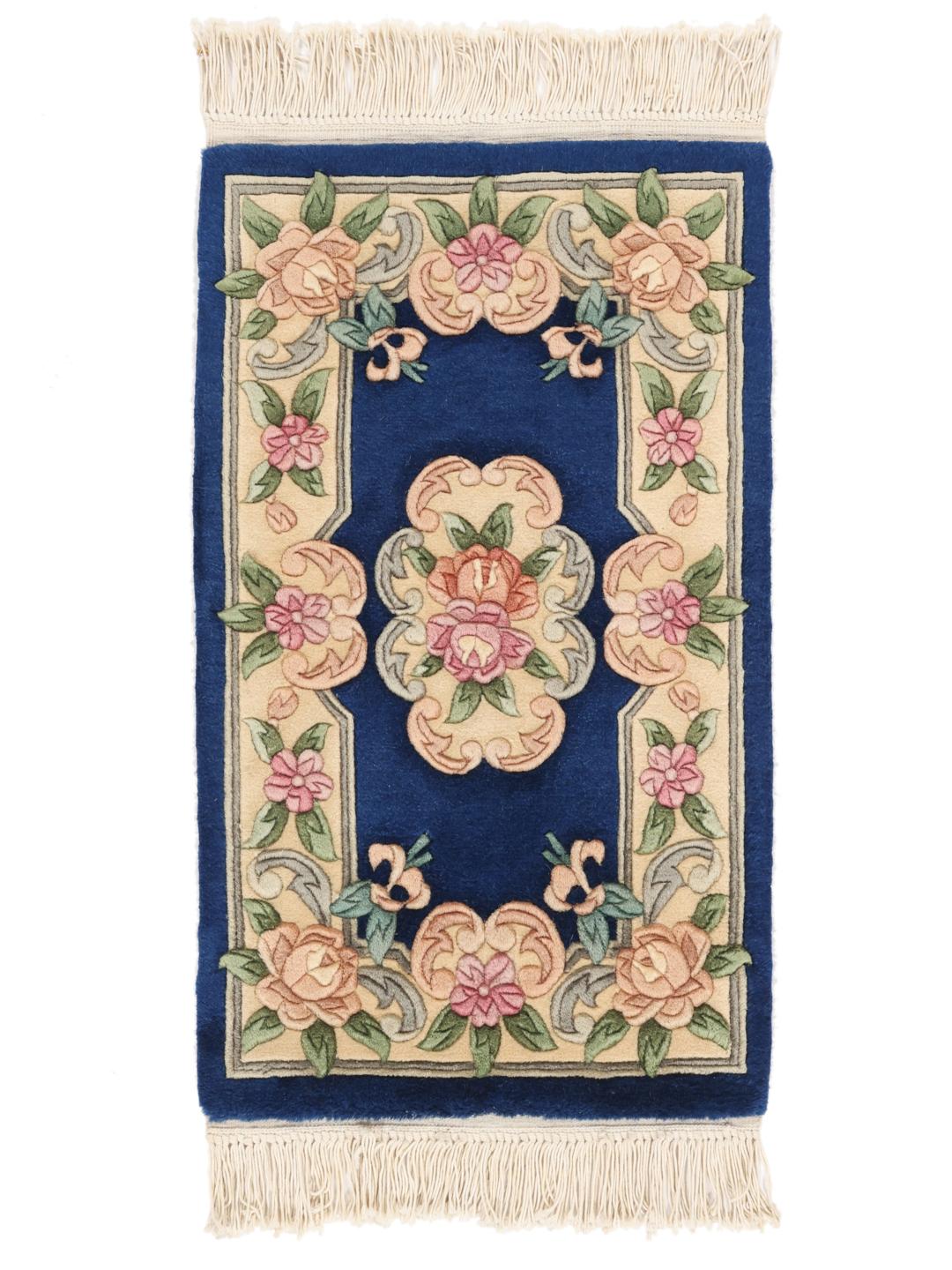
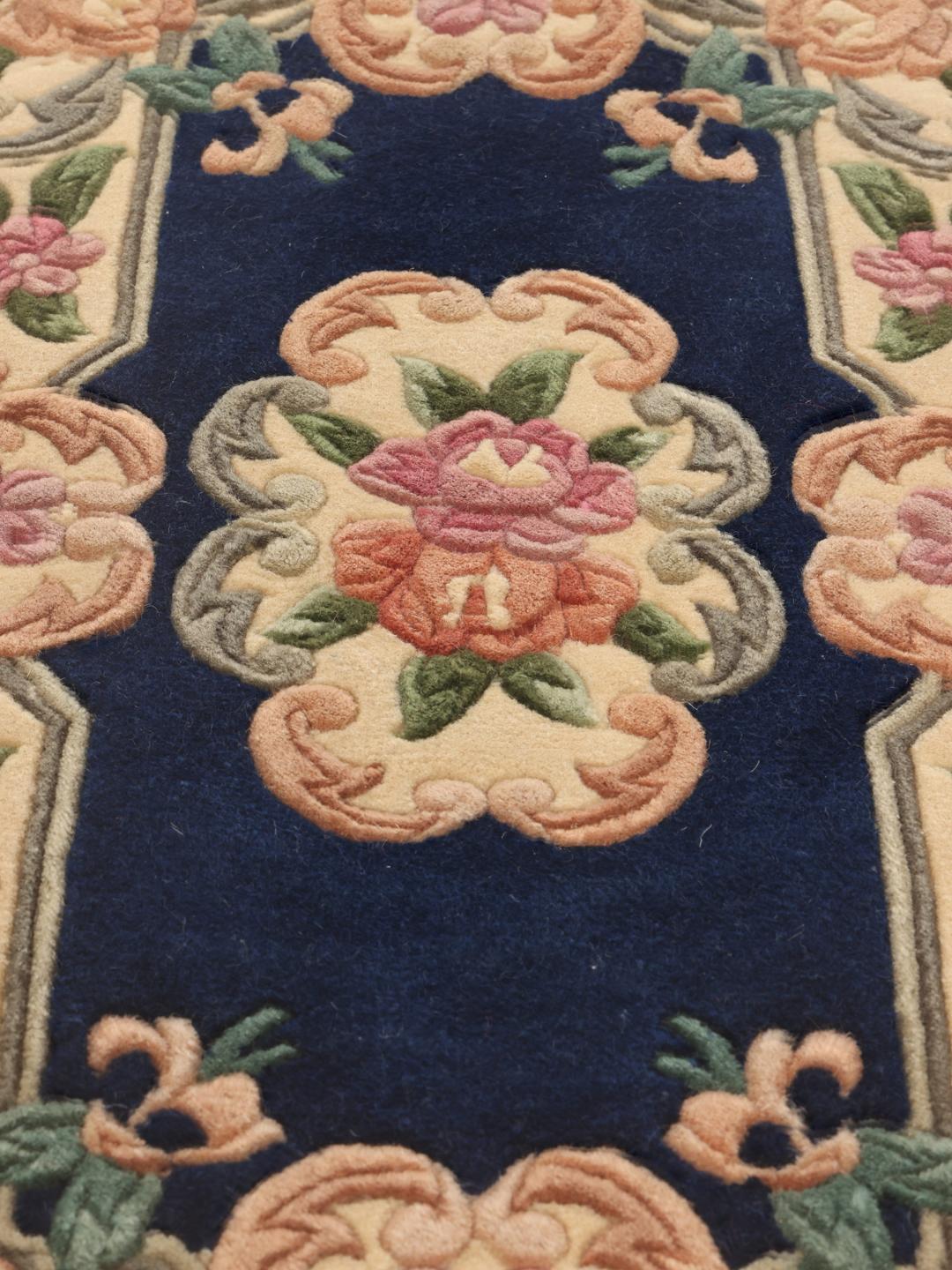
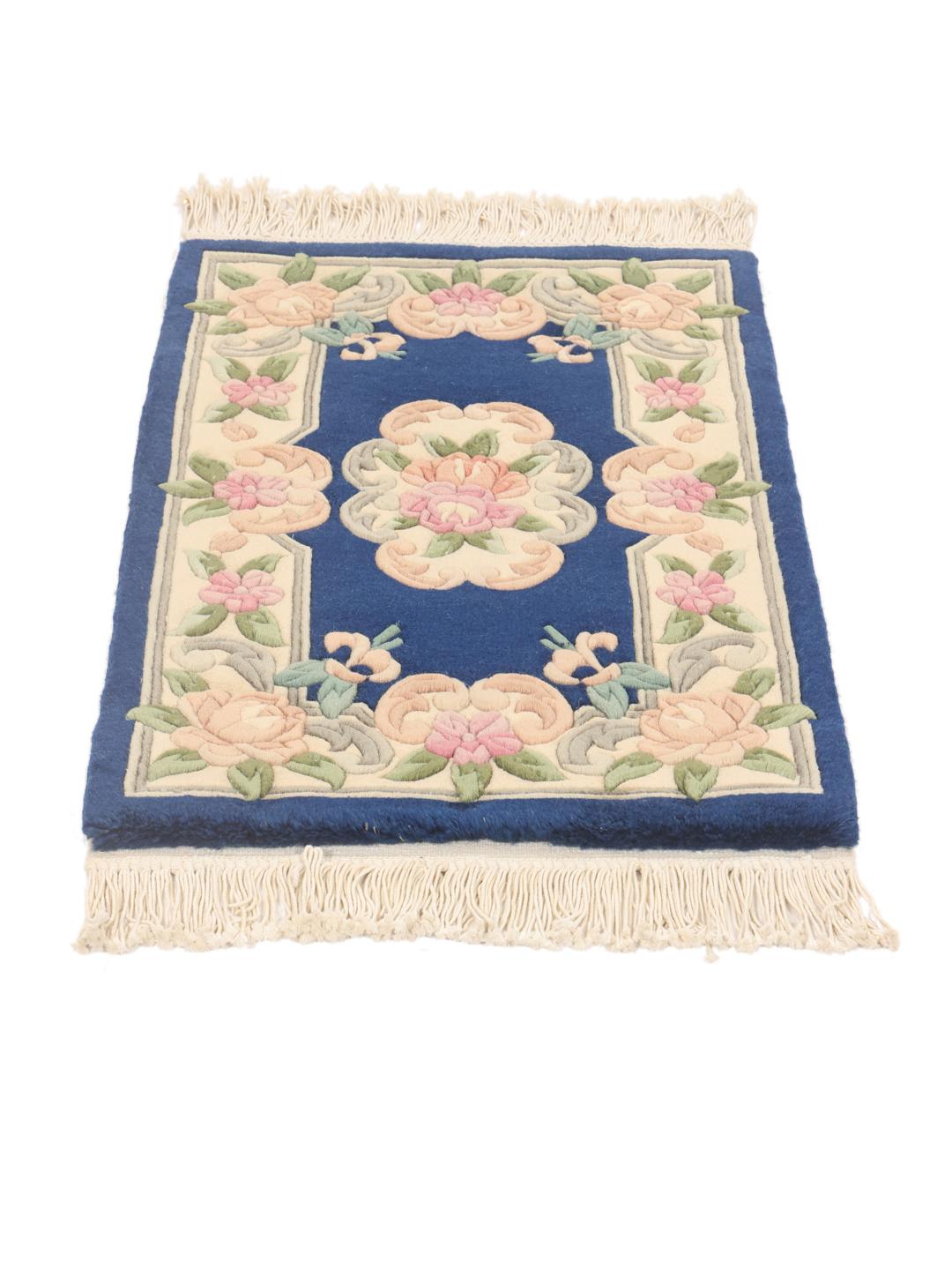
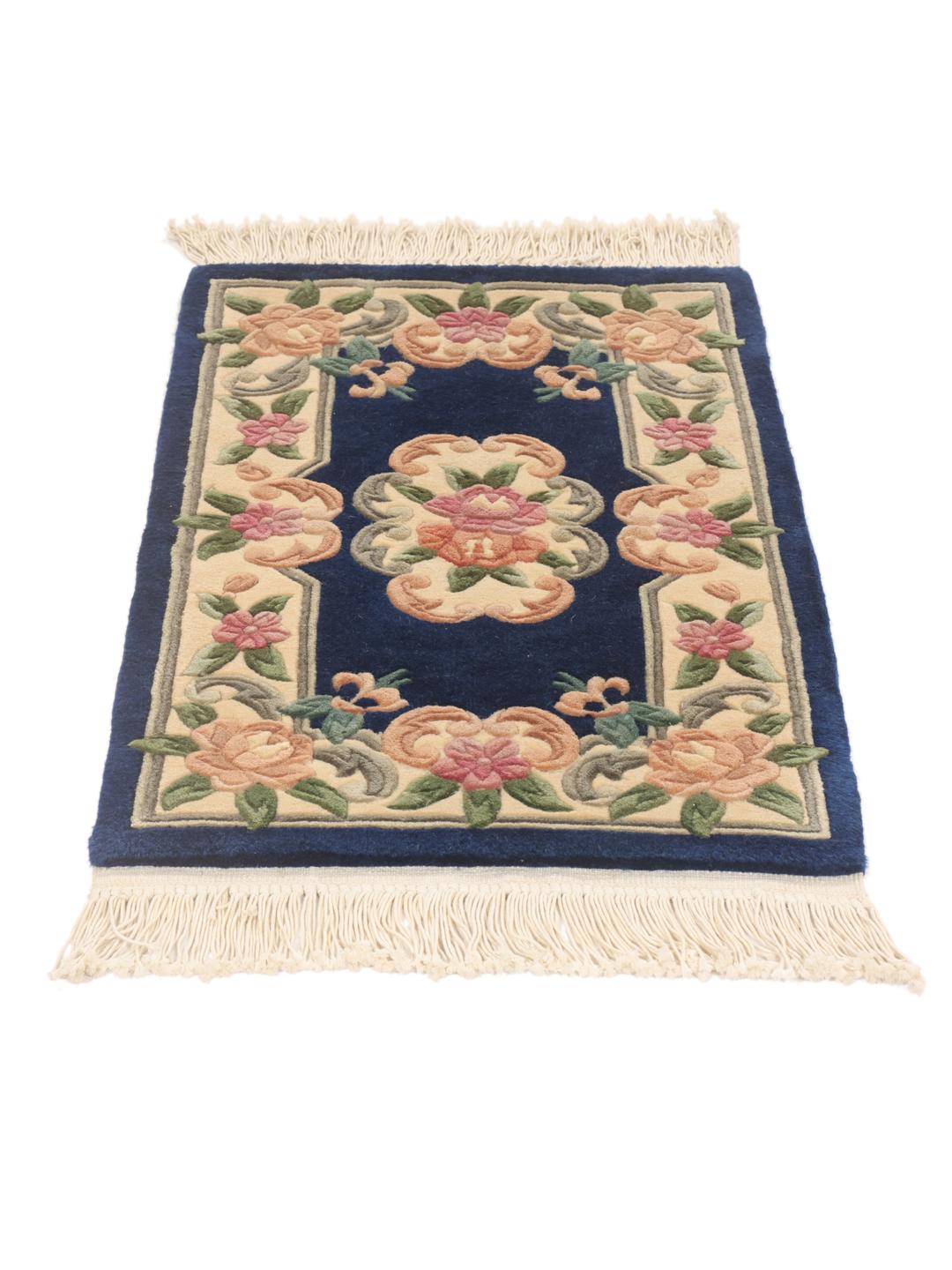
The term '90 line' refers to a traditional measurement system used in Chinese rug production, indicating the number of knots per linear foot. This technical standard is essential for determining the intricacy of the design, as a specific line count ensures that the patterns, such as the floral borders and medallions seen here, are rendered with consistent precision and clear, defined lines.
The design of this rug showcases signature floral elements, often rendered in soft, harmonious palettes that stand out against a bold field. The use of repeating botanical motifs and balanced borders is a hallmark of this tradition, reflecting a long-standing appreciation for nature-inspired art that serves to bring a sense of organic beauty into the domestic environment.
Collectors and enthusiasts value these rugs for their combination of technical skill and enduring design. Owning a piece from this tradition is an opportunity to appreciate the human effort and historical continuity that goes into every knot, ensuring that the rug serves as a lasting, meaningful addition to a well-curated home.