Chinese rug weaving has a long and storied history, evolving from ancient traditions that were originally focused on producing functional mats for seating and sleeping. Over centuries, these techniques were refined, incorporating artistic influences from Chinese painting, ceramics, and textiles to create the sophisticated floral and medallion designs that are now recognised globally.
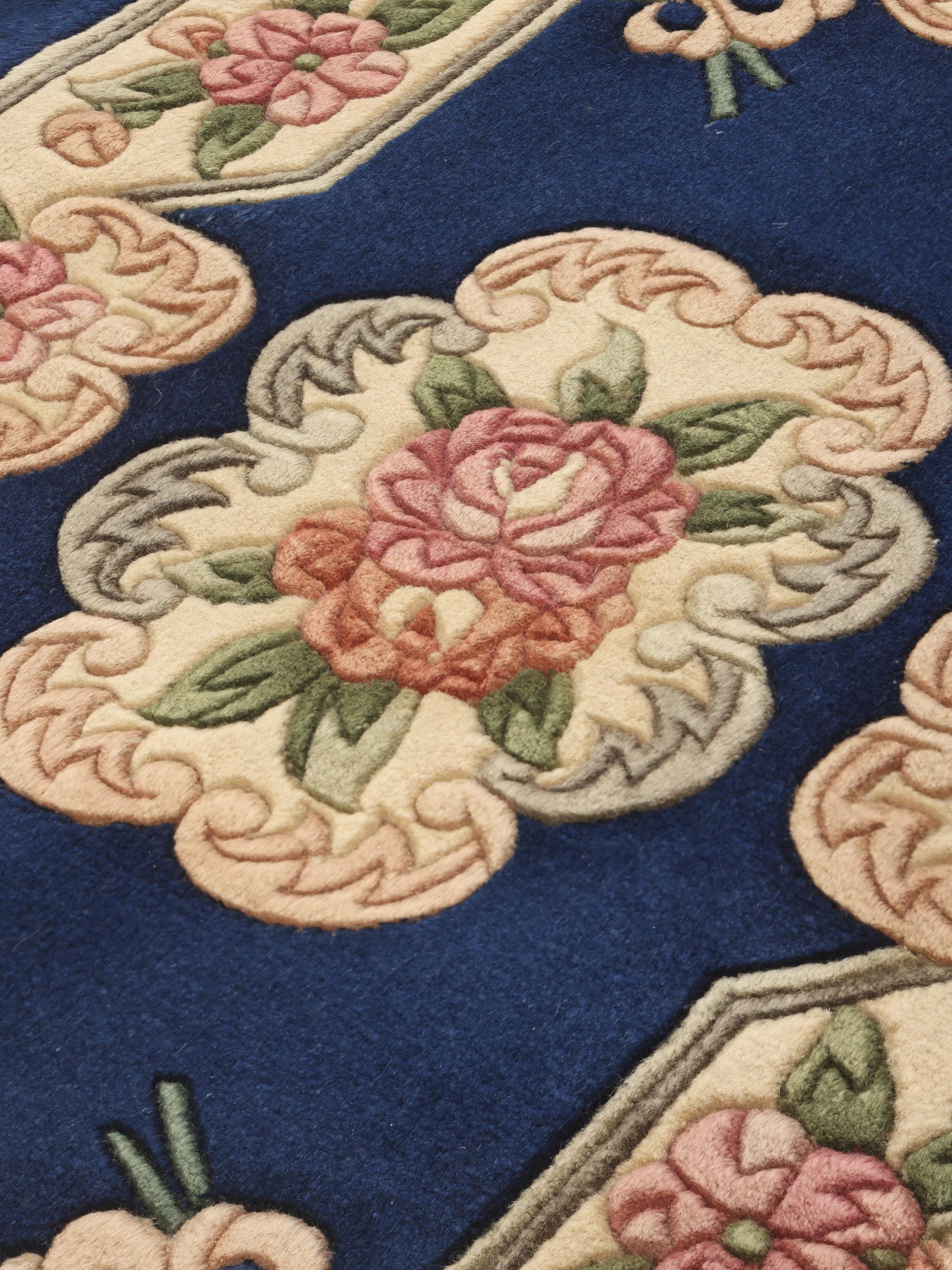
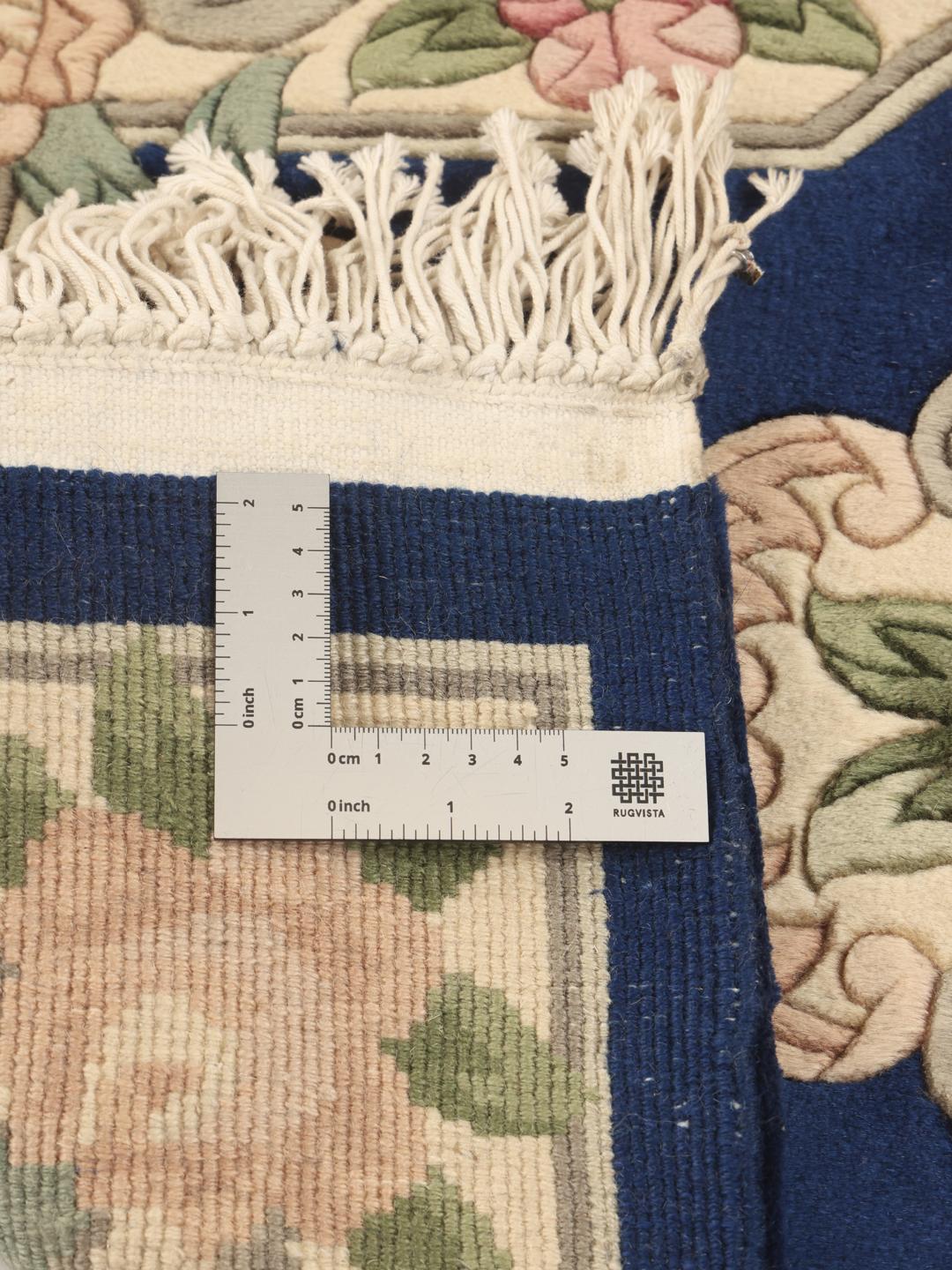
The '90 line' terminology refers to the density of the knotting process, a classic standard that dictates how many knots are placed across a specific width. This measurement is vital as it directly influences the clarity of the patterns and the overall density of the pile, ensuring that the finished rug is both visually detailed and structurally sound for long-term enjoyment.
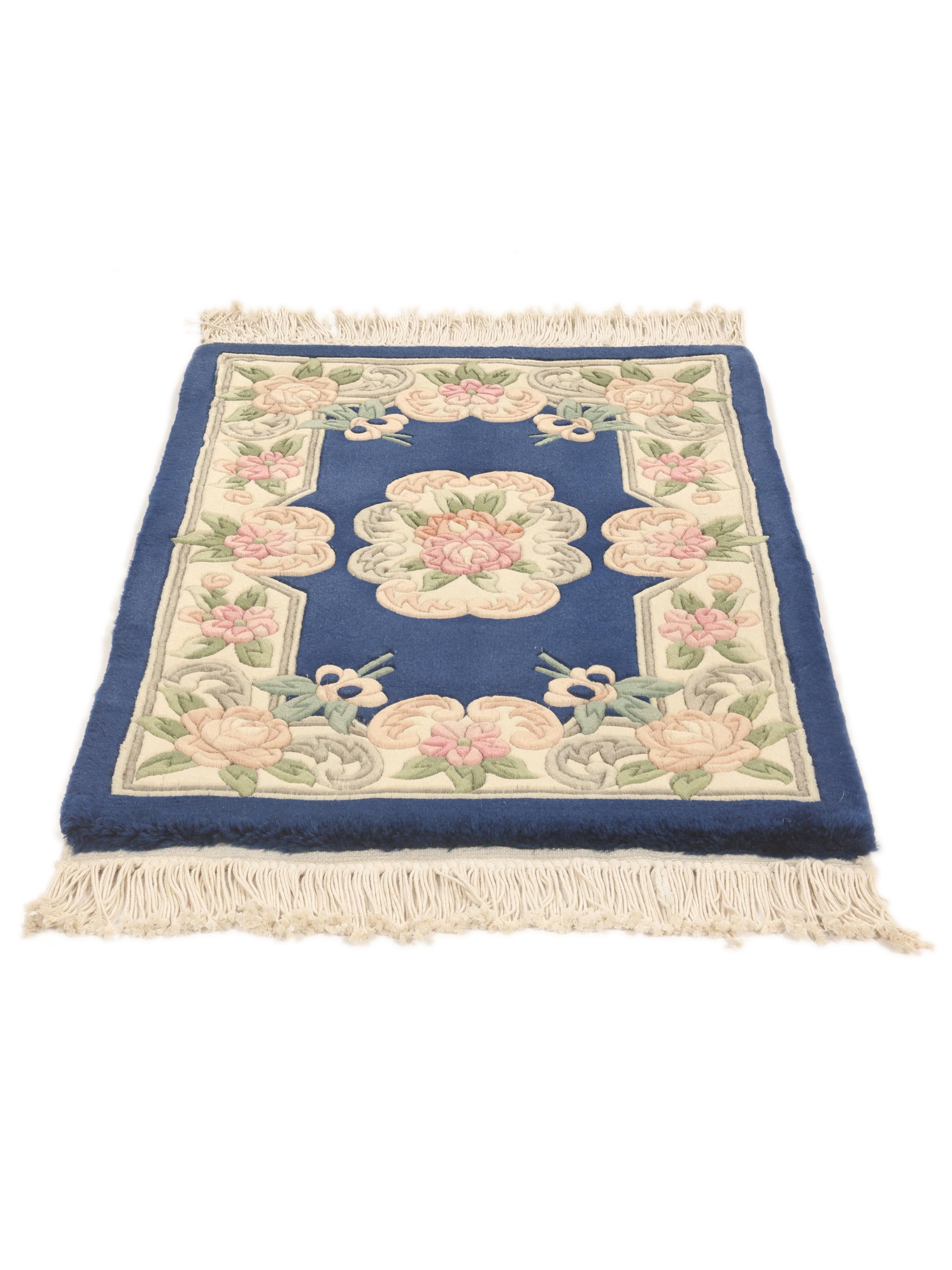
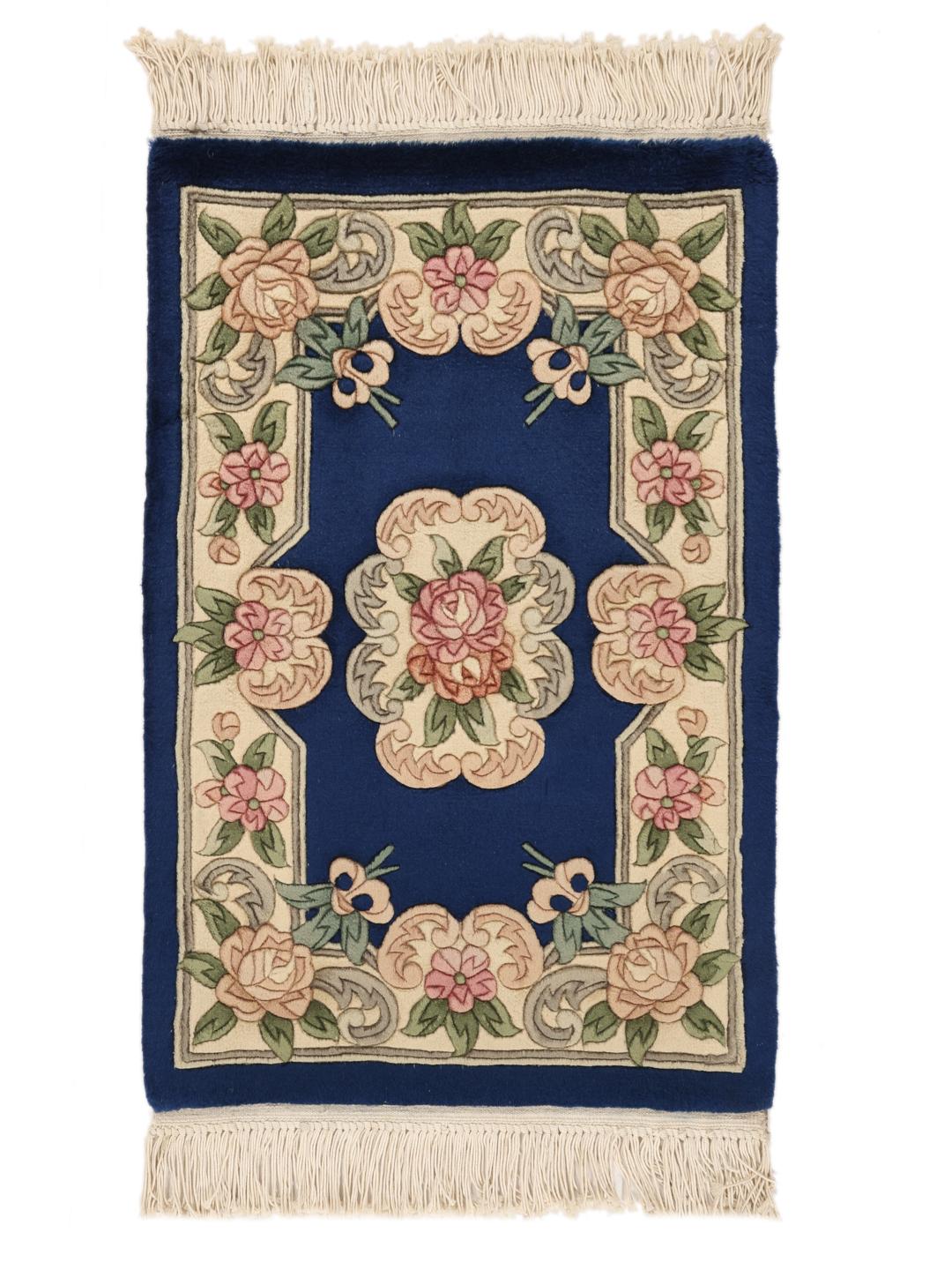
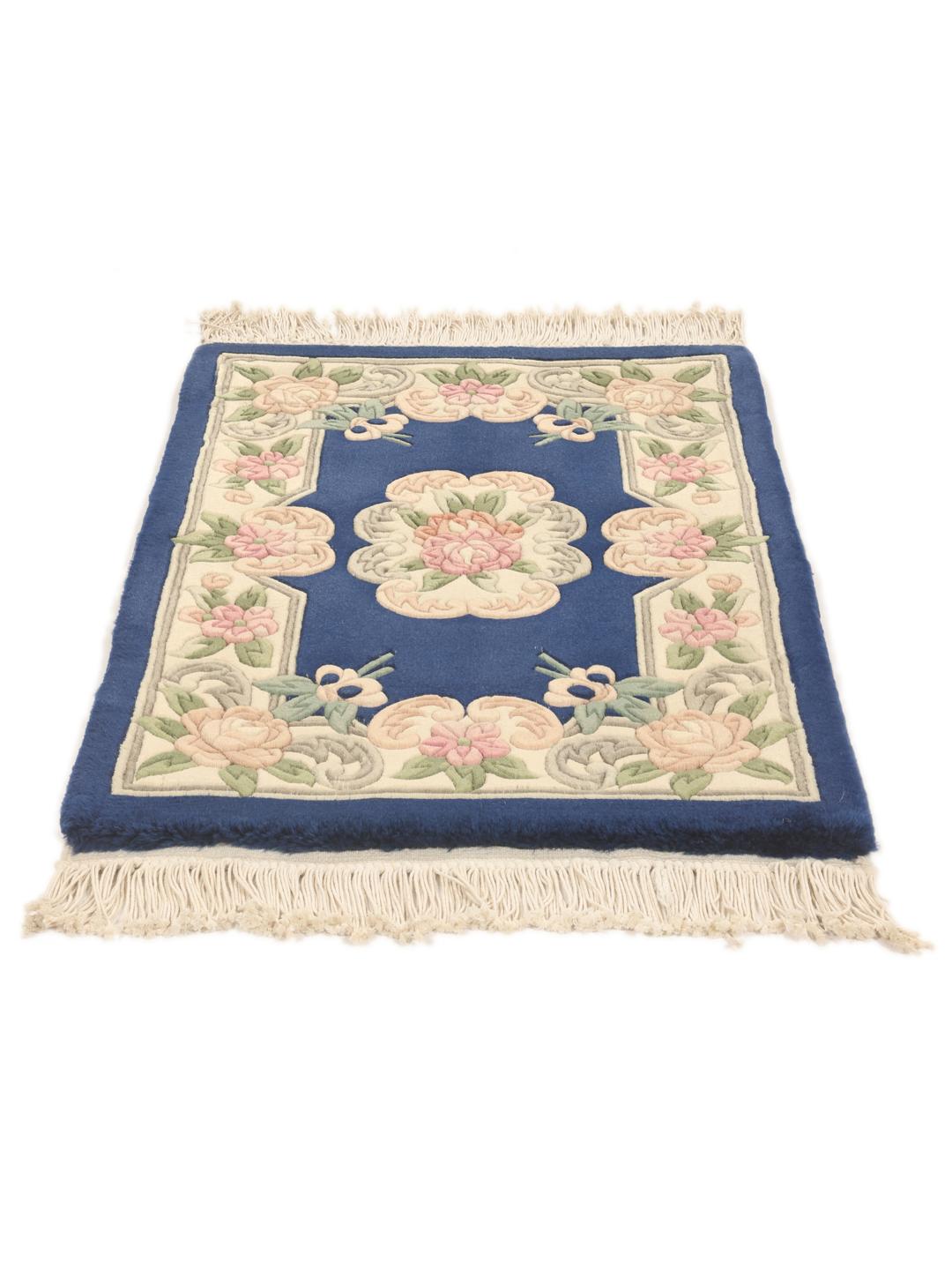
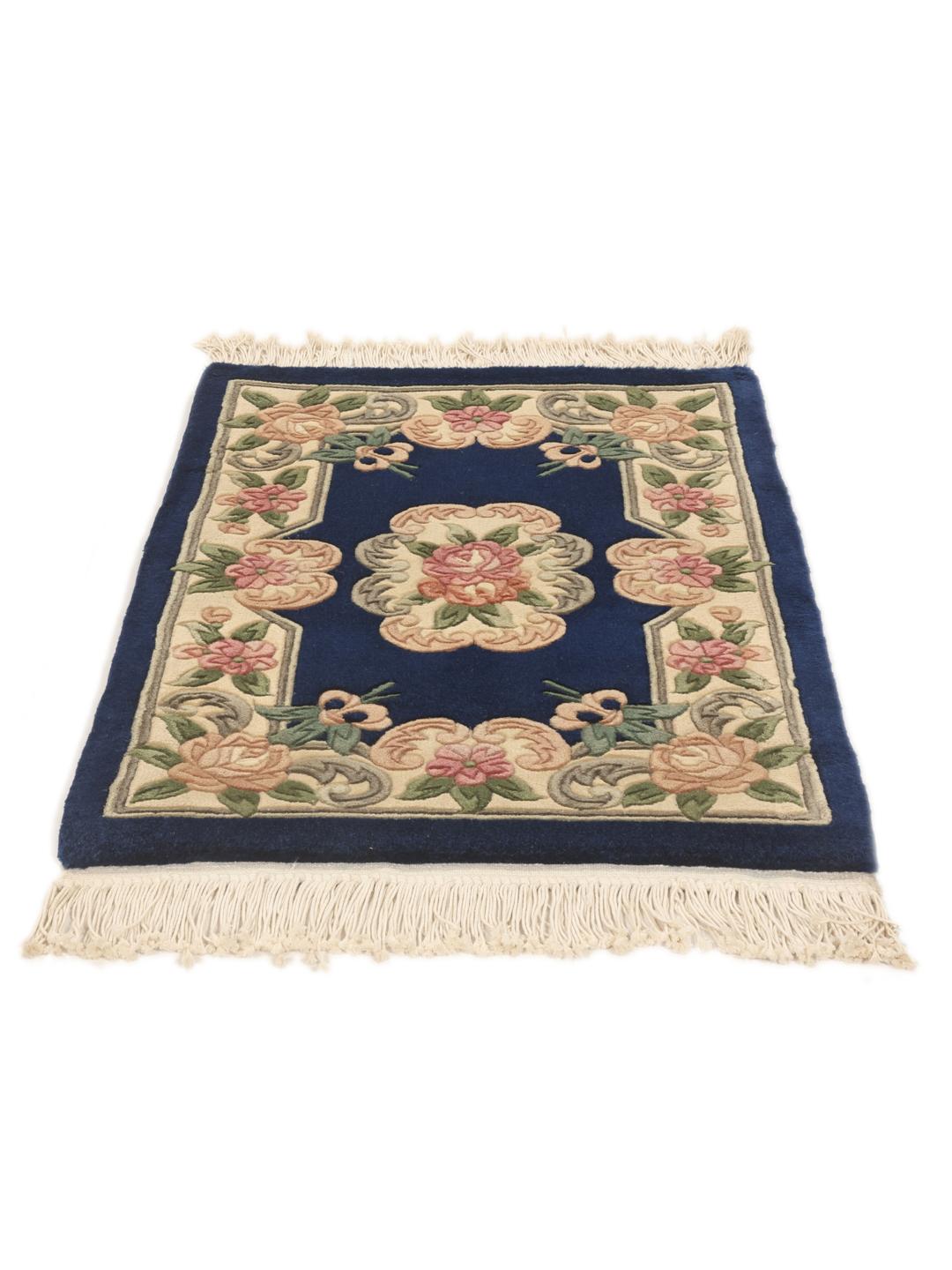
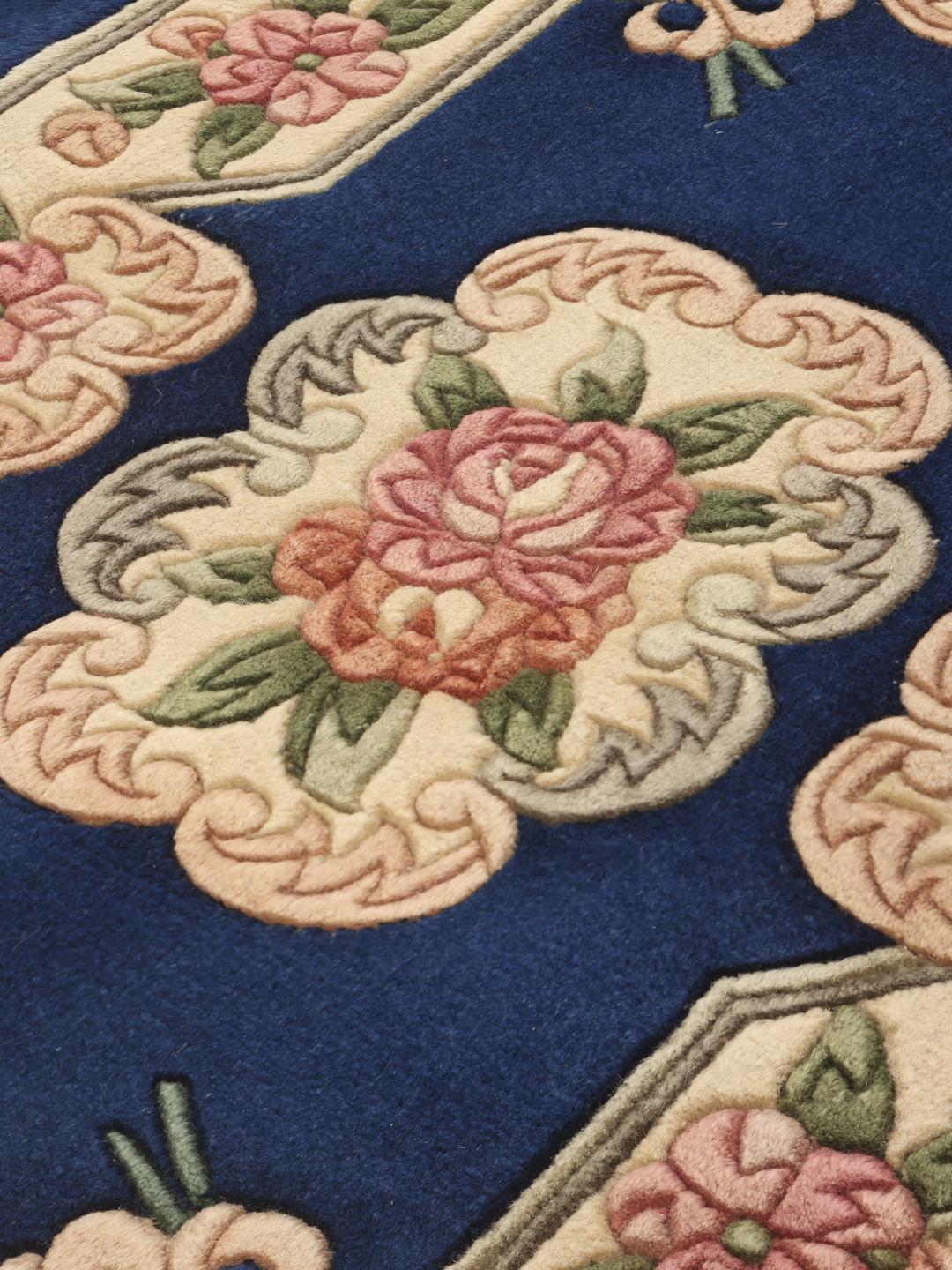
Floral motifs are a signature element in this tradition, often symbolising prosperity, longevity, and beauty. These designs are frequently framed by elegant borders that create a sense of order and symmetry, reflecting the cultural appreciation for balance. The use of a deep blue field, as seen here, is a classic choice that highlights the softer pink and green tones of the floral elements.
Owning a hand-knotted rug from this region is an investment in a living craft. These pieces are valued for their ability to bridge the gap between historical artistry and modern home comfort, serving as a testament to the skill of the weavers who preserve these techniques. It is a piece with genuine cultural weight, designed to be cherished as a lasting part of your home.