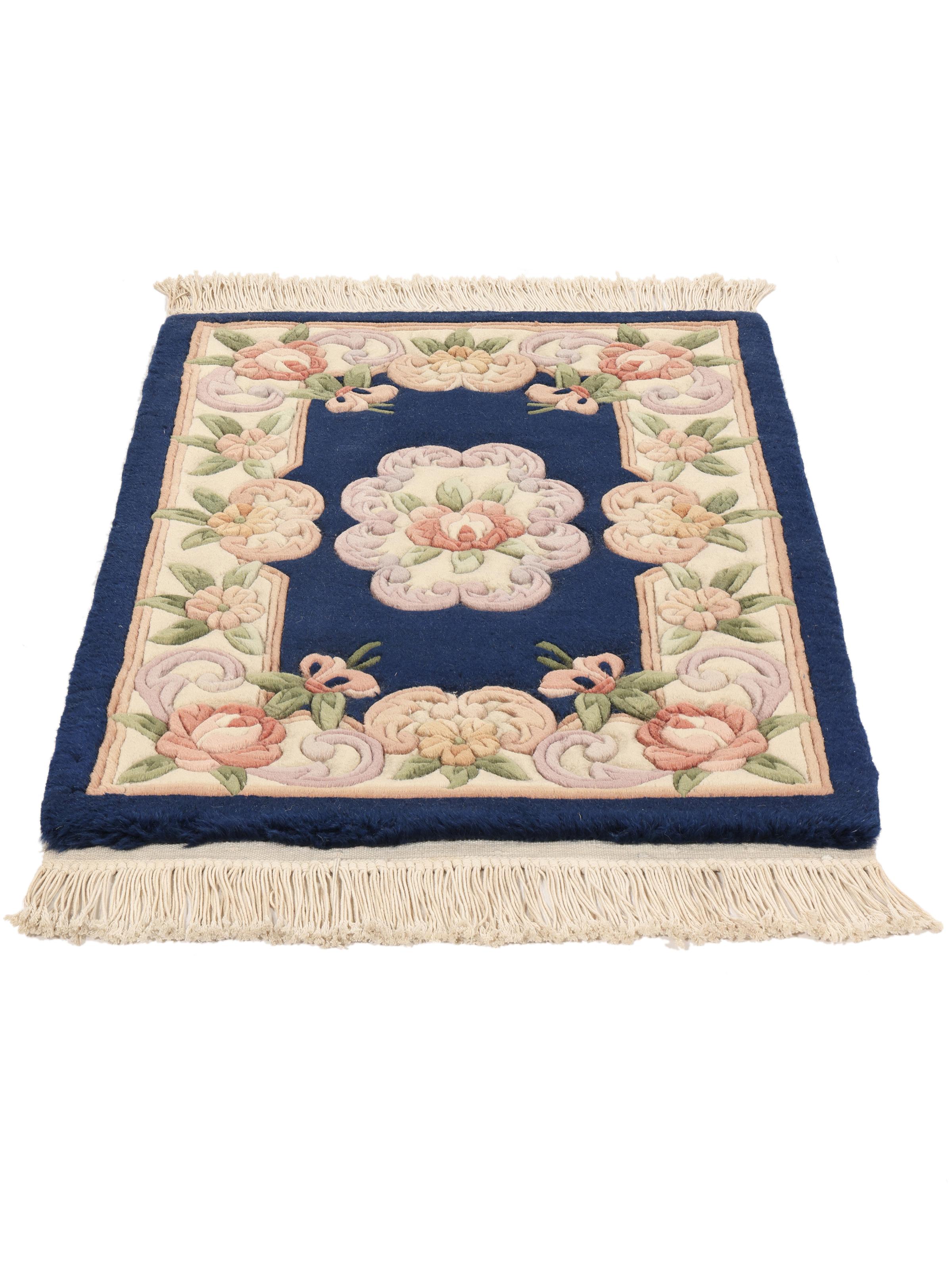
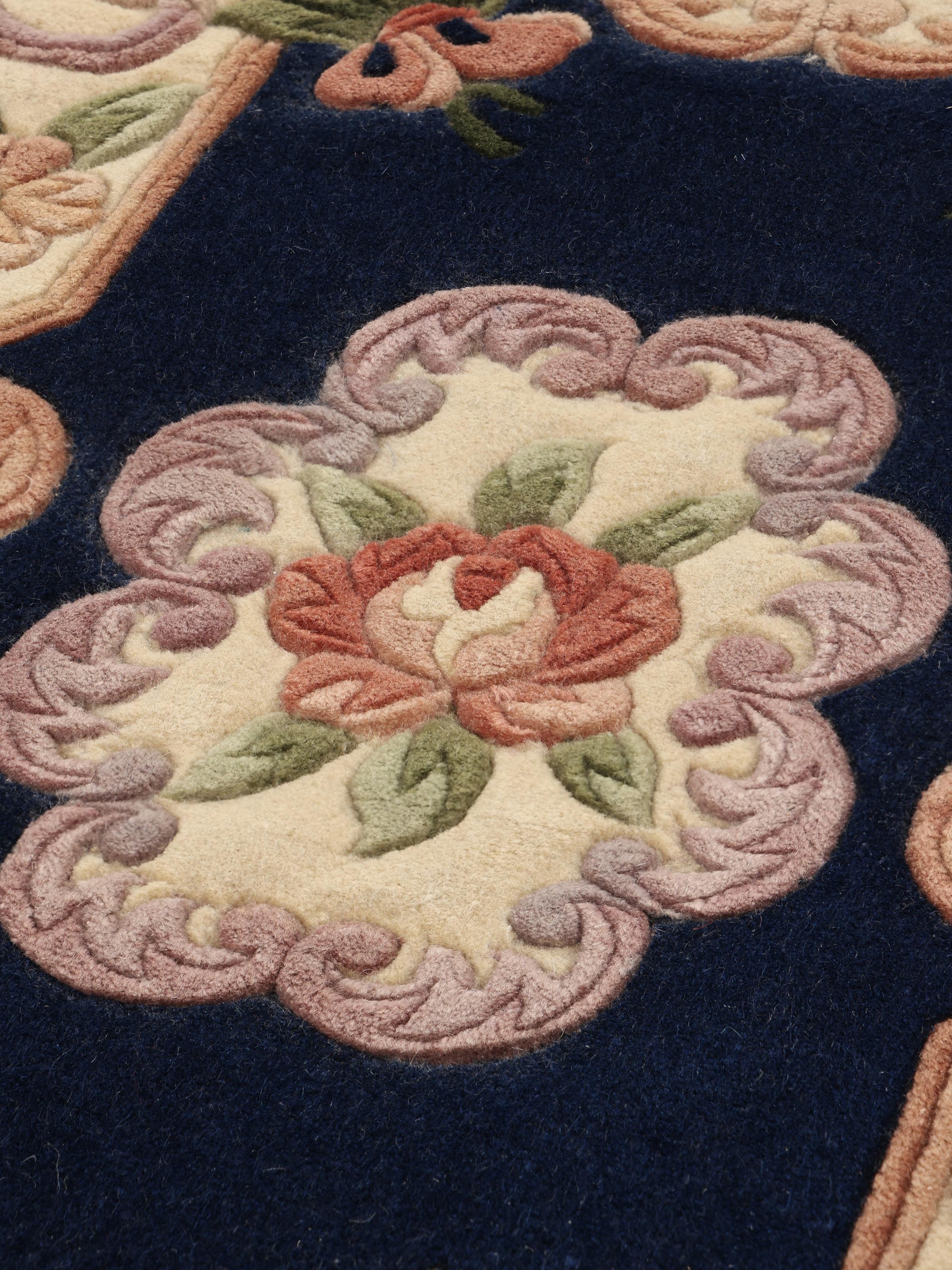
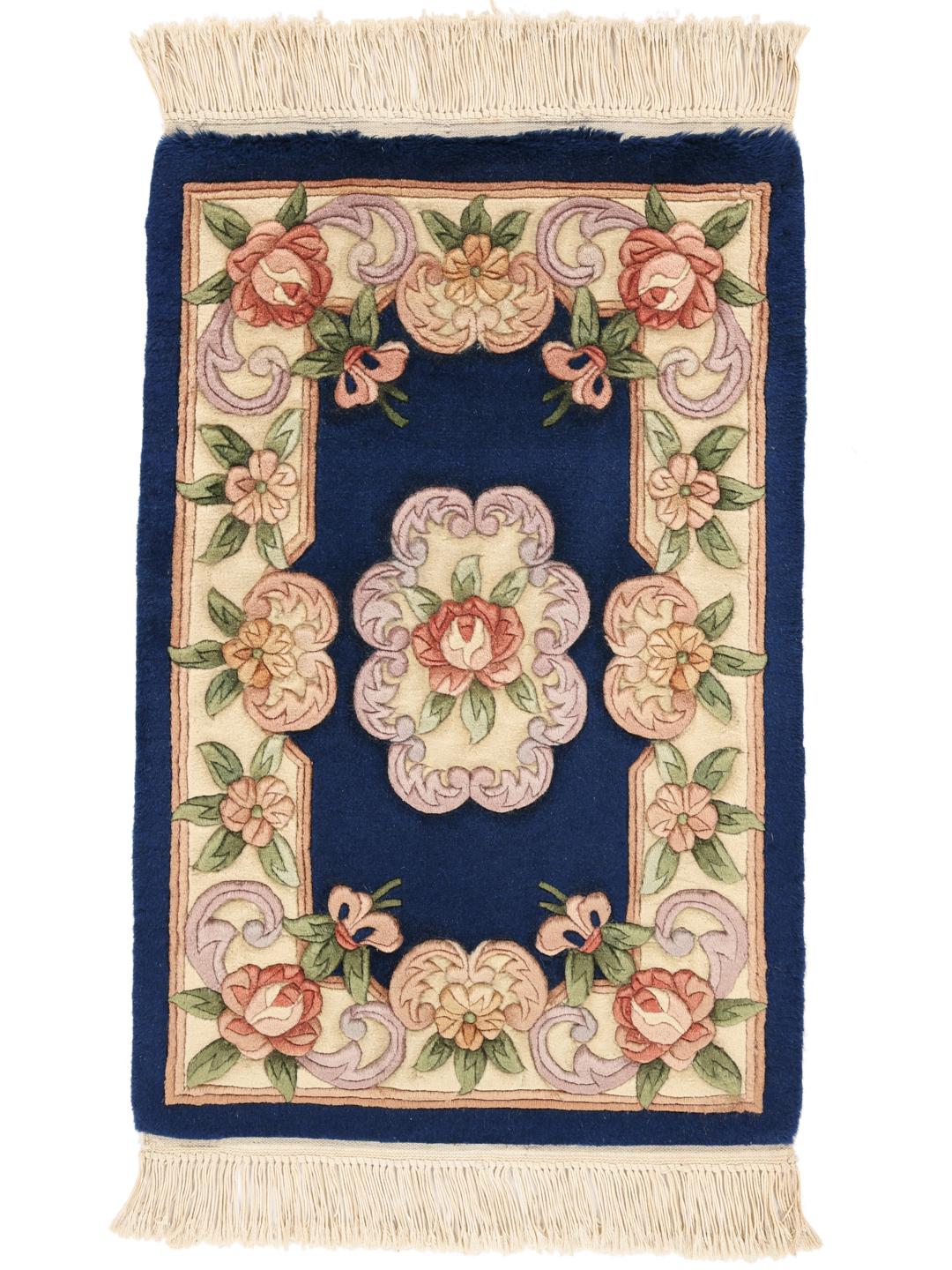
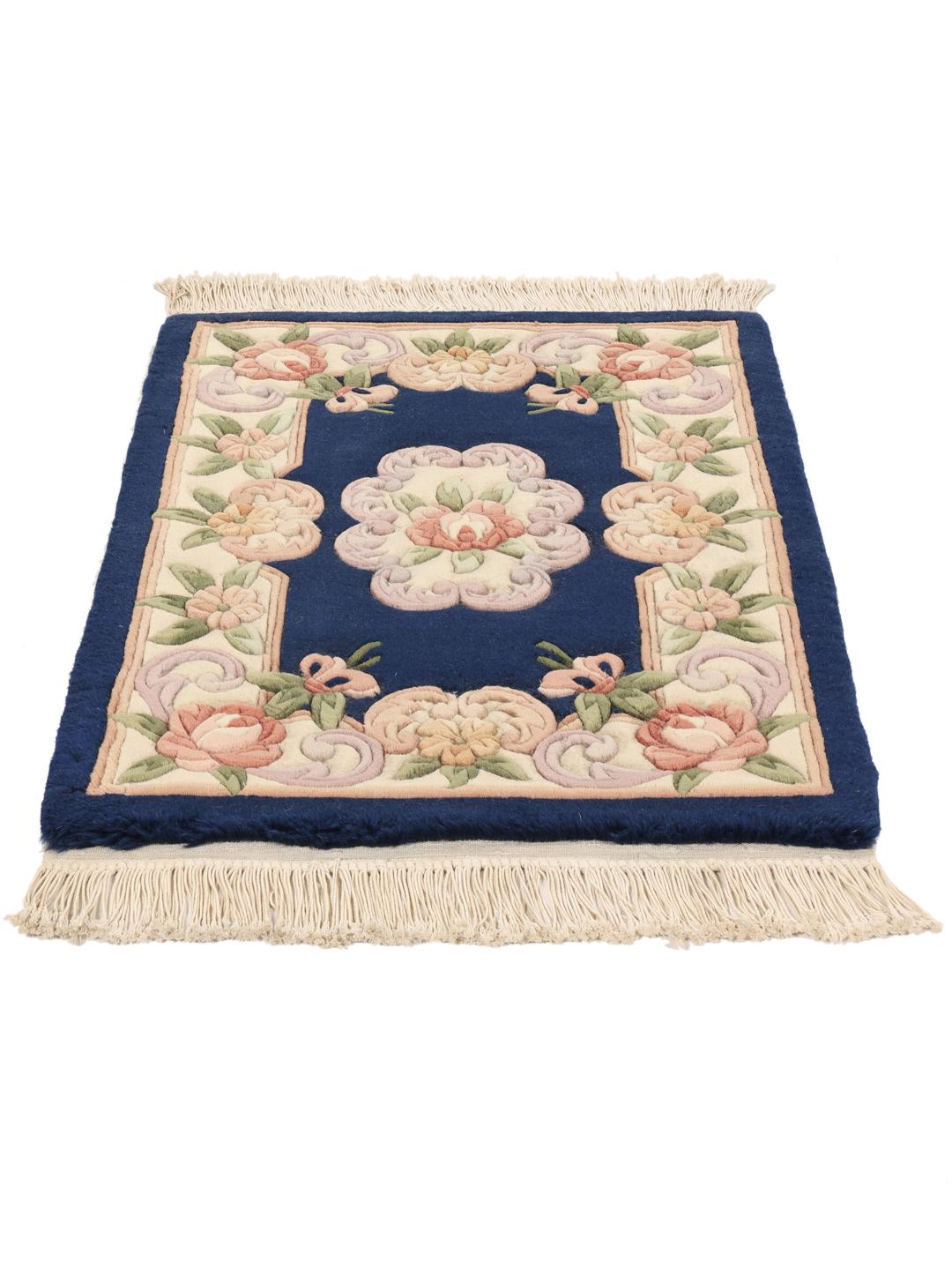
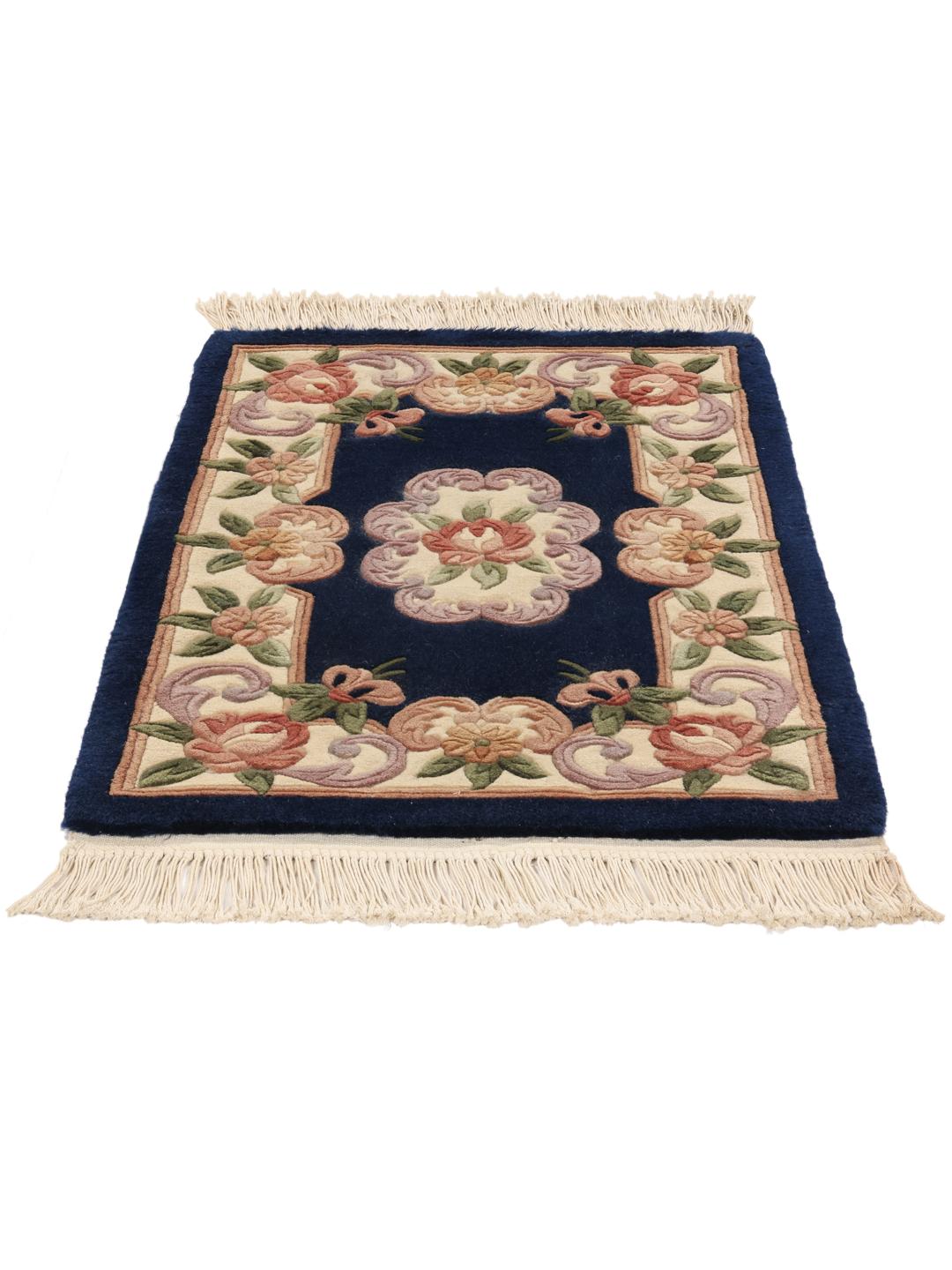
The tradition of Chinese rug weaving is an ancient craft, with roots that stretch back centuries. Historically, these rugs were produced for the imperial court and elite households, often featuring symbolic motifs that represented prosperity, long life, and happiness. Over time, the designs evolved to incorporate both traditional Eastern aesthetics and influences from global design movements, resulting in the sophisticated floral styles seen today.
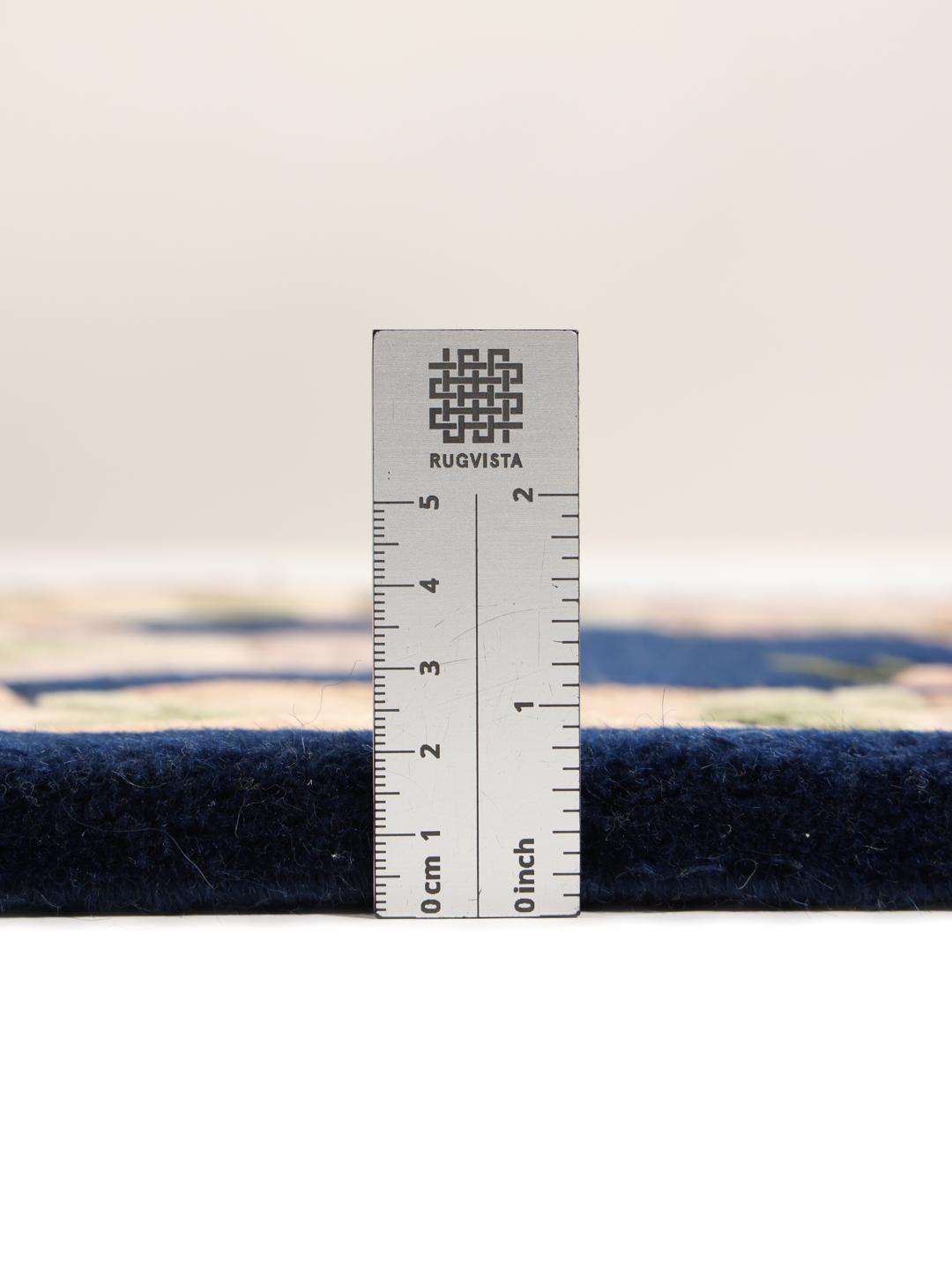
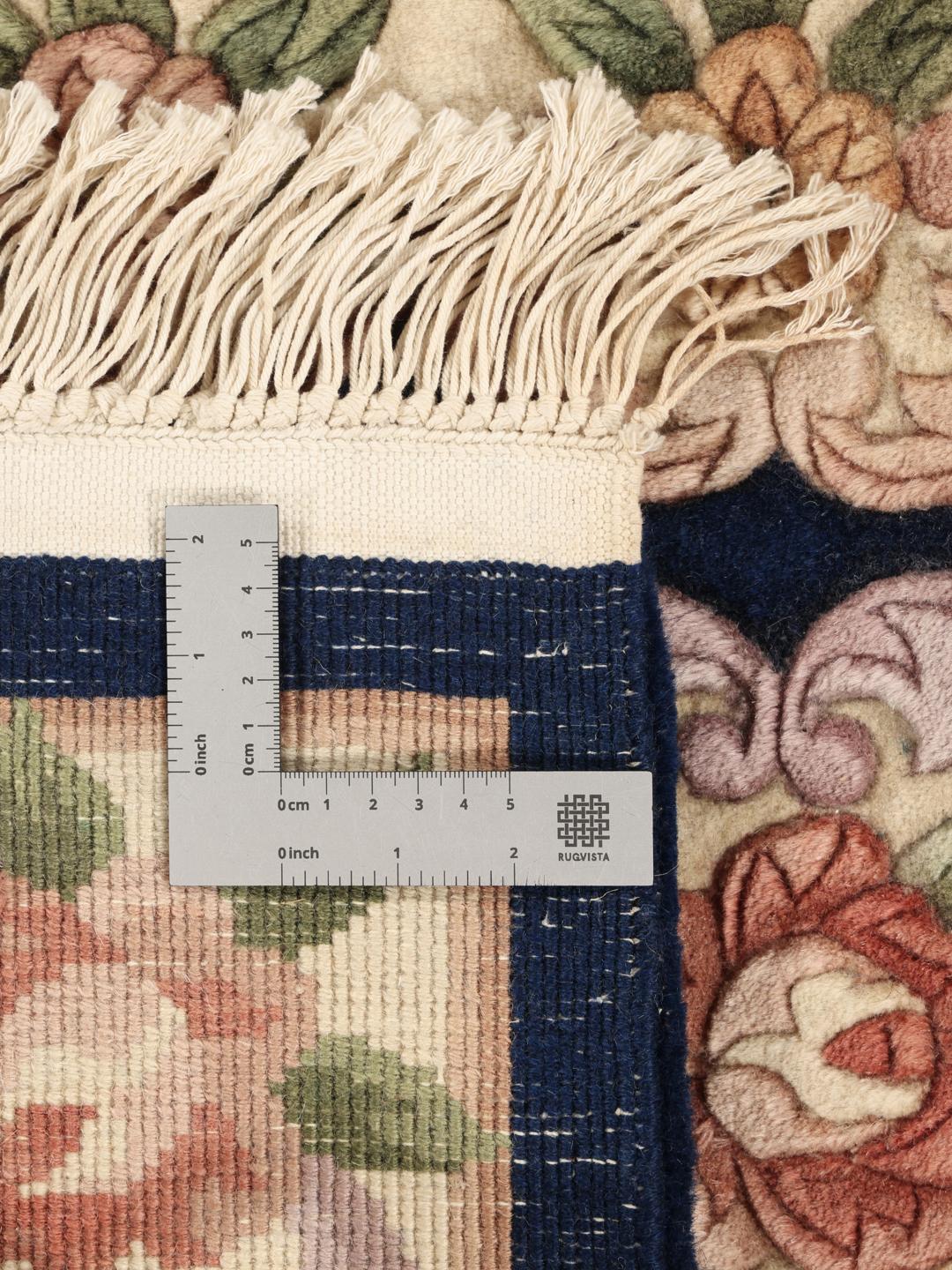
The term '90 Line' refers to a specific system of measurement used to gauge the density and quality of a hand-knotted rug. It denotes the number of knots per linear foot, which directly correlates to the clarity of the design and the robustness of the pile. In this context, it signifies a commitment to a standard of construction that balances fine detail with a heavy, luxurious feel underfoot.
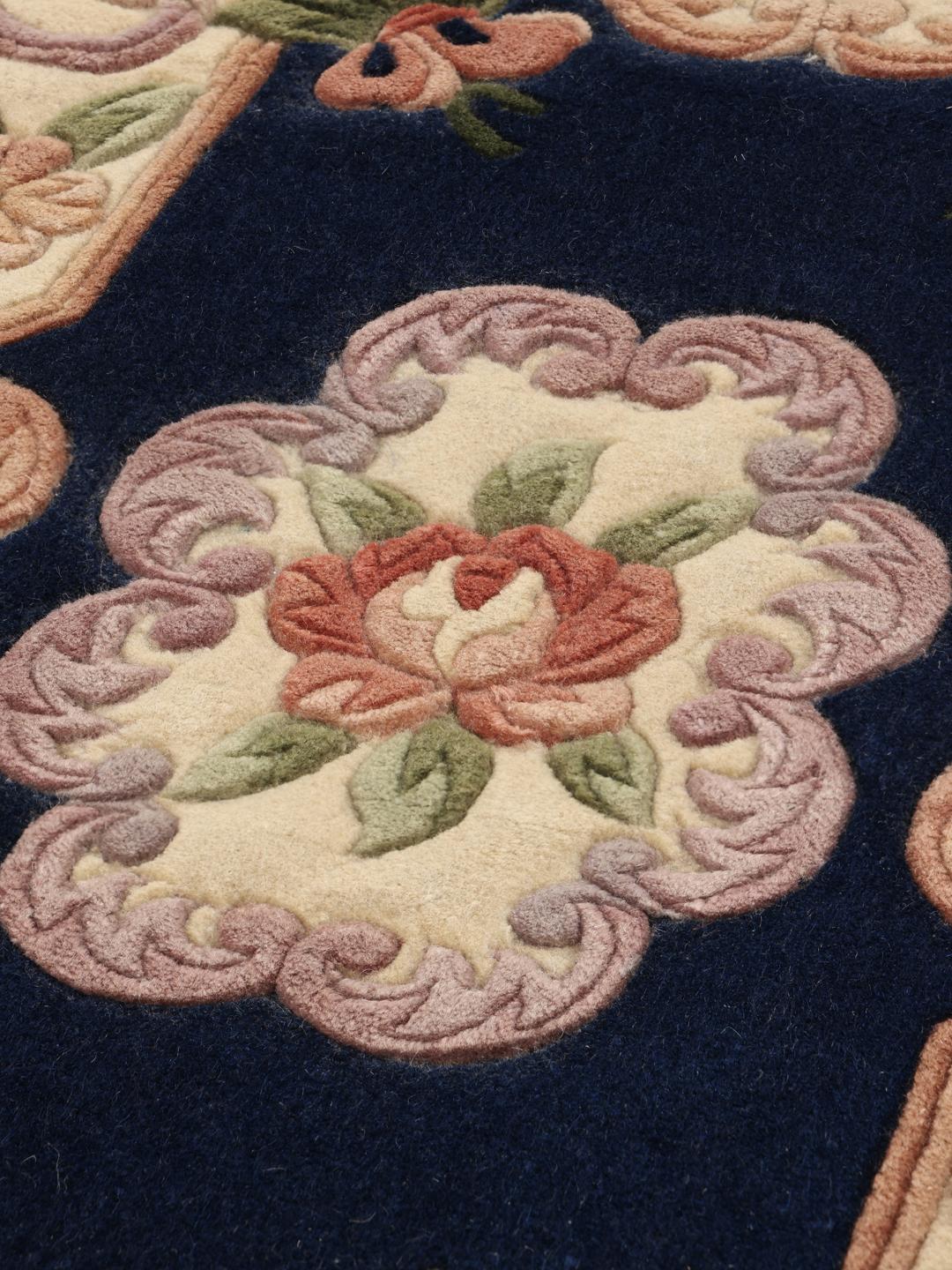
Floral motifs are a cornerstone of this tradition, often rendered with a sense of depth and realism that sets them apart from more abstract regional styles. The use of soft, naturalistic colours paired with a strong, solid-coloured field creates a dramatic contrast that highlights the intricacy of the blossoms. These designs are intended to bring the beauty of nature indoors, reflecting a long-standing appreciation for botanical imagery in art.
Collecting rugs from this tradition is a way to preserve a legacy of skill and cultural expression. Each piece serves as a testament to the artisan's ability to translate complex patterns into a functional, durable object. By choosing a rug with such a rich history, you are securing a piece of cultural heritage that brings a sense of permanence and refinement to your home.