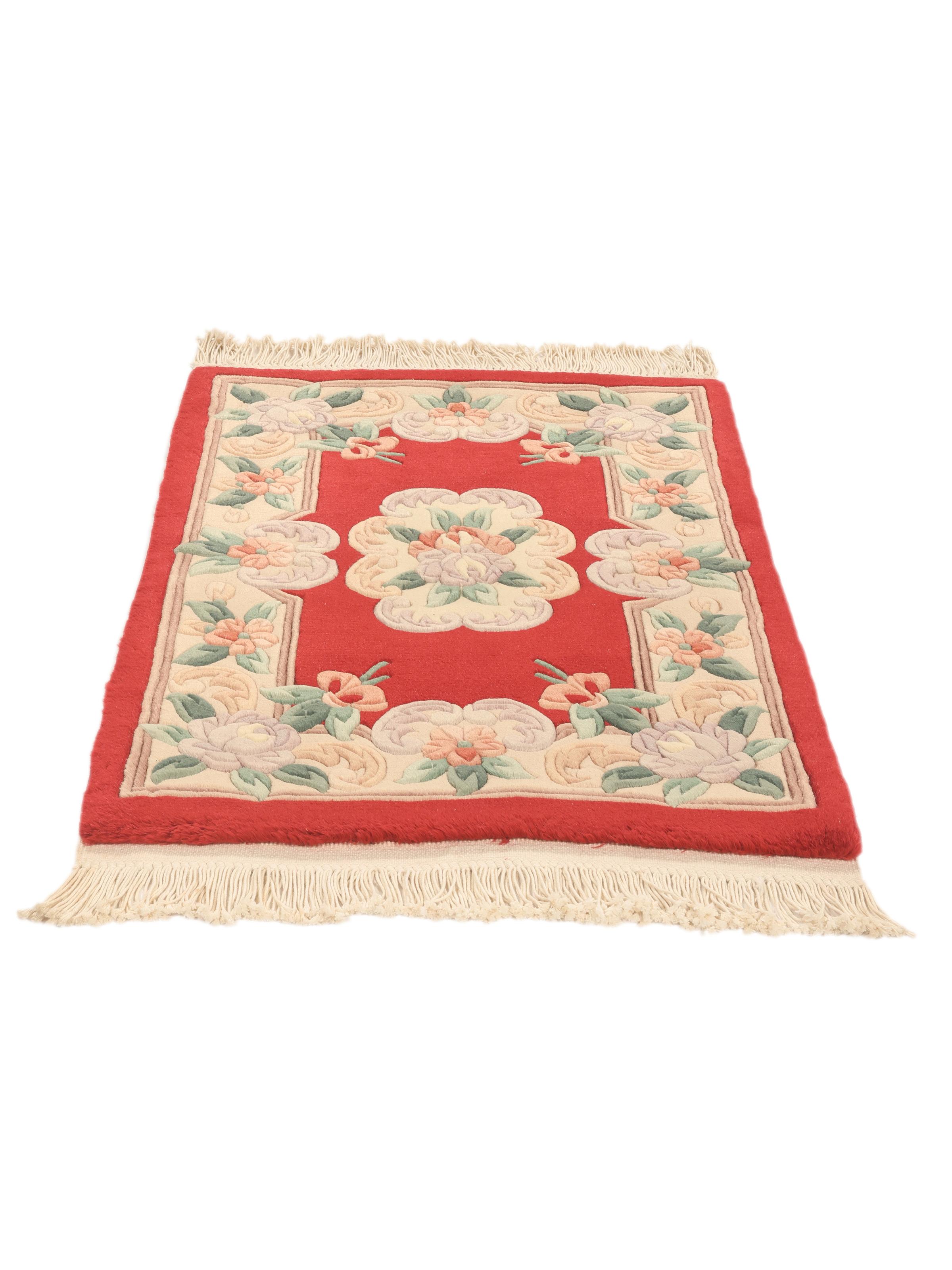
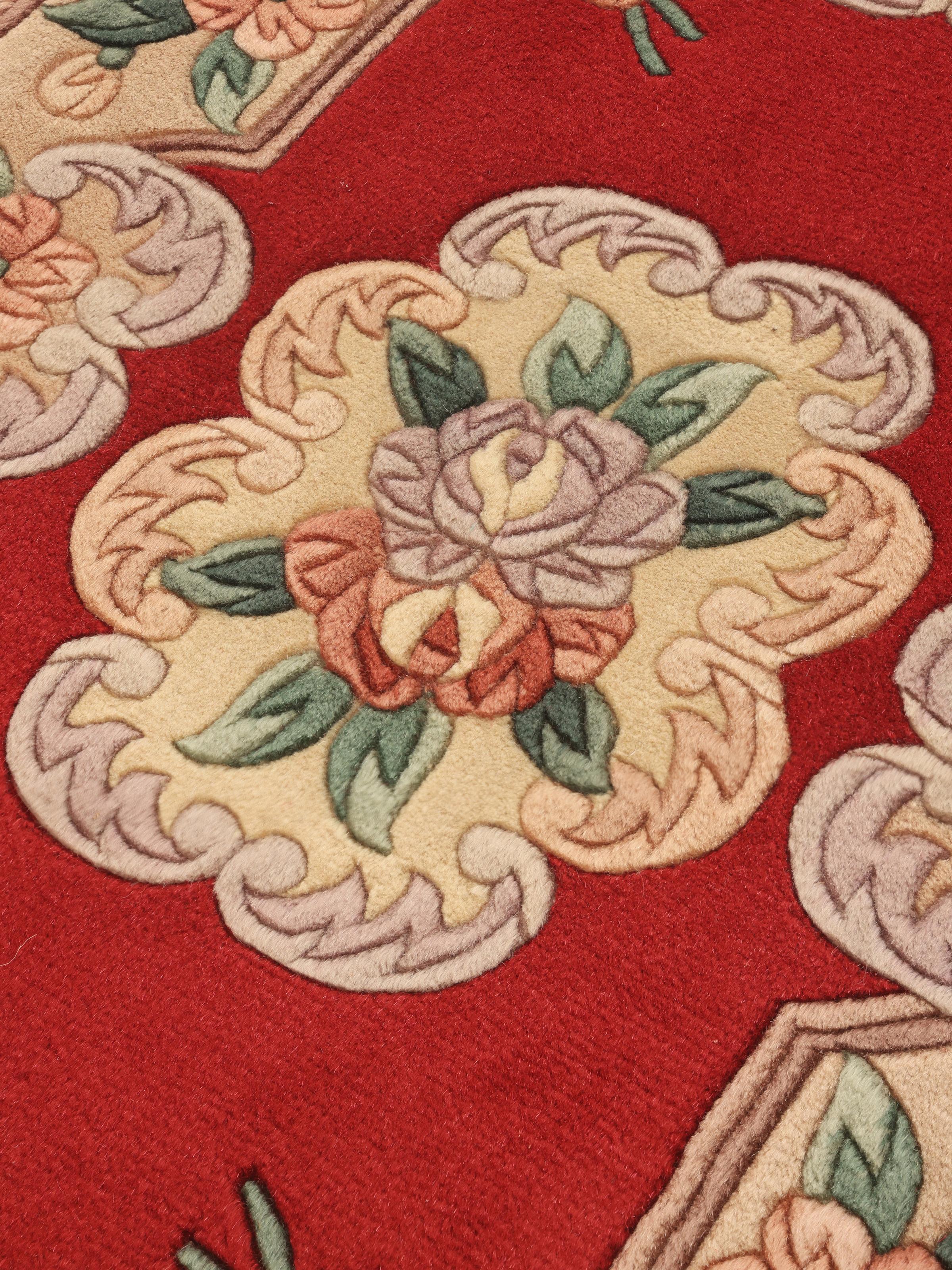
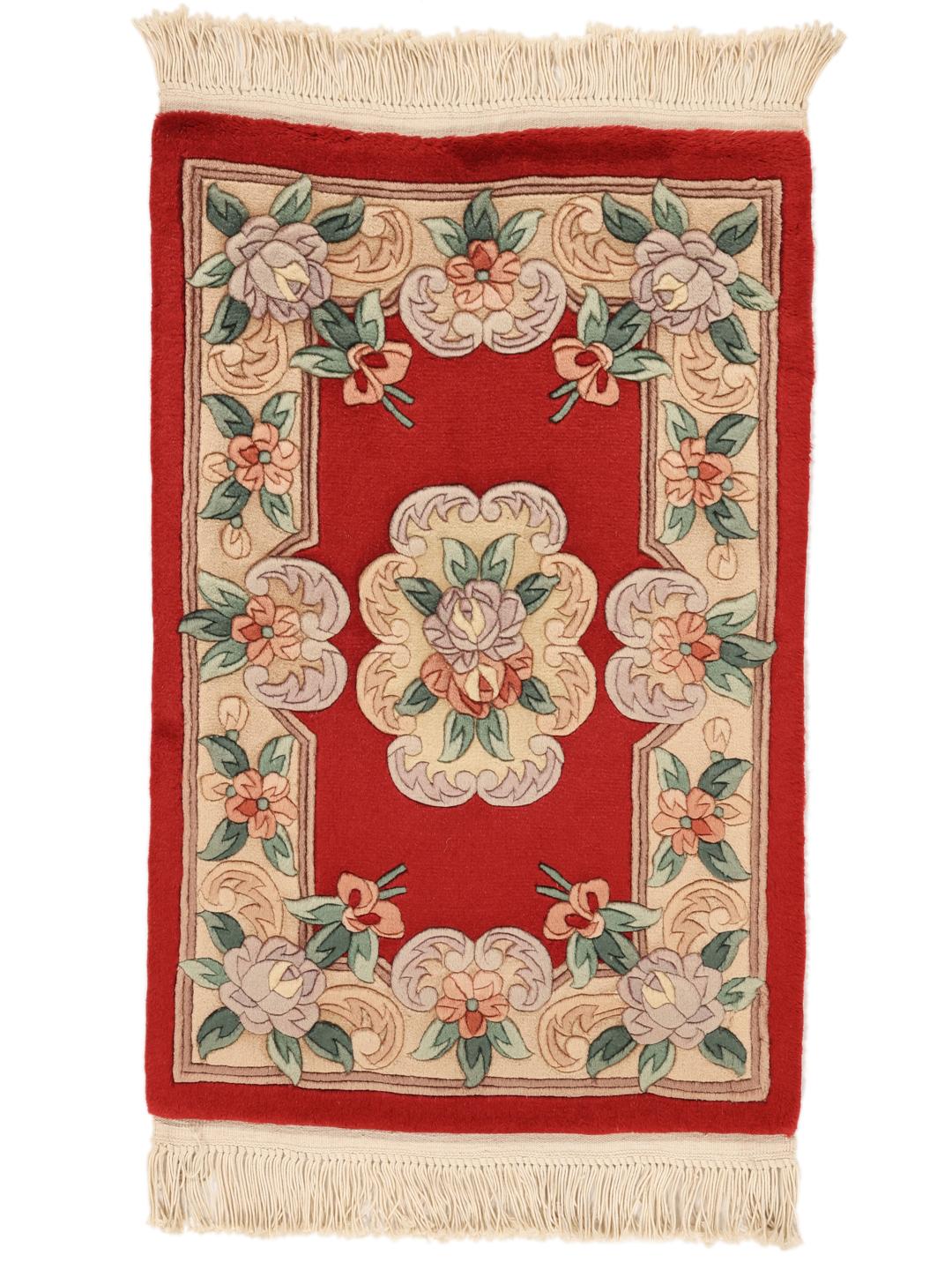
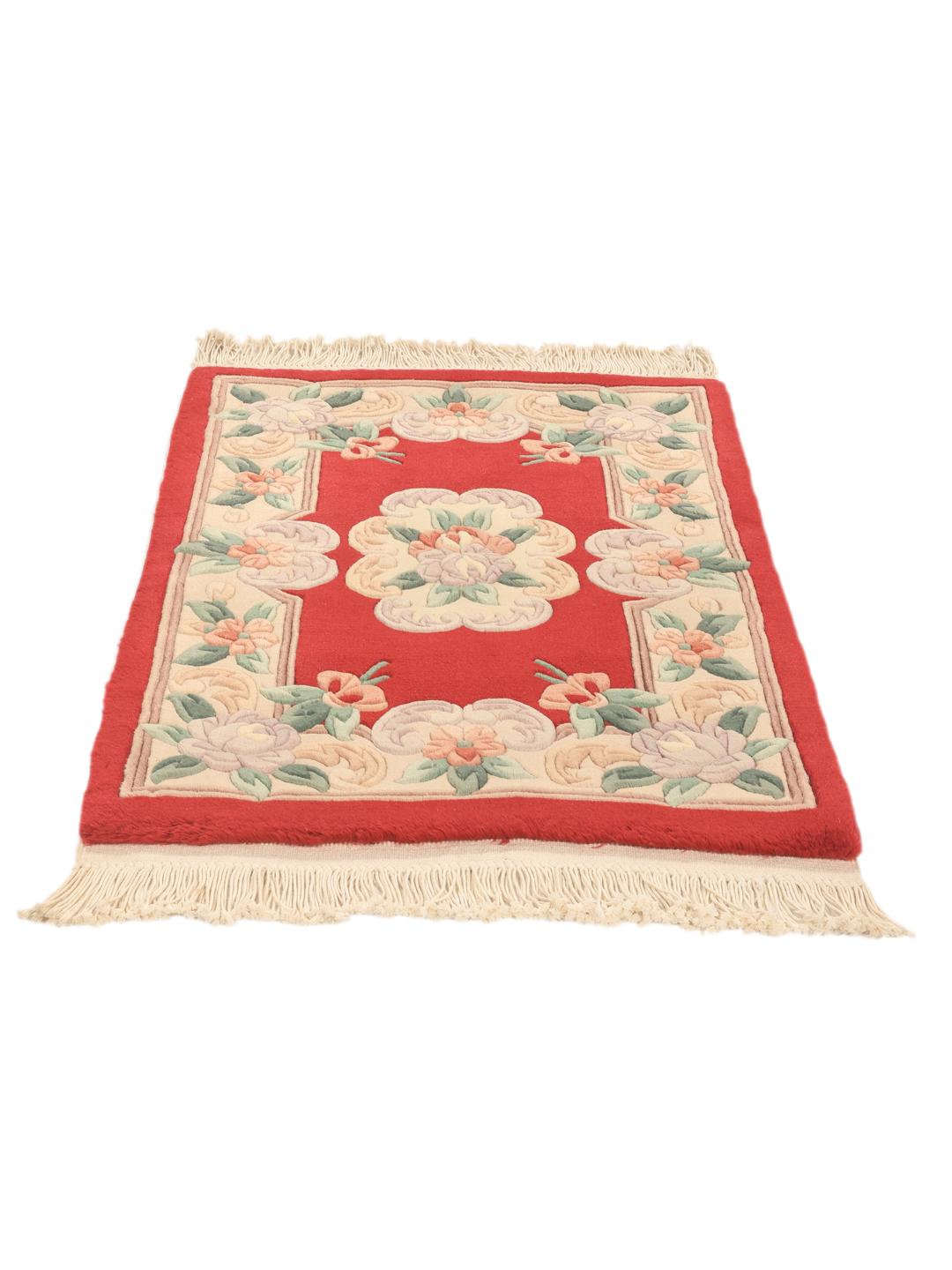
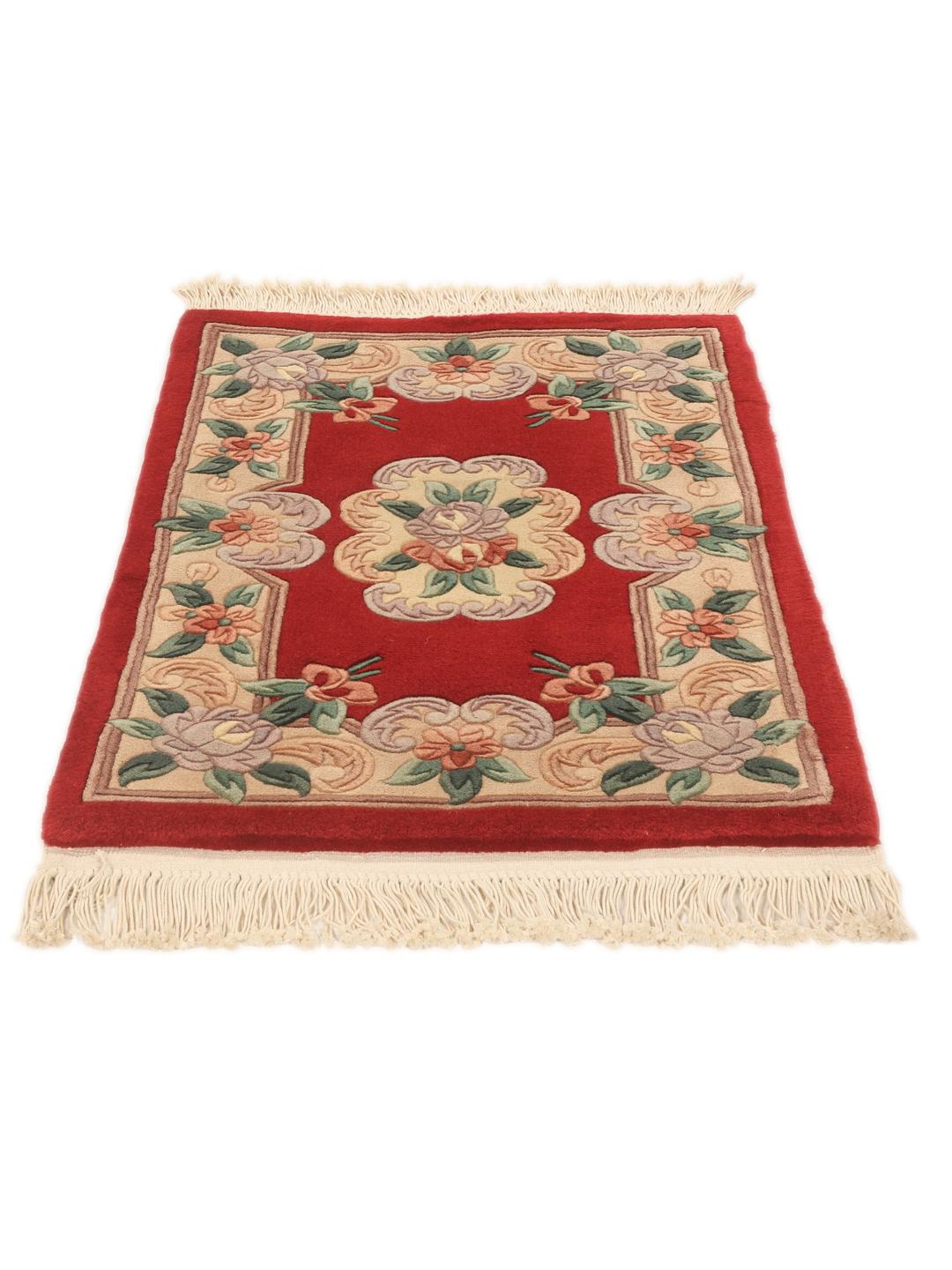
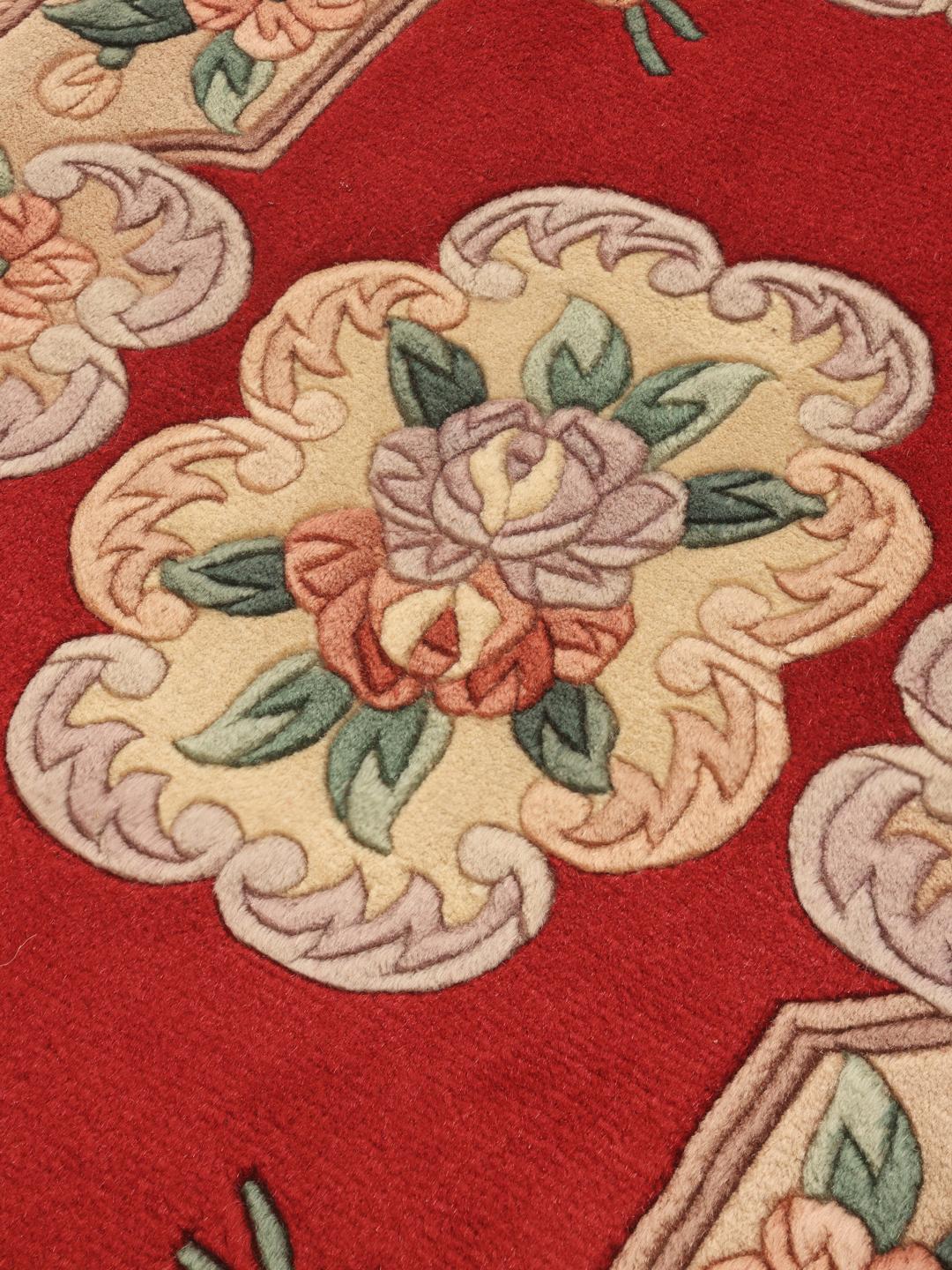
Chinese rug weaving is a venerable tradition that has evolved significantly over centuries, blending artistic expression with functional craftsmanship. Historically, these rugs were often commissioned for imperial palaces and temples, featuring symbolism rooted in local philosophy and nature, such as the floral elements seen in this piece.
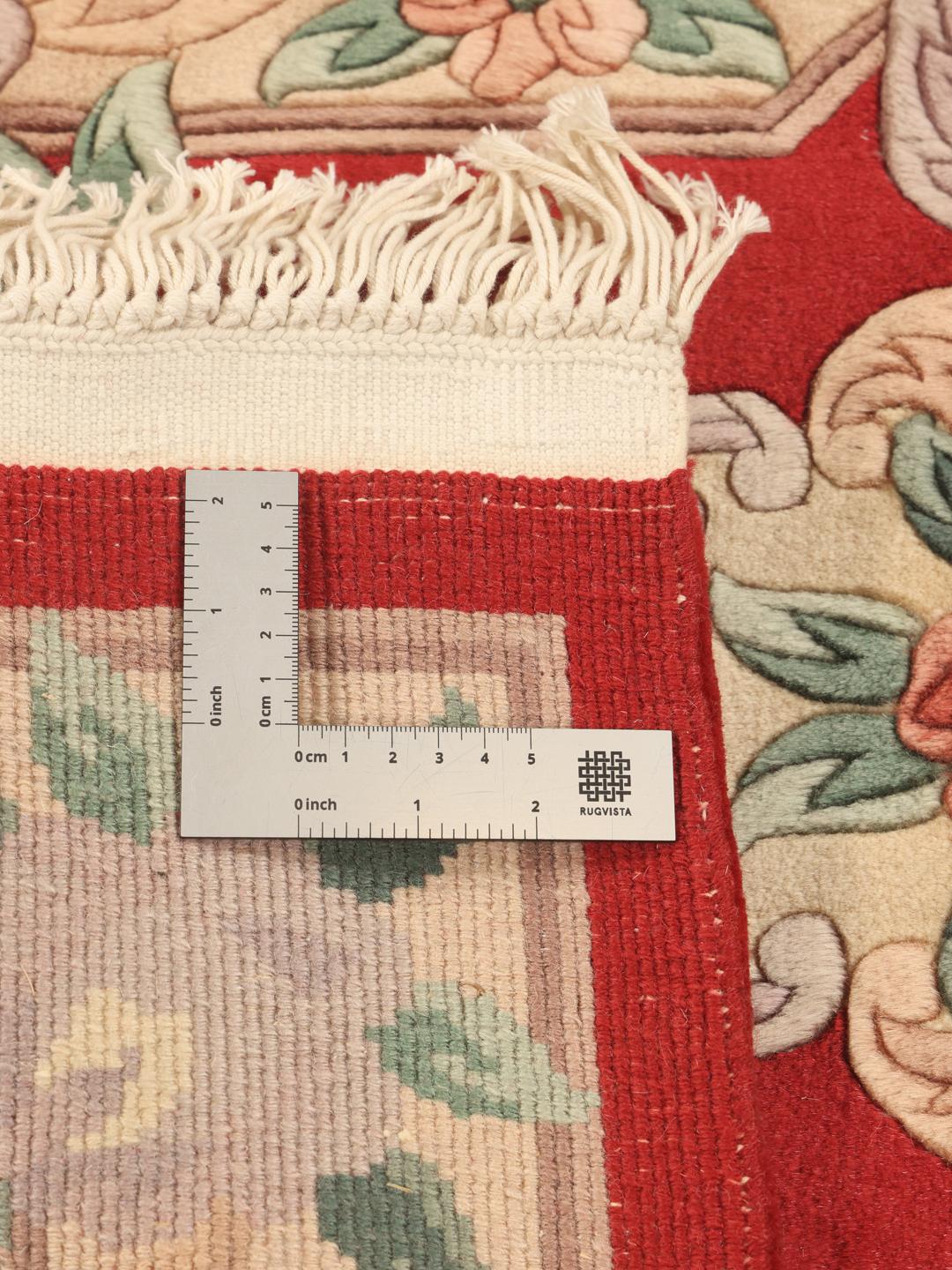
The term 90-line refers to a specific system of measurement used to determine the density of the rug's foundation. This technical classification is essential for maintaining the clarity of the design and ensuring the longevity of the pile. By adhering to these established standards, weavers create rugs that balance aesthetic detail with structural integrity.
Floral motifs are a cornerstone of this tradition, often representing prosperity, beauty, and the changing seasons. The use of a central medallion surrounded by a decorative border is a hallmark of the classic Chinese style, designed to create a focal point that draws the eye and anchors the space with a sense of order and balance.
Today, these rugs are highly valued by collectors for their cultural significance and the skill required to produce them. Owning a piece from this tradition is an investment in heritage, offering a way to connect with a long history of artistry while adding a timeless, elegant element to the modern home.