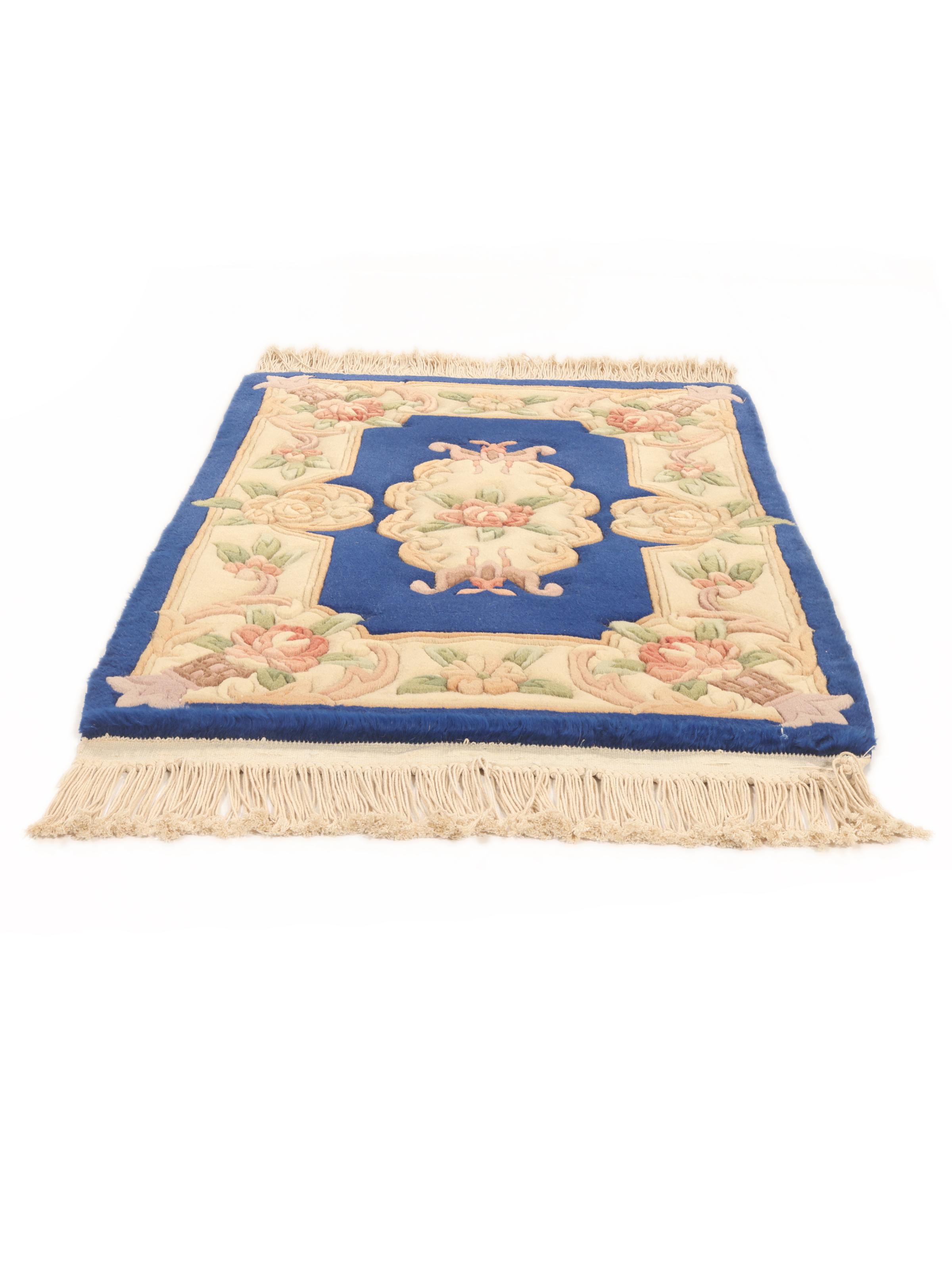
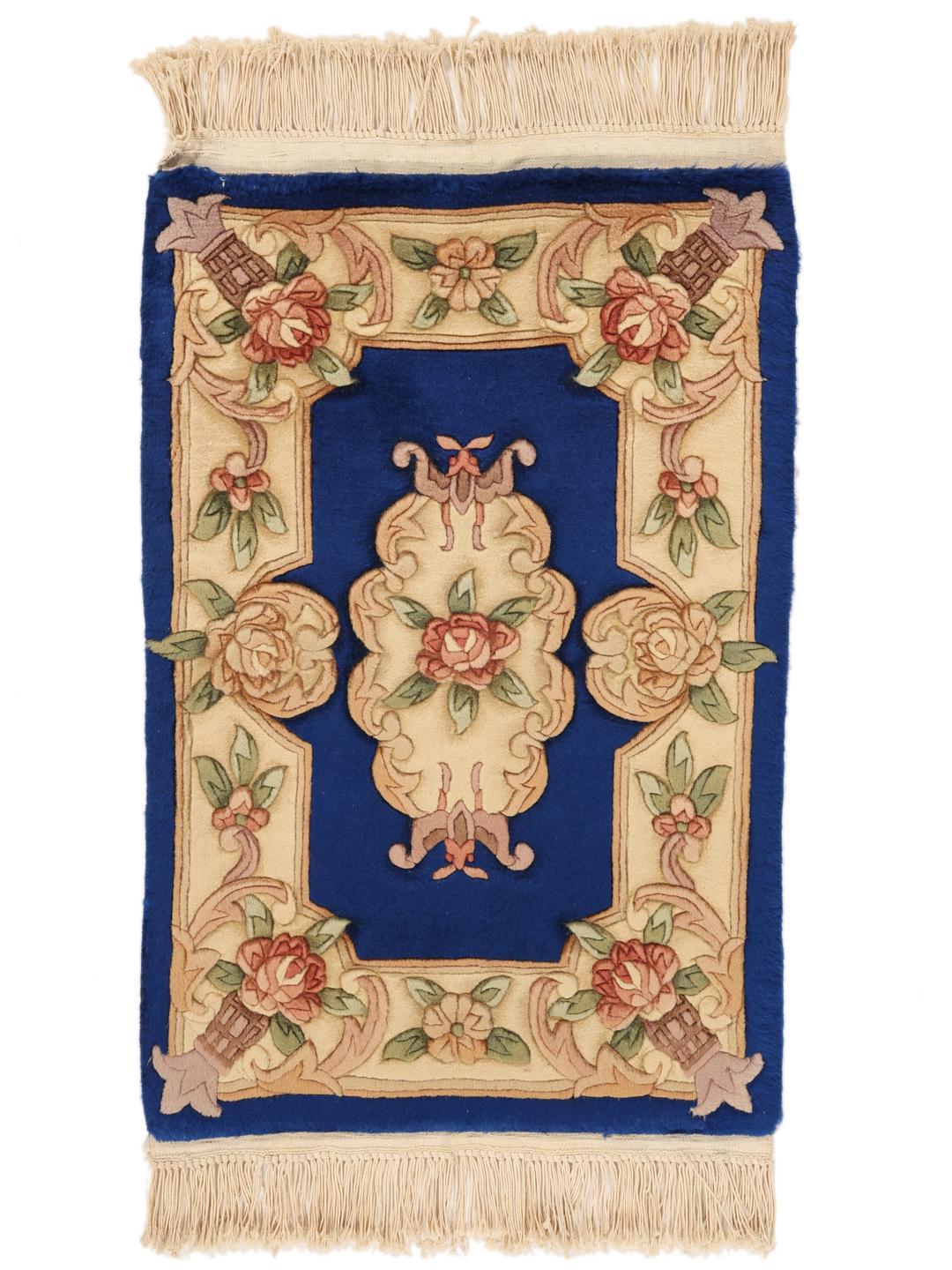
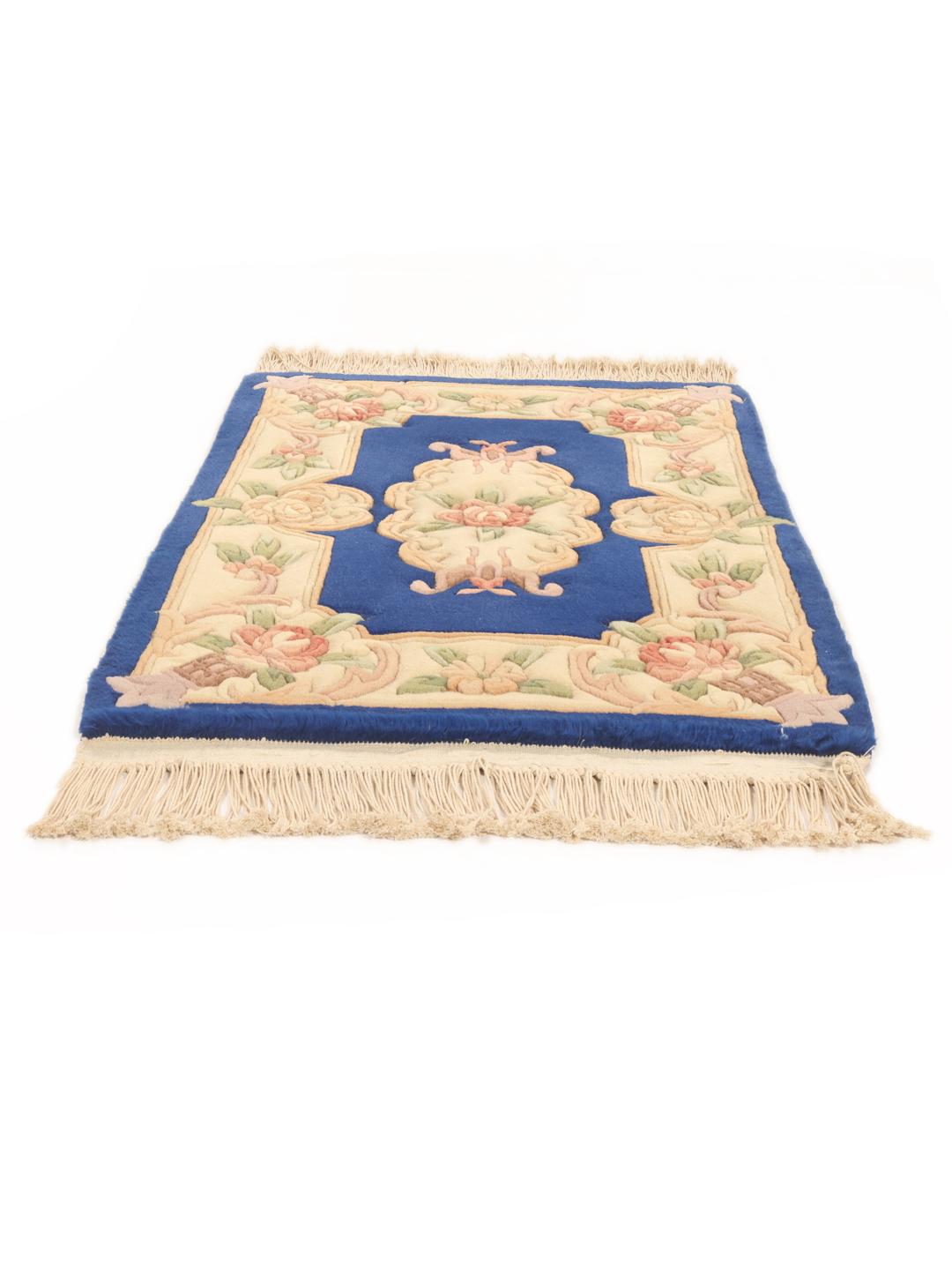
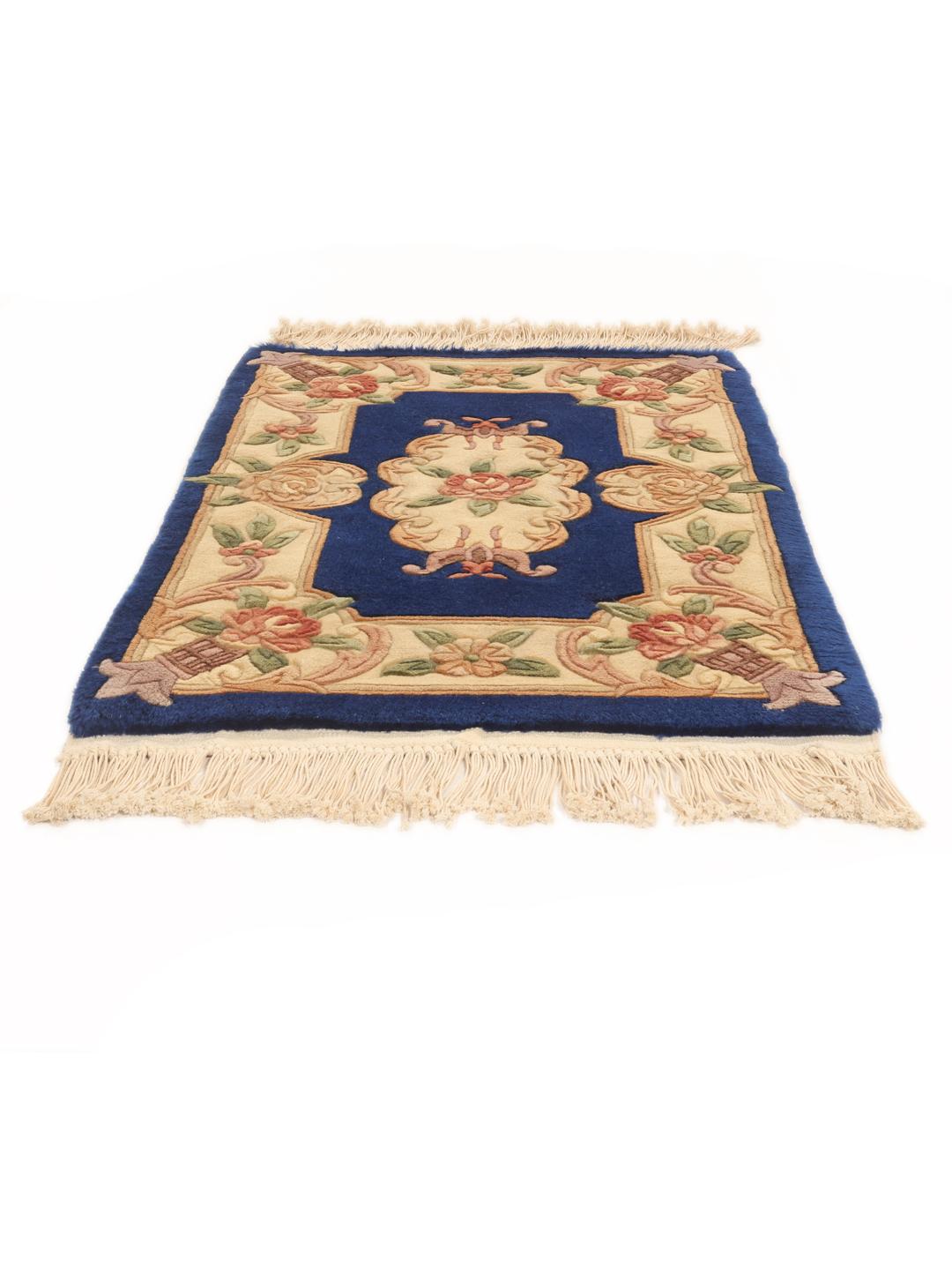
Chinese rug weaving has a long and storied tradition that dates back centuries, evolving from functional floor coverings into highly sophisticated works of art. The region is particularly celebrated for its ability to blend local motifs with refined craftsmanship, often drawing inspiration from nature, silk weaving, and imperial aesthetics.
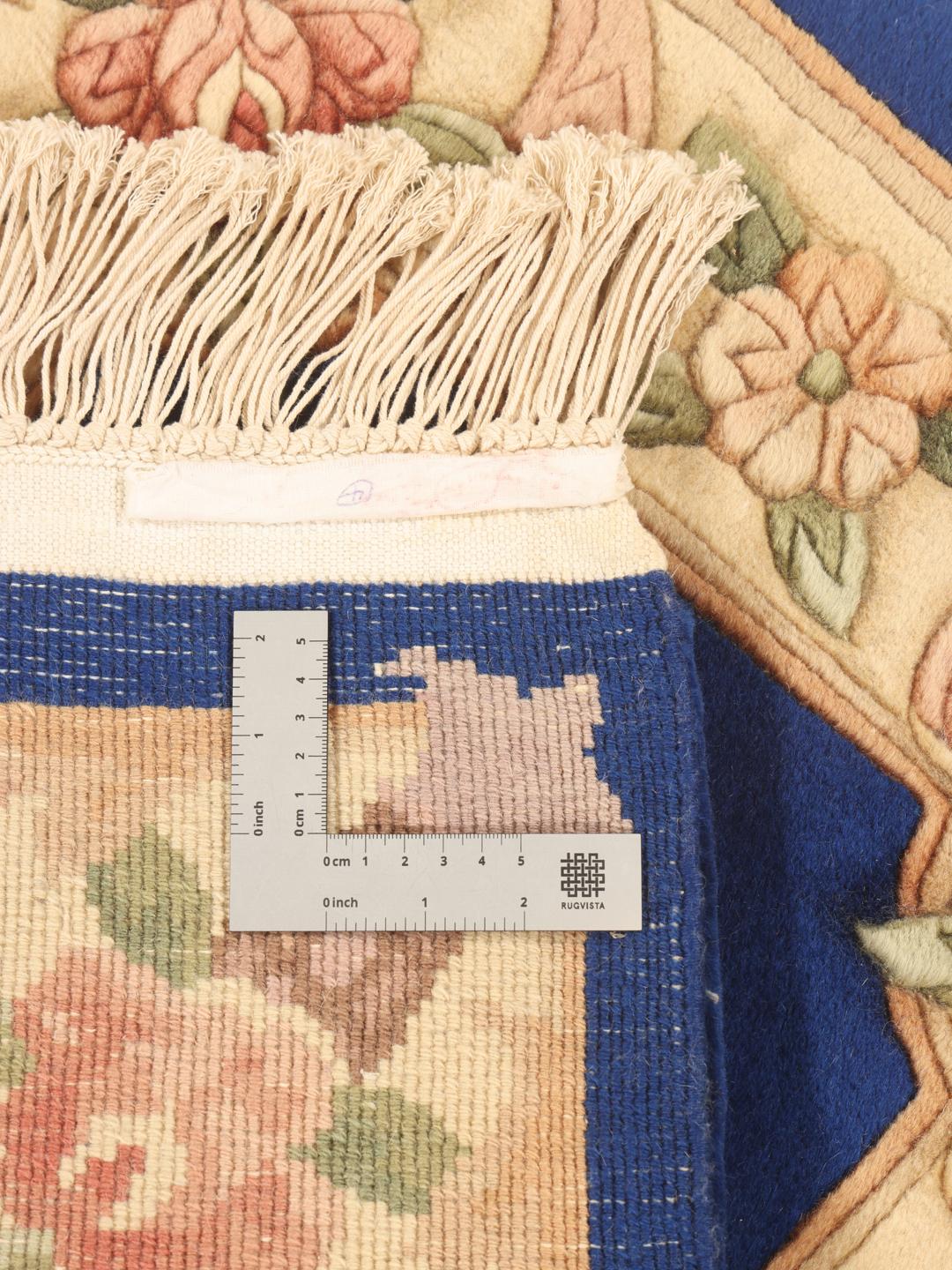
The term '90 Line' refers to a traditional method of measuring the fineness of the knotting, based on the number of knots per linear foot along the width of the rug. This specific classification is a hallmark of Chinese craft, representing a standard that balances density and detail to create a pile that is both soft to the touch and durable enough for daily use.
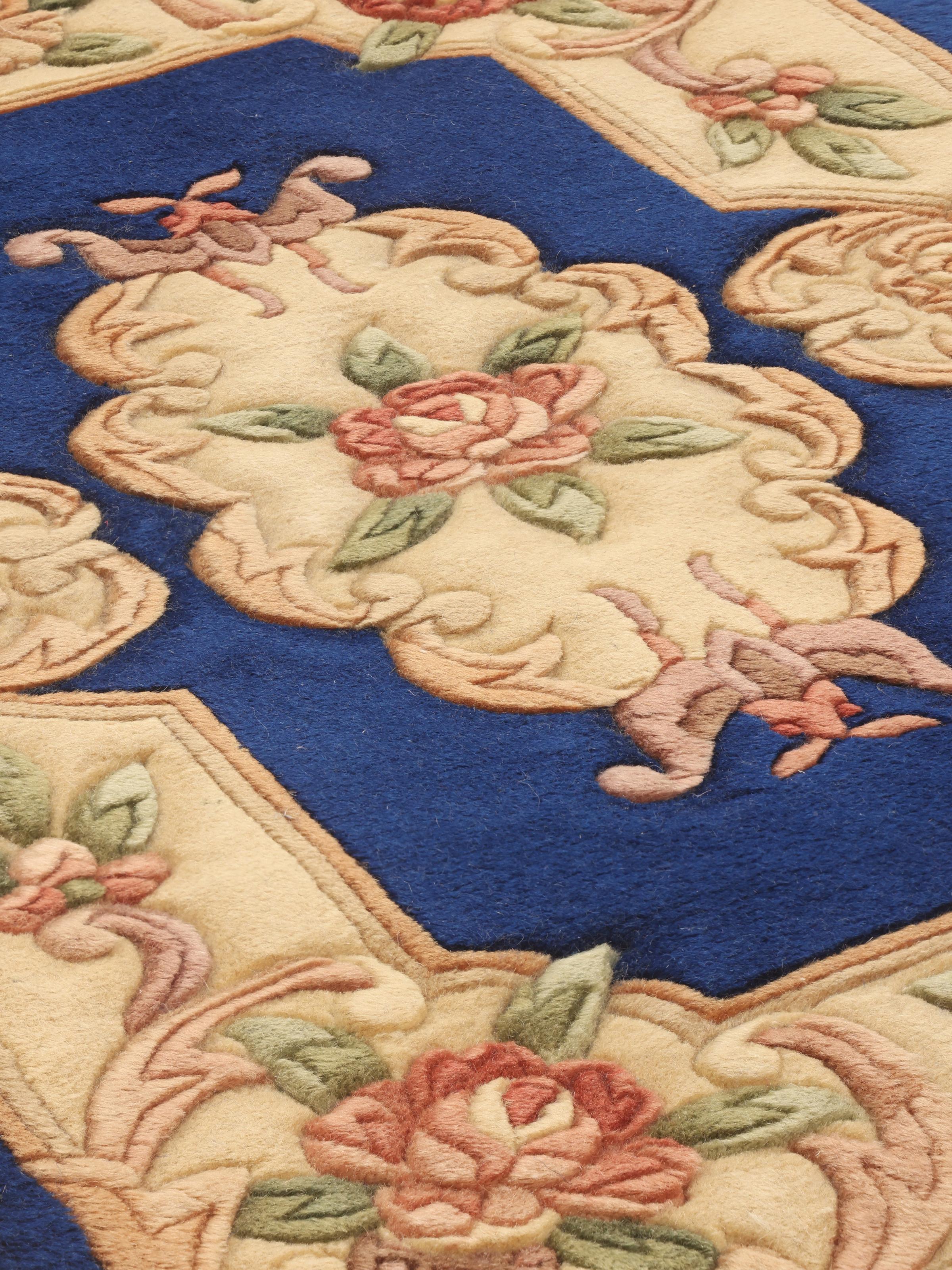
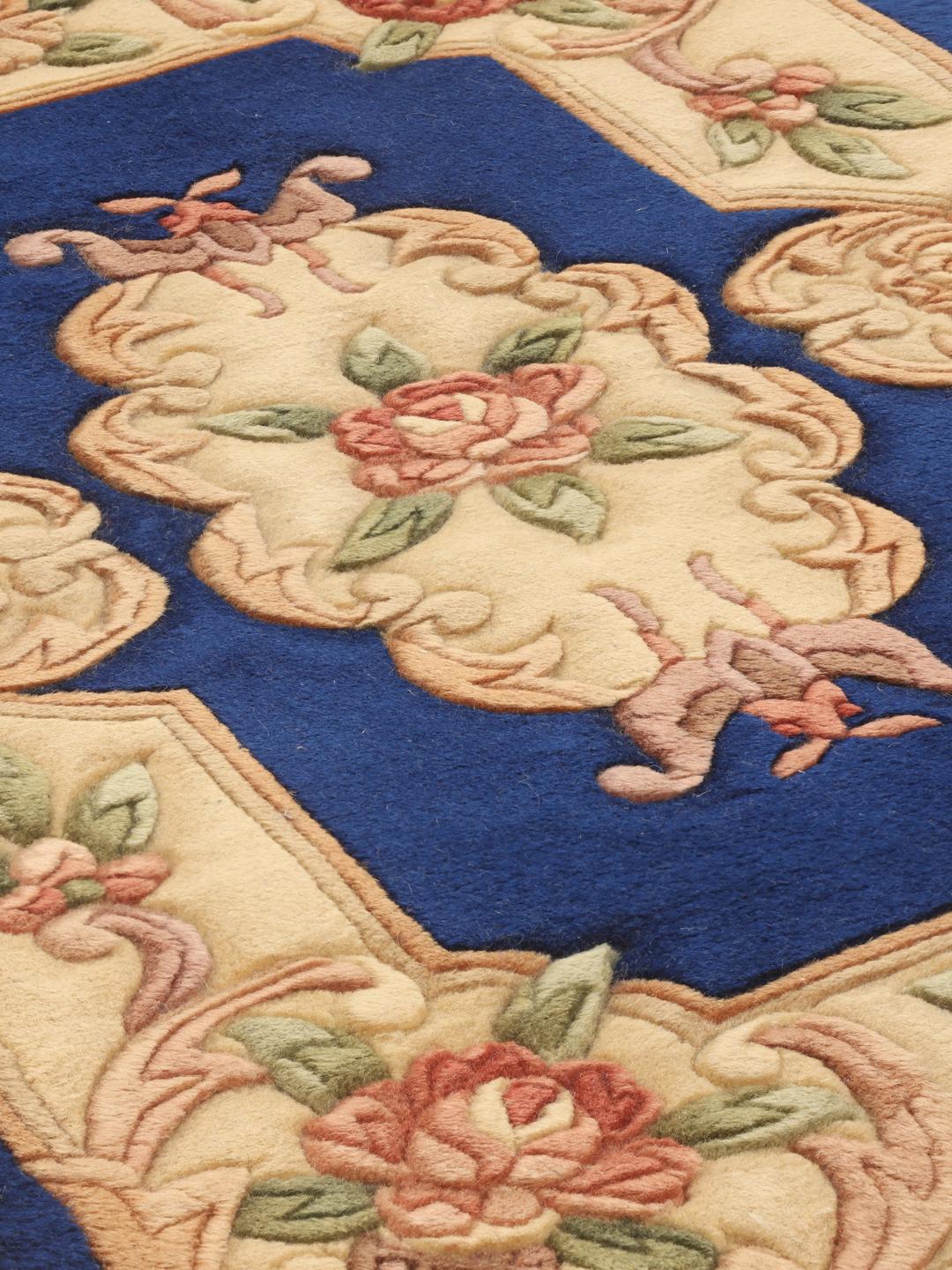
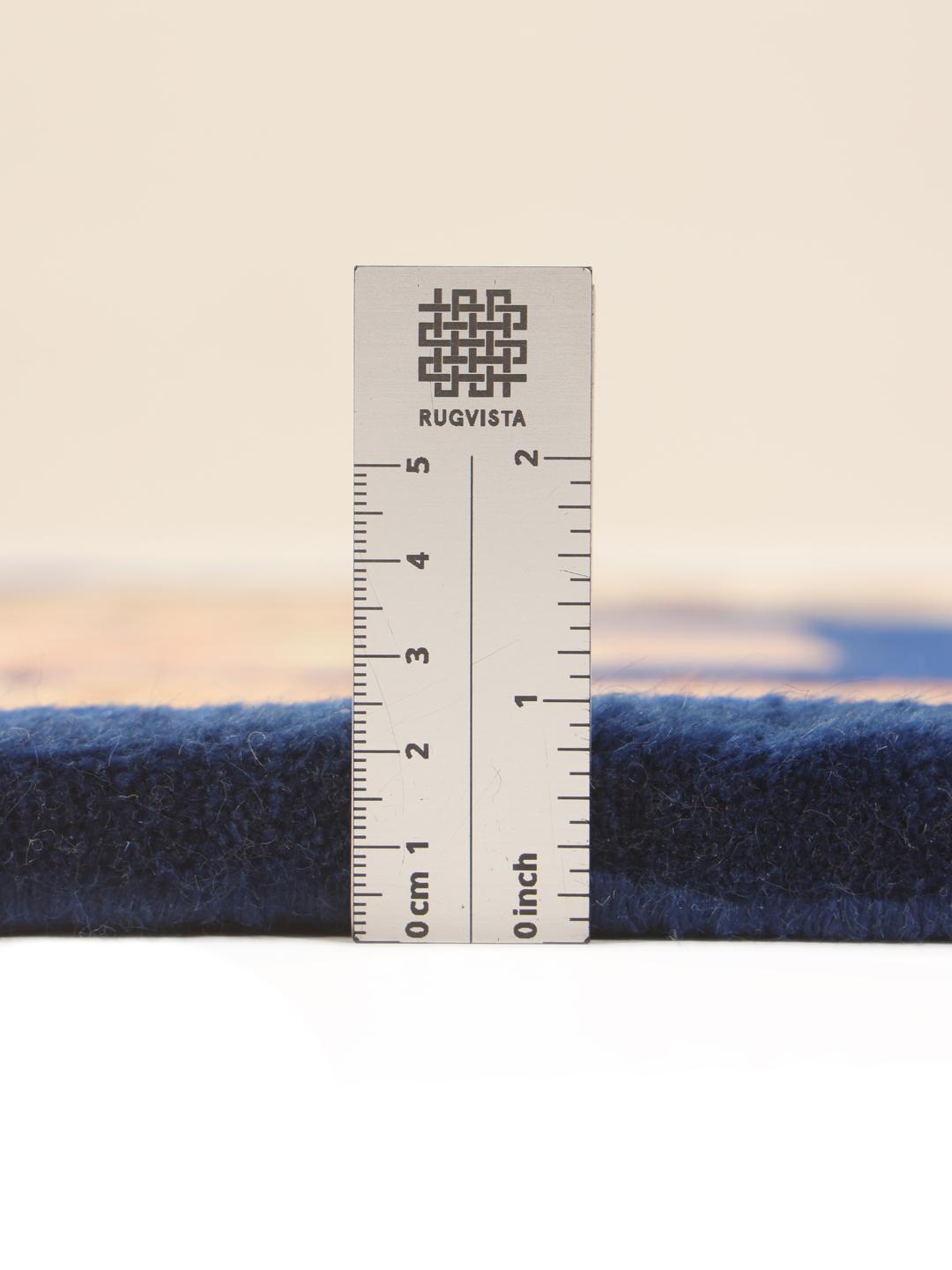
Floral patterns are a cornerstone of this tradition, frequently featuring stylised roses, peonies, or lotus blossoms that carry deep cultural symbolism. These designs often utilise a distinct carving technique where the pile is clipped at different heights to create a subtle relief, giving the flowers a three-dimensional appearance that catches the light beautifully.
Collectors value these rugs for their unique combination of artistic expression and technical reliability. Acquiring a hand-knotted piece from China is an investment in a storied heritage of textile production, offering a sense of cultural depth and personal luxury that mass-produced alternatives cannot provide.