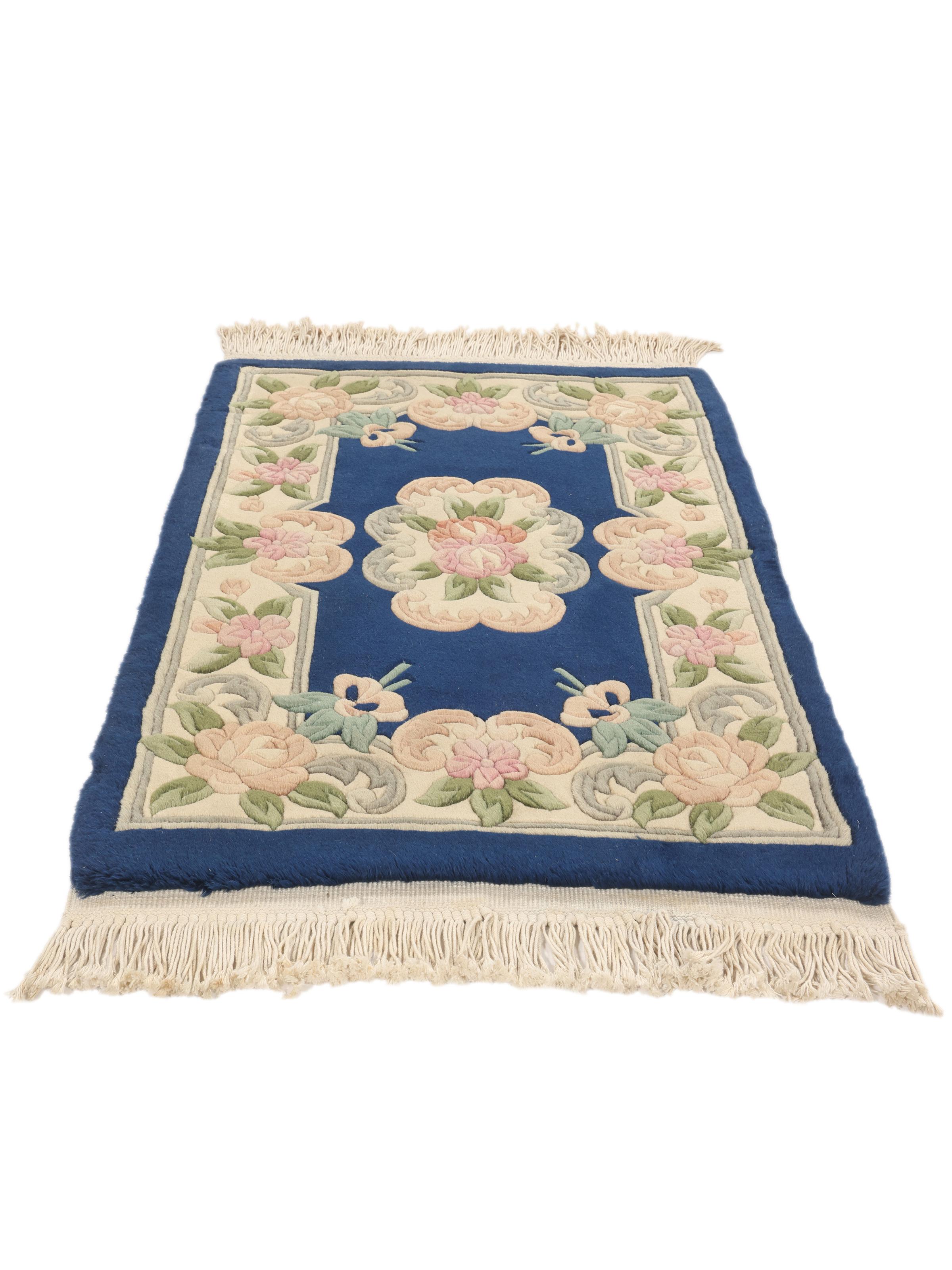
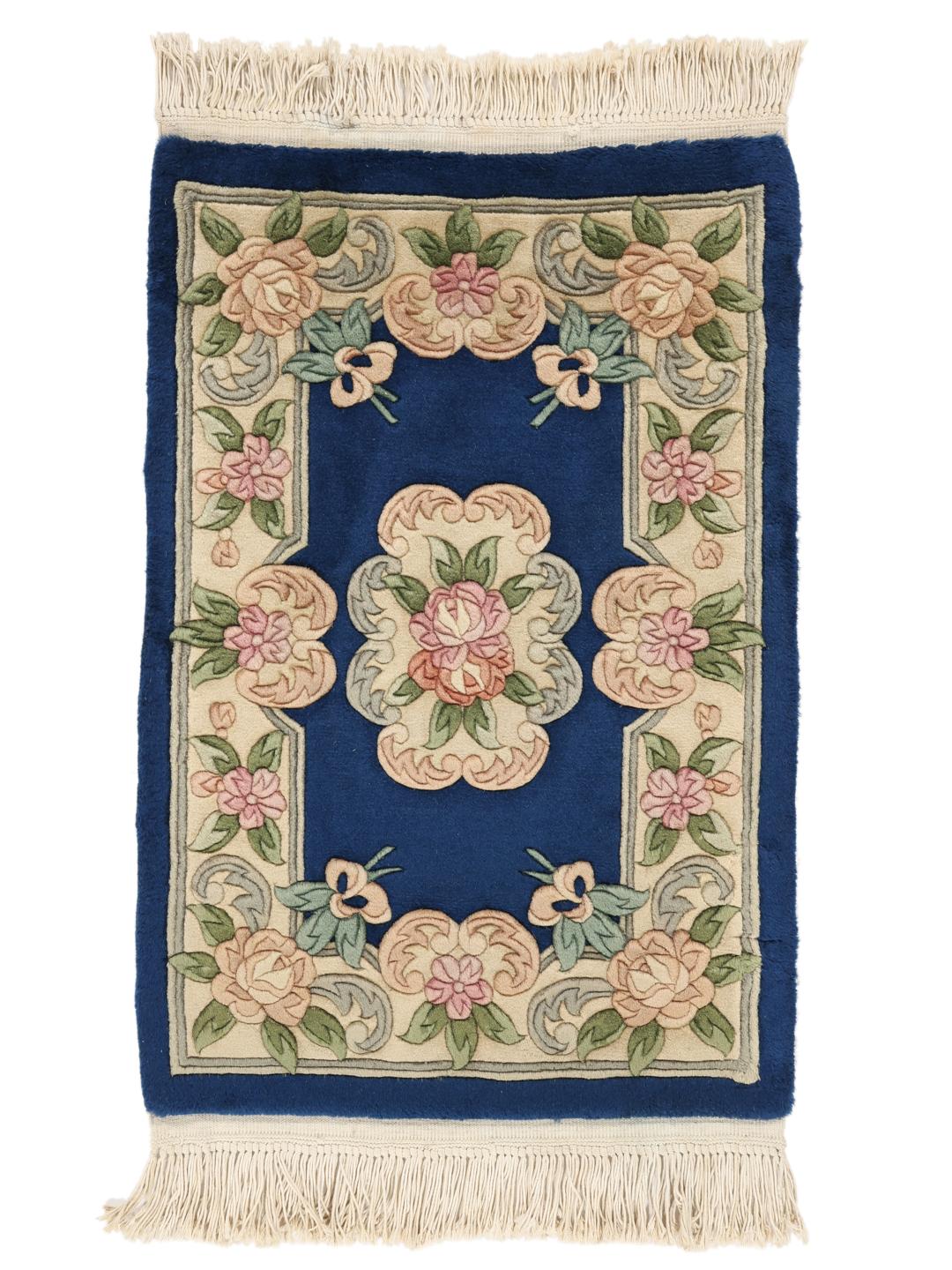
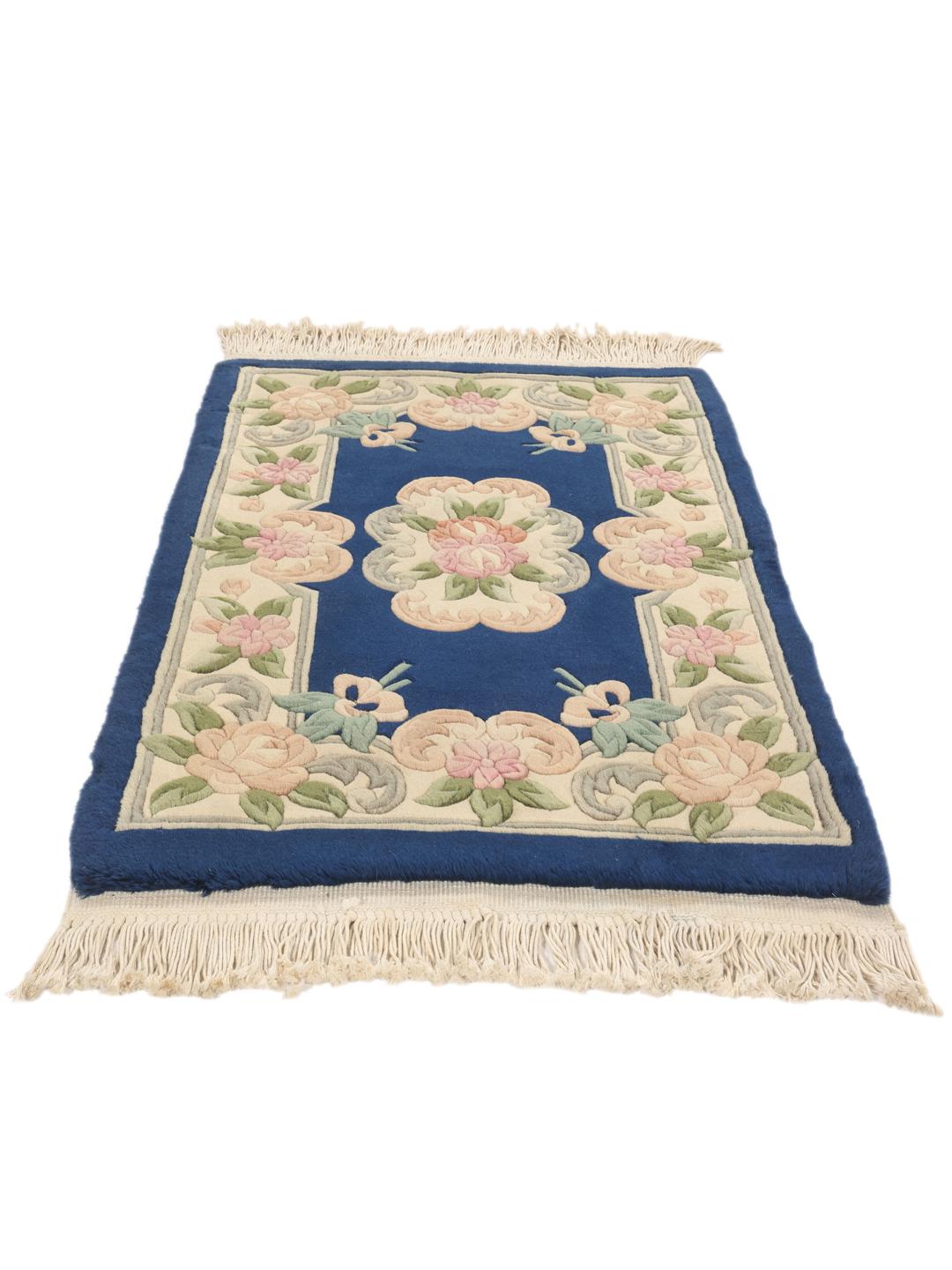
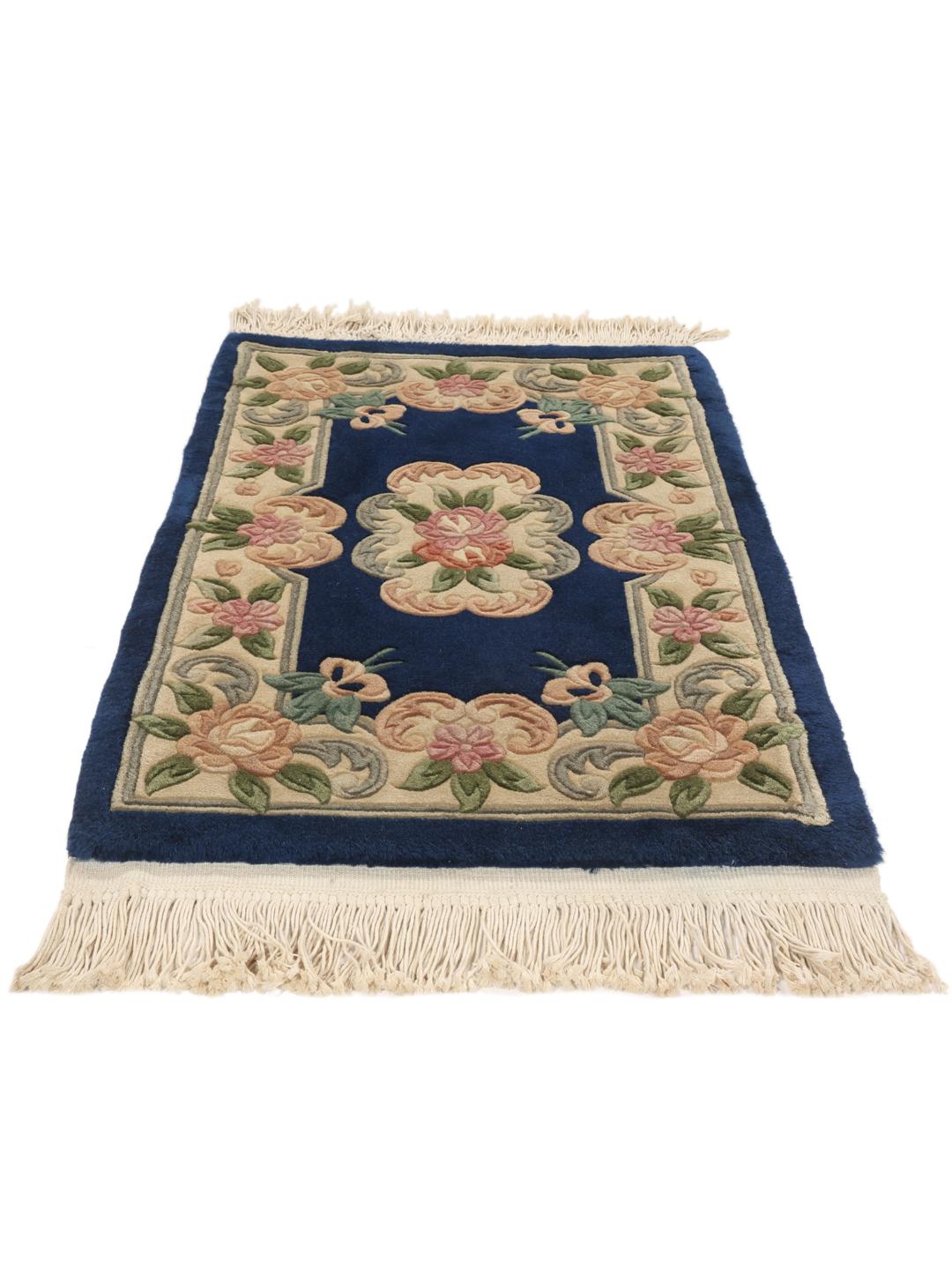
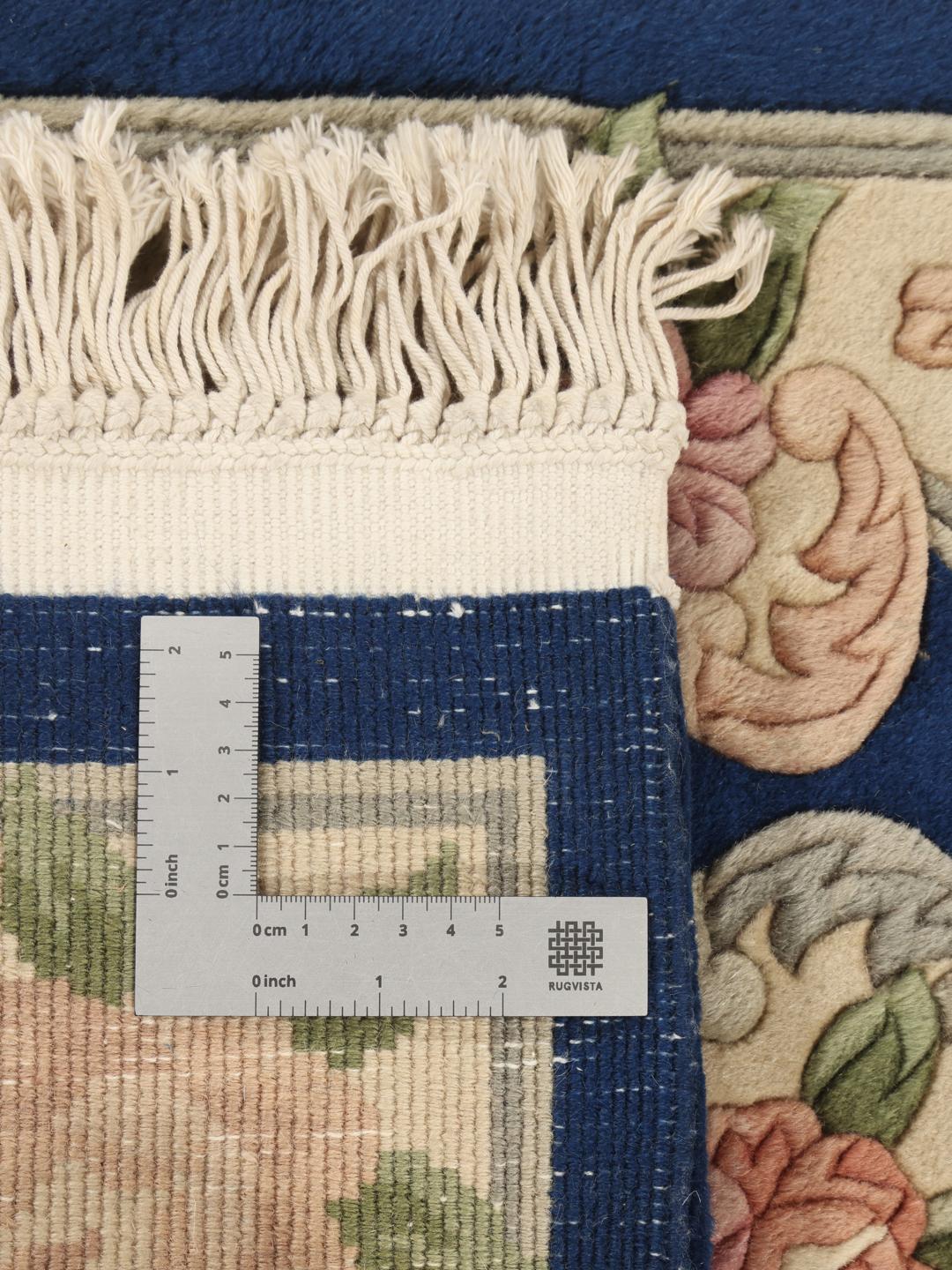
Chinese rugs have a long and storied history, evolving from ancient traditions that prioritised both utility and symbolic beauty. Historically, these pieces were often commissioned for imperial palaces or temples, serving as both floor coverings and artistic expressions of the culture's deep connection to nature and floral imagery.
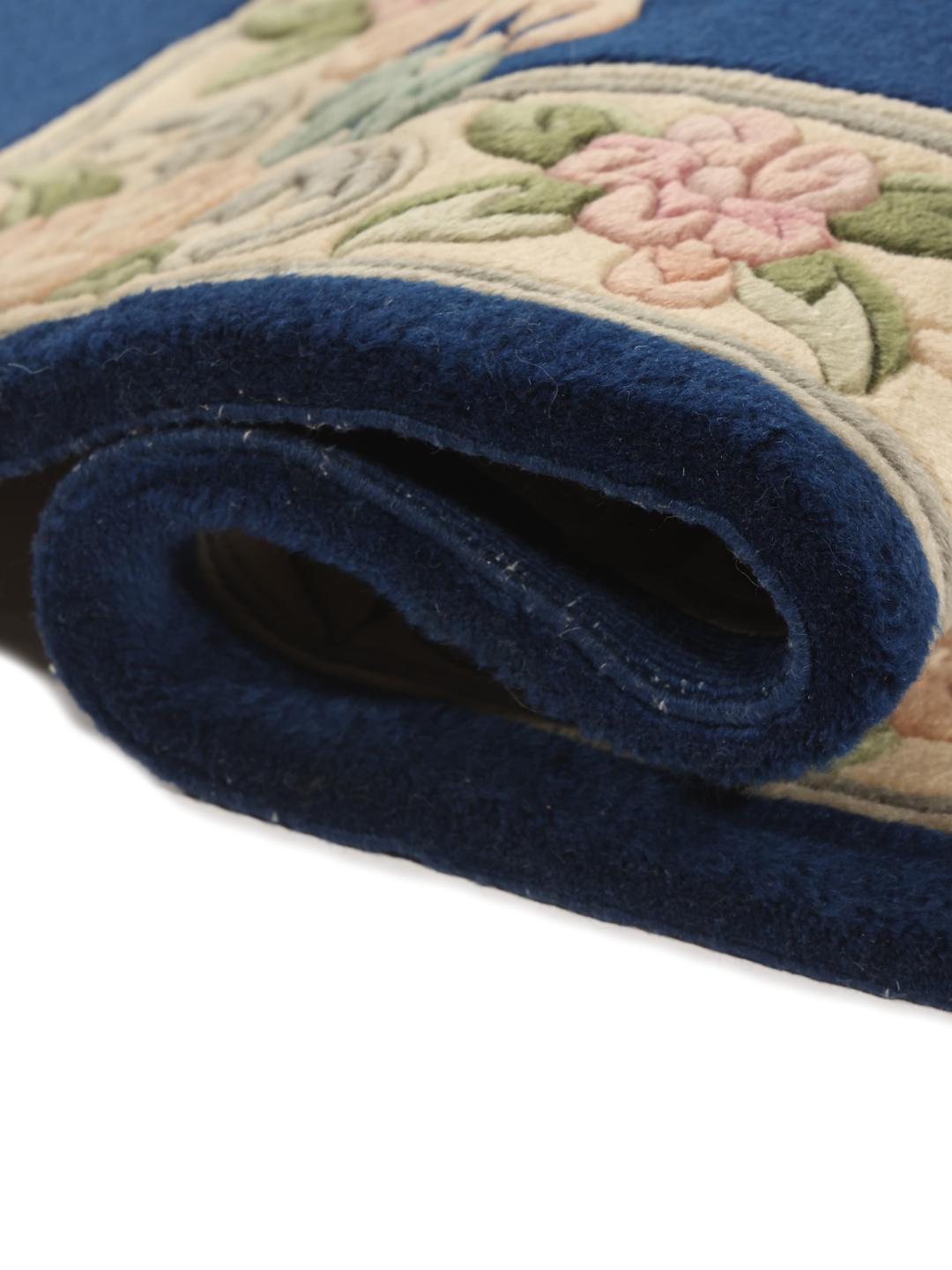
The '90 Line' designation refers to a specific traditional counting method used in Chinese rug making, indicating the density of the knots per linear foot. This technical standard is a hallmark of regional quality, ensuring that the finished product has a consistent, uniform texture that feels both substantial and refined to the touch.
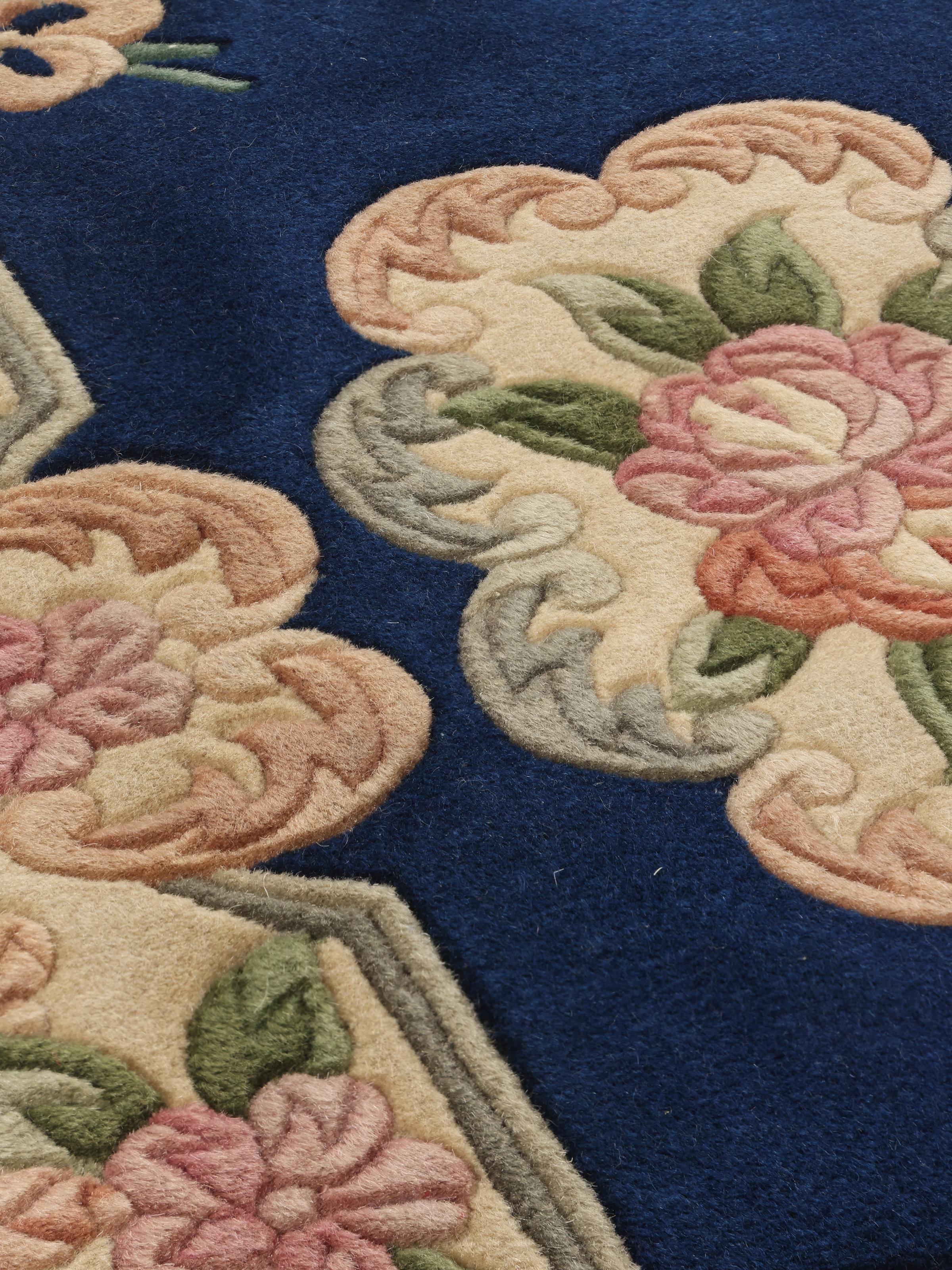
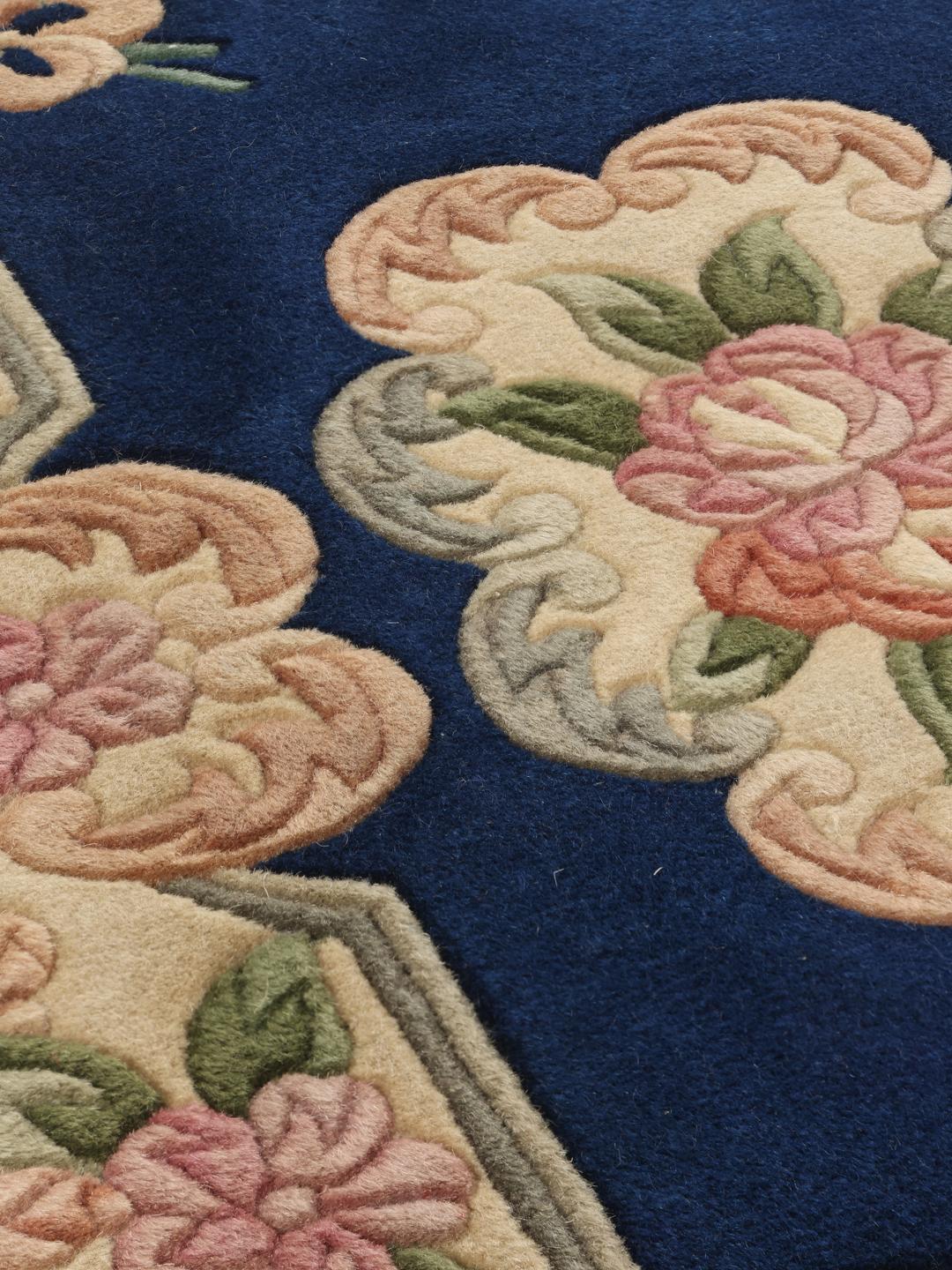
Floral motifs, particularly roses and peonies, are central to the visual language of Chinese rug design. These elements are often arranged in balanced, symmetrical compositions that draw from classical art traditions, emphasising the beauty of seasonal blooms and organic forms arranged in a formal, elegant manner.
Collectors value these rugs for their distinct combination of technical precision and cultural heritage. Owning a piece from this tradition is an opportunity to connect with a craft that has been refined over centuries, offering not just a decorative item, but a legacy of skill and aesthetic balance that enhances any home.