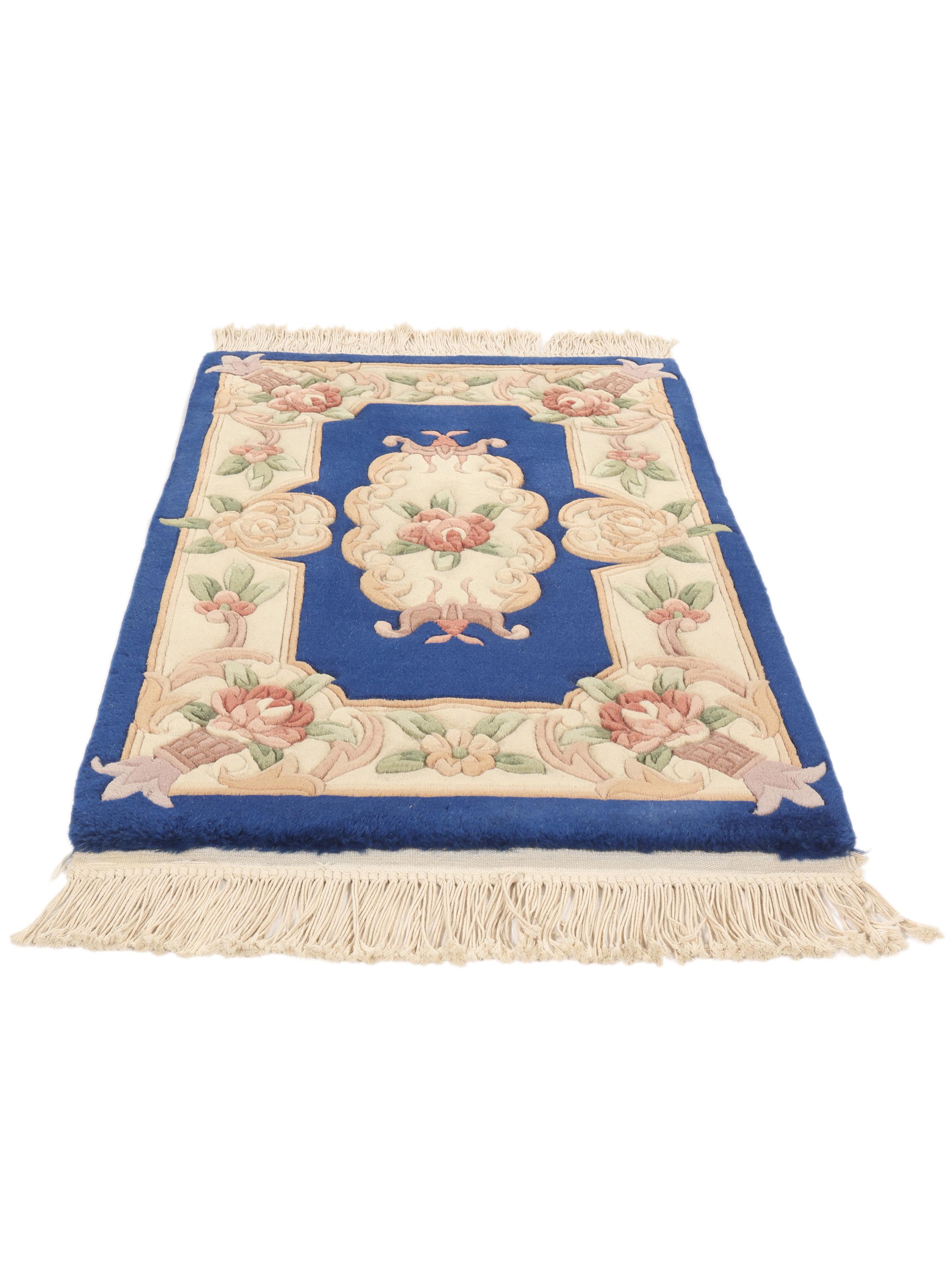
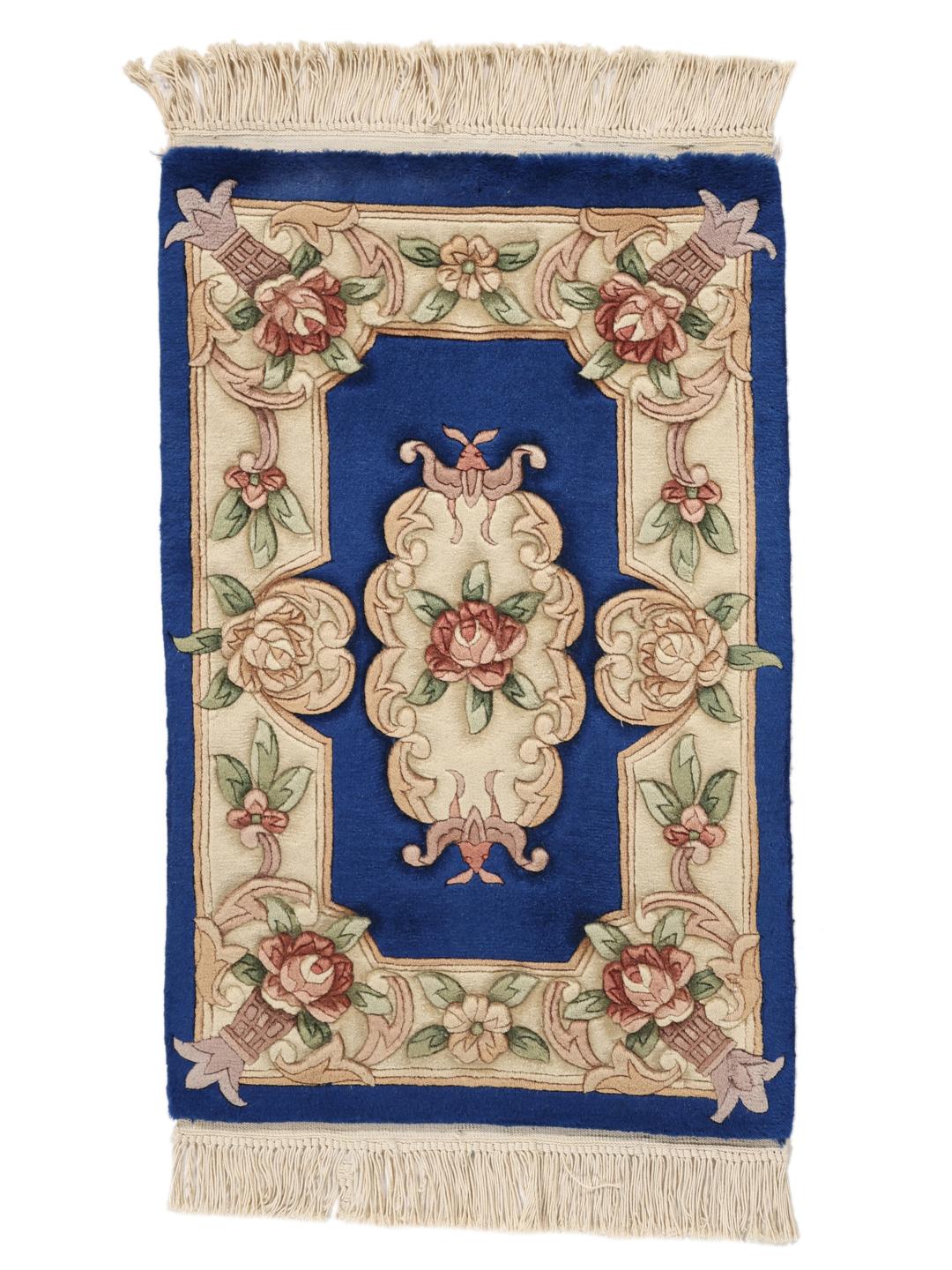
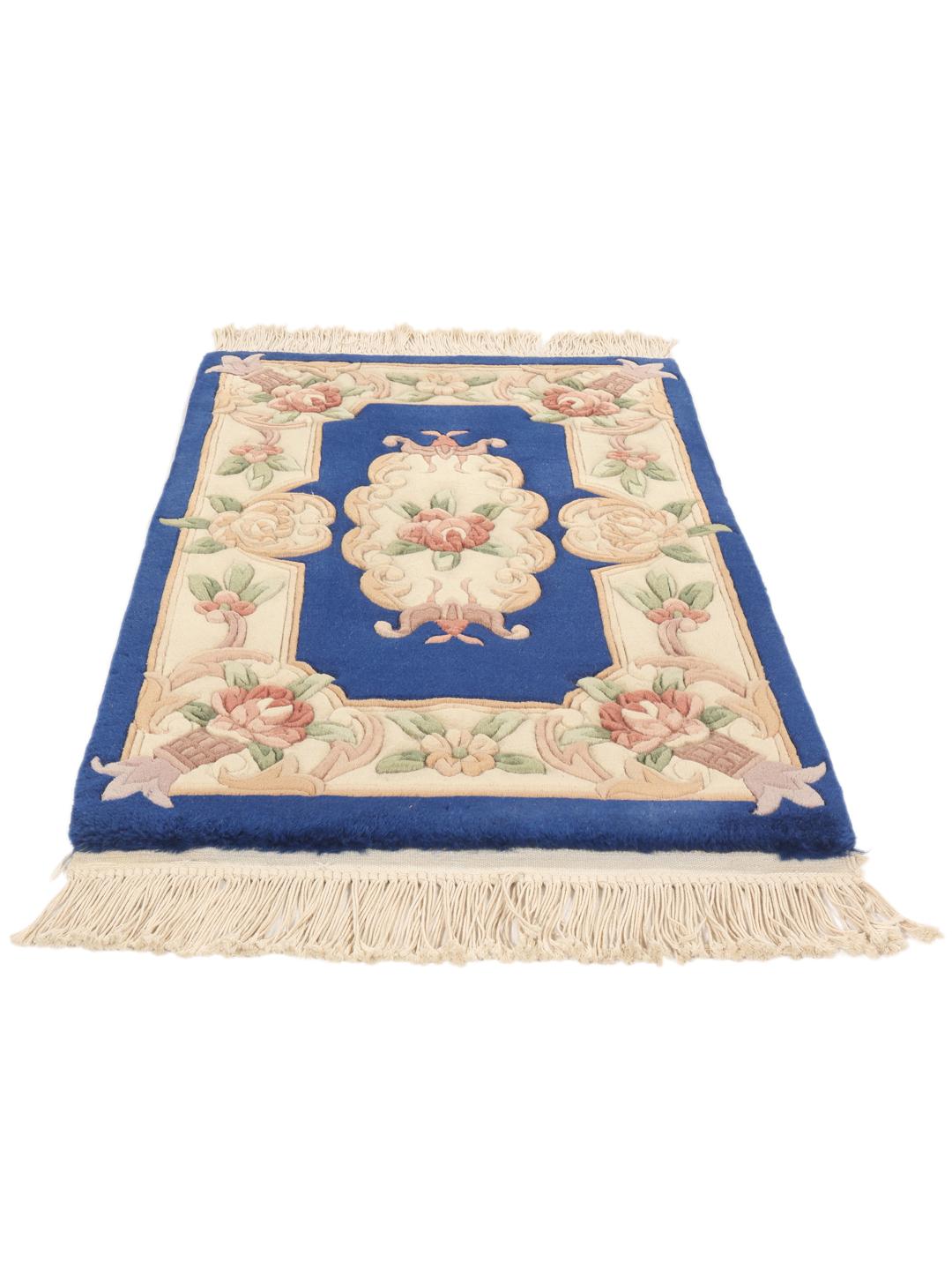
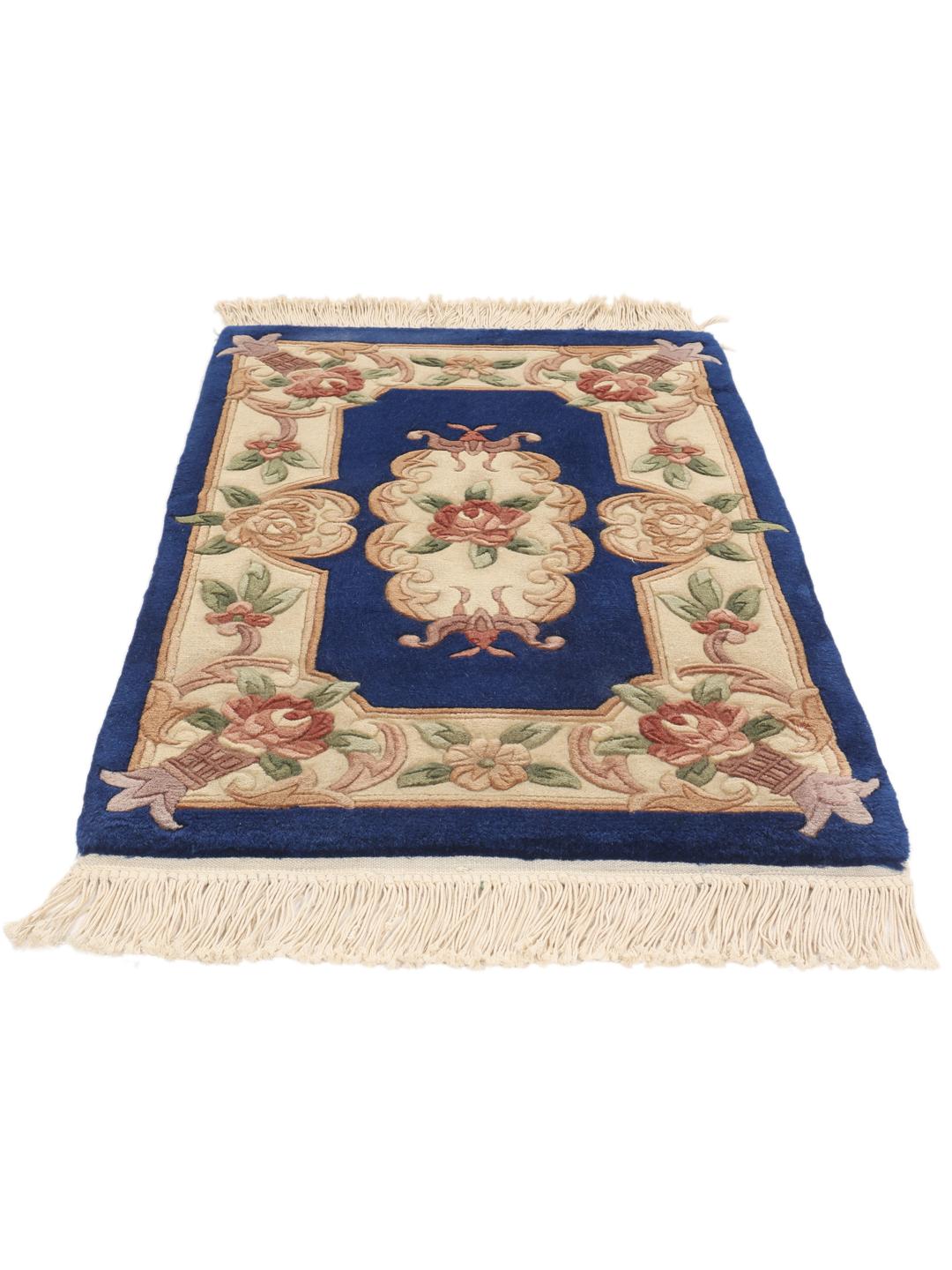
Chinese rug-making is an ancient tradition that has evolved significantly over centuries, blending local artistic sensibilities with influences from the broader Middle Eastern and Central Asian weaving cultures. Historically, these rugs were highly prized for their symbolic motifs, often incorporating elements from nature and mythology, and they have long been considered symbols of status and refinement.
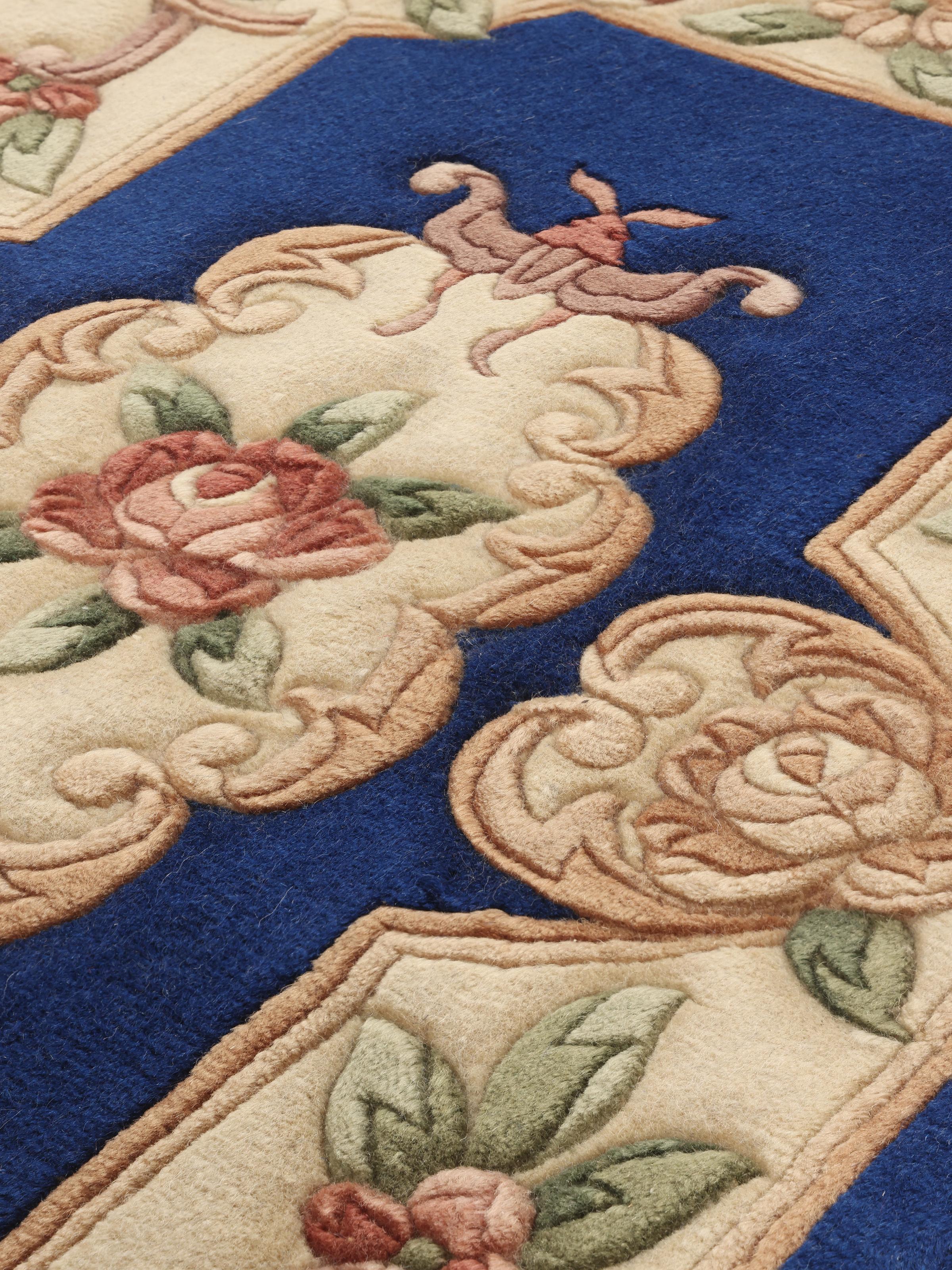
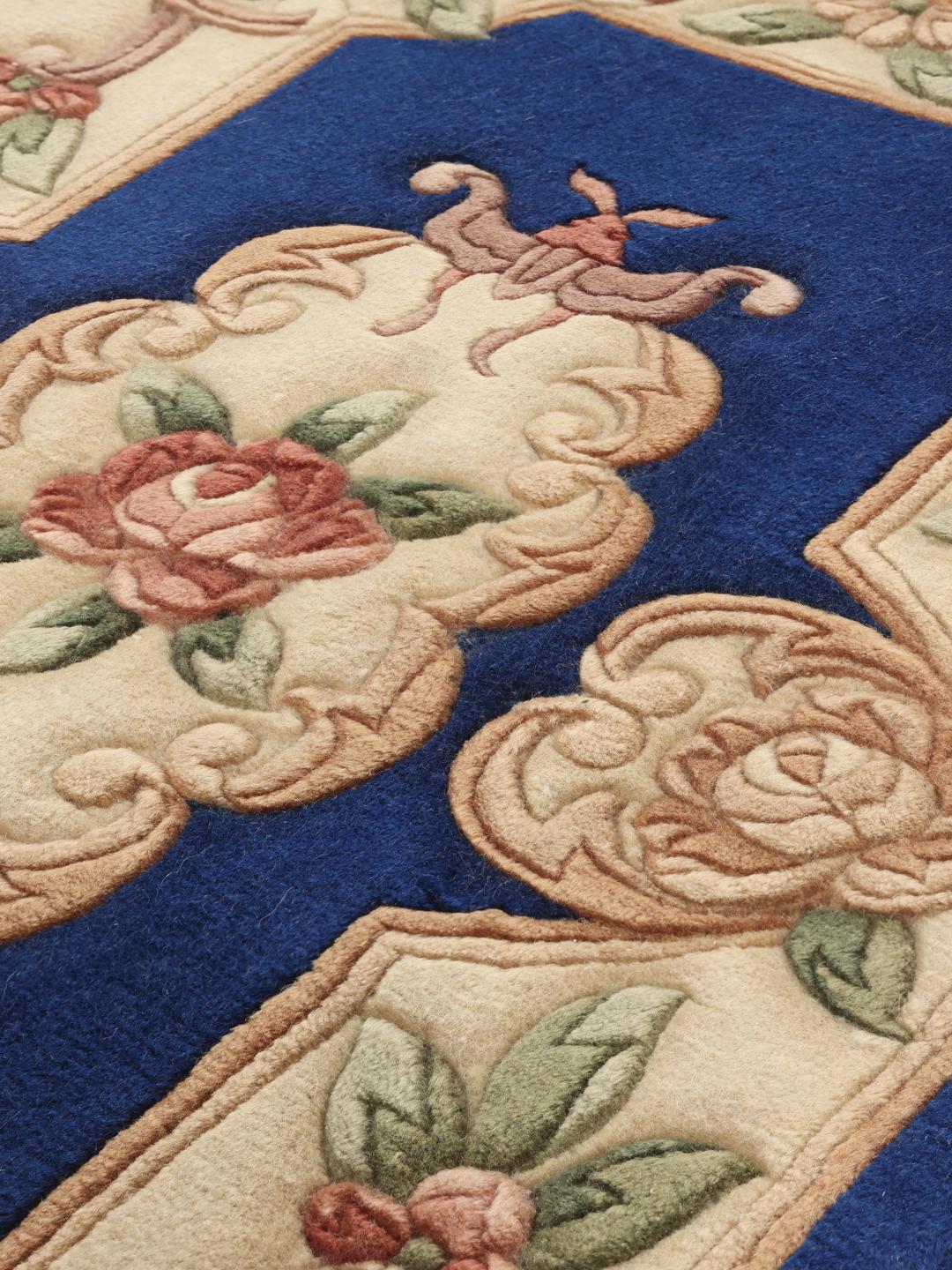
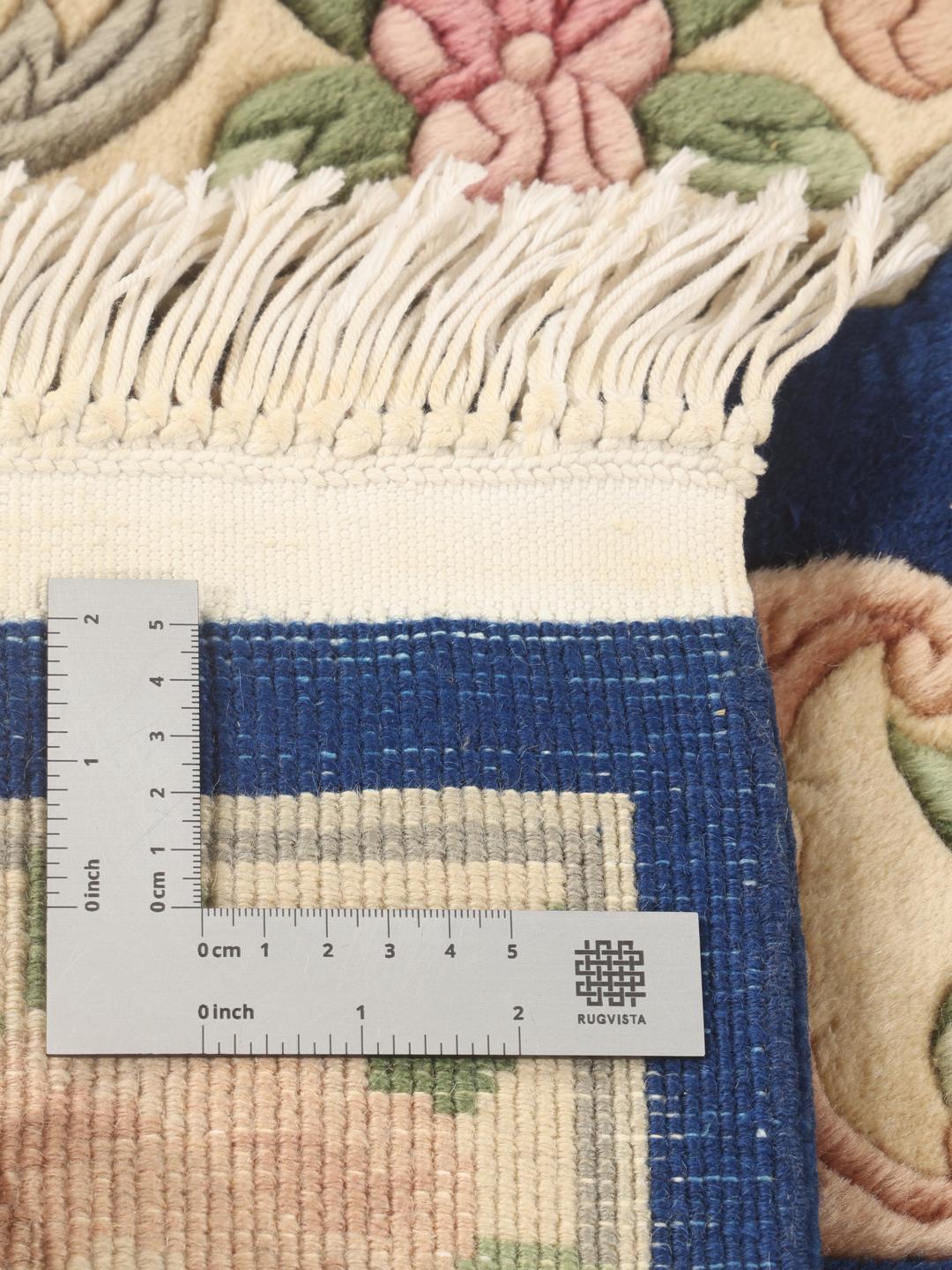
The term 90 line refers to a traditional system of measuring knot density in Chinese rug production, which relates to the number of knots along a specific width. This method is a hallmark of regional craftsmanship, ensuring that the pile is not only dense but also capable of holding intricate, curvilinear designs like the floral patterns seen here with great clarity and definition.
The floral imagery found in this piece draws on a deep history of Chinese art, where flowers are often used to represent seasonal change, prosperity, and harmony. The use of a central medallion surrounded by ornate borders is a classic arrangement that reflects a structured approach to design, intended to create a balanced and peaceful aesthetic in the home.
Collectors value Chinese rugs for their unique combination of thick, durable pile and sophisticated, often understated, artistic vision. Owning a piece from this tradition connects you to a long lineage of artisans who have perfected the balance between functional utility and decorative beauty, making each rug a cherished heirloom.