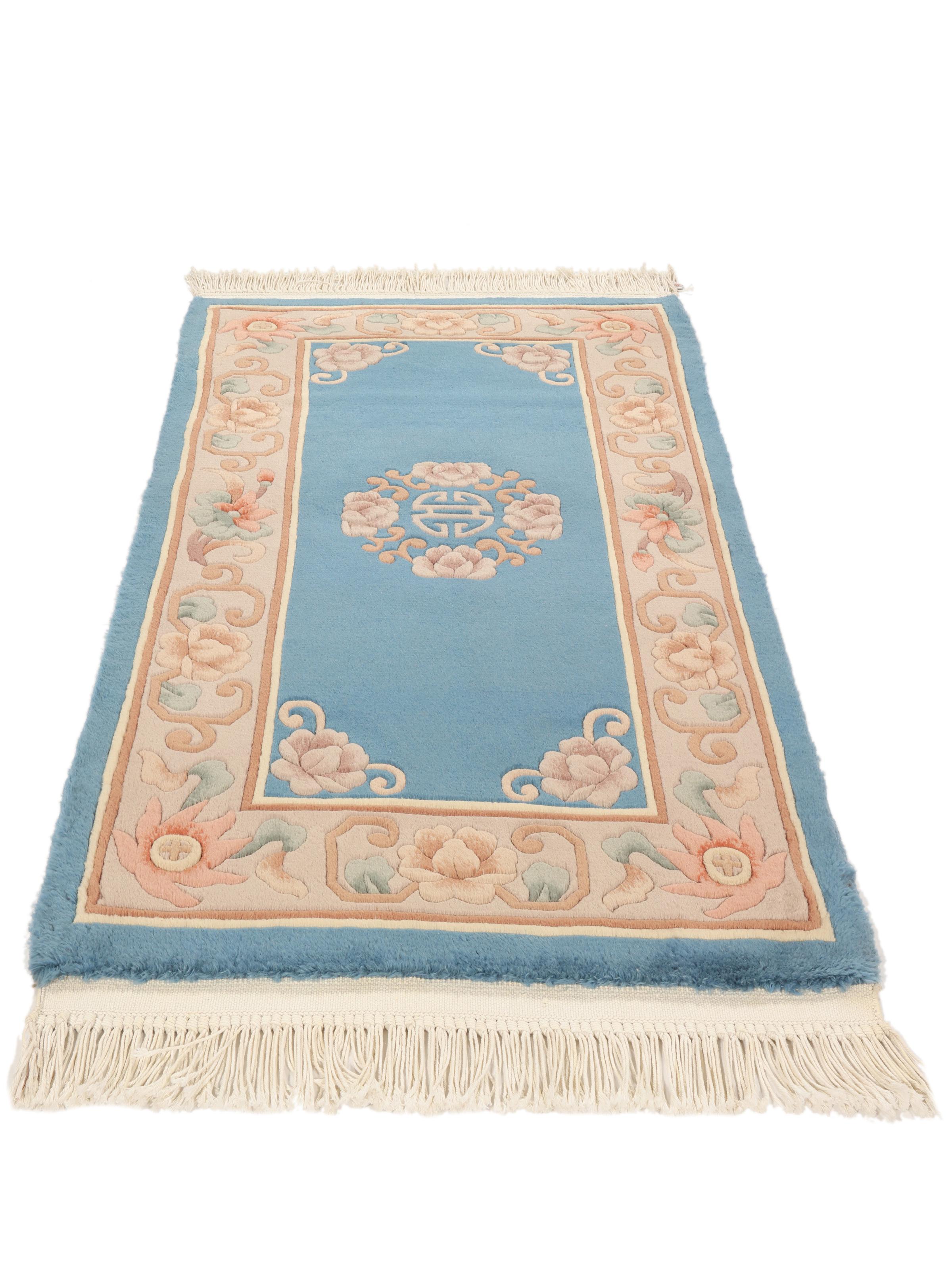
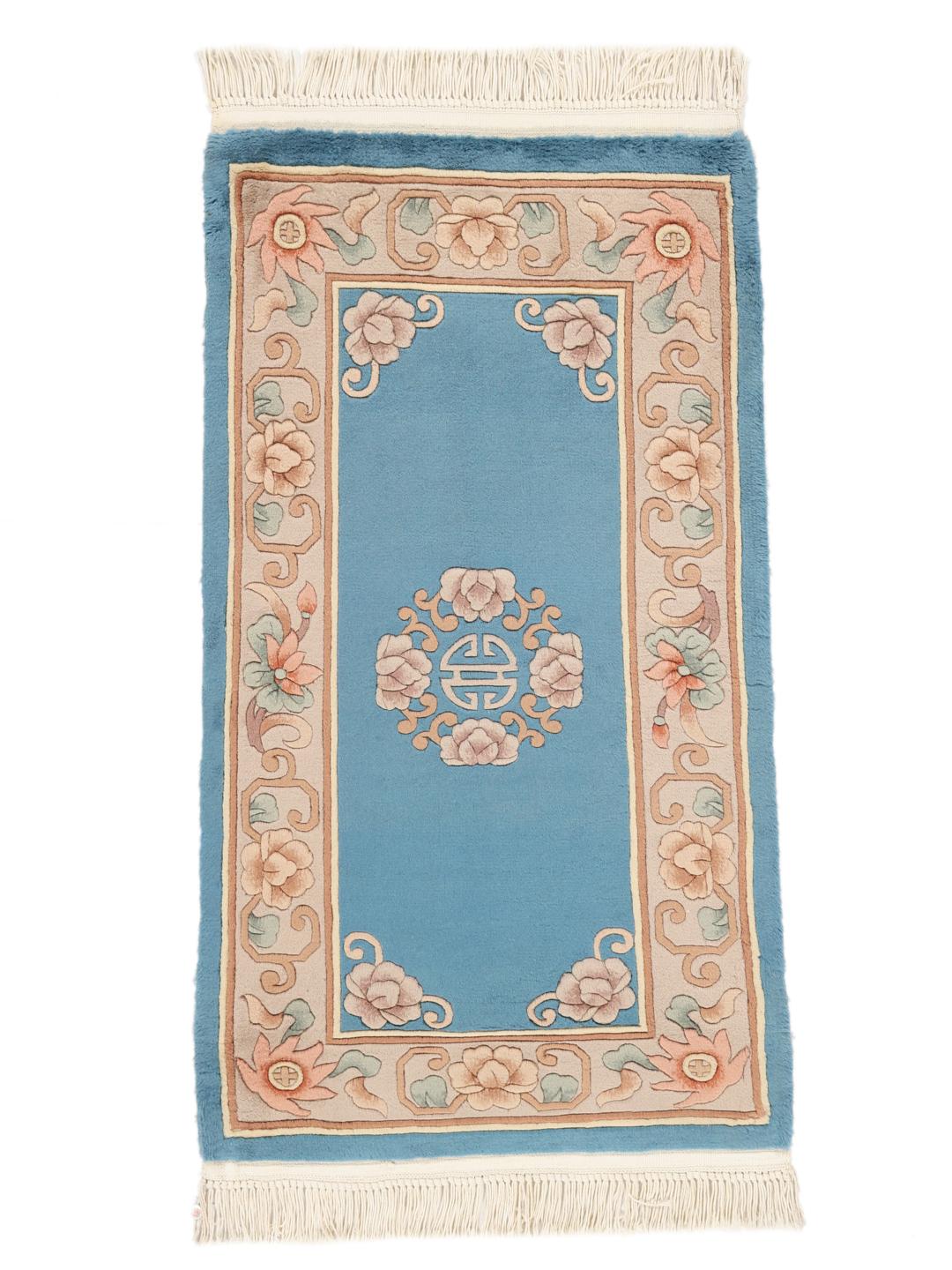
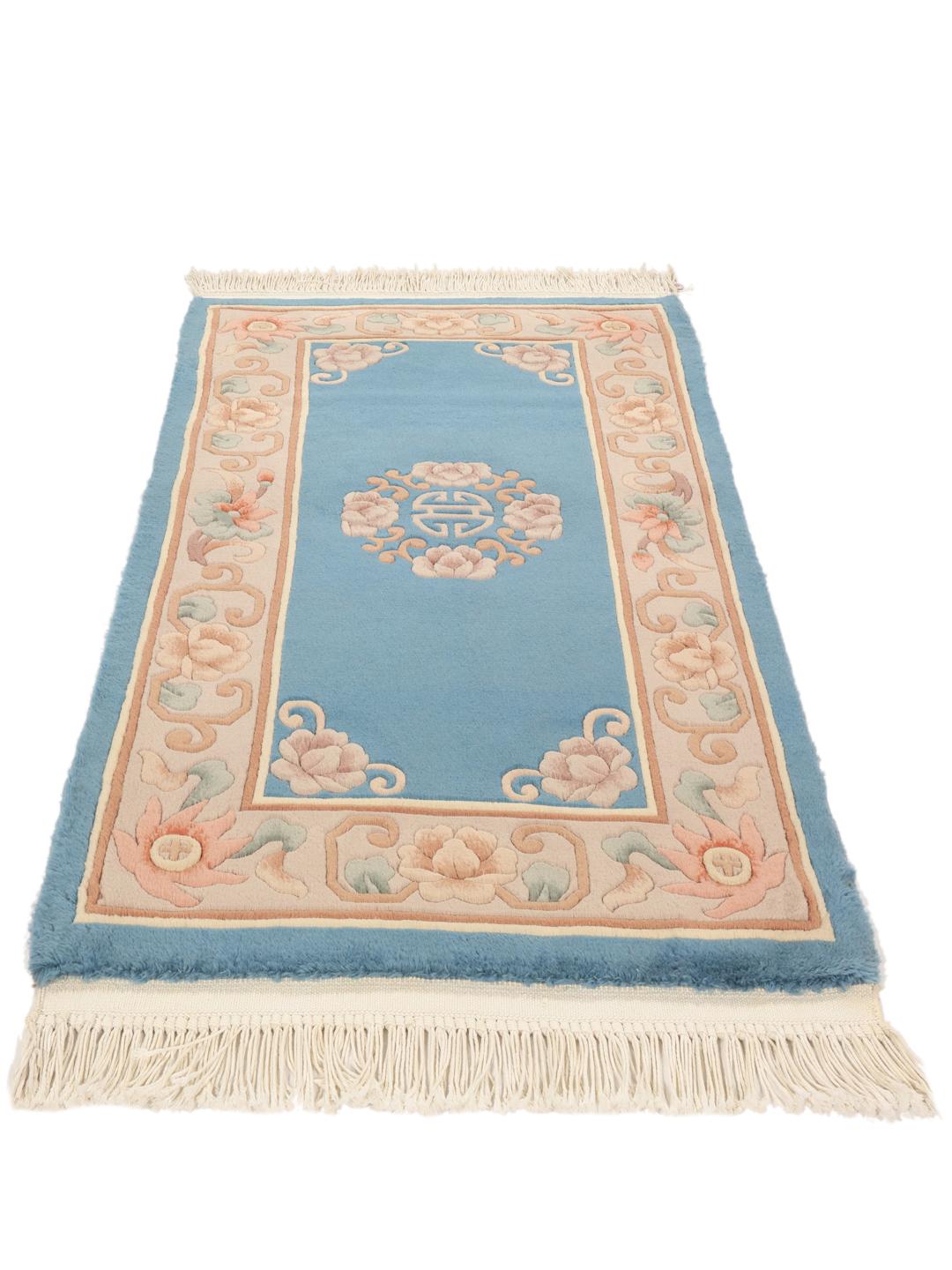
Chinese rug weaving is a tradition that spans centuries, deeply rooted in the artistic and philosophical history of the region. Traditionally, these rugs served both functional and symbolic purposes, often incorporating motifs derived from nature, such as peonies and lotus flowers, which represent prosperity and purity in Chinese culture.
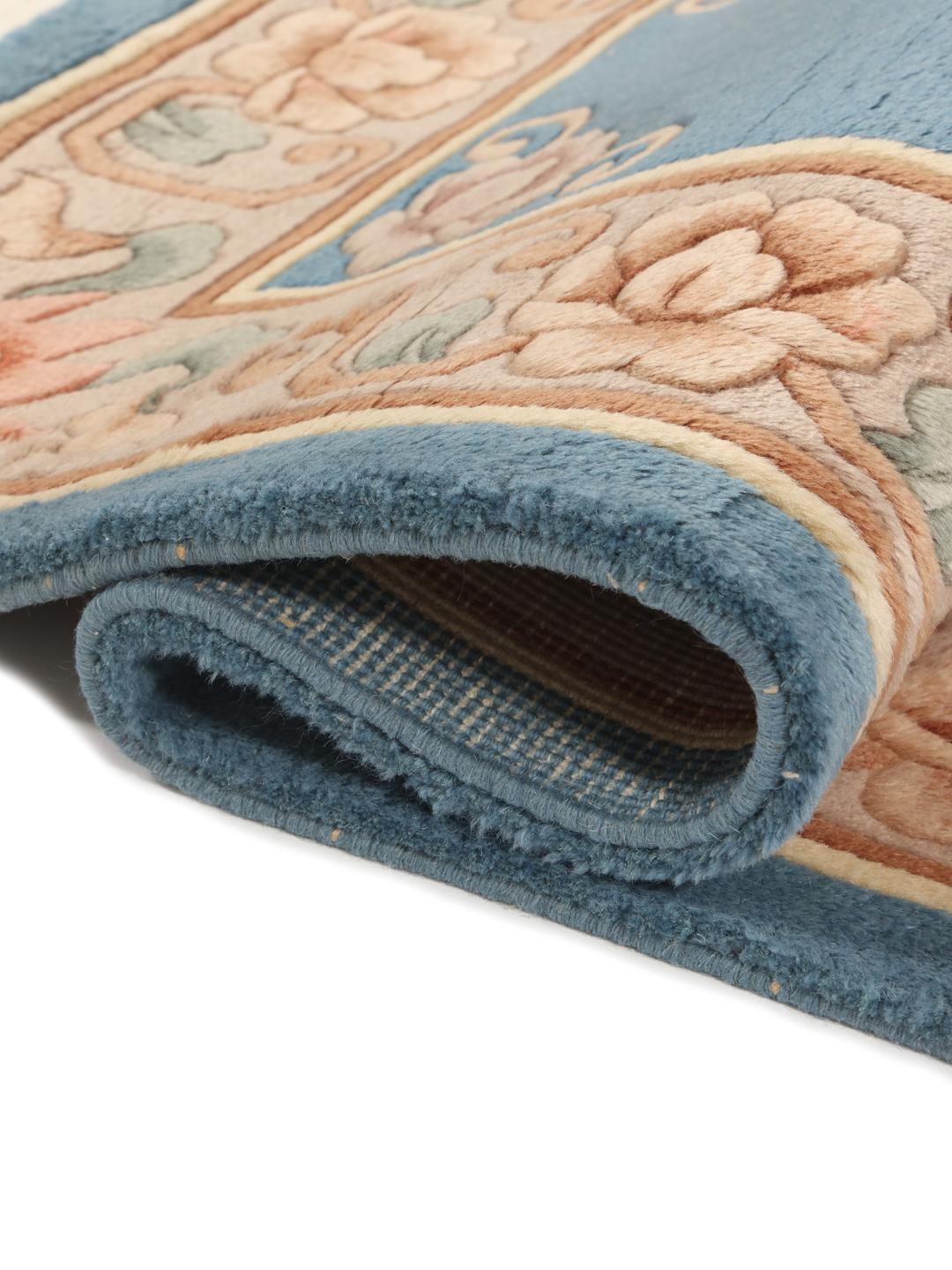
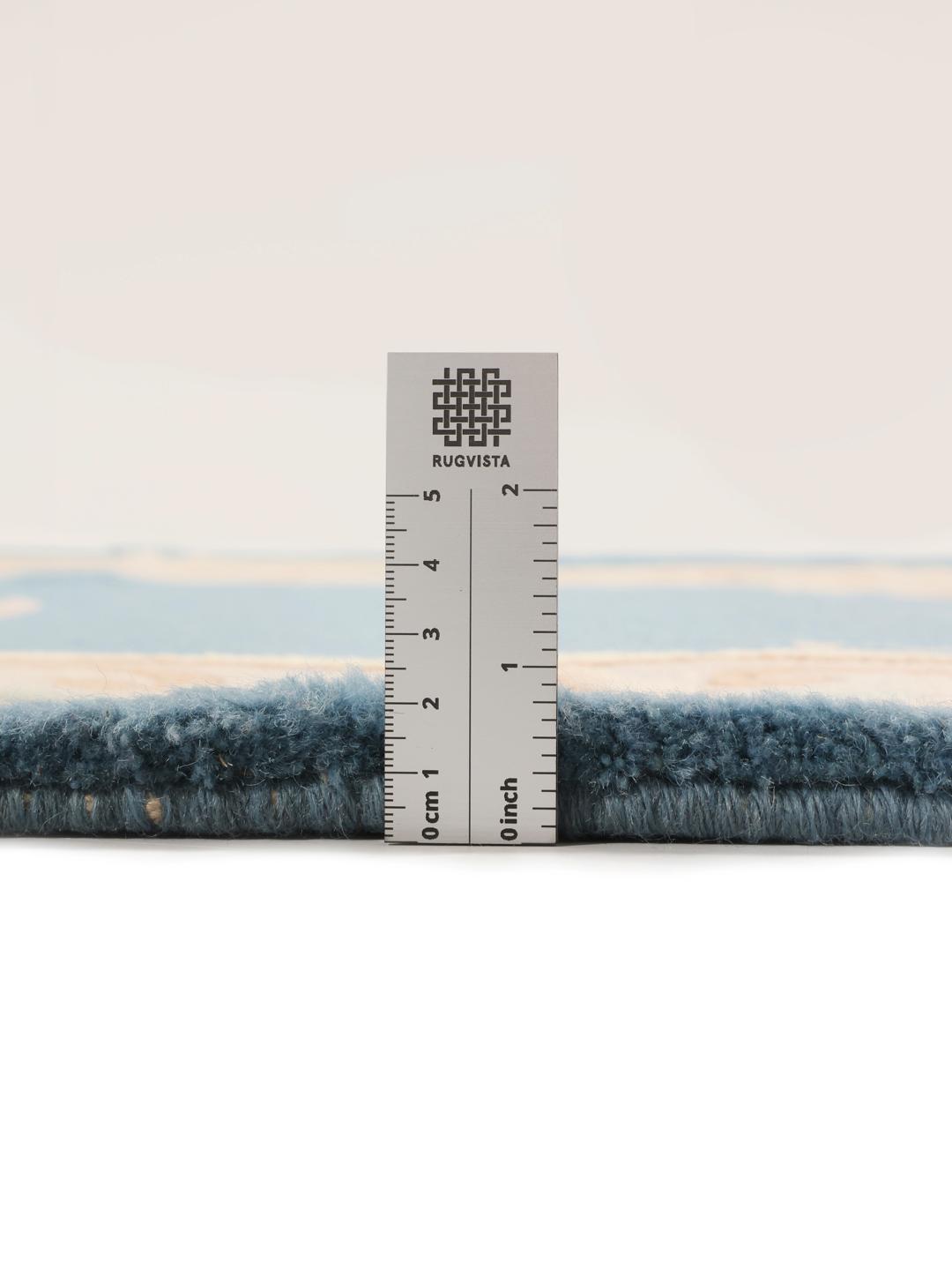
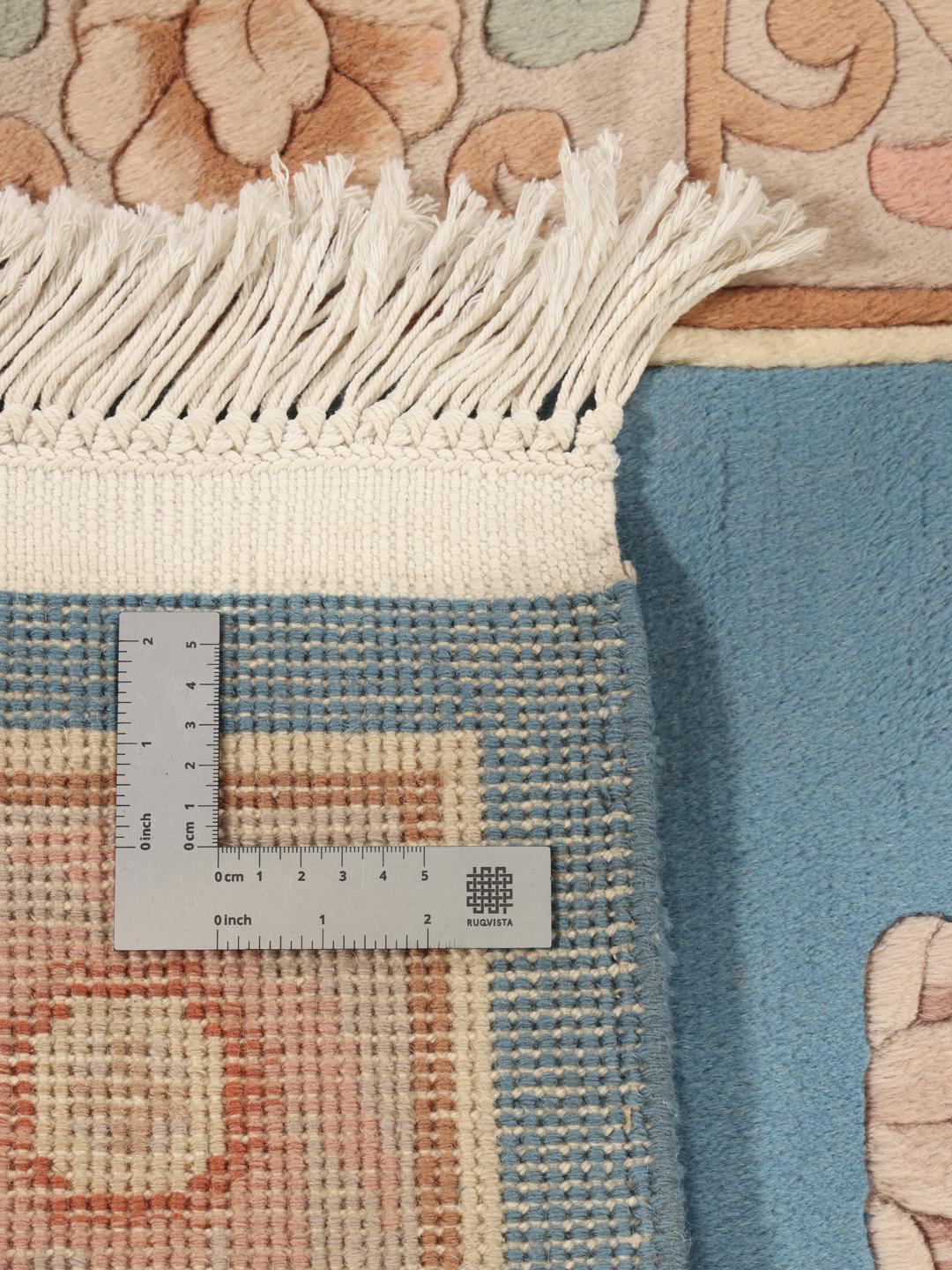
The term '90 line' refers to a specific technical measurement of the rug's density, indicating the number of knots along a set width. This standardised approach to weaving allows for the creation of intricate, well-defined patterns that remain crisp and clear over time. It is a hallmark of Chinese craft that balances technical precision with artistic expression.
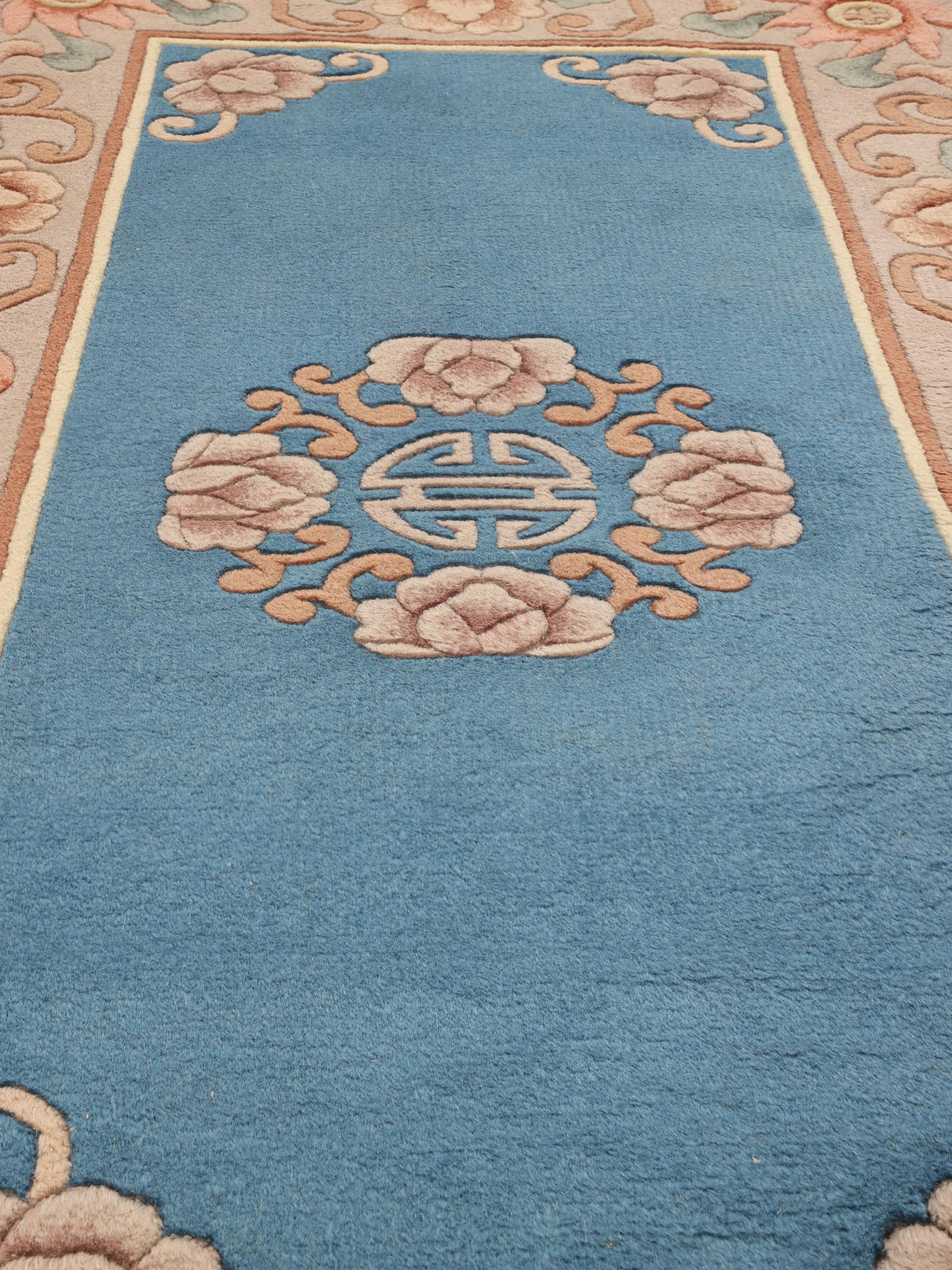
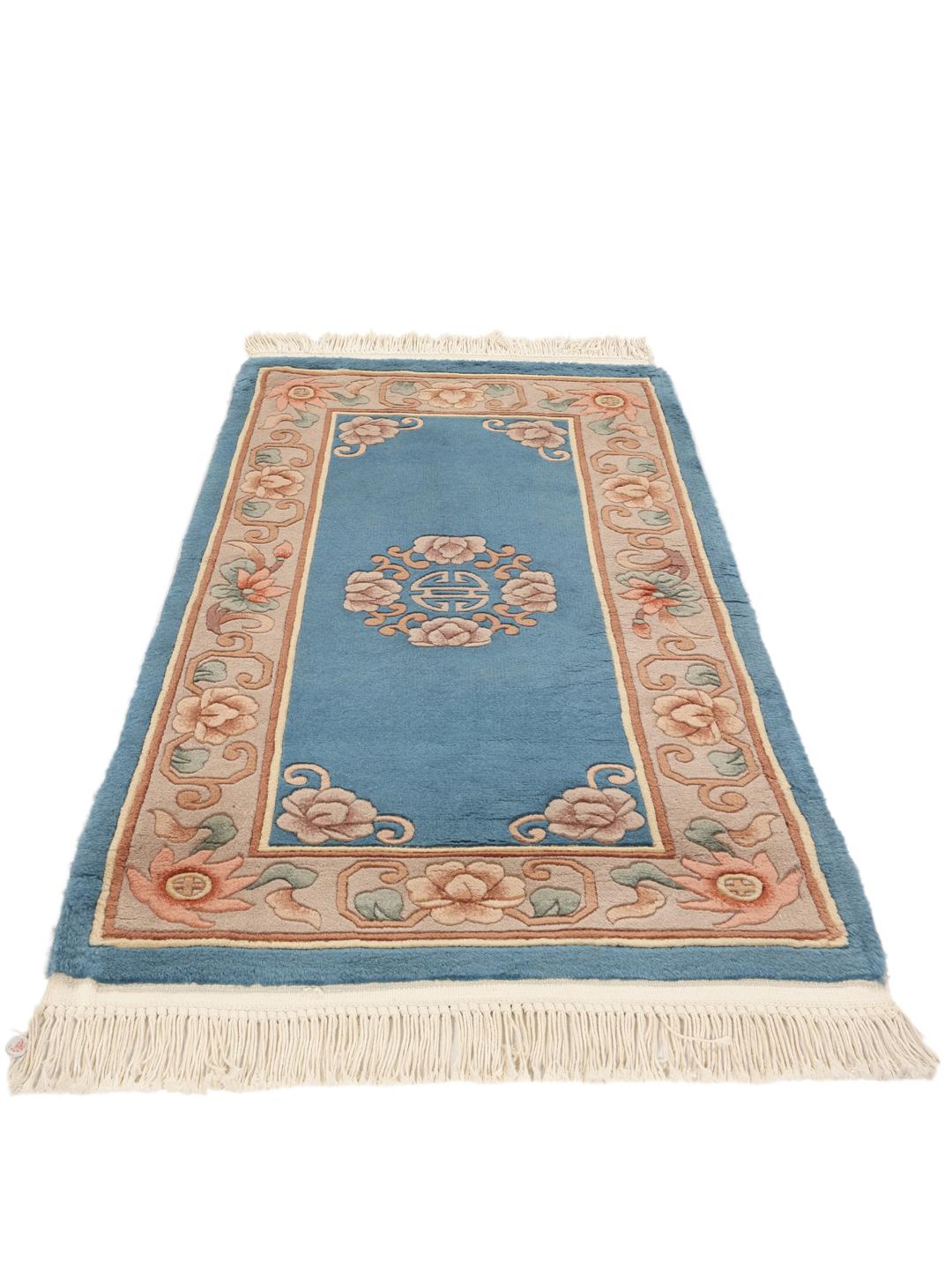
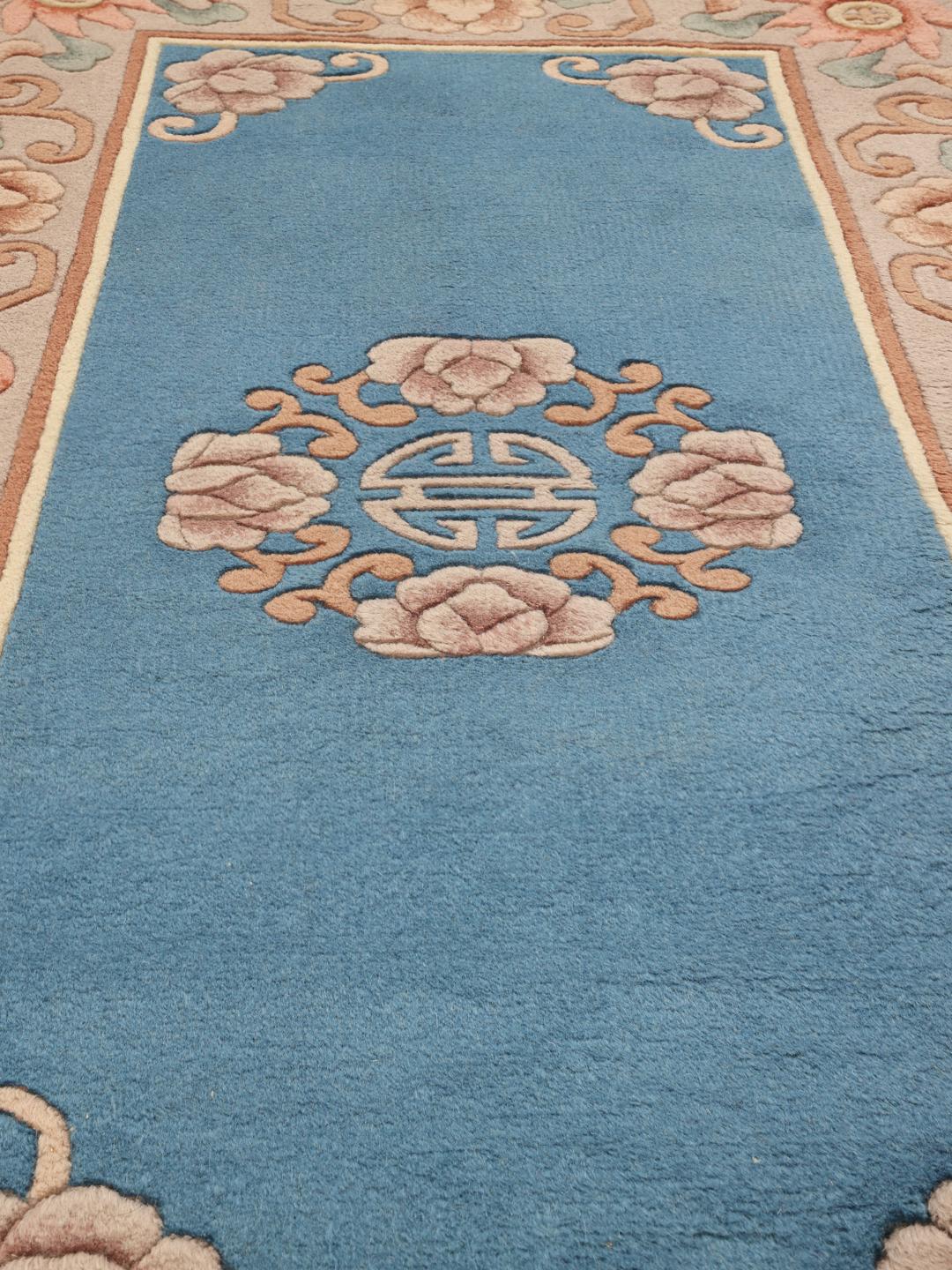
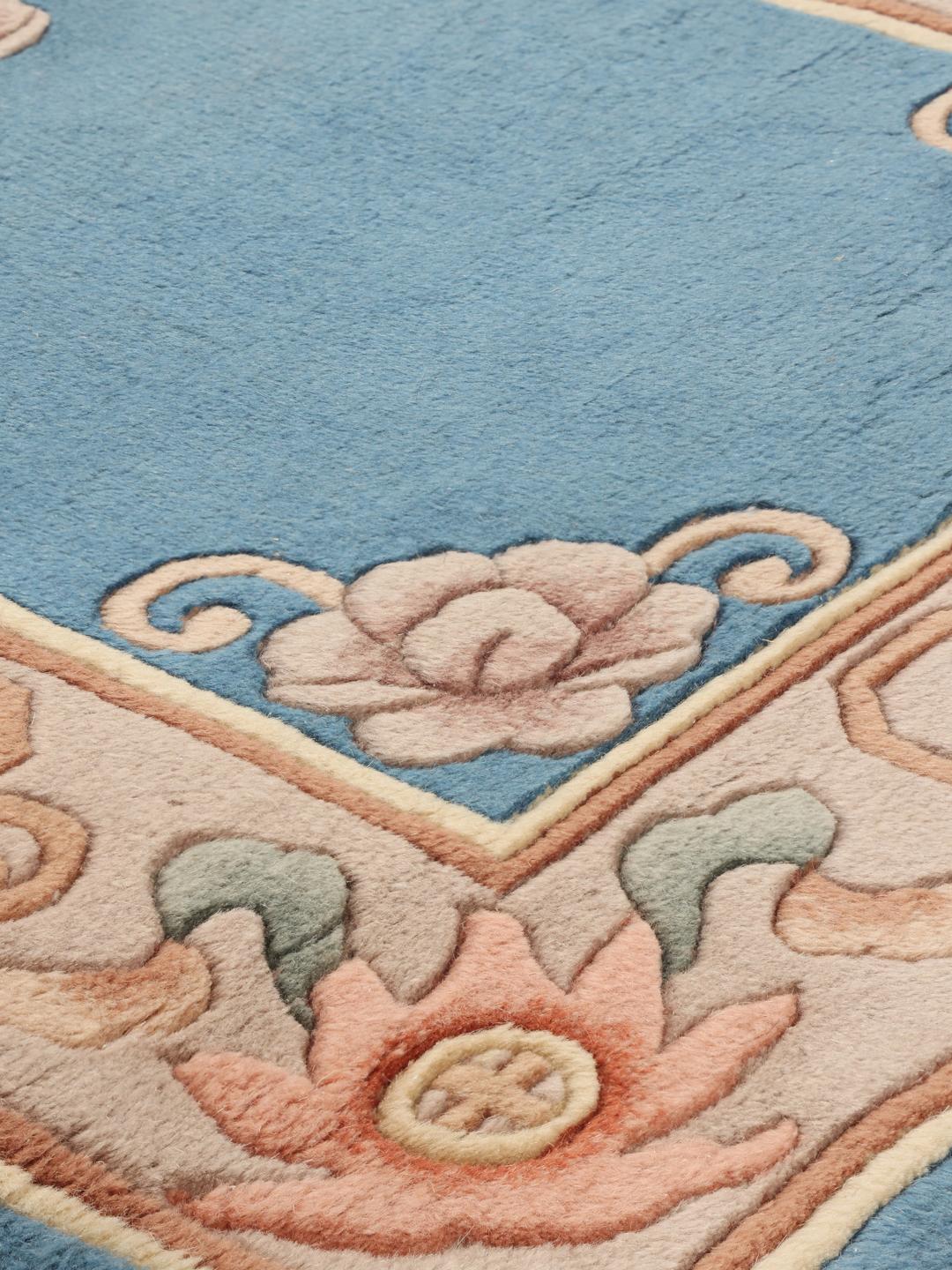
Design elements in this style often feature a clean, open field framed by ornate borders. The use of a central medallion, as seen here, is a classic motif meant to create a sense of harmony and focus. These rugs are known for their soft, sculpted appearance, where the pile is often carved to emphasise the details of the floral patterns, adding a three-dimensional quality to the design.
Collectors value these pieces for their blend of historical design language and the undeniable skill required to produce them. Owning a rug from this tradition is a way to connect with a legacy of artistry that has been refined over generations. It brings a sense of cultural weight and enduring beauty into the modern home, standing as a testament to the weaver's dedication.