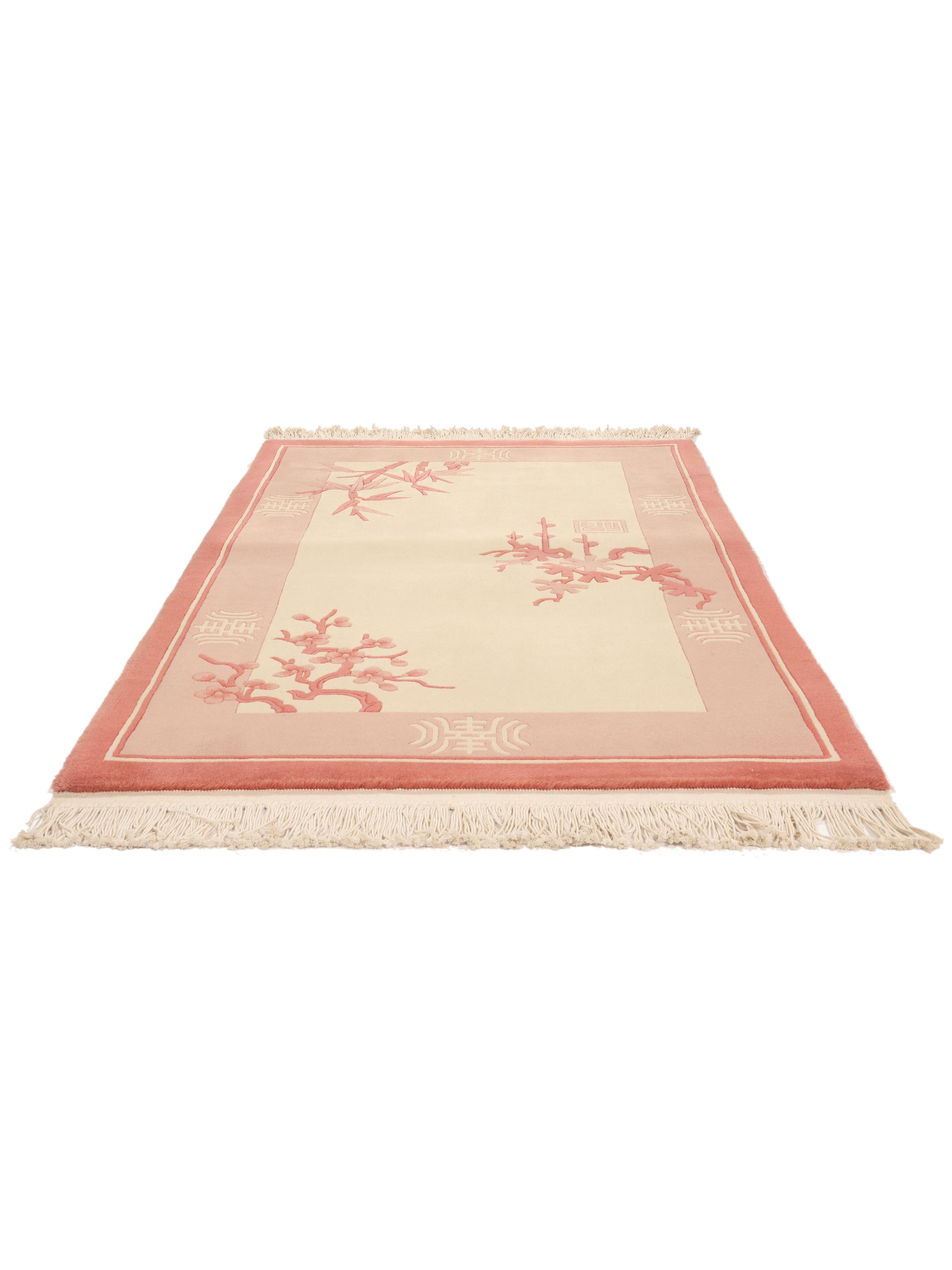
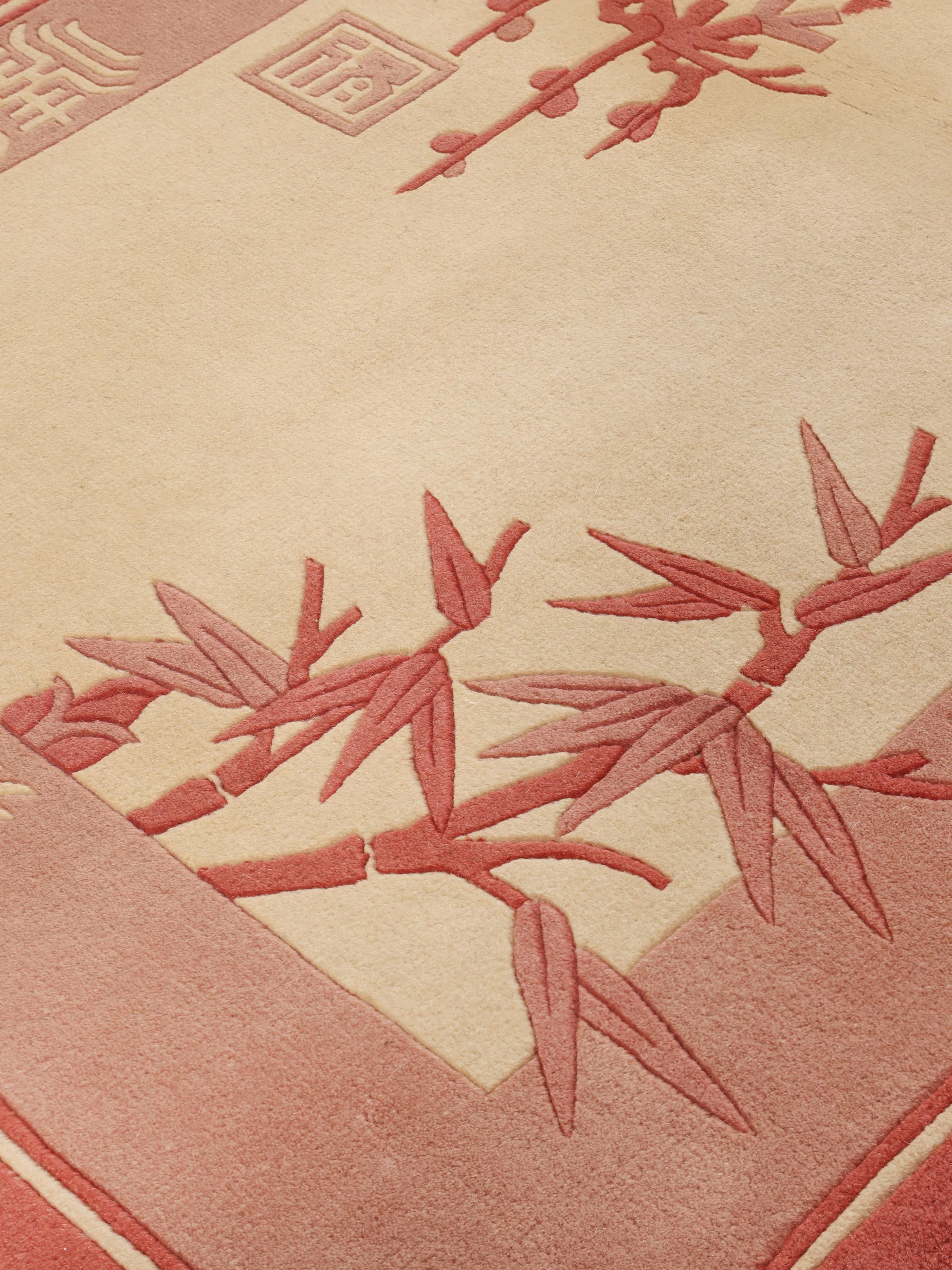
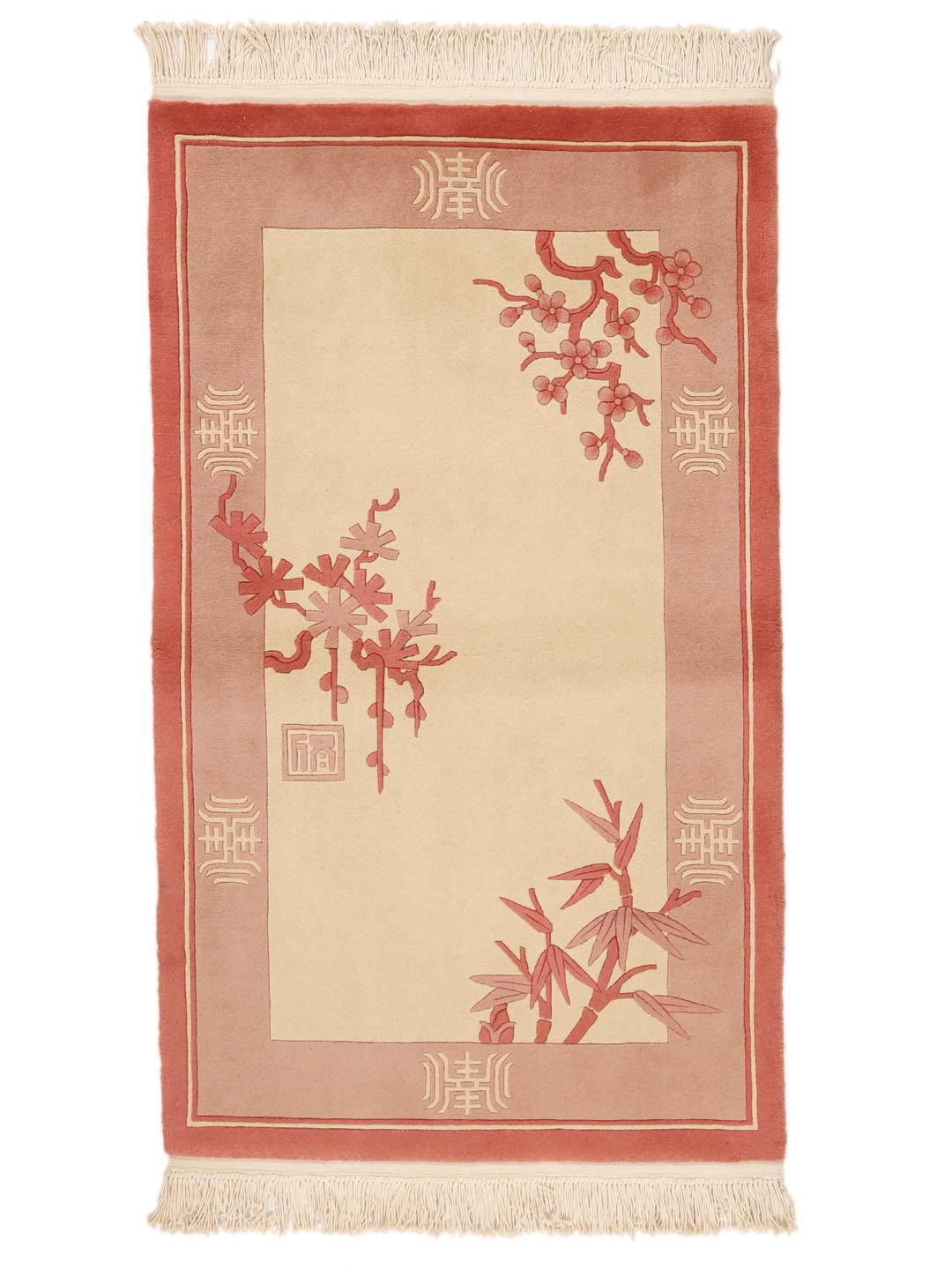
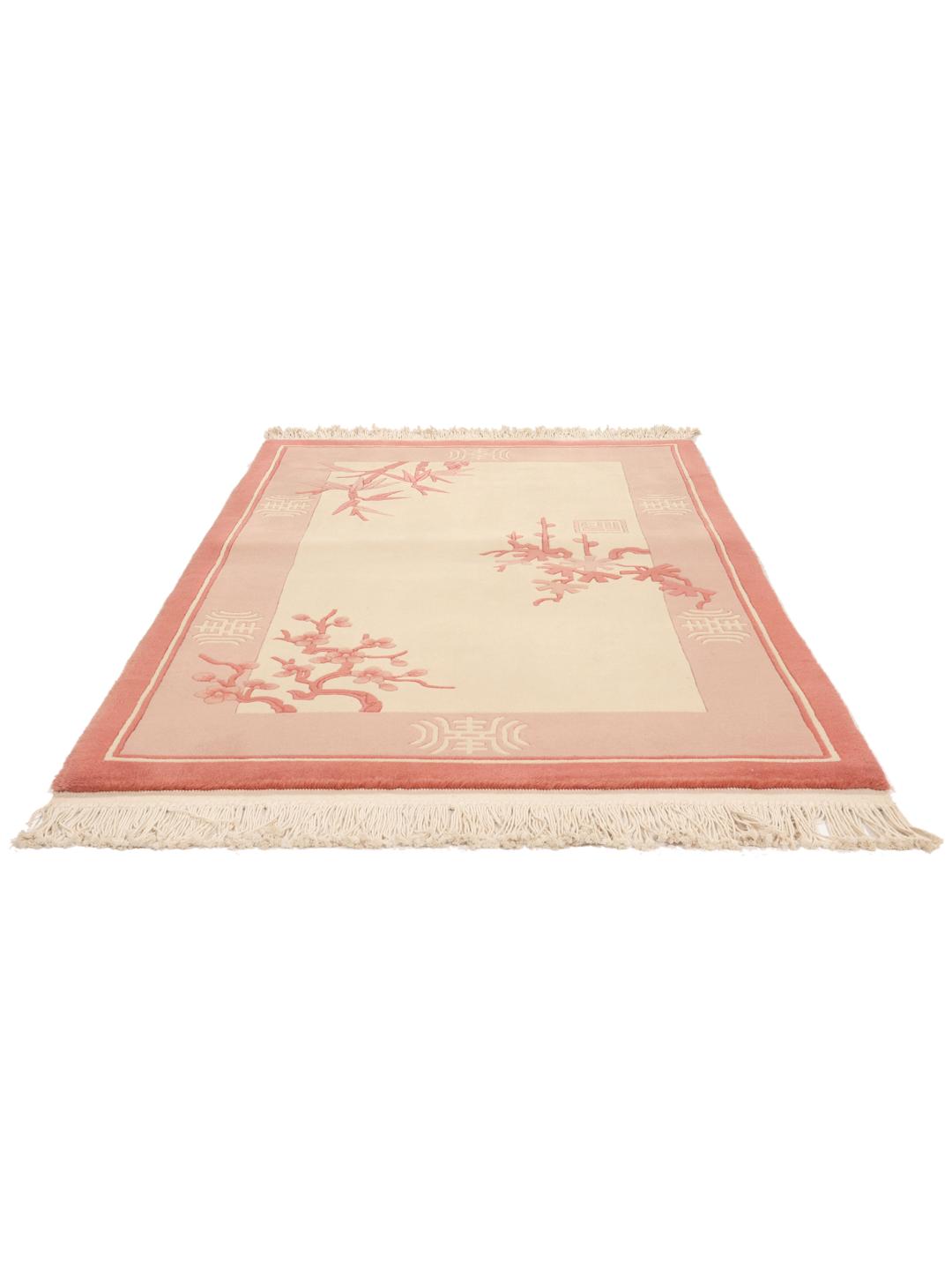
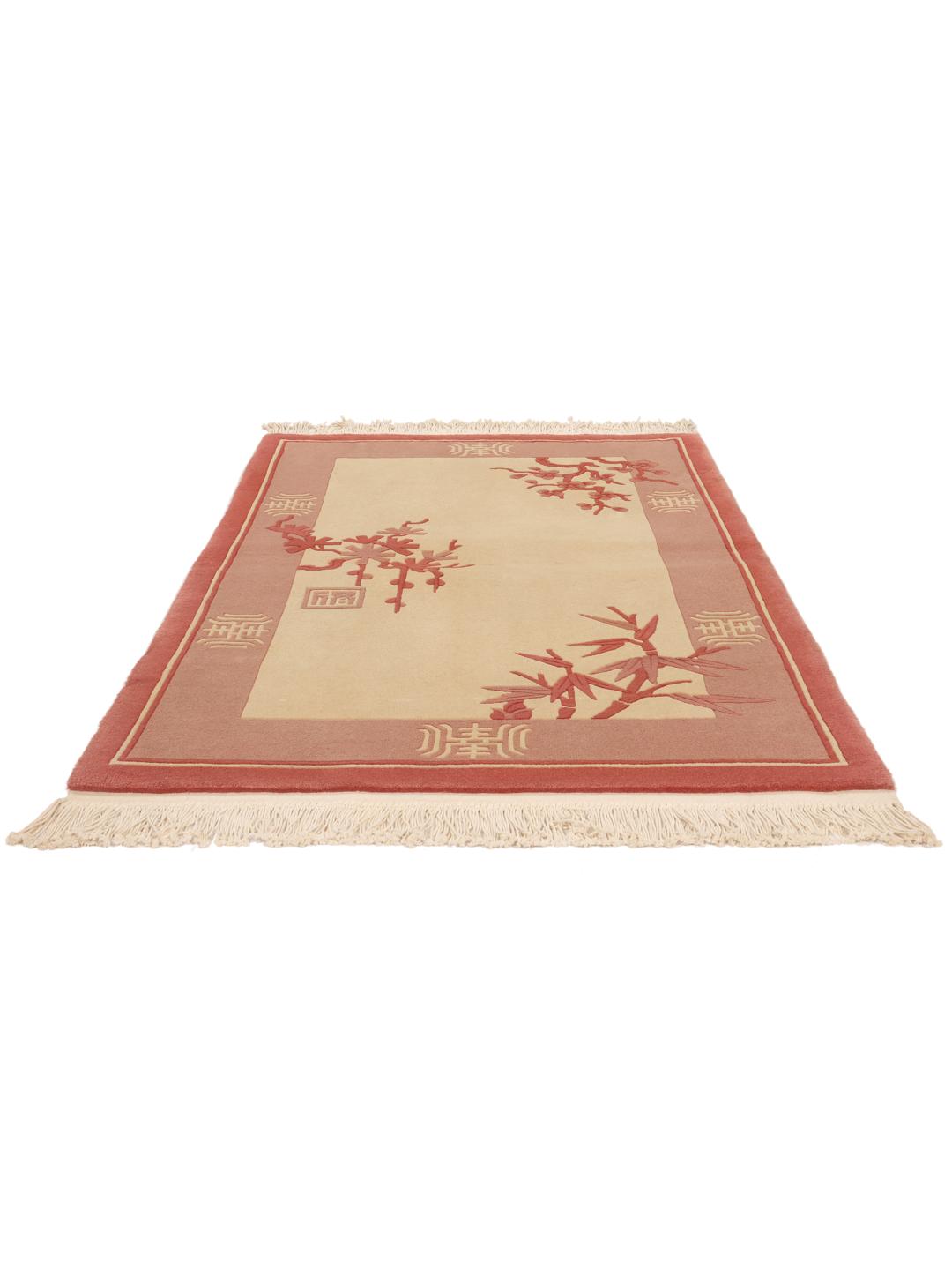
Chinese rug weaving is a tradition steeped in centuries of artistic development, often deeply connected to the country's rich history of painting and calligraphy. Unlike the more complex, all-over patterns found in some other regions, Chinese rugs often favour open, spacious fields that highlight individual motifs, allowing the beauty of the negative space to shine through.
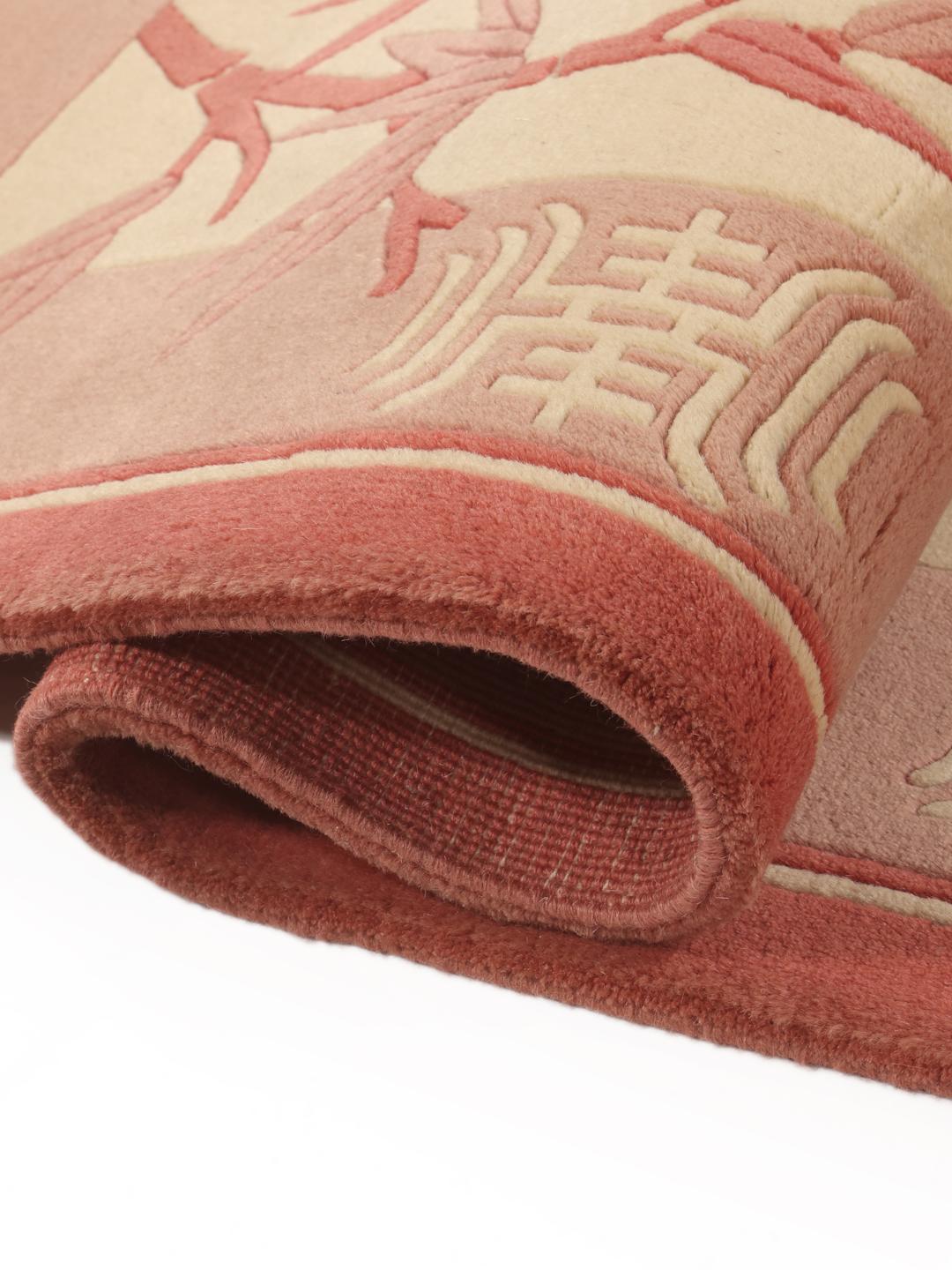
The term '90 line' refers to a traditional system of measuring knot density in Chinese rug production, specifically indicating the number of knots per linear foot. This technical standard serves as a guide for the fineness of the weave, ensuring that the finished product has a consistent, uniform texture that allows for crisp, clear design lines and a smooth, elegant finish.
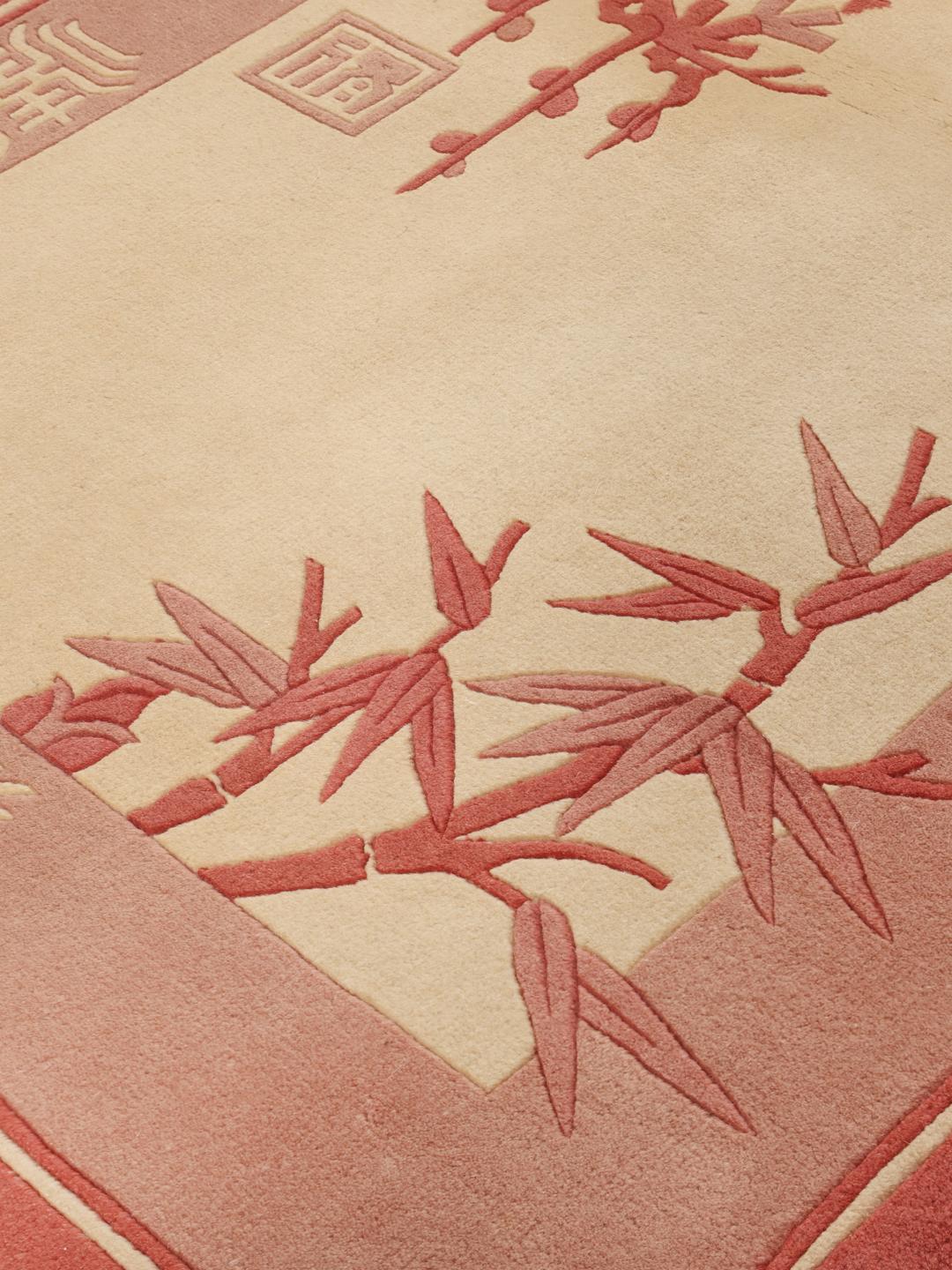
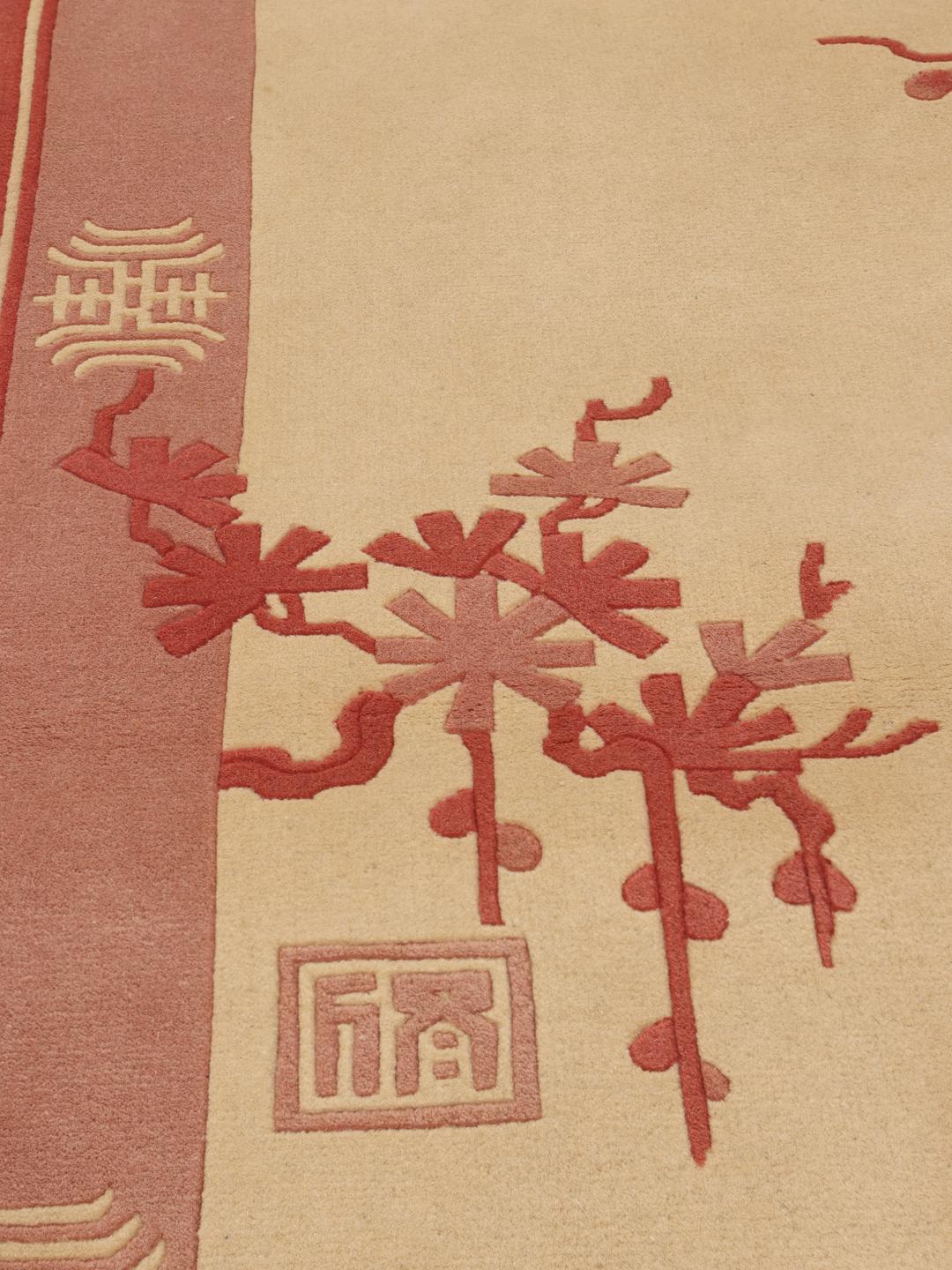
Design motifs in this tradition are rarely chosen at random. The inclusion of bamboo, for example, represents resilience and flexibility, while flowering branches symbolise growth and beauty. These symbols are woven into the rug not just as decoration, but as a visual language intended to bring auspicious energy and a sense of peace into the home environment.
Owning a hand-knotted rug from China is an invitation to connect with a legacy of patience and precision. Collectors value these pieces for their ability to blend seamlessly into modern interiors while retaining a strong sense of provenance and cultural depth. Every thread represents a bridge between ancient craftsmanship and contemporary living.