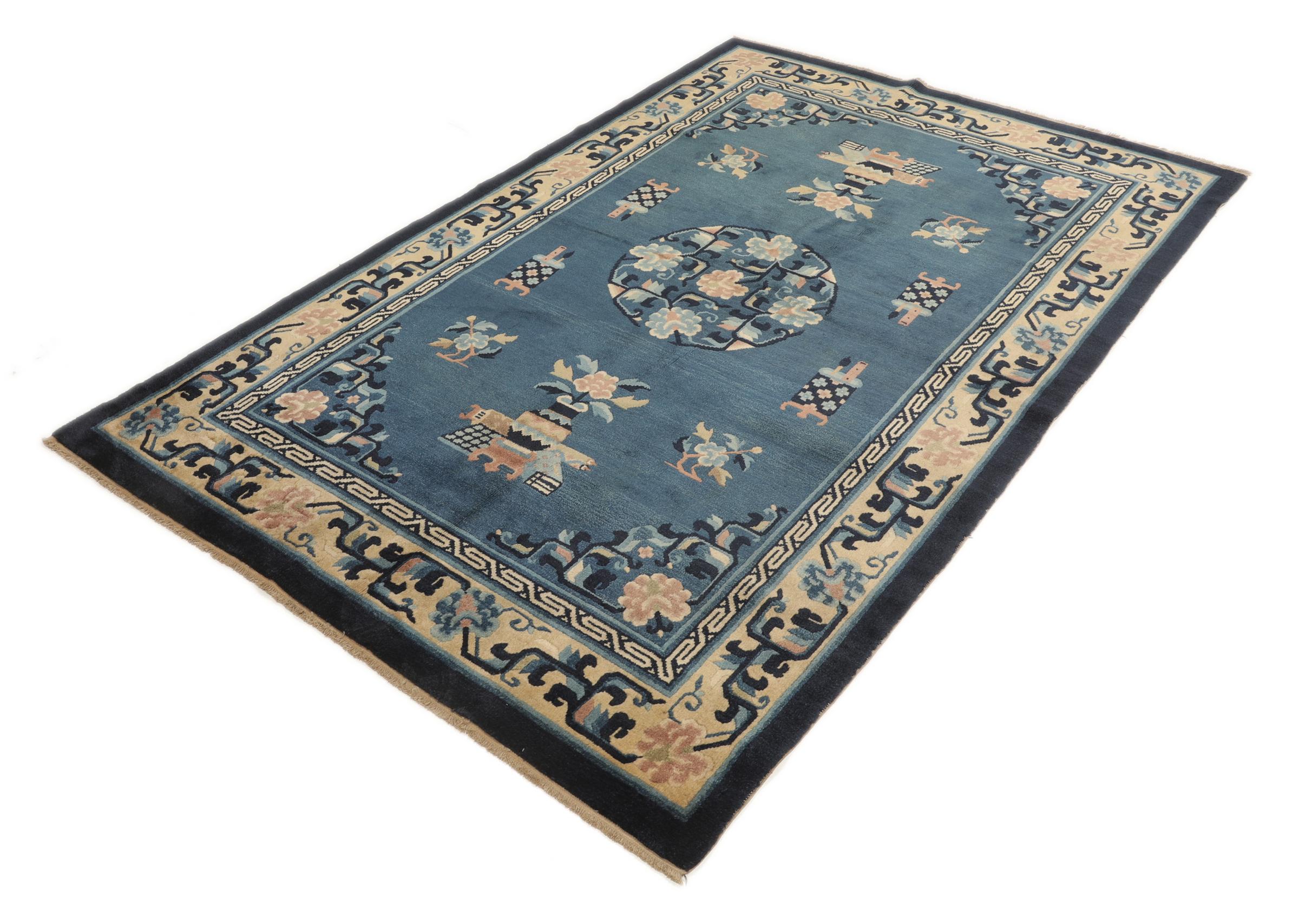
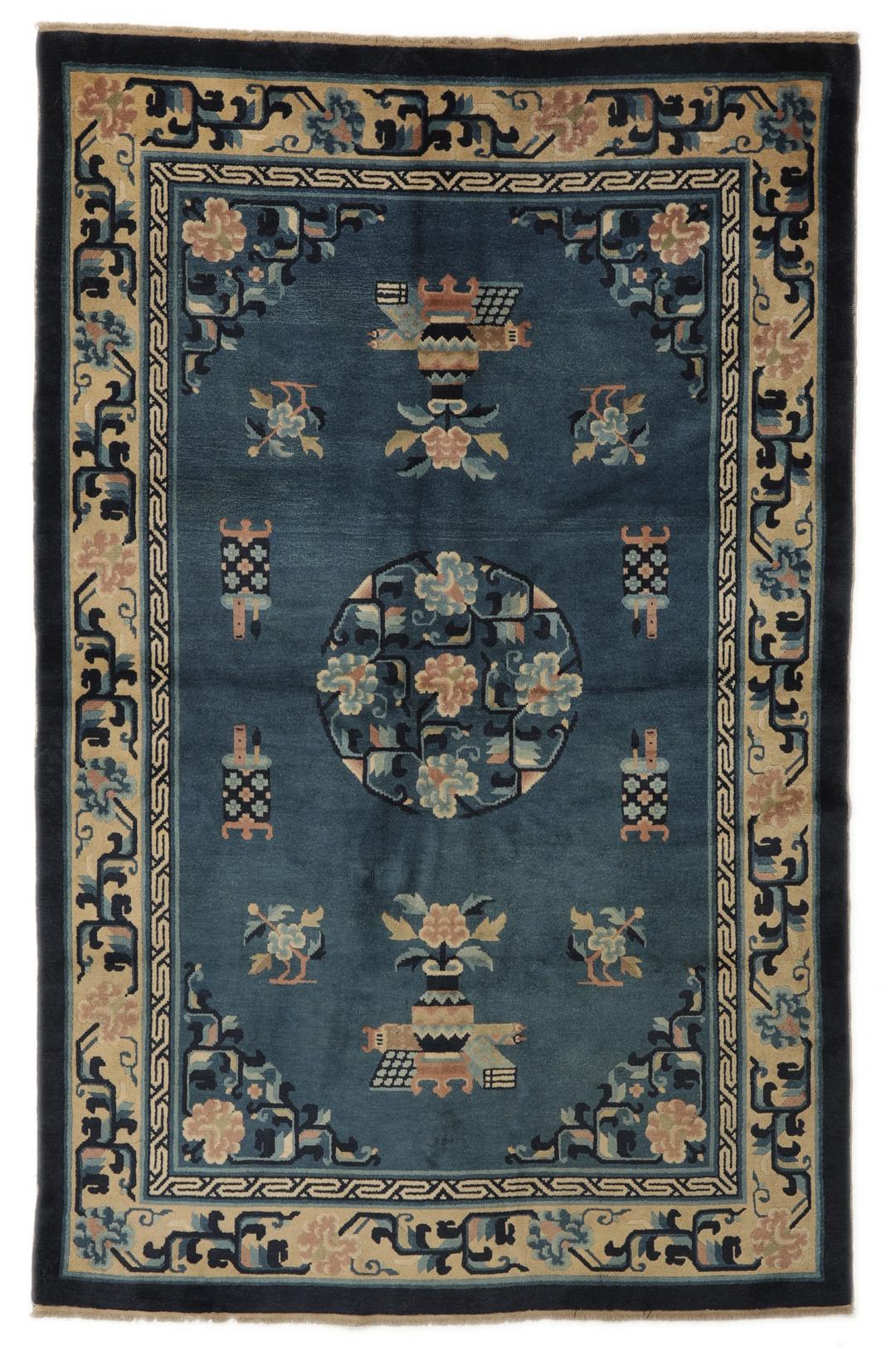
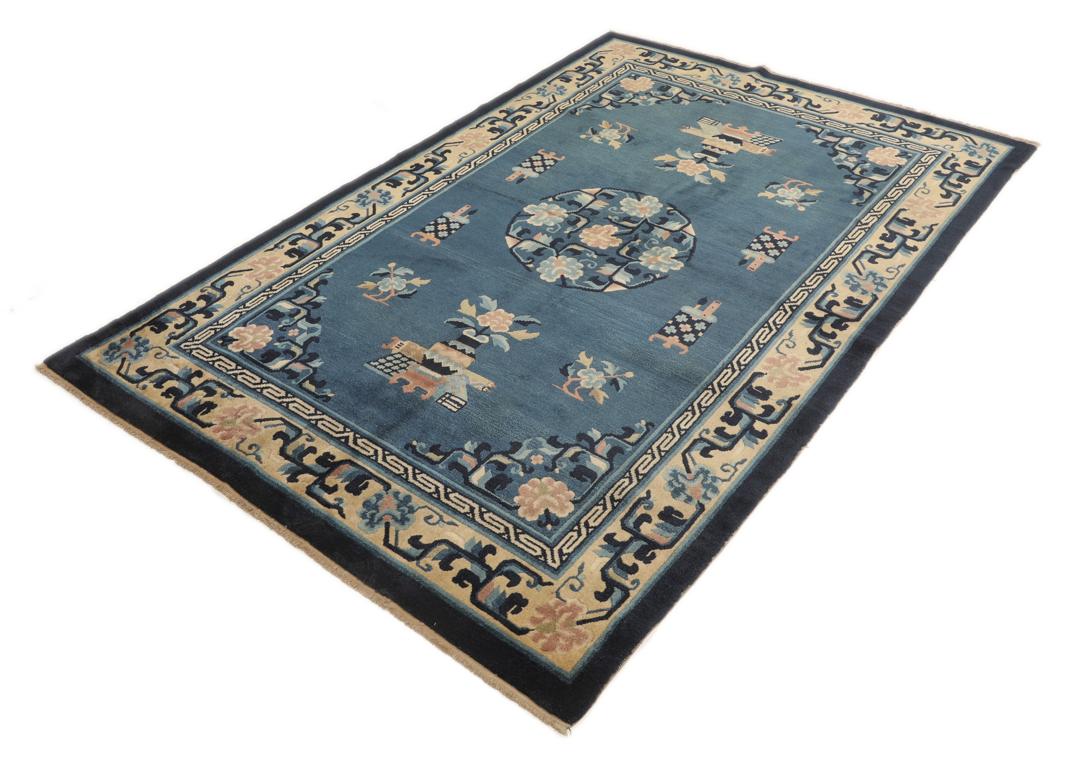
The history of Chinese rug weaving is deeply rooted in centuries of artistic tradition, distinct from the weaving styles found in the Middle East. While many antique rugs from the region were crafted for local nobility or temple use, the style known as Peking, or Beijing, became particularly iconic in the early 20th century. These pieces often feature a more restrained use of colour and a focus on open, serene fields of wool.
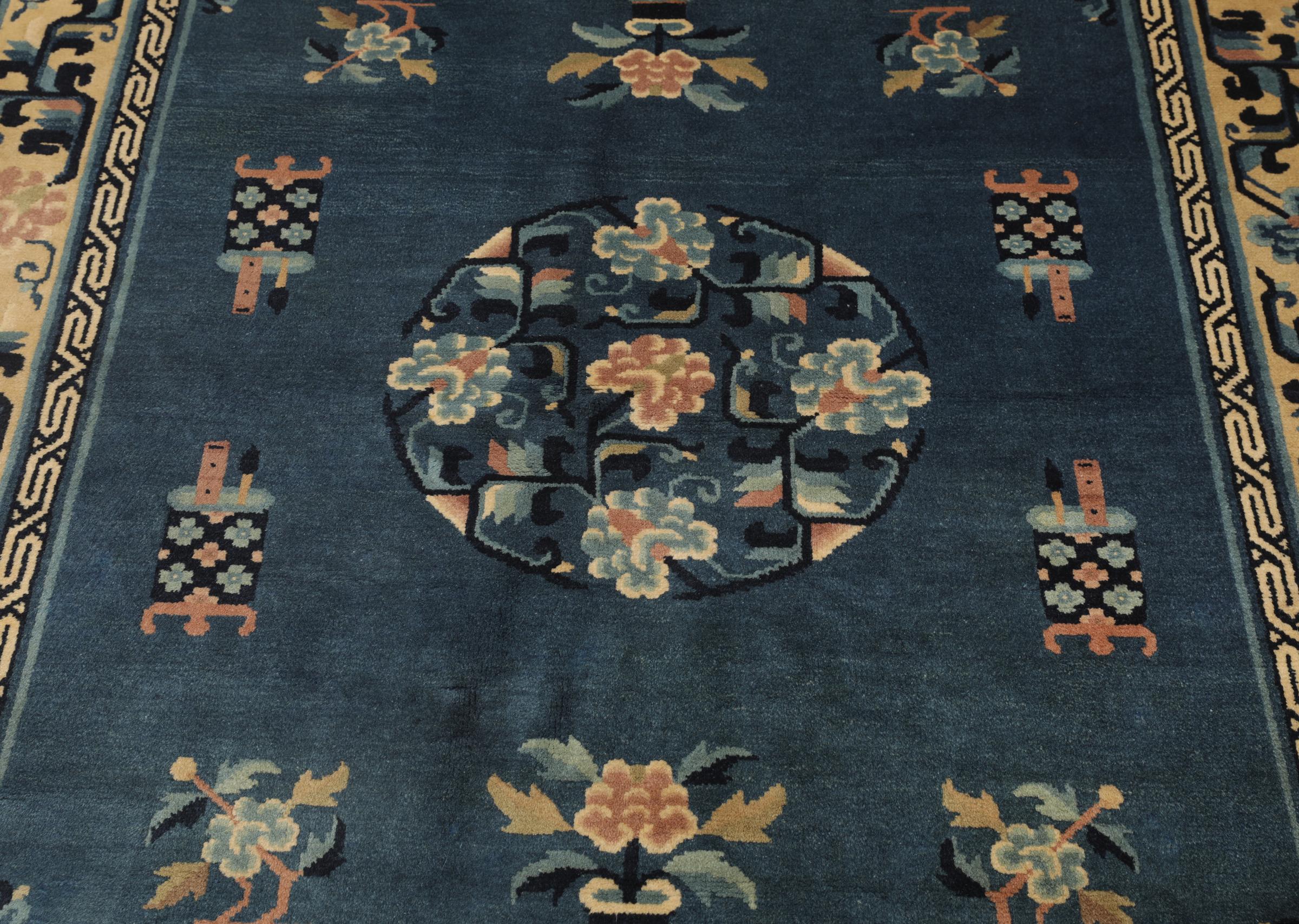
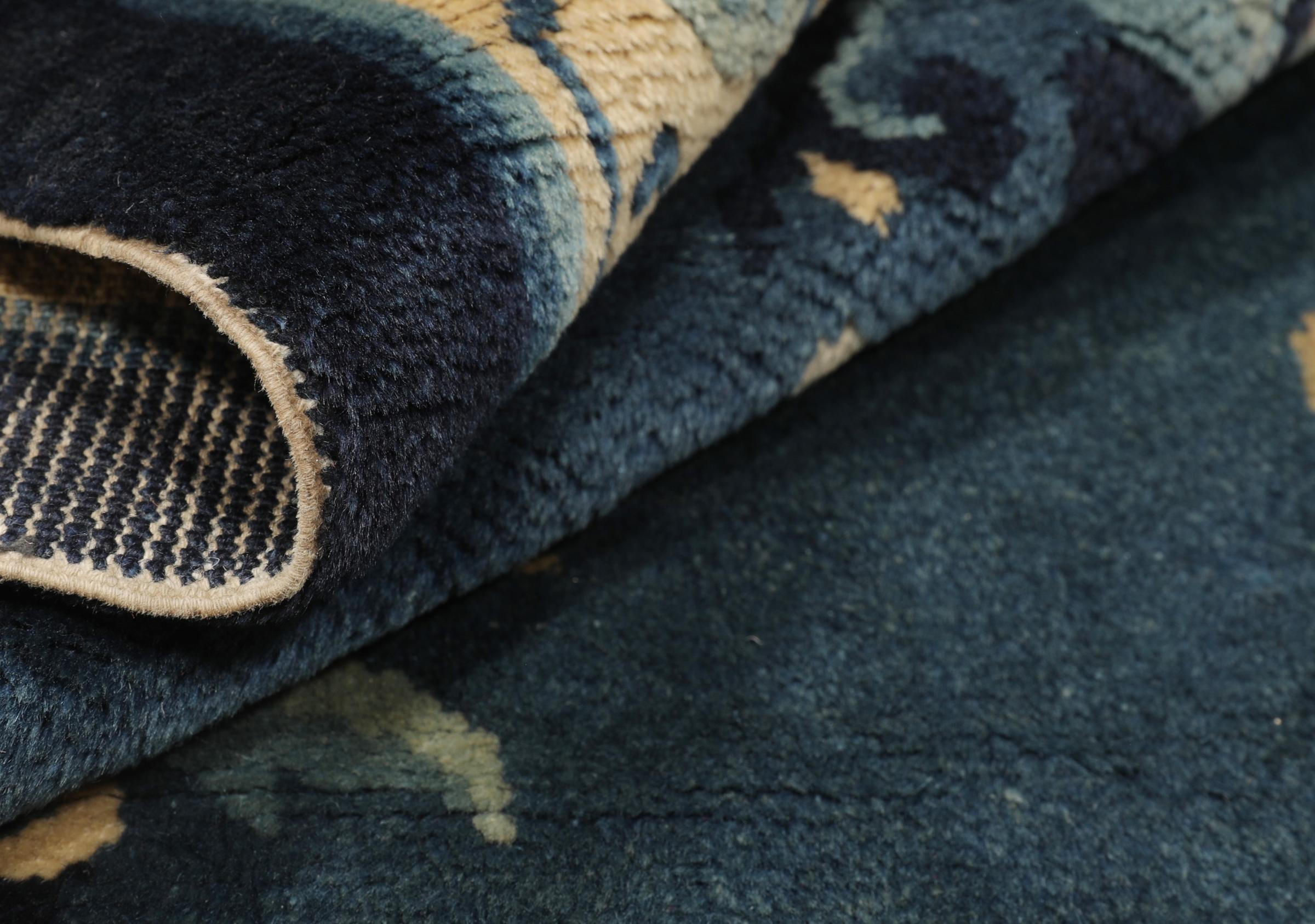
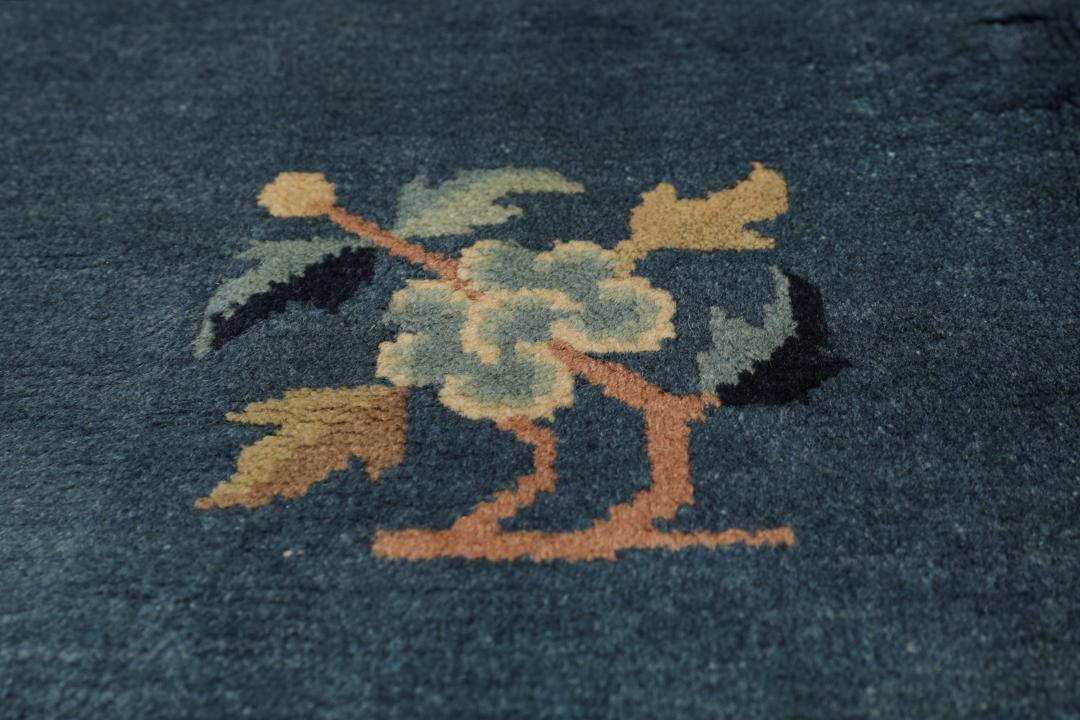
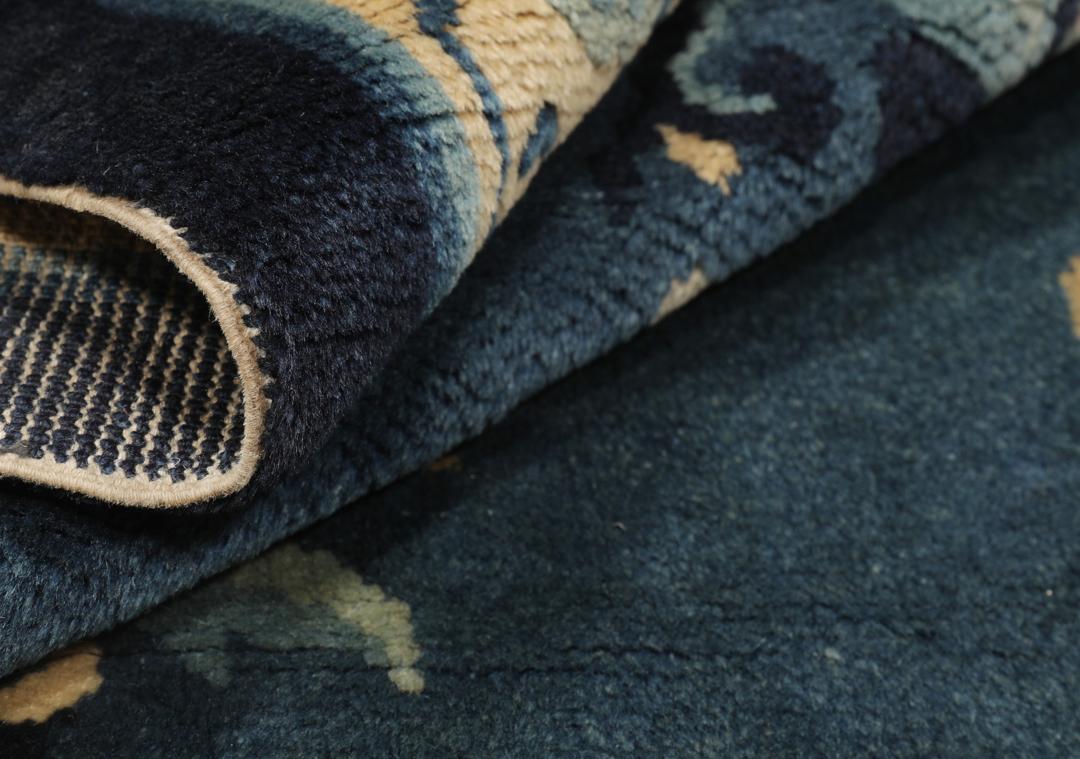
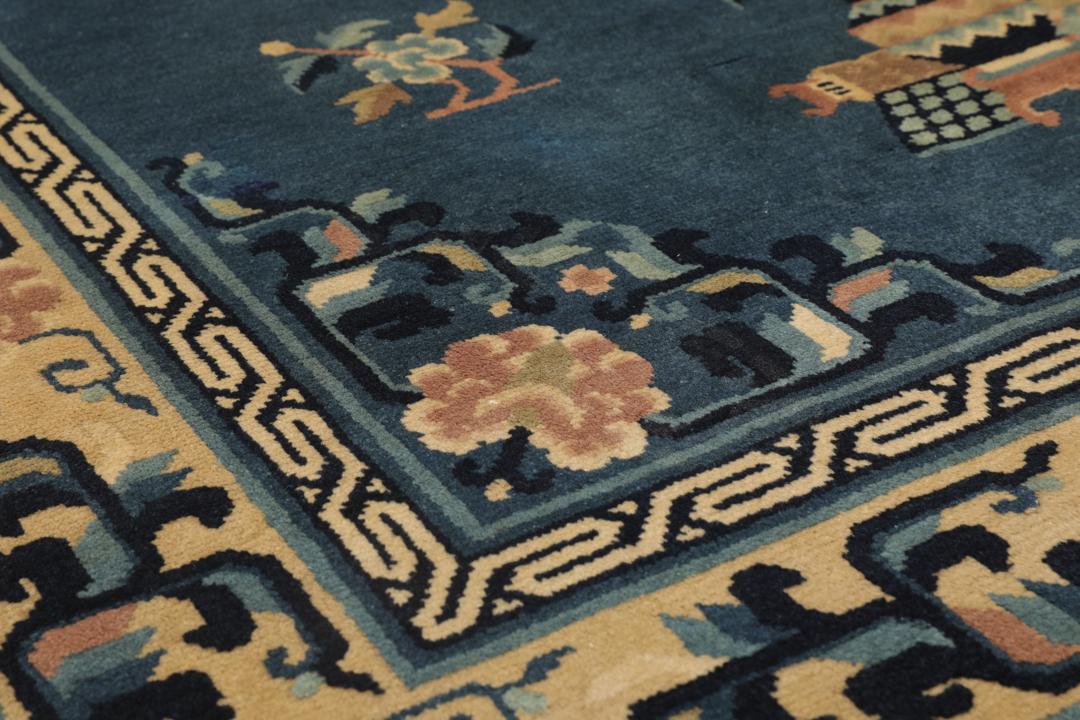
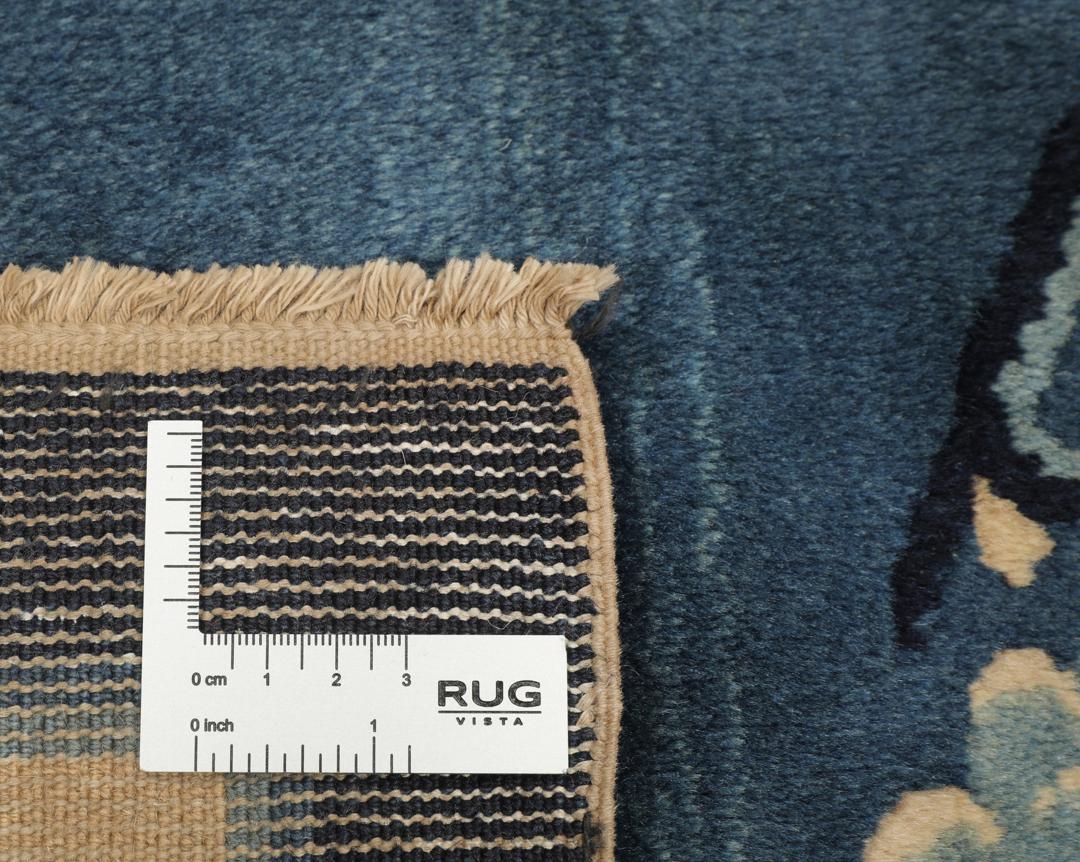
When we speak of antique Chinese rugs from the 1940s, we are looking at a period of transition where traditional motifs were refined for a global audience. The construction typically relies on wool, which provides a soft yet durable pile. This era is known for its distinct approach to pile height and knotting, which creates a sculptural quality, allowing the motifs to stand out with a subtle, three-dimensional effect that adds depth to the design.
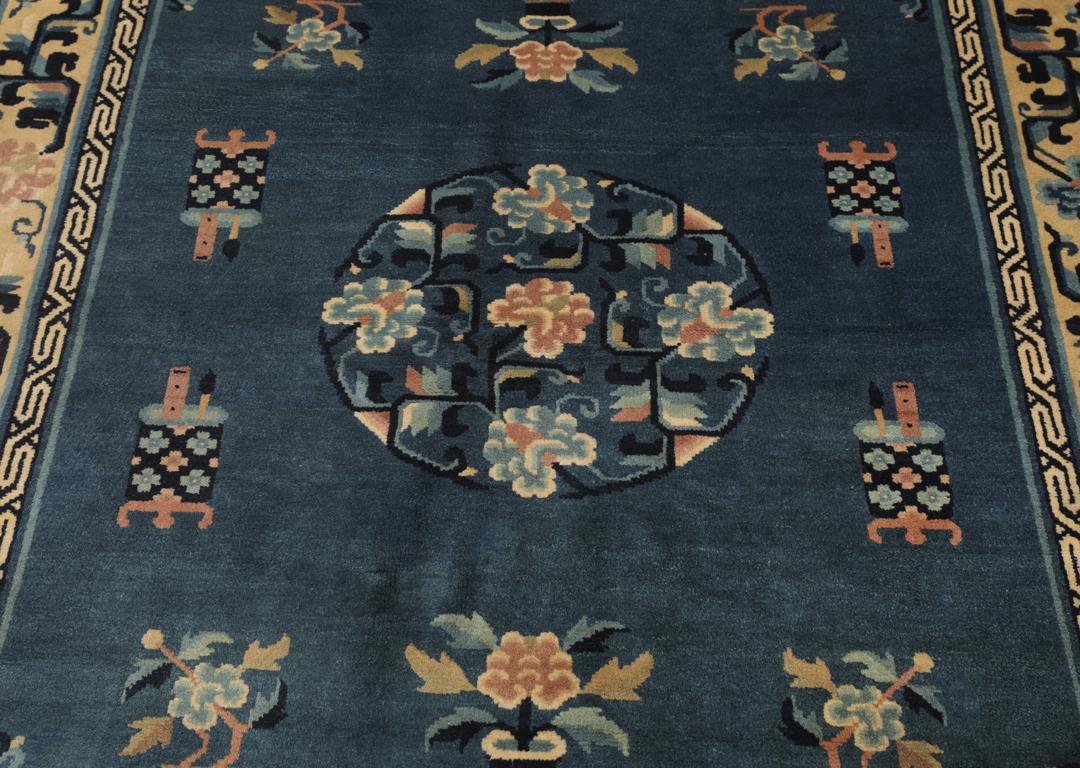
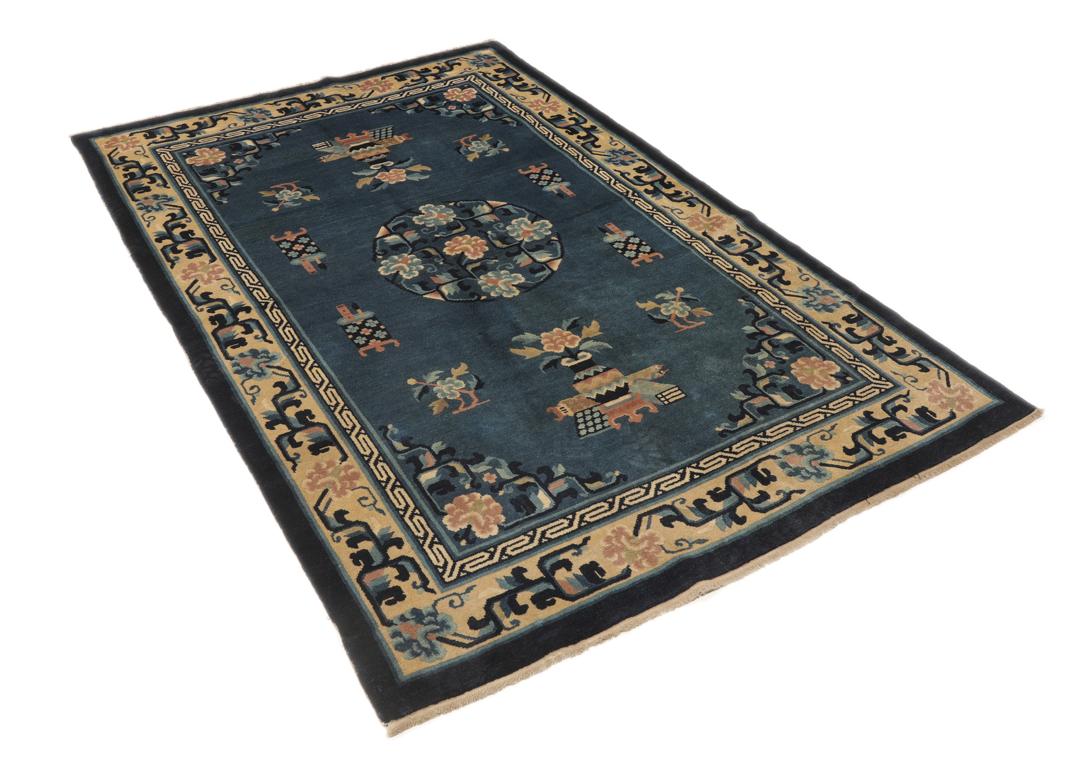
Signature elements of these rugs often include symbolic flora such as peonies, lotus flowers, or the 'hundred antiquities' motifs, all arranged with a sense of balance and harmony. The borders are frequently decorated with geometric patterns or wave motifs, framing the central field. This specific piece displays these classic characteristics, showcasing the restraint and elegance that define the Peking aesthetic.
Collecting antique rugs from this era is an investment in cultural heritage. These pieces are valued for their rarity and the way they capture a specific moment in the evolution of textile art. By choosing this rug, you are preserving a craft tradition that has been passed down through generations, ensuring that these beautiful, hand-crafted objects continue to be appreciated and enjoyed for years to come.