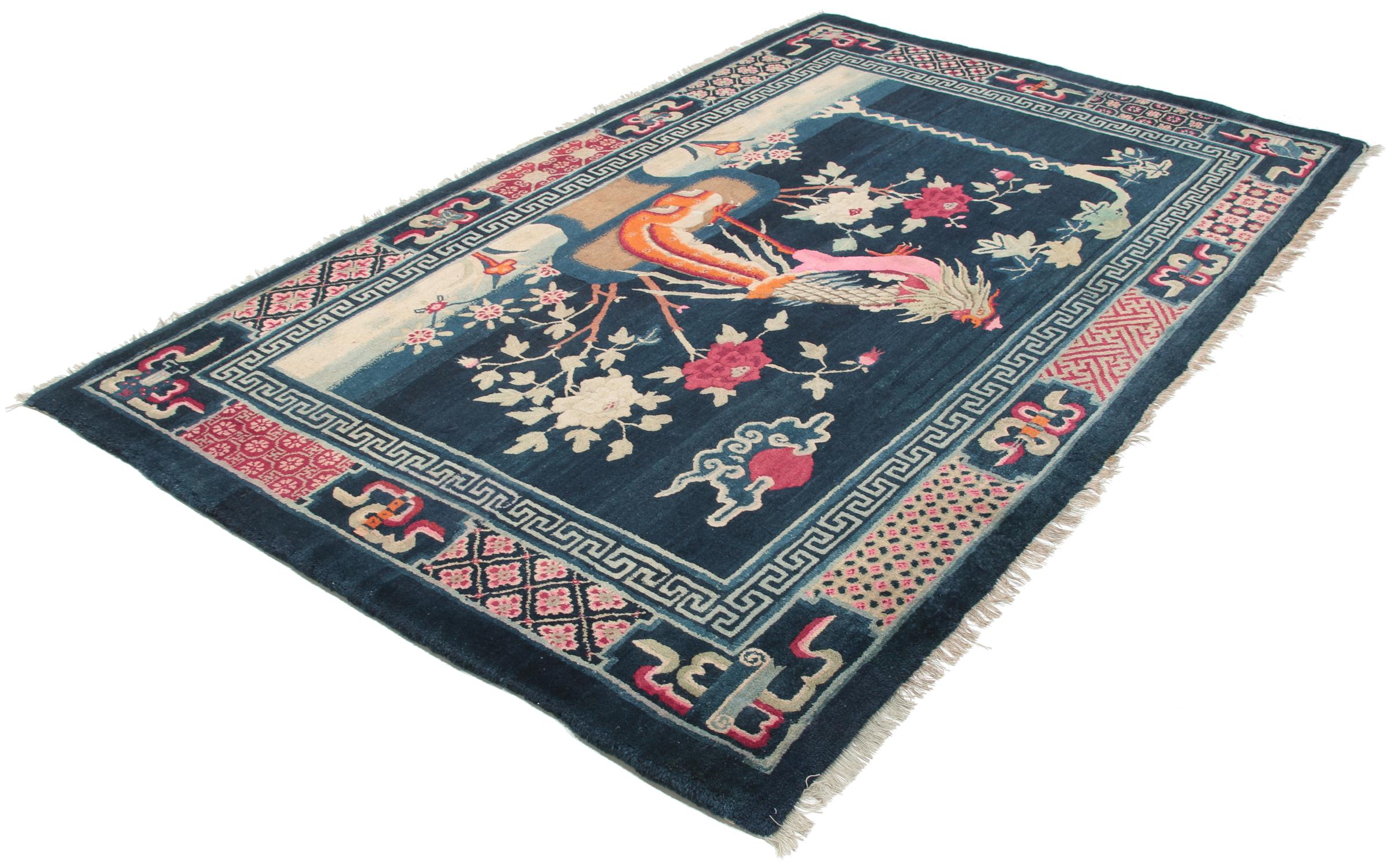
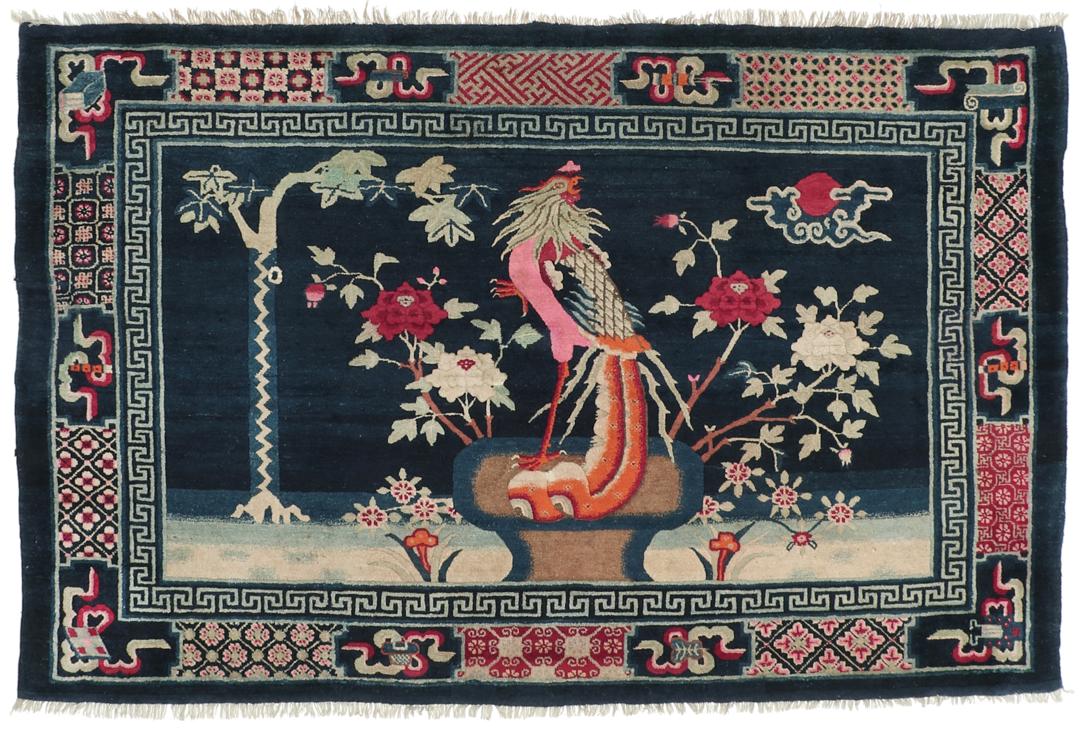
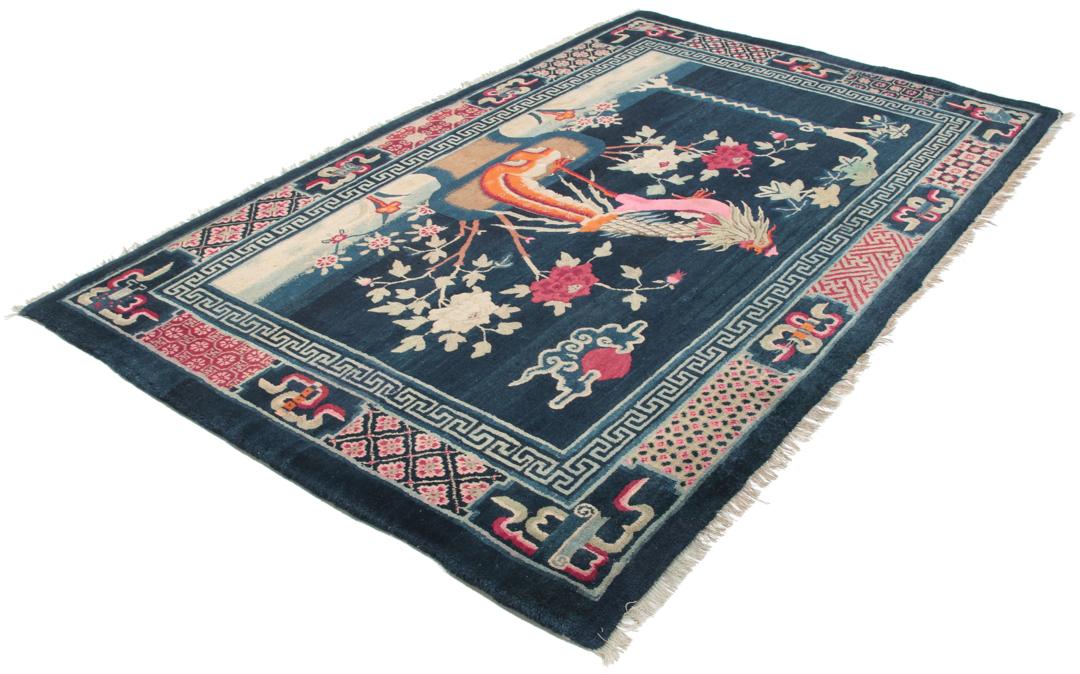
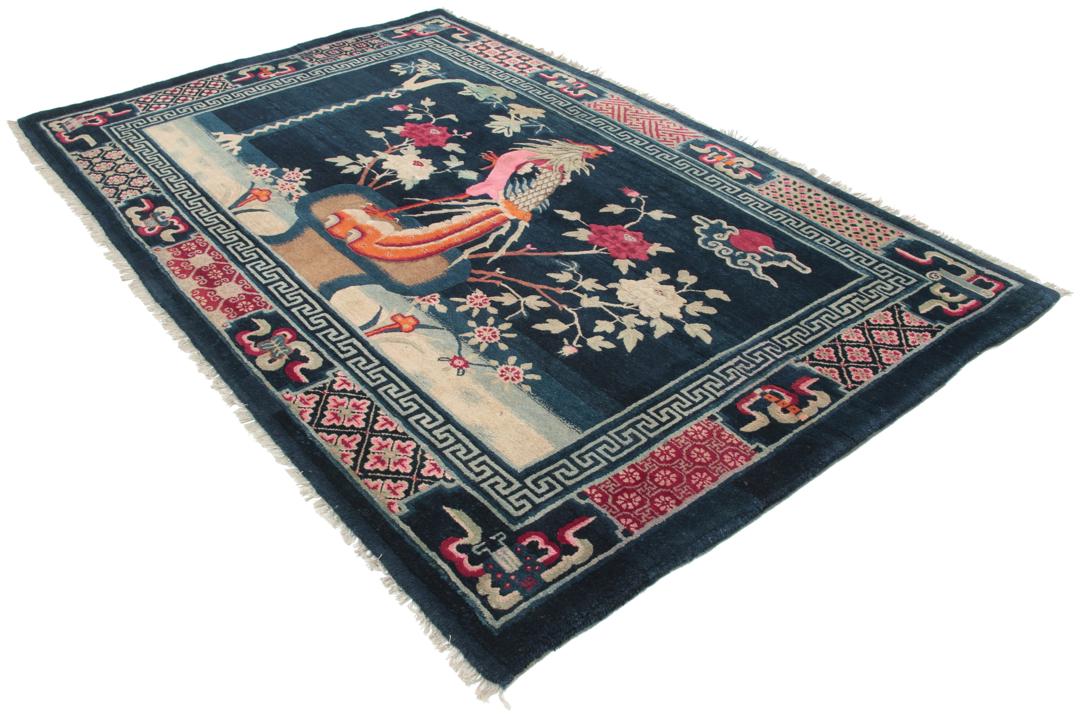
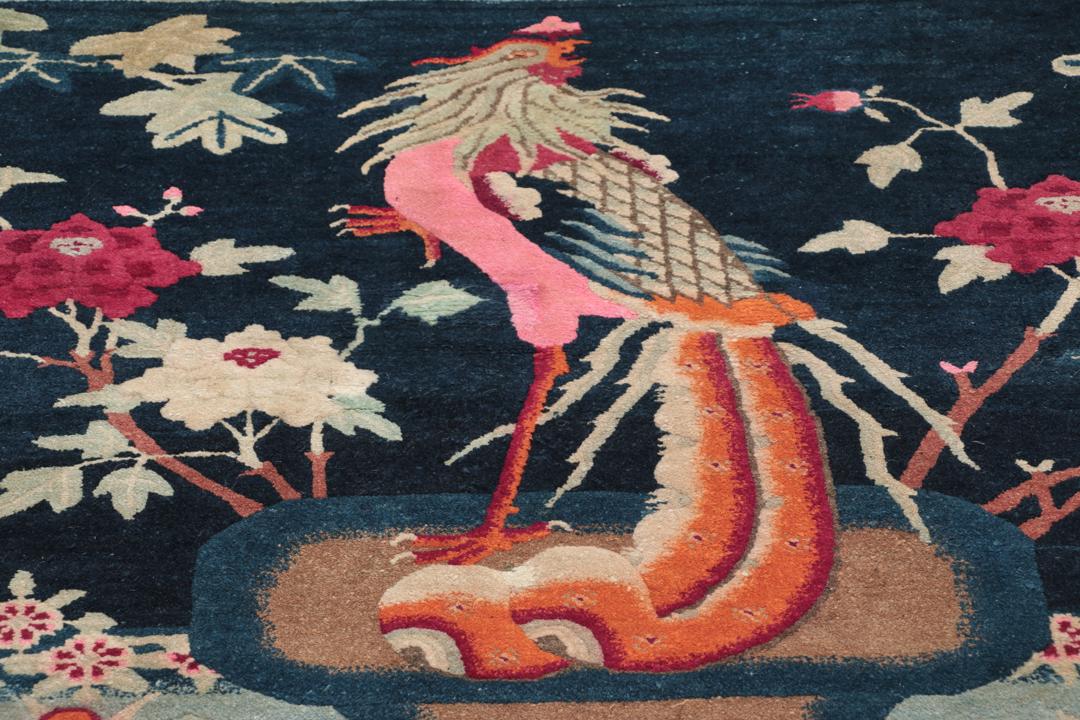
The Art Deco movement in China during the early 20th century represents a fascinating cross-cultural exchange. While the techniques are rooted in long-standing traditional Chinese rug-making practices, the aesthetic was heavily influenced by the global Art Deco movement of the 1920s. This resulted in a unique style that combined traditional Chinese iconography, such as the phoenix and peonies, with the bold, clean lines and simplified forms of Western modernism.
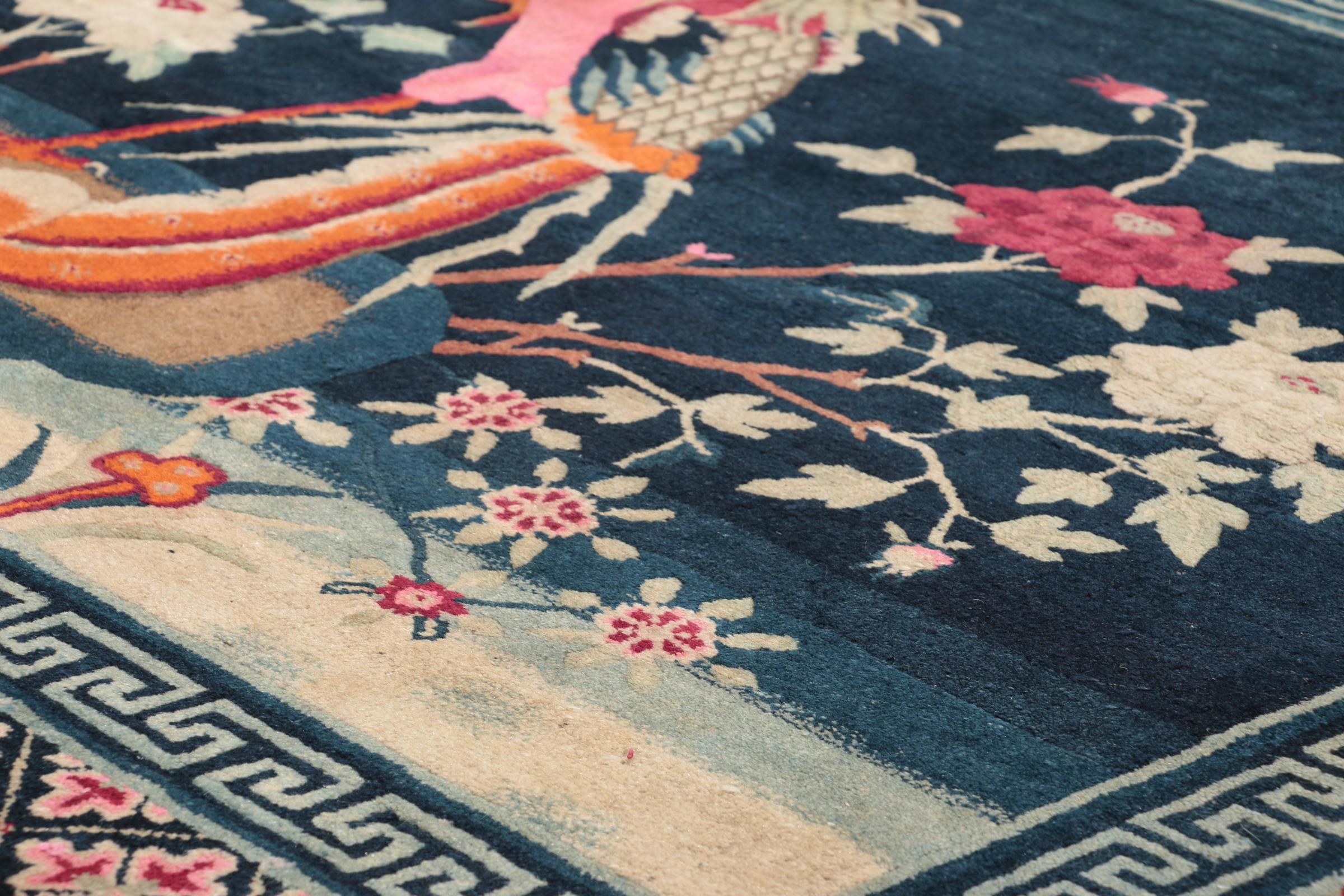
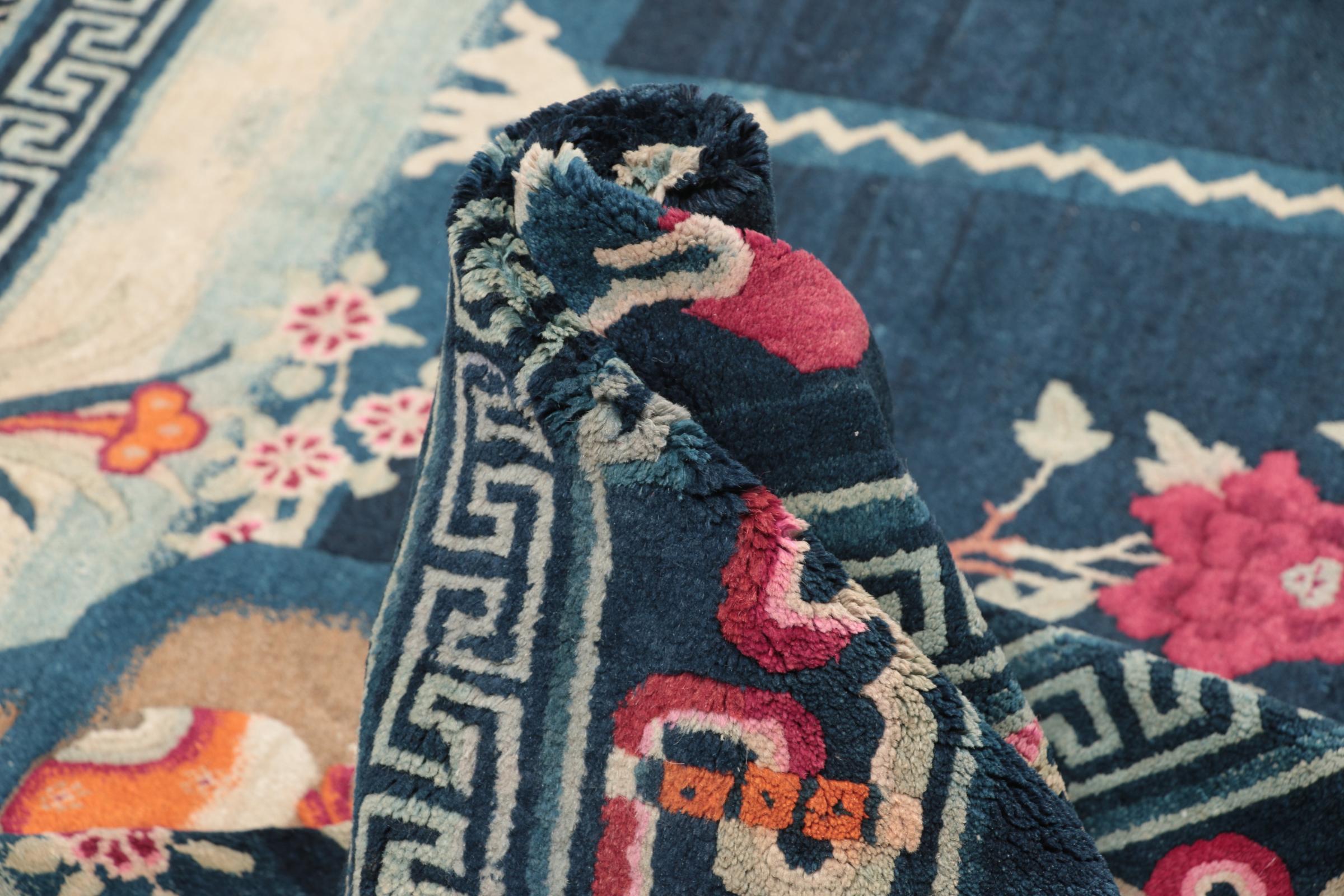
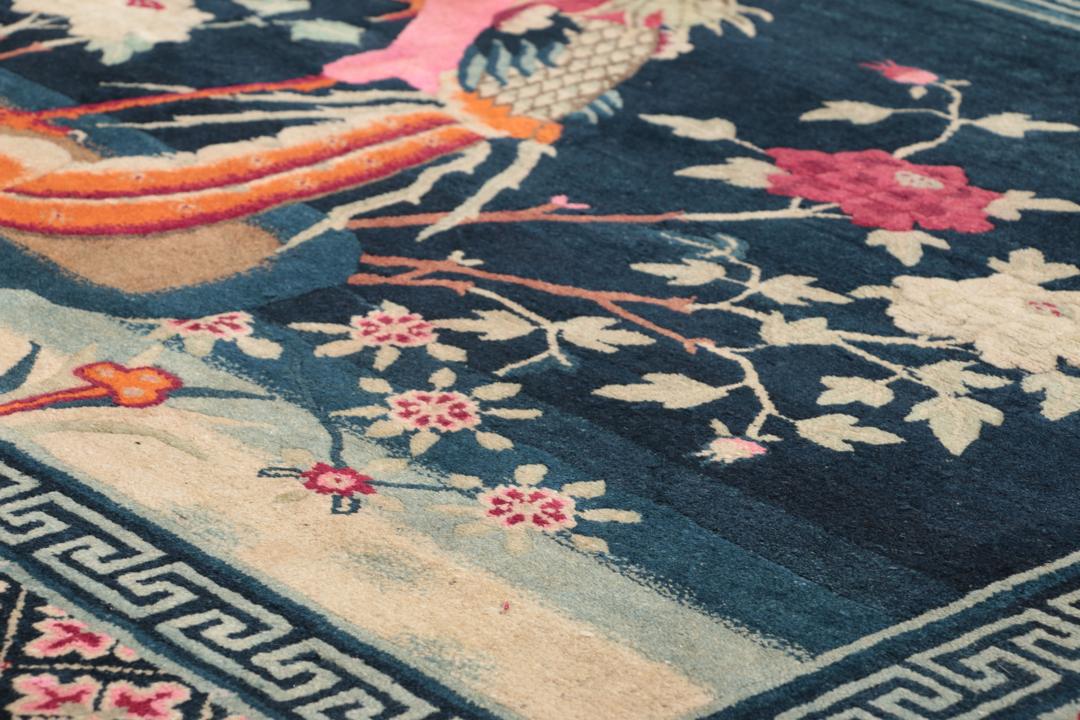
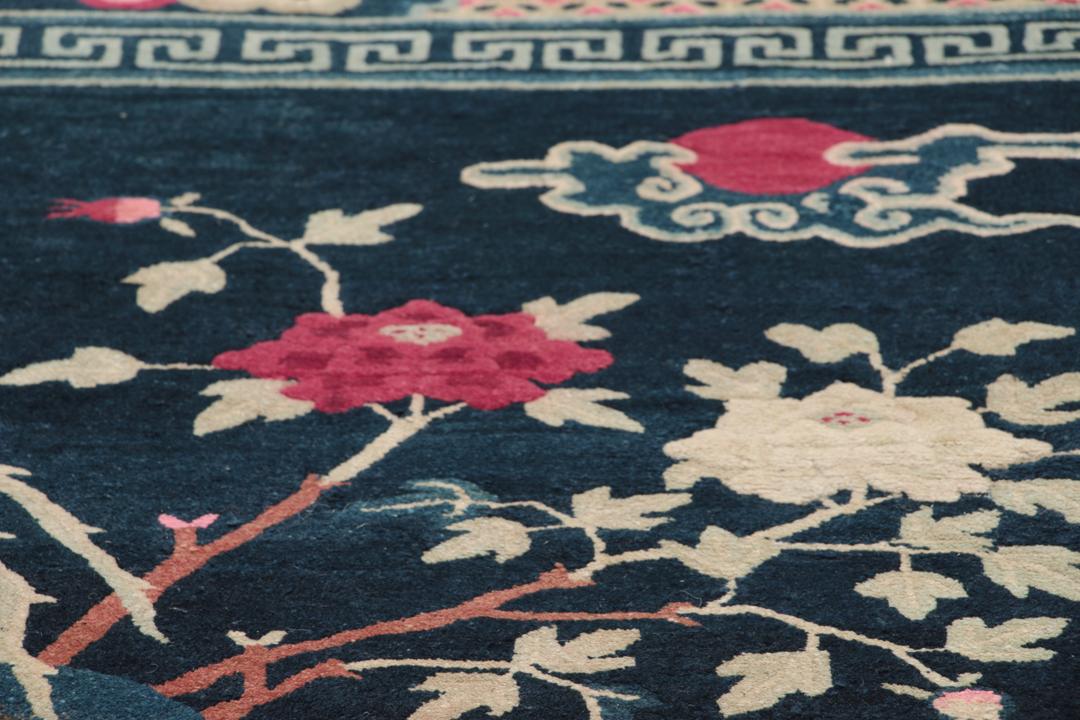
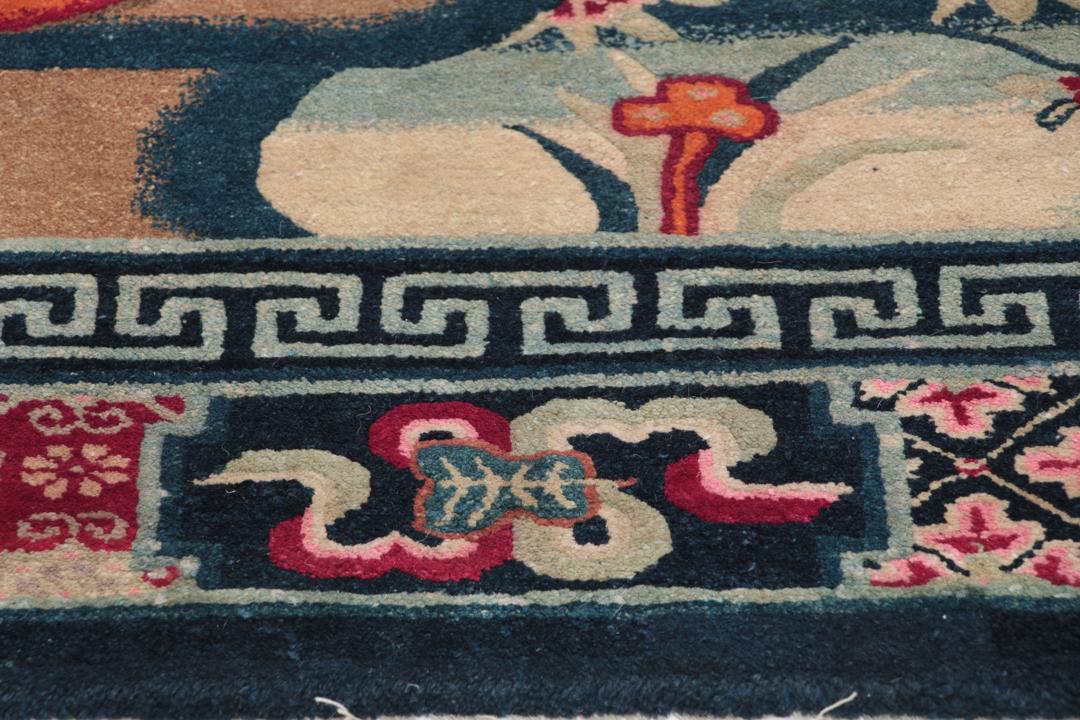
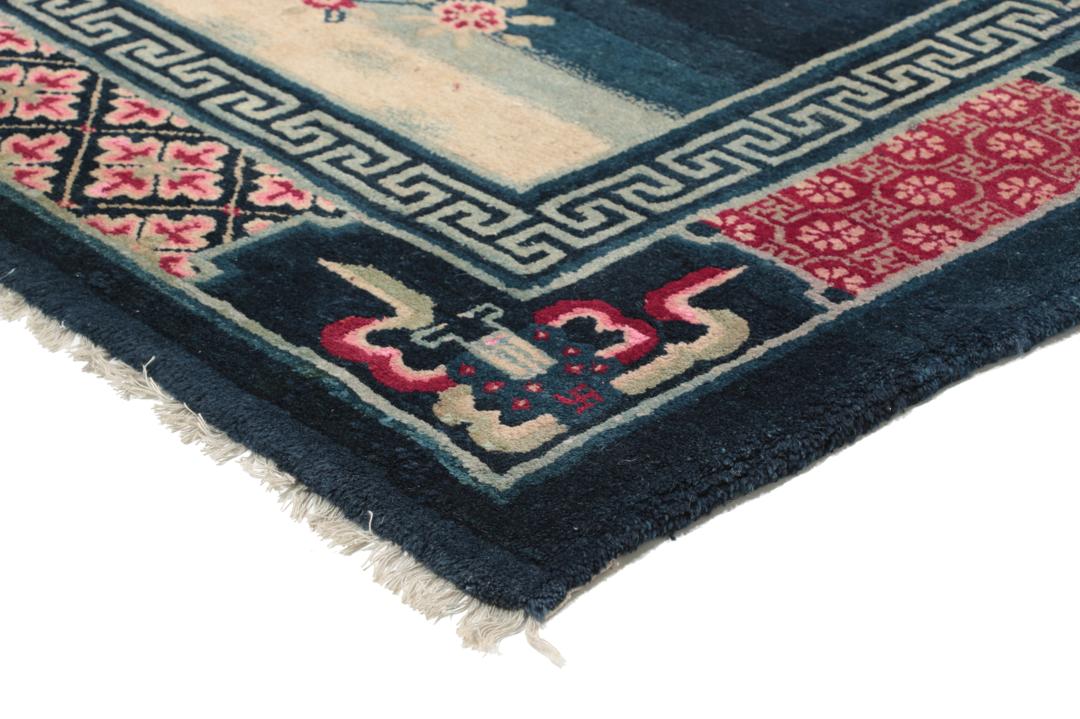
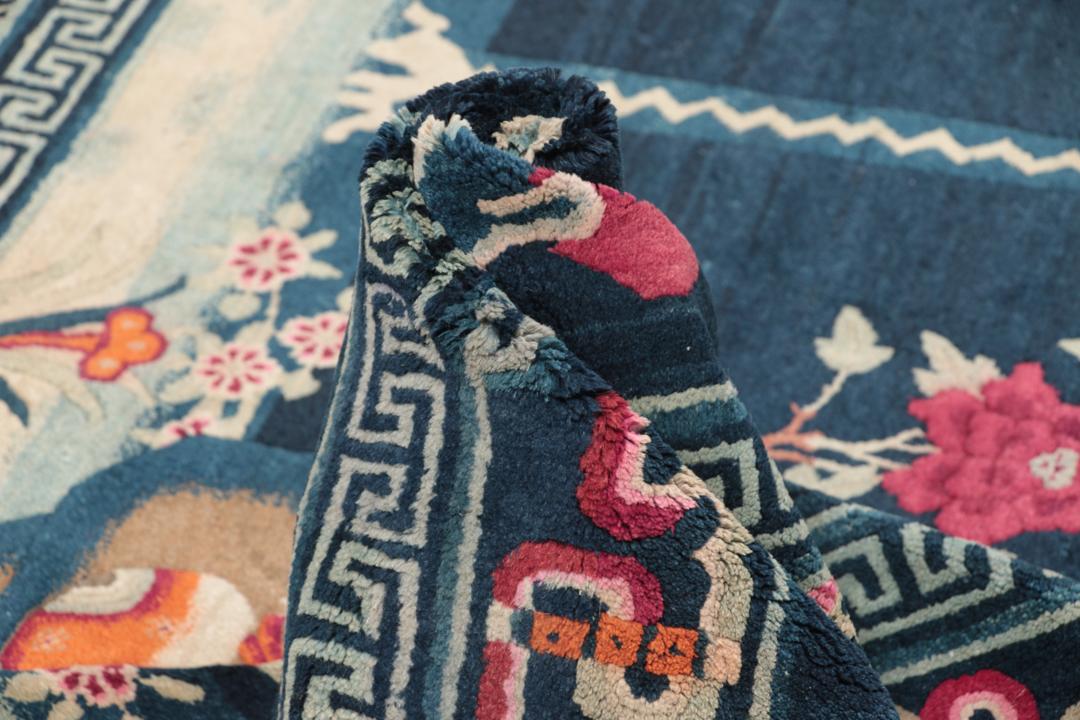
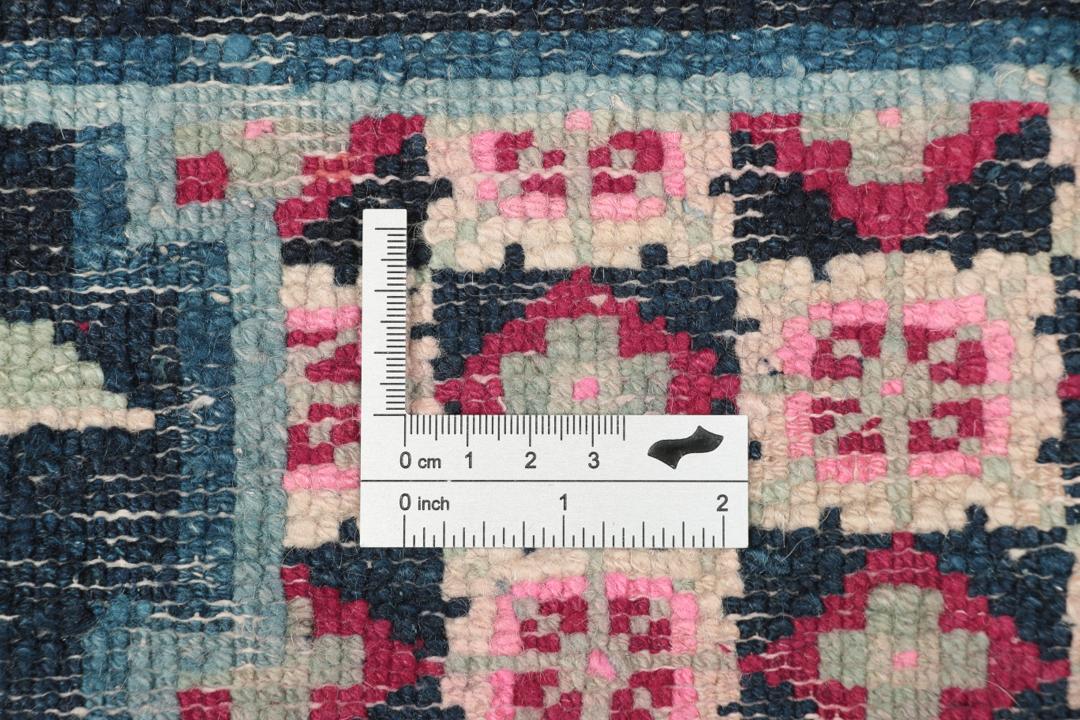
These rugs are highly prized for their distinctive approach to pile and texture. Unlike many other regional styles that focus on extremely fine, intricate knotting, these Chinese Art Deco pieces often feature a thicker, more plush wool pile. This construction choice was deliberate, allowing the weavers to create a sculptural, embossed effect where the patterns appear to rise from the surface of the rug, giving them a three-dimensional quality that is both striking and incredibly soft.
The imagery found in this rug is deeply symbolic. The phoenix is a classic emblem of grace, virtue, and prosperity in Chinese culture, while the peony is celebrated as the flower of wealth and honour. These motifs are often arranged in a way that emphasises balance and harmony, framed by borders that incorporate geometric fretwork patterns. Such designs were intended to bring positive energy and aesthetic refinement into the homes of those who owned them.
Collecting these antique rugs is about more than just interior design; it is about preserving a specific moment in international trade and artistic history. Because the production of these specific Art Deco designs was relatively brief, they have become highly sought after by collectors worldwide. Owning one is a way to celebrate the skill of the artisans who bridged two worlds, creating a legacy of beauty that continues to resonate in contemporary spaces.