The tradition of hand-knotted rugs in India traces its roots back to the 16th century, heavily influenced by the artistic traditions of the Middle East. Over centuries, these techniques were refined and integrated with local aesthetic sensibilities, resulting in a unique Indian style known for its intricate floral designs and high-quality wool construction.
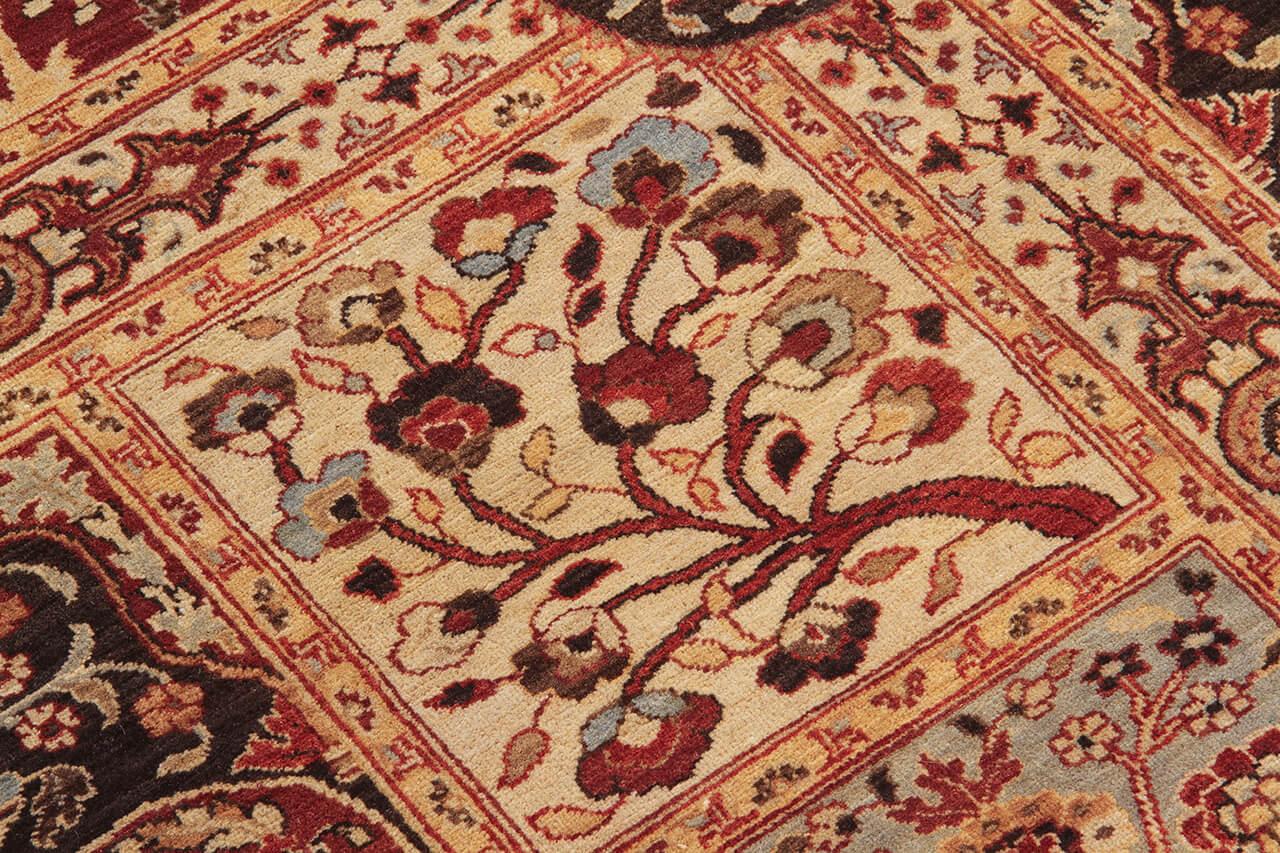
At the heart of this craft is the hand-knotting process, where each strand of wool is looped around the foundation threads. This method is the gold standard for rug making, as it creates a permanent, dense pile that is far more durable and lustrous than any machine-made alternative. It is a labour-intensive tradition that prioritises longevity above all else.
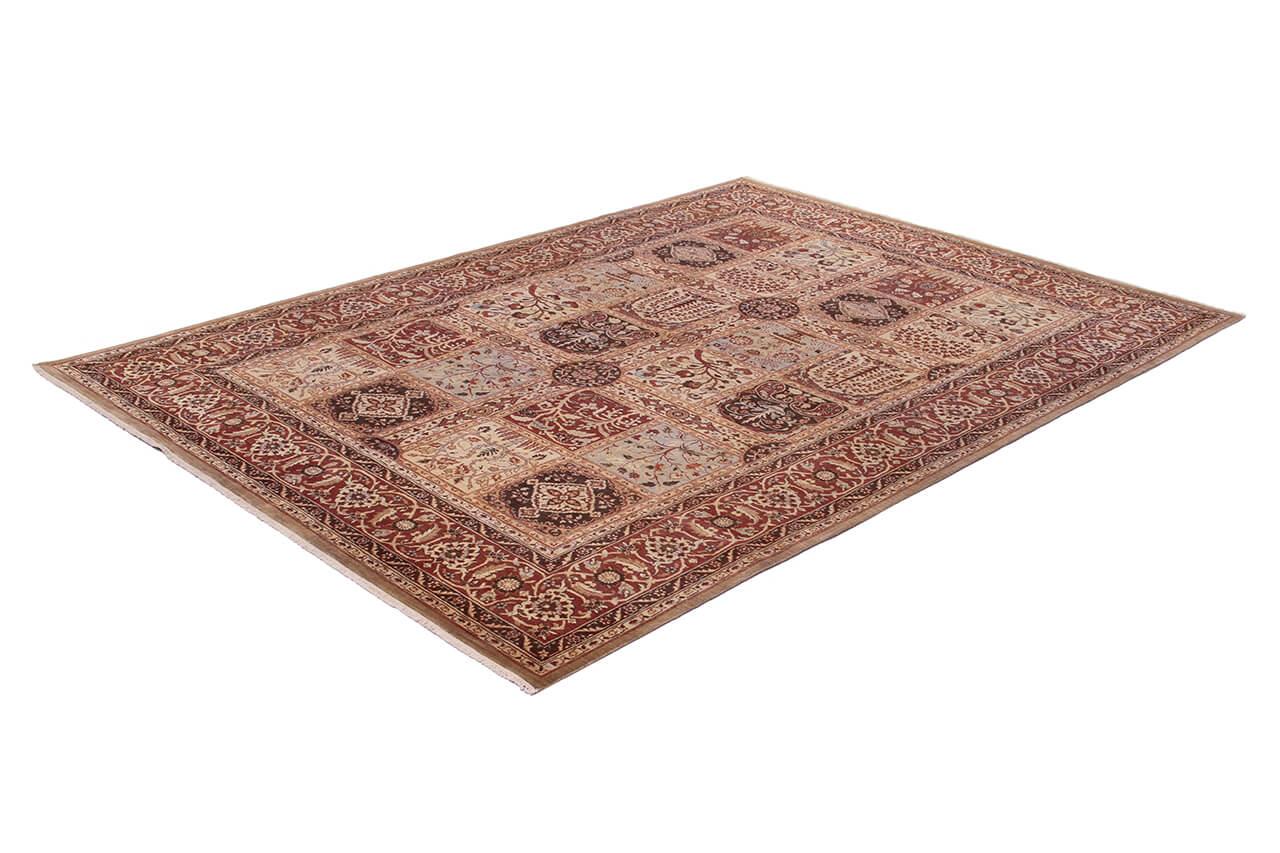
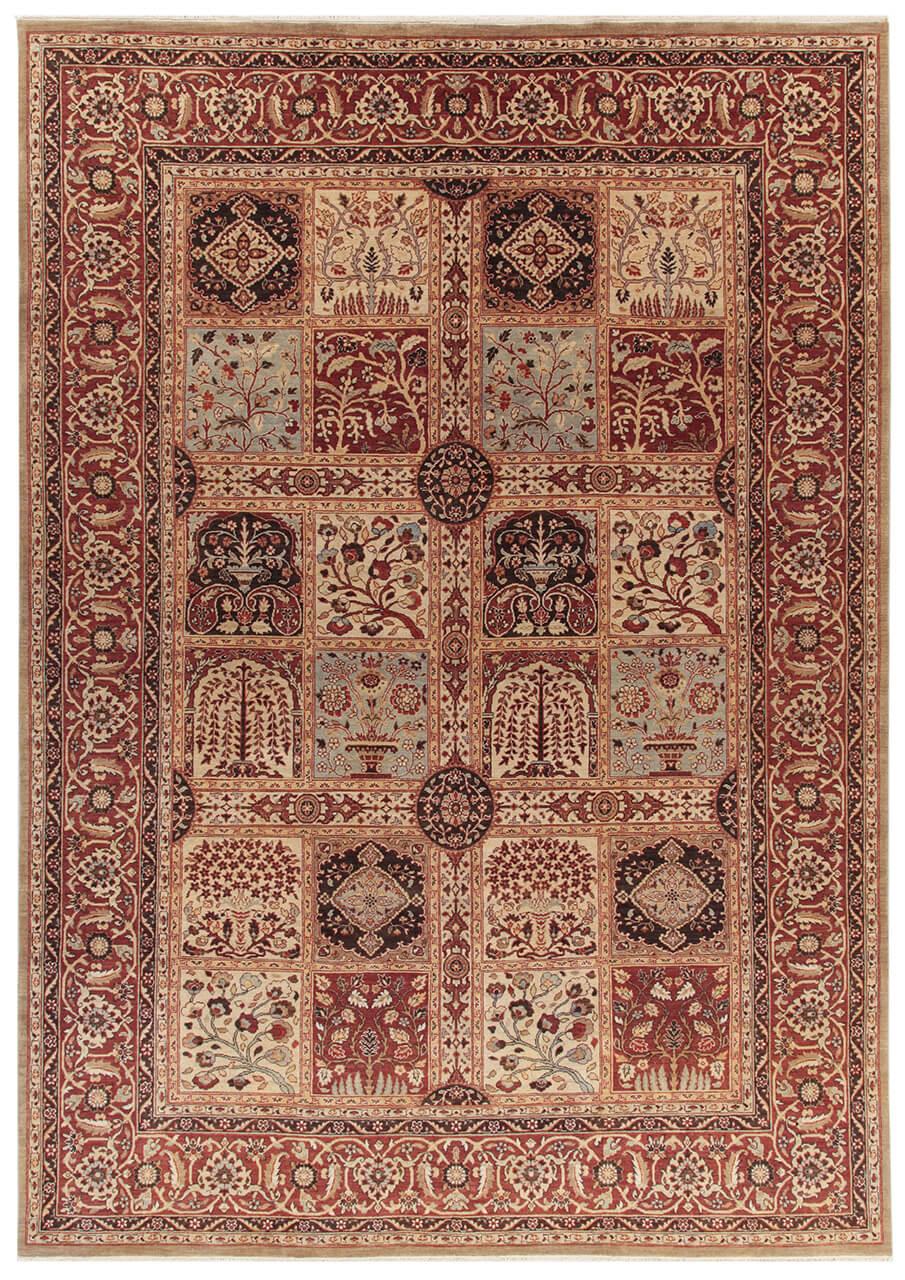
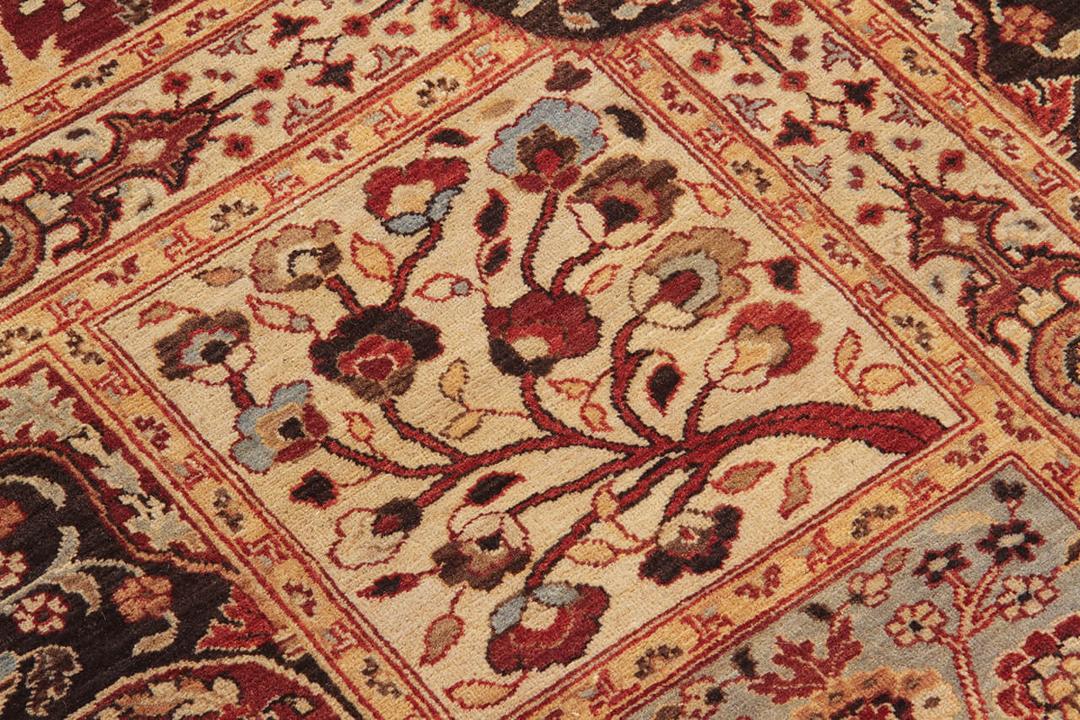
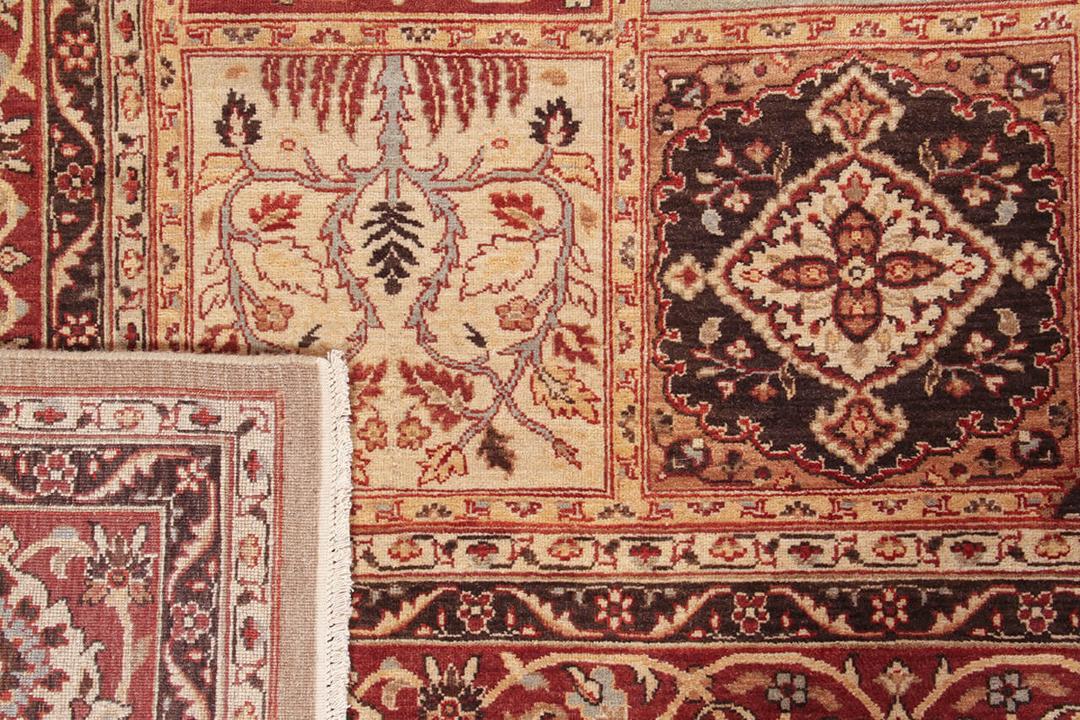
The design of this rug features a formal garden motif, often organised into a grid of panels. These panels typically house stylised trees, flowers, and vases, echoing the classic 'paradise garden' layouts found in historical textiles. The inclusion of decorative borders further frames these scenes, creating a balanced and orderly aesthetic that is highly prized in traditional interiors.
Owning a hand-knotted rug from India is a commitment to preserving a legacy of skill and patience. Collectors value these pieces not only for their visual beauty but for the human story embedded in every knot. By choosing this rug, you are becoming a custodian of a craft that has been passed down through generations, supporting the continuation of this artistic heritage.