The art of rug weaving in India is a storied tradition that evolved significantly through the influence of Middle Eastern artisans who brought their expertise to the region centuries ago. Over time, these techniques merged with local craftsmanship, creating a distinct Indian style that is celebrated for its technical precision and creative use of floral and botanical motifs.
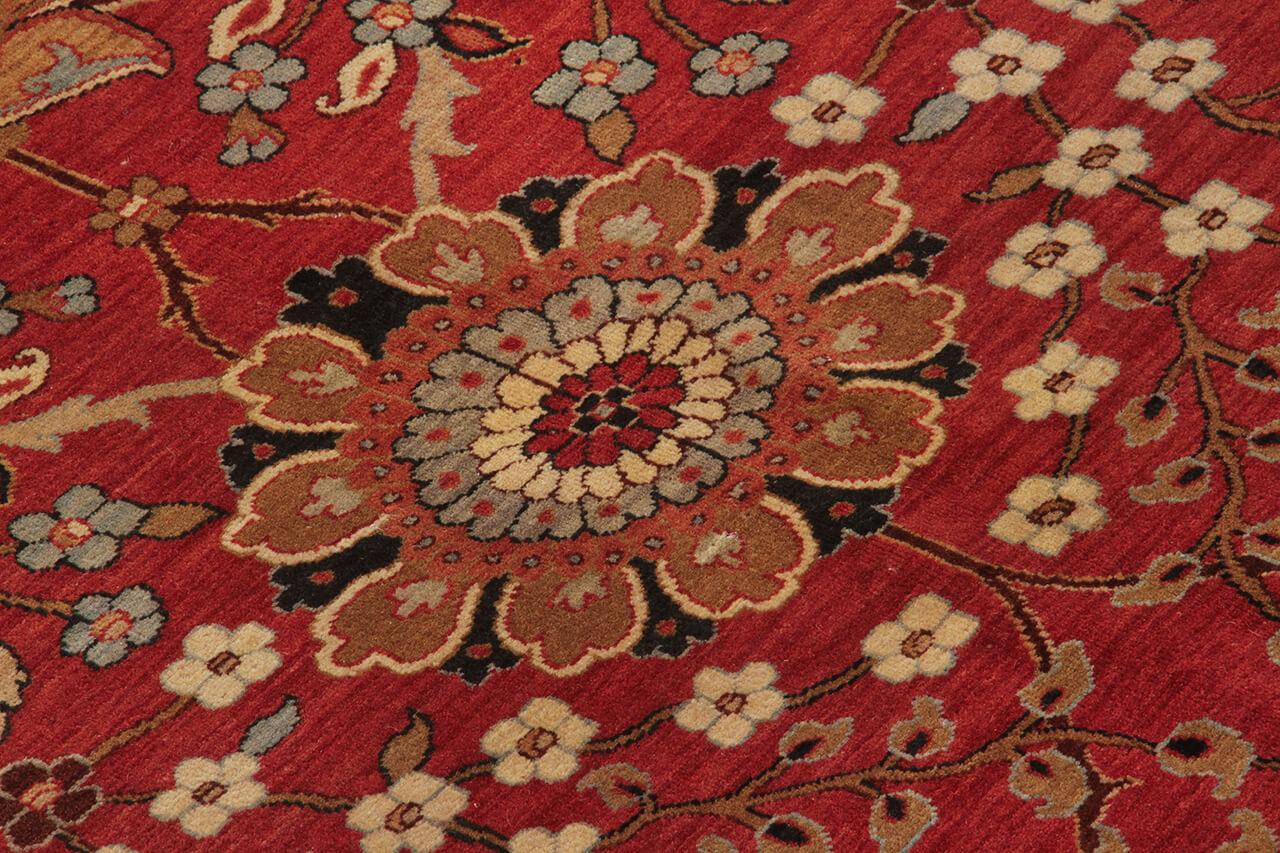
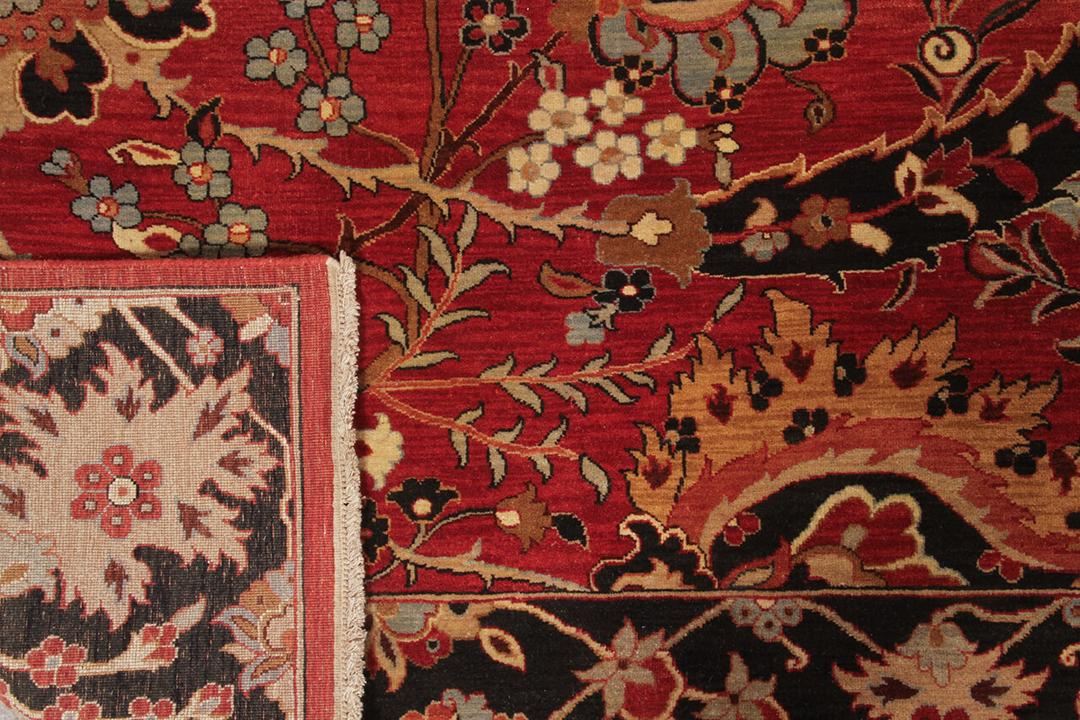
The term hand-knotted refers to the most traditional and labour-intensive method of rug construction, where each individual strand of wool is tied by hand onto the foundation. This method creates a structure that is far more durable and complex than machine-made alternatives, allowing for the intricate, curvilinear designs that define the classic oriental aesthetic.
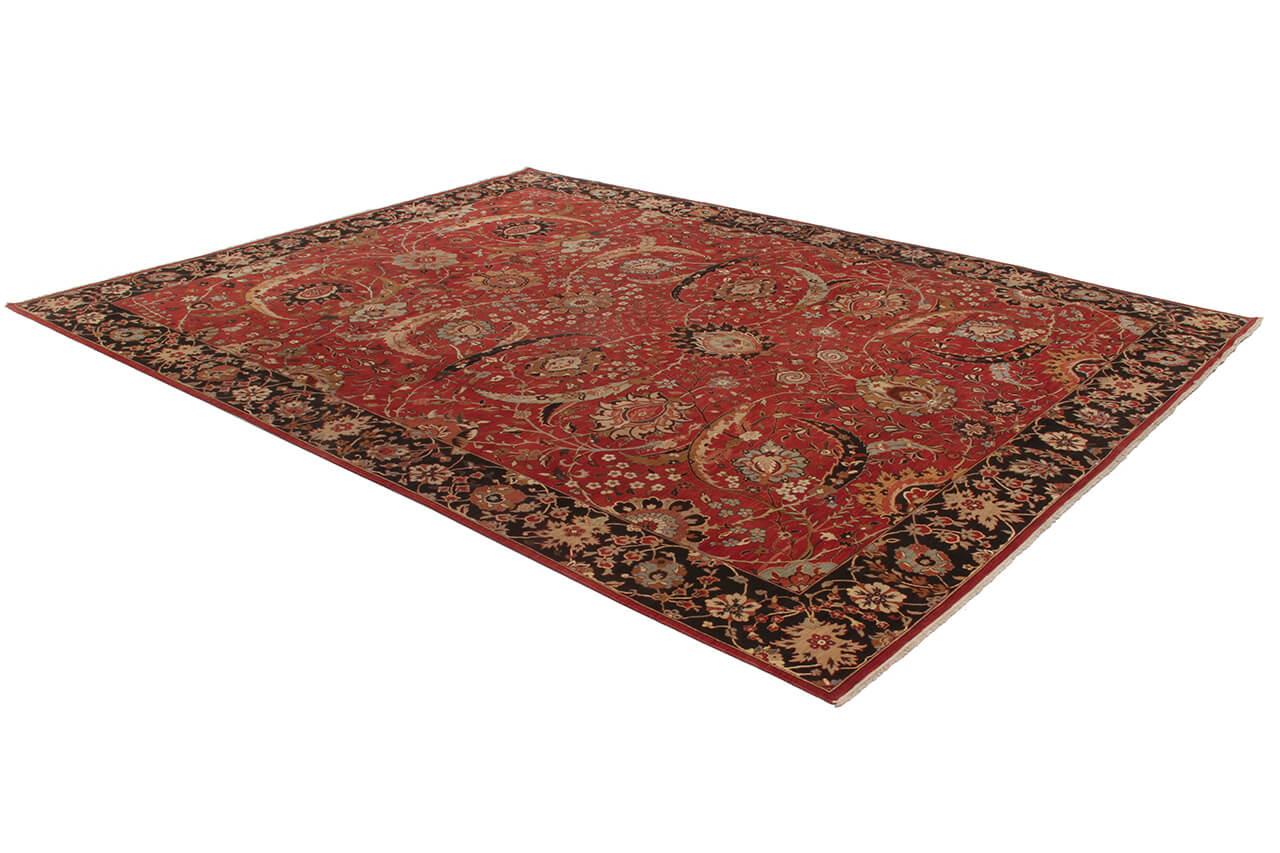
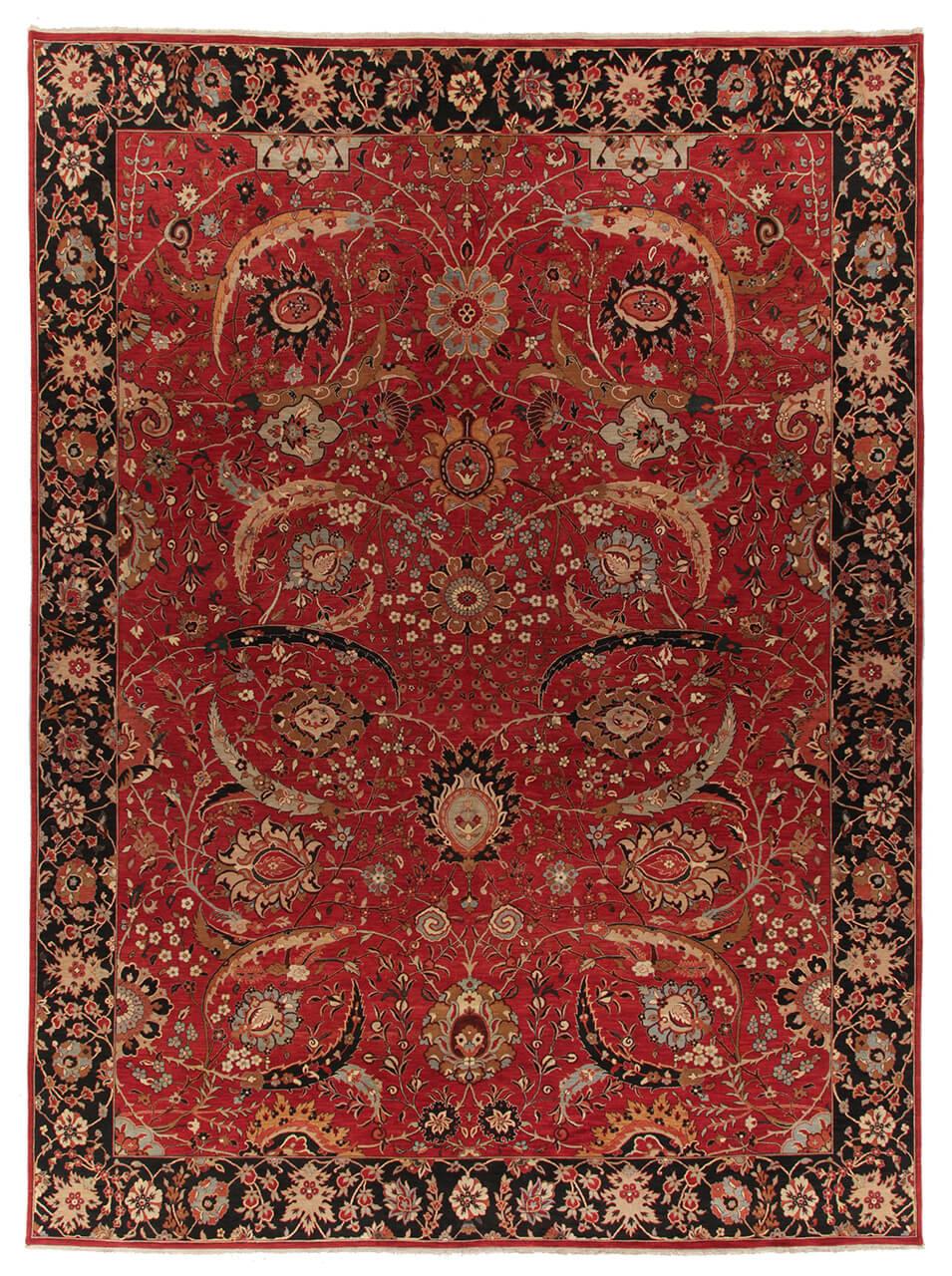
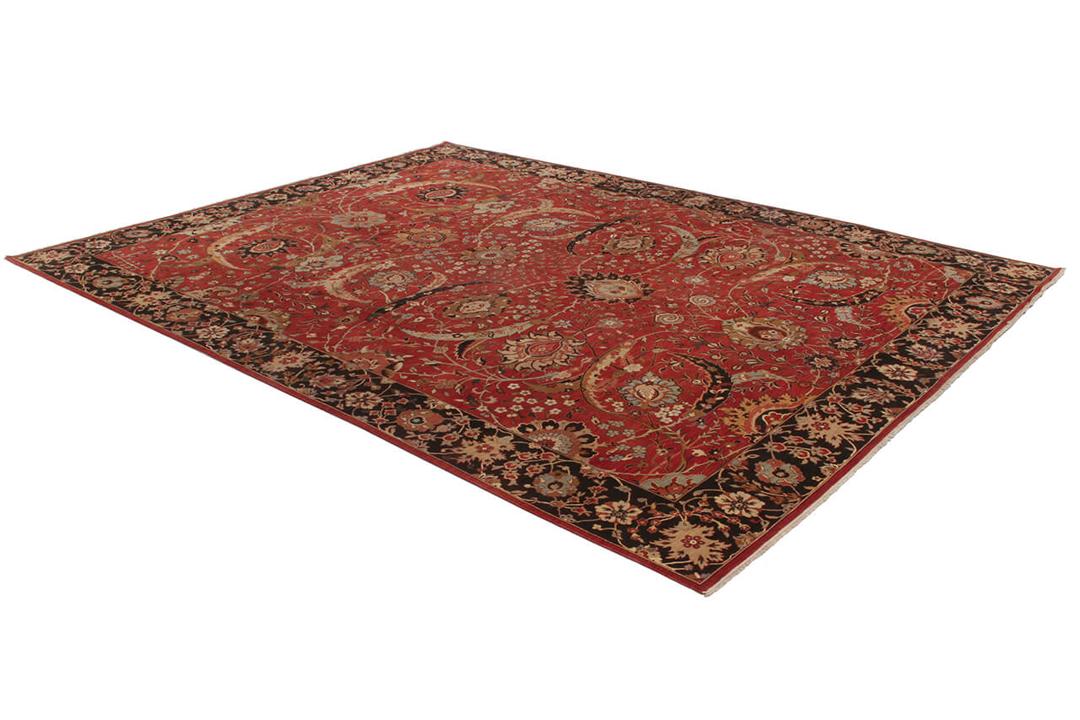
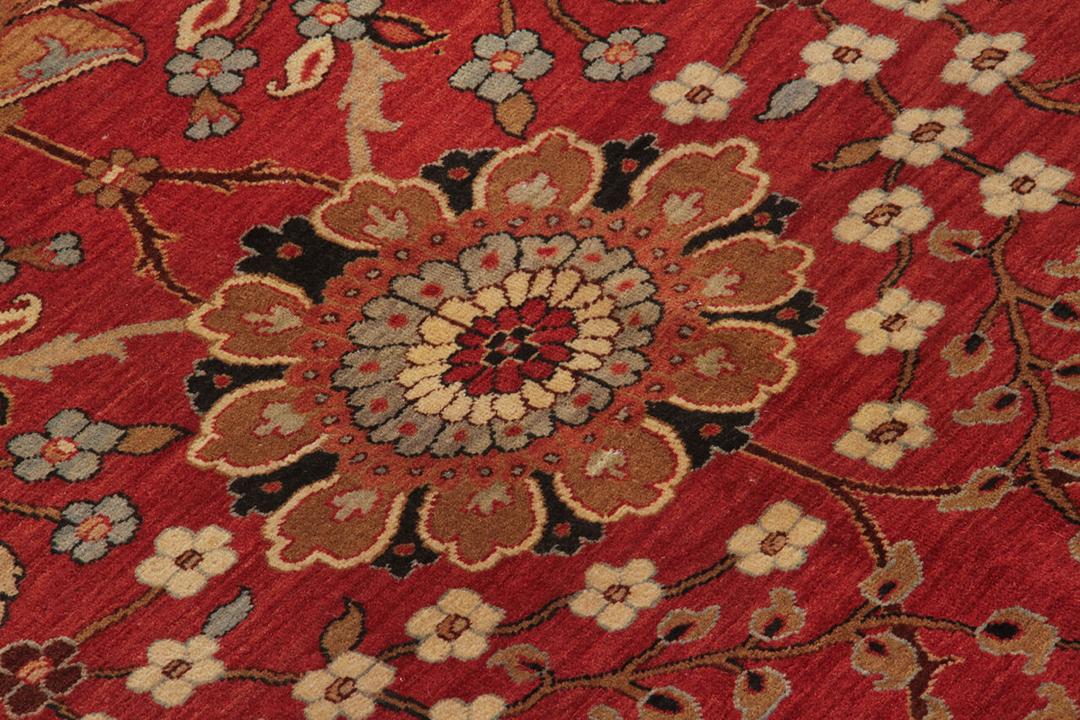
The visual language of this piece is deeply rooted in the classic floral tradition, featuring sweeping vines, elegant blossoms, and a balanced, symmetrical composition. These designs often draw inspiration from historical garden motifs, where the rug acts as a canvas for nature-inspired patterns. The bold use of a red field framed by a deep, dark border is a hallmark of this style, providing a sophisticated contrast that draws the eye.
Collecting hand-knotted rugs is a way of preserving a legacy of human skill and cultural heritage. Each piece acts as a physical record of the weaver's dexterity and the regional traditions of the loom. By owning such a piece, you are continuing a long-standing appreciation for items that are crafted slowly and with intention, ensuring their beauty and utility persist for years to come.