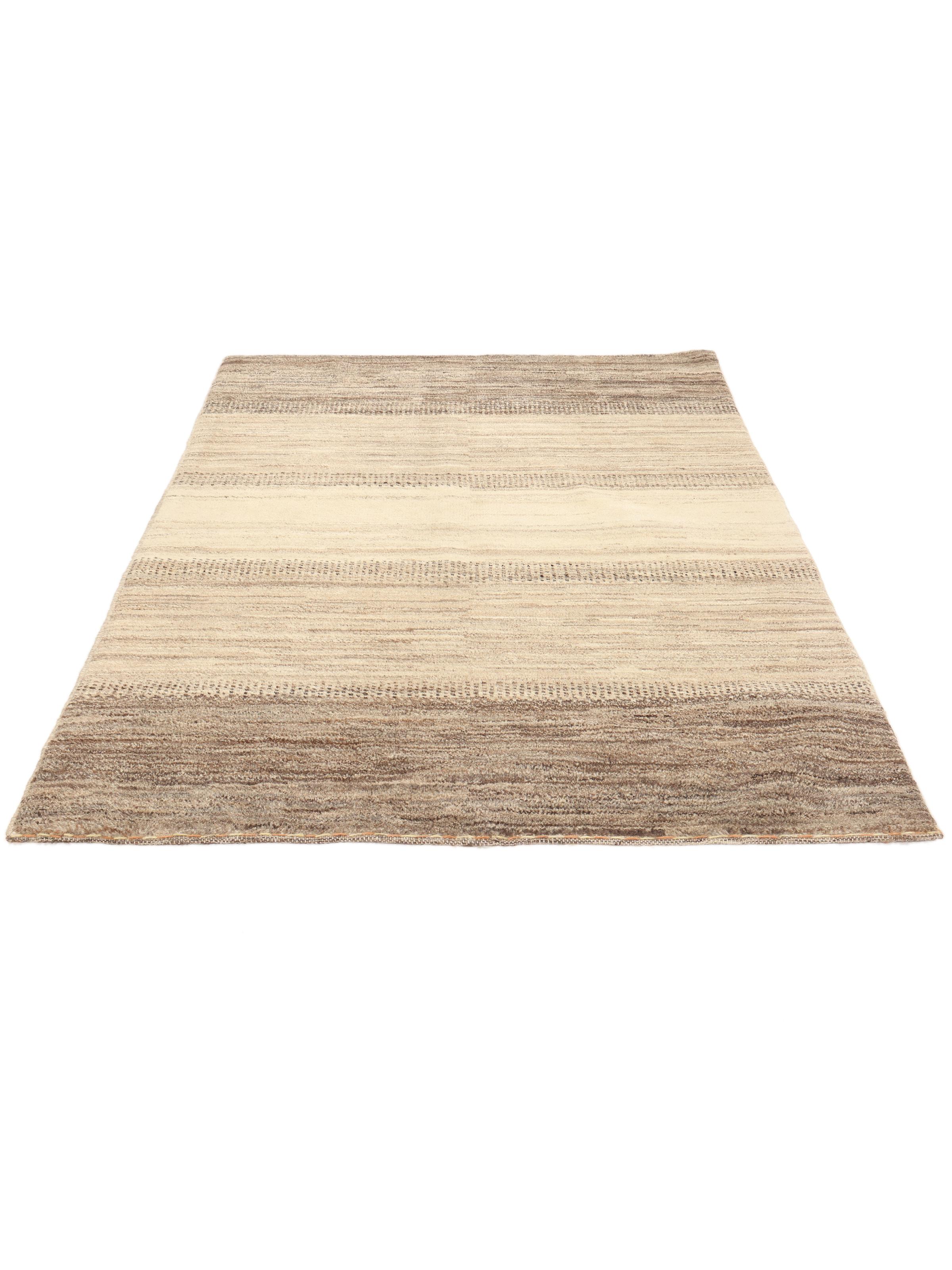
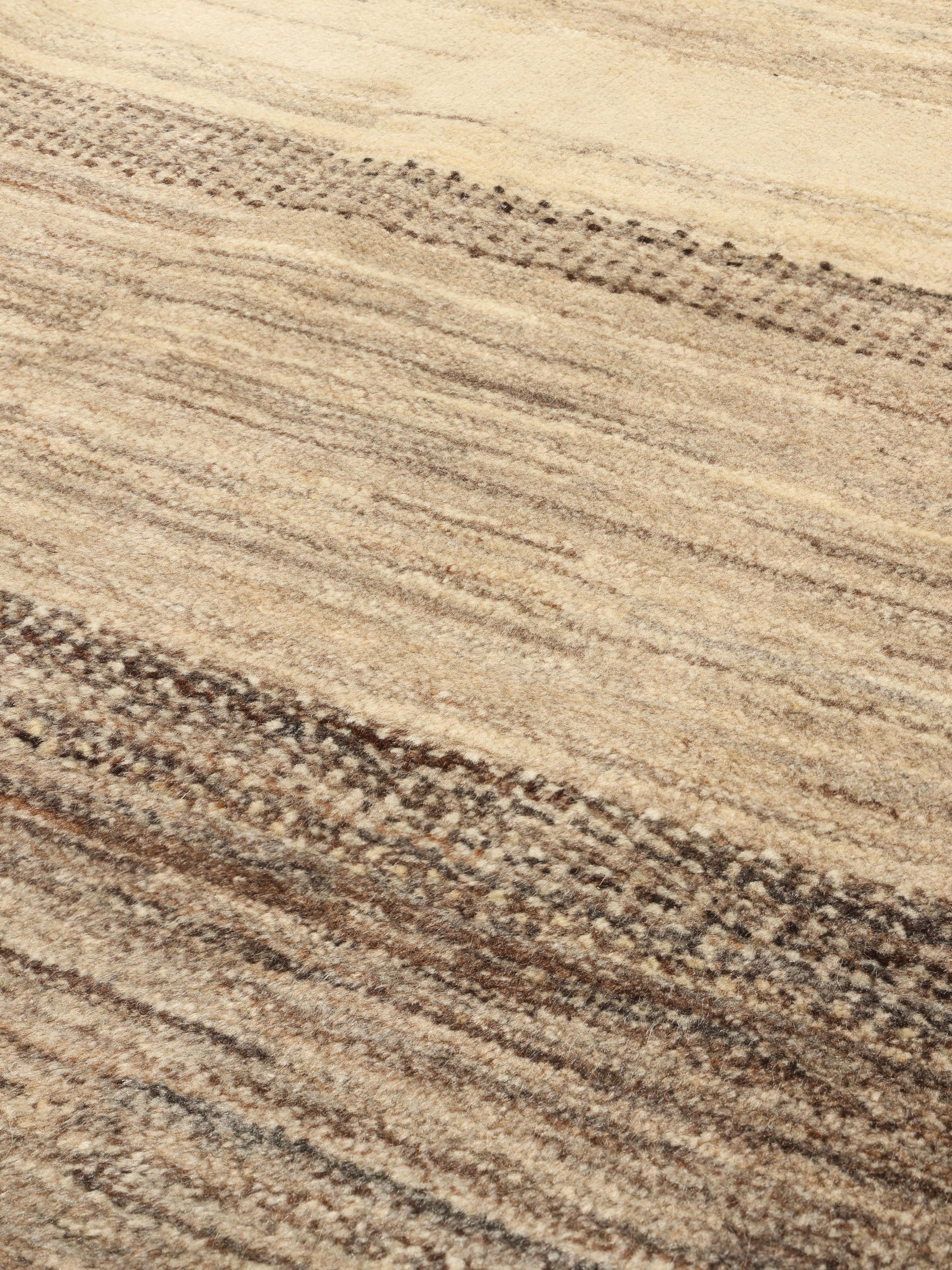
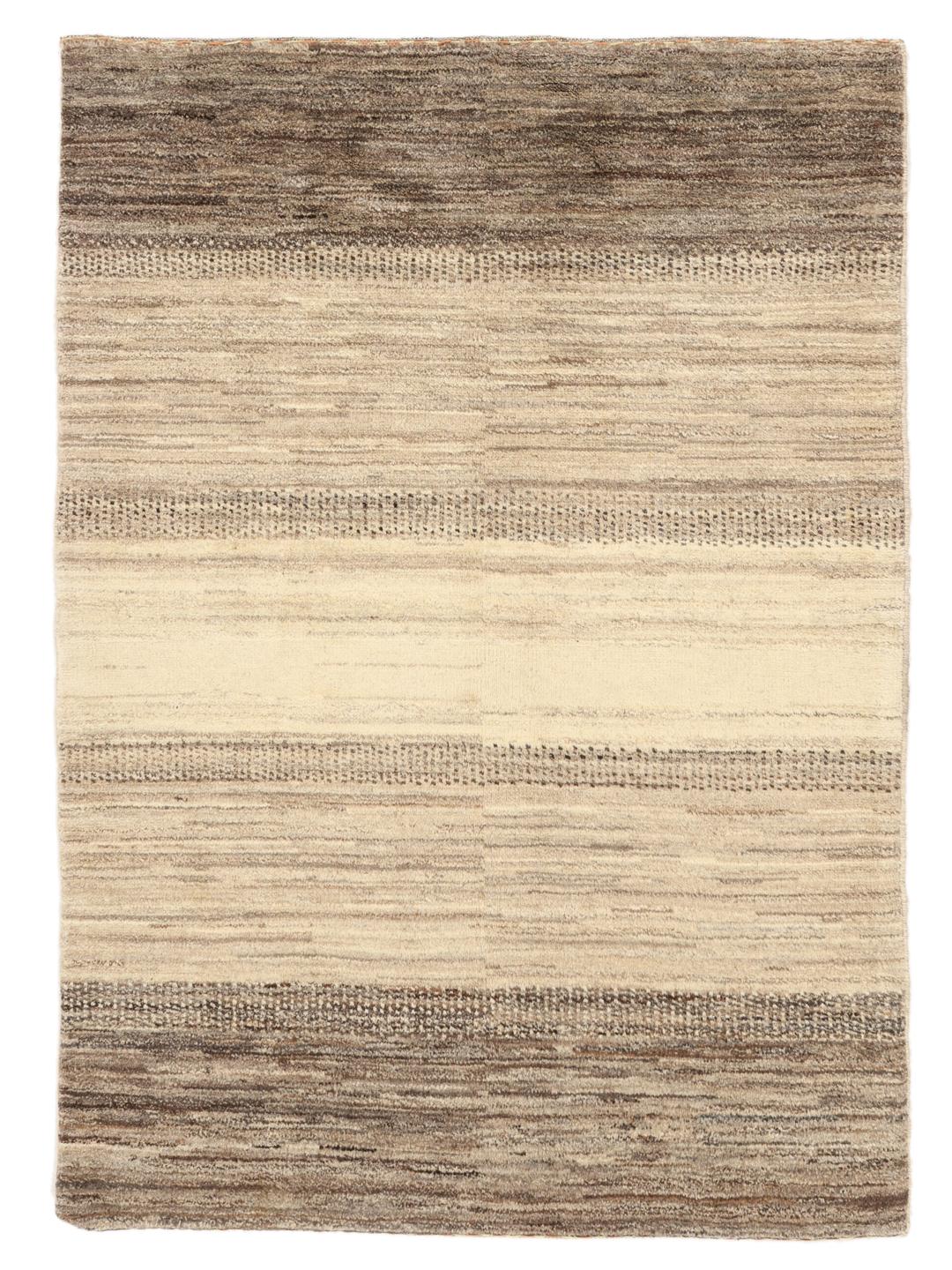
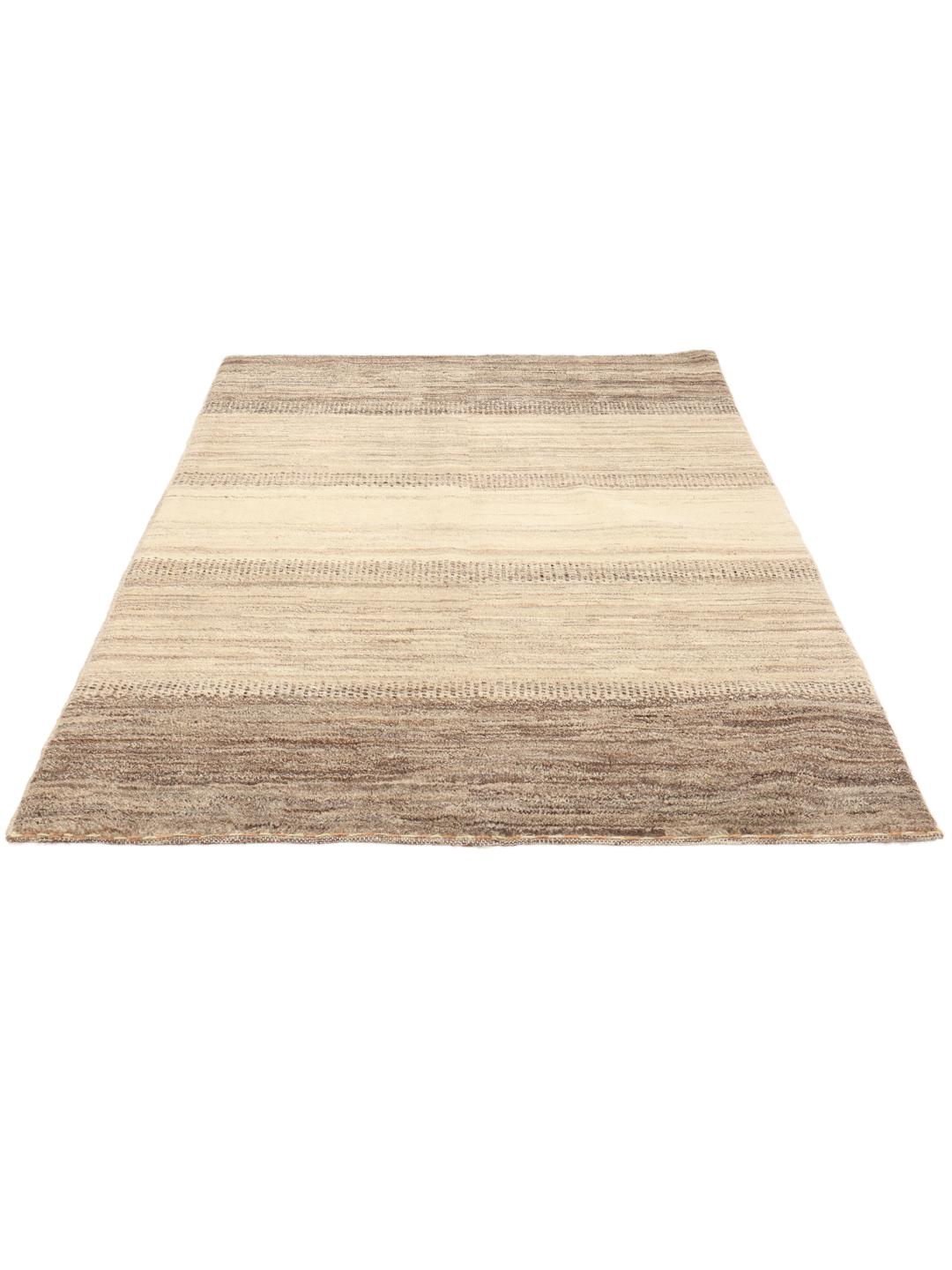
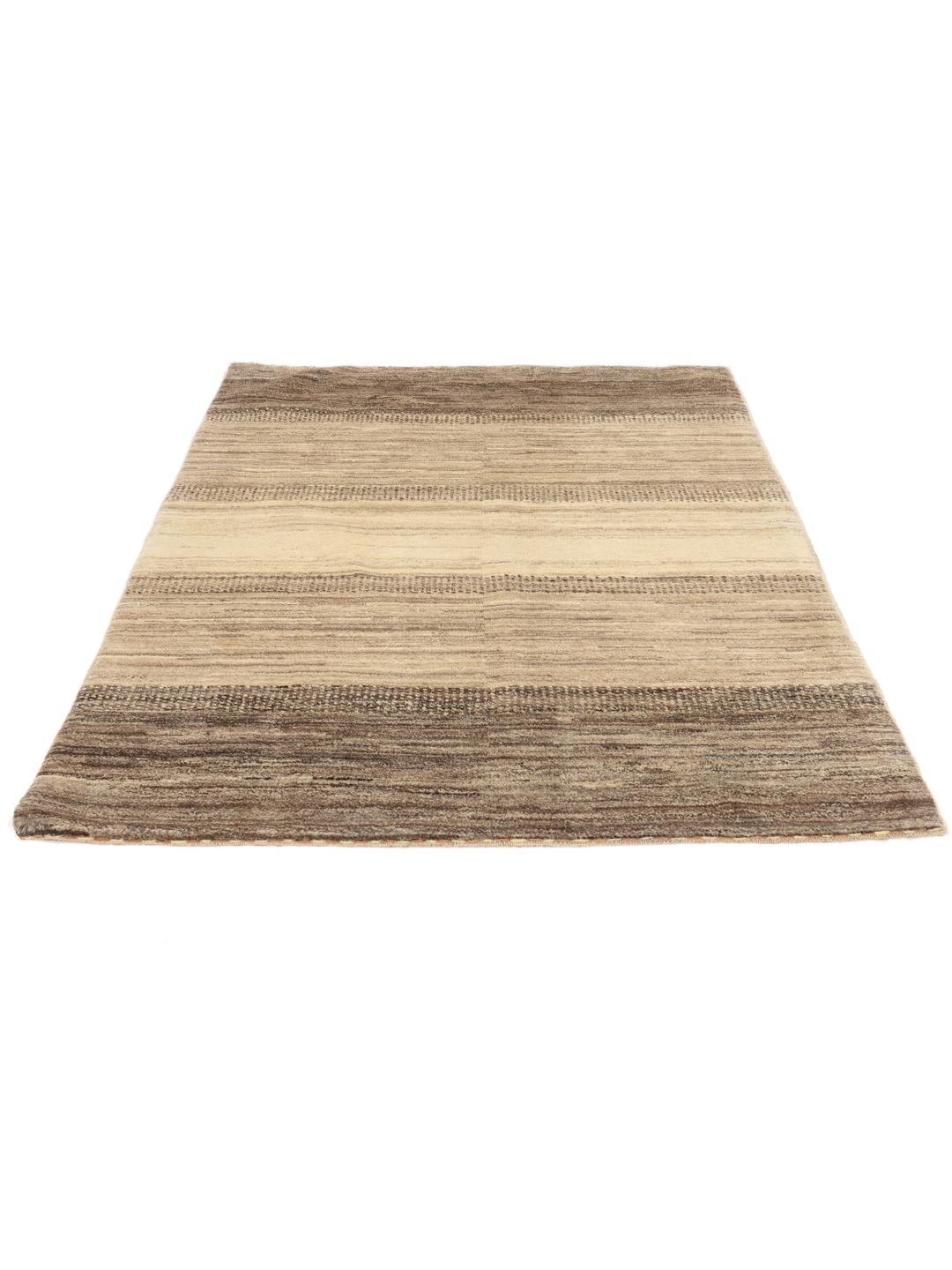
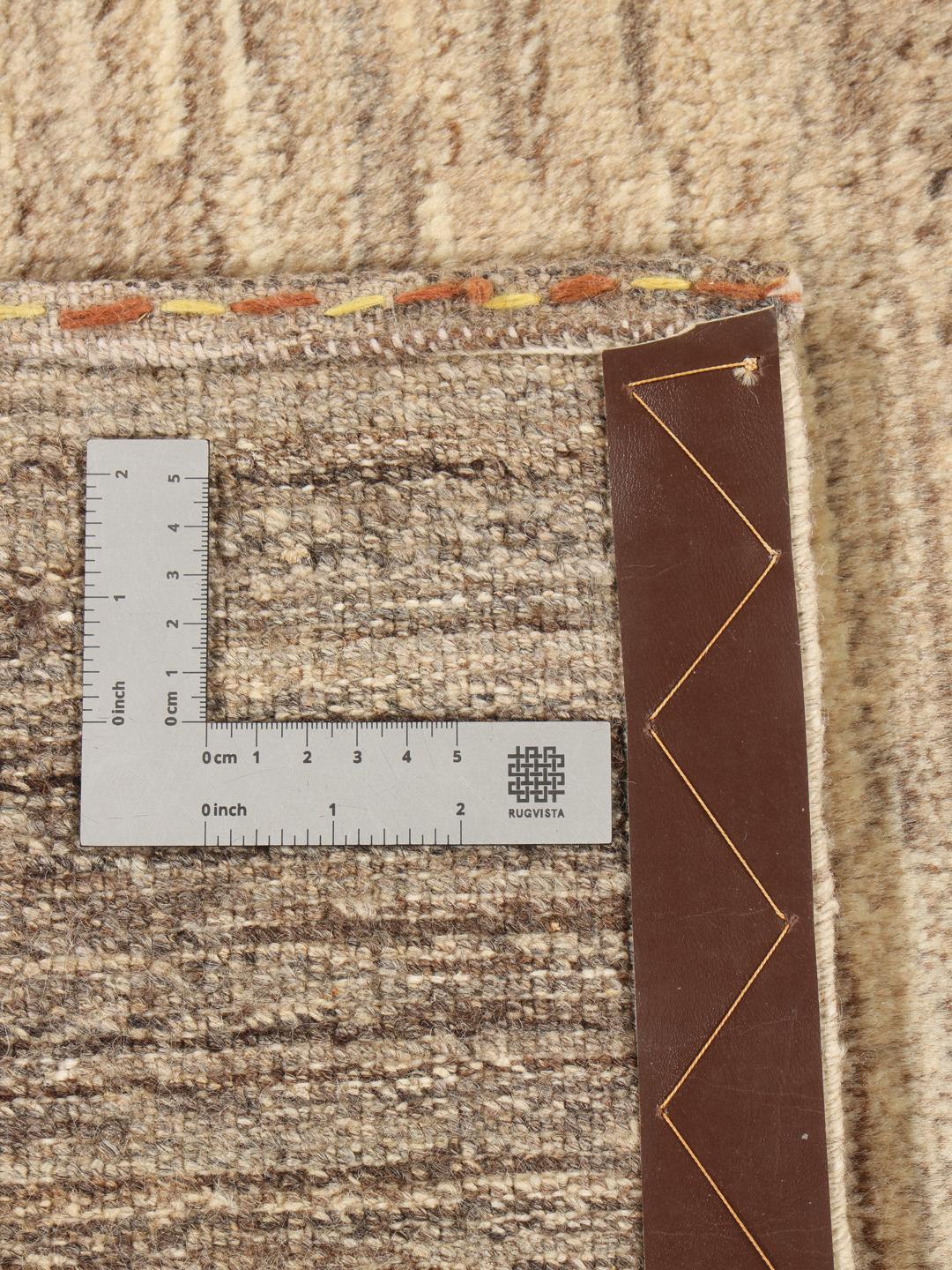
The Gabbeh tradition finds its roots in the nomadic cultures of the Middle East. Originally woven for personal use rather than for trade, these rugs were created by tribes who lived in close harmony with the landscape, using the Wool from their own flocks and natural dyes derived from local plants and minerals.
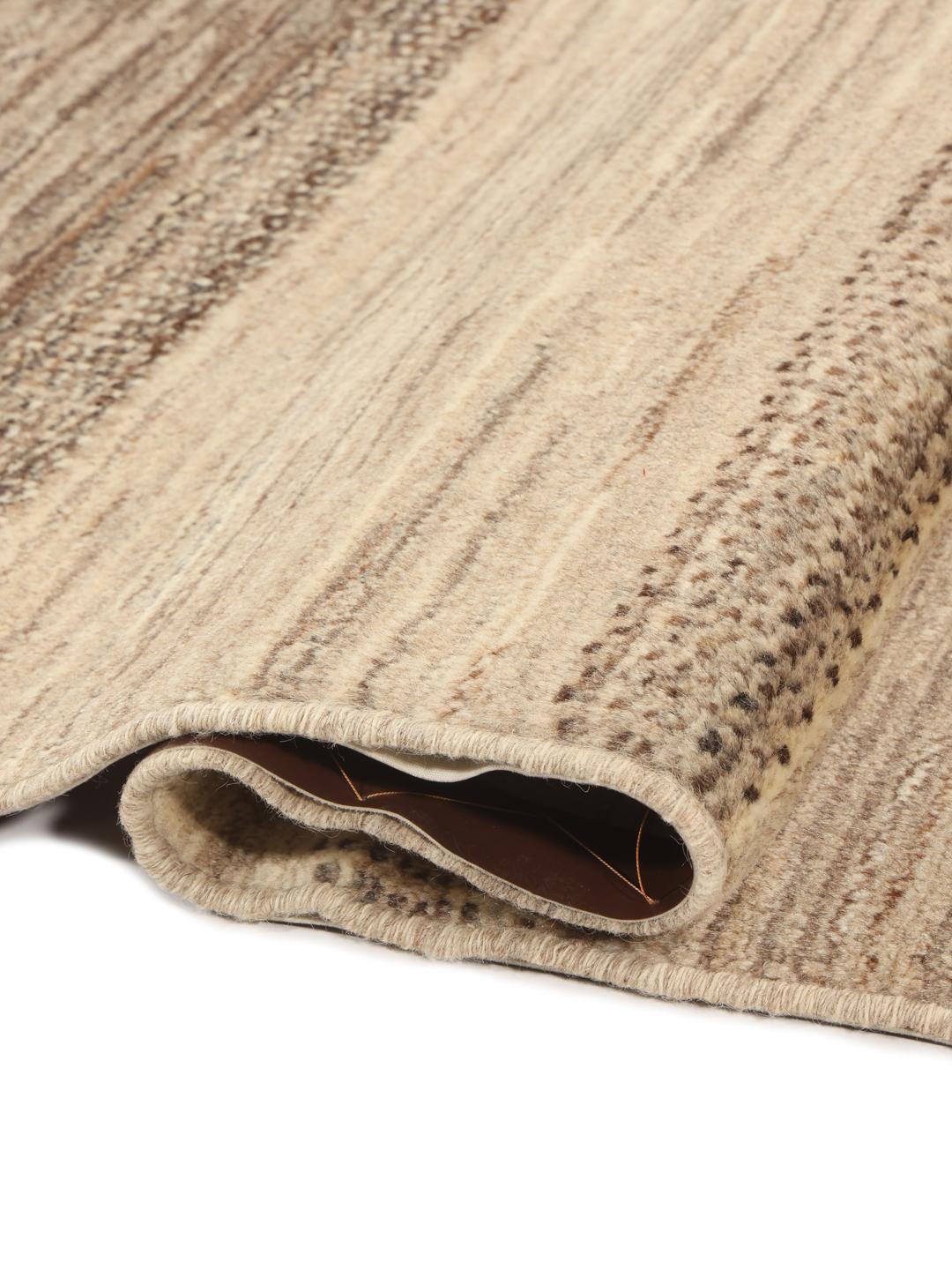
The term 'Gabbeh' itself implies something raw, natural, or unclipped, which speaks to the tradition's emphasis on thick, comfortable pile and simplistic, expressive designs. Unlike more formal urban rugs that follow rigid, pre-planned patterns, these pieces were often improvised at the loom, allowing the weaver to express their personal story through intuitive colour choices.
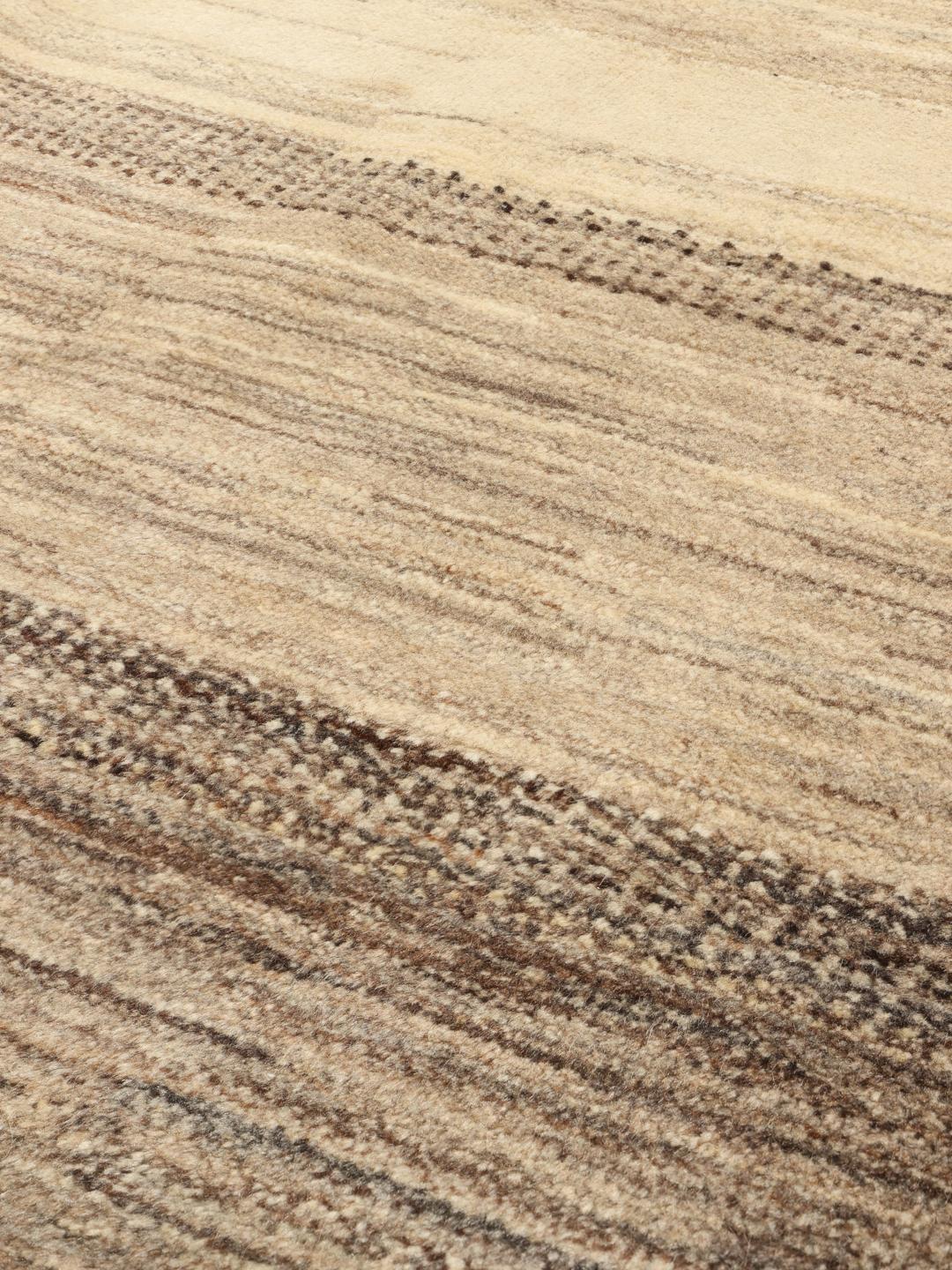
Shabargan designs are particularly noted for their use of un-dyed or naturally dyed Wool, which create a sophisticated, monochromatic, or earthy aesthetic. The signature striped or banded motifs often seen in this style represent a minimalist approach to traditional geometry, focusing on the interplay of light and shadow rather than complex pictorial scenes.
Today, these rugs are highly valued by collectors and homeowners alike for their authenticity and connection to ancient craft practices. Owning a piece from this tradition is an investment in human skill and cultural heritage, offering a tangible link to a lifestyle that prioritises function, comfort, and the beauty of natural materials.