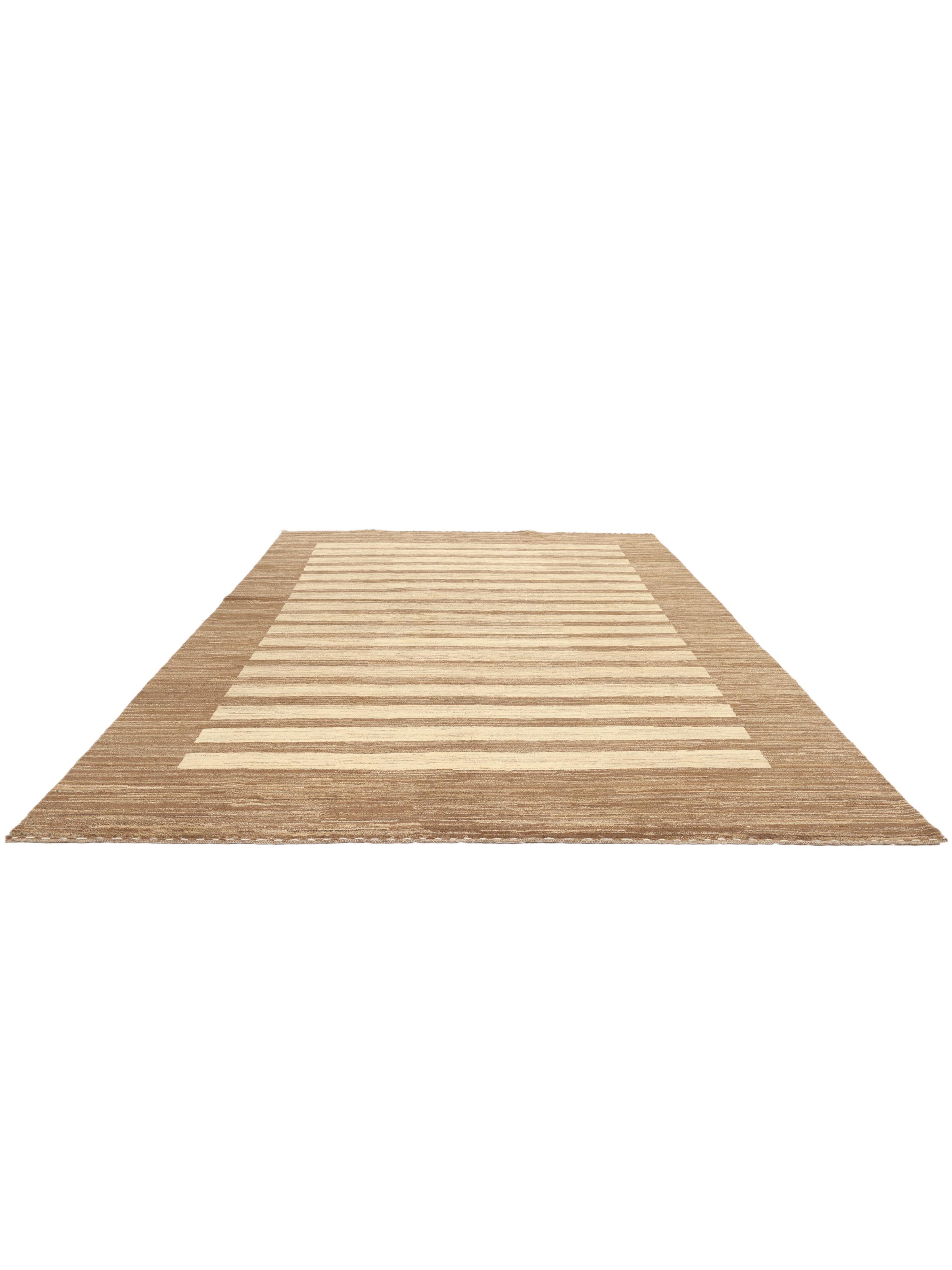
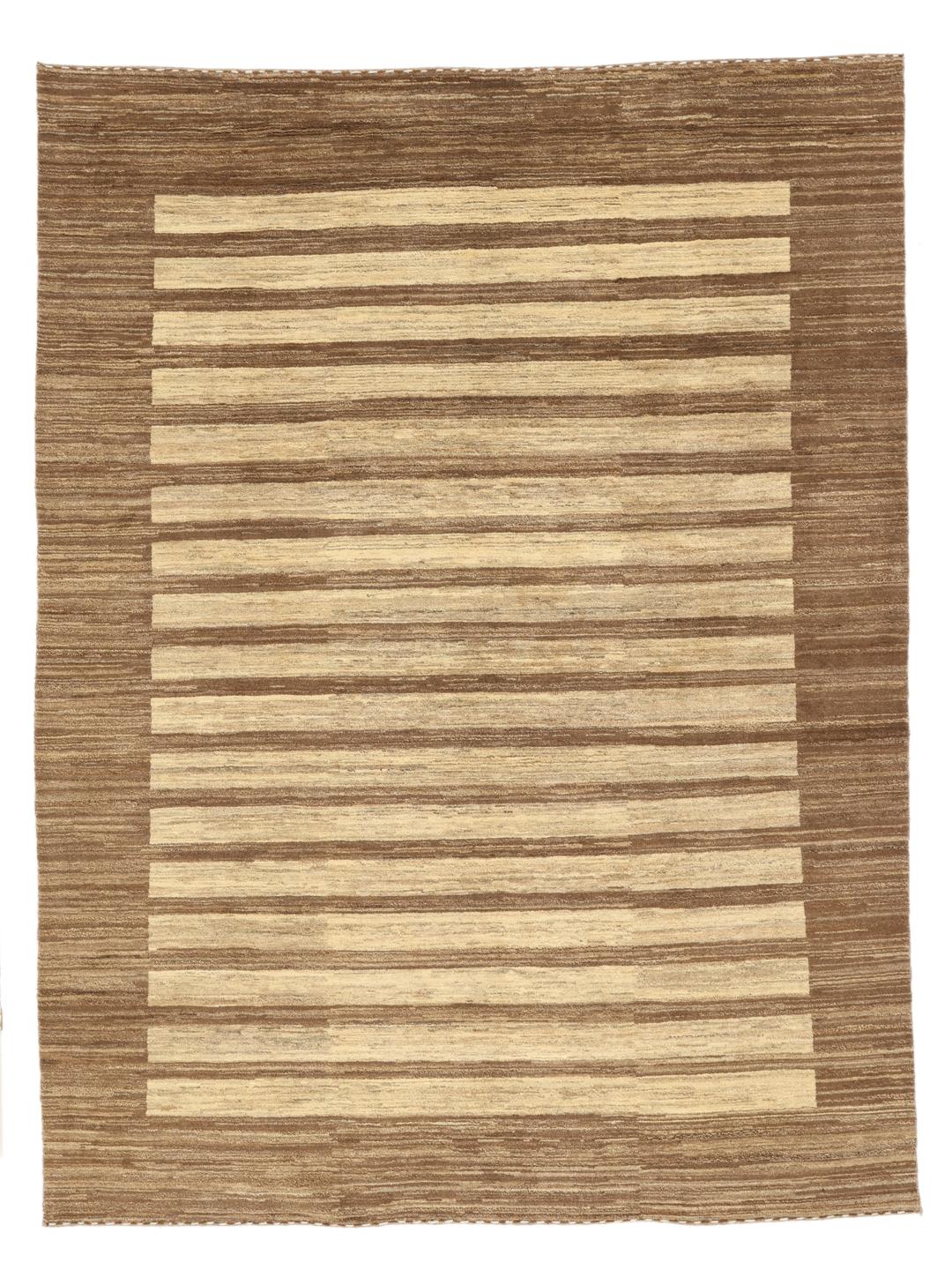
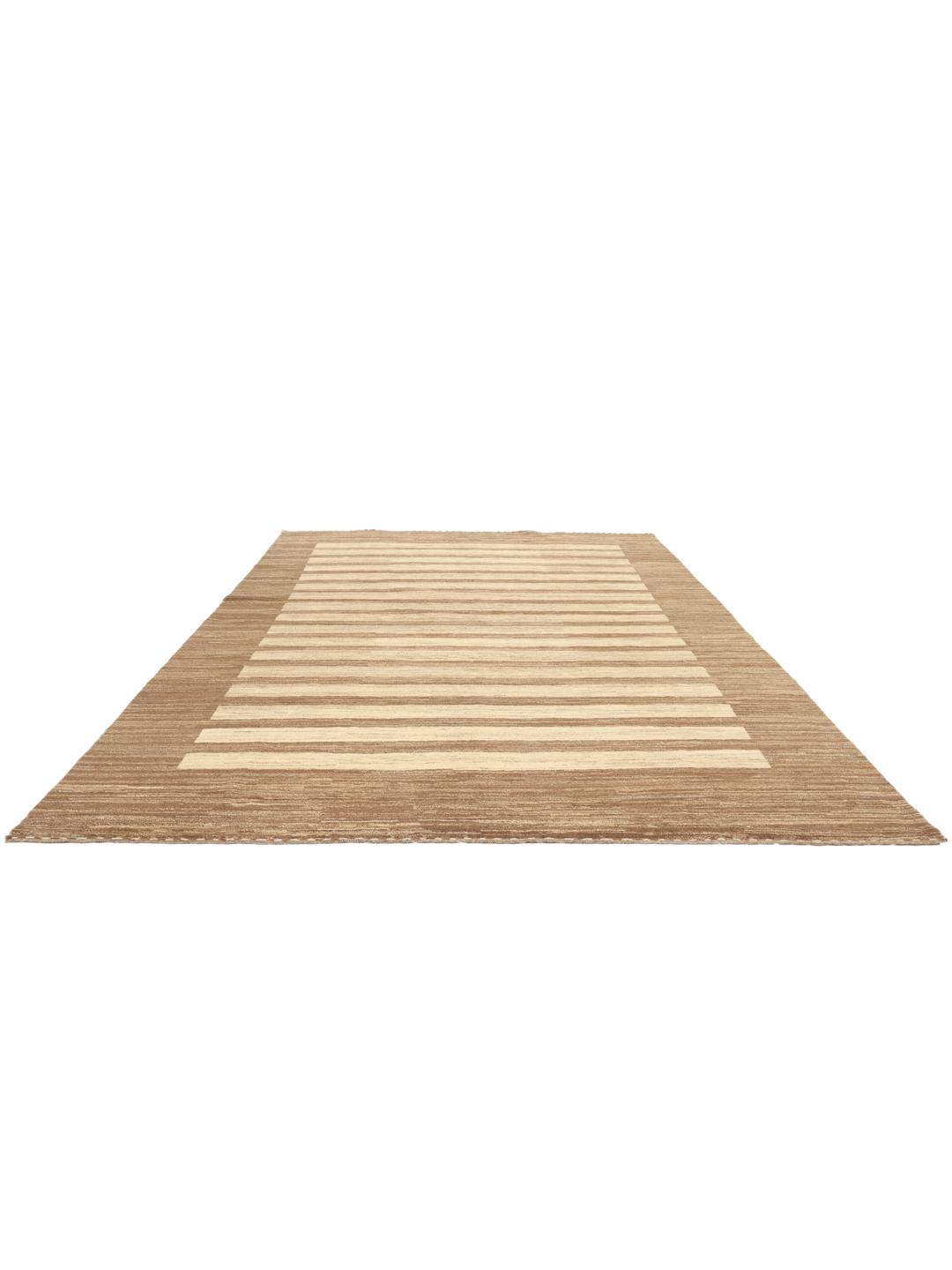
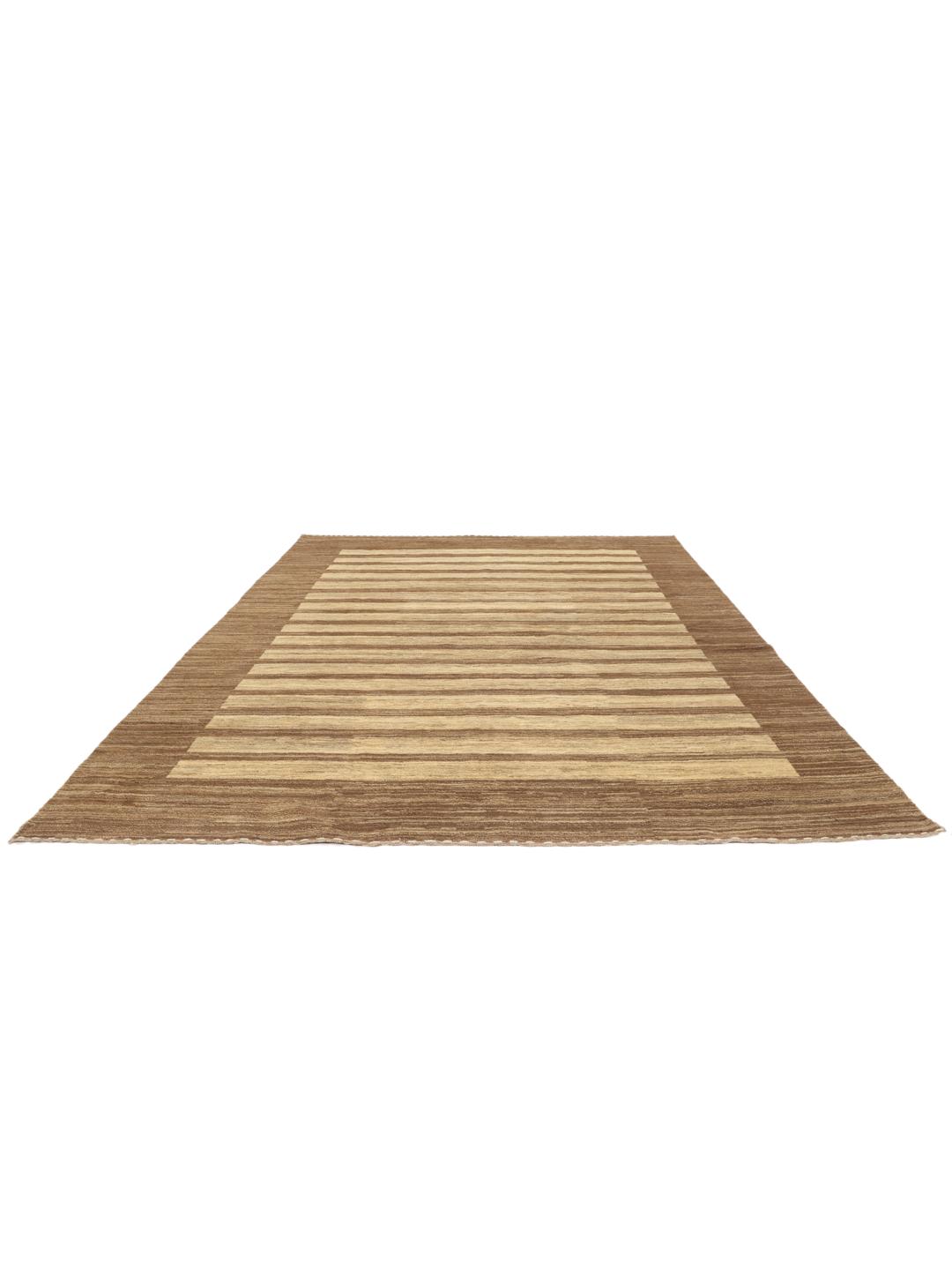
The Shabargan tradition finds its roots in the rich weaving culture of the Middle East, where the art of the rug has been passed down through generations. These rugs are often associated with the nomadic tribes who developed distinct styles that prioritise both functionality and symbolic storytelling, evolving over centuries into the sophisticated pieces we see today.
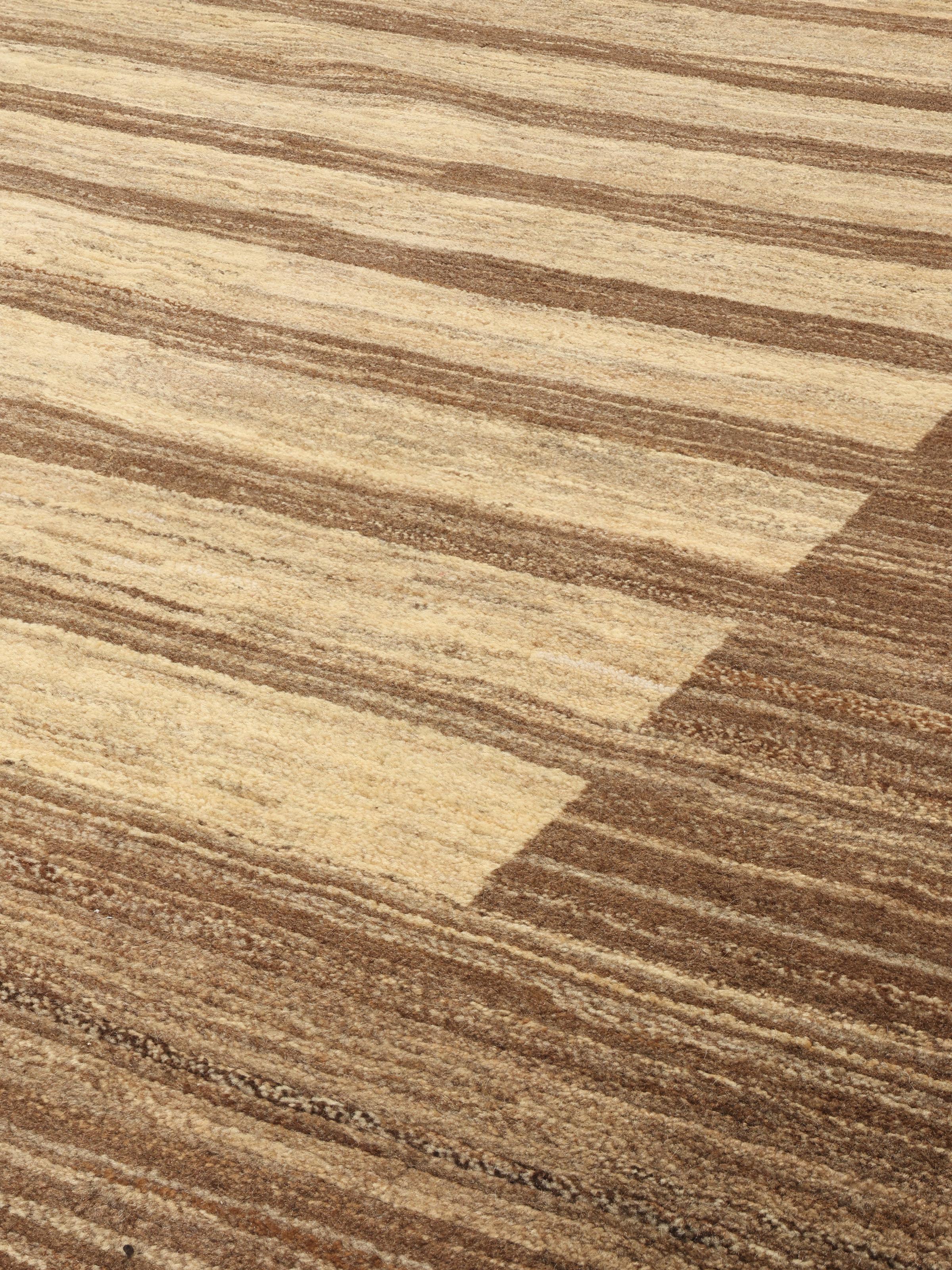
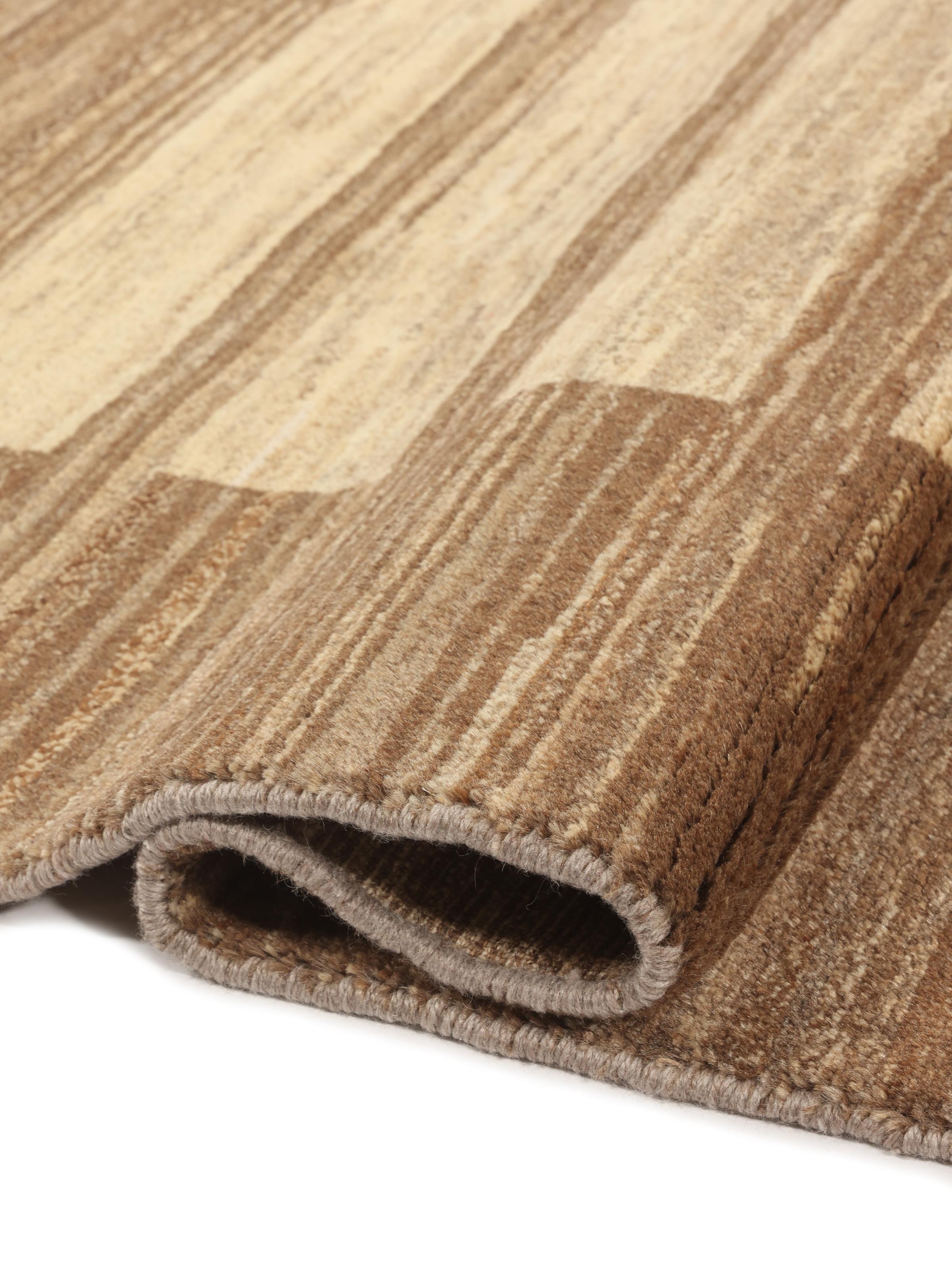
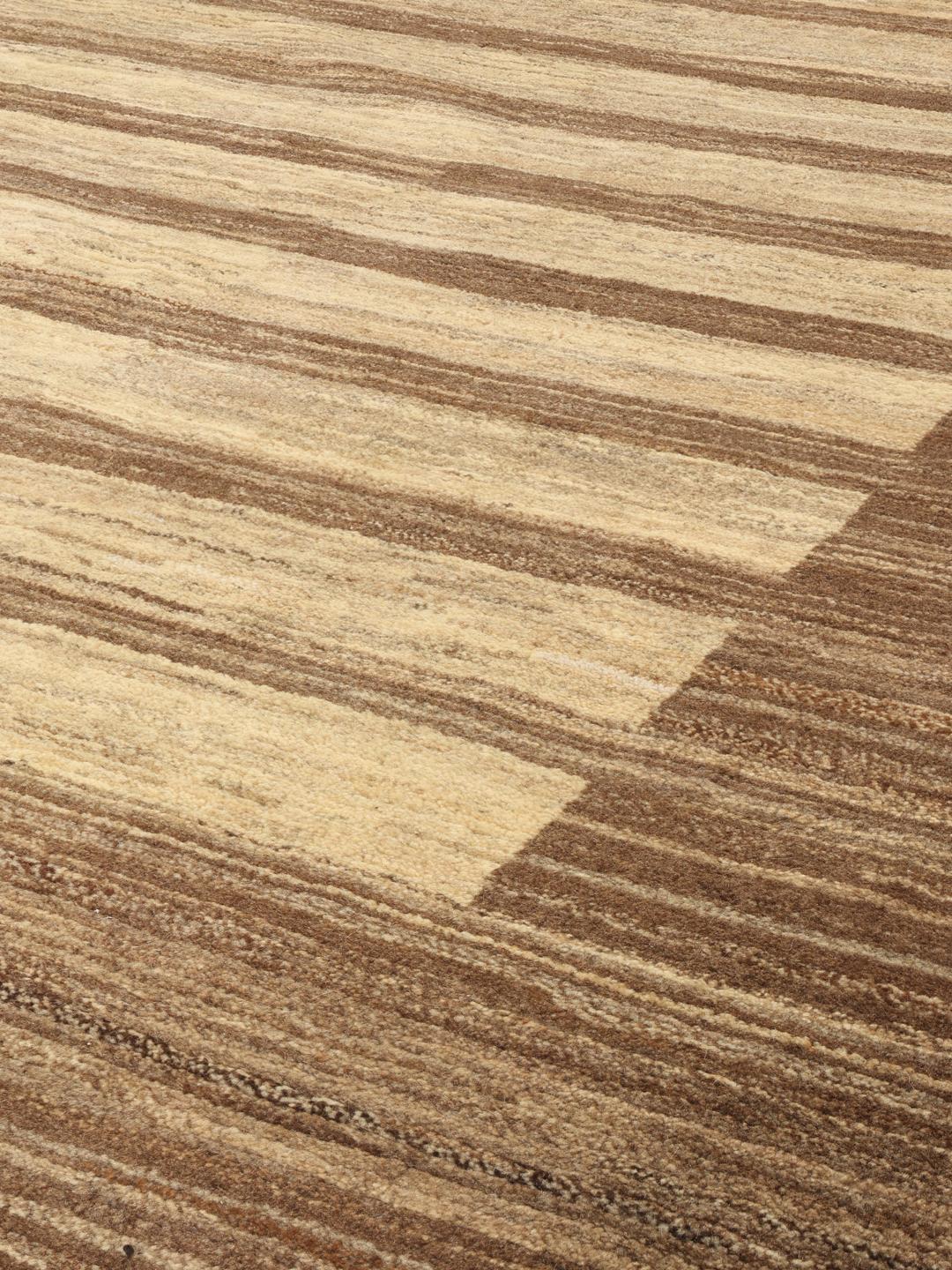
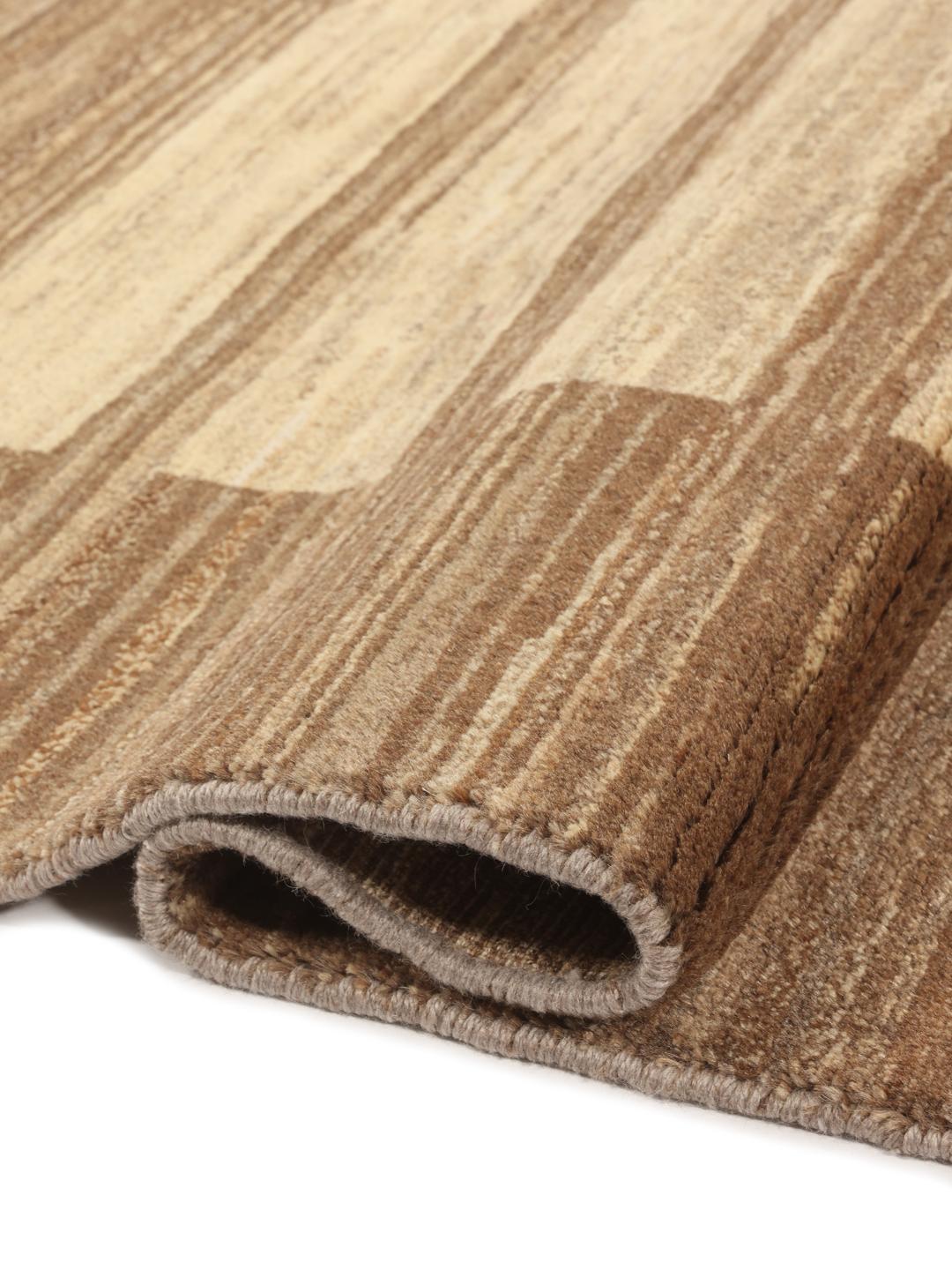
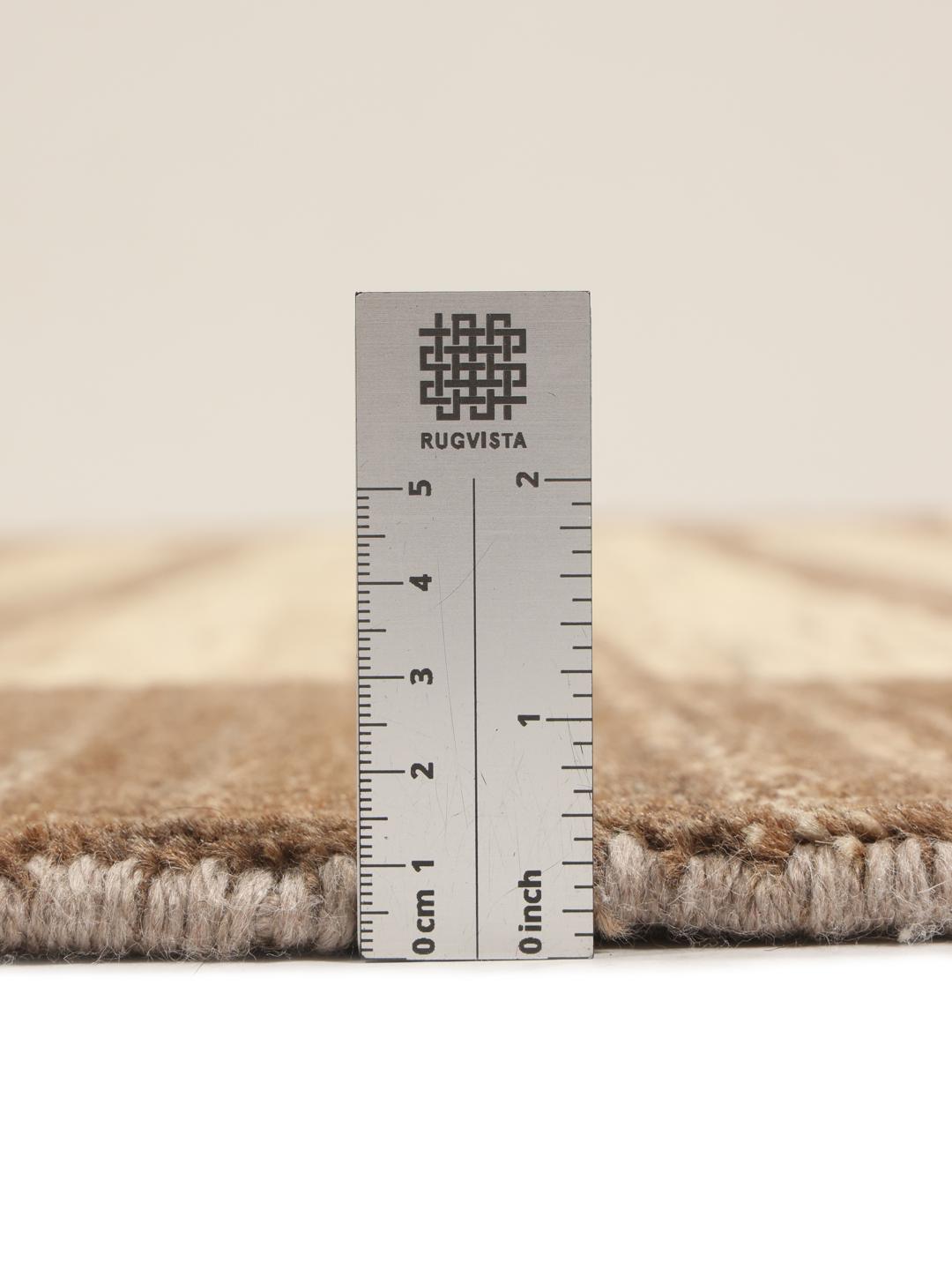
The term Gabbeh refers to a type of rug traditionally woven with a thicker, coarser, and longer pile compared to other styles. This construction was originally designed to provide nomads with a warm and comfortable floor covering in harsh, cold climates. The focus is on a heavy, plush pile that feels substantial and grounding underfoot.
Visually, these rugs are known for their minimalist or geometric aesthetics, often utilising bold, simple motifs or stripes that allow the raw beauty of the wool to shine. While they can feature vibrant colours, they are equally celebrated for their use of natural, undyed wool tones, which highlight the organic textures of the material.
Collectors value these rugs for their authenticity and the human story behind every knot. Owning a piece from this tradition is an appreciation of heritage and manual skill, representing a connection to a long-standing history of artistry that favours the unique character of individual expression over industrial uniformity.