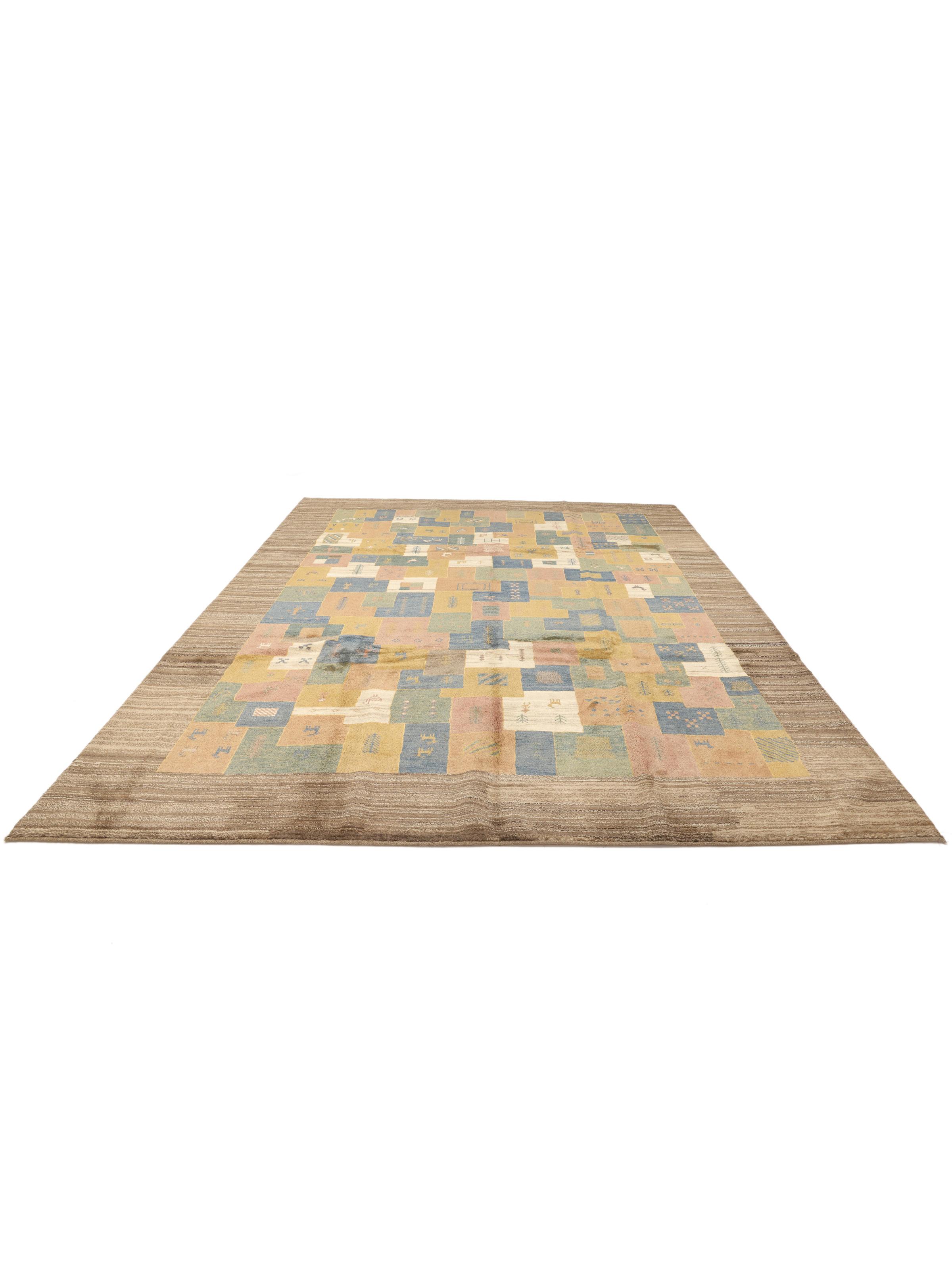
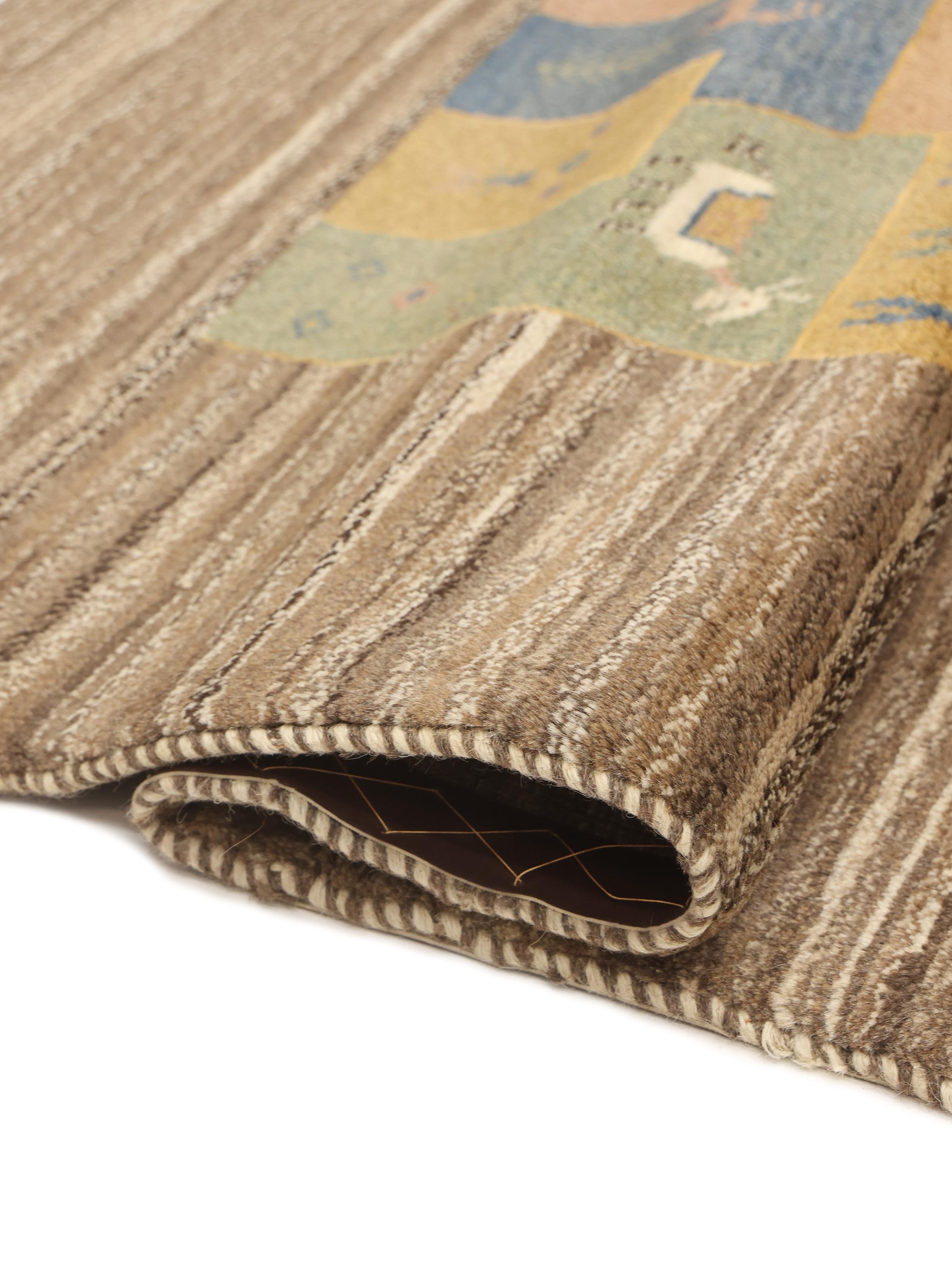
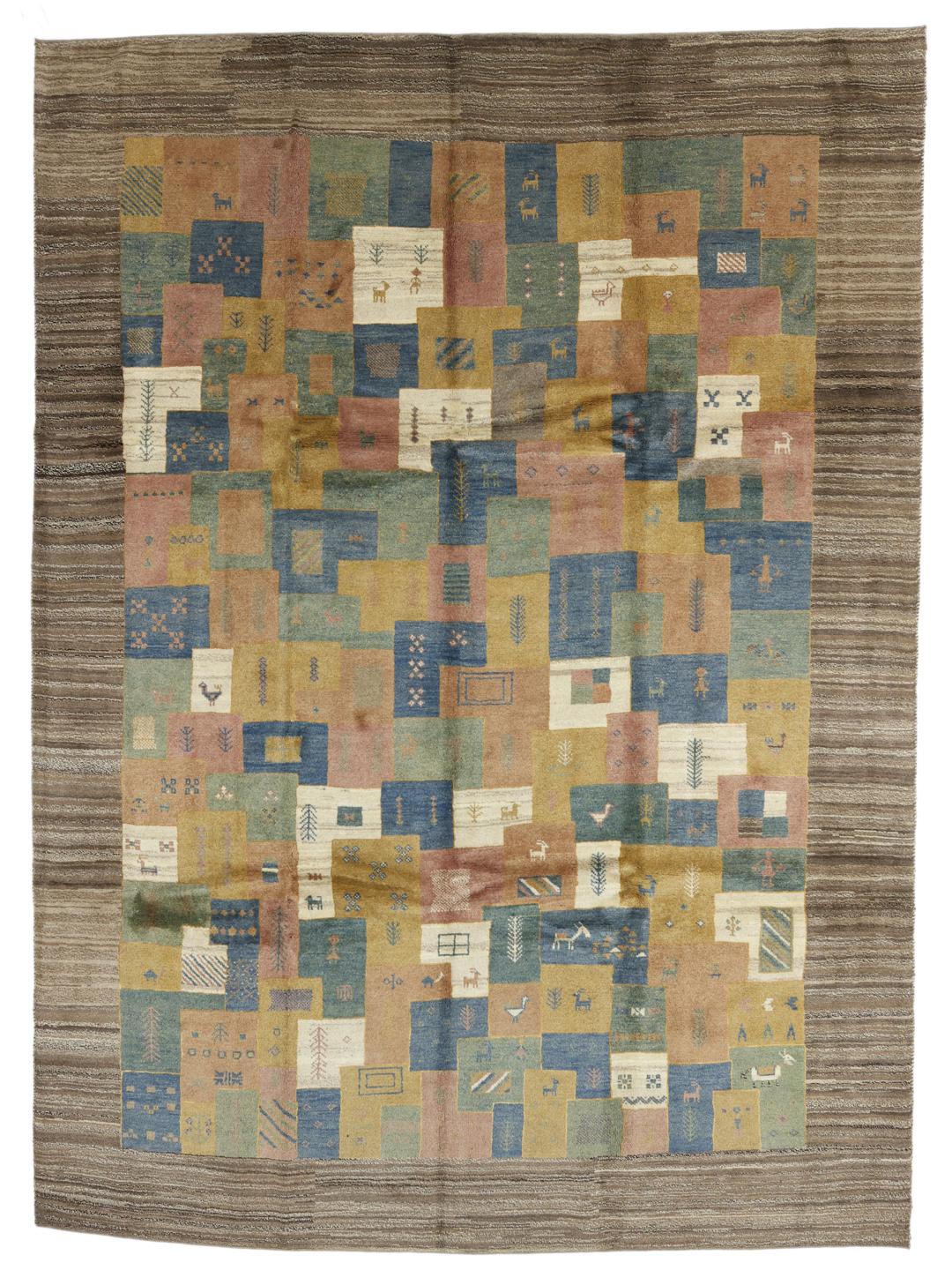
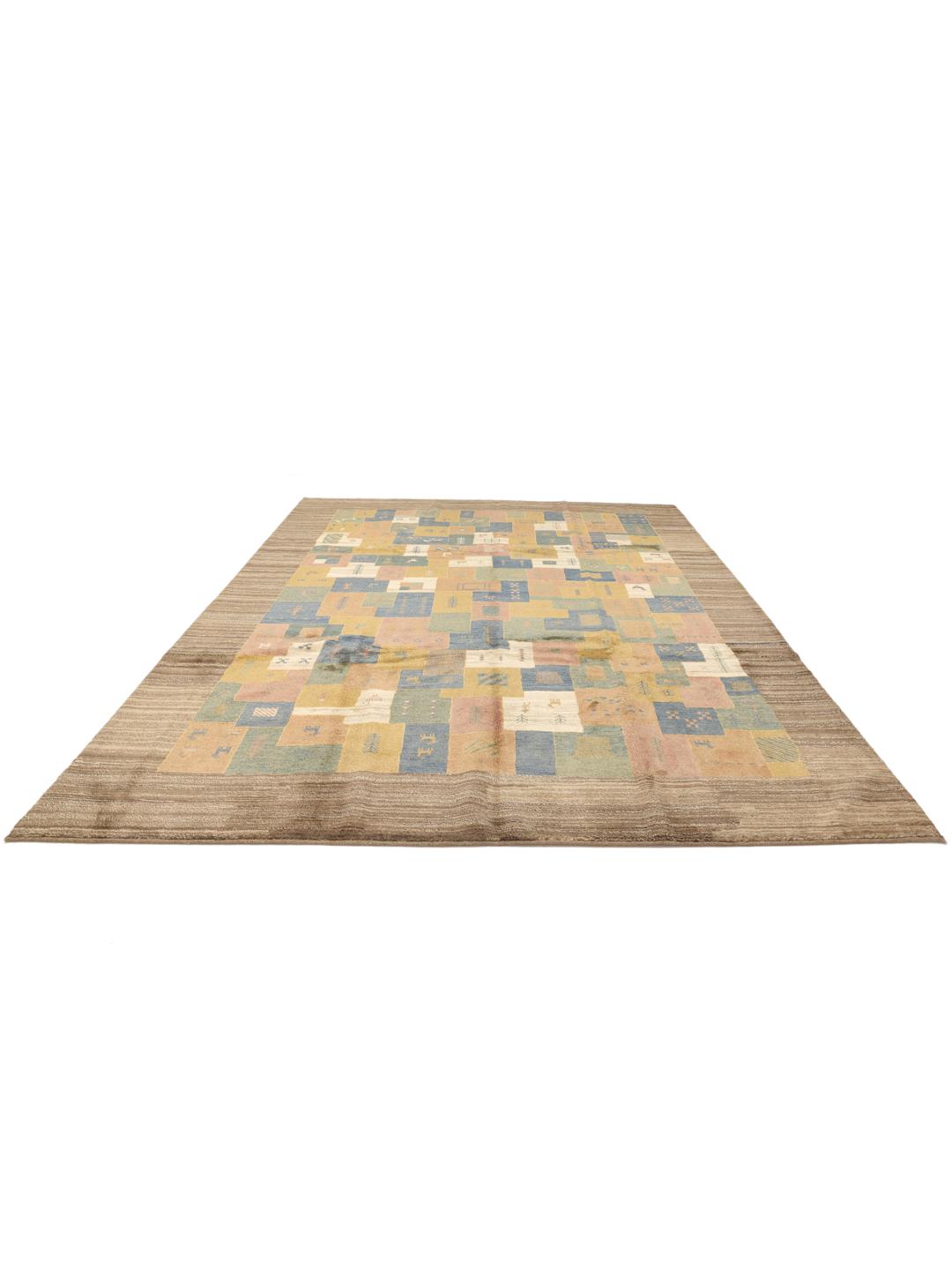
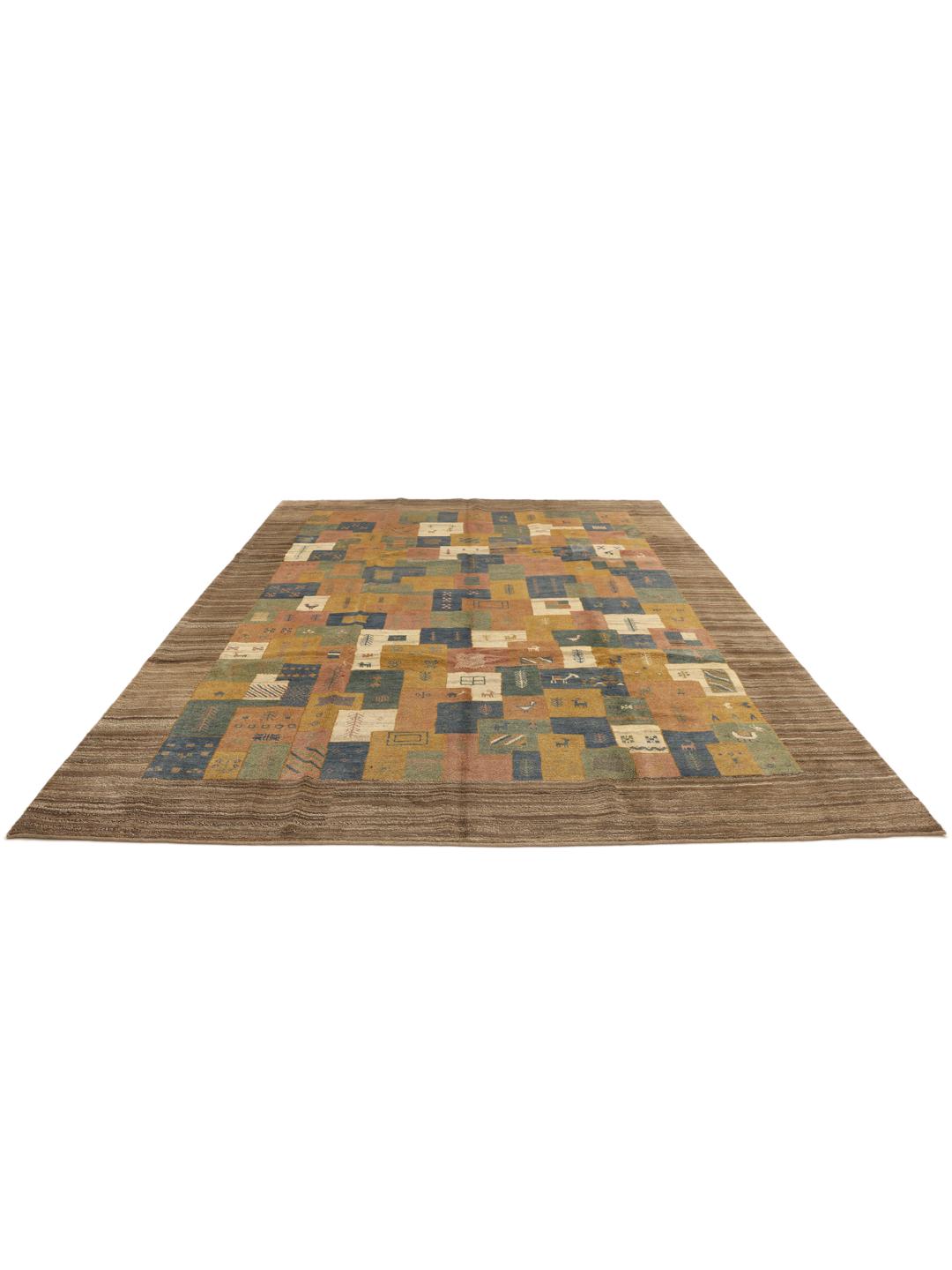
Gabbeh rugs originate from the nomadic tribes of the Middle East, specifically the Qashqai and Luri peoples. Historically, these rugs were woven for personal use within the tent, serving as functional bedding and floor coverings rather than as decorative items for sale. This origin gives them a raw, authentic quality that distinguishes them from more formal, court-style weaving traditions.
The term 'Gabbeh' itself means 'raw', 'natural', or 'unclipped', which reflects the rug's simple, honest construction. Unlike many other types of rugs that rely on complex, pre-planned patterns, Gabbeh weavers often rely on their own imagination and immediate surroundings to create their designs. This approach results in a highly expressive and organic style that prioritises creative freedom over rigid symmetry.
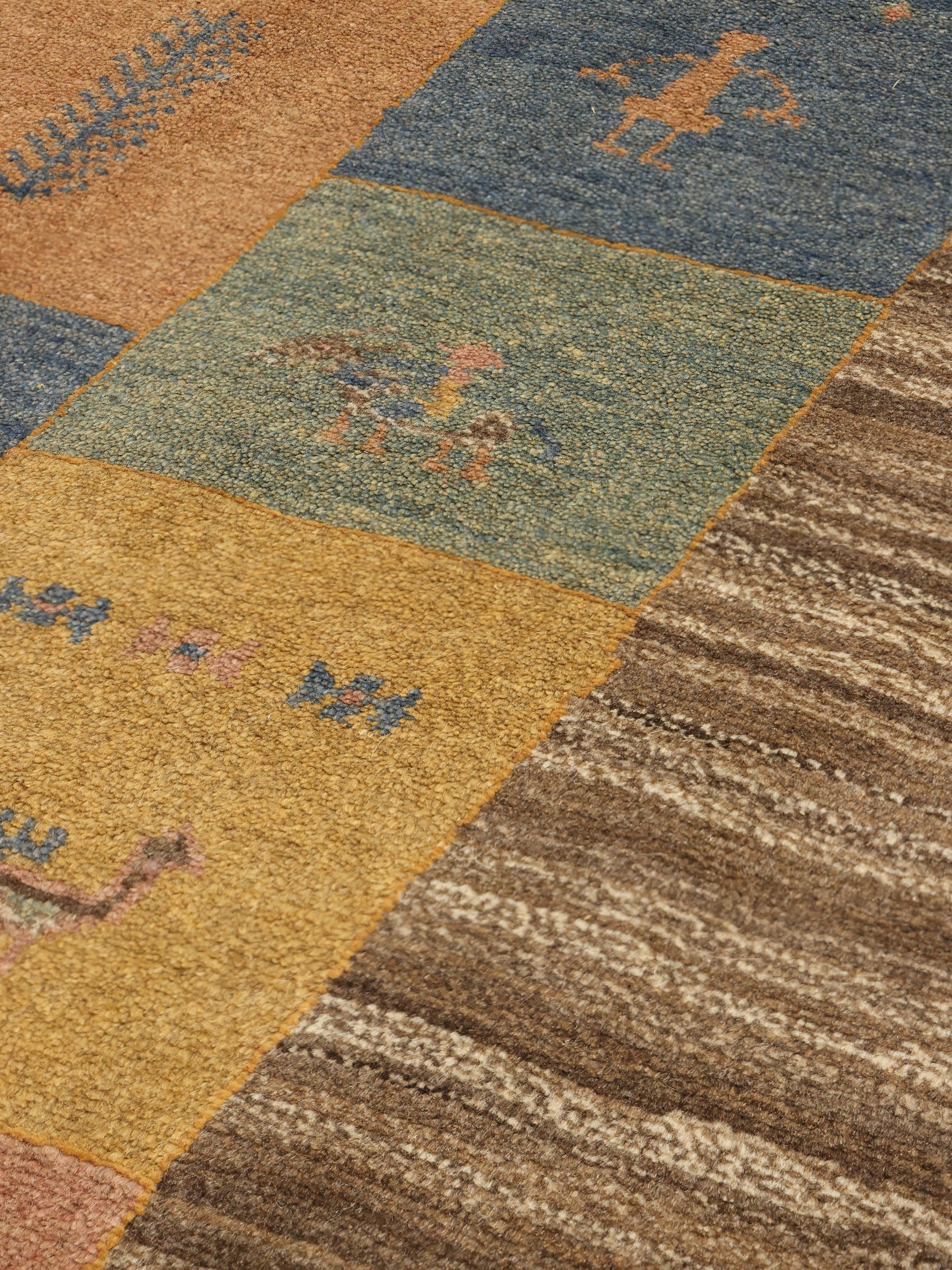
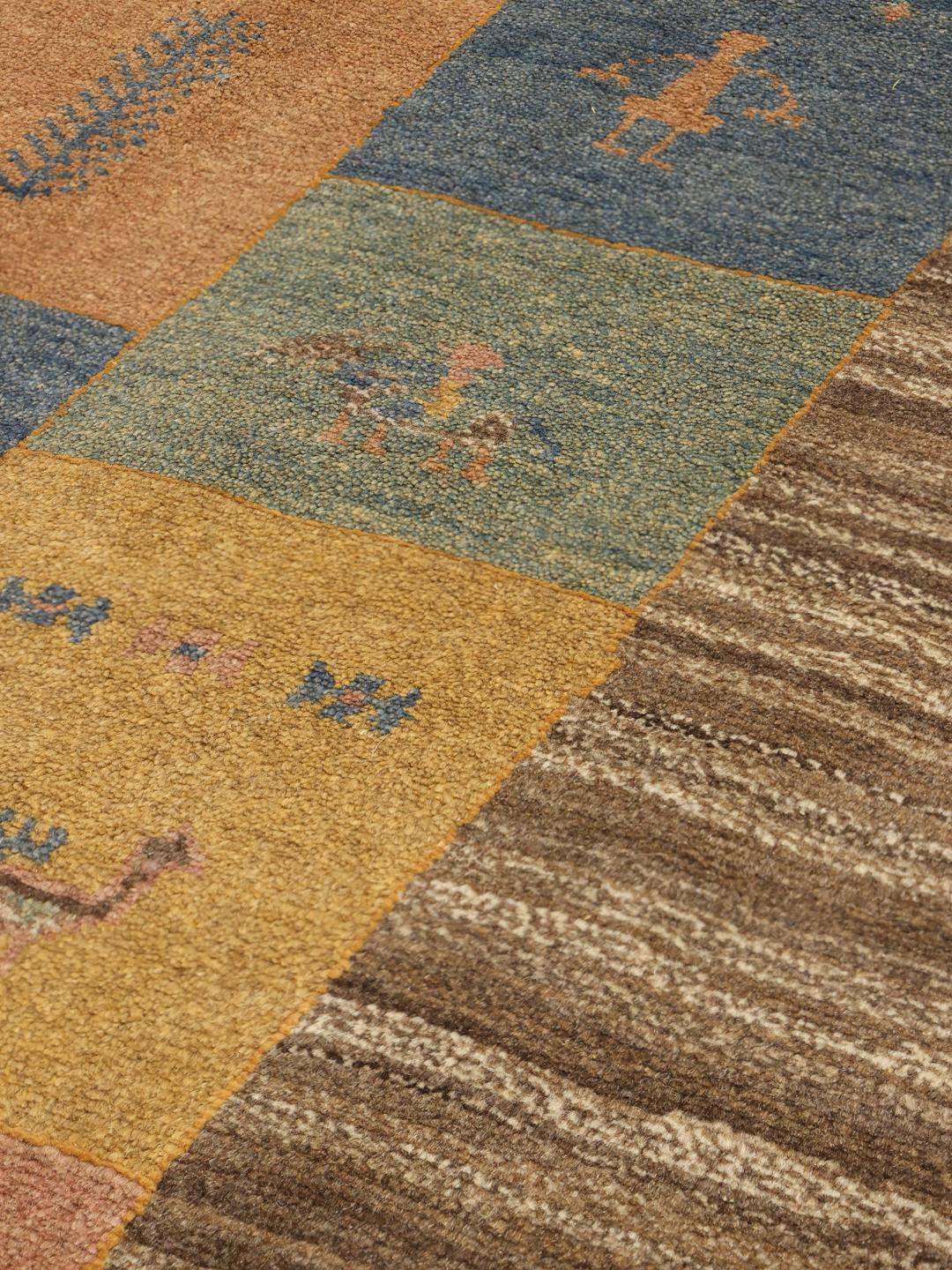
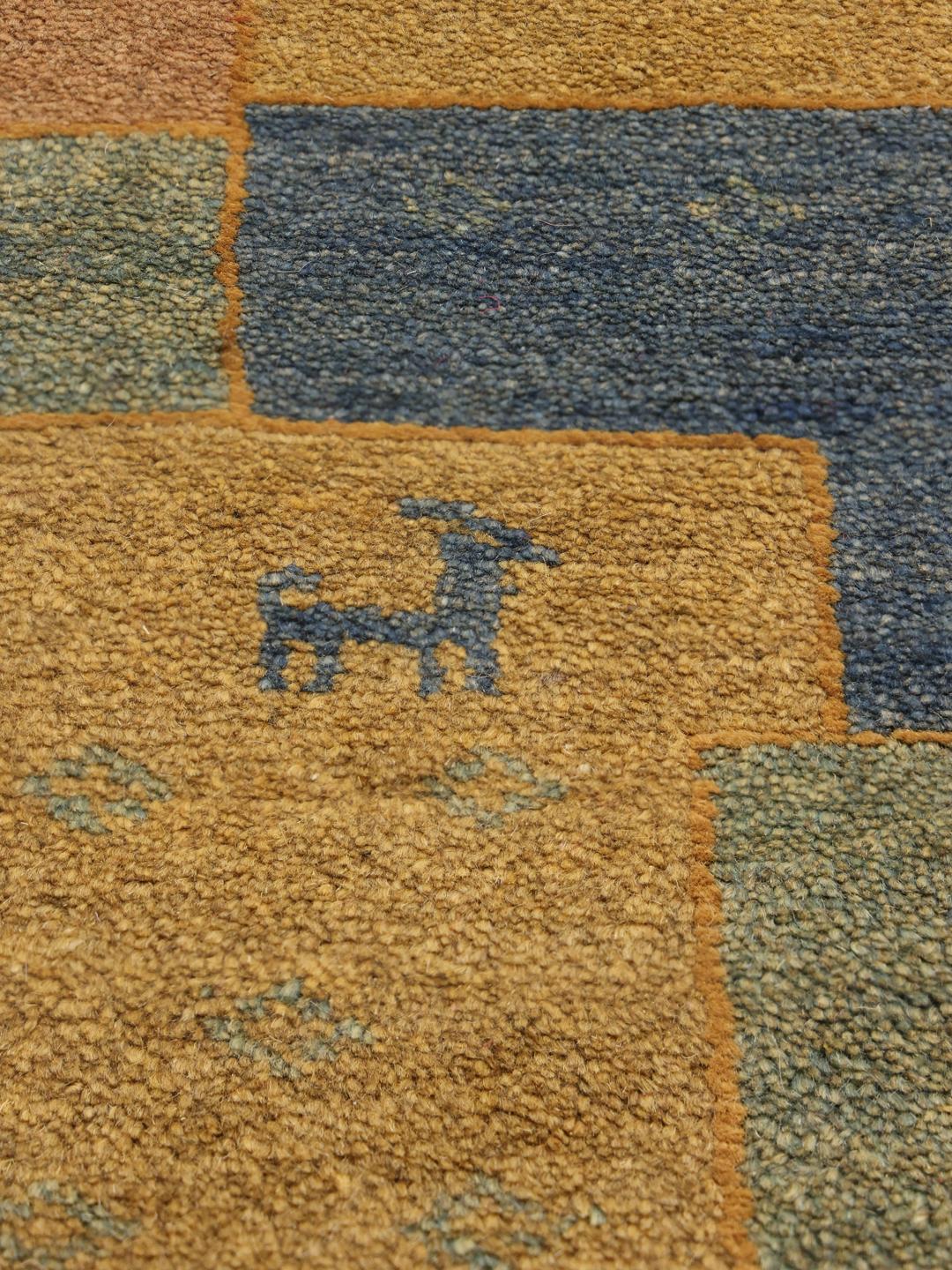
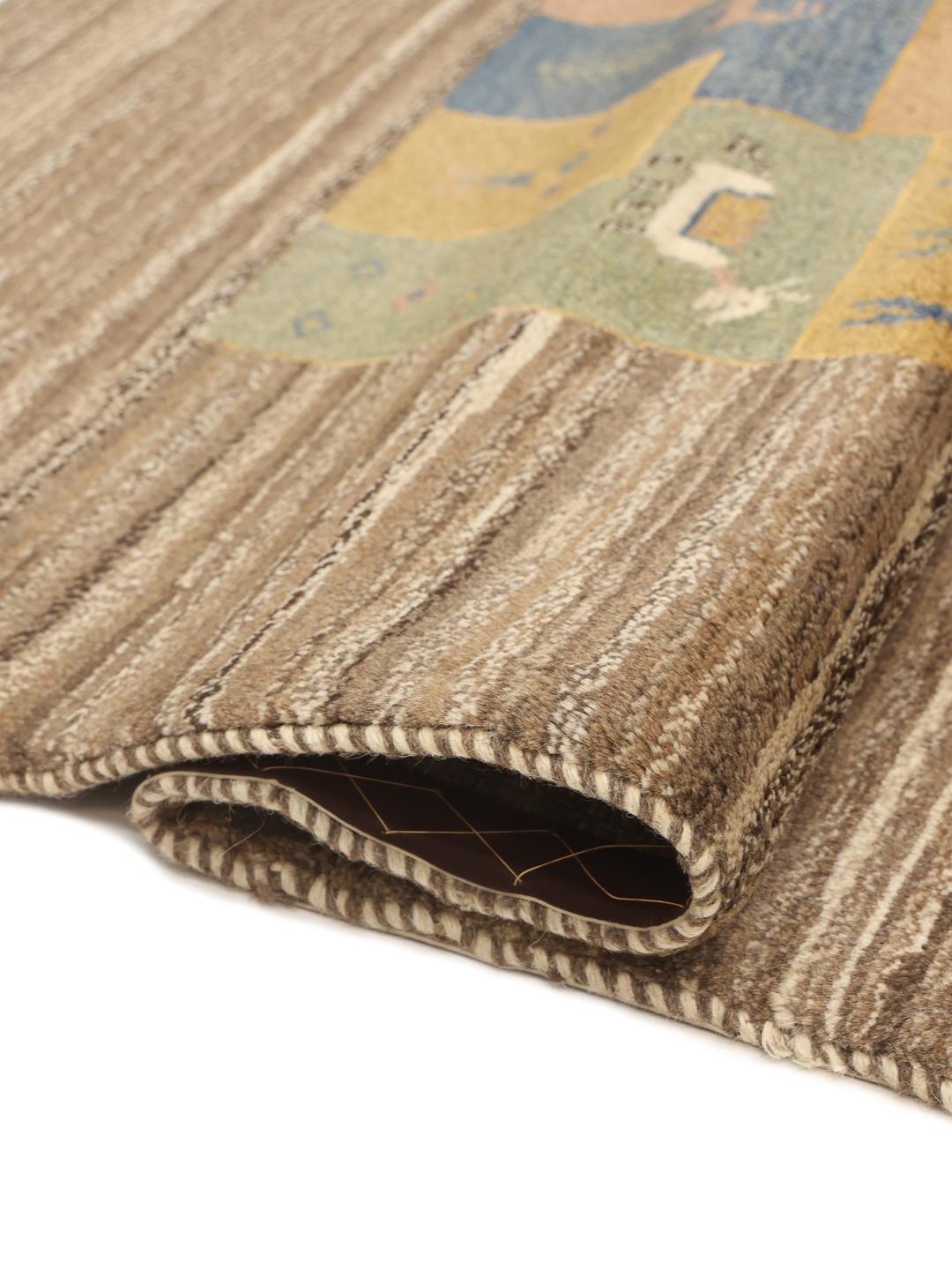
The design elements found in this rug are classic examples of tribal iconography. You will often find simplified, stylised depictions of animals, plants, and geometric shapes, which act as a visual shorthand for the weaver's environment and cultural stories. These motifs are not merely decorative but are deeply symbolic, often representing wishes for prosperity, protection, or fertility within the tribal community.
Today, these rugs are highly prized by collectors for their artistic spontaneity and the deep cultural heritage they represent. Owning a piece like this is more than just a purchase; it is an investment in a living tradition. It represents the skill of a weaver who works without a cartoon or pattern, relying on memory and intuition to create a work of lasting beauty and cultural significance.