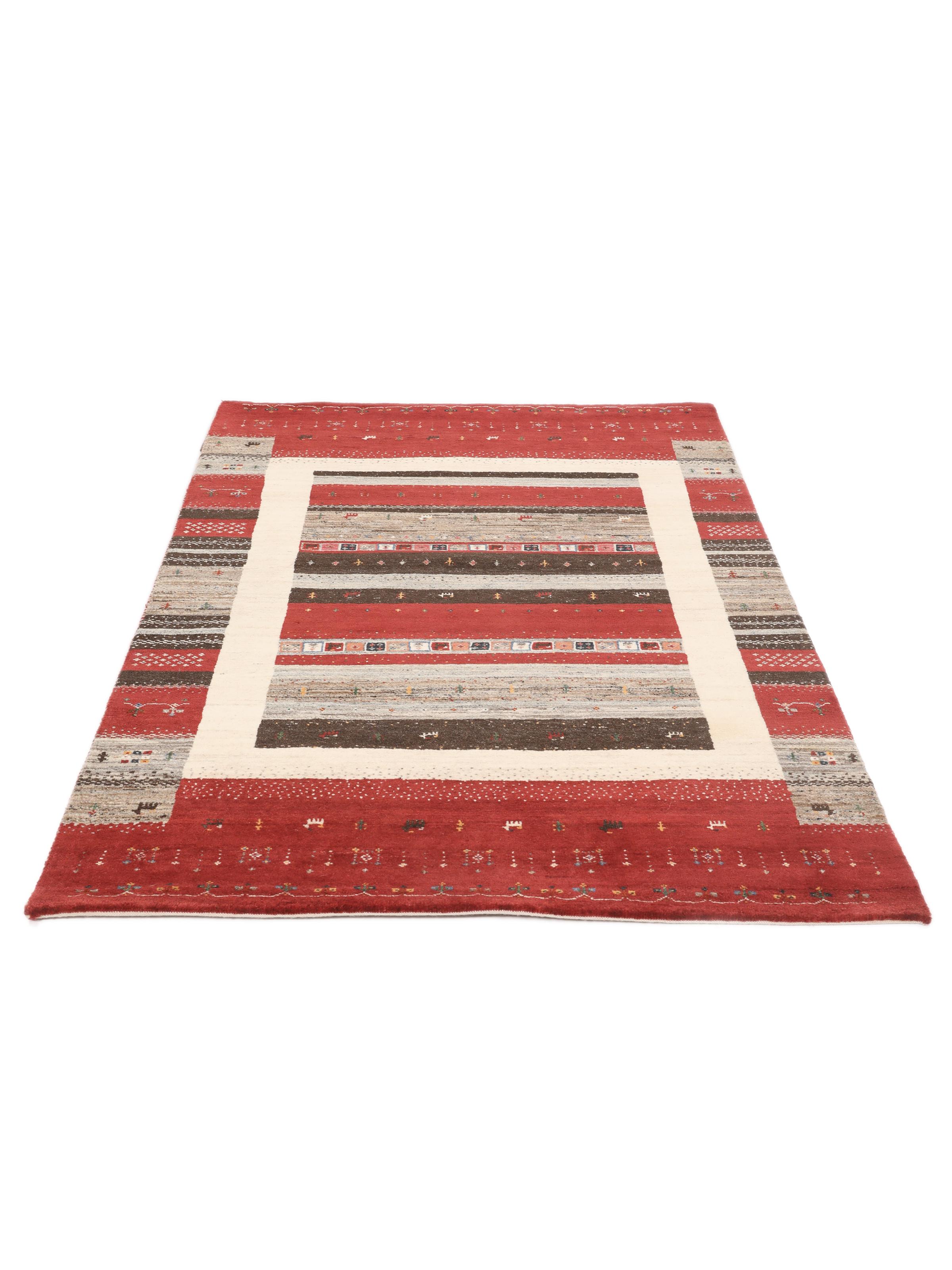
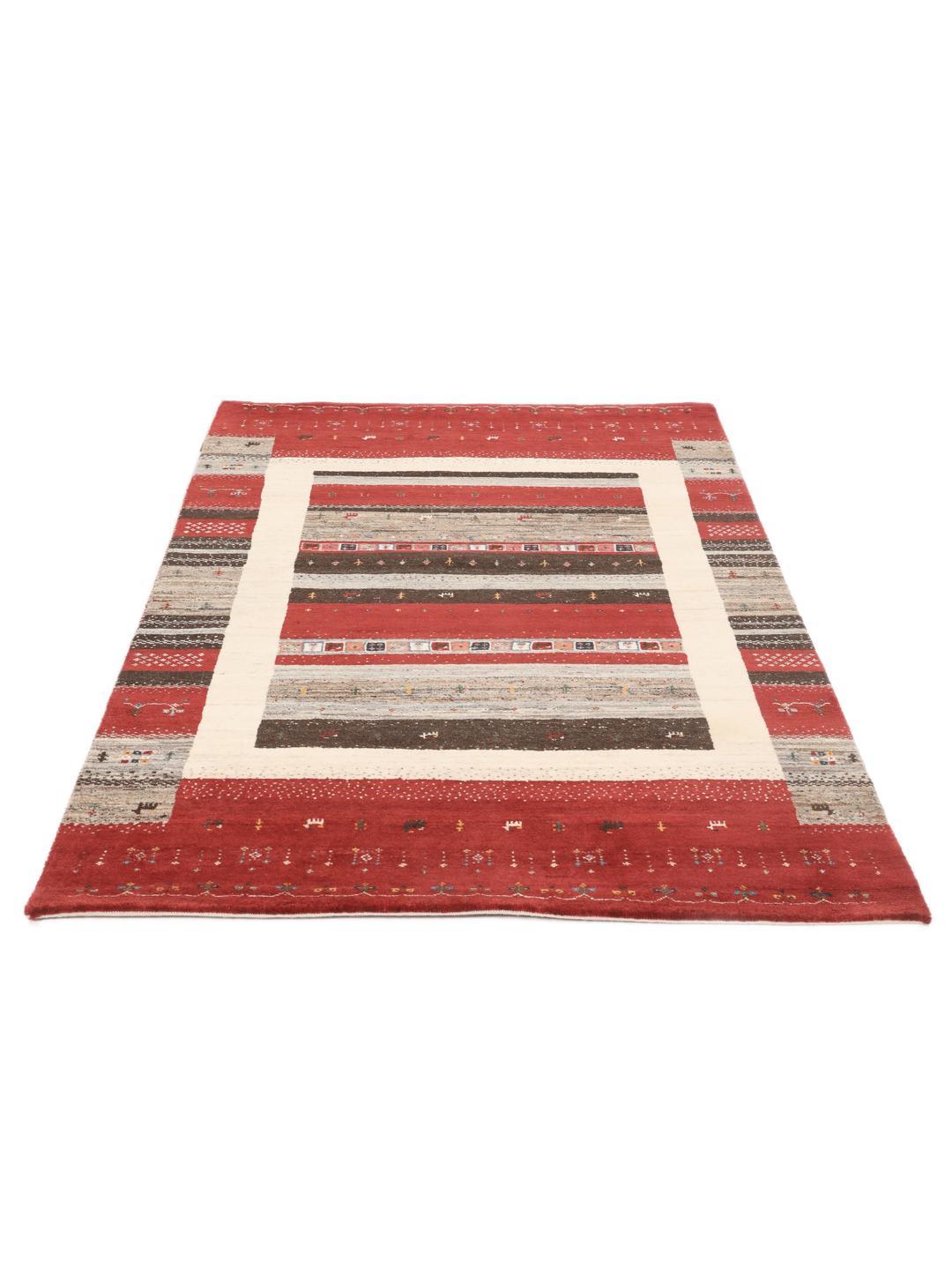
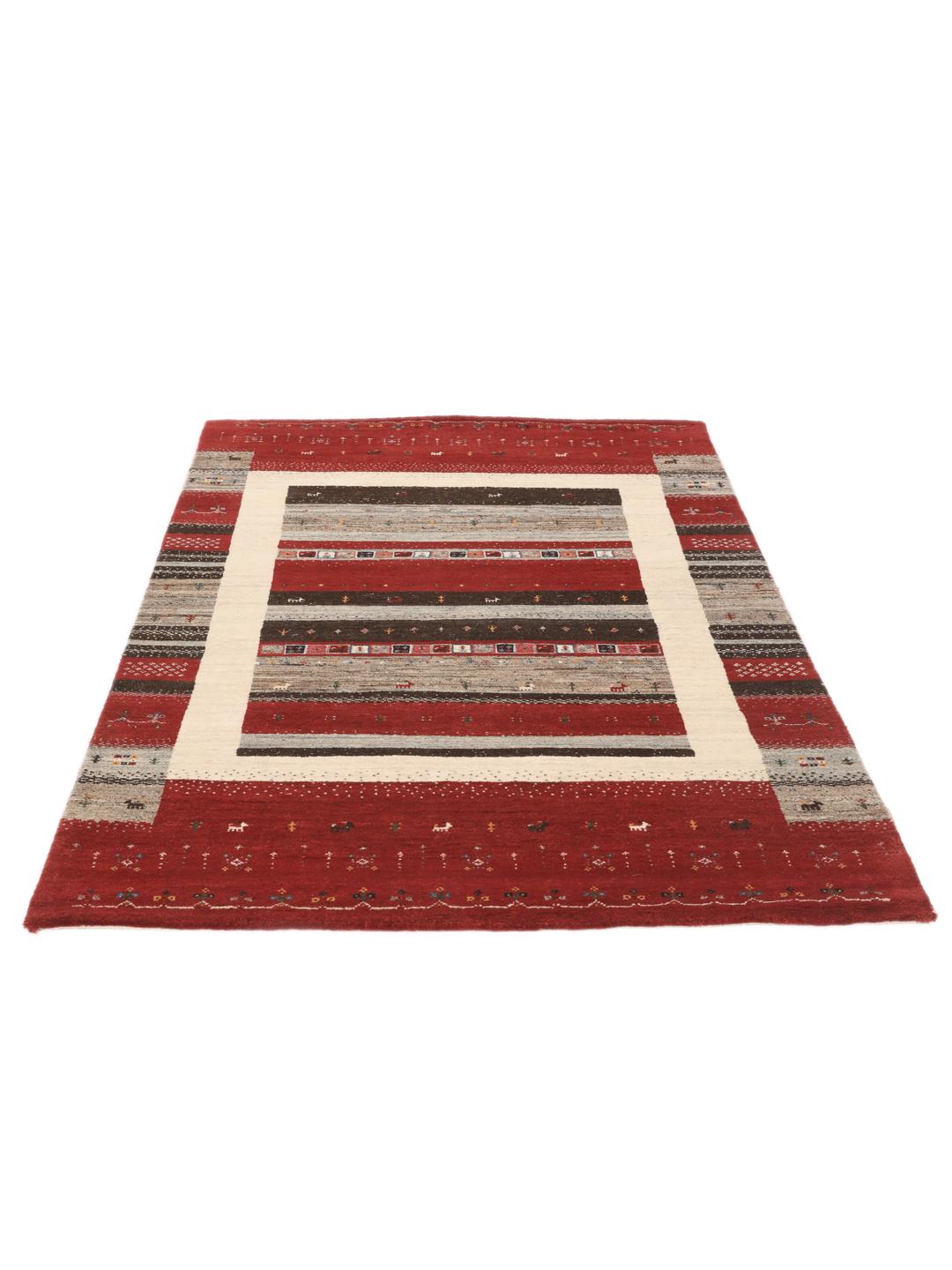
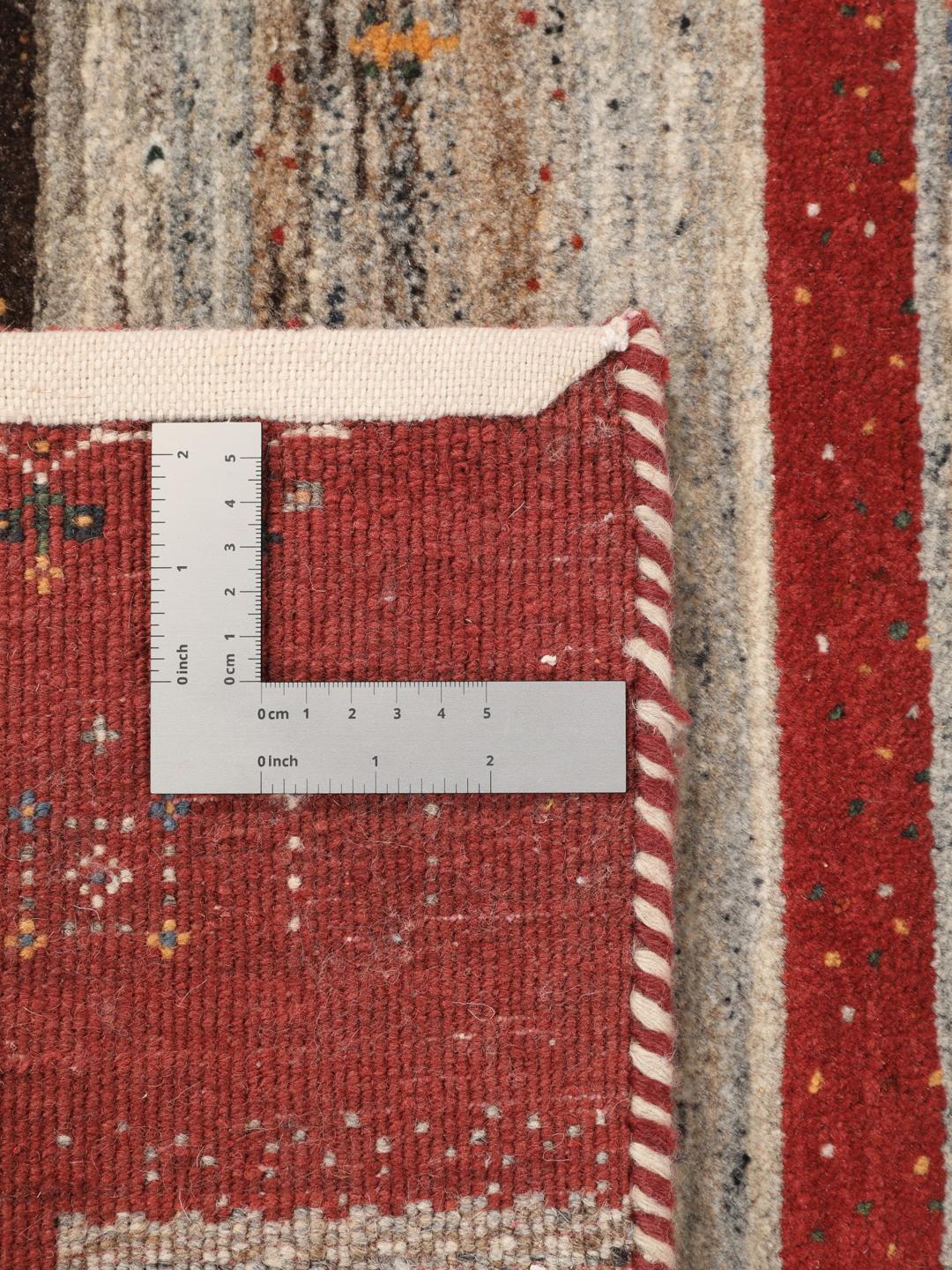
The Gabbeh tradition traces its roots back to the nomadic tribes of the Middle East, where weavers created these rugs primarily for their own practical use. Unlike more formal urban rugs, Gabbehs were designed to be thick, comfortable, and durable enough to withstand life in a tent. Over time, the style evolved, and today, the finest examples are crafted by artisans in India who honour these ancient techniques while refining the wool and dye processes.
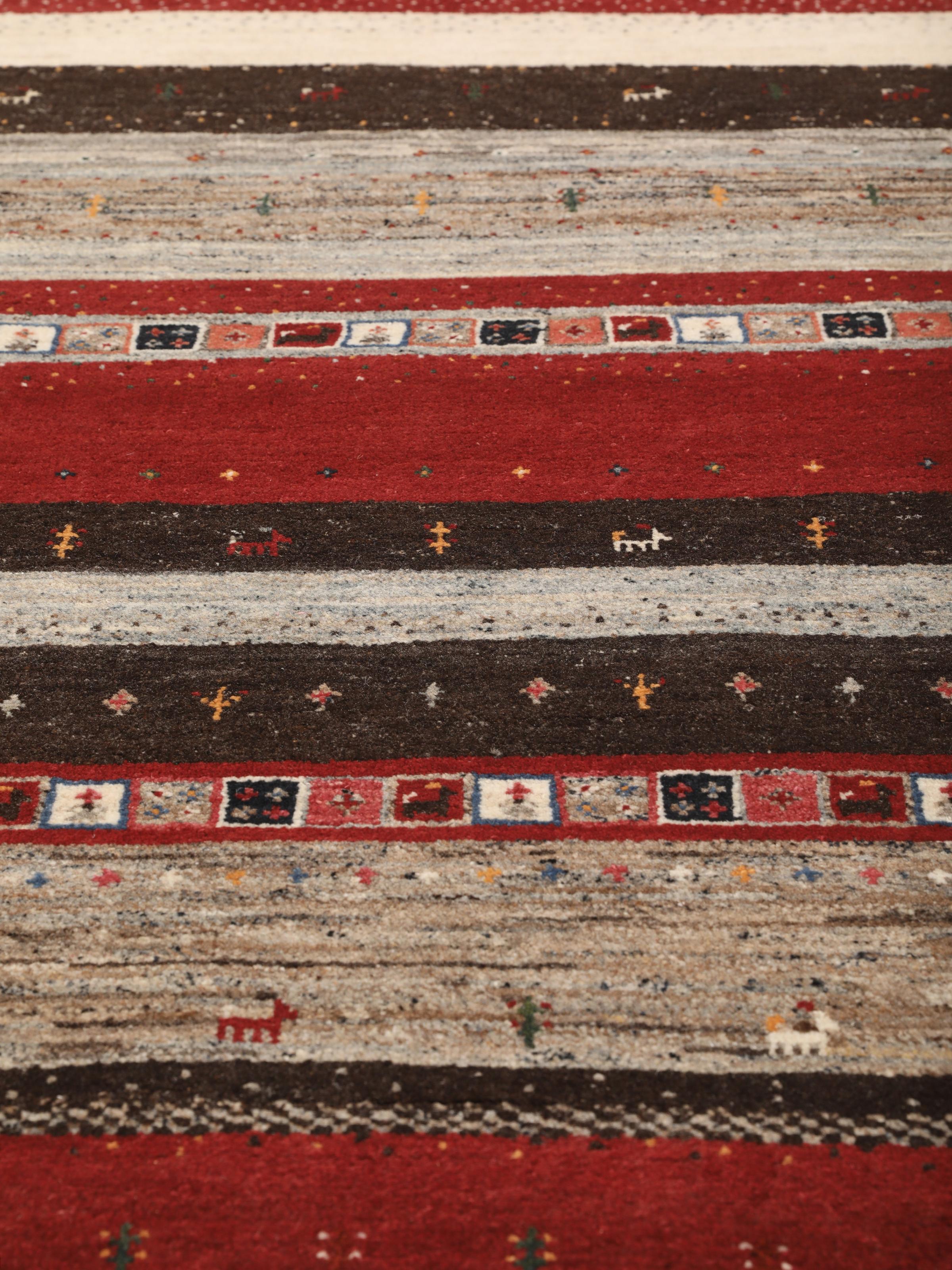
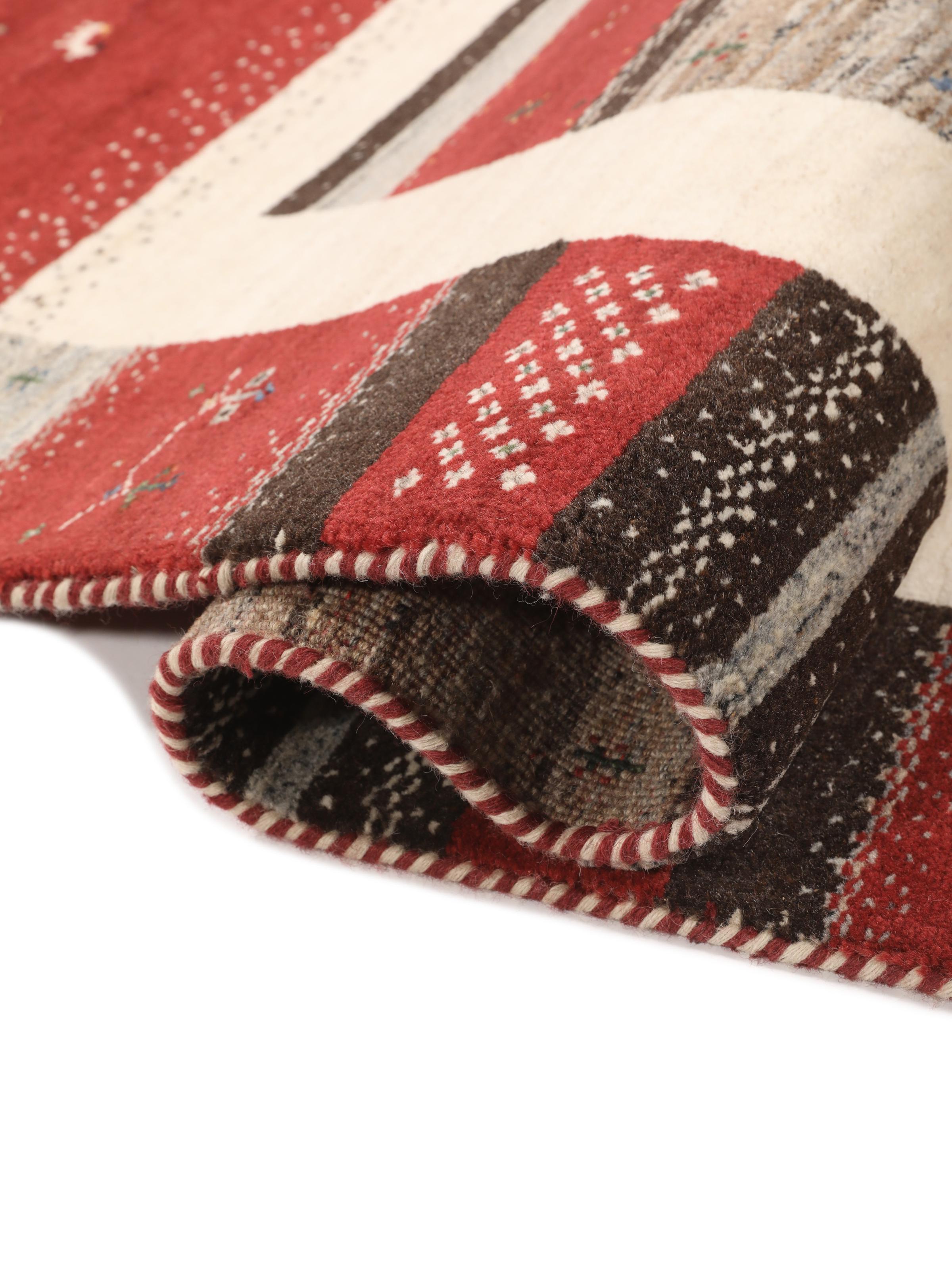
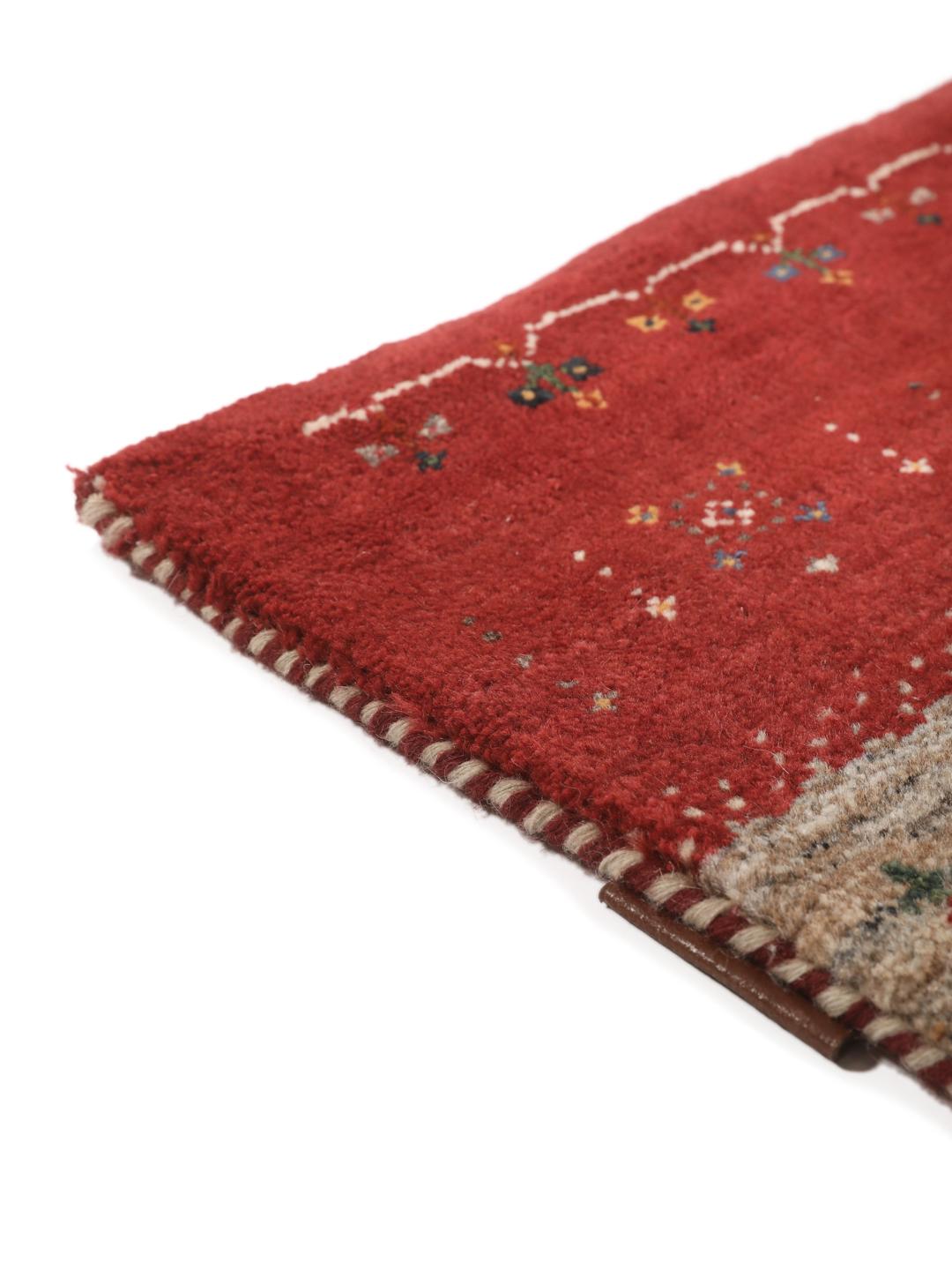
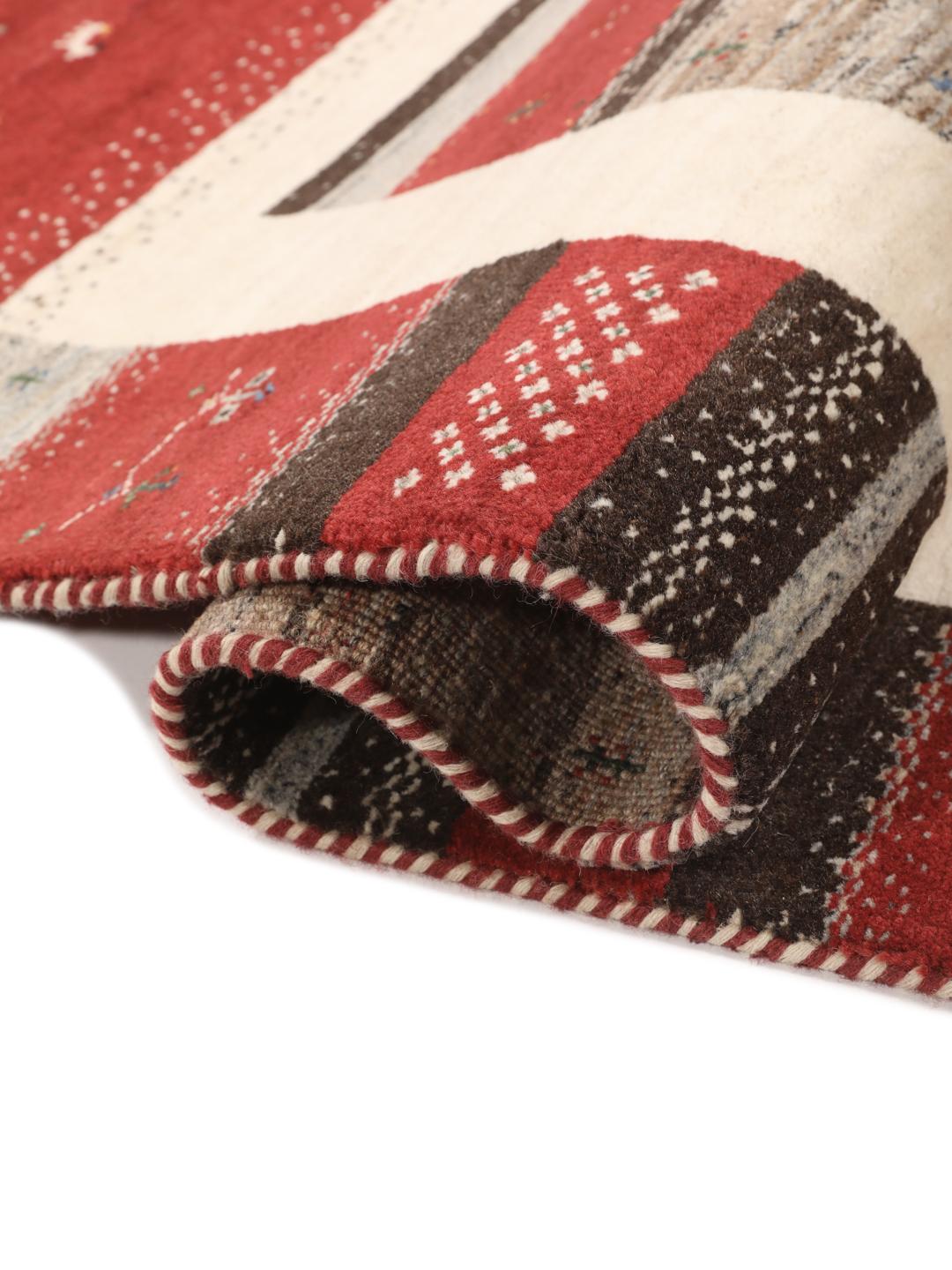
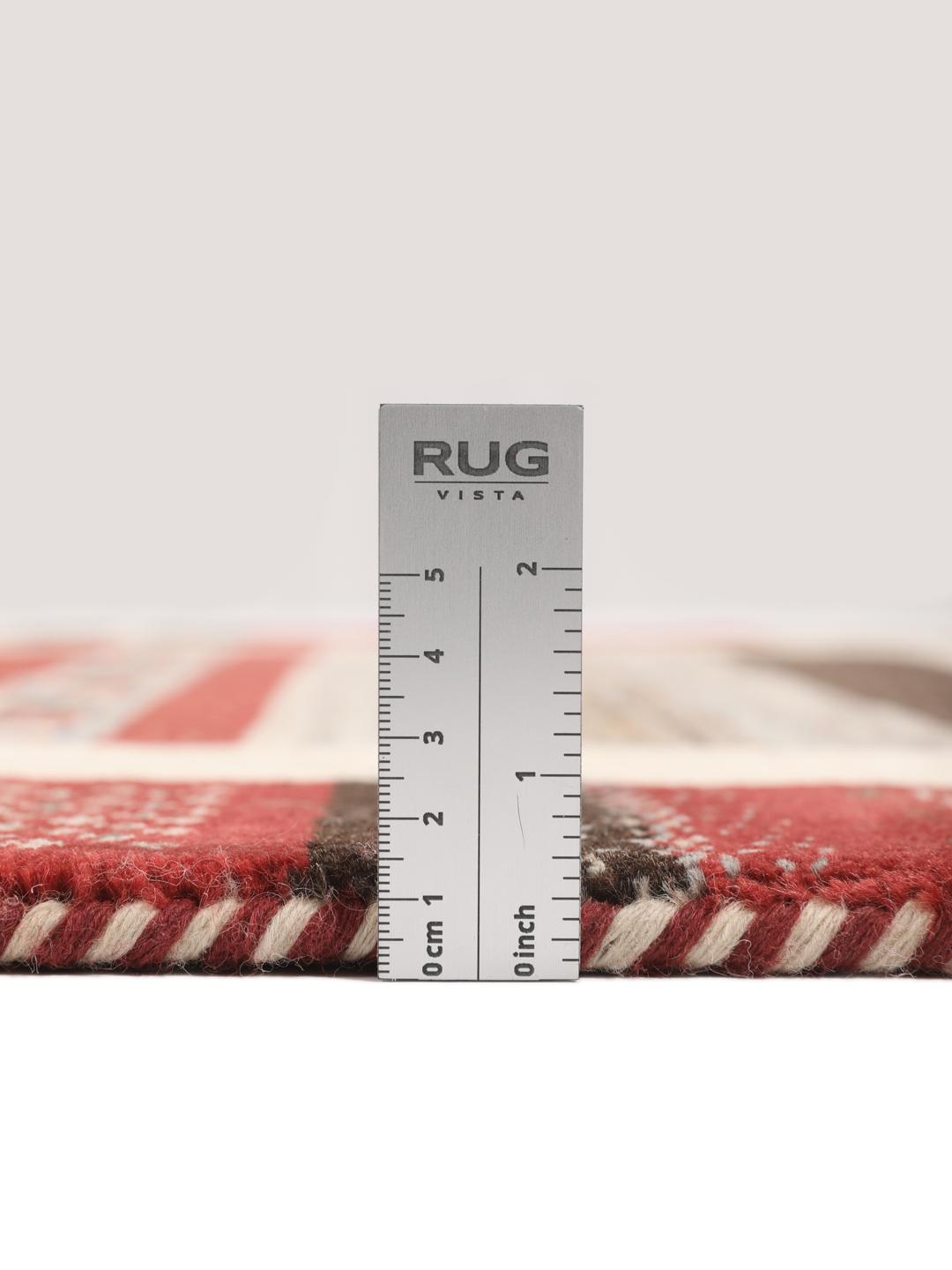
The term 'Loribaft' refers to a specific, elevated quality of Gabbeh, characterised by a much higher knot density than traditional, simpler versions. This technical advancement allows for more refined patterns and a tighter, more luxurious pile. The extra care taken during the knotting process results in a rug that feels more substantial and holds its shape better over the years.
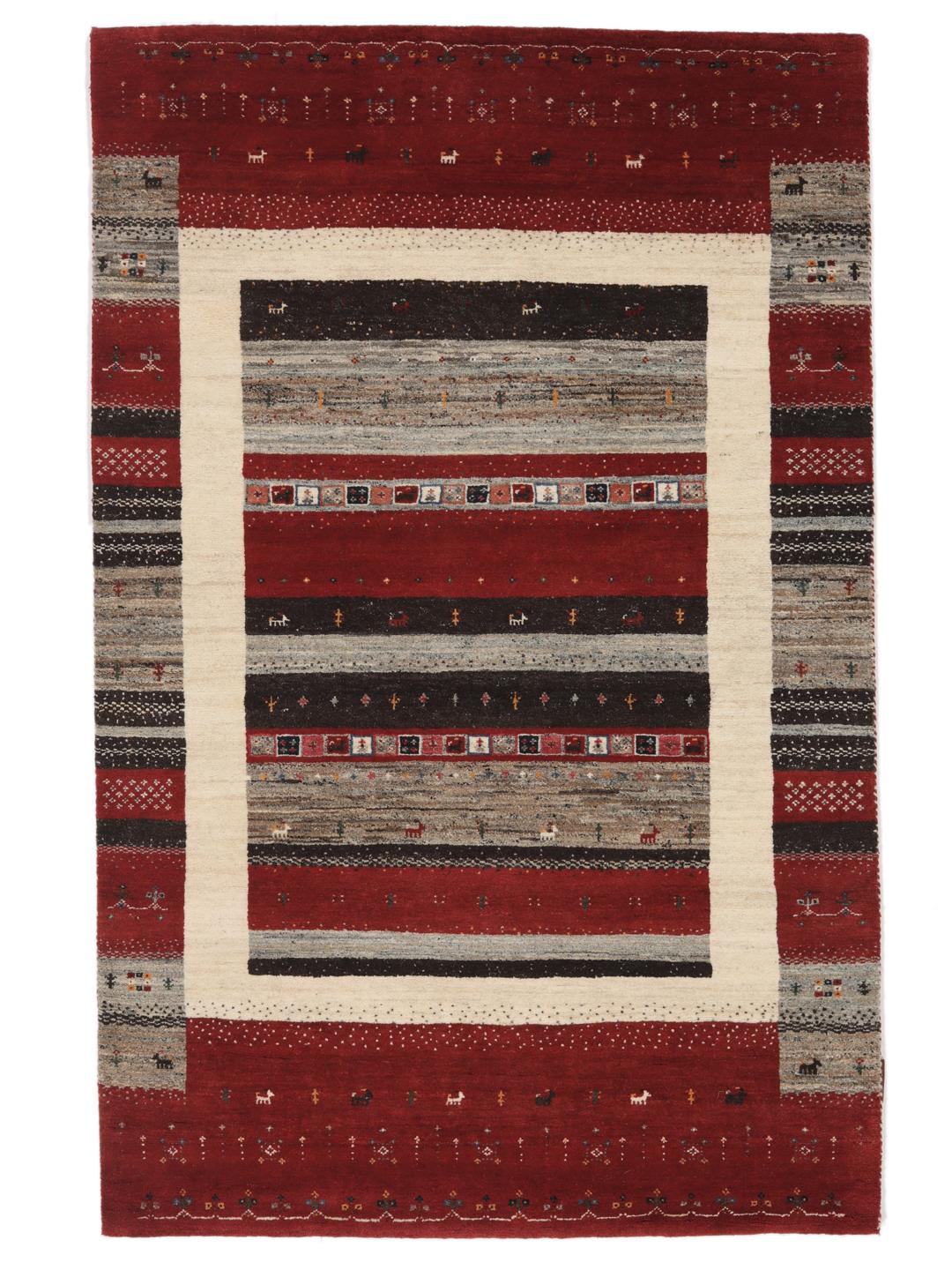
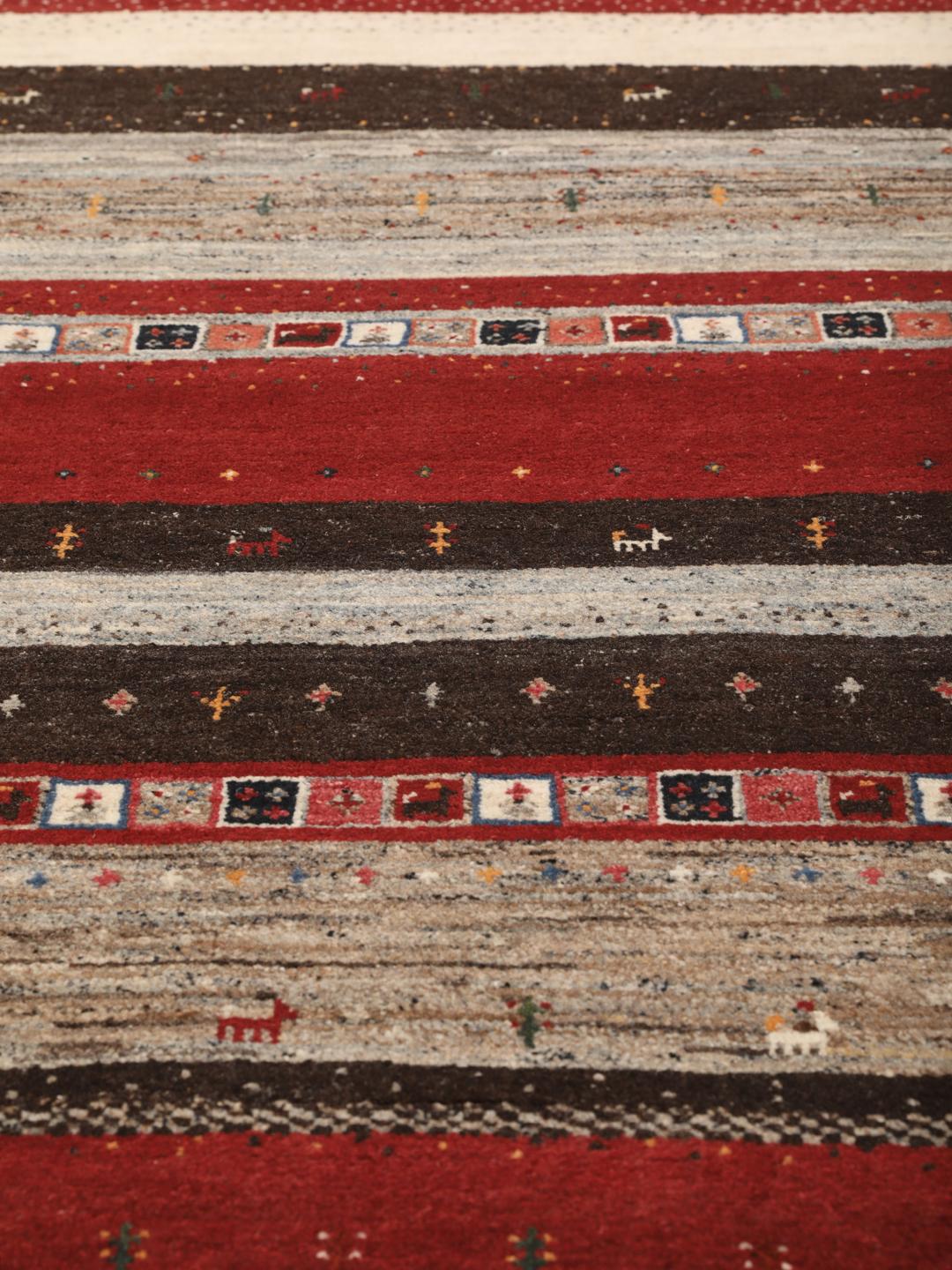
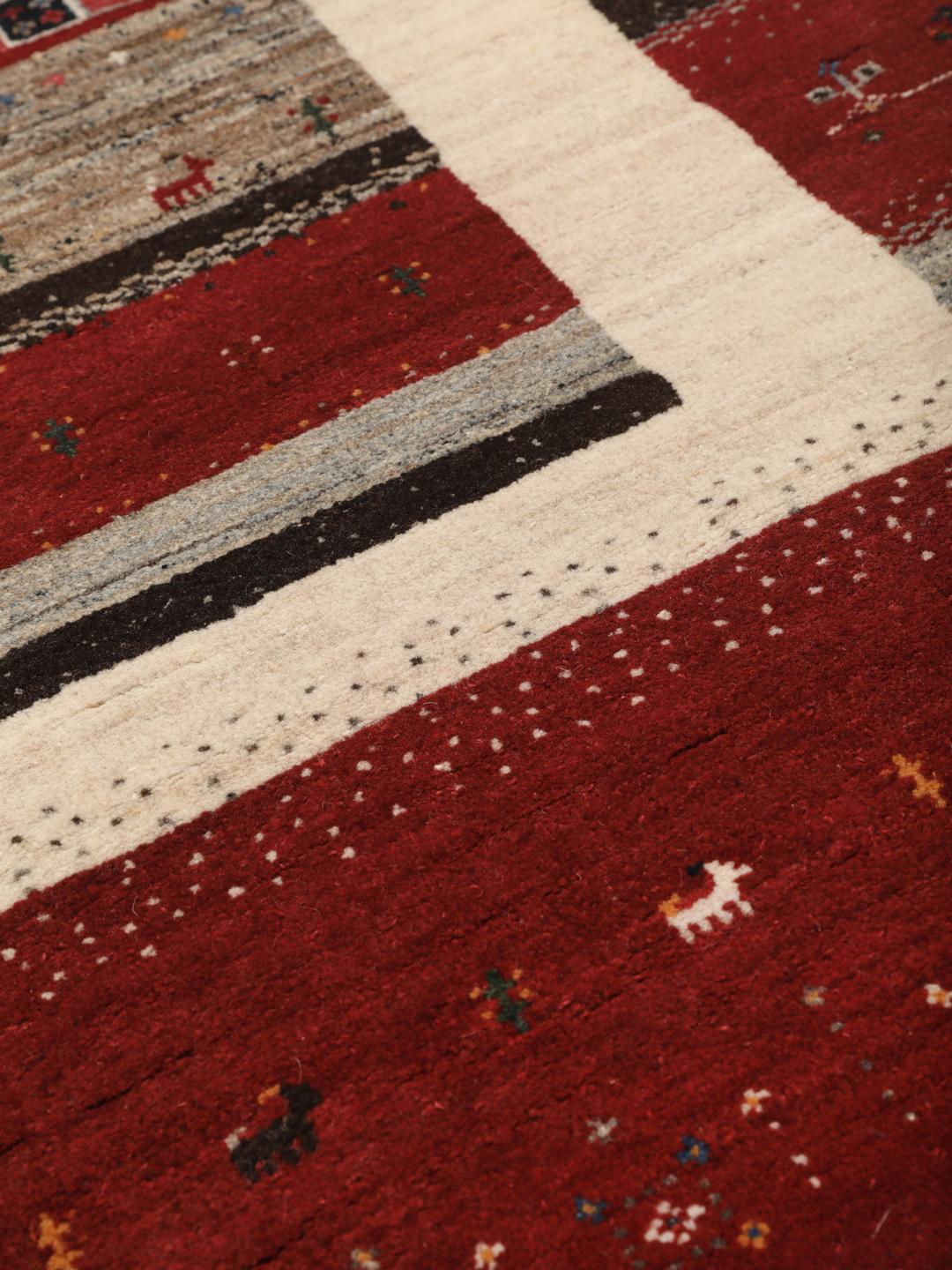
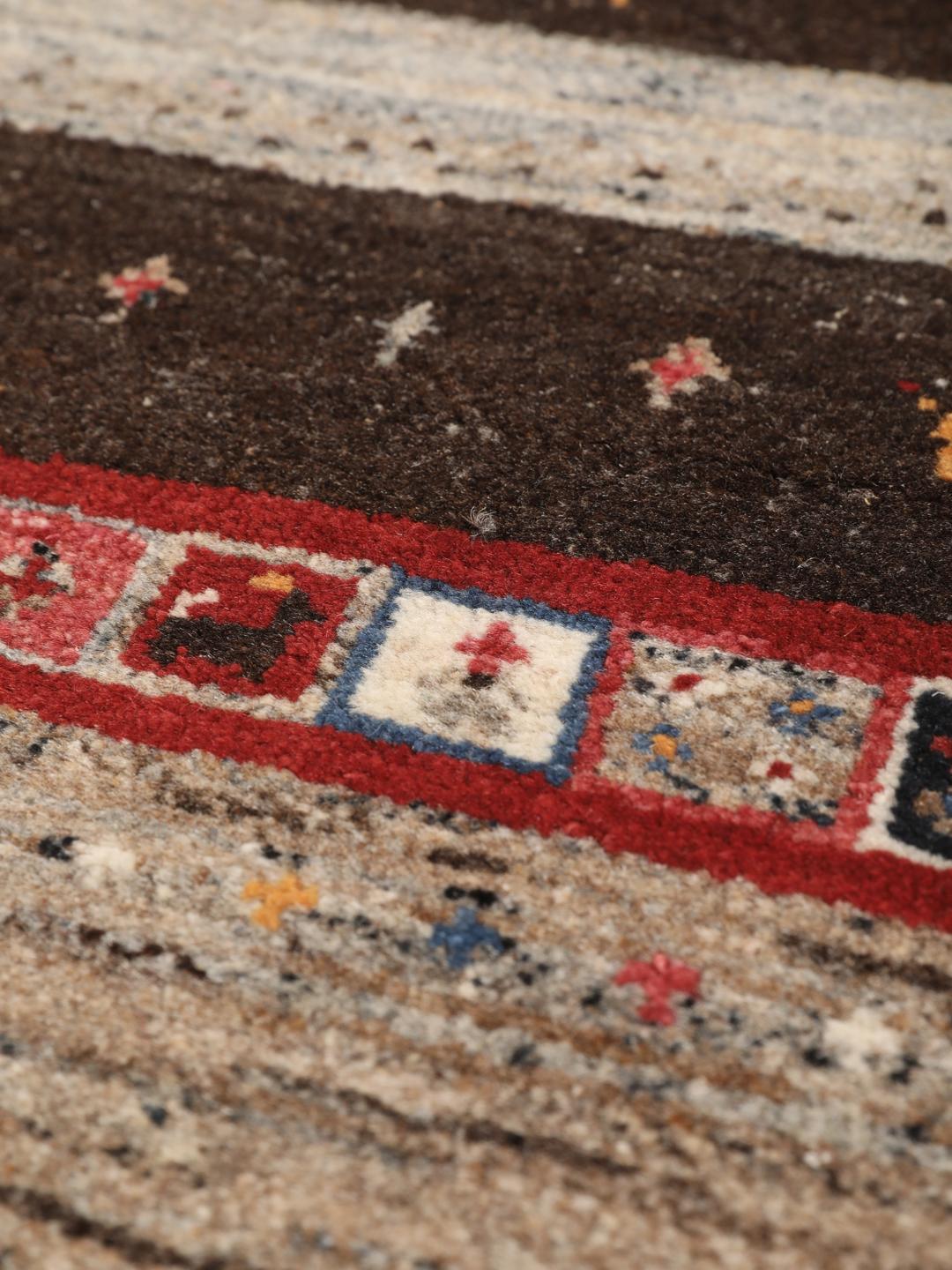
Design-wise, these rugs are celebrated for their artistic freedom. While they often feature geometric shapes and symbolic motifs representing animals, plants, or daily life, the composition is usually open and expressive. The border often acts as a frame for the central field, which may contain simple stripes or scattered figures, showcasing a harmonious balance between negative space and intricate detail.
Owning a Gabbeh Loribaft is an invitation to connect with a long-standing heritage of human skill. These rugs are highly valued by collectors and interior designers alike for their ability to bring warmth and personality into a room. Because they are hand-made without a pre-printed pattern, every curve and colour variation is a testament to the artisan's personal touch, making each piece a meaningful addition to any home.