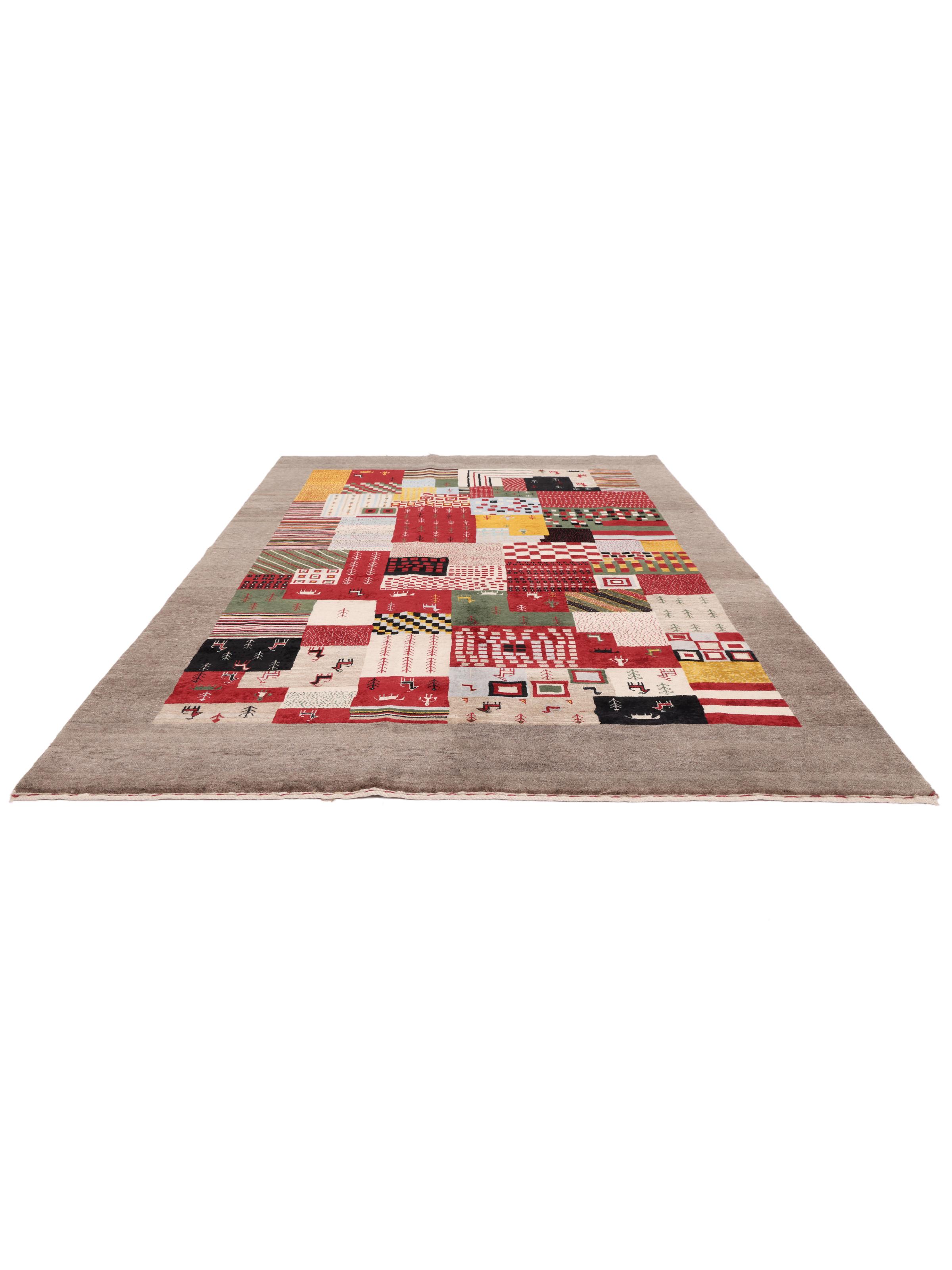
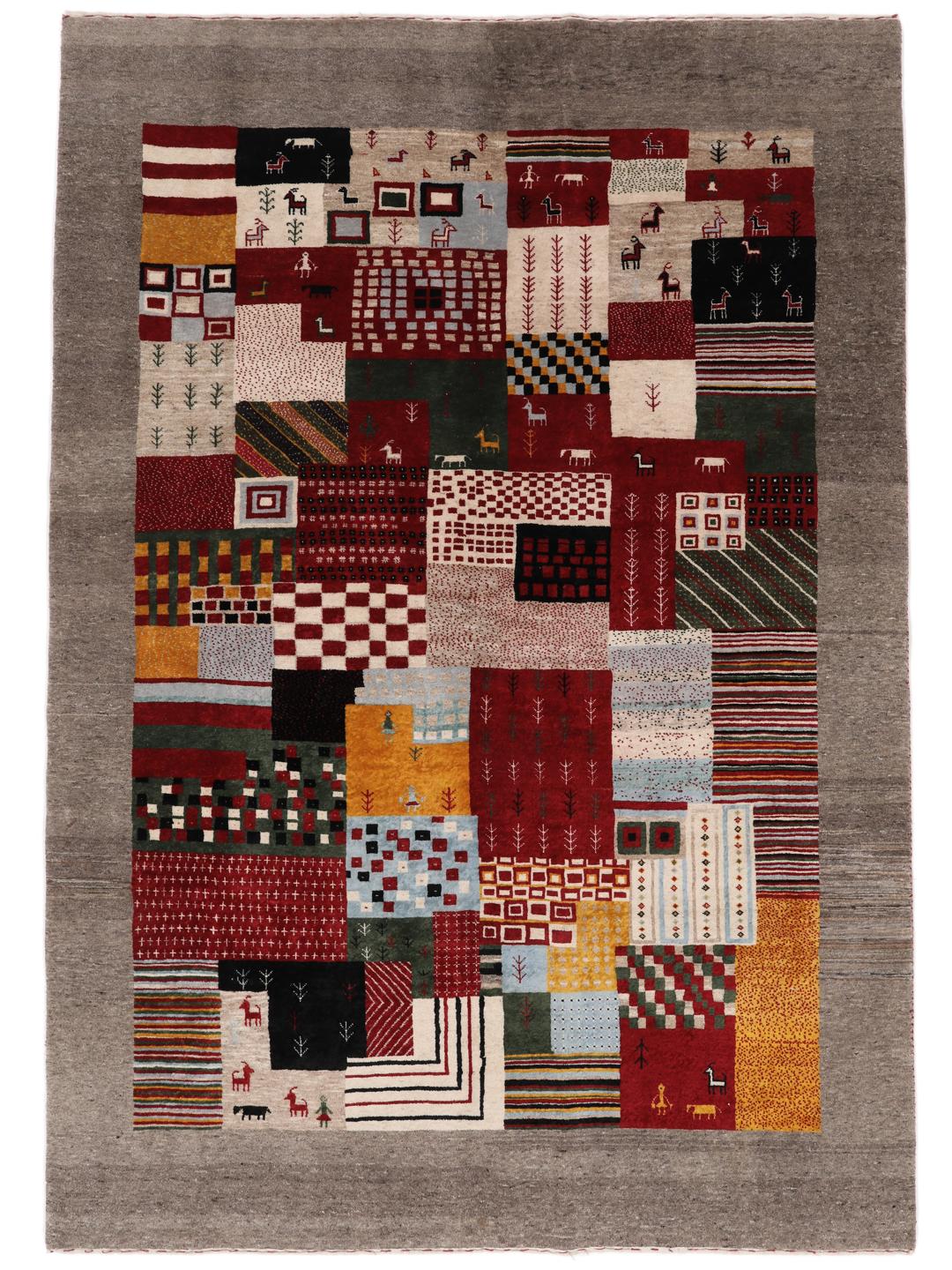
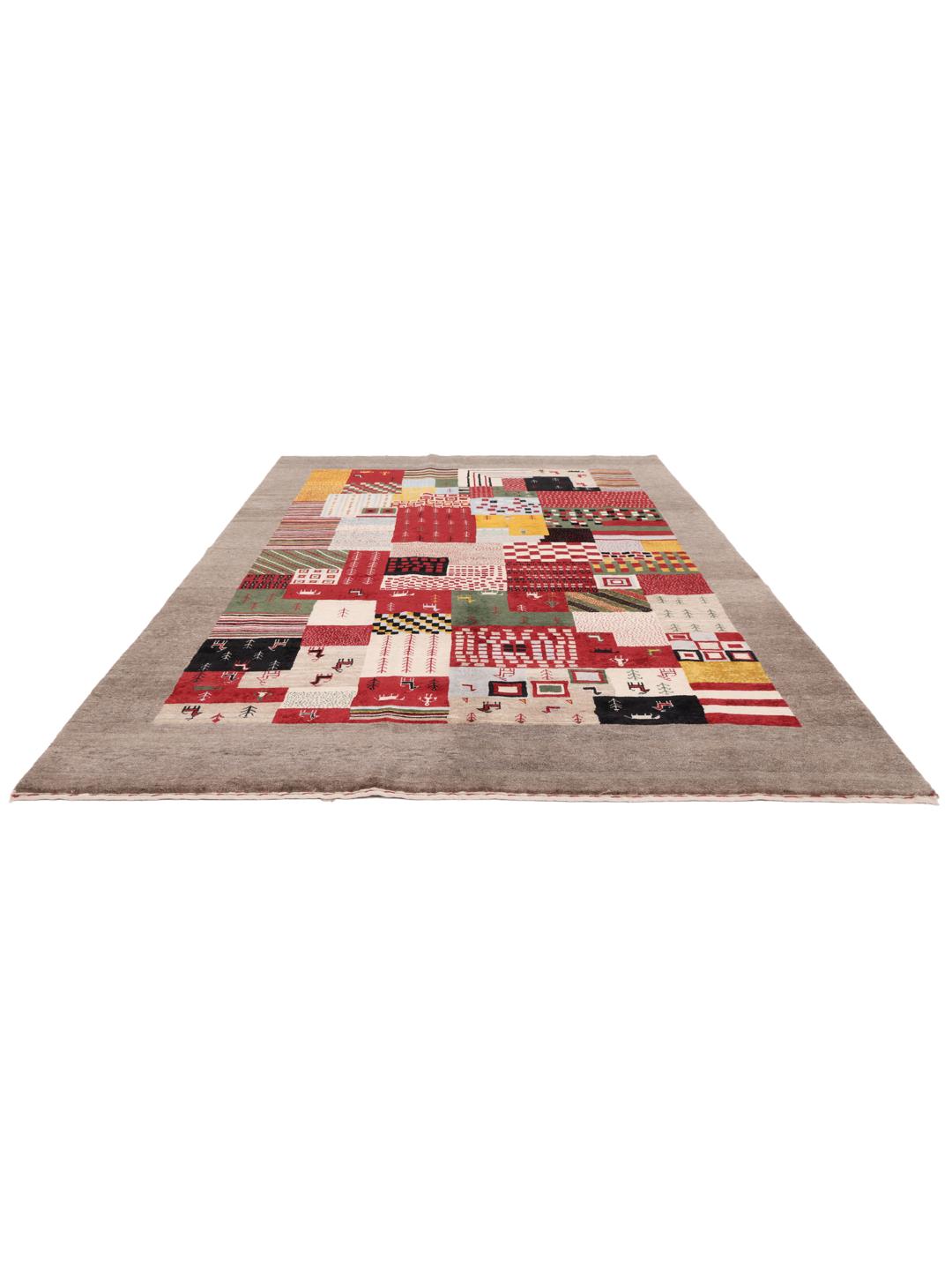
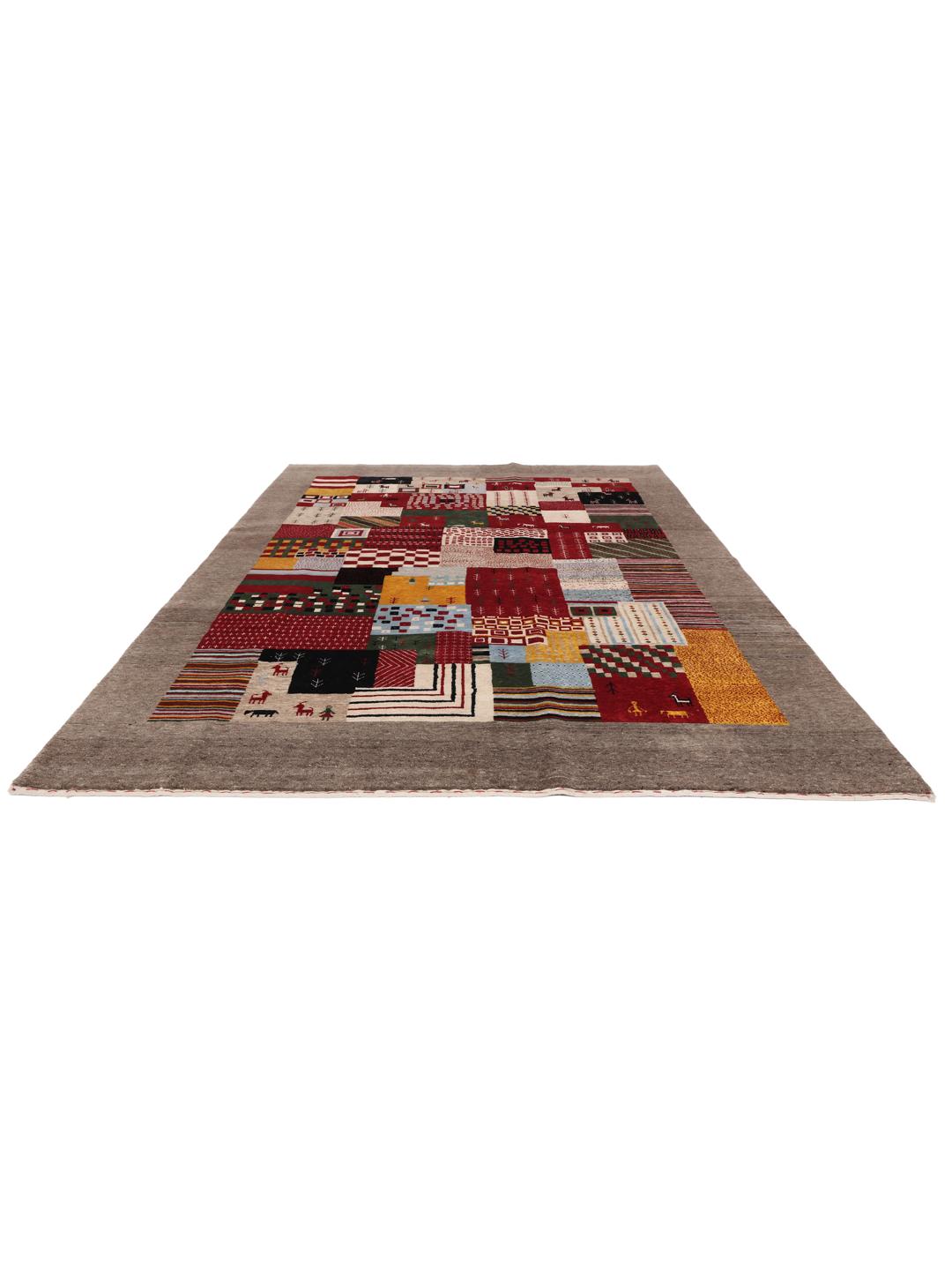
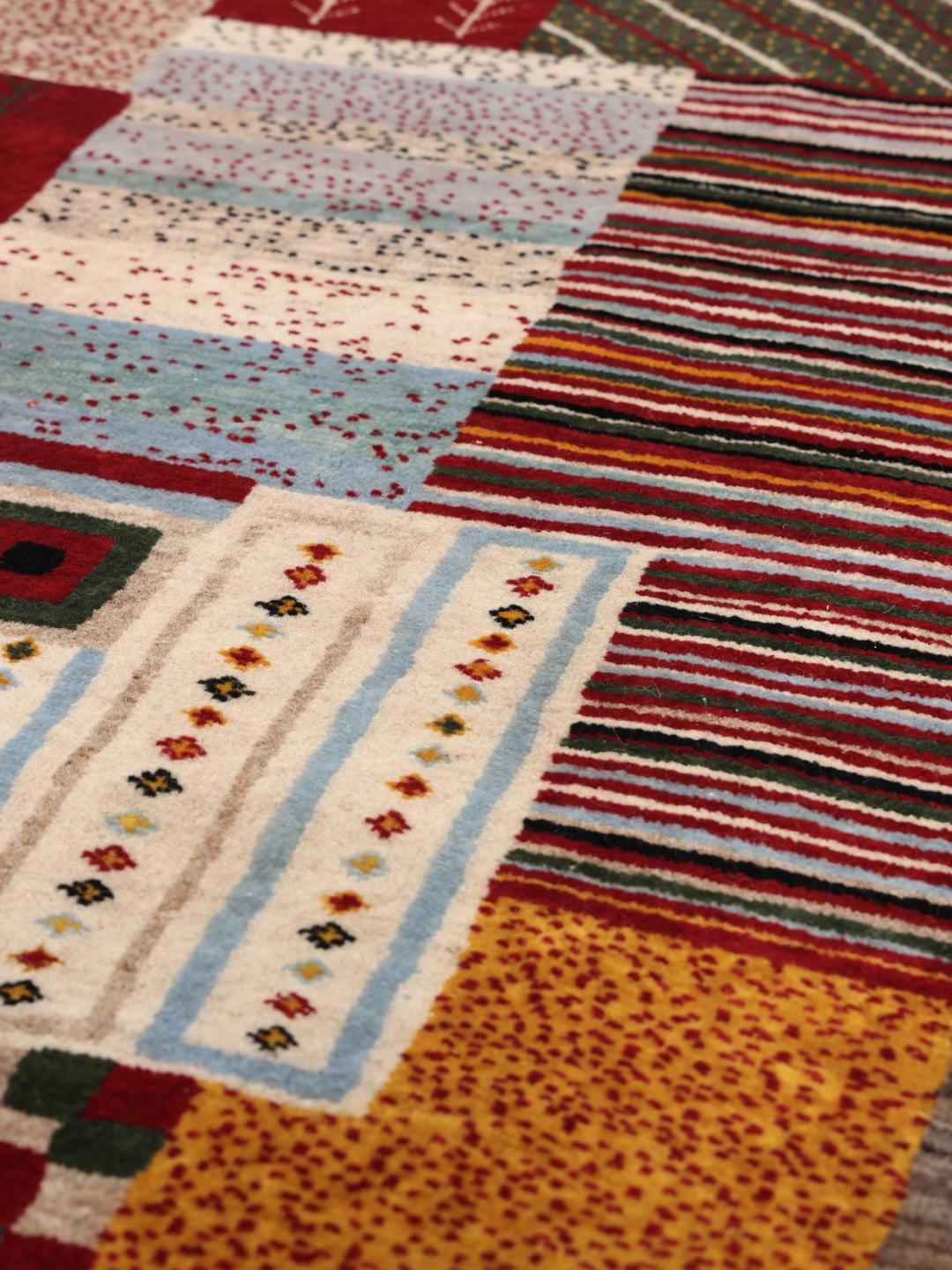
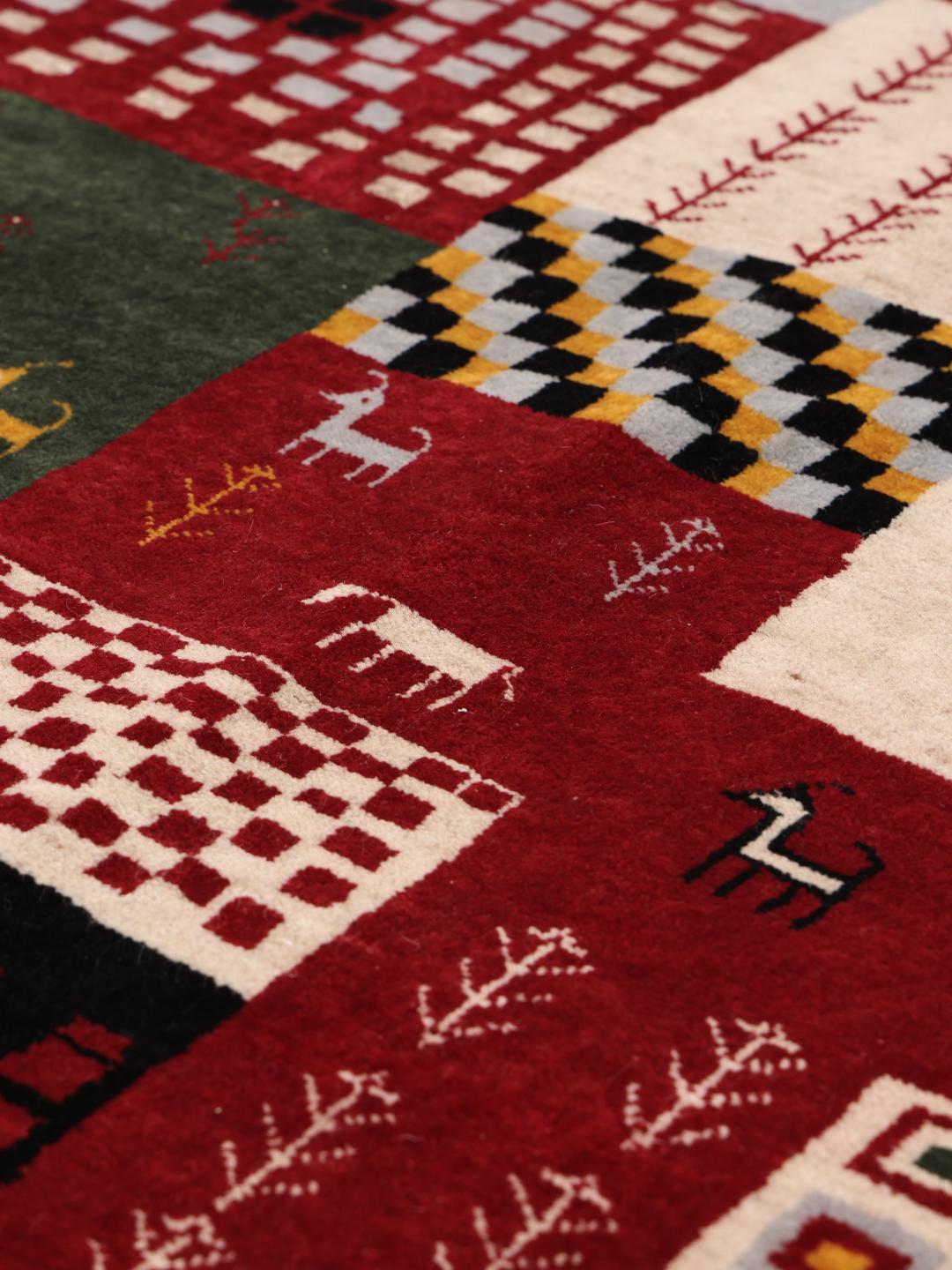
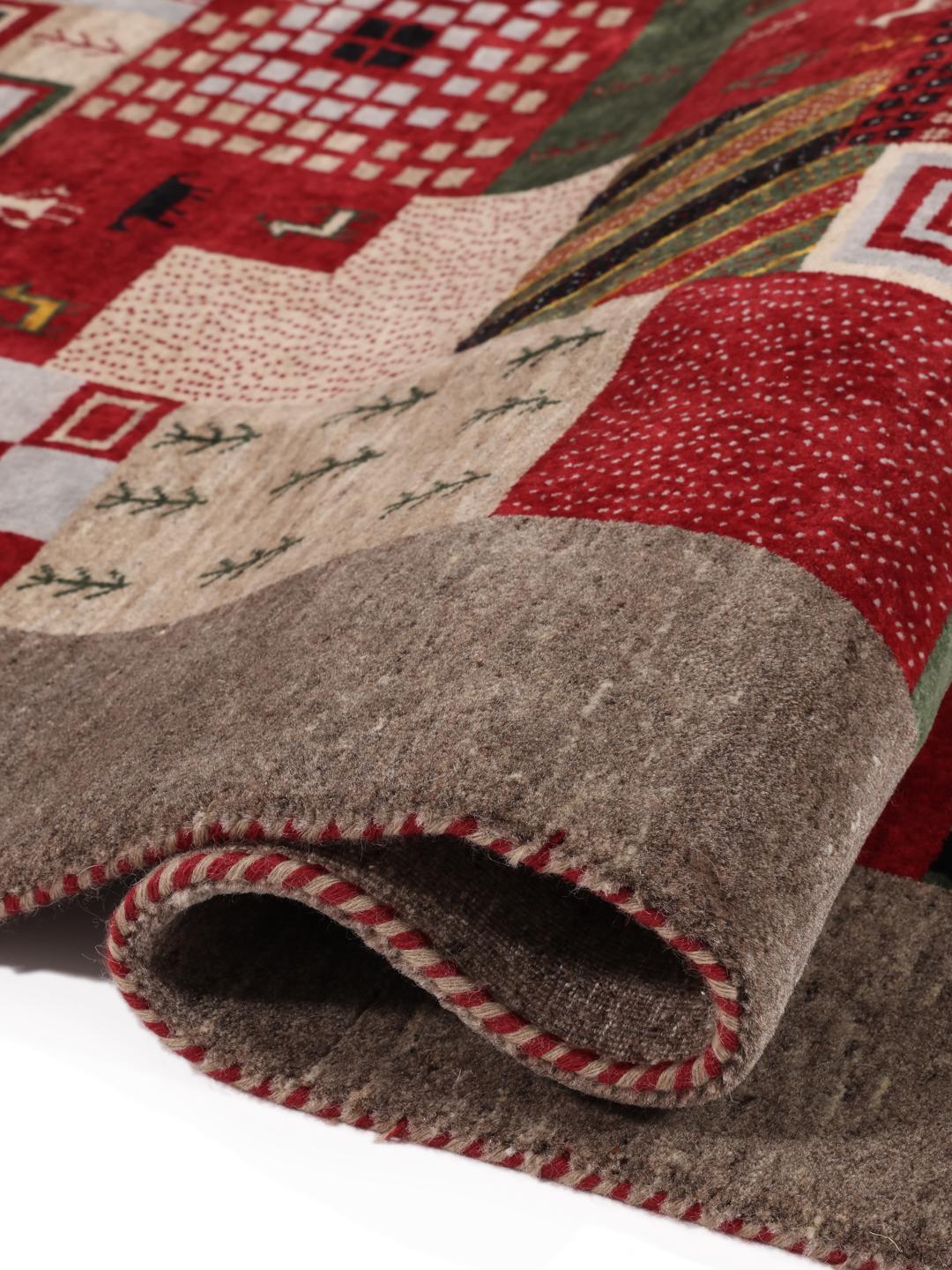
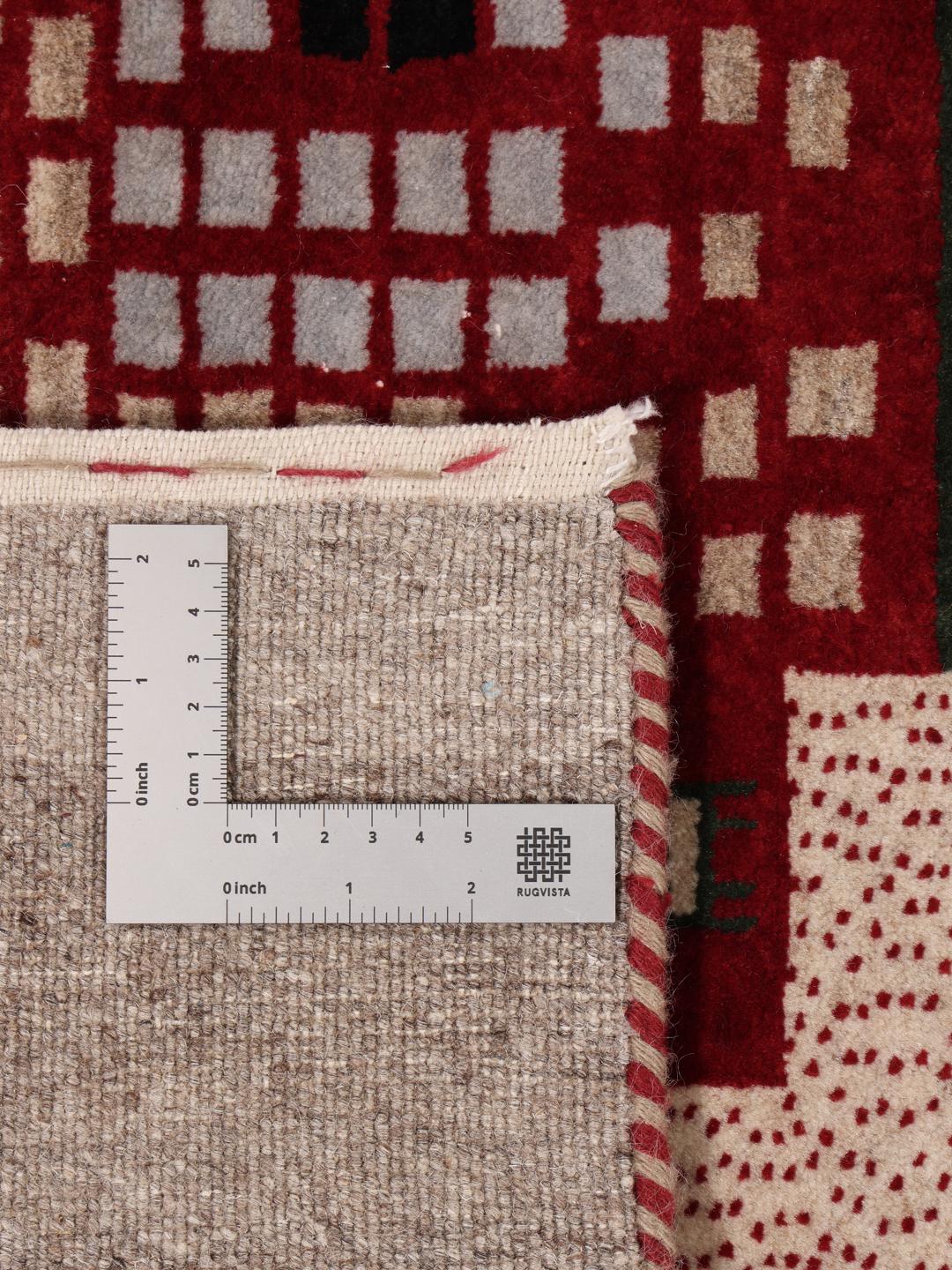
Gabbeh rugs have a long history as the rustic, artistic expression of nomadic tribes in the Middle East. Originally woven for personal use rather than trade, these rugs were created to provide warmth and comfort within the tent, often featuring spontaneous designs that reflected the weaver's surroundings, dreams, and cultural narratives.
The term 'Loribaft' refers to a specific, finer grade of Gabbeh, traditionally associated with the Lori tribes. While classic Gabbeh rugs are known for their thicker, coarser pile, the Loribaft style introduced a higher knot density, allowing for more detailed motifs and a more refined, elegant finish while still maintaining the soulful, spontaneous character of the original tradition.
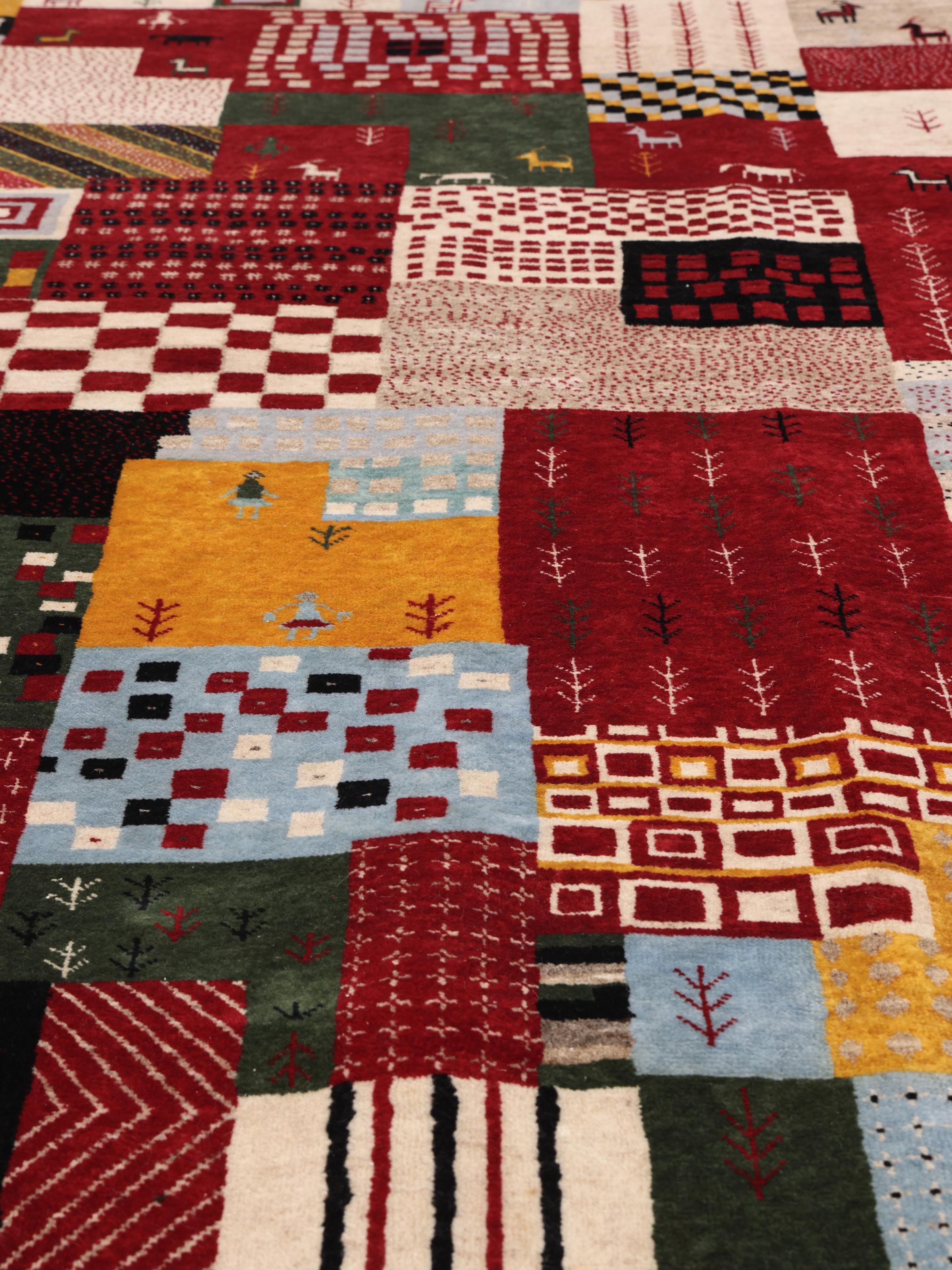
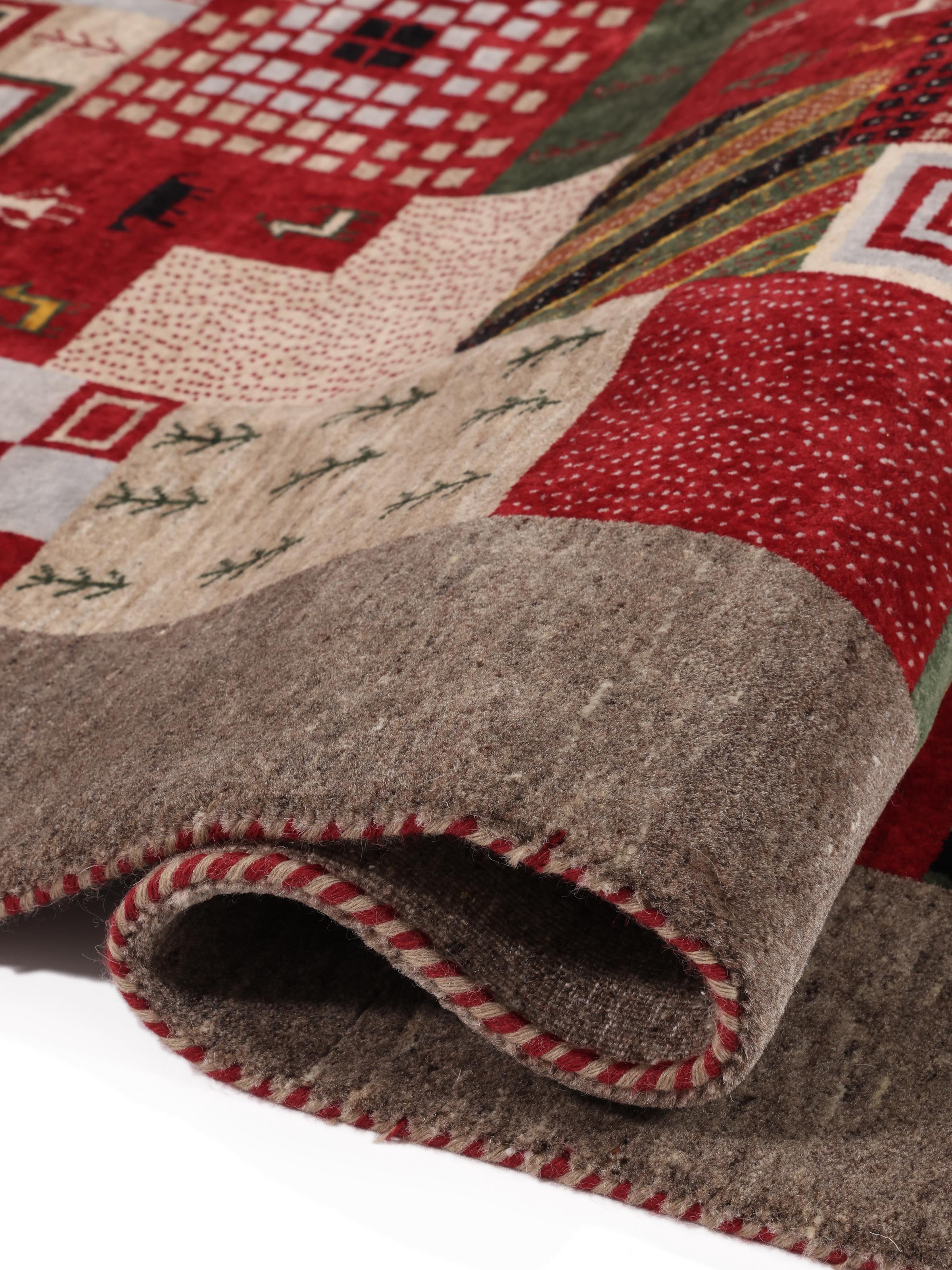
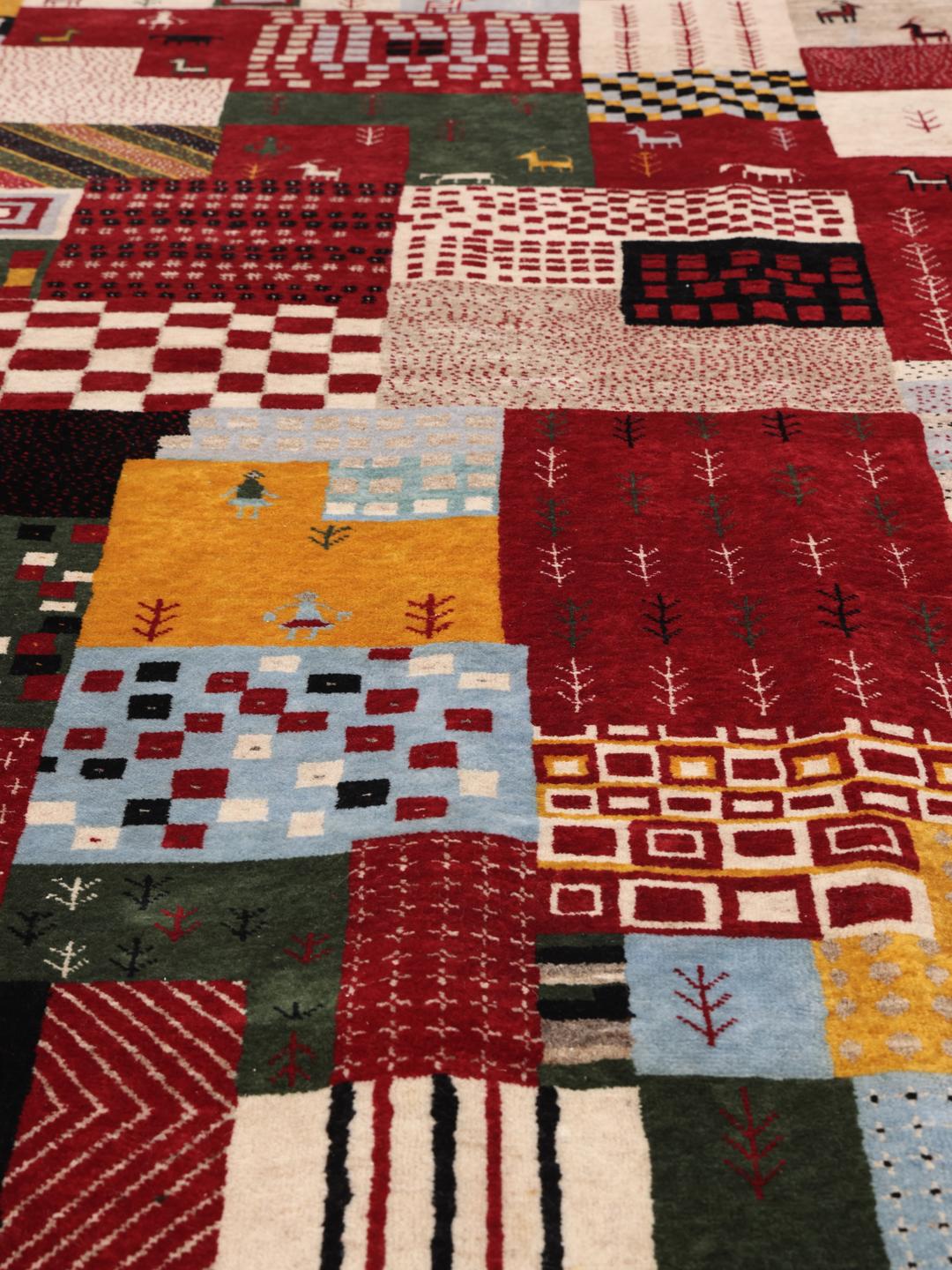
Visually, these rugs are celebrated for their bold use of colour and symbolic patterns. You will often find stylized depictions of animals, plants, and geometric symbols like diamonds or squares, which serve as a visual shorthand for tribal identity and protection. The migration of these weaving techniques to India has allowed for the preservation of these ancient styles, often incorporating high-quality, hand-spun wool to enhance the texture.
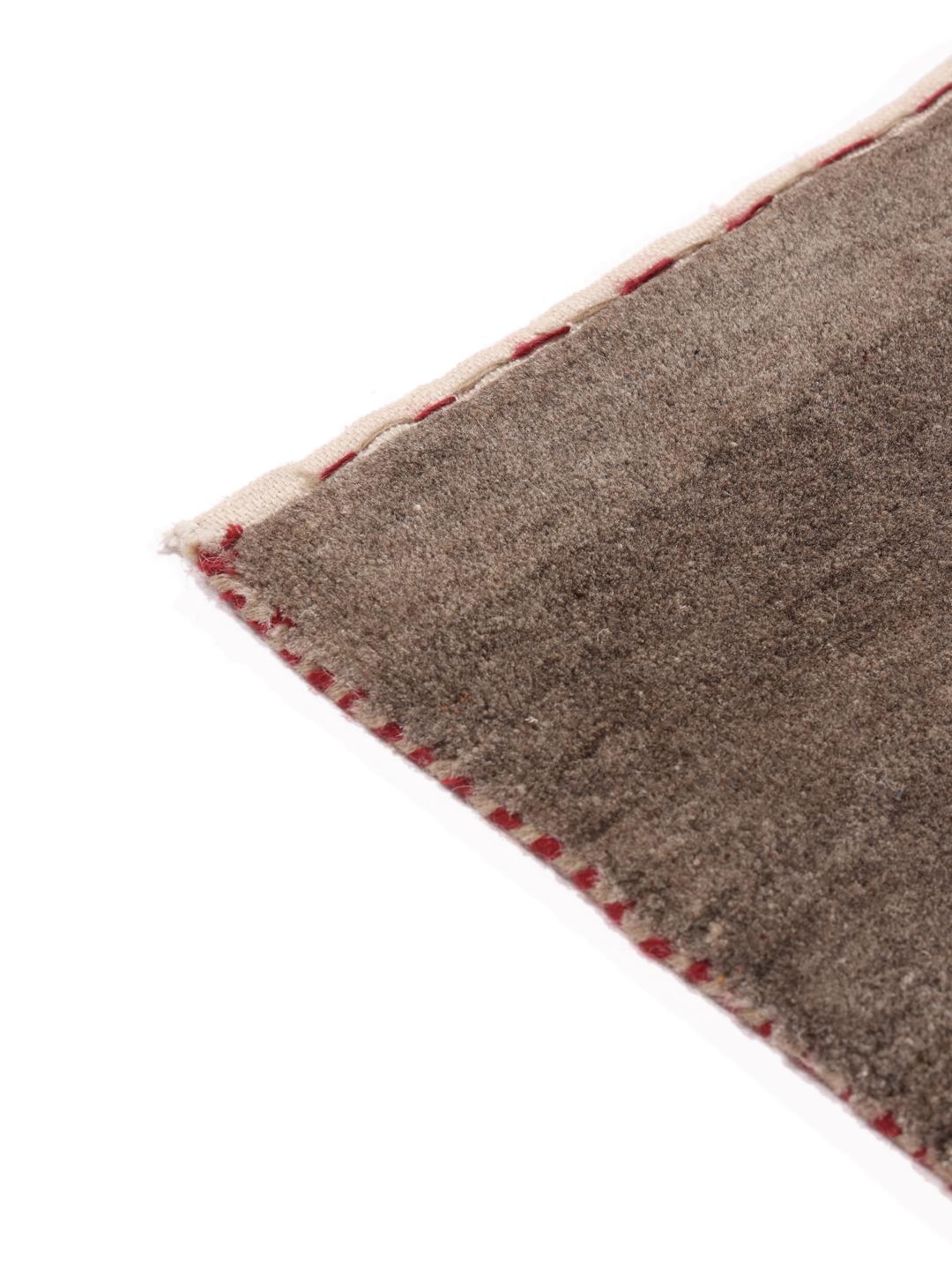
Owning a piece from this tradition is an investment in cultural heritage. Collectors value these rugs not only for their durability but for the genuine human touch inherent in every knot. Each rug serves as a bridge between ancient nomadic artistry and contemporary home design, offering a depth of character that mass-produced floor coverings simply cannot replicate.