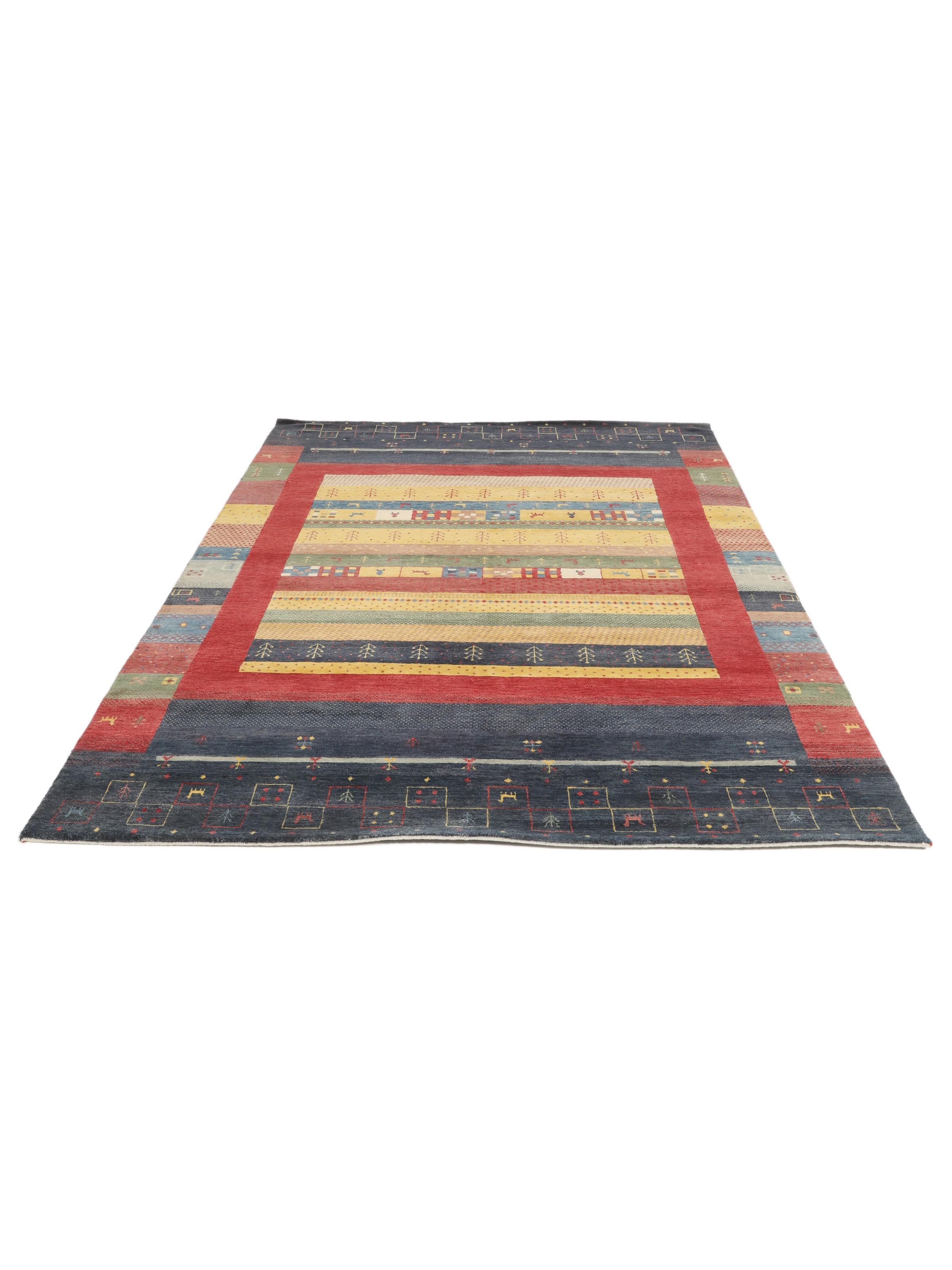
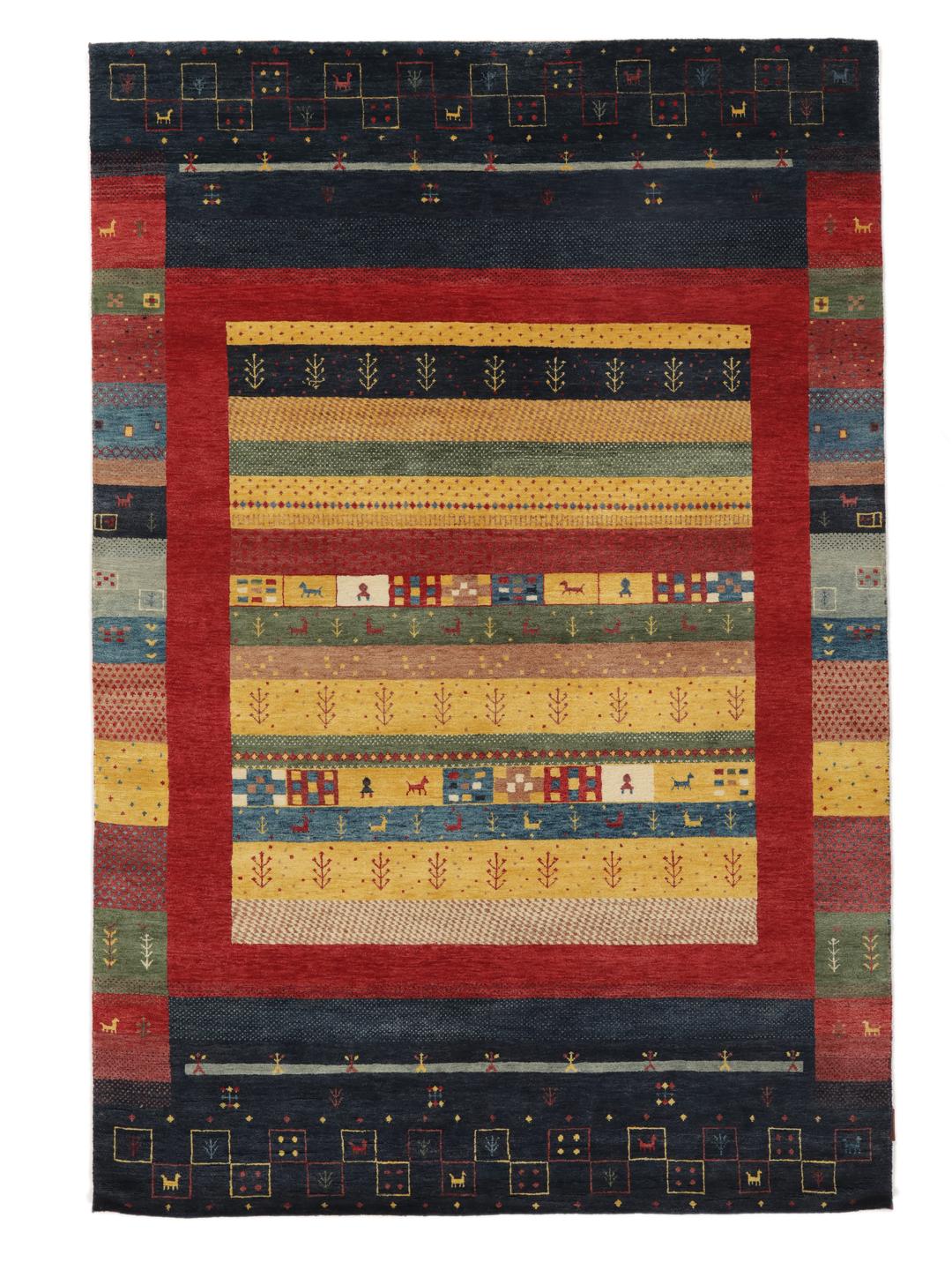
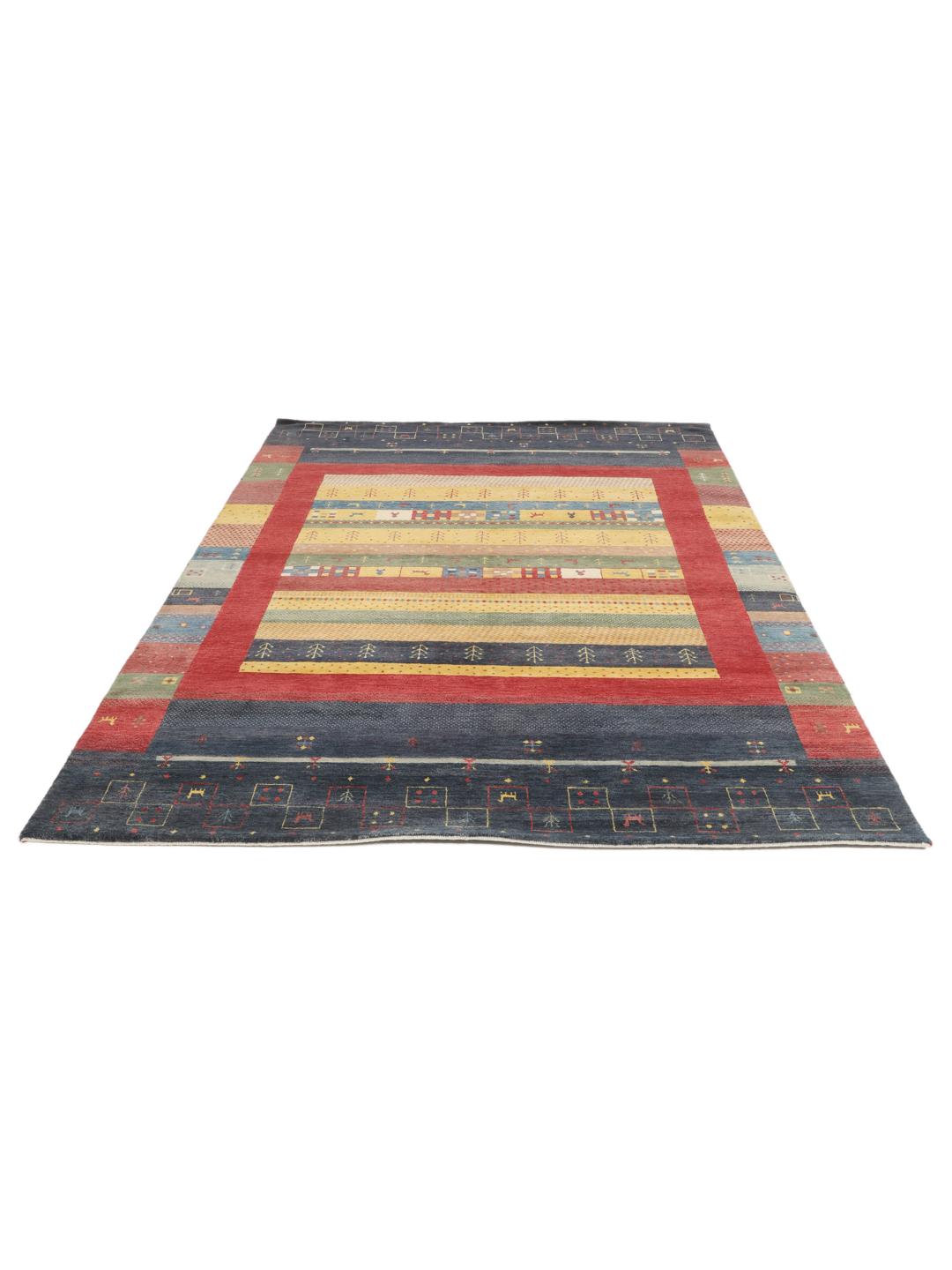
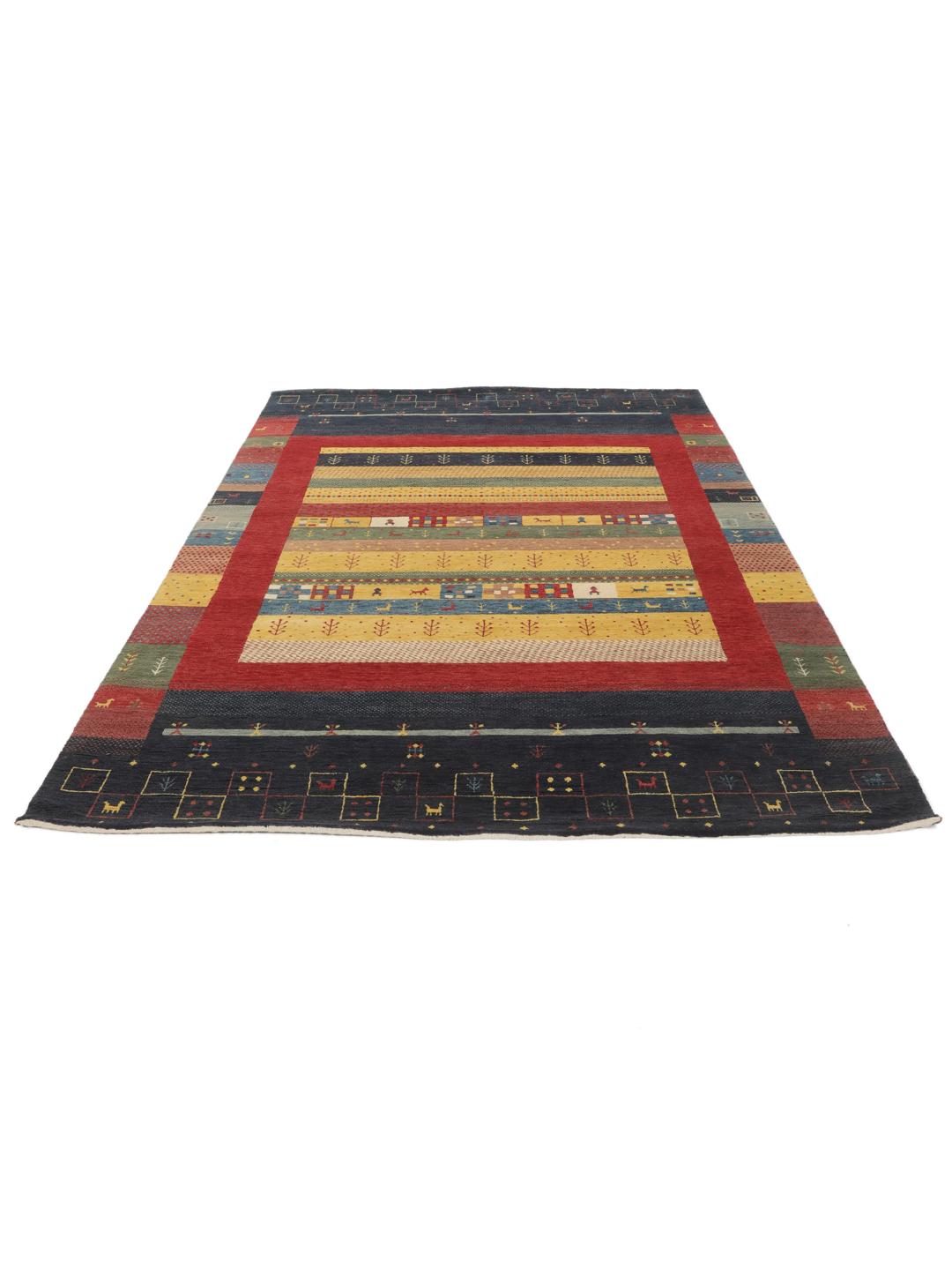
Gabbeh rugs have long been celebrated for their artistic freedom and connection to the nomadic traditions of the Middle East. Originally woven for personal use by tribal communities, these rugs were designed as functional art, meant to provide warmth in harsh climates while reflecting the weaver's personal vision and surroundings.
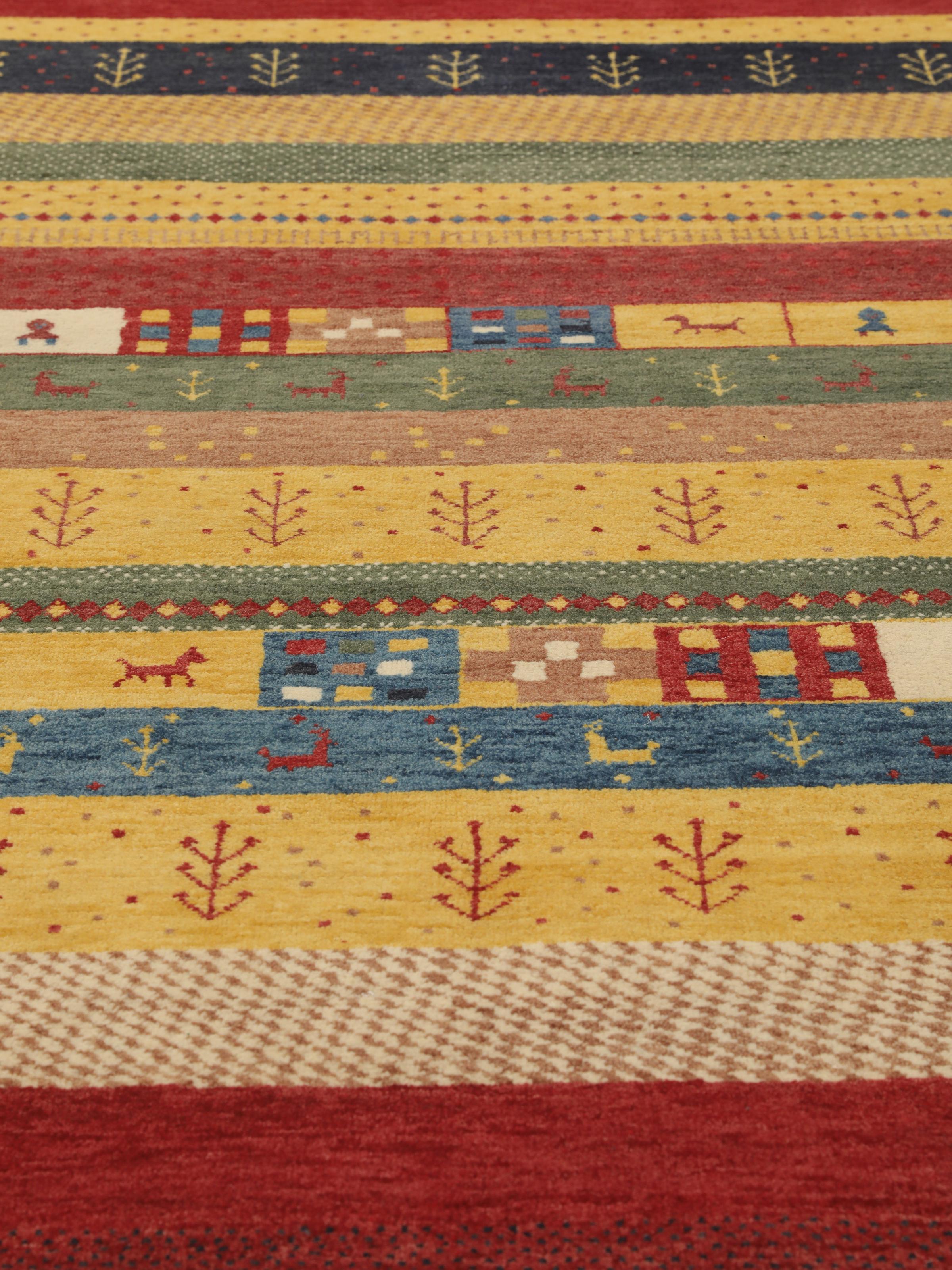
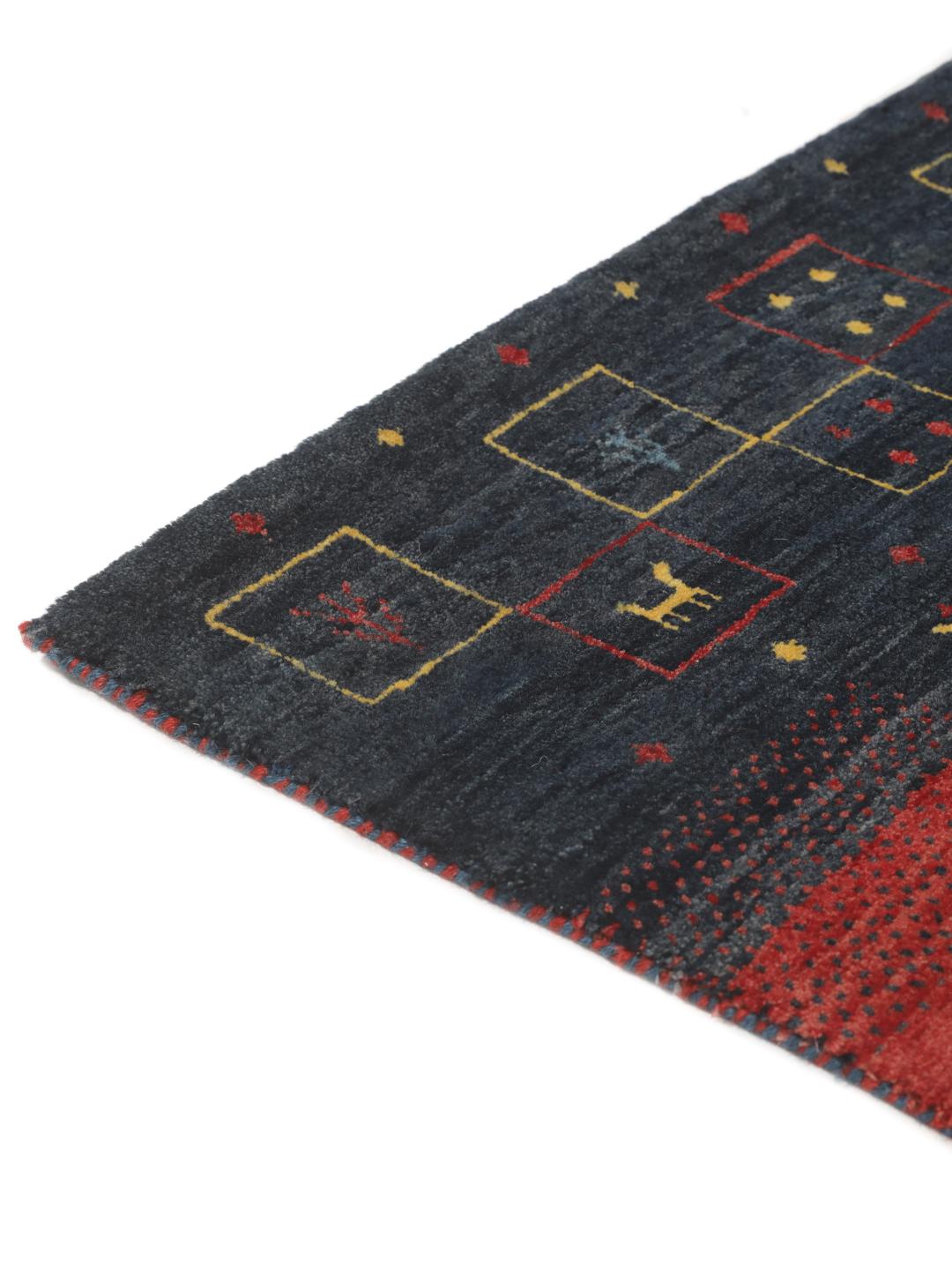
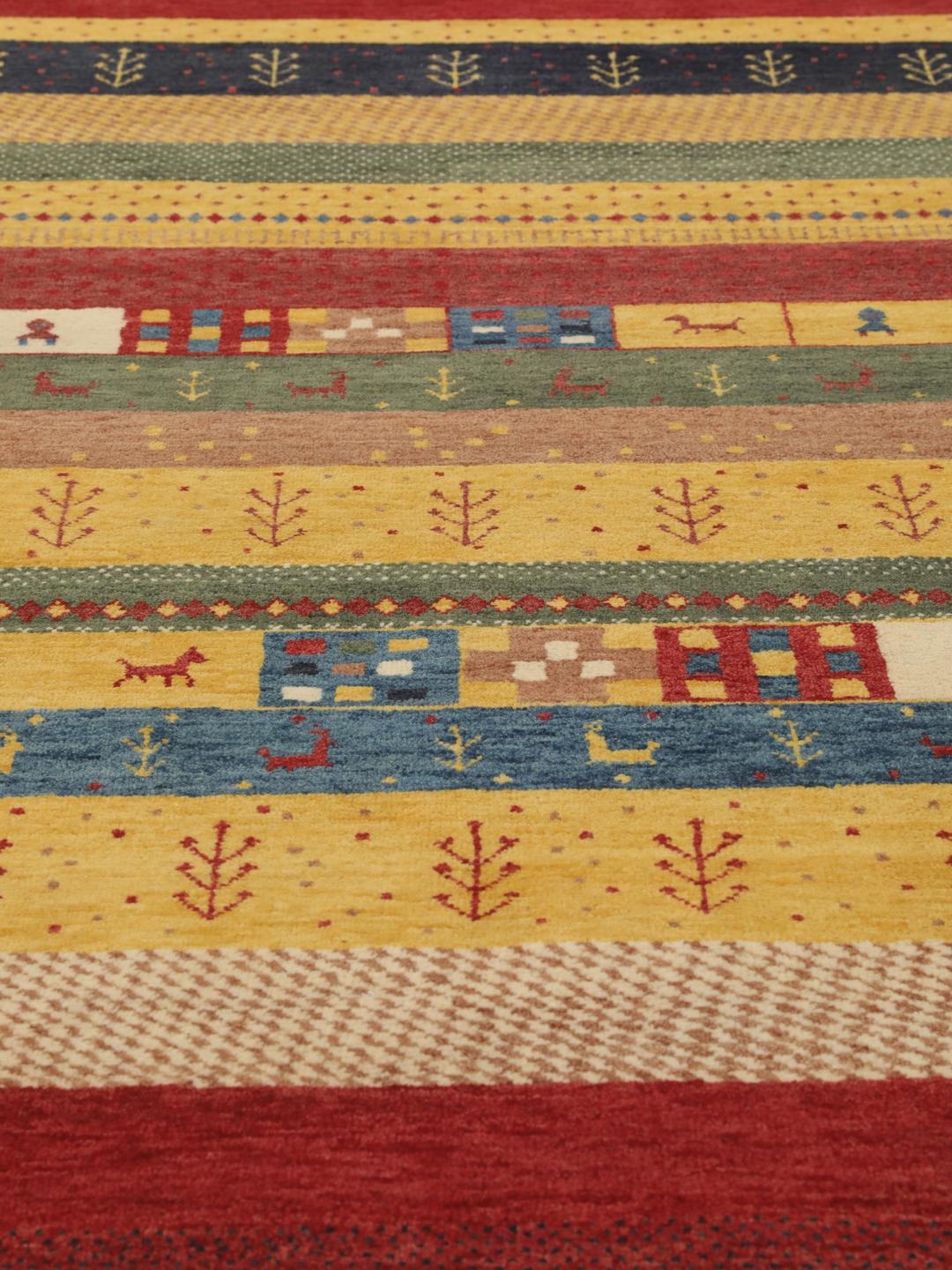
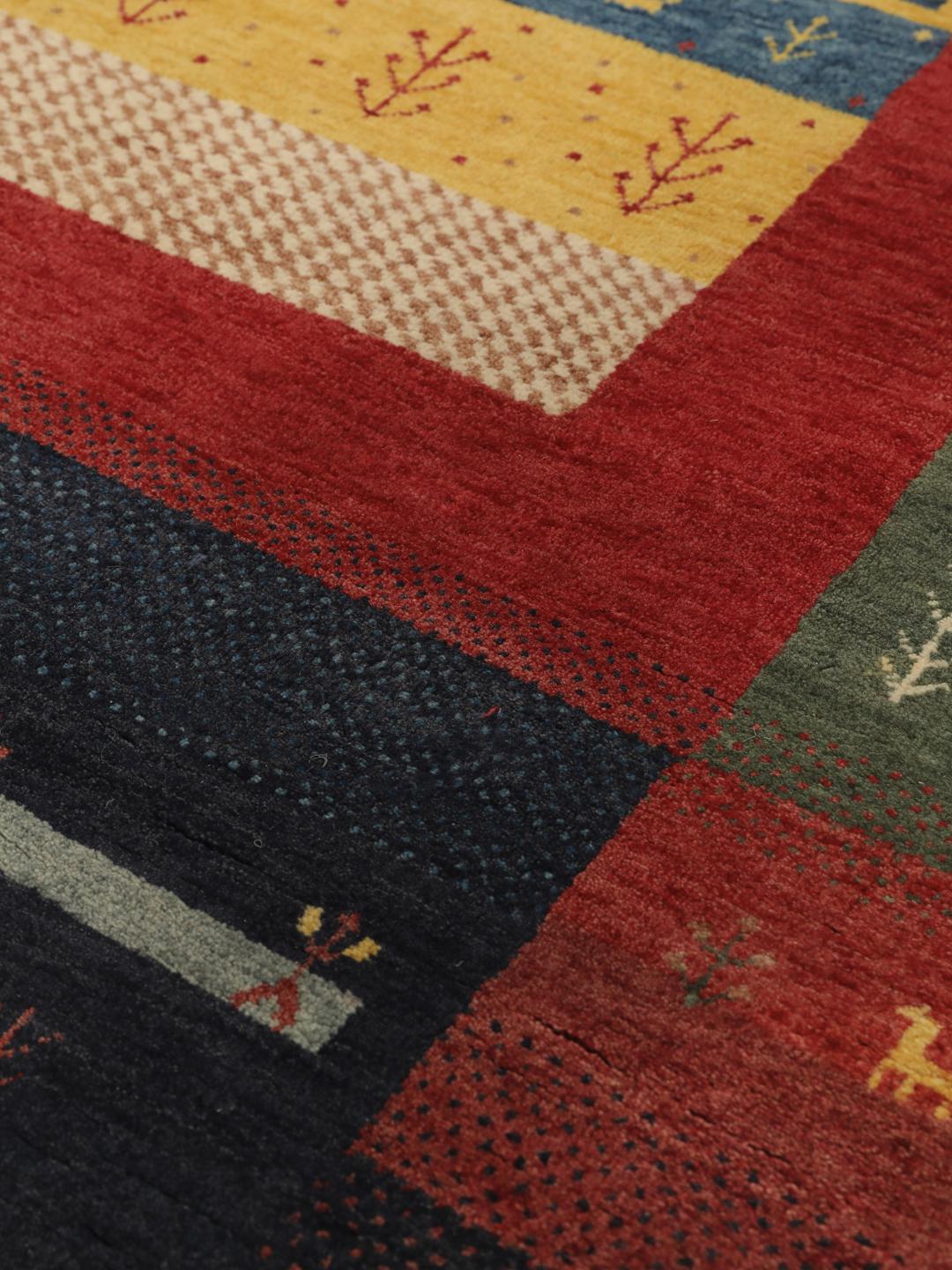
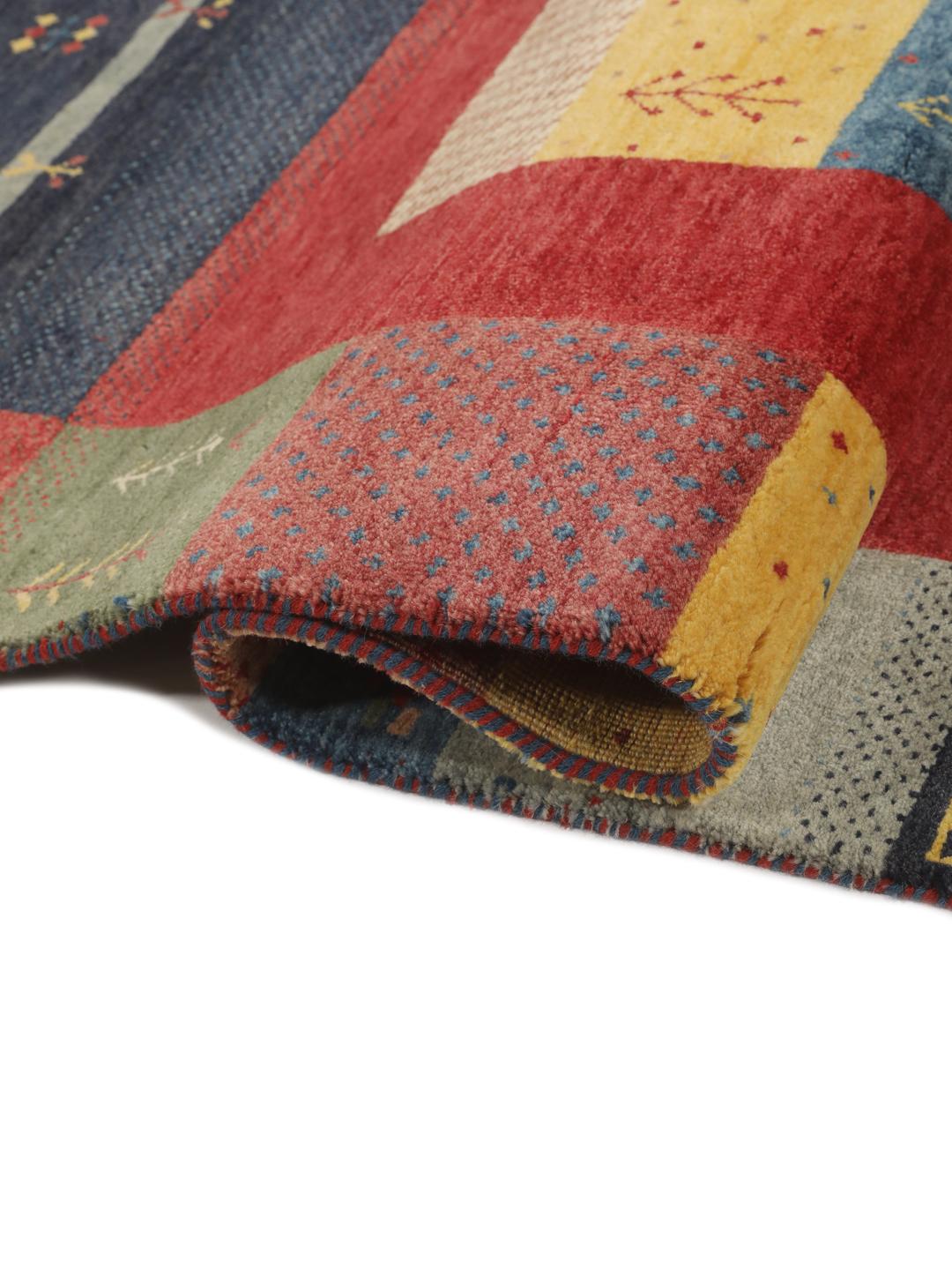
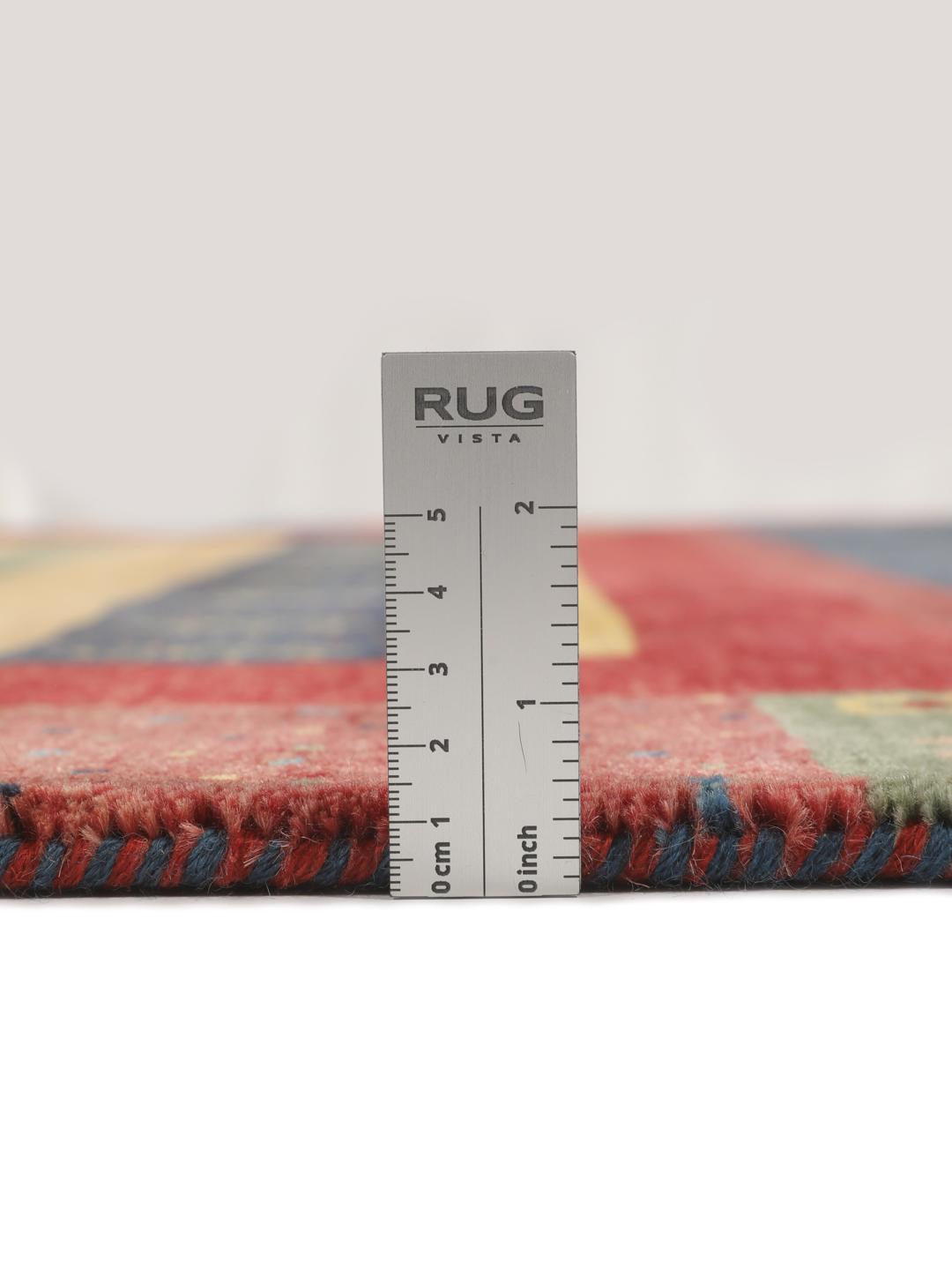
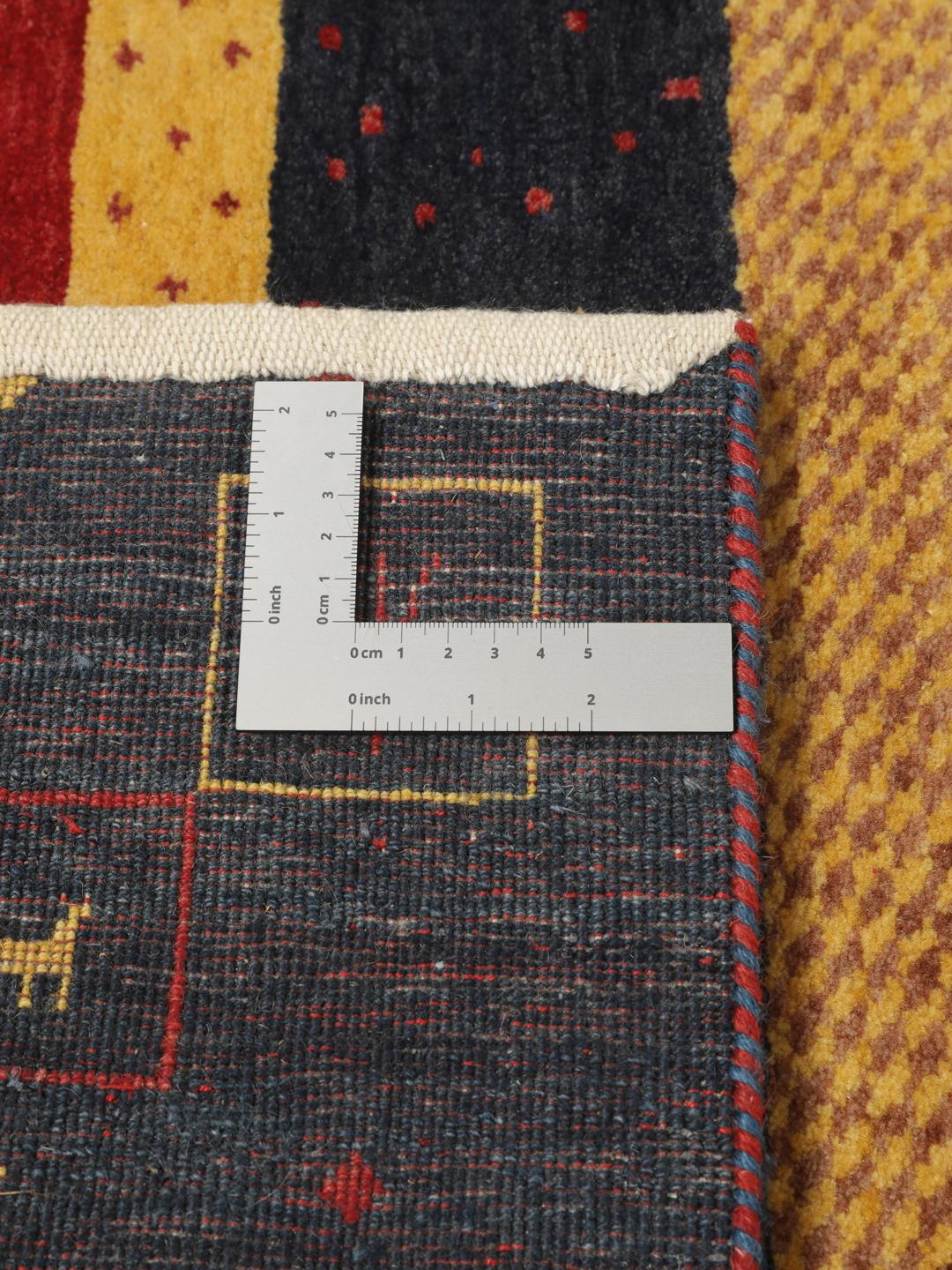
The Loribaft style represents an evolution of this tradition, characterised by a higher knot density and a more refined finish than traditional nomadic Gabbehs. By using a tighter knotting technique, weavers are able to create sharper, more detailed patterns that retain the raw, expressive spirit of the original style while offering a smoother, more sophisticated texture.
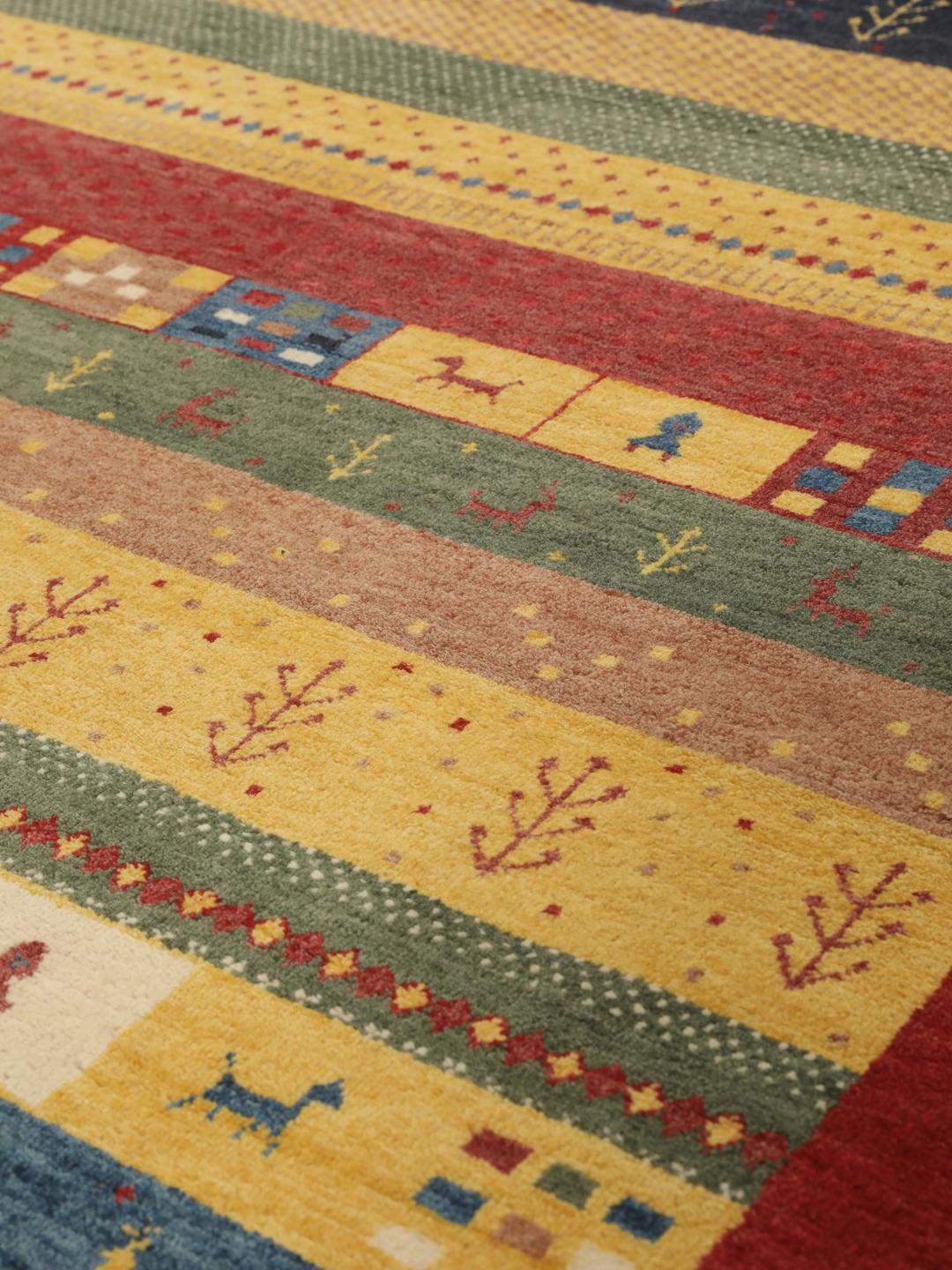
Signature elements of this tradition include the use of bold, simplified motifs such as trees of life, small animals, and geometric symbols. These designs are not merely decorative but are deeply rooted in the cultural heritage of the weavers, often serving as a visual language to represent themes of nature, prosperity, and protection.
Collectors value Loribaft rugs for their unique balance of rustic charm and technical precision. Owning such a piece means preserving a centuries-old craft that prioritises human expression and natural materials over mass production, ensuring that the legacy of the weaver's skill continues to live on in your home.