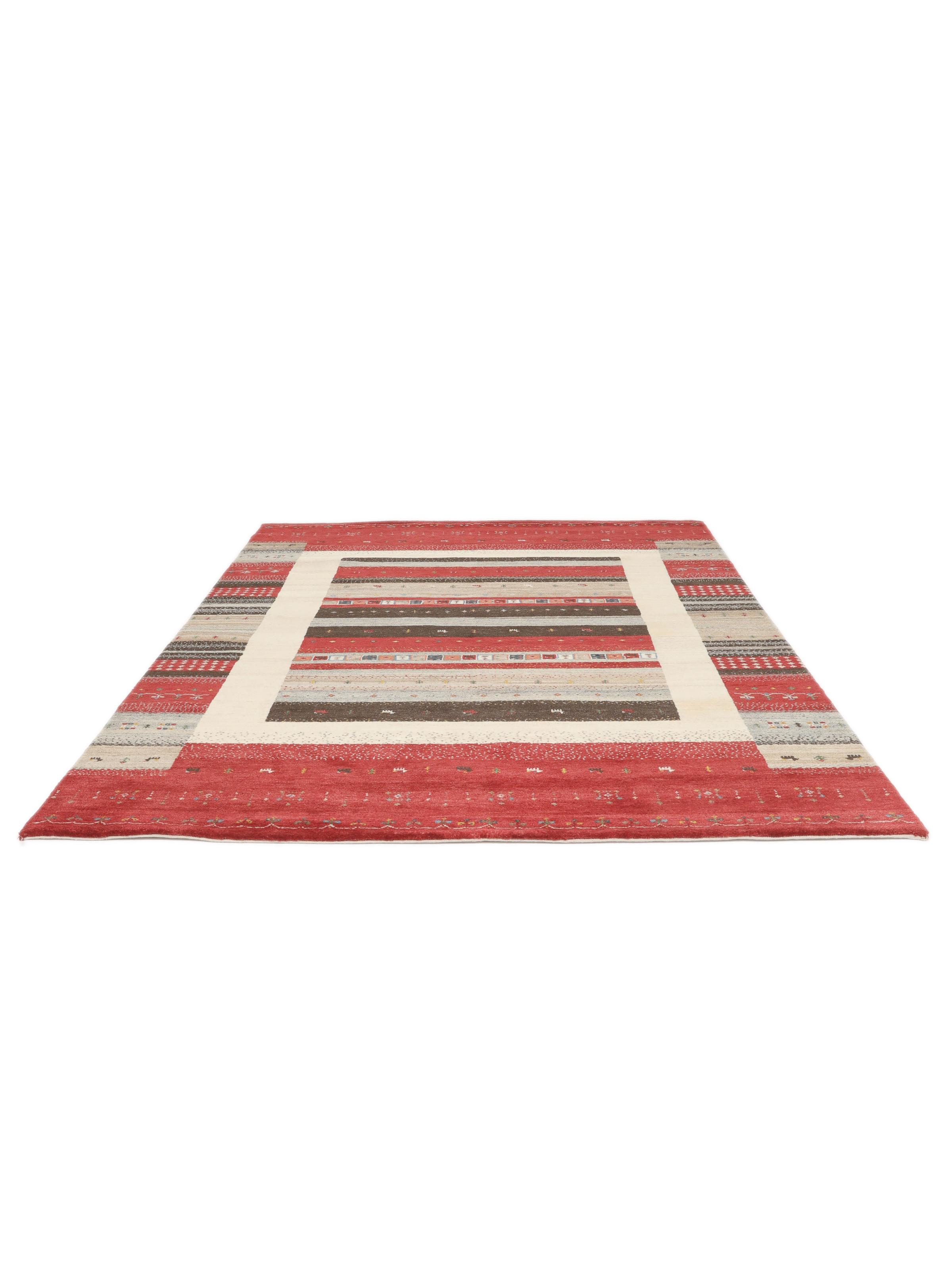
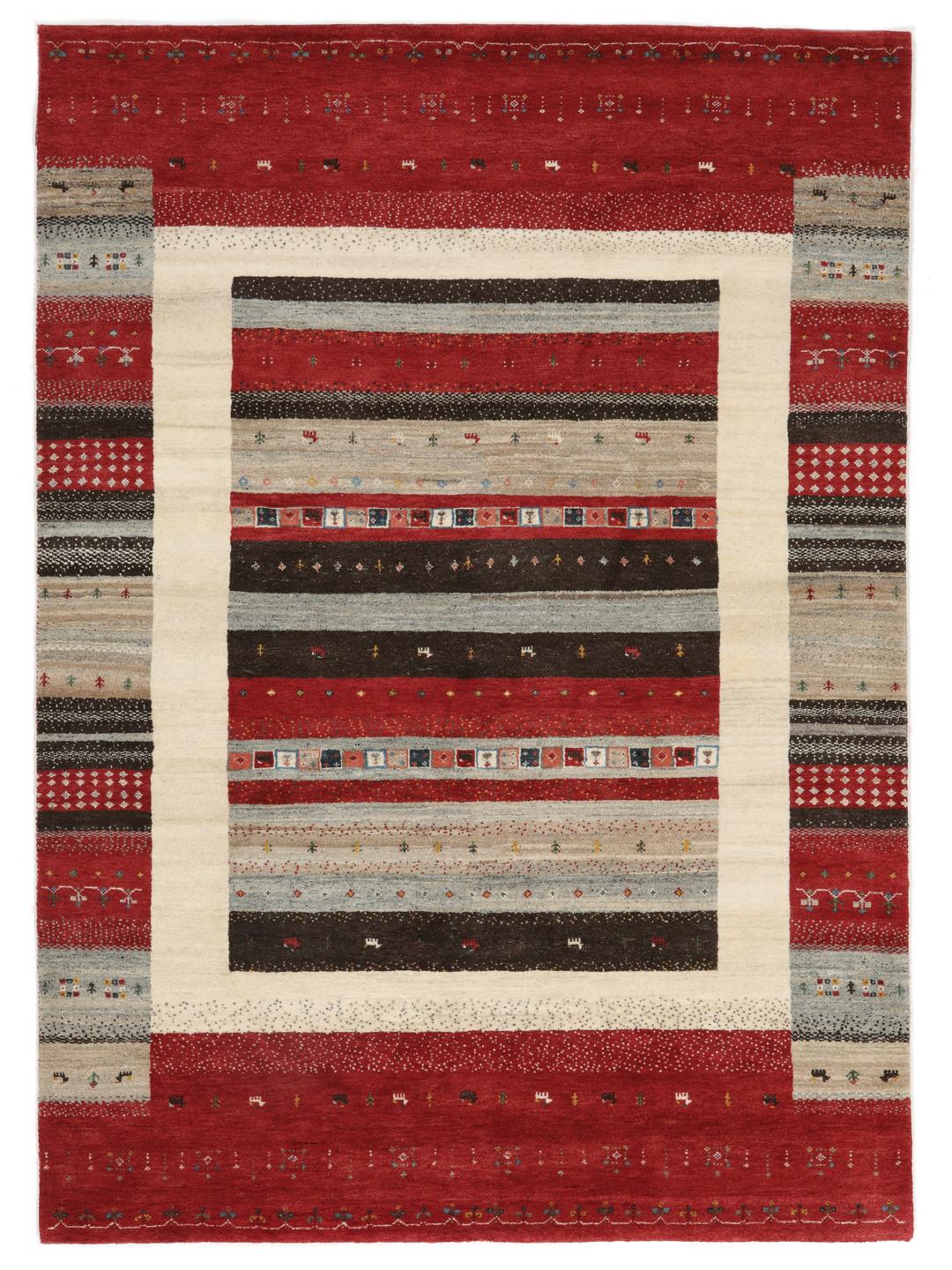
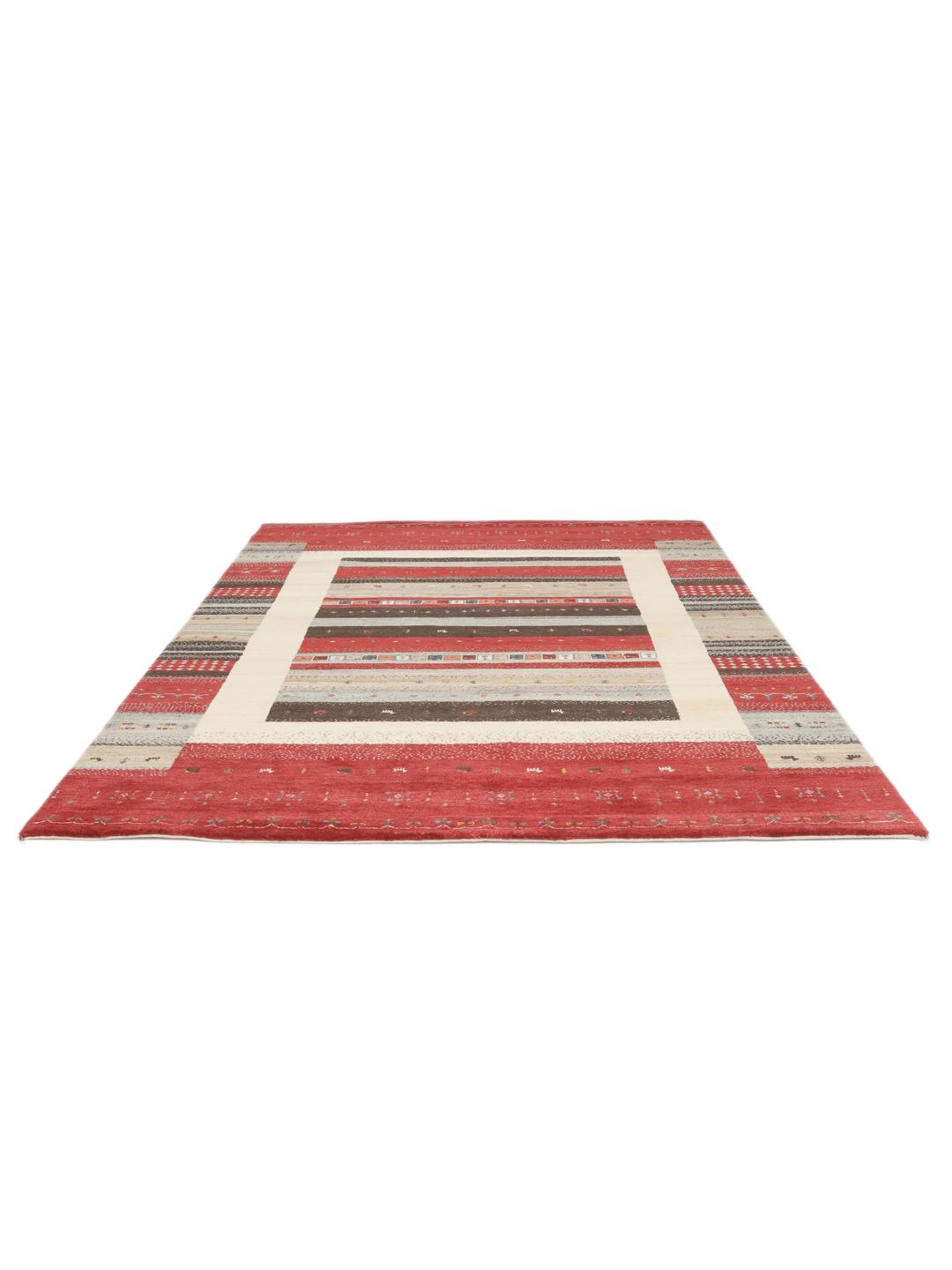
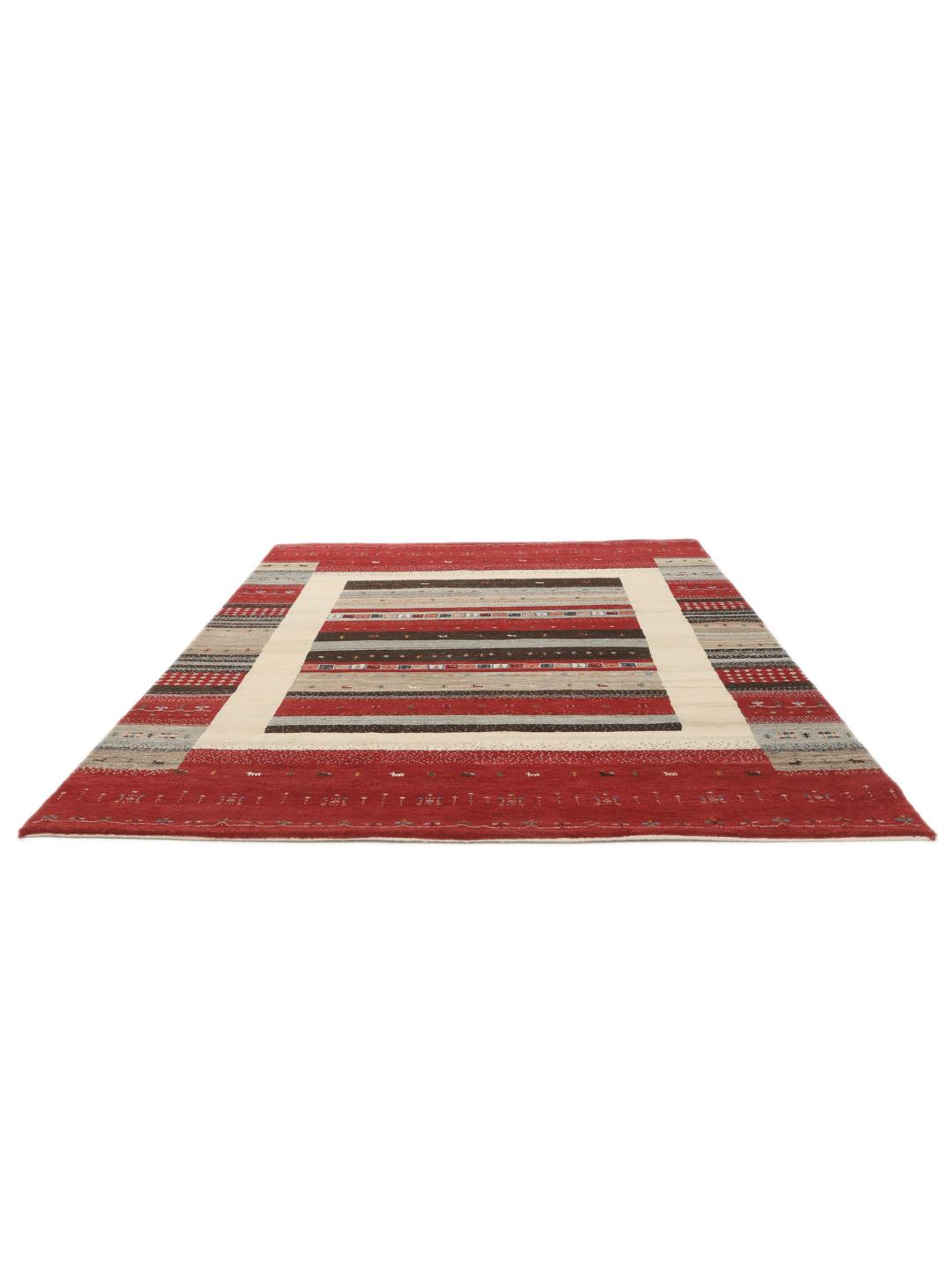
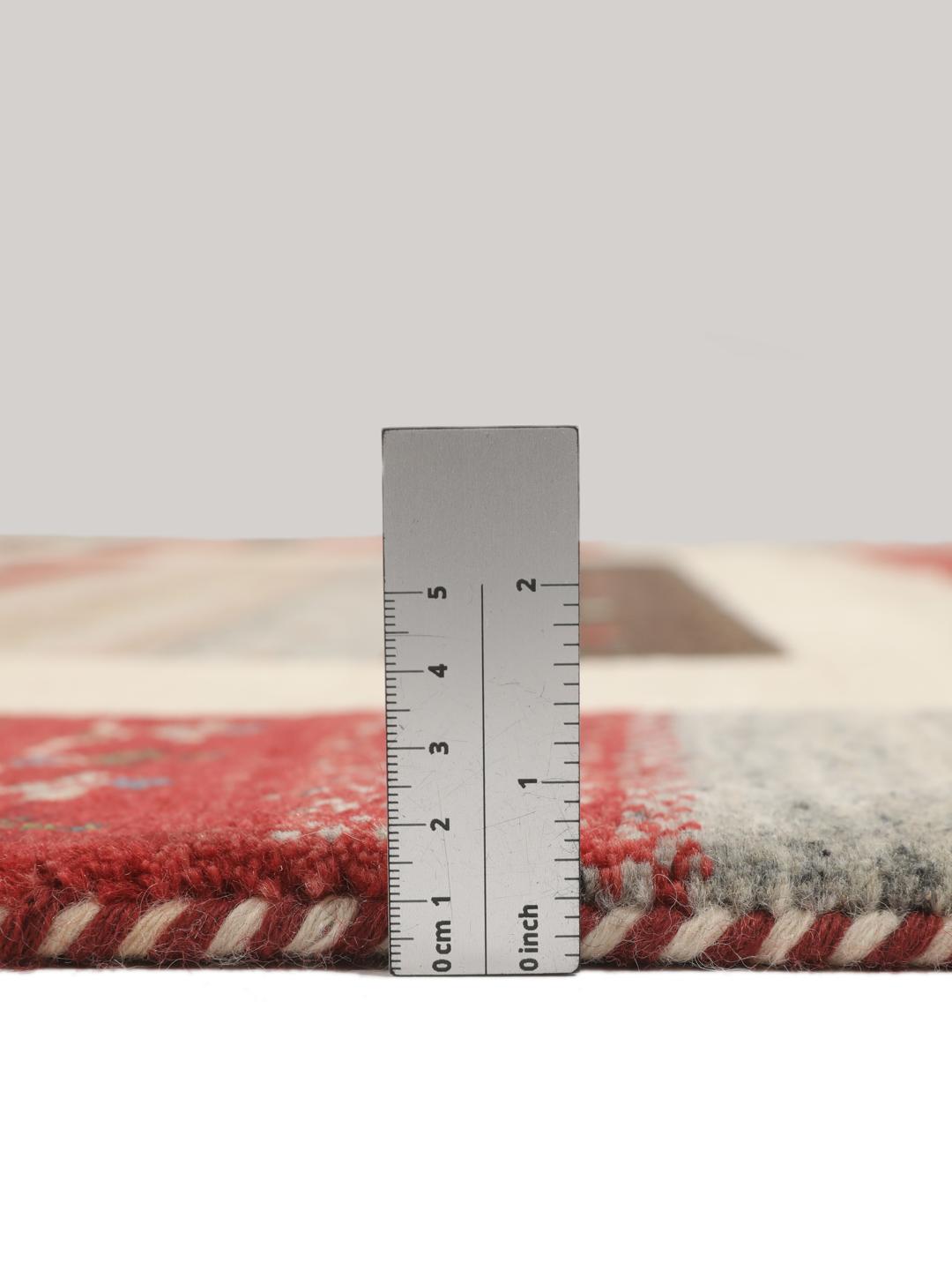
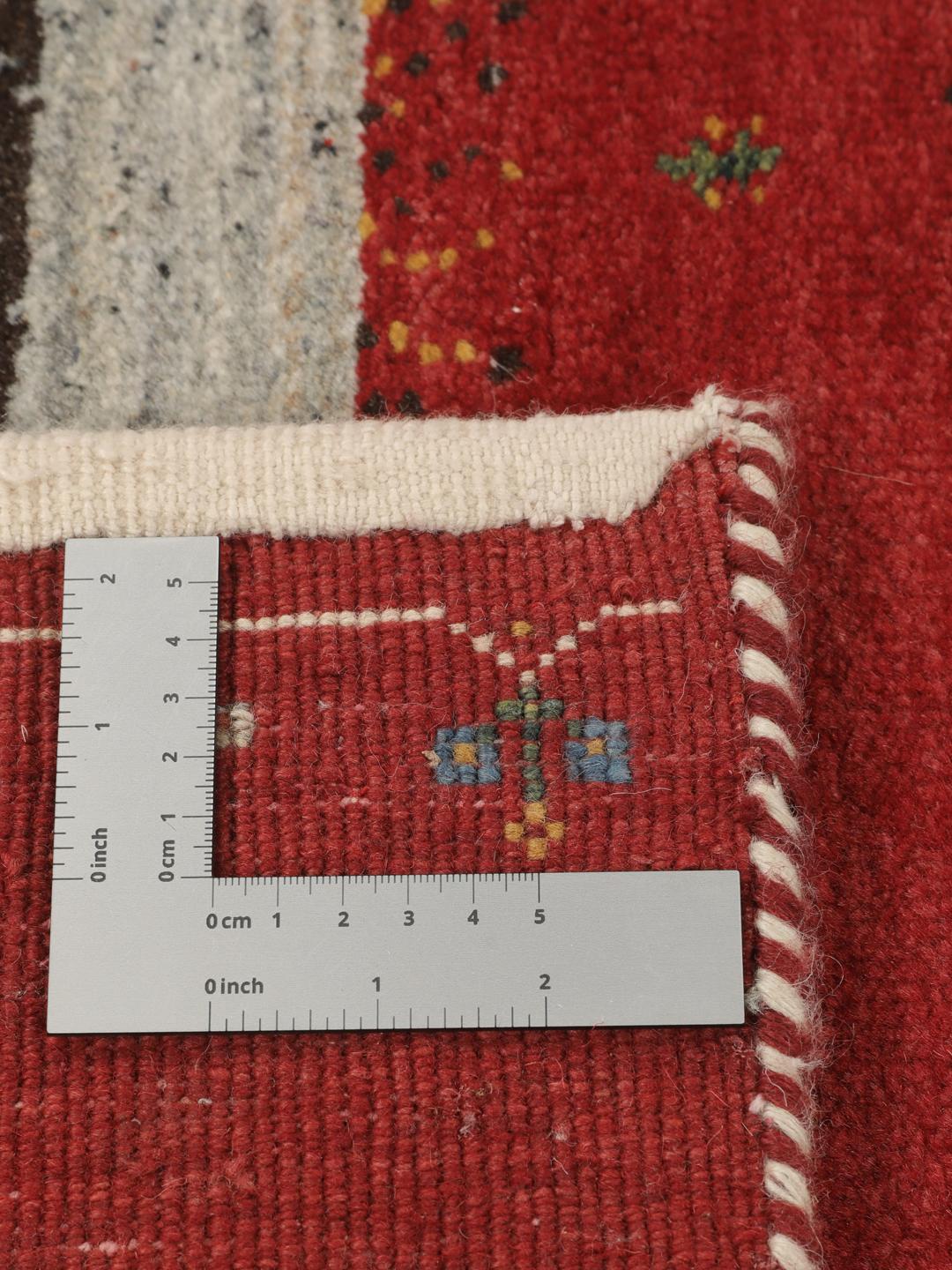
The Gabbeh rug tradition originates from the nomadic tribes of the Middle East, who created these pieces primarily for personal use and protection against the harsh elements. Over time, the style evolved into the sophisticated Loribaft and Kashkooli traditions, which are now celebrated globally for their artistic freedom and expressive use of colour.
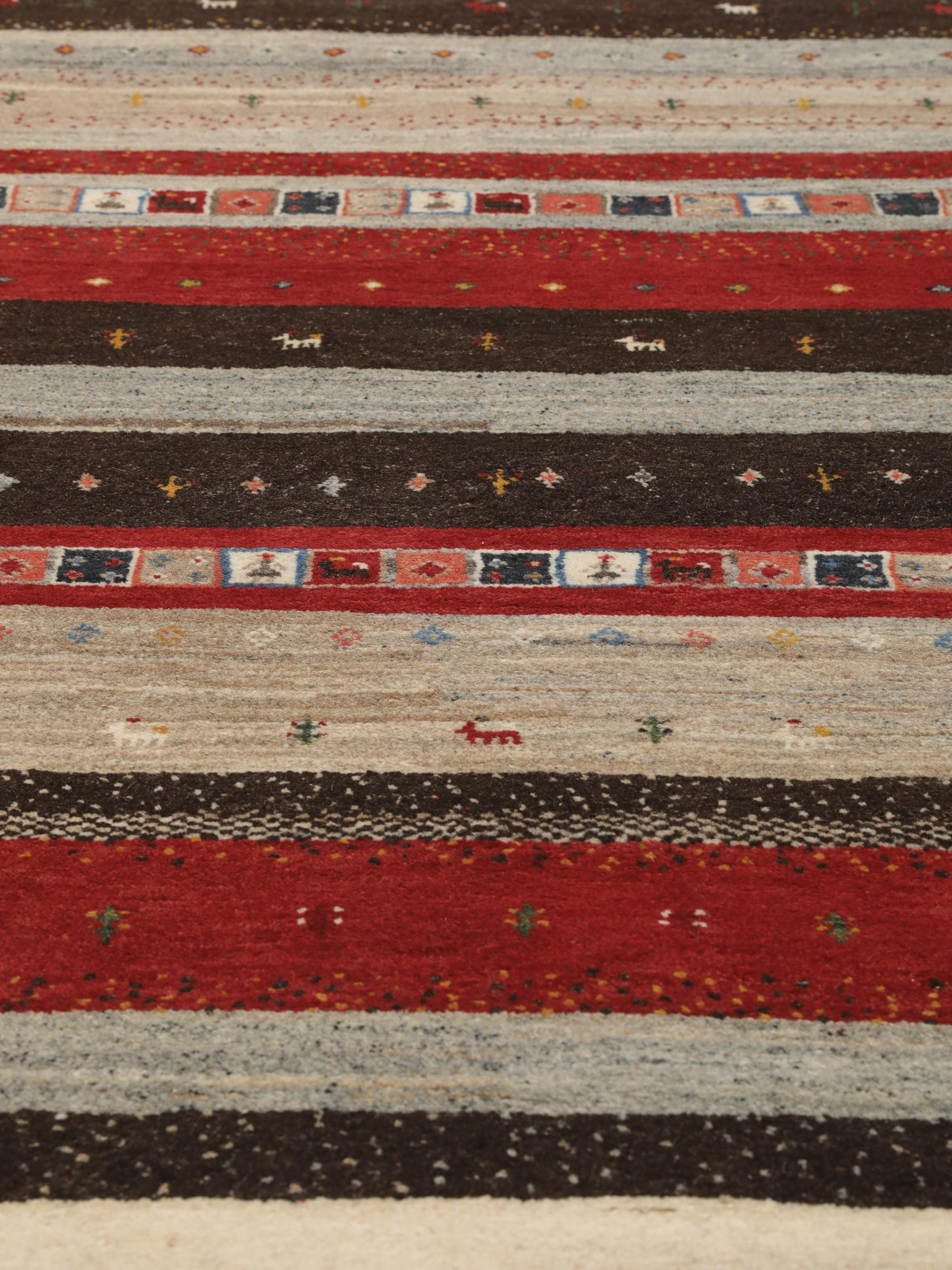
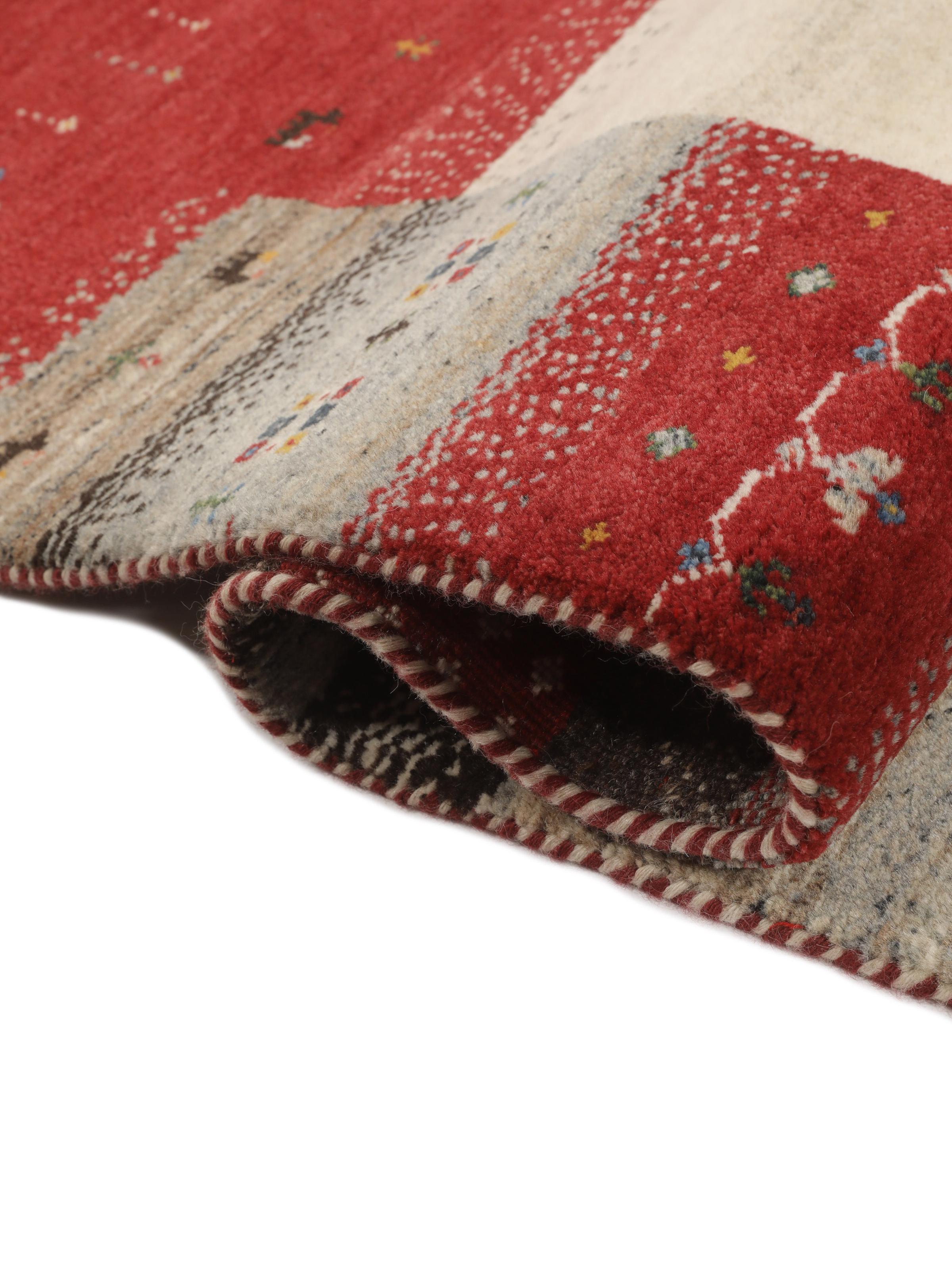
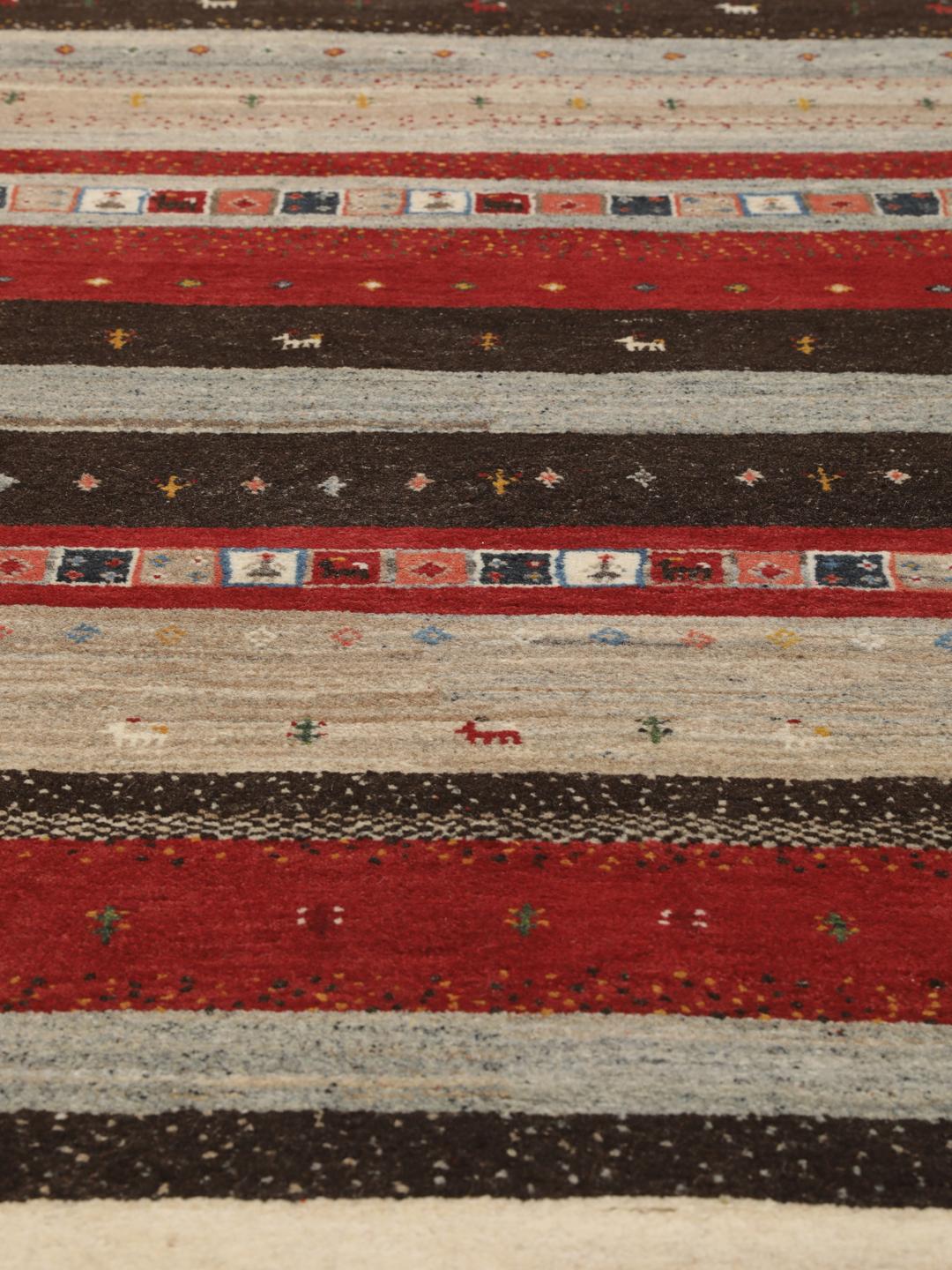
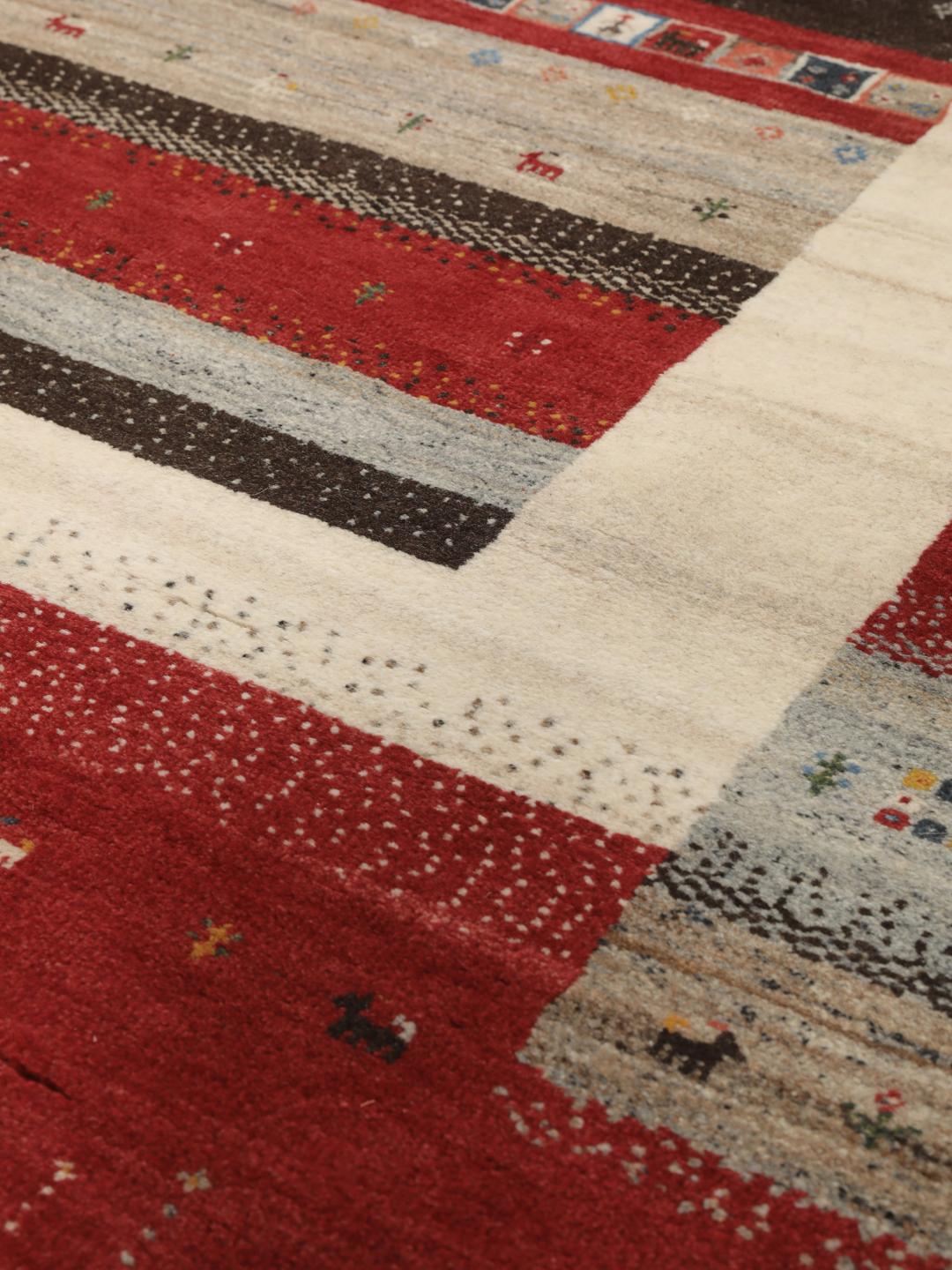
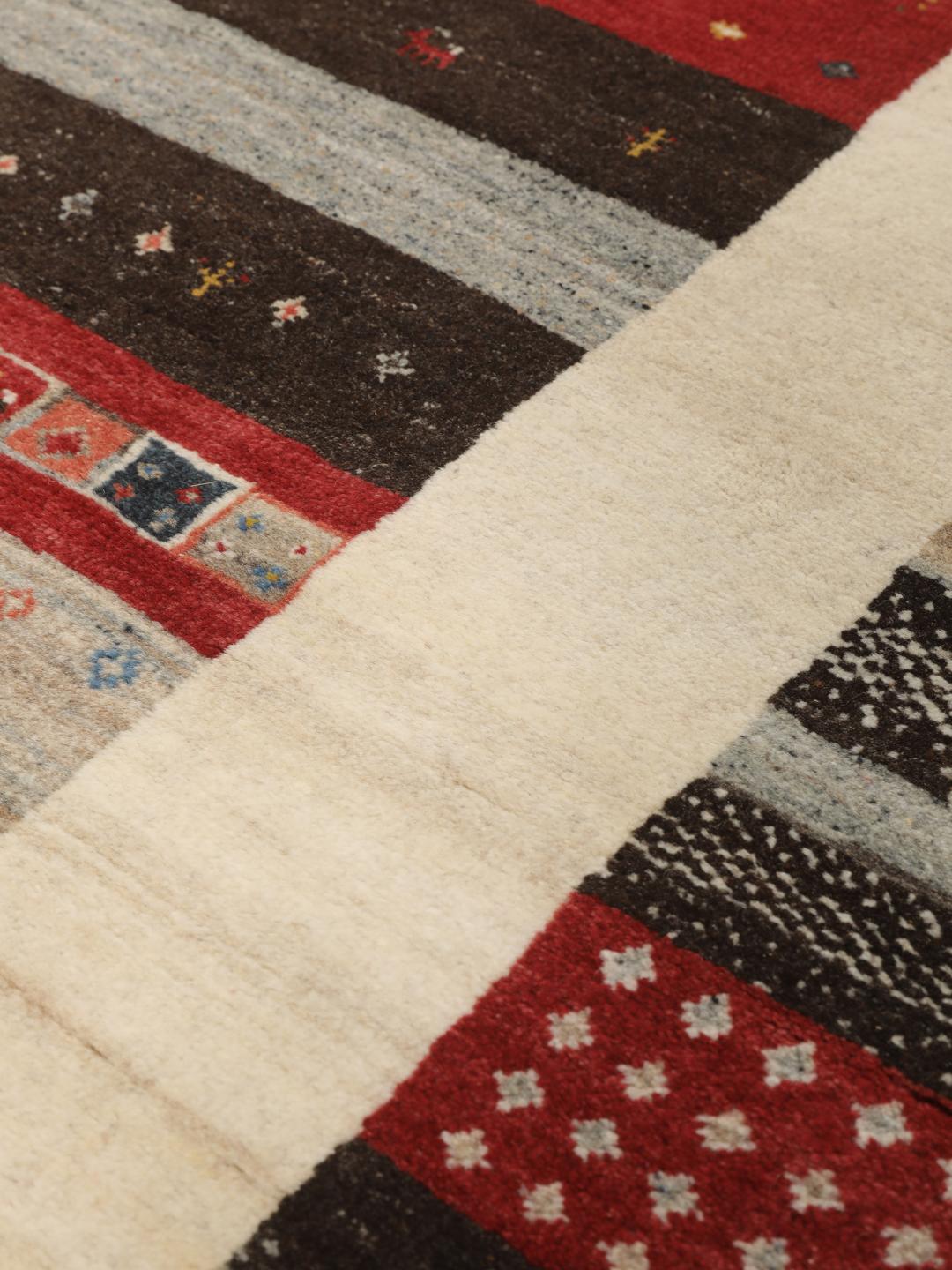
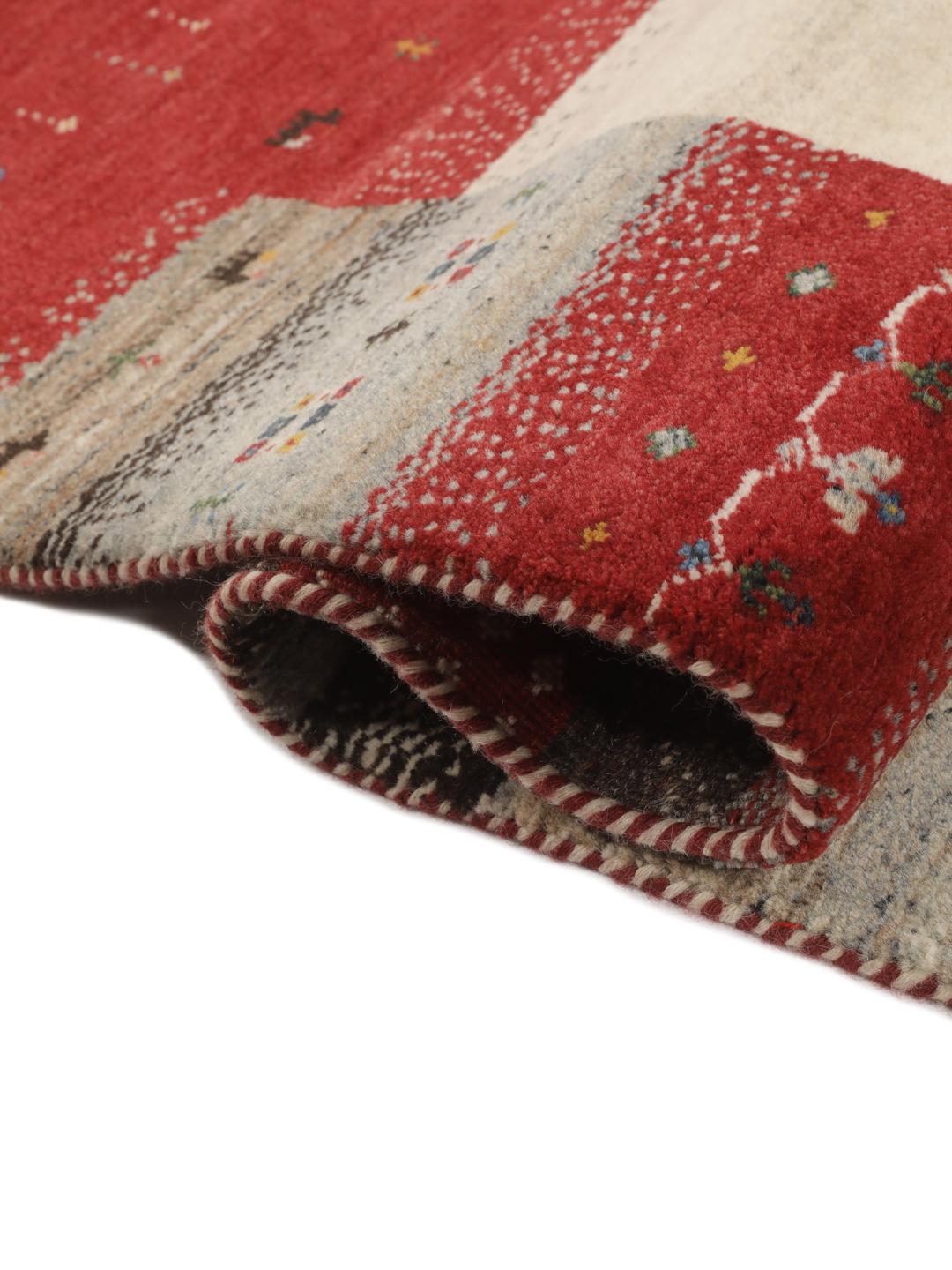
The term Loribaft refers to a specific, elevated style of weaving that emphasises a finer, more refined pile compared to traditional, coarser Gabbeh rugs. This evolution allows for more intricate patterns and a smoother, more lustrous appearance, while still maintaining the rustic charm and soulful character that define the genre.
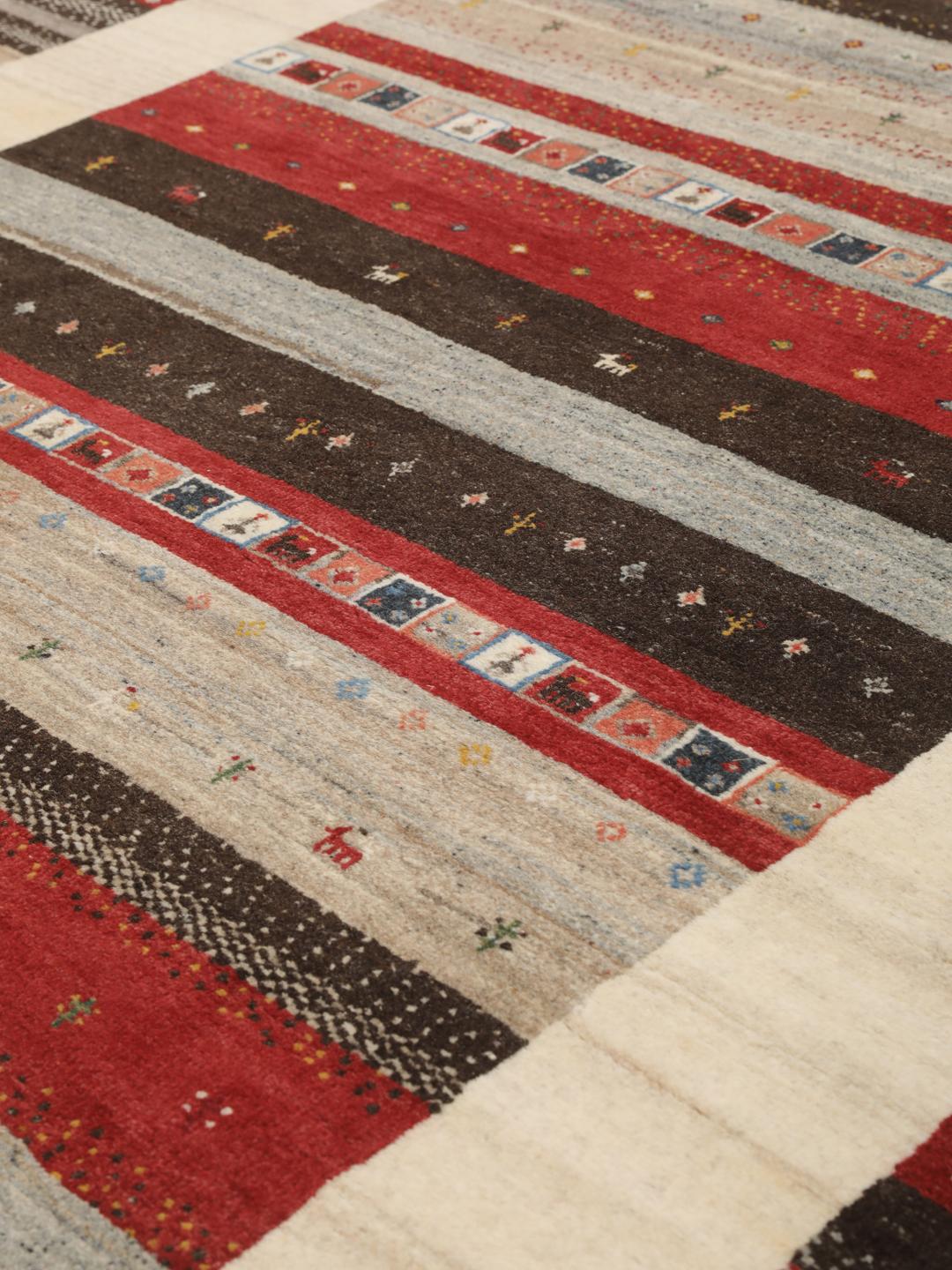
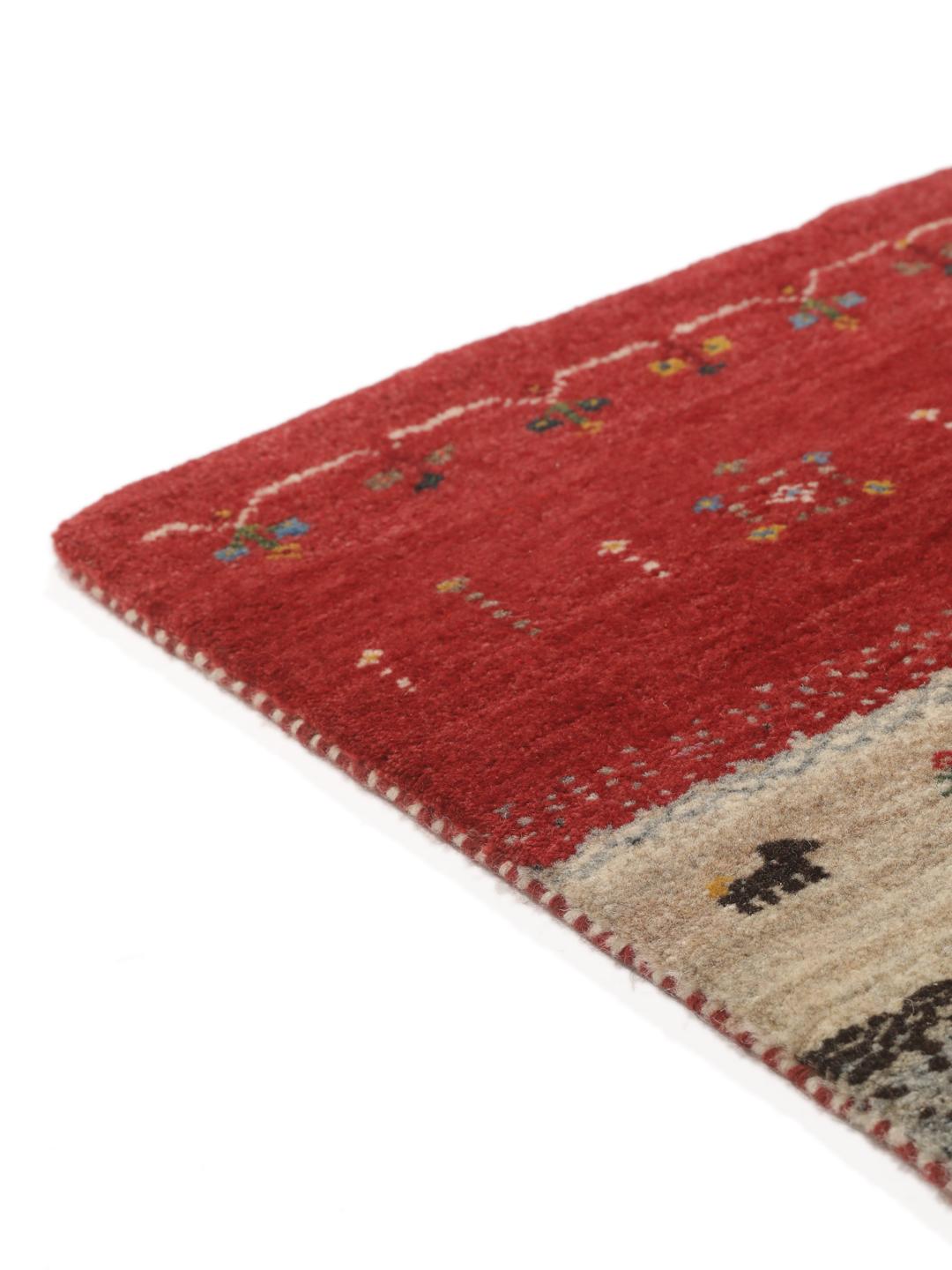
Visually, these rugs are known for their minimalist yet deeply symbolic motifs, often inspired by the natural world, tribal life, and personal narratives. The use of open fields and geometric, stripe-like arrangements creates a rhythmic flow, while the inclusion of small, stylised figures adds a layer of storytelling that is unique to each individual weaver.
Owning a Loribaft rug is an opportunity to connect with a long-standing heritage of craftsmanship. These rugs are highly valued by collectors not just for their beauty, but for the skill required to produce them without the aid of modern technology, representing a legacy of patience, tradition, and creative spirit.