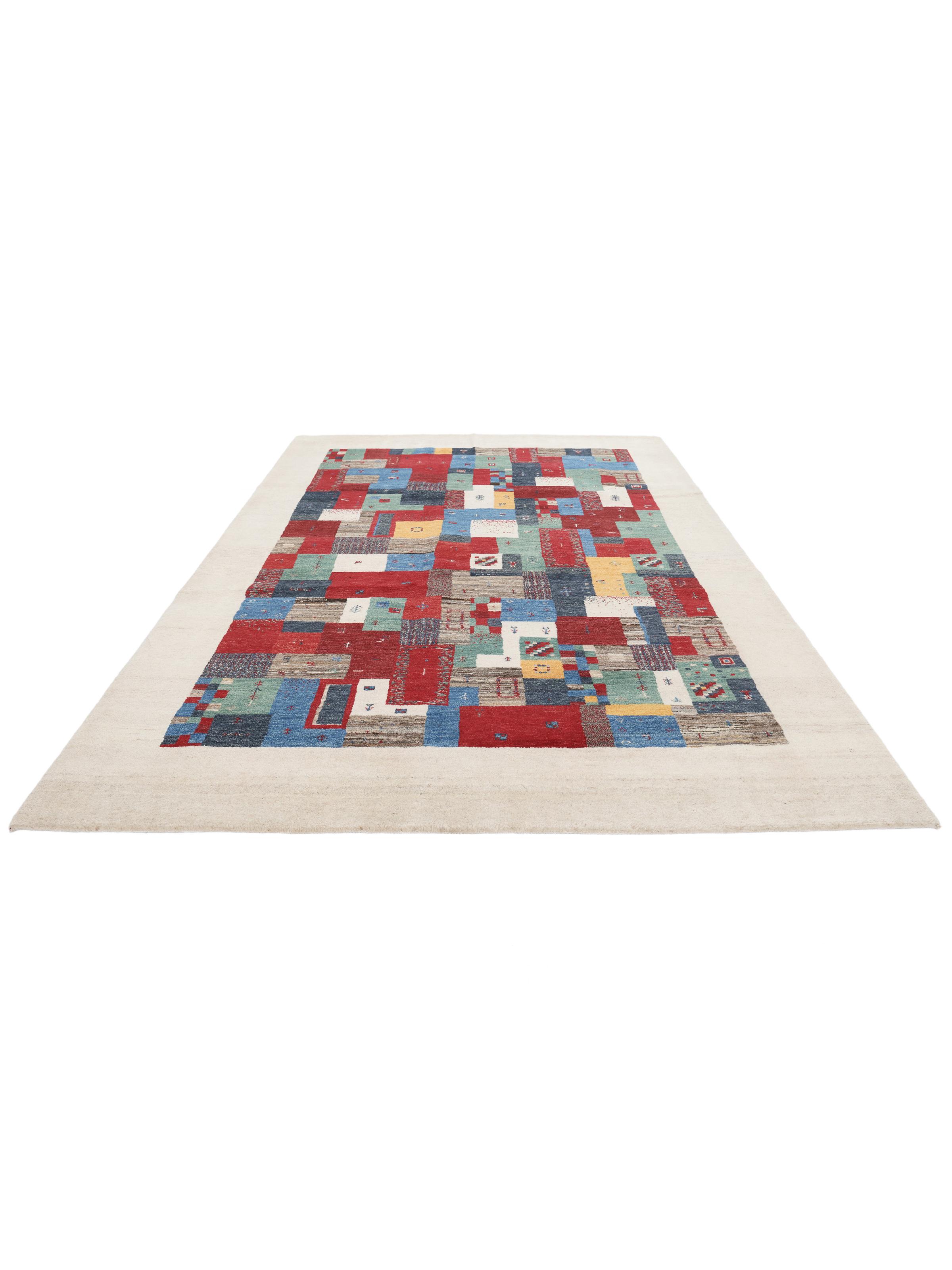
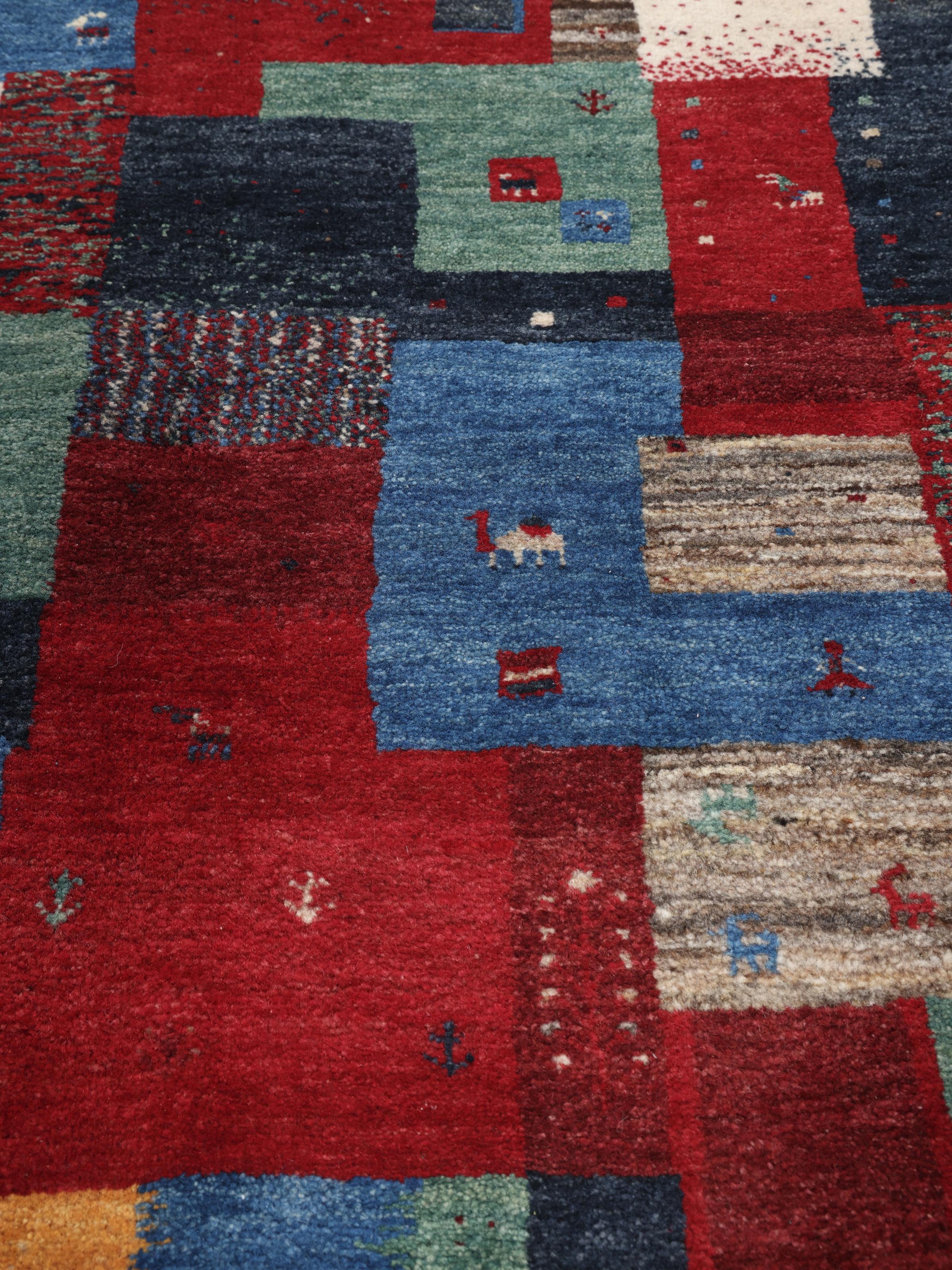
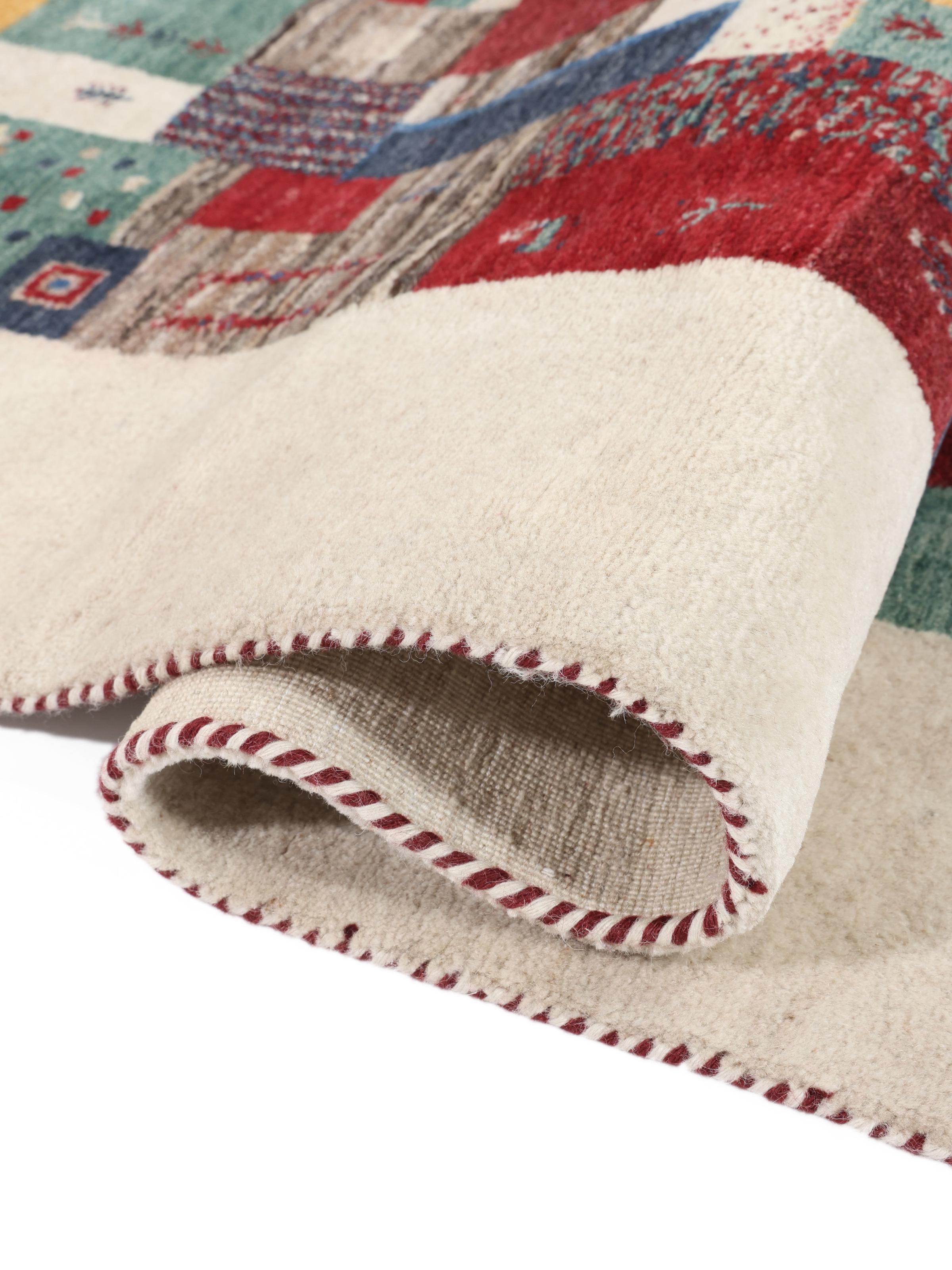
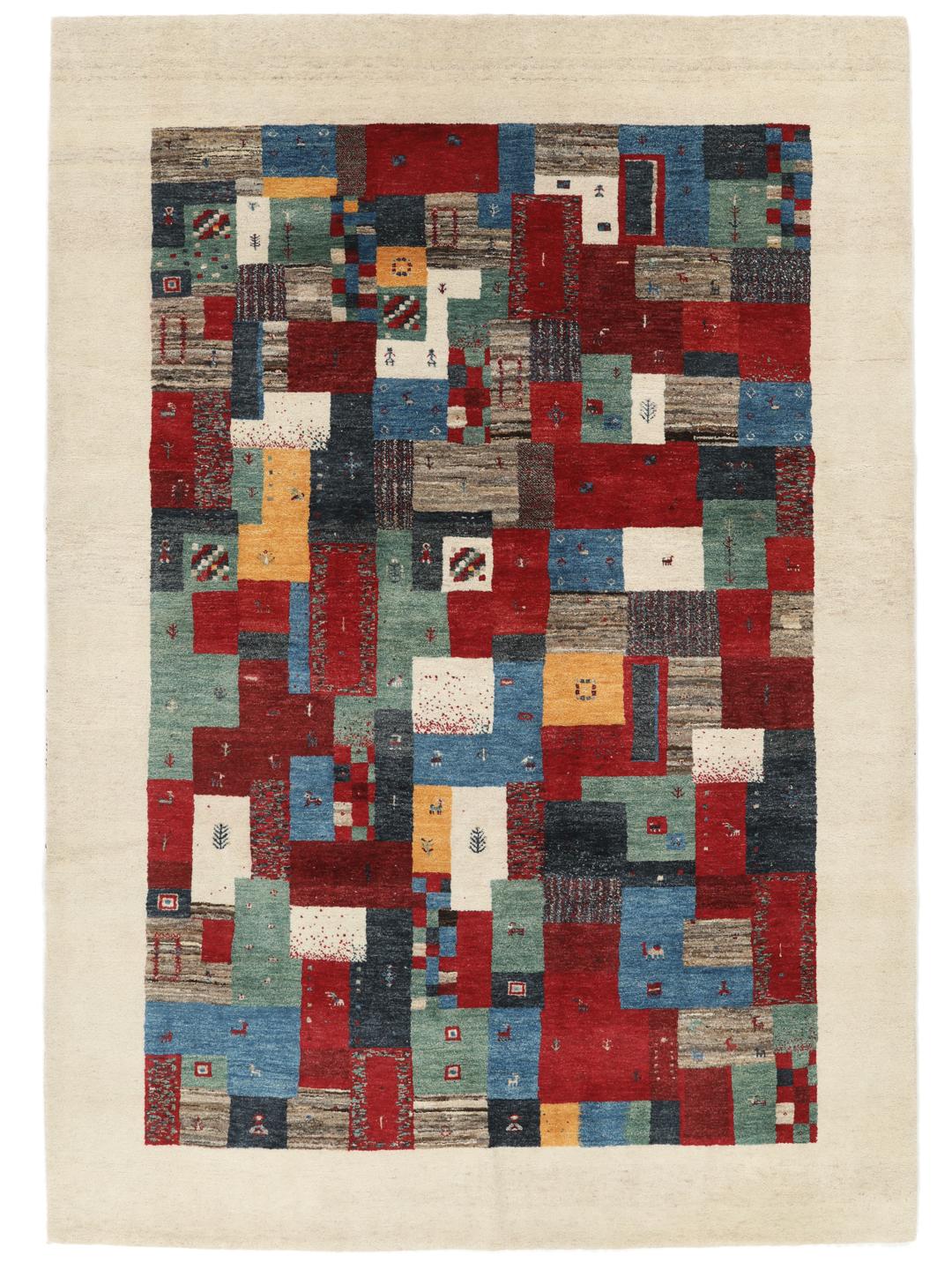
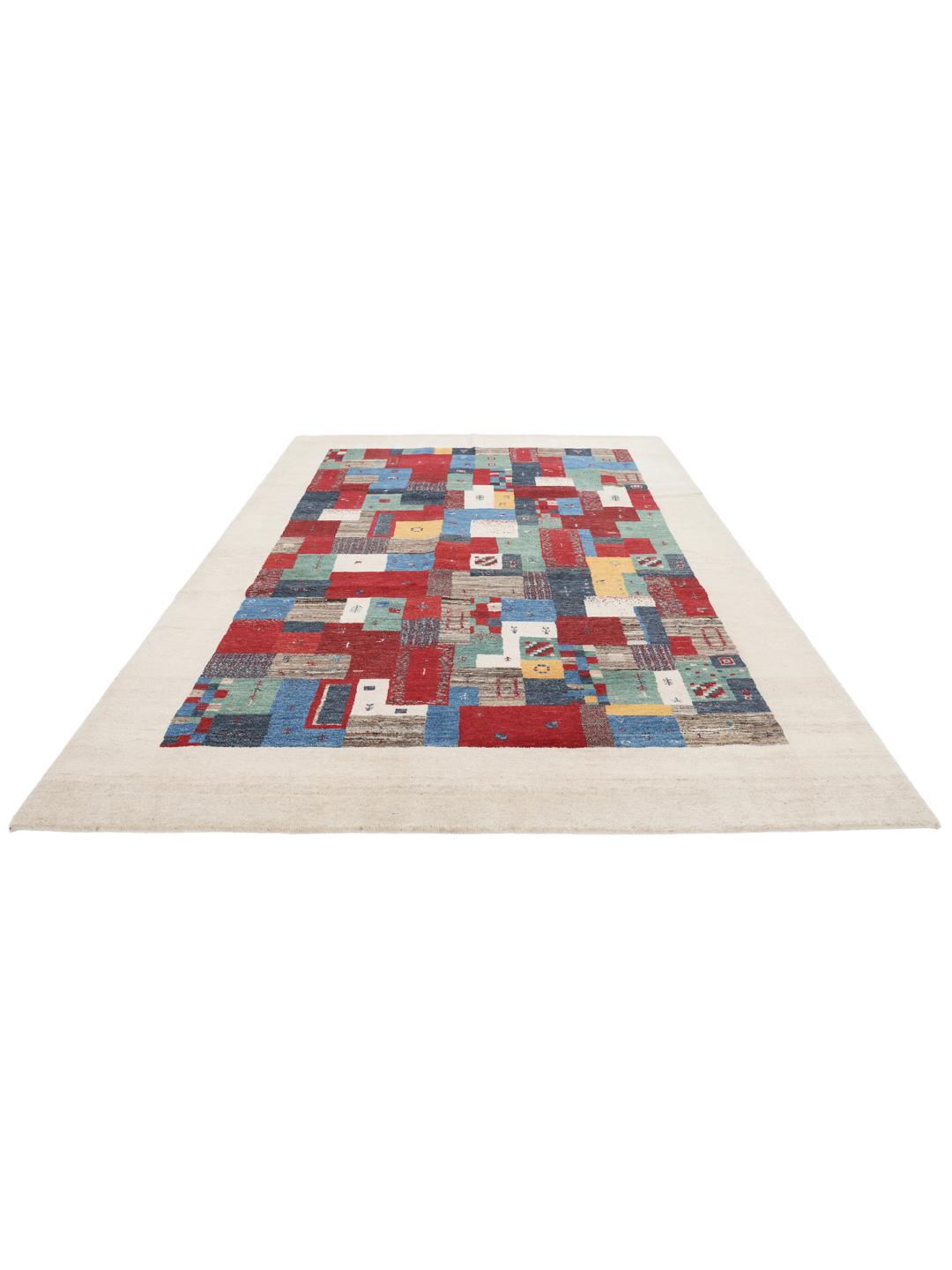
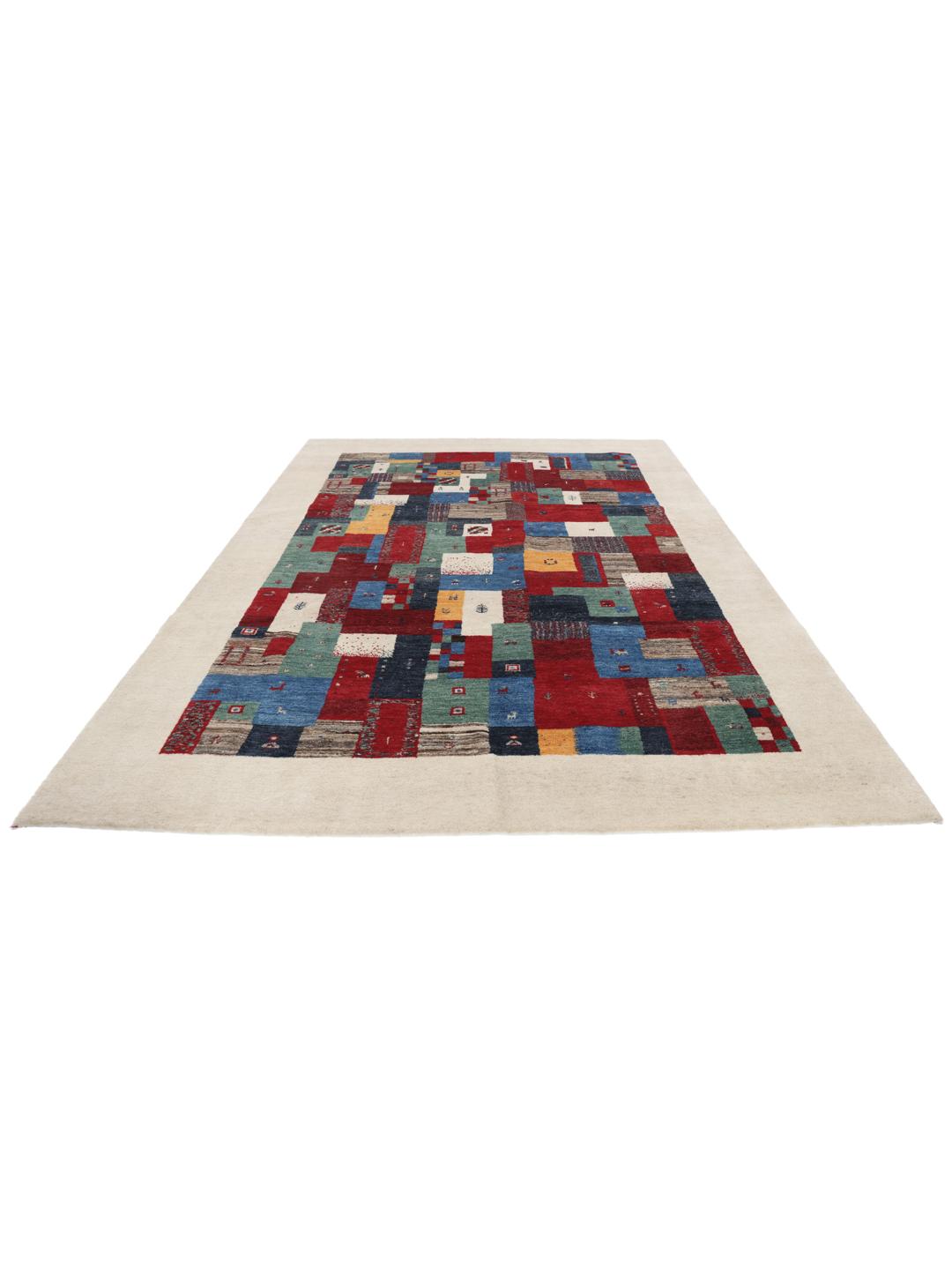
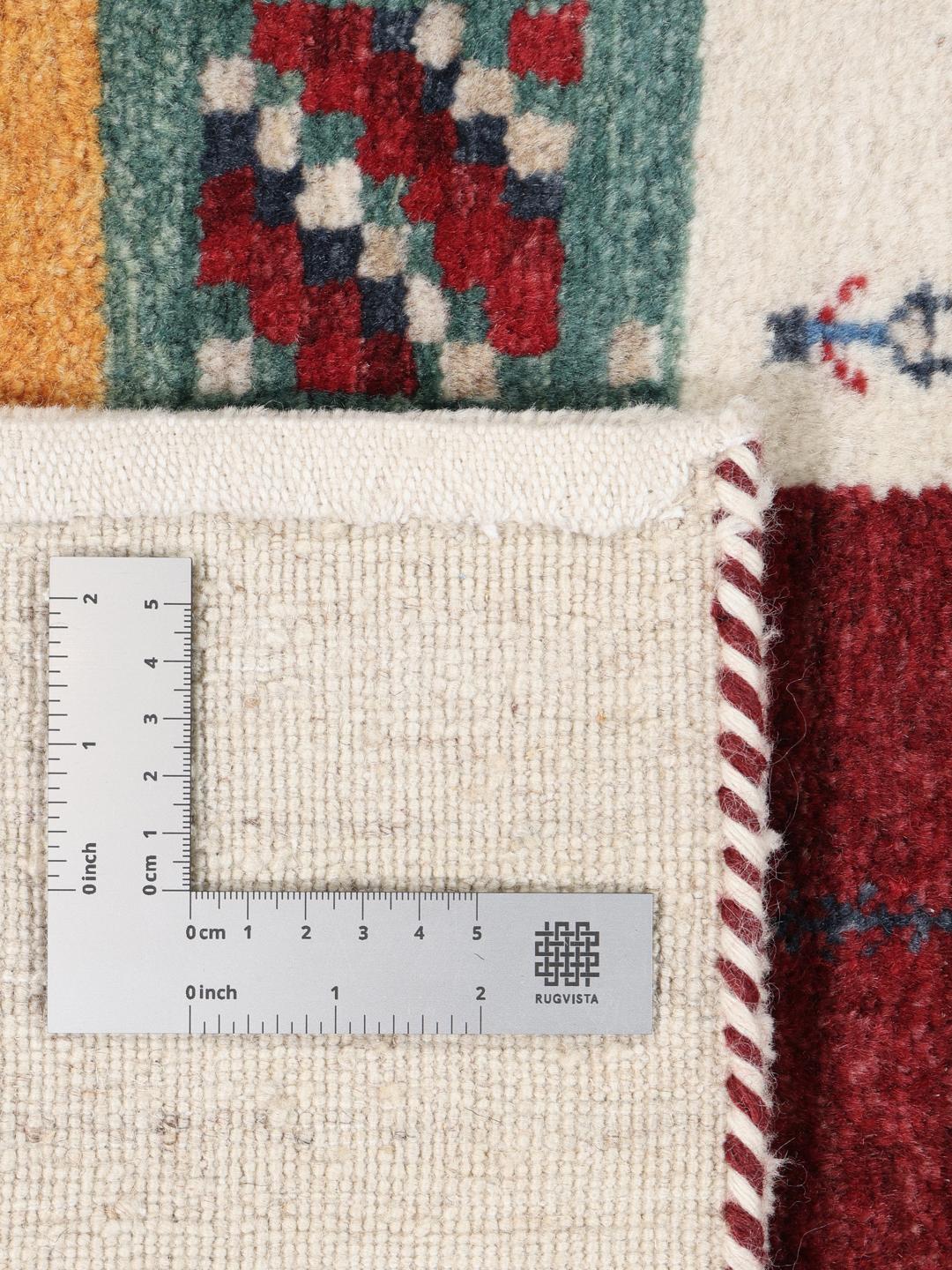
The Gabbeh tradition finds its roots in the nomadic cultures of the Middle East, where weavers historically created rugs for personal use rather than for trade. These rugs were traditionally thick and coarse, designed for warmth and comfort inside tents. Over time, these rugs have evolved into a refined art form, with modern interpretations like the Loribaft style emerging to blend traditional, rustic charm with more sophisticated techniques.
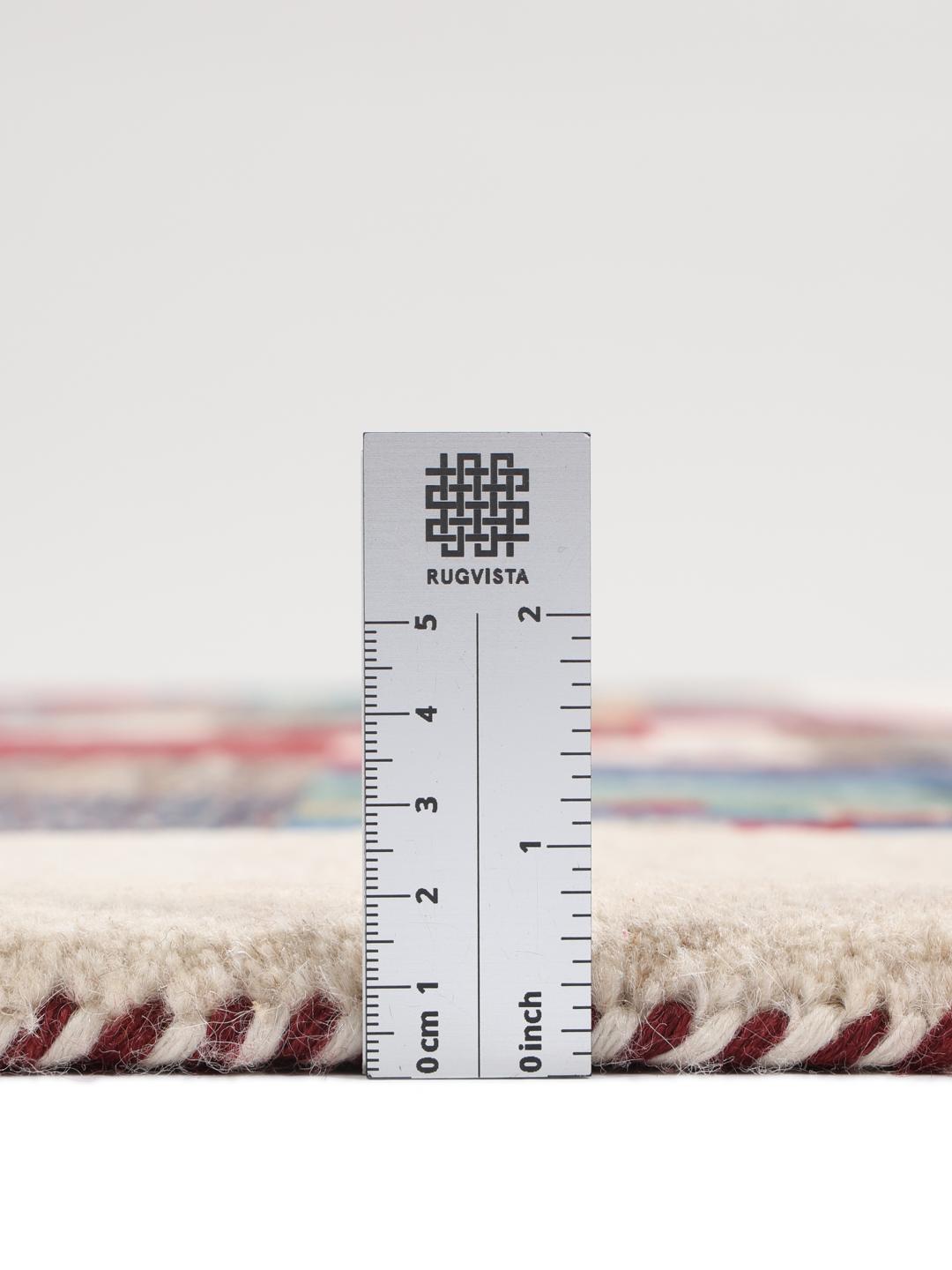
The term 'Loribaft' refers to a specific, finer style of Gabbeh weaving. While traditional Gabbehs are known for their thicker, more open knotting, the Loribaft style uses a much higher knot density. This technical evolution allows for more detailed patterns and a more polished finish, combining the soul of nomadic design with the precision required for contemporary homes.
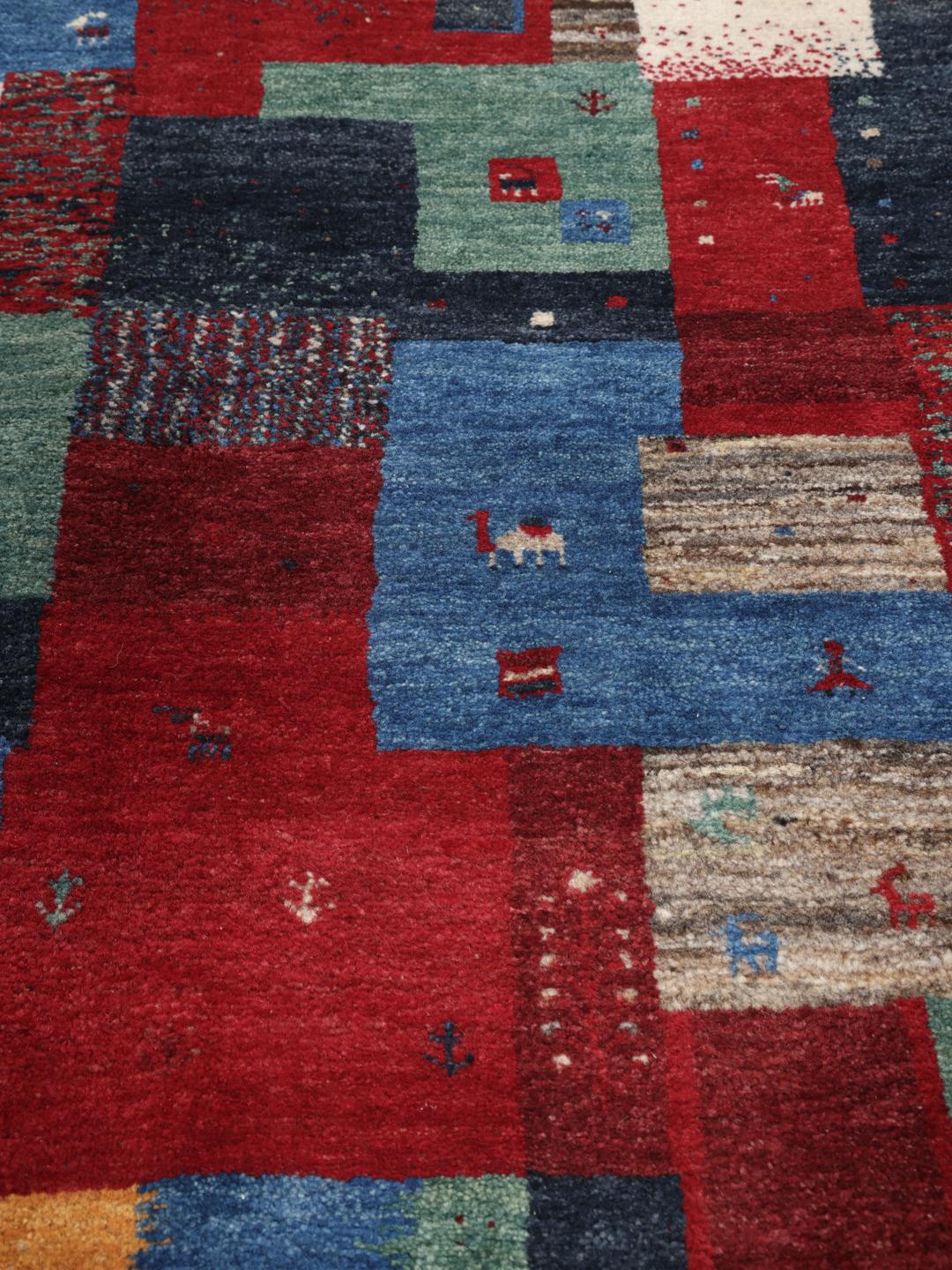
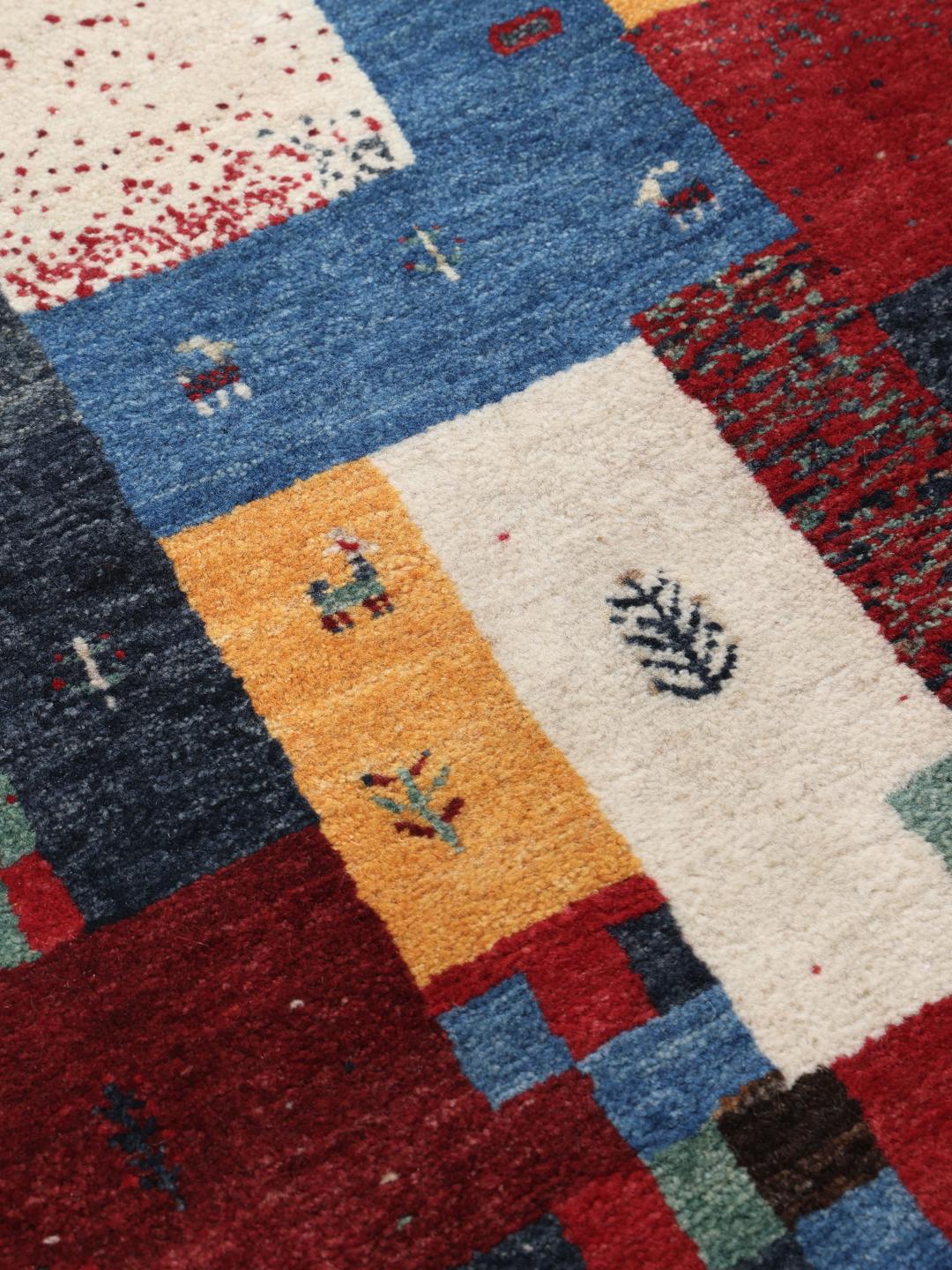
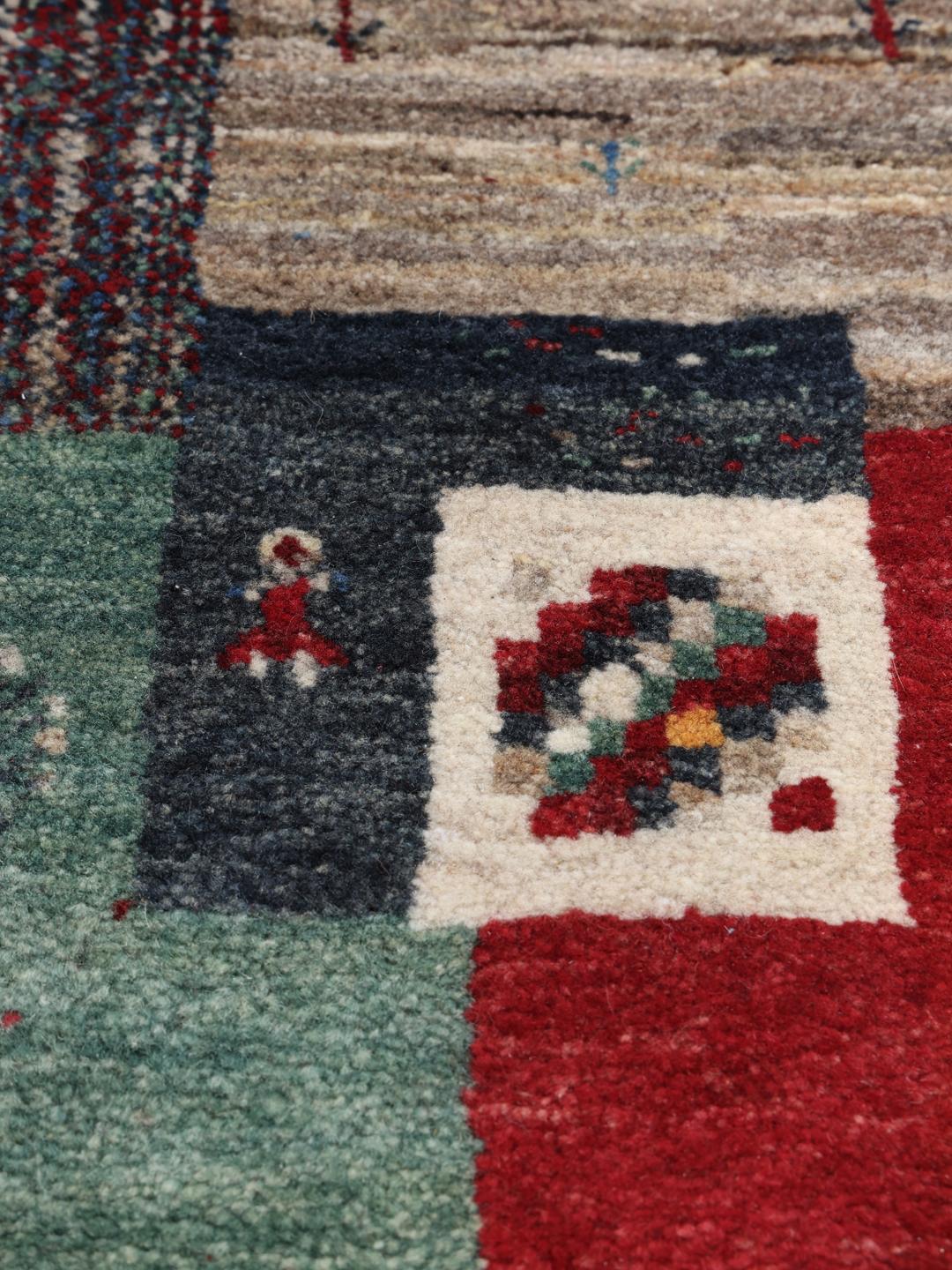
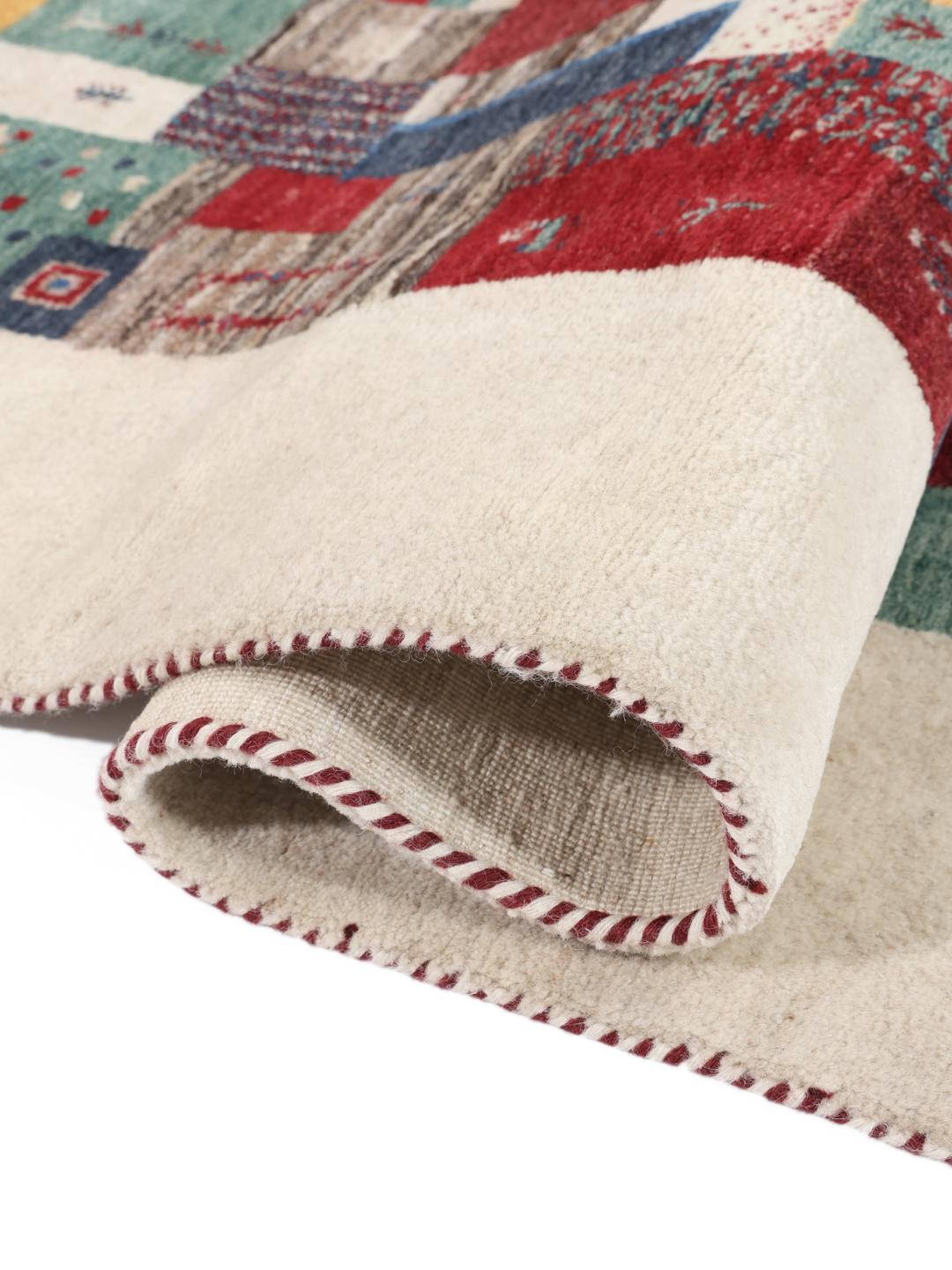
Visually, these rugs are defined by their use of bold, saturated colours and simplified, often geometric, motifs. Unlike more formal, medallion-heavy rug styles, the Loribaft often features a mosaic-like composition of fields, filled with stylized representations of life, nature, and cultural symbols. The use of natural dyes historically gave these rugs their characteristic vibrant hues, which remain a hallmark of the tradition today.
Owning a piece from this tradition is an invitation to connect with a long lineage of weaving artistry. These rugs are highly valued by collectors for their authenticity and the sheer skill required to translate cultural narratives into textile form. By bringing a Loribaft into your home, you are choosing a piece that celebrates human creativity and the enduring appeal of heritage craft.