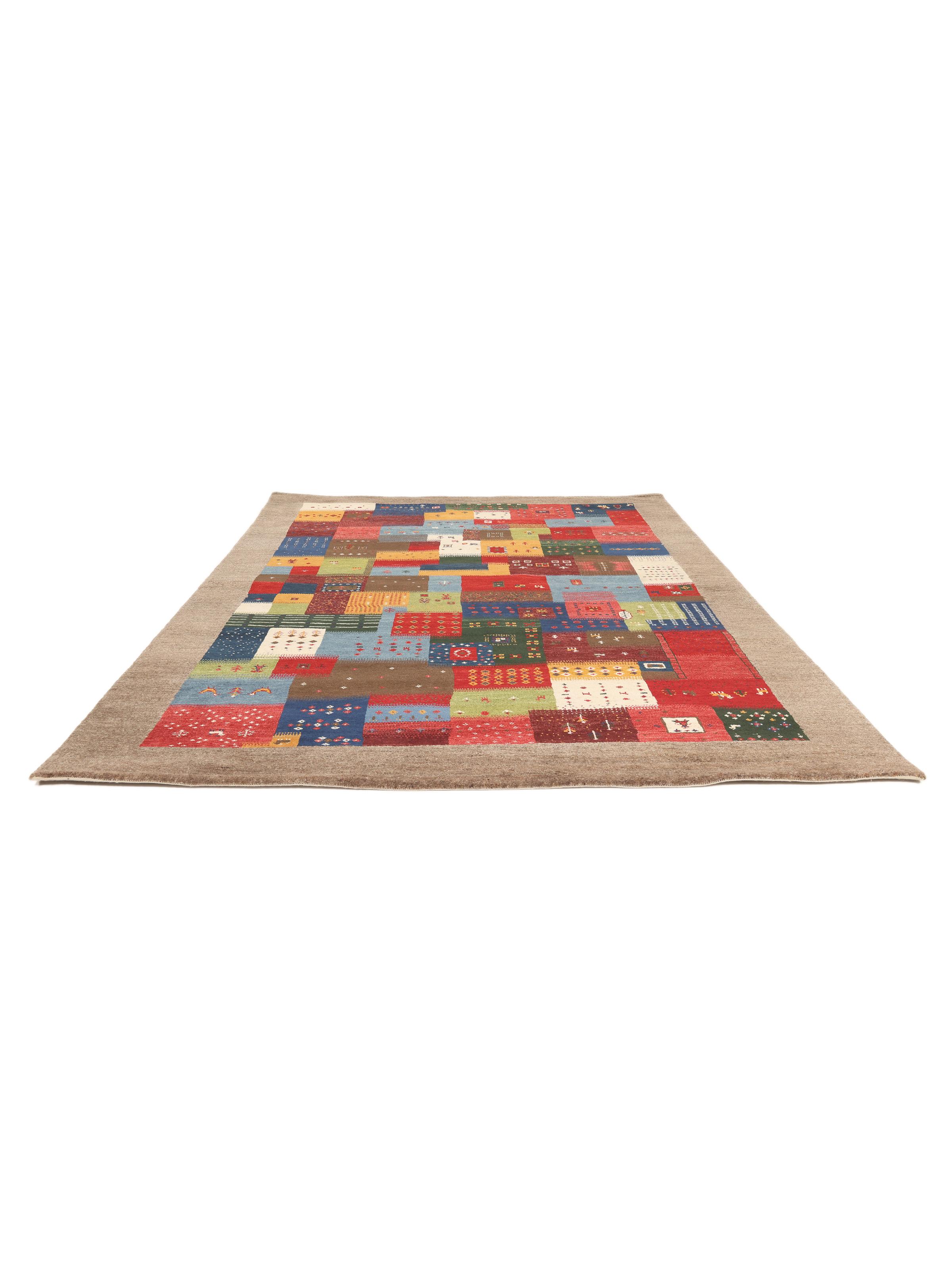
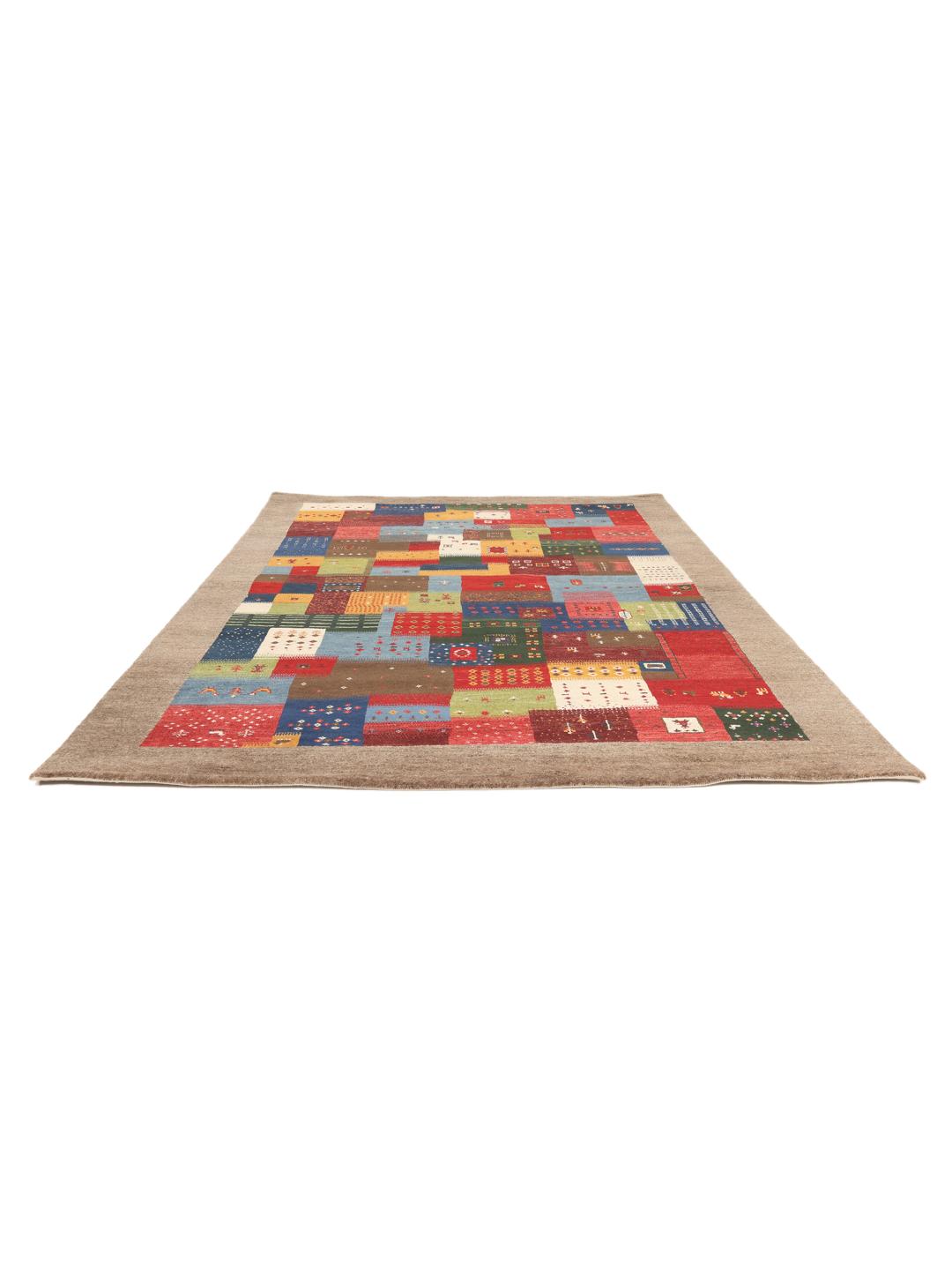
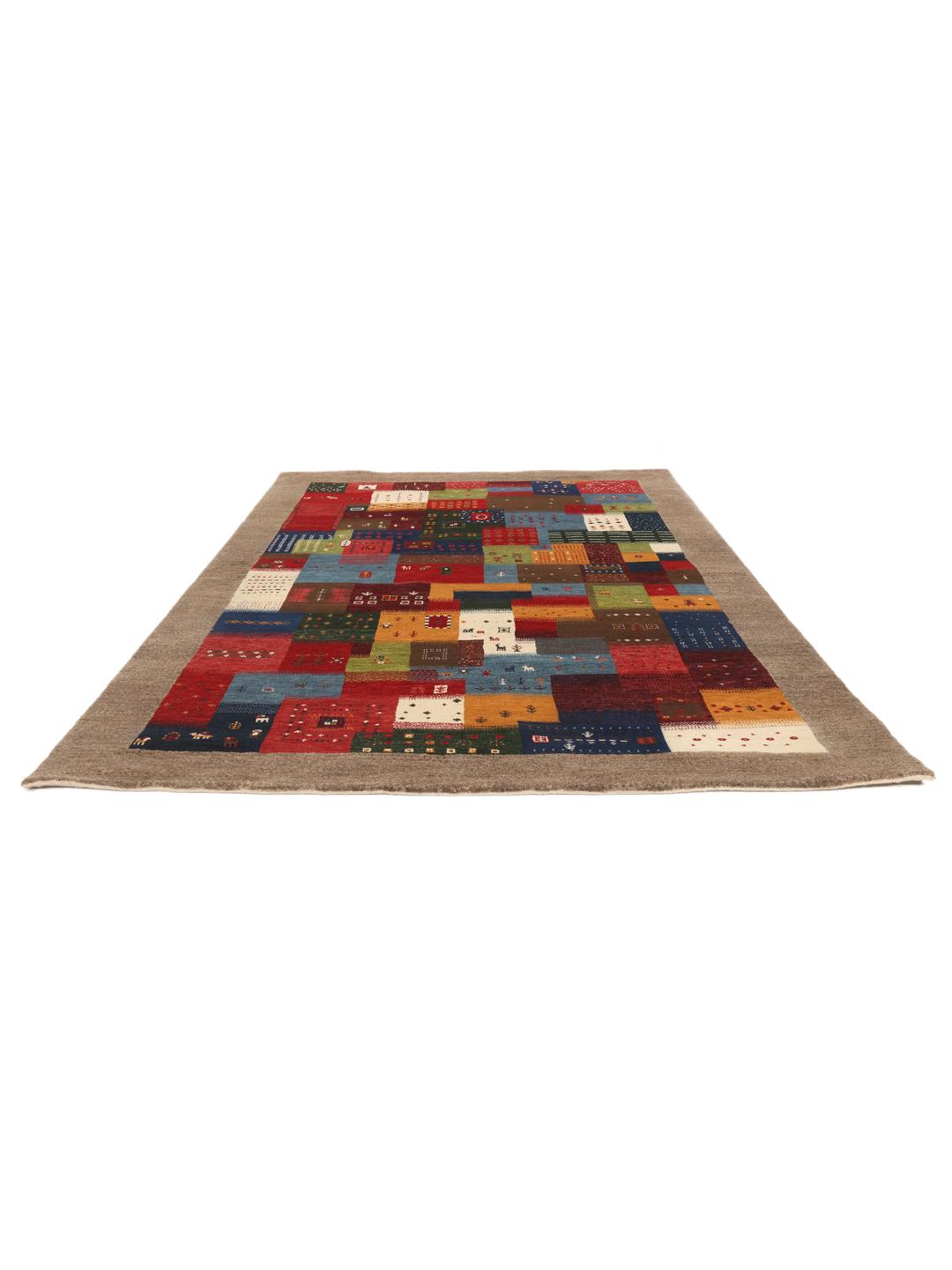
The Gabbeh style originates from the nomadic tribes of the Middle East, traditionally created as heavy, coarse rugs for personal use within tents. Over time, these rugs evolved from simple utility items into highly sought-after pieces of folk art. While the roots are deeply tied to nomadic life, the finest modern iterations, such as this Loribaft, are now expertly crafted in regions like India, where weavers have mastered the art of translating these ancient, spontaneous designs into refined, high-quality textiles.
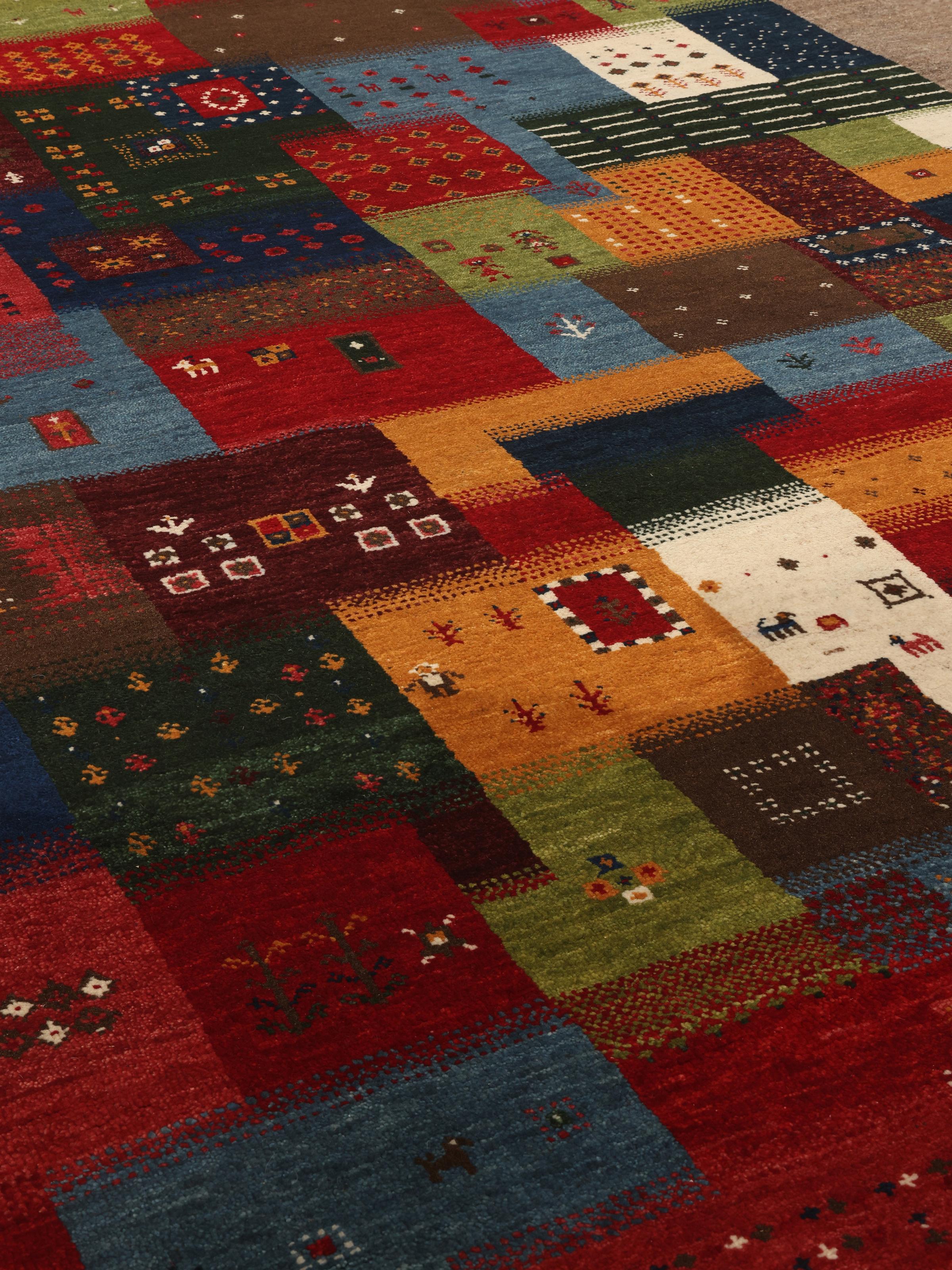
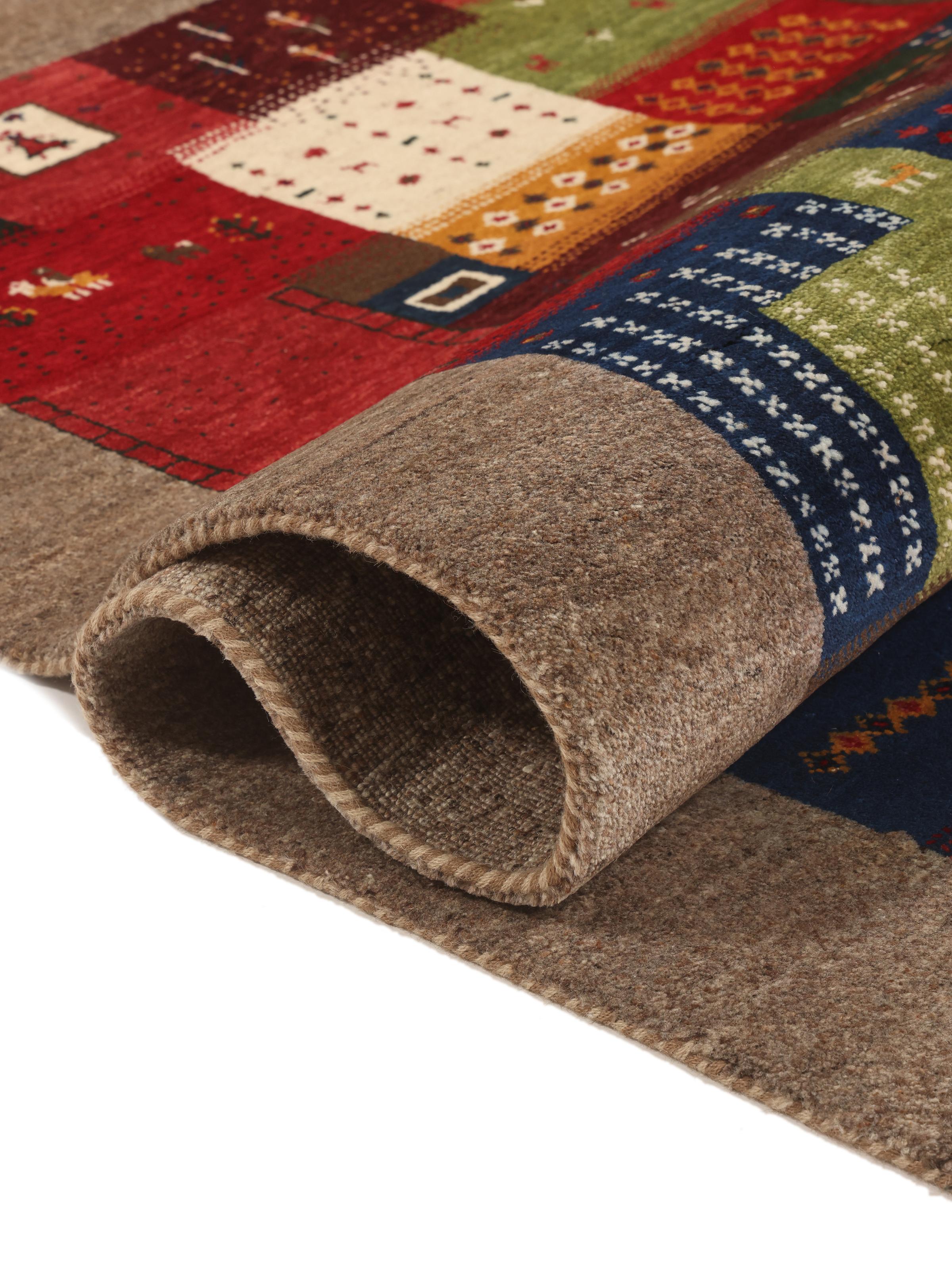
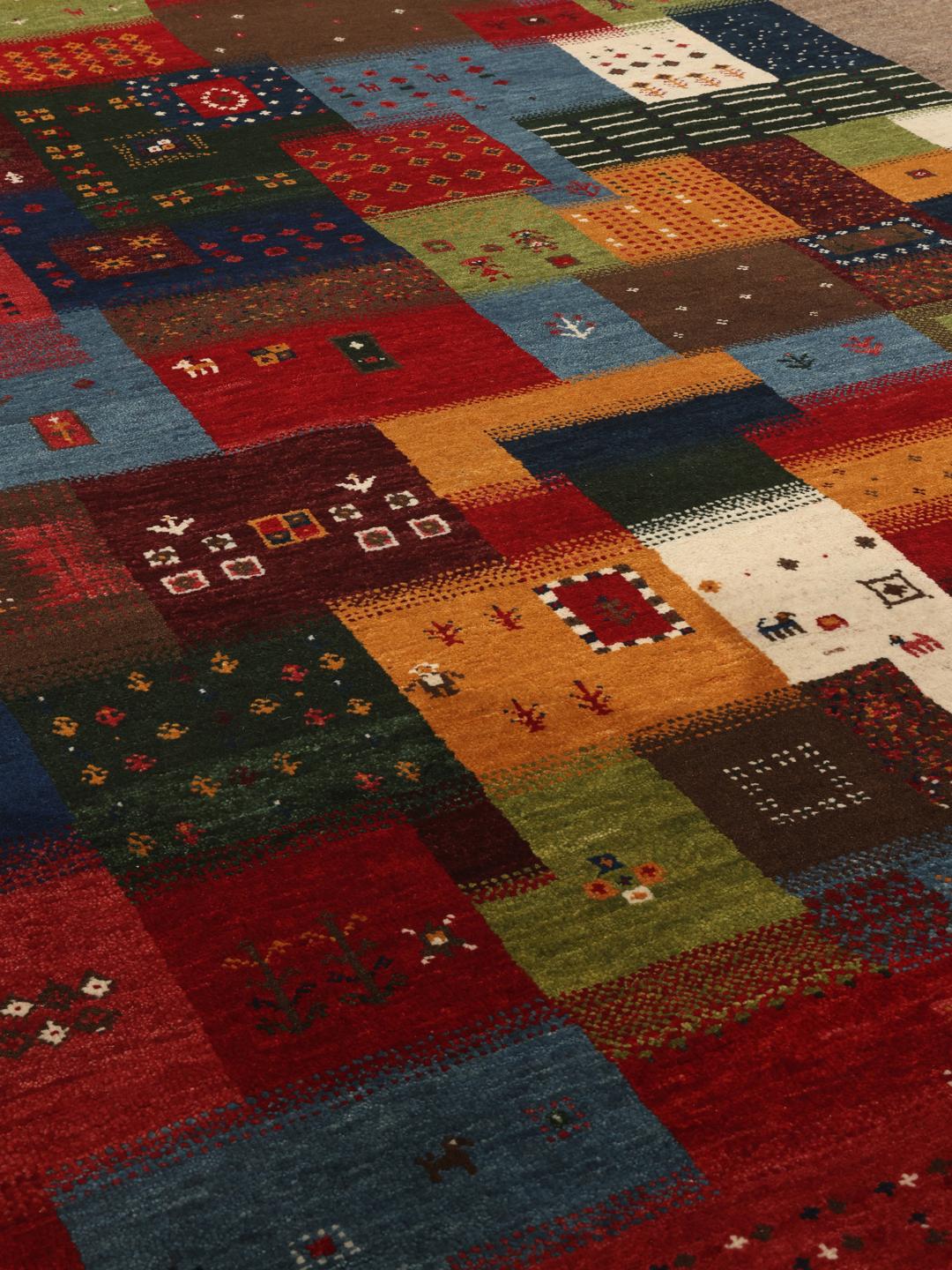
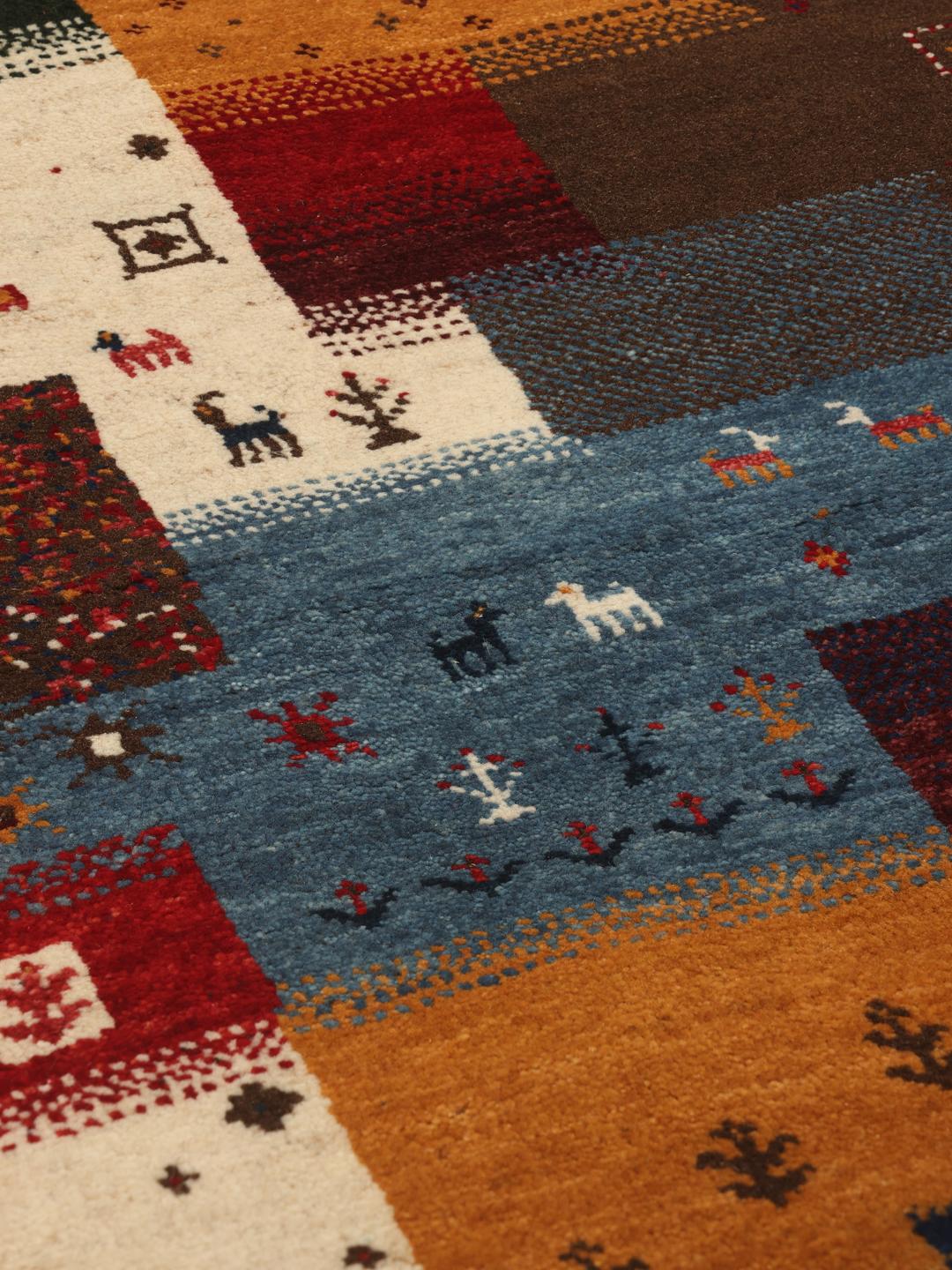
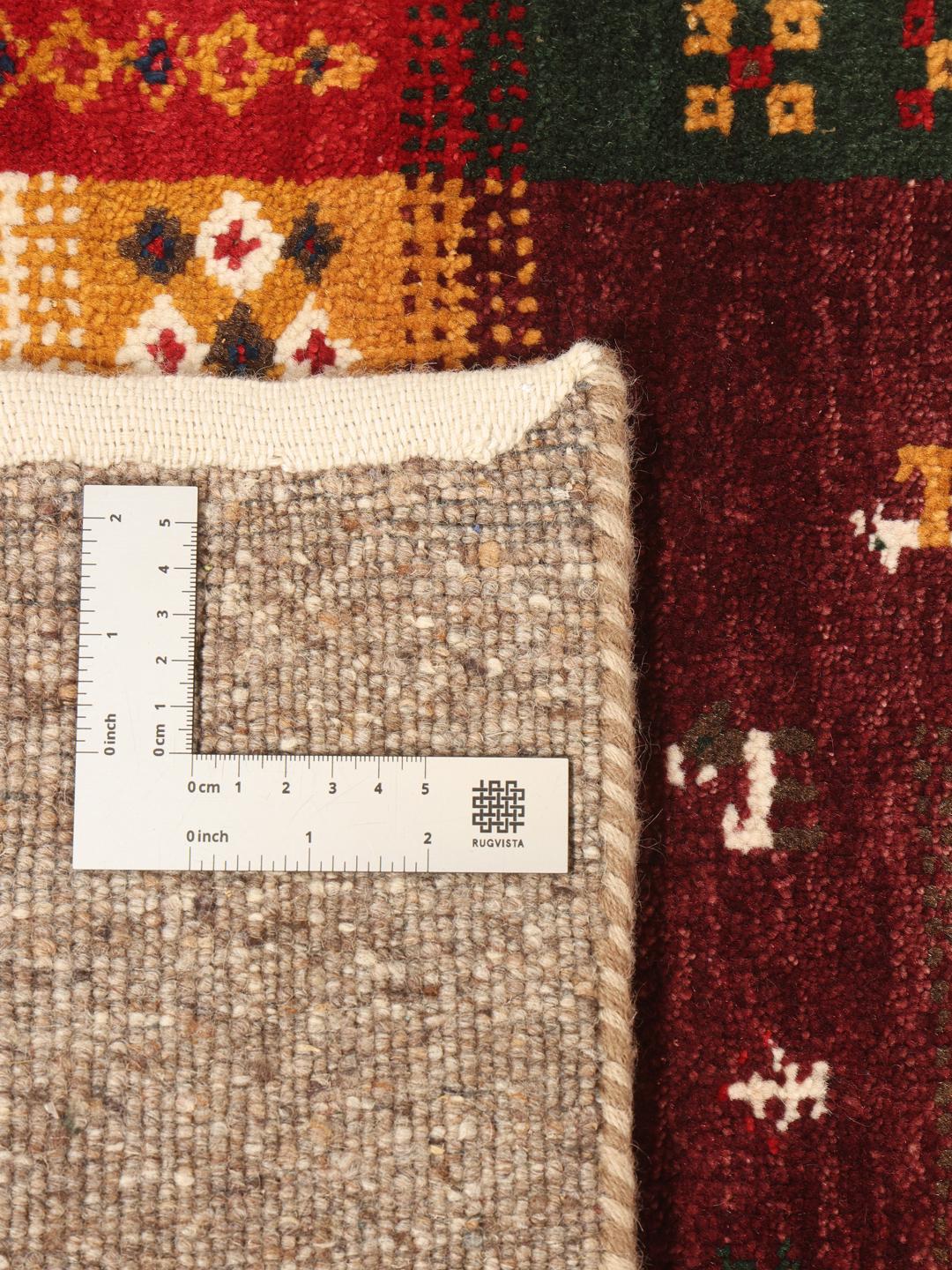
The term 'Loribaft' refers to a specific, more sophisticated evolution of the traditional Gabbeh. While classic Gabbehs are often defined by their thick, long pile and sparse, abstract designs, a Loribaft uses a much finer weave. This higher knot density allows for more intricate patterns and a smoother, more lustrous surface. The result is a rug that retains the soul and warmth of the original nomadic style but with a level of polish and detail that makes it suitable for contemporary homes.
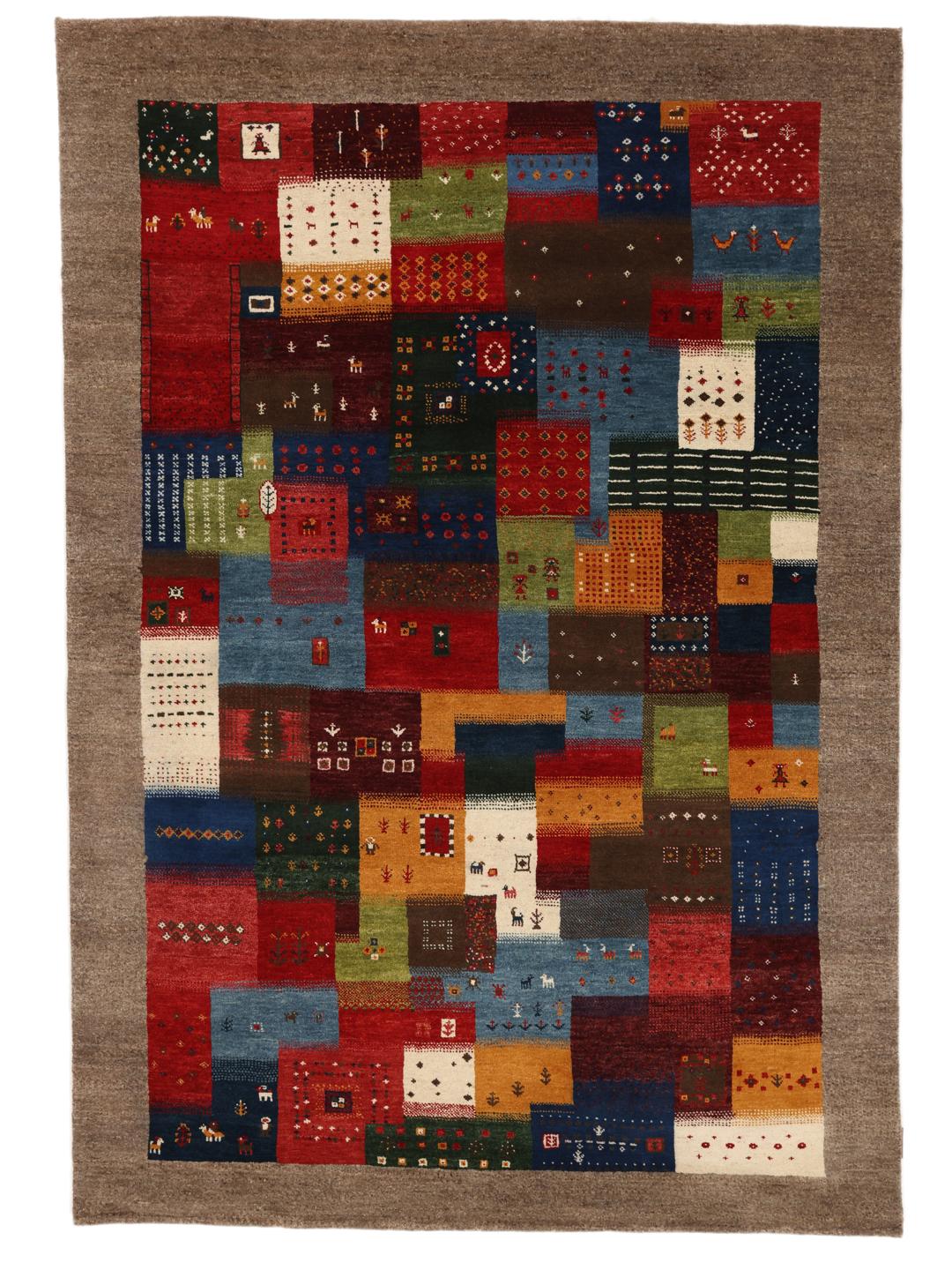
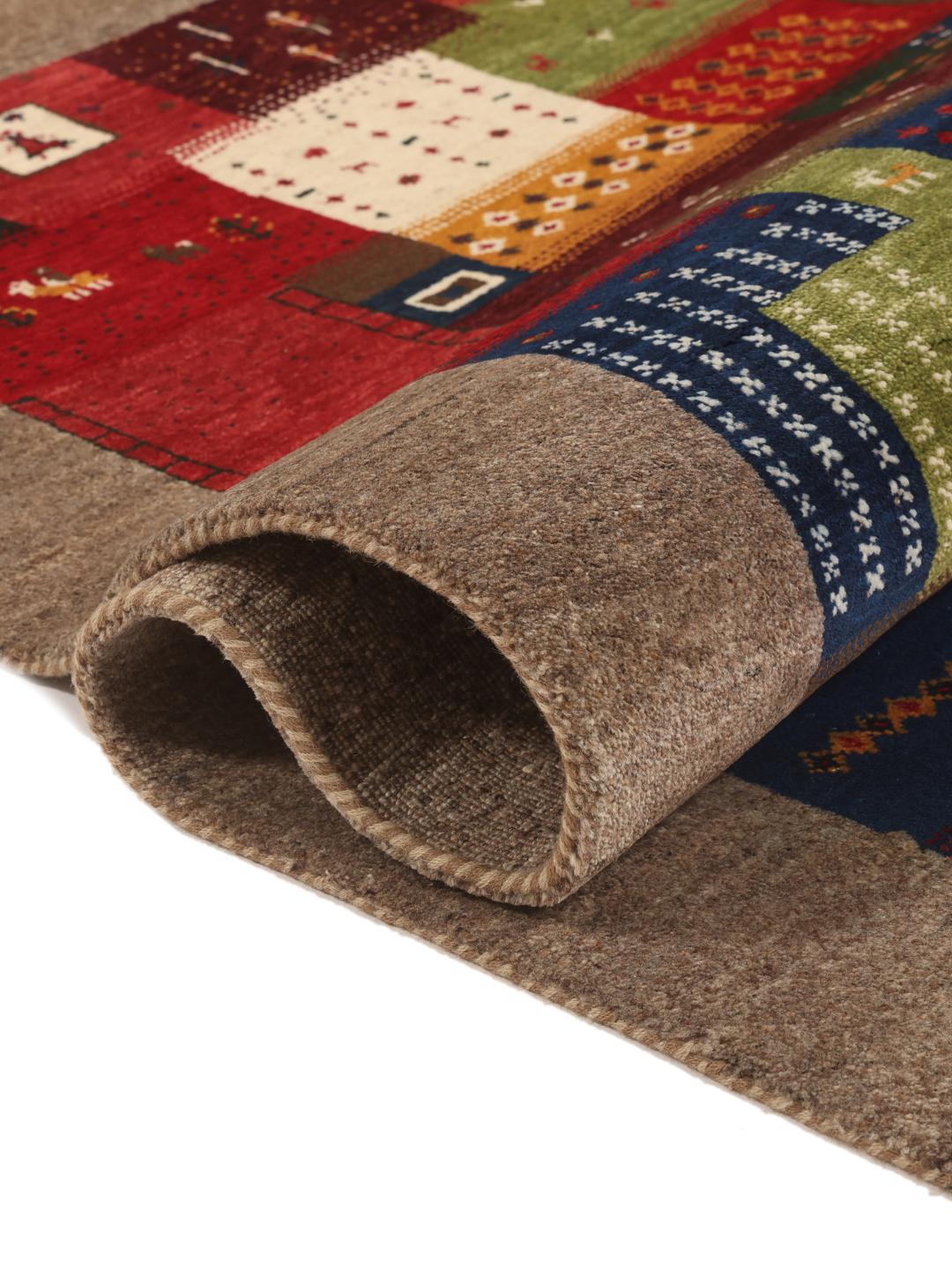
Visually, these rugs are defined by their use of bold, saturated colours and simple, symbolic motifs. You will often find representations of animals, plants, and geometric shapes scattered across the field, reflecting the weaver's surroundings and personal stories. In this particular piece, the mosaic of blocks creates a playful, narrative-driven design, where each square tells a different part of a larger story, framed by a grounded, neutral border that ties the composition together.
Owning a Loribaft is an appreciation of both history and human skill. These rugs are valued by collectors not just for their aesthetic appeal, but for the connection they offer to a deep-rooted craft tradition. Each piece is a testament to the weaver's individual expression, and by incorporating one into your home, you are continuing a long-standing tradition of valuing textile art that celebrates both heritage and the beauty of the handmade.