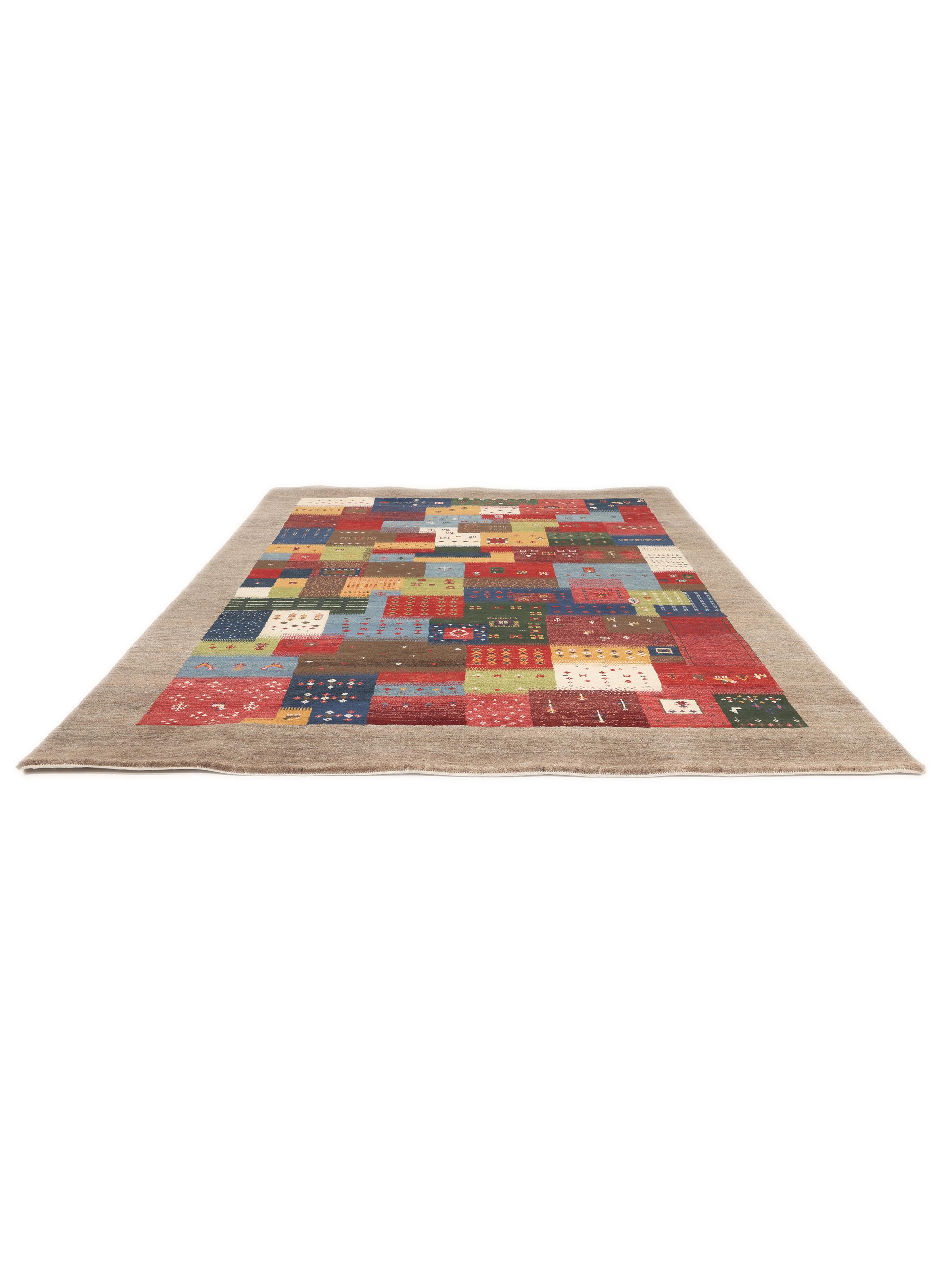
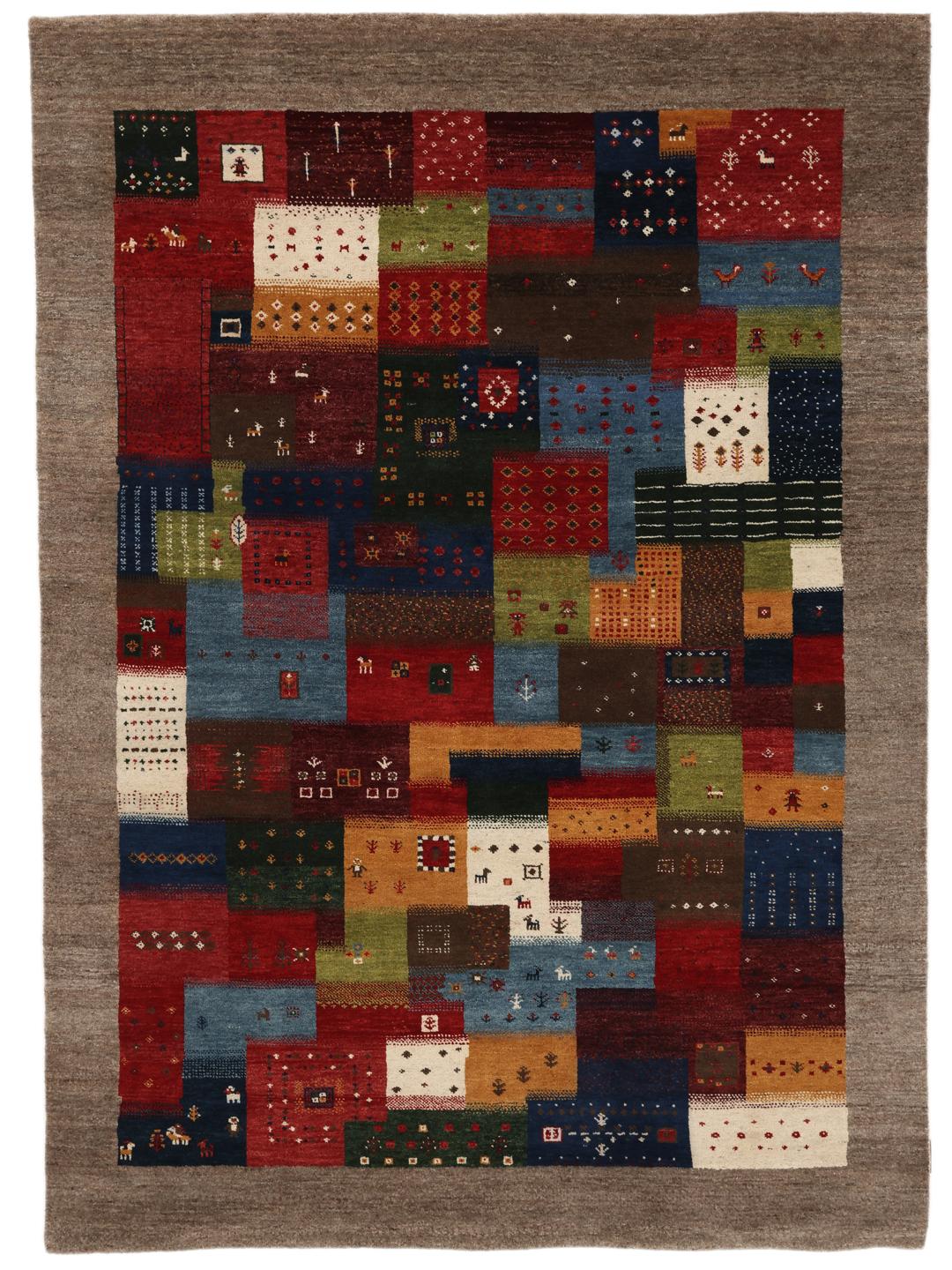
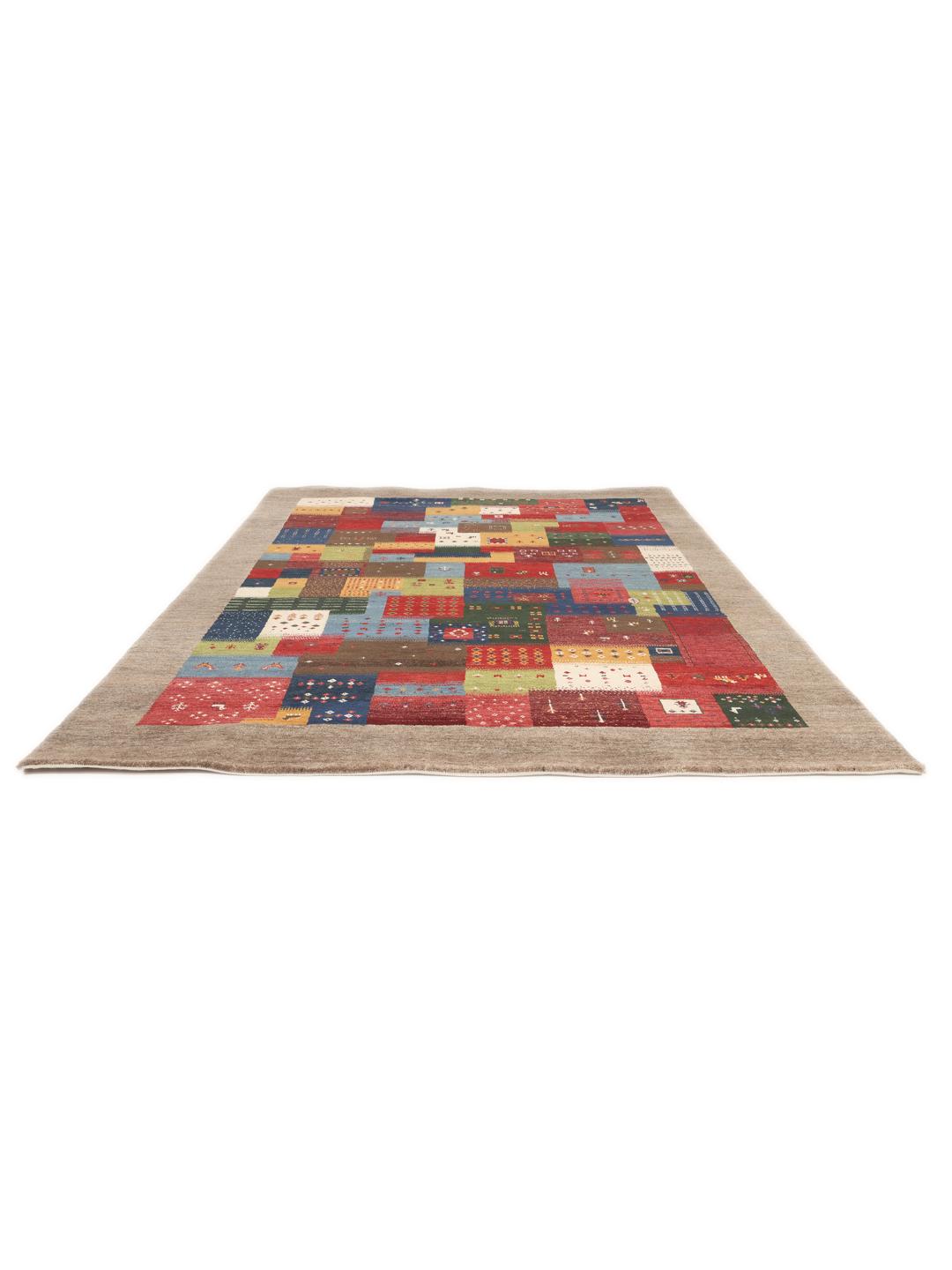
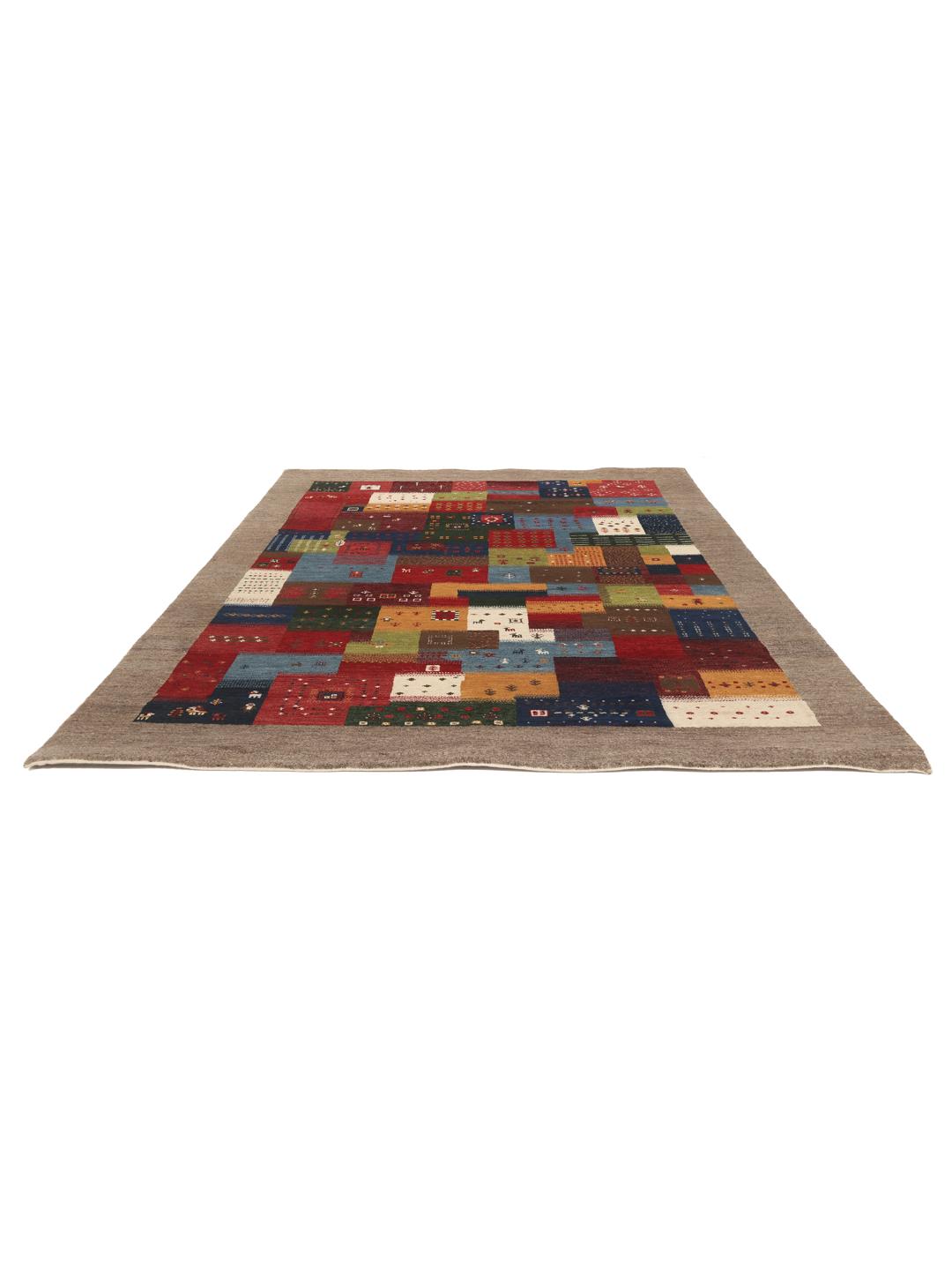
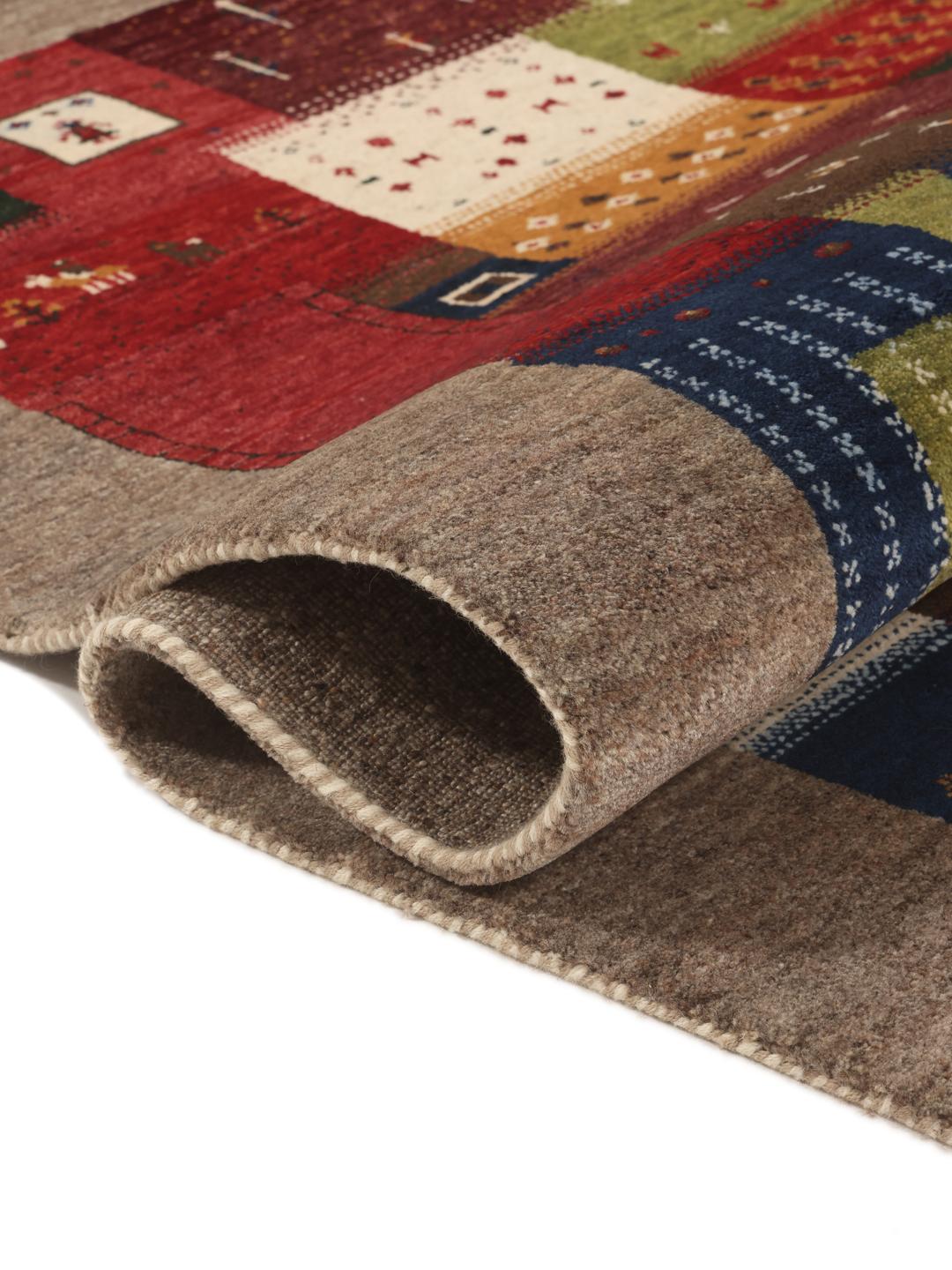
The Gabbeh tradition finds its roots in the nomadic cultures of the Middle East, where weavers historically crafted these rugs for personal use rather than for trade. Unlike formal, city-made rugs, Gabbeh rugs were originally characterised by their thicker pile and simpler, often abstract, designs that reflected the weaver's immediate environment and daily life. Over time, this tradition travelled and evolved, finding a new home in India where the craft has been refined to capture the same rustic, authentic spirit.
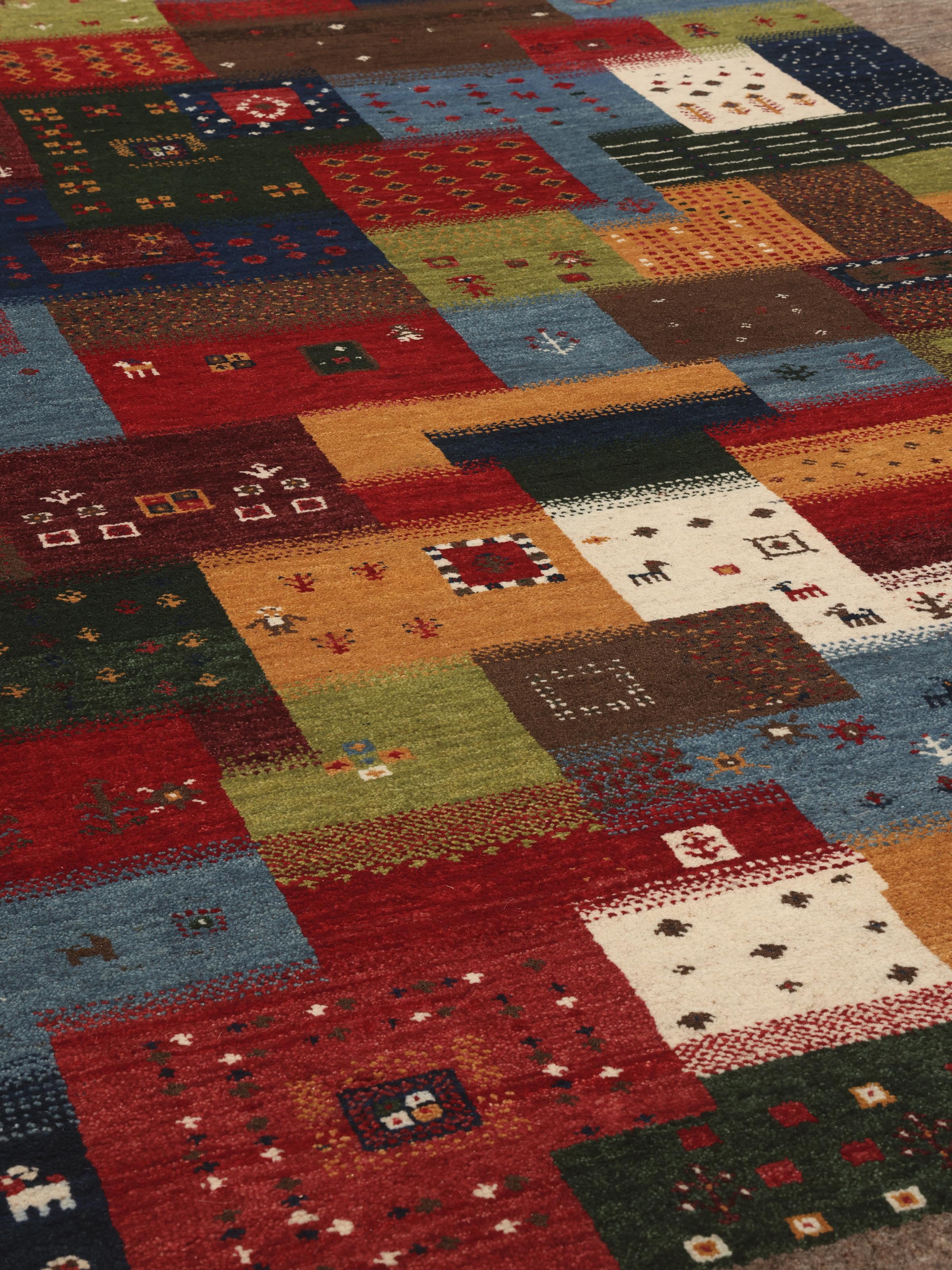
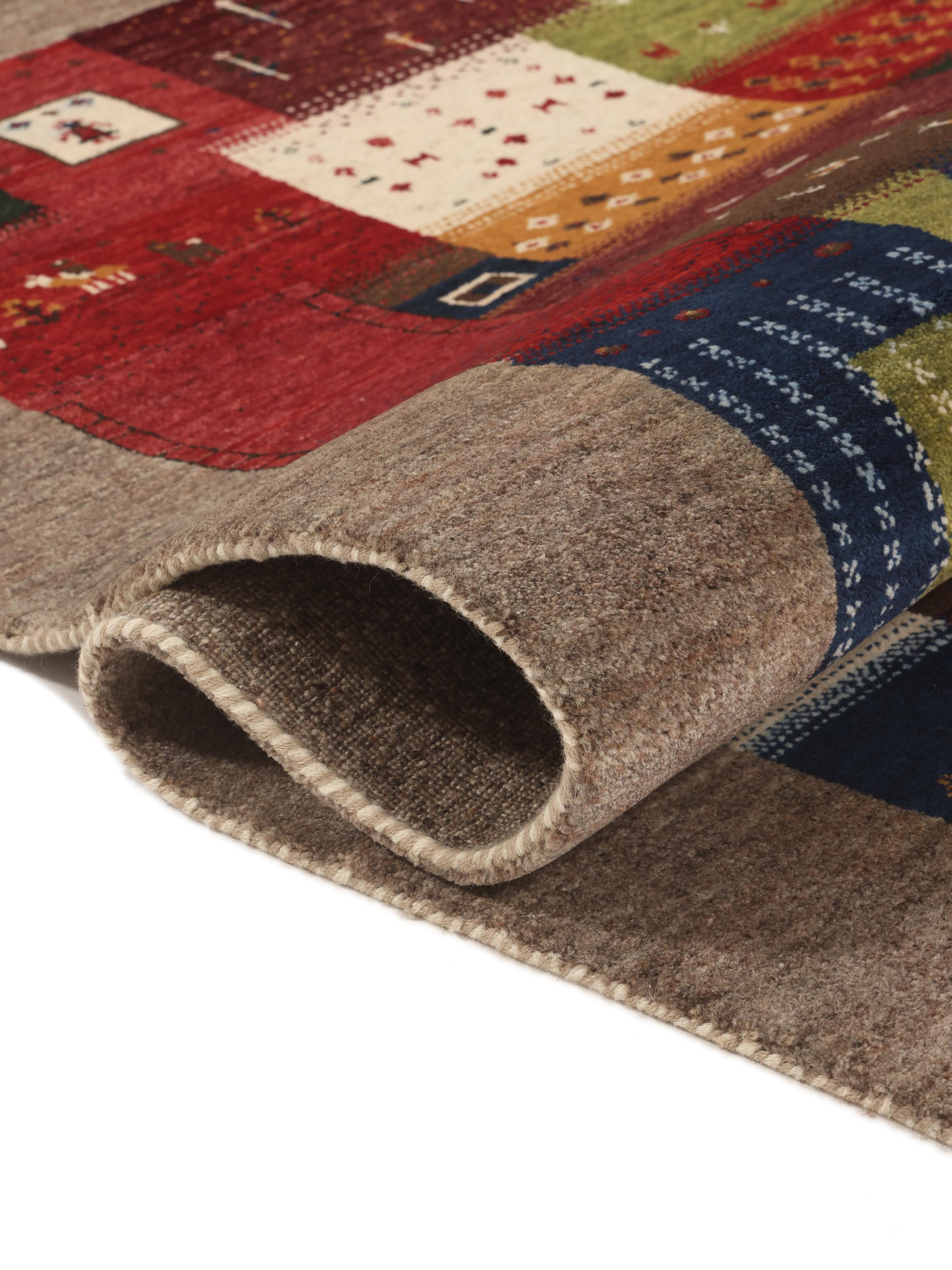
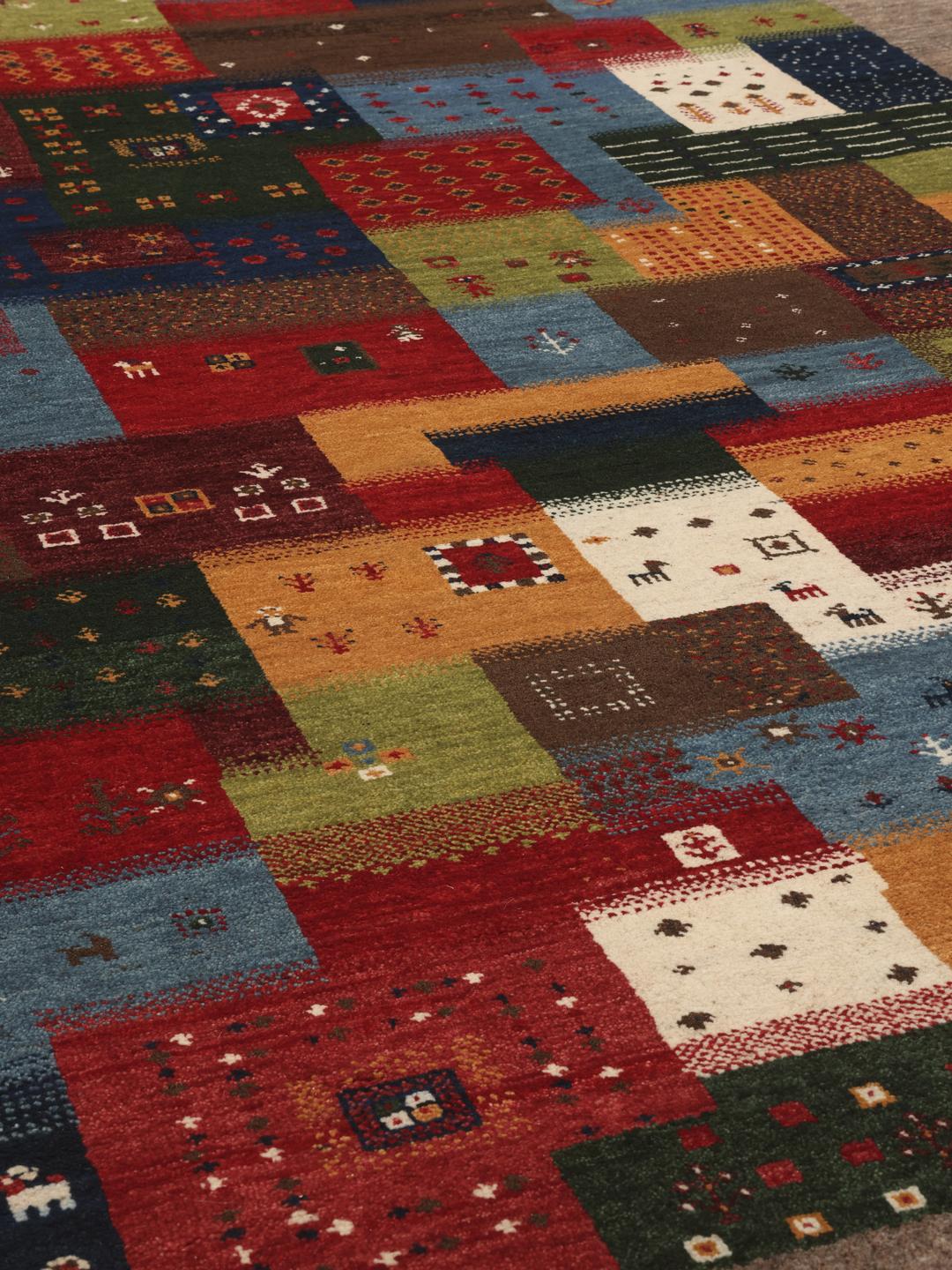
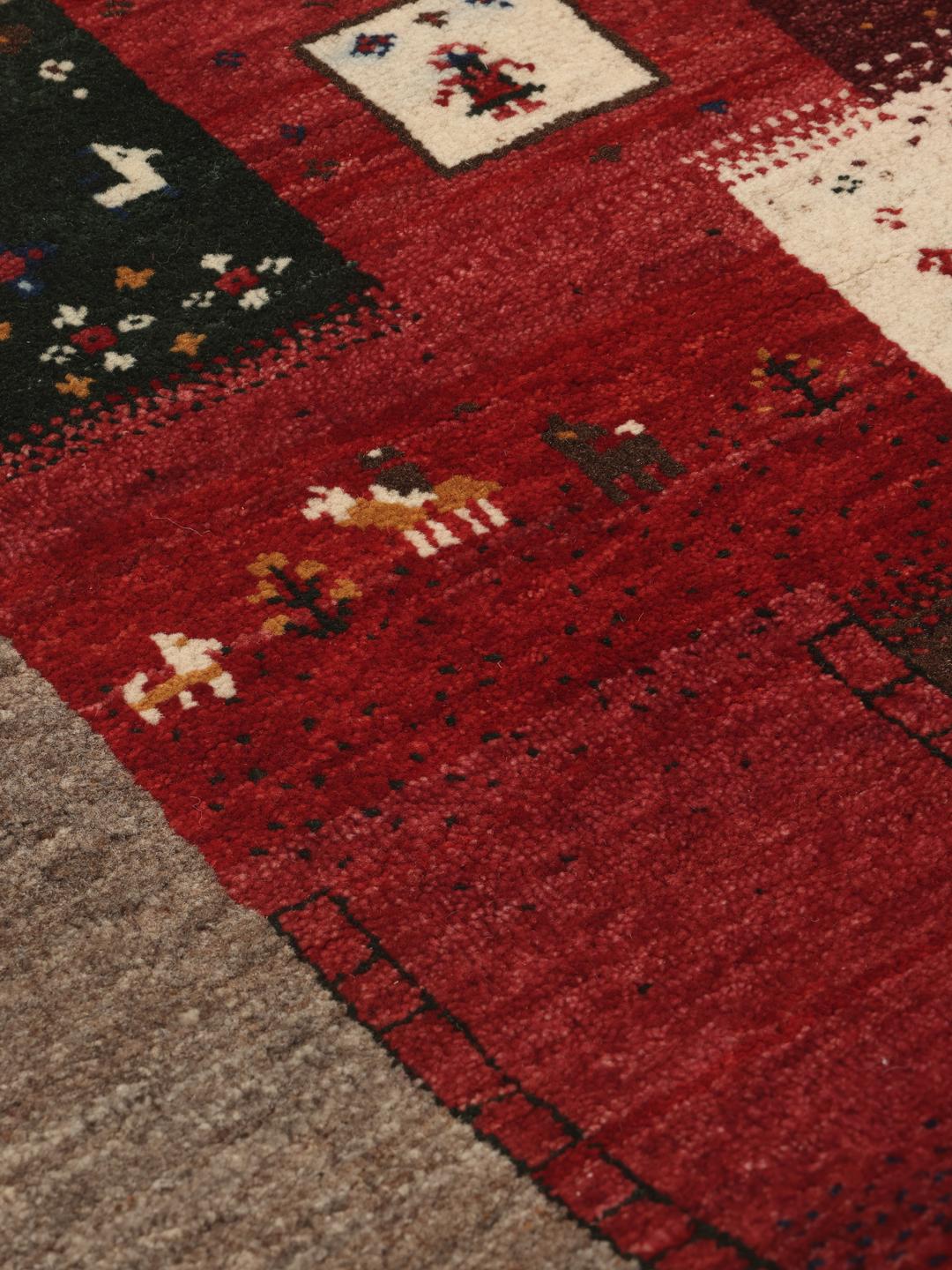
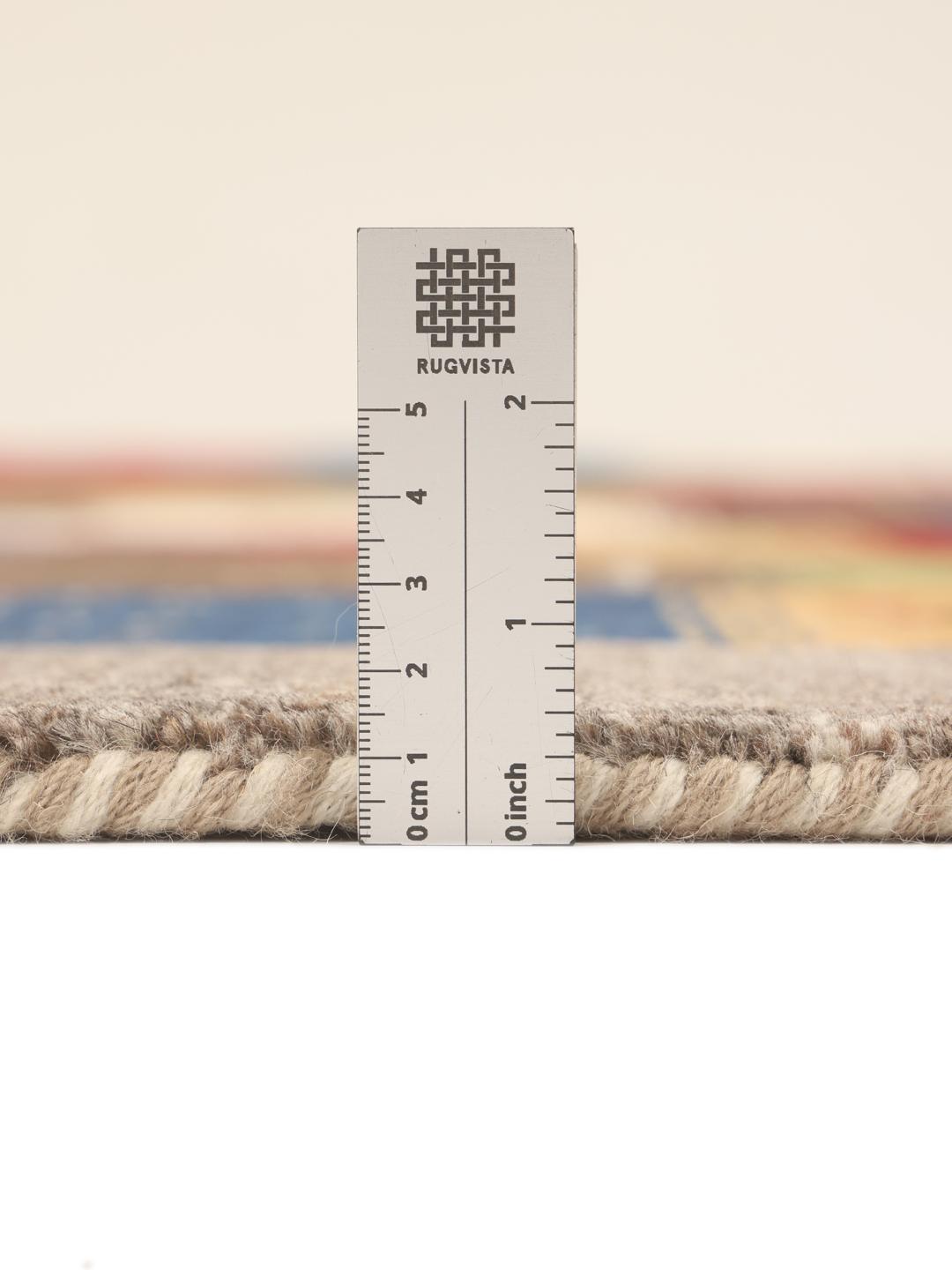
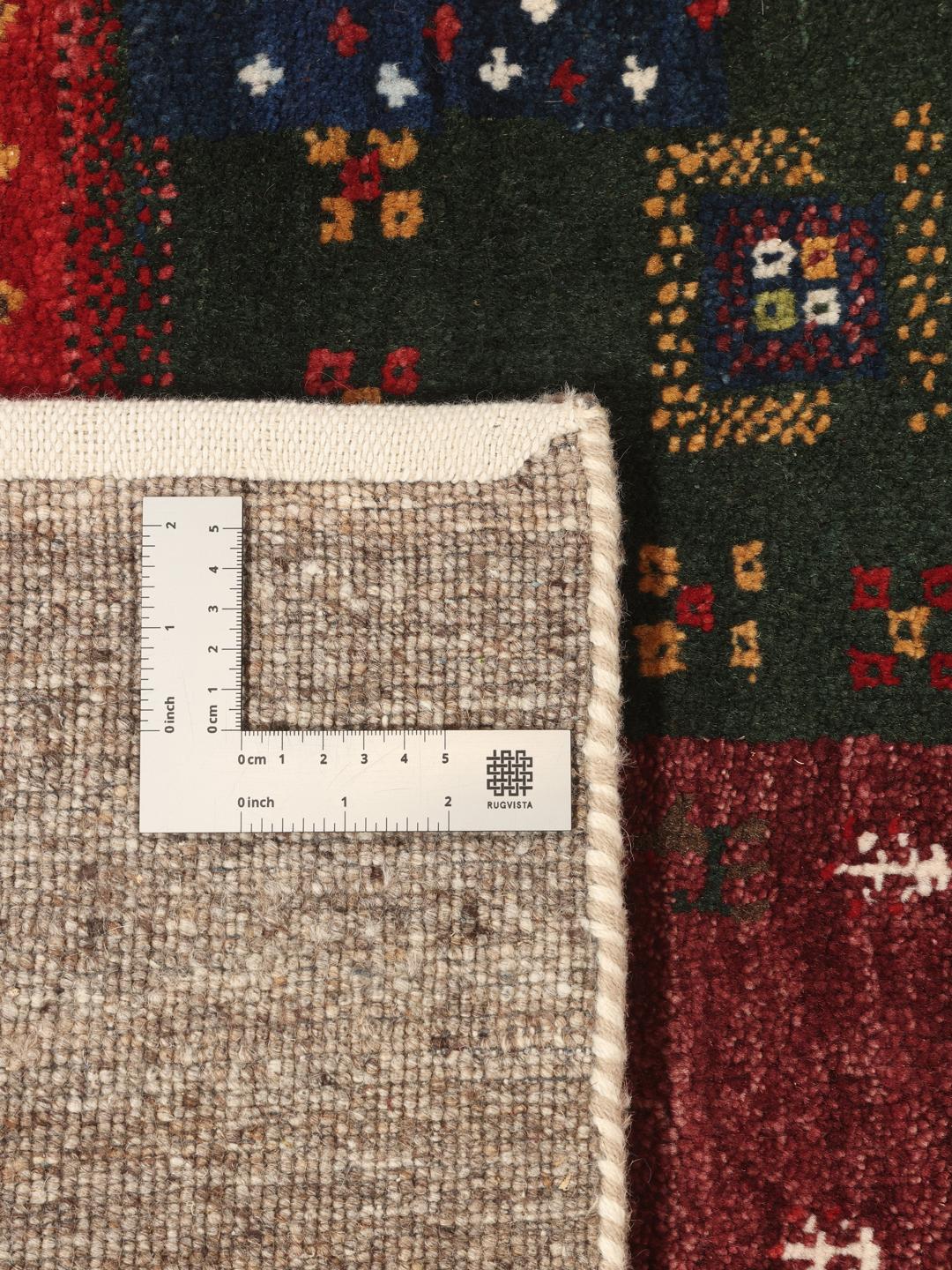
The term 'Loribaft' refers to a specific, elevated style of Gabbeh weaving known for its finer knot density compared to traditional, coarser examples. While traditional Gabbeh rugs are often quite simple, the Loribaft style allows for greater detail, enabling weavers to incorporate more complex, miniature motifs and intricate geometric patterns. This increased knot density creates a more lustrous and durable surface, bridging the gap between primitive, folk-art aesthetics and refined, decorative rug-making.
Visualising a Loribaft often involves looking for a 'field of dreams' where symbols and motifs are scattered across the surface. Common elements include stylised animals, trees of life, and geometric shapes, all of which hold symbolic meaning within their culture of origin. The use of vibrant, saturated colours is a hallmark of this tradition, reflecting a desire to bring joy, protection, and warmth into the tent or home through expressive use of natural dyes.
Today, these rugs are highly prized by collectors and homeowners alike for their authenticity and the human story they carry. Owning a Loribaft is an investment in a living tradition, representing a rare blend of ancient nomadic design and high-quality craftsmanship. It serves as a reminder of the skill required to translate cultural heritage into a modern, functional piece that anchors a contemporary home with depth and meaning.