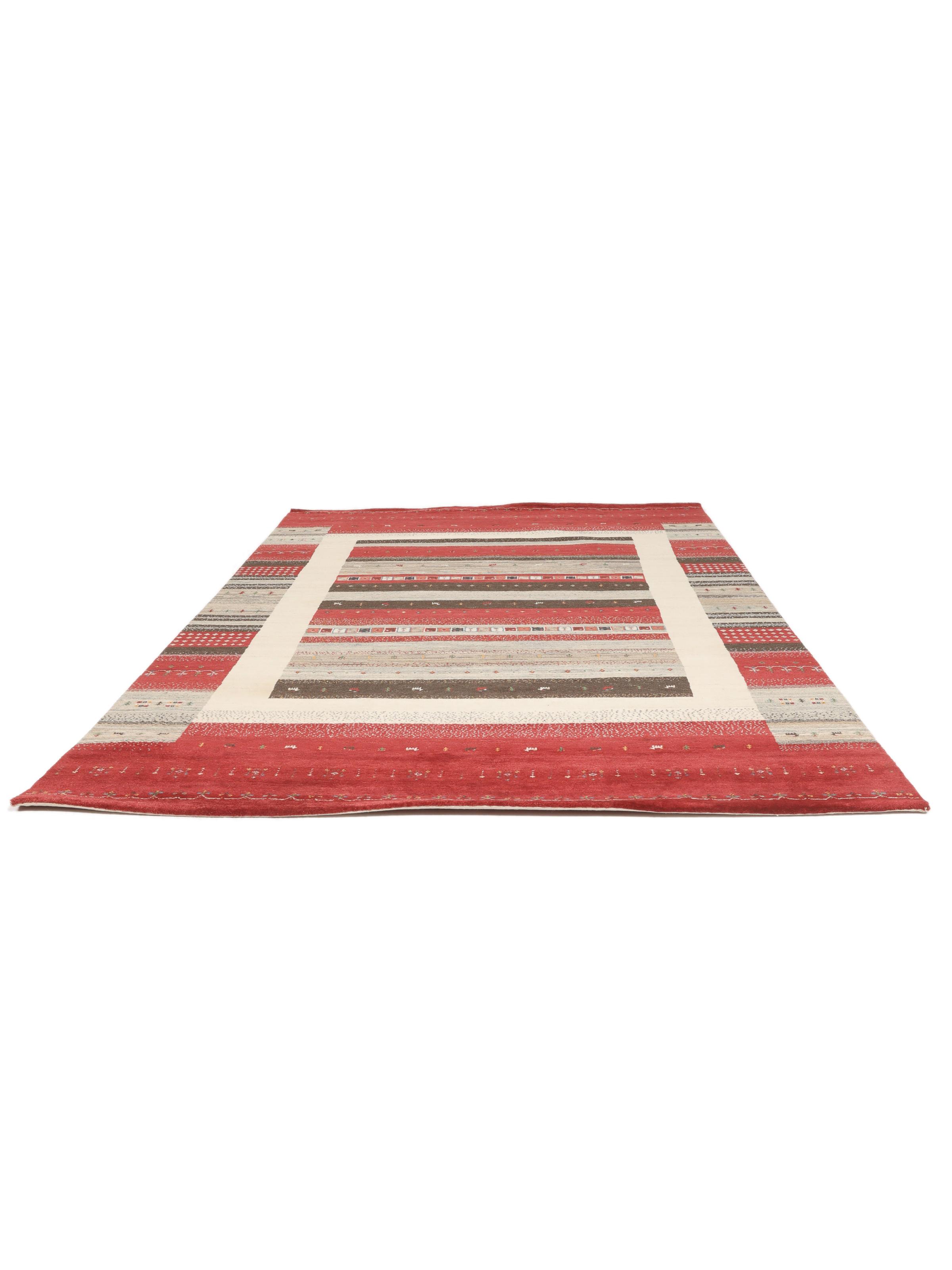
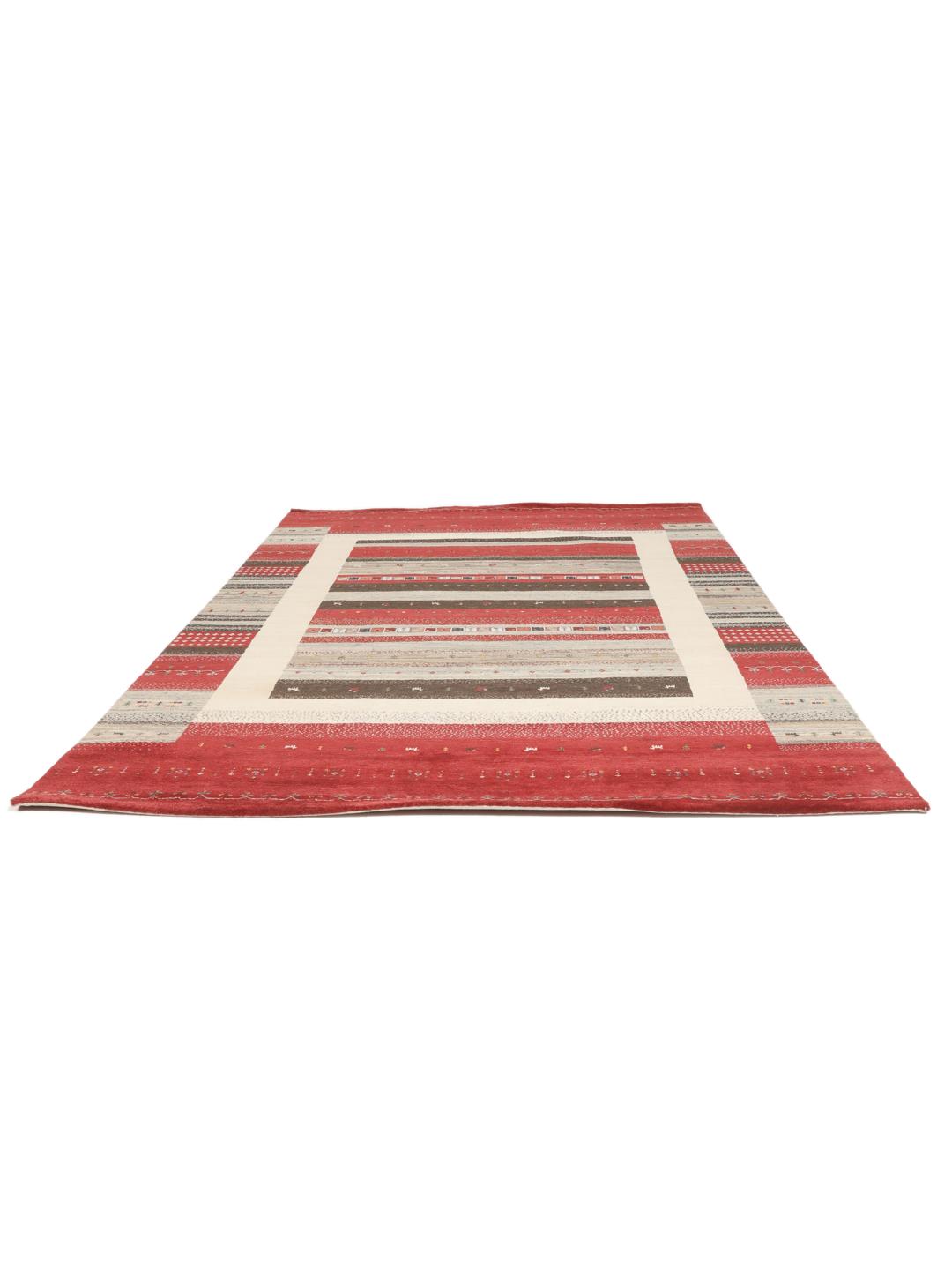
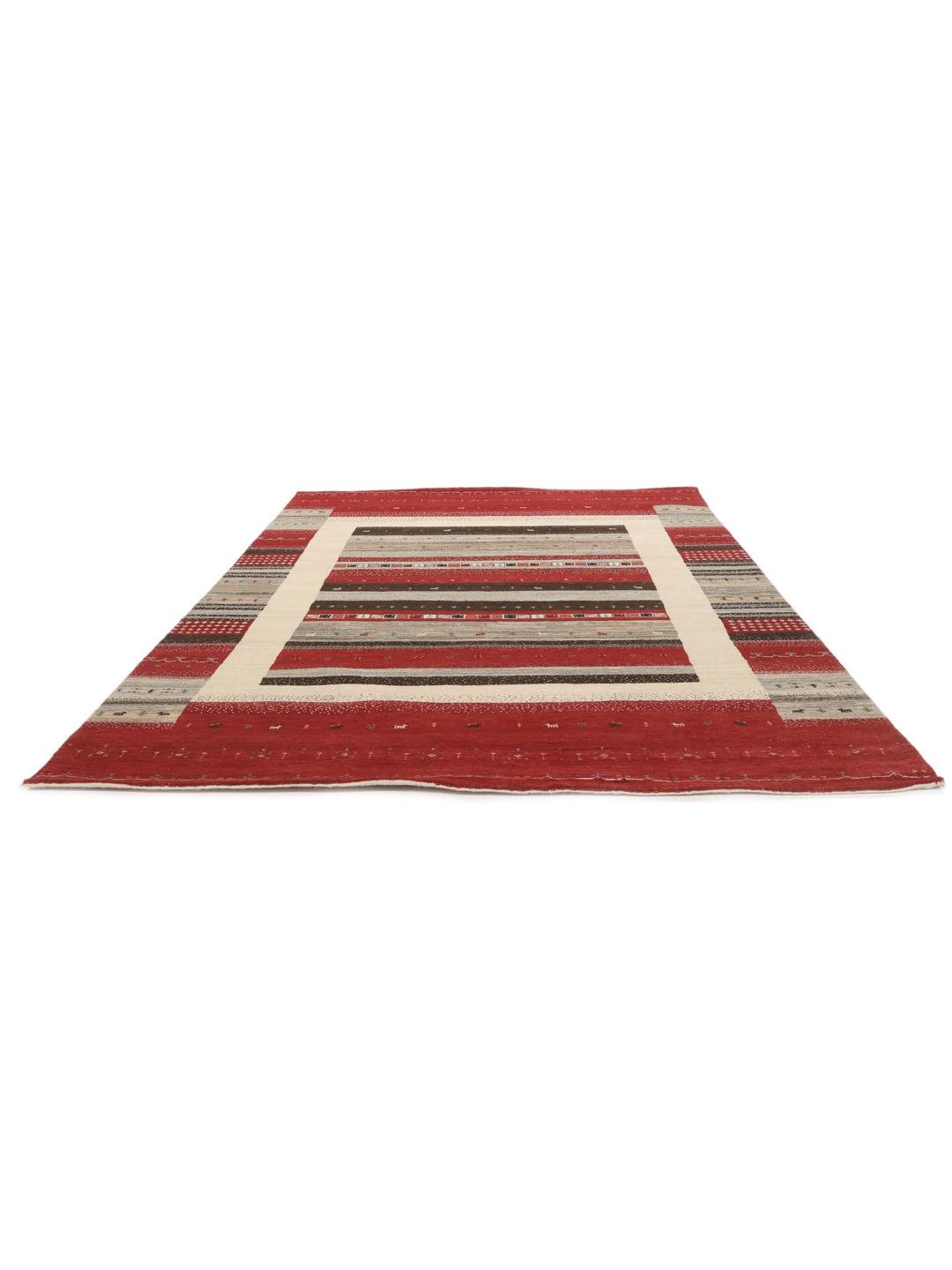
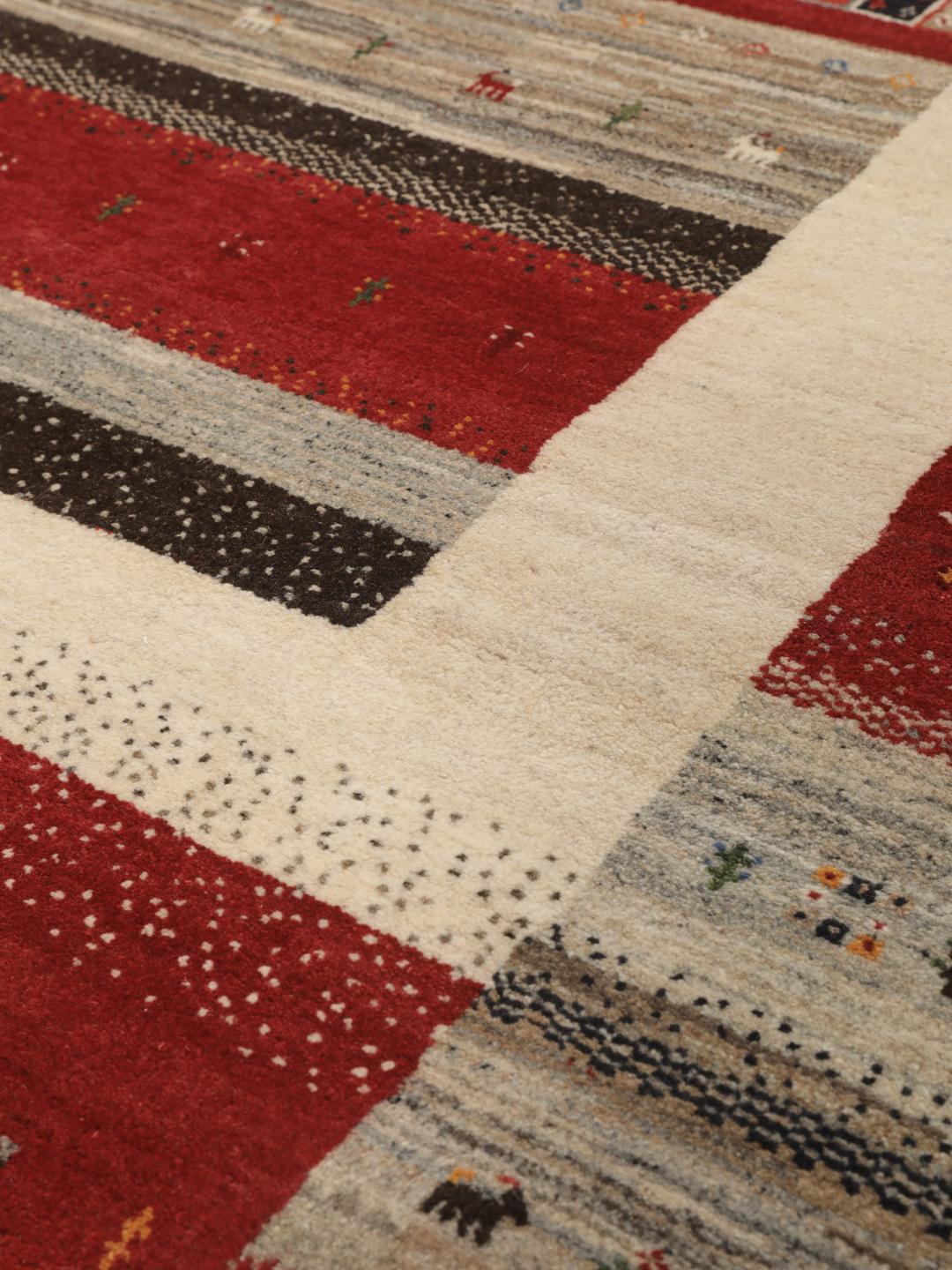
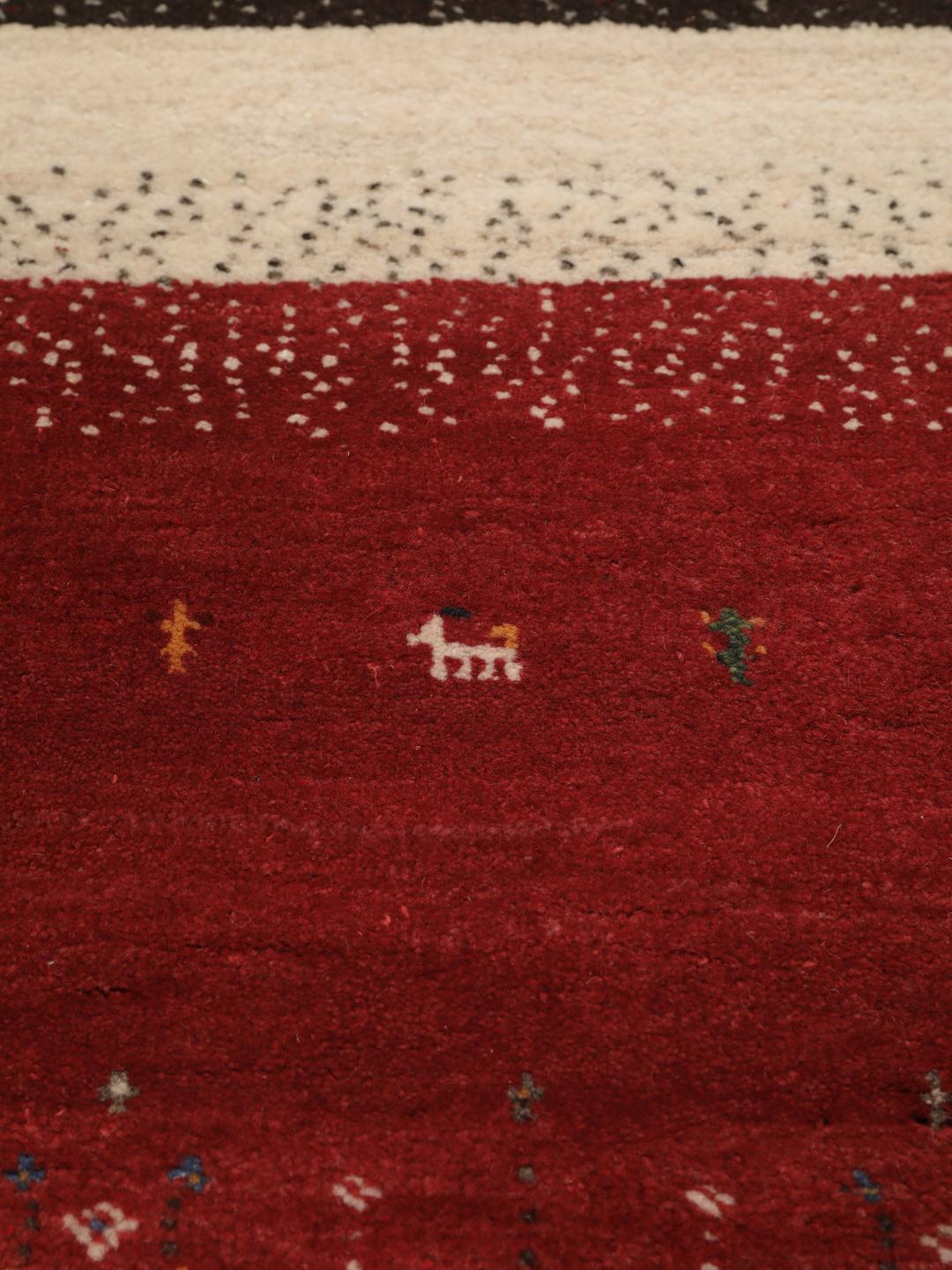
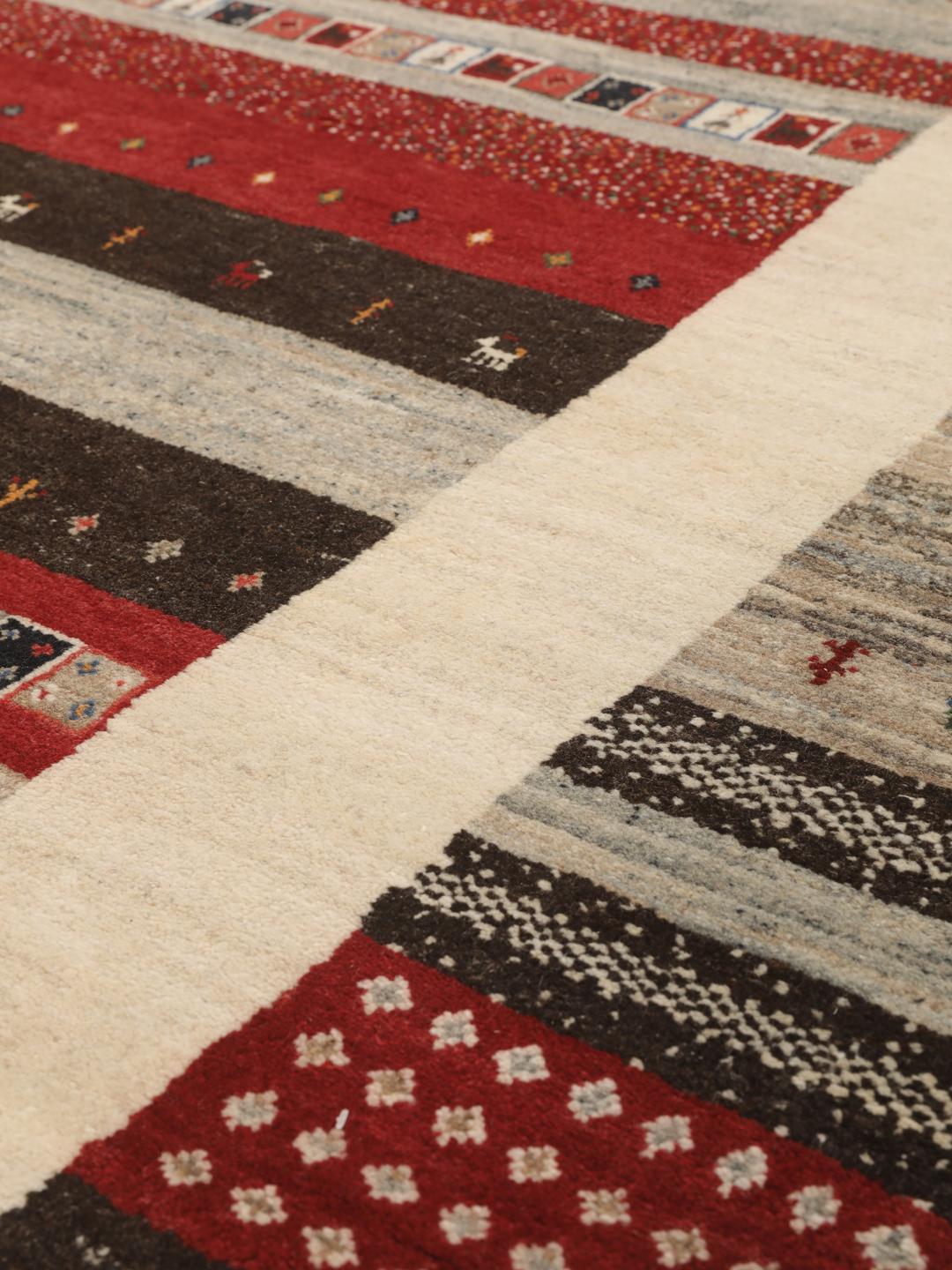
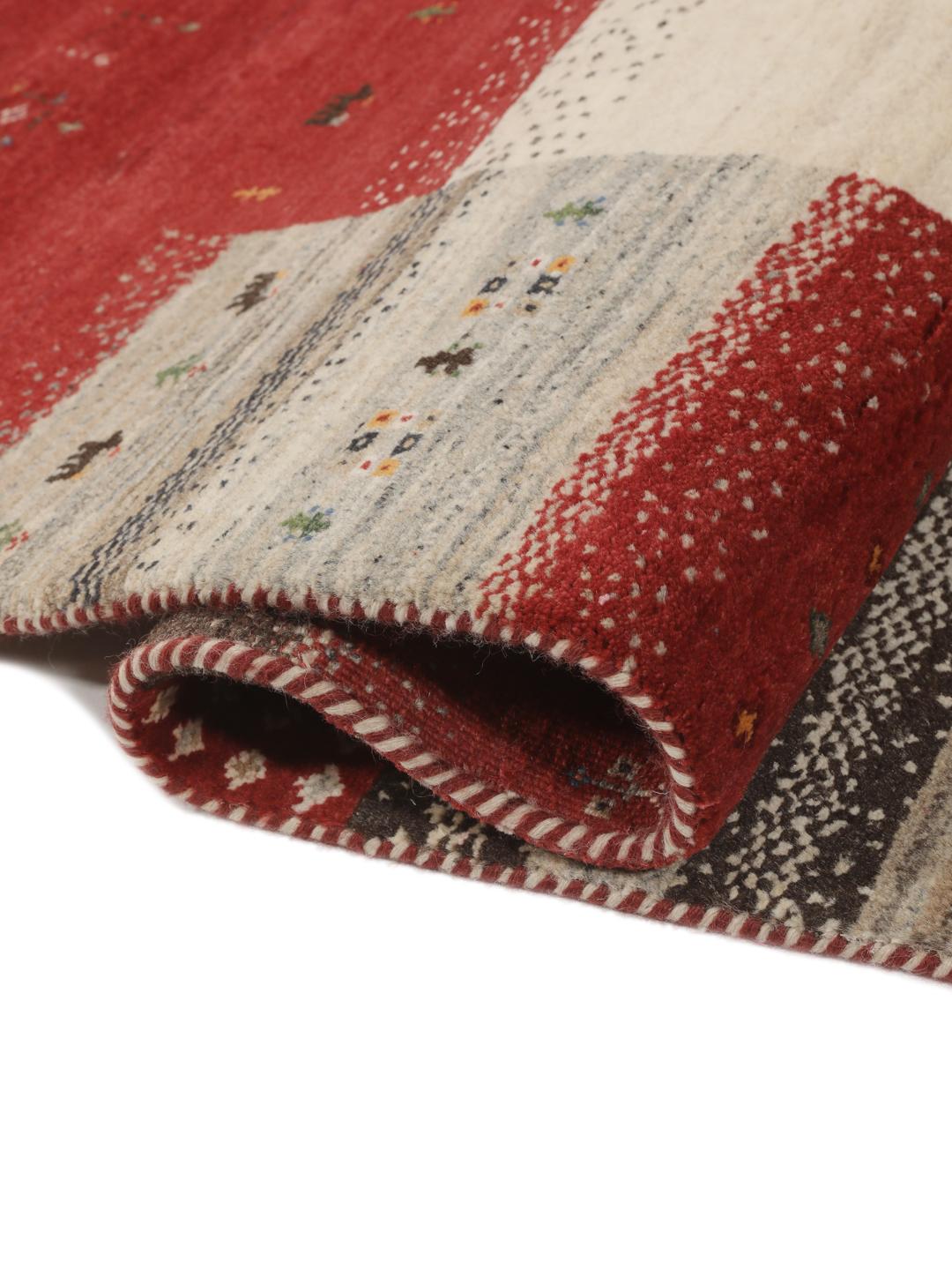
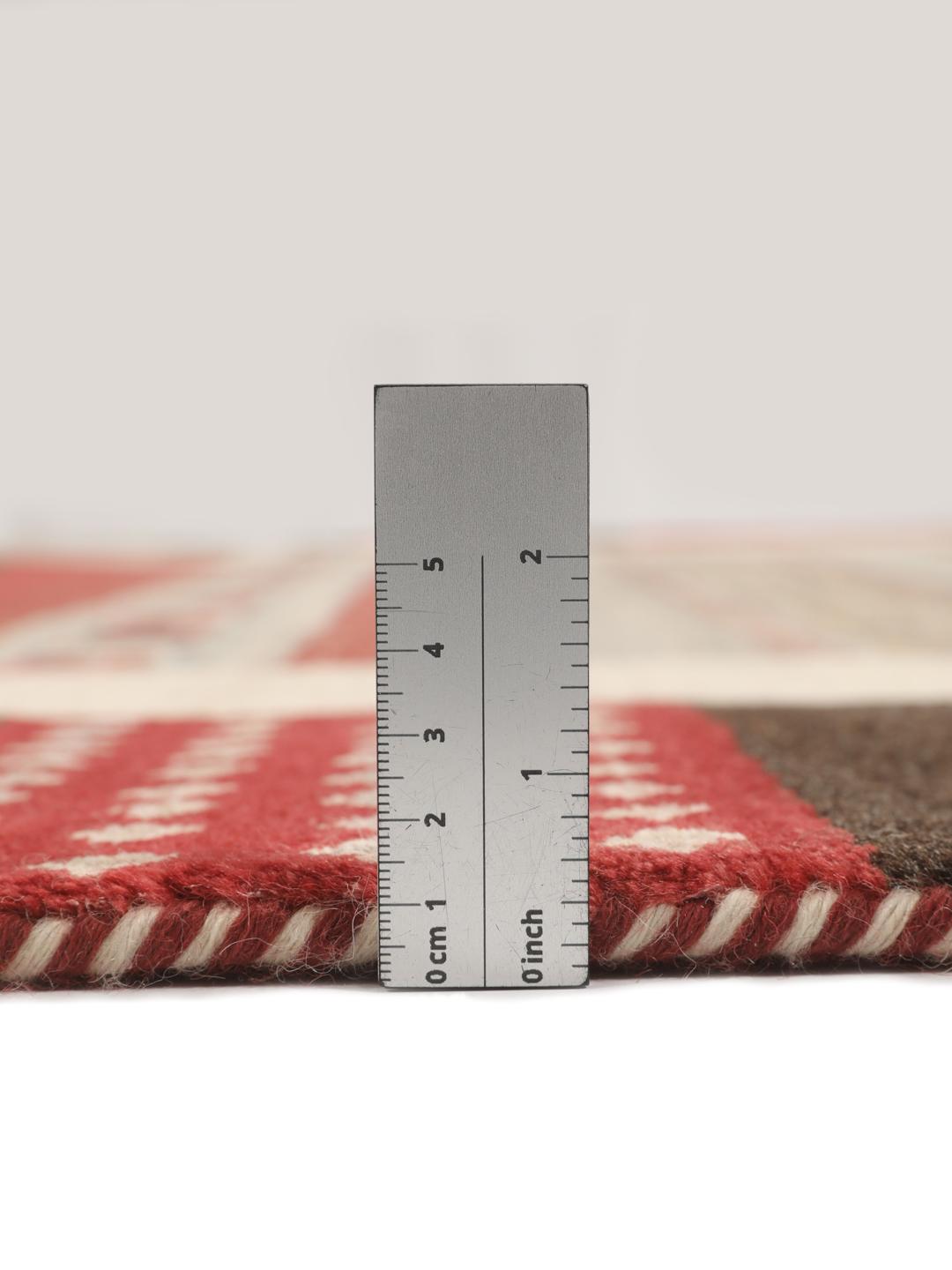
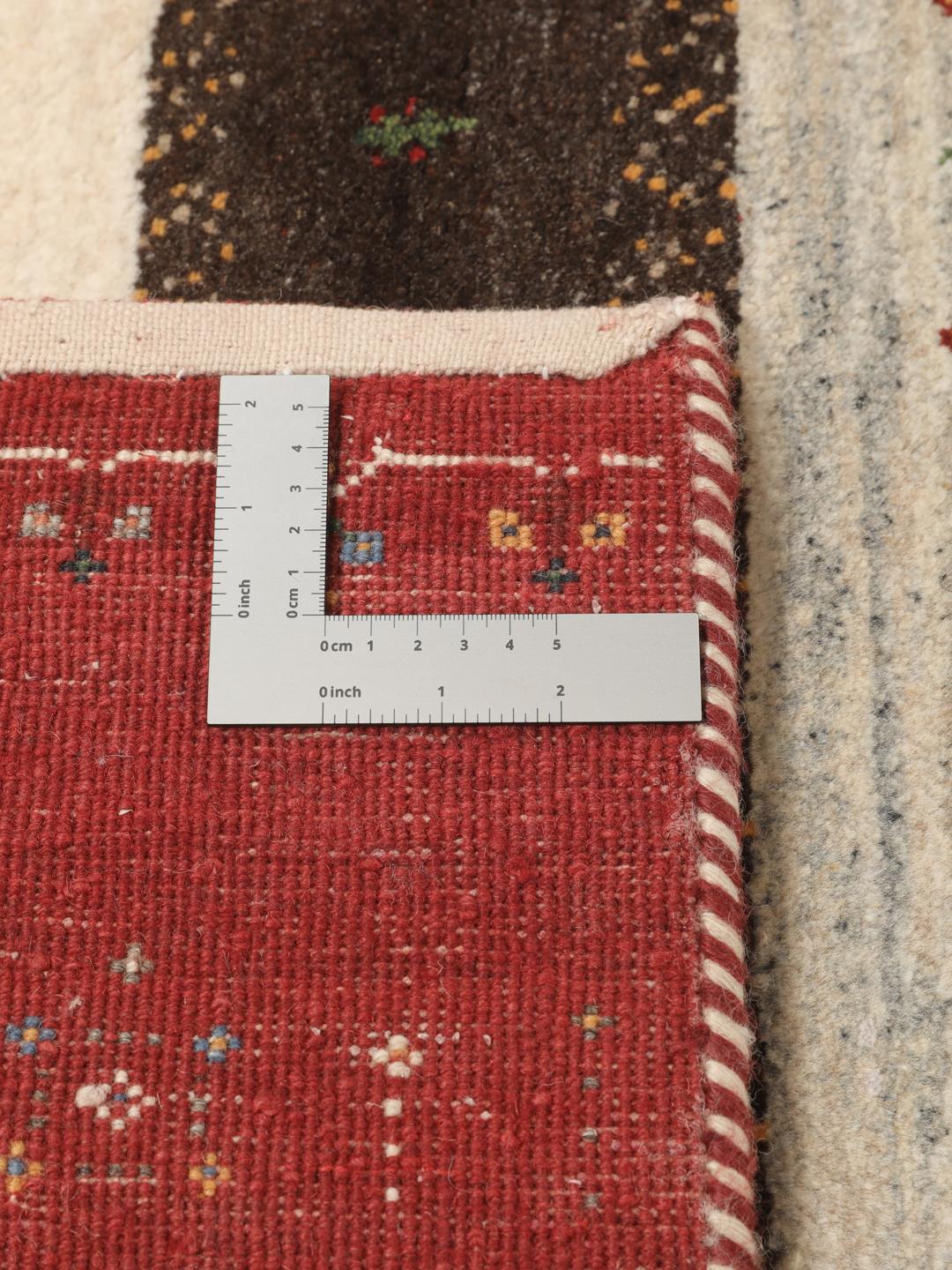
Gabbeh rugs have their roots in the tribal traditions of the Middle East, where they were originally woven by nomadic groups for personal use and protection against the harsh elements. These rugs were designed to be functional, thick, and durable, serving as bedding or floor coverings in tents. Over time, the style evolved, and today, fine examples like this Loribaft are expertly crafted in India, carrying forward the spirit of these nomadic origins.
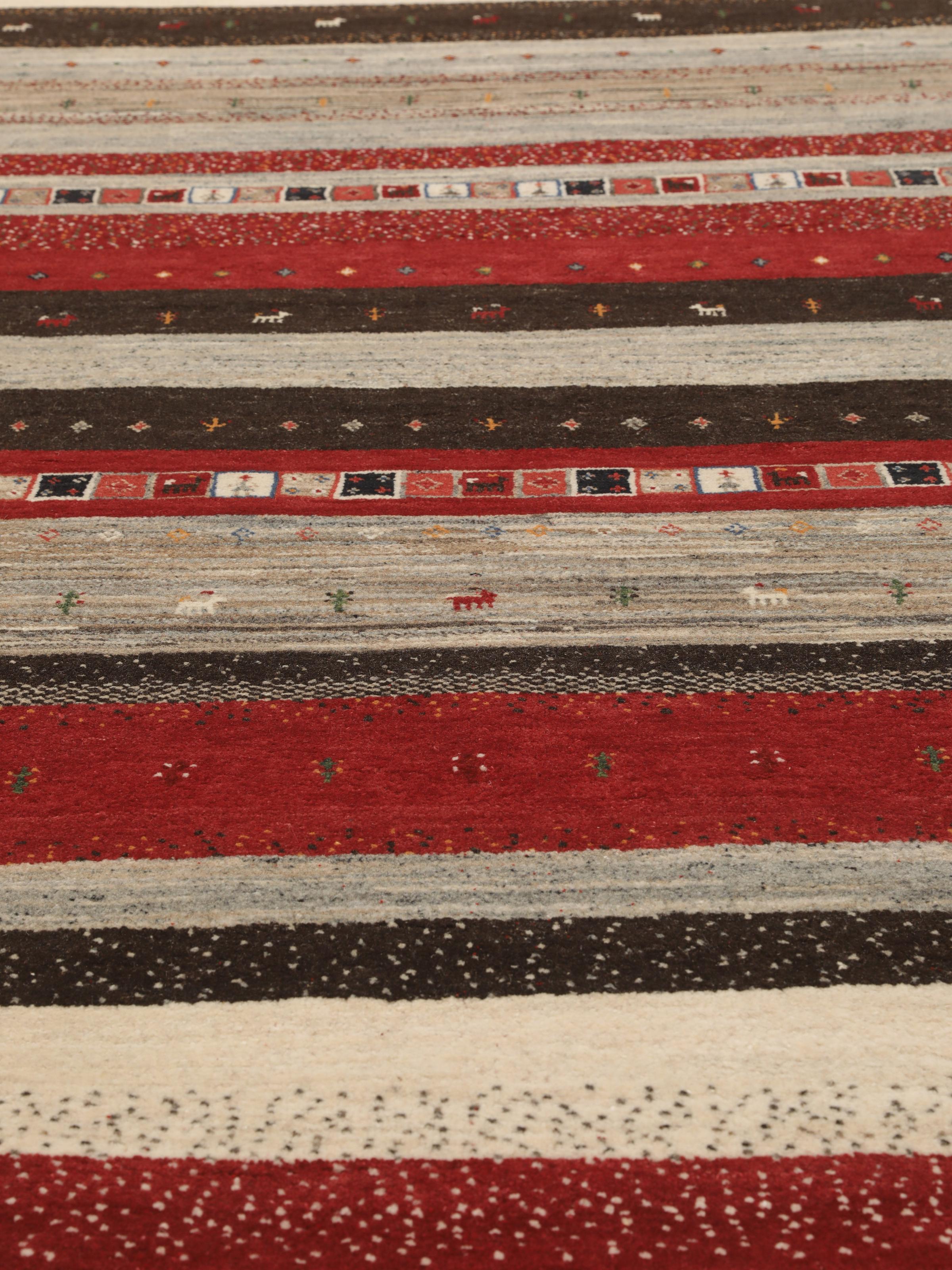
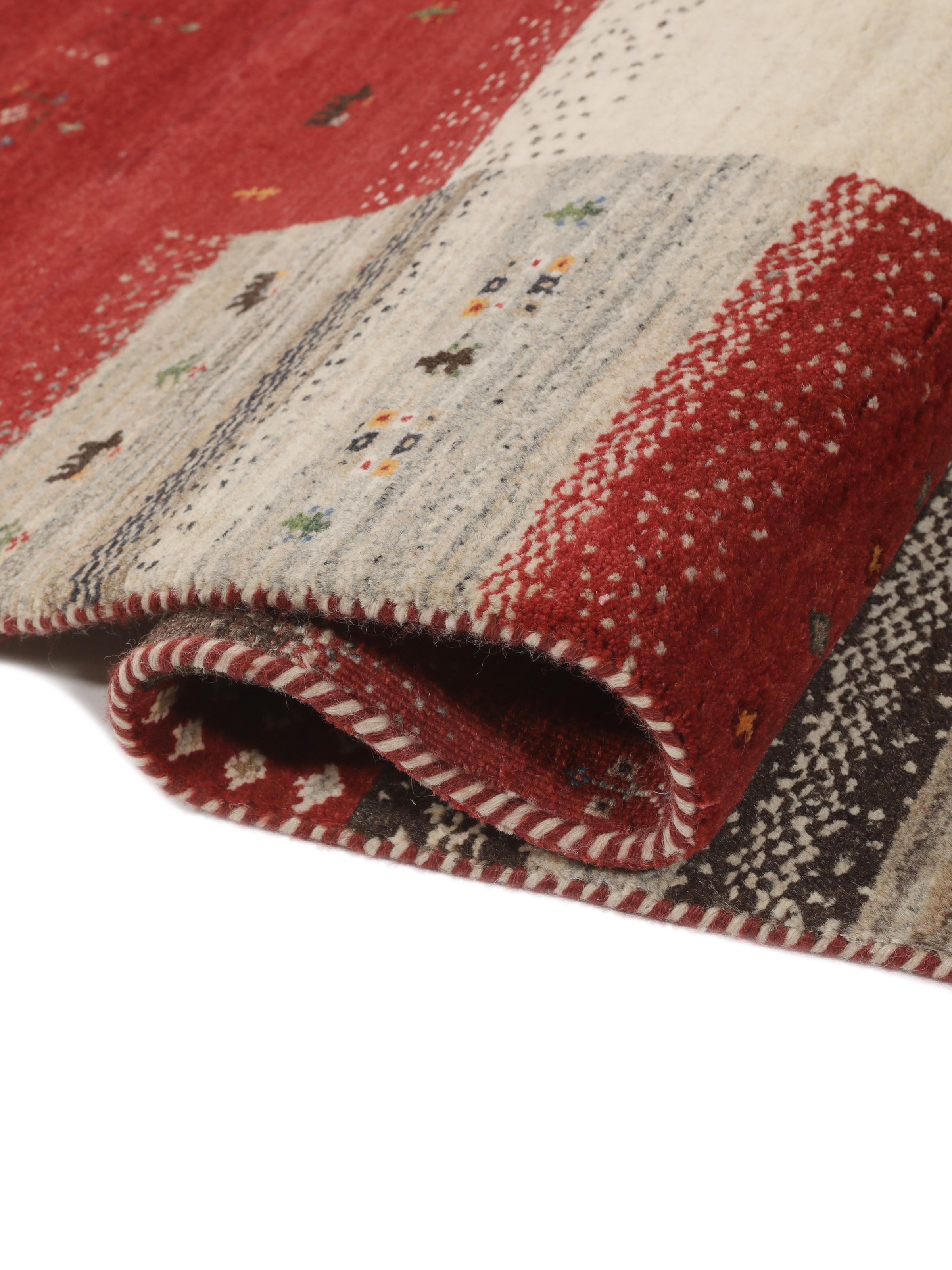
The term 'Loribaft' refers to a specific, high-quality style within the Gabbeh family. These rugs are known for their thicker pile and a more refined, sophisticated approach to the traditional tribal aesthetic. The term often implies a greater density of knots, which allows for more intricate pattern work and a more luxurious, velvety feel compared to simpler, coarser versions of the style.
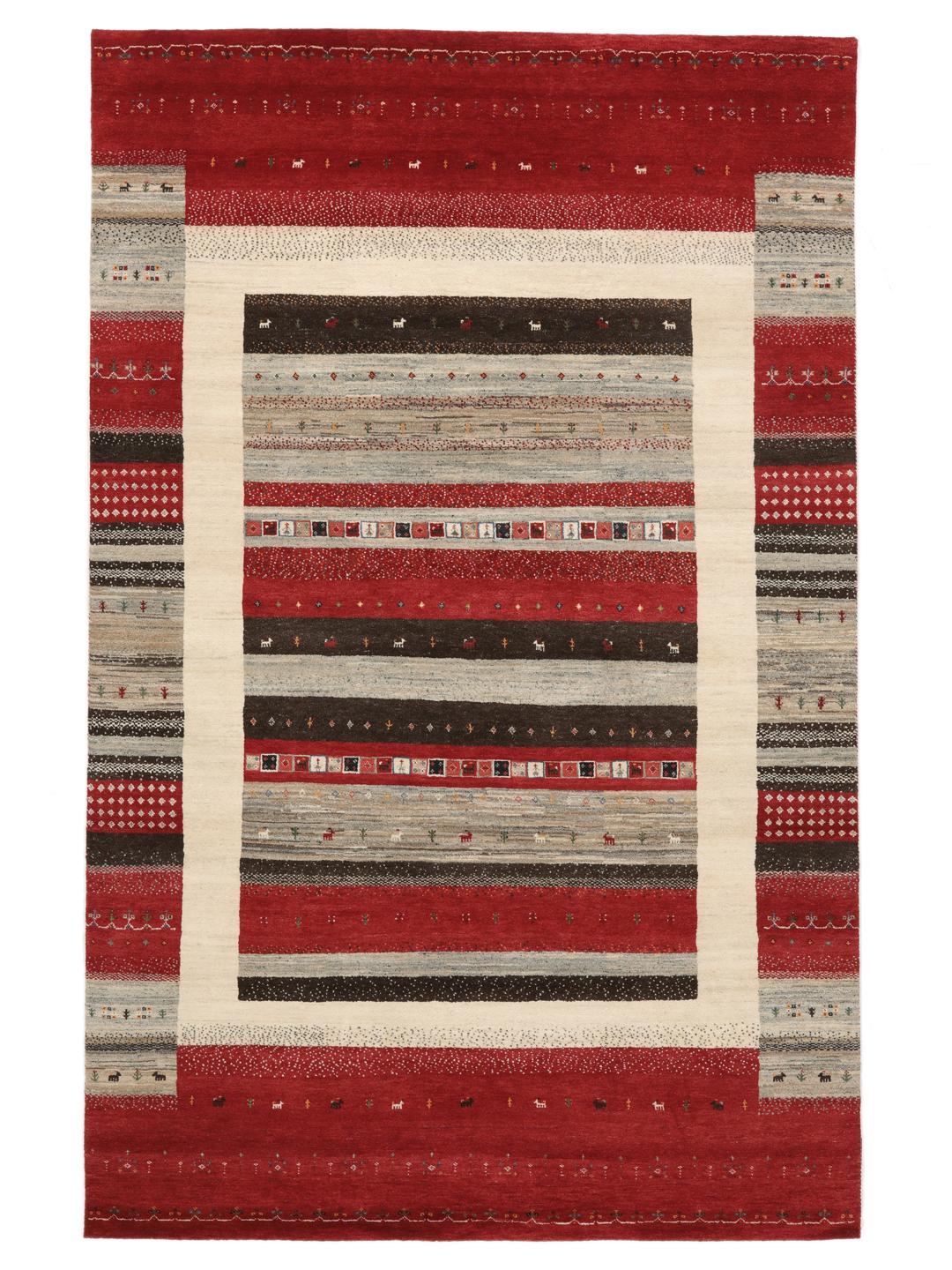
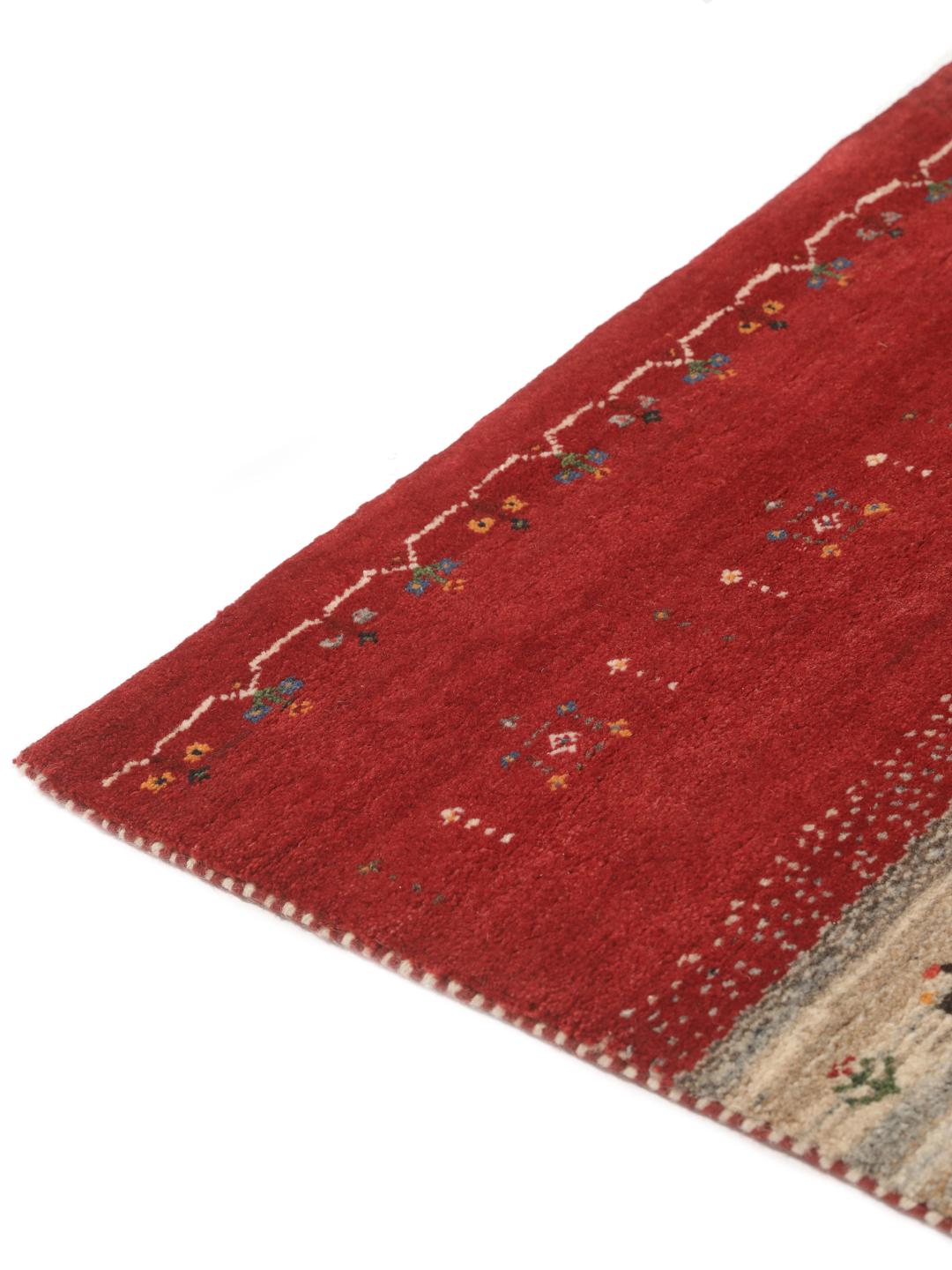
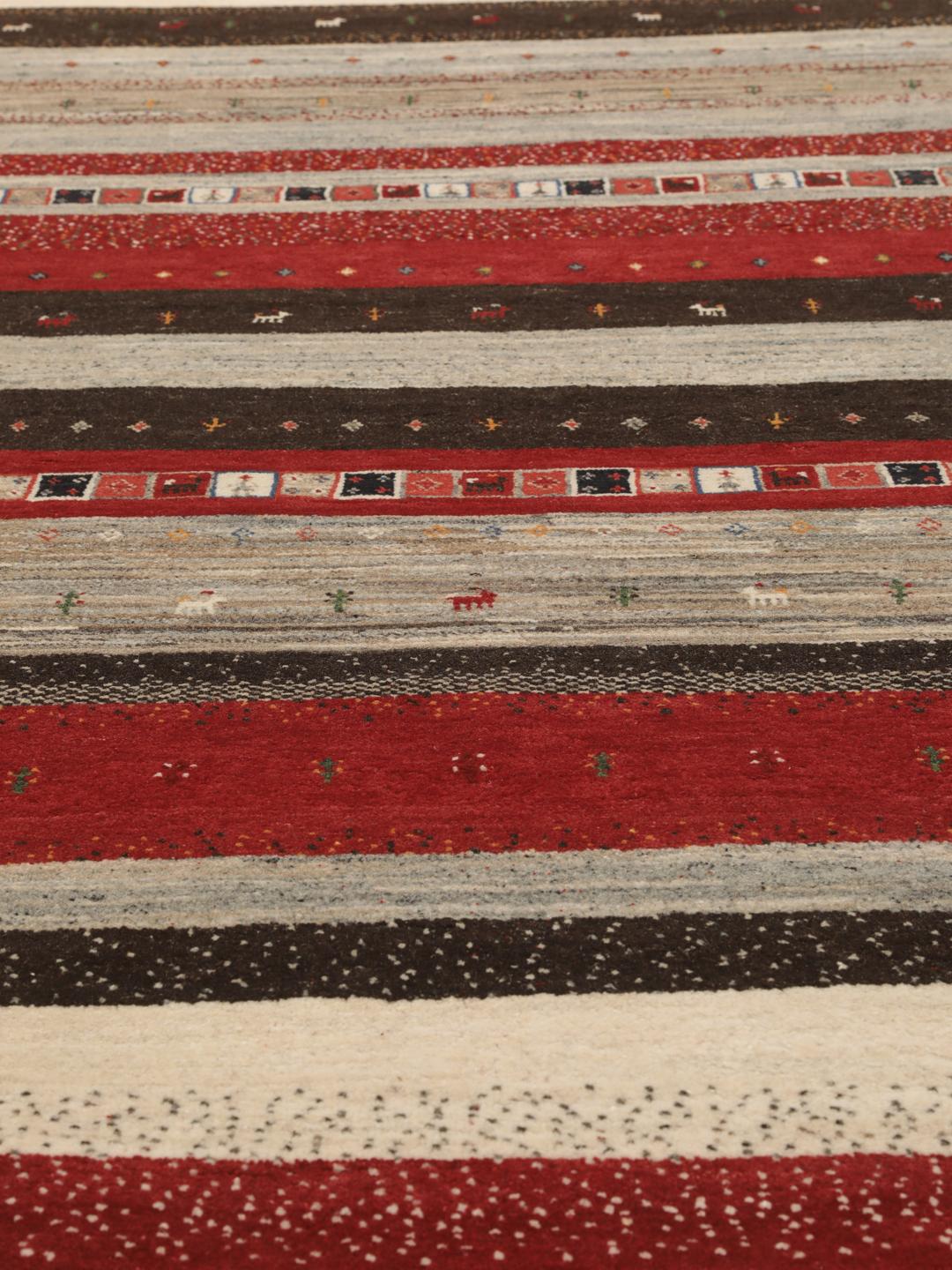
Visually, these rugs are celebrated for their bold use of colour and abstract, often whimsical, geometric and pictorial motifs. While traditional nomadic Gabbehs often featured open, monochromatic fields, the Loribaft style frequently incorporates more structured borders and varied, repetitive patterns. This balance between rustic, earthy tones and precise, symbolic imagery makes them highly versatile for modern interiors.
Collectors value Loribaft rugs for their blend of primitive charm and technical excellence. Owning one is more than just acquiring a floor covering; it is an act of preserving a dying art form that relies entirely on human skill and cultural memory. Because each rug is created without a formal chart, the weaver’s intuition guides the design, making every piece a genuine reflection of the individual artisan's perspective and heritage.