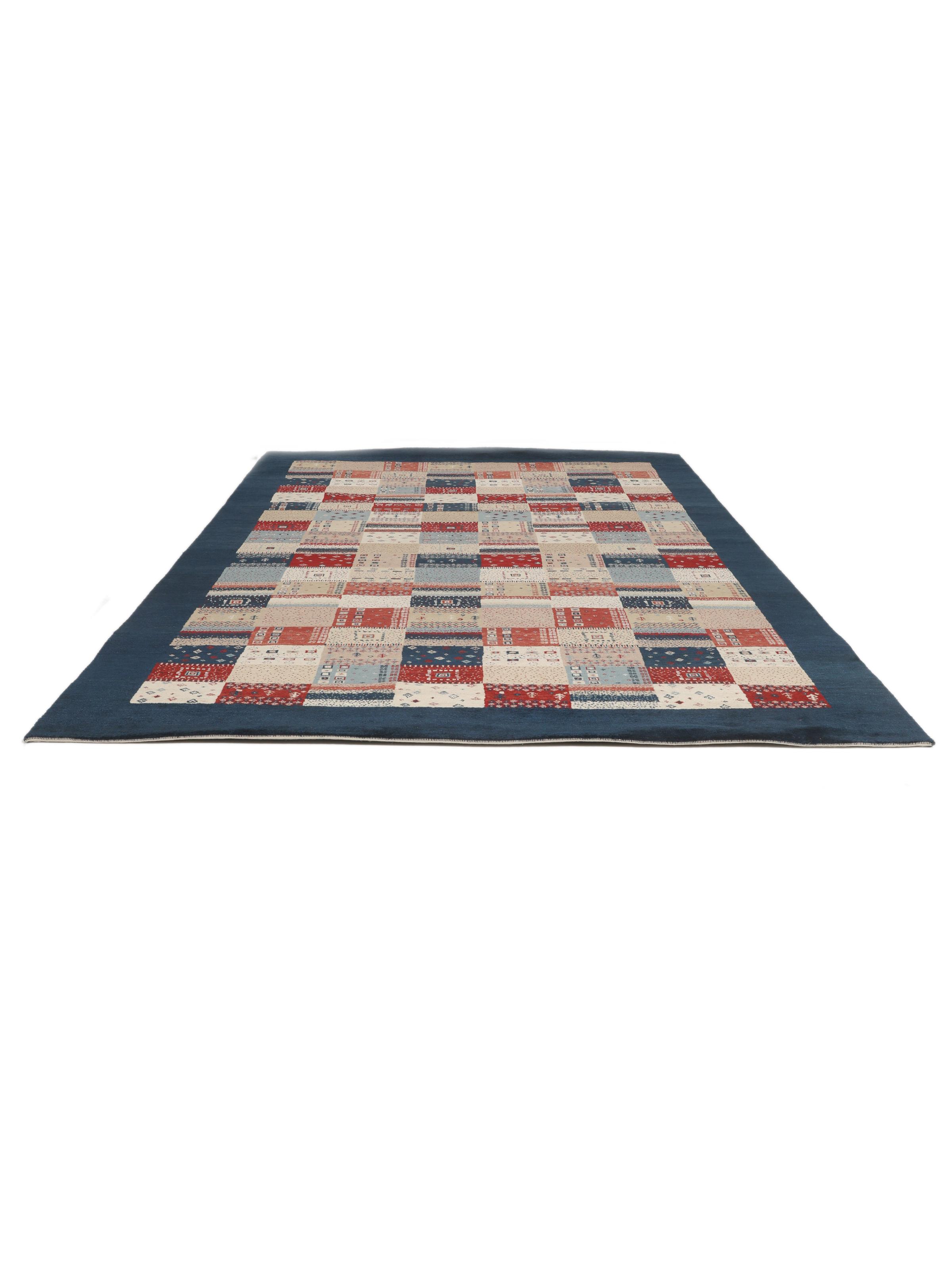
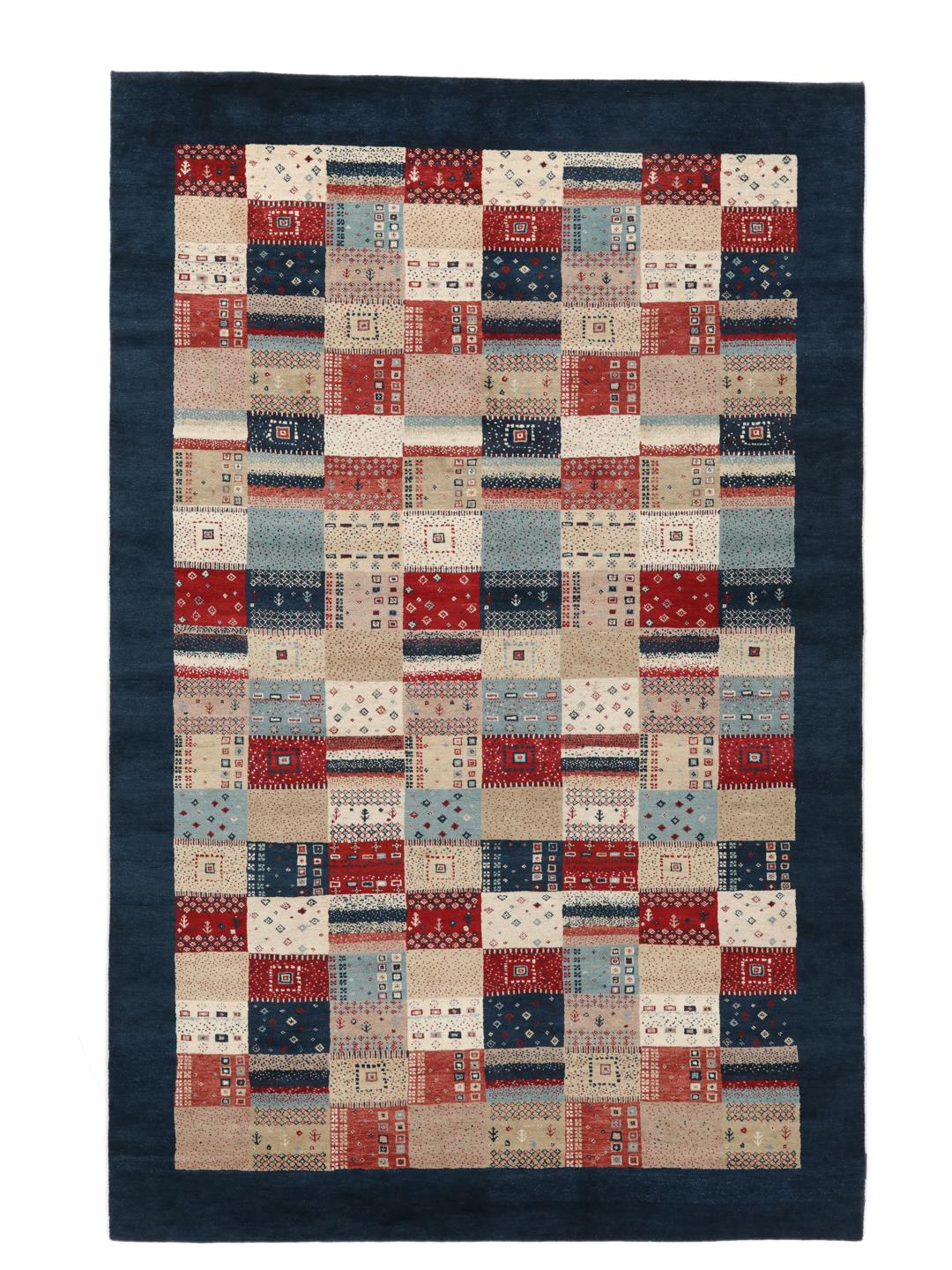
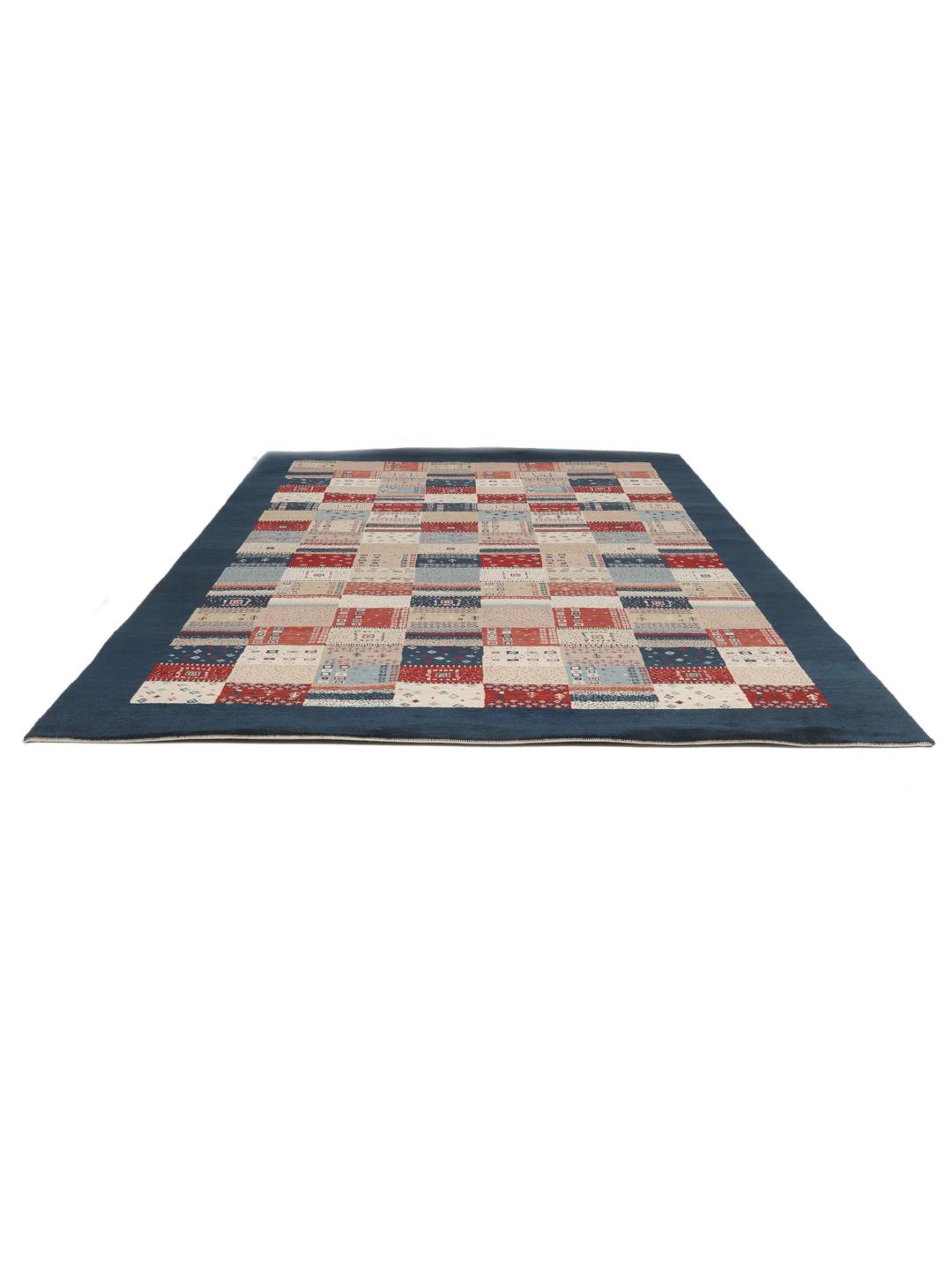
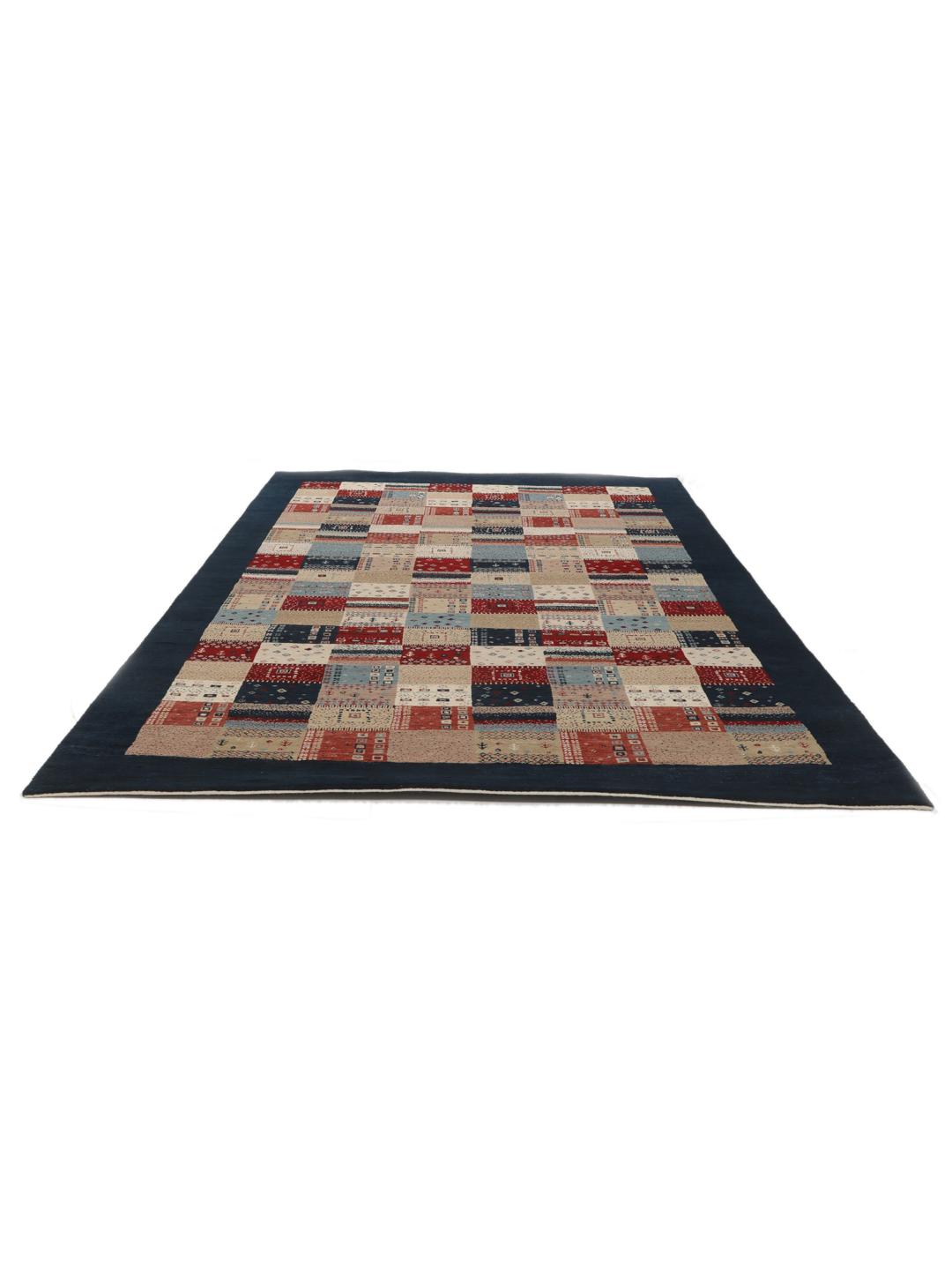
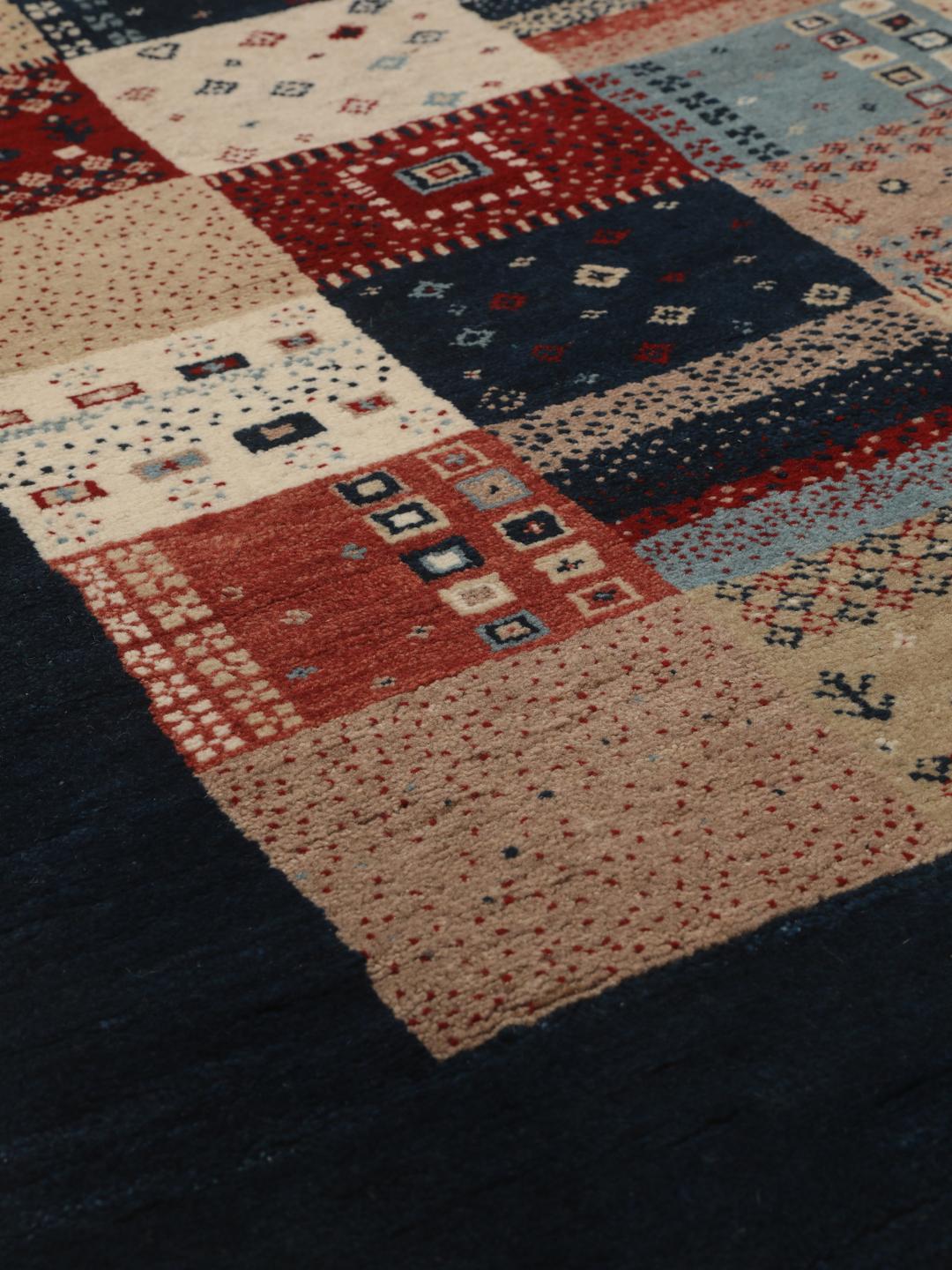
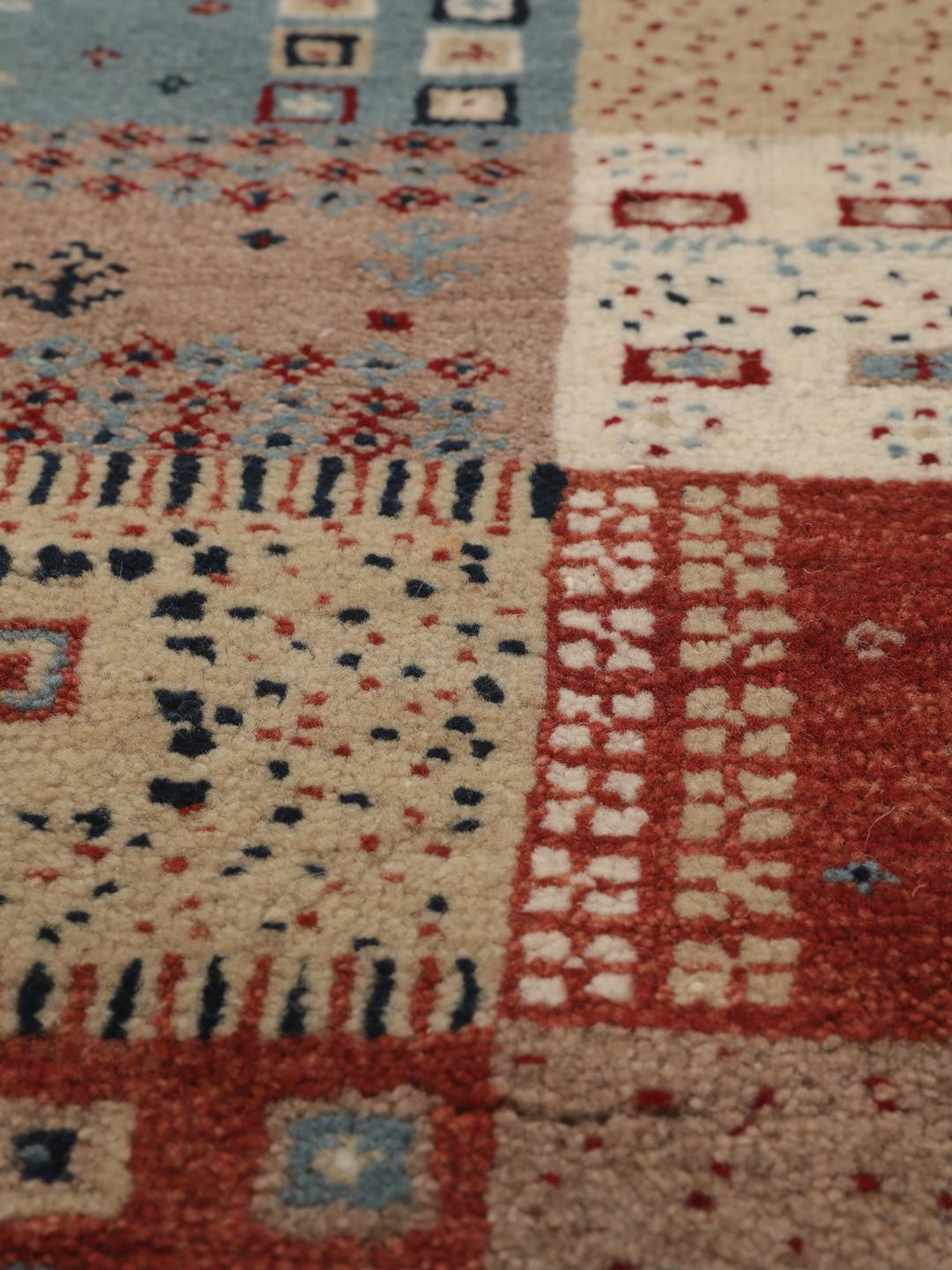
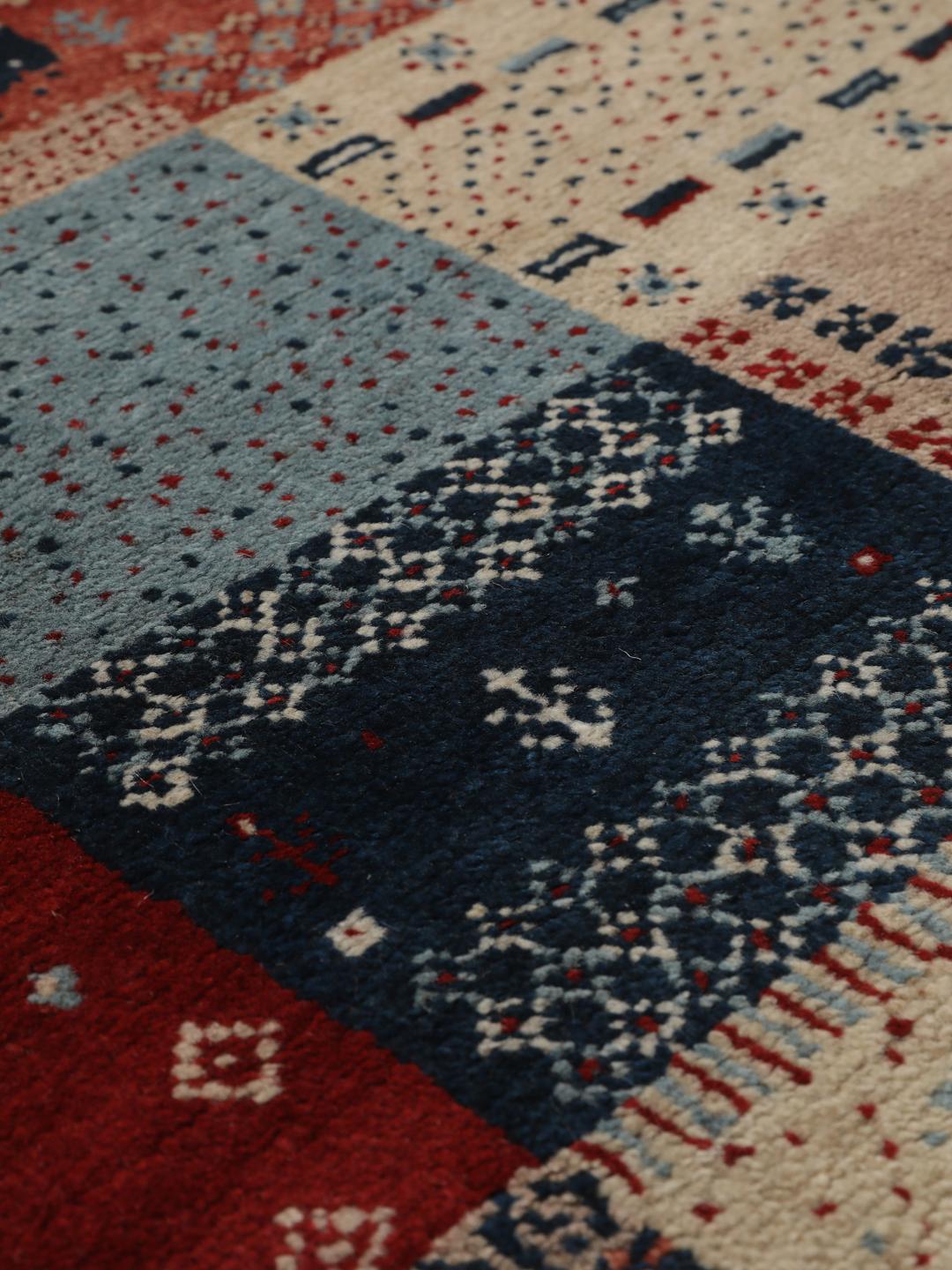
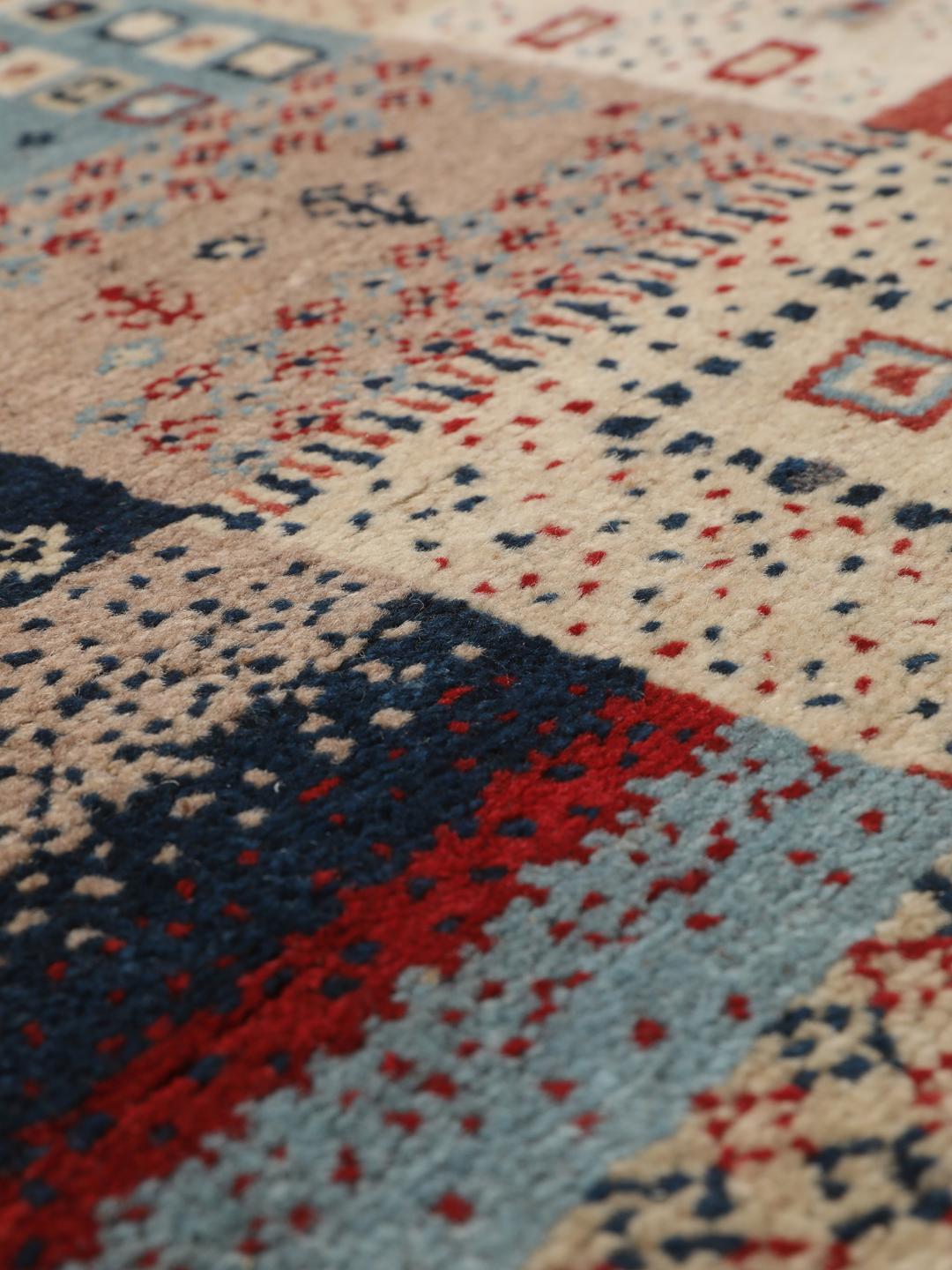
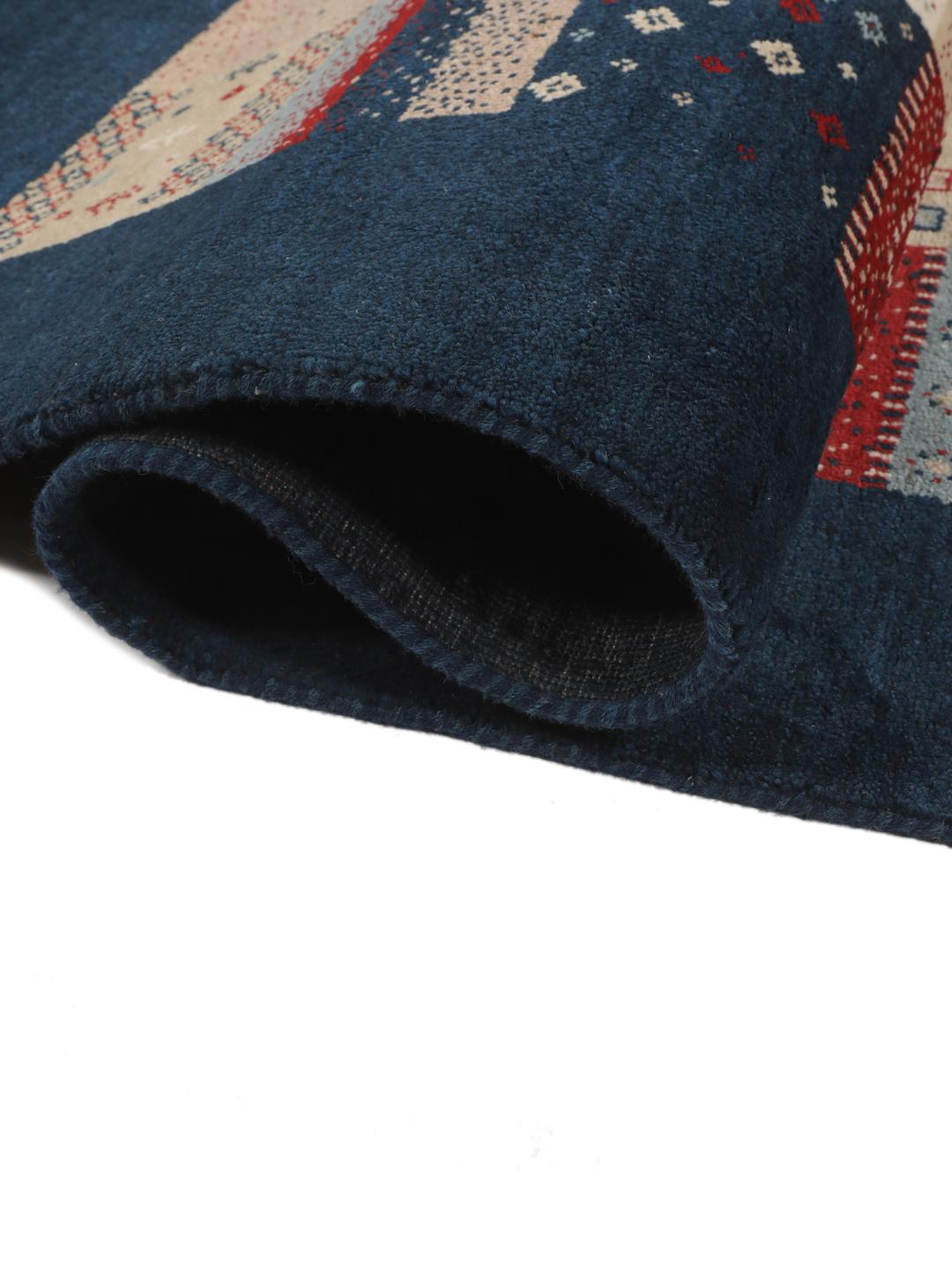
The Gabbeh Loribaft rug belongs to a venerable tradition of tribal weaving, originating from the nomadic cultures of the Middle East. Historically, these rugs were created by tribal weavers for practical use within their own tents, serving as warm bedding and floor coverings. Over time, the style evolved into the sophisticated Loribaft and Kashkooli categories, which are now celebrated for their refined artistic expression while maintaining the spirit of their humble, nomadic roots.
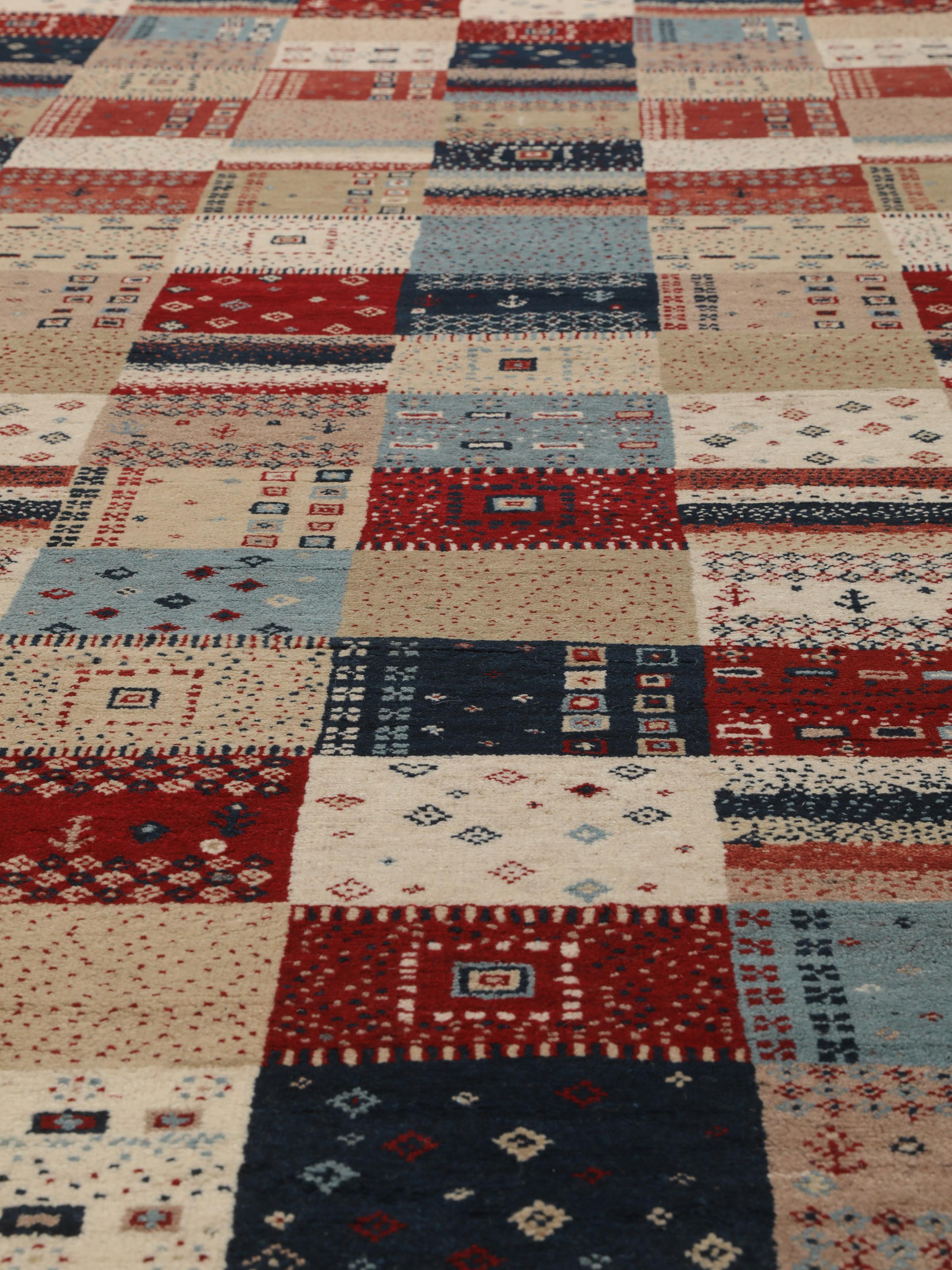
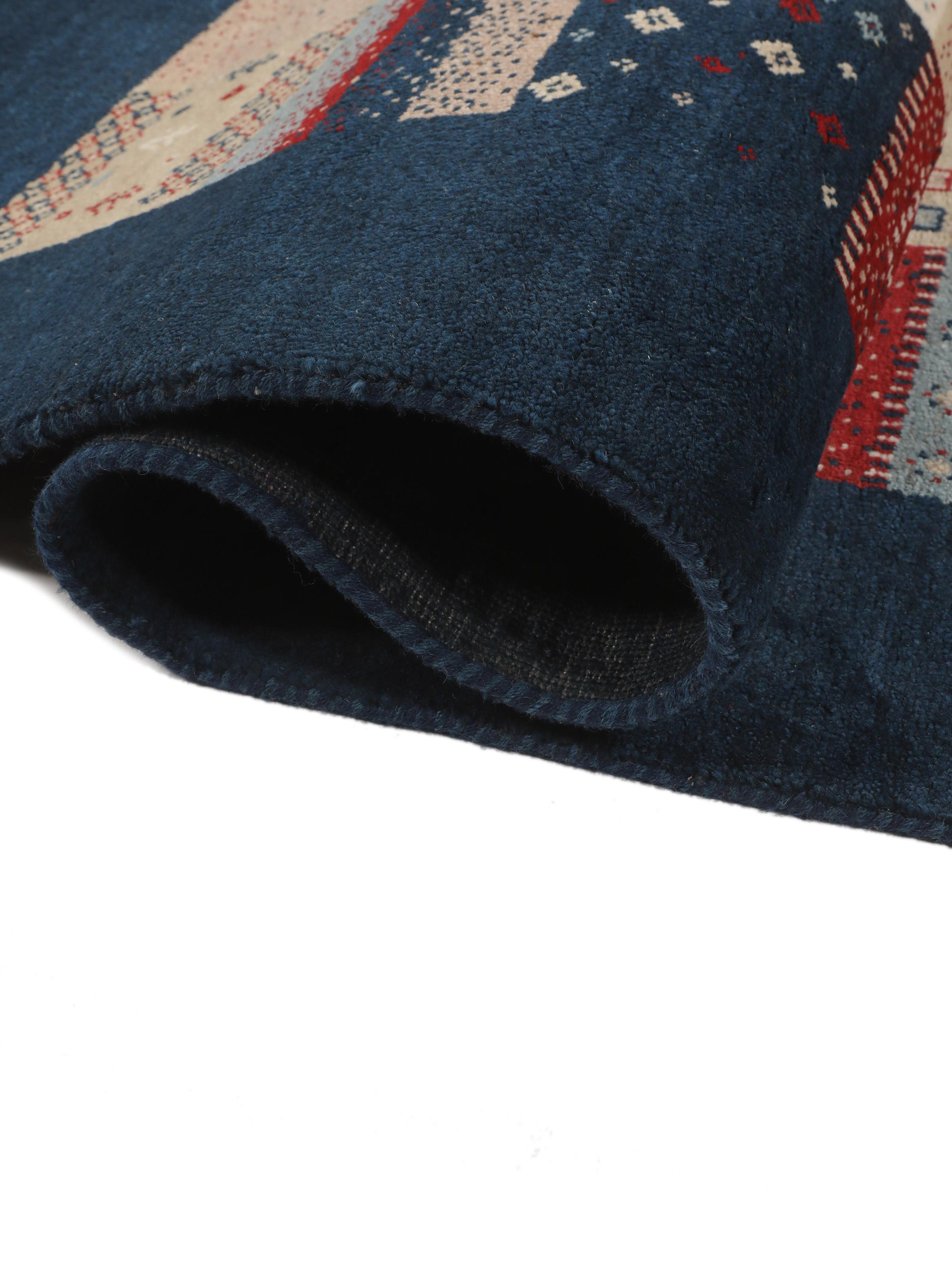
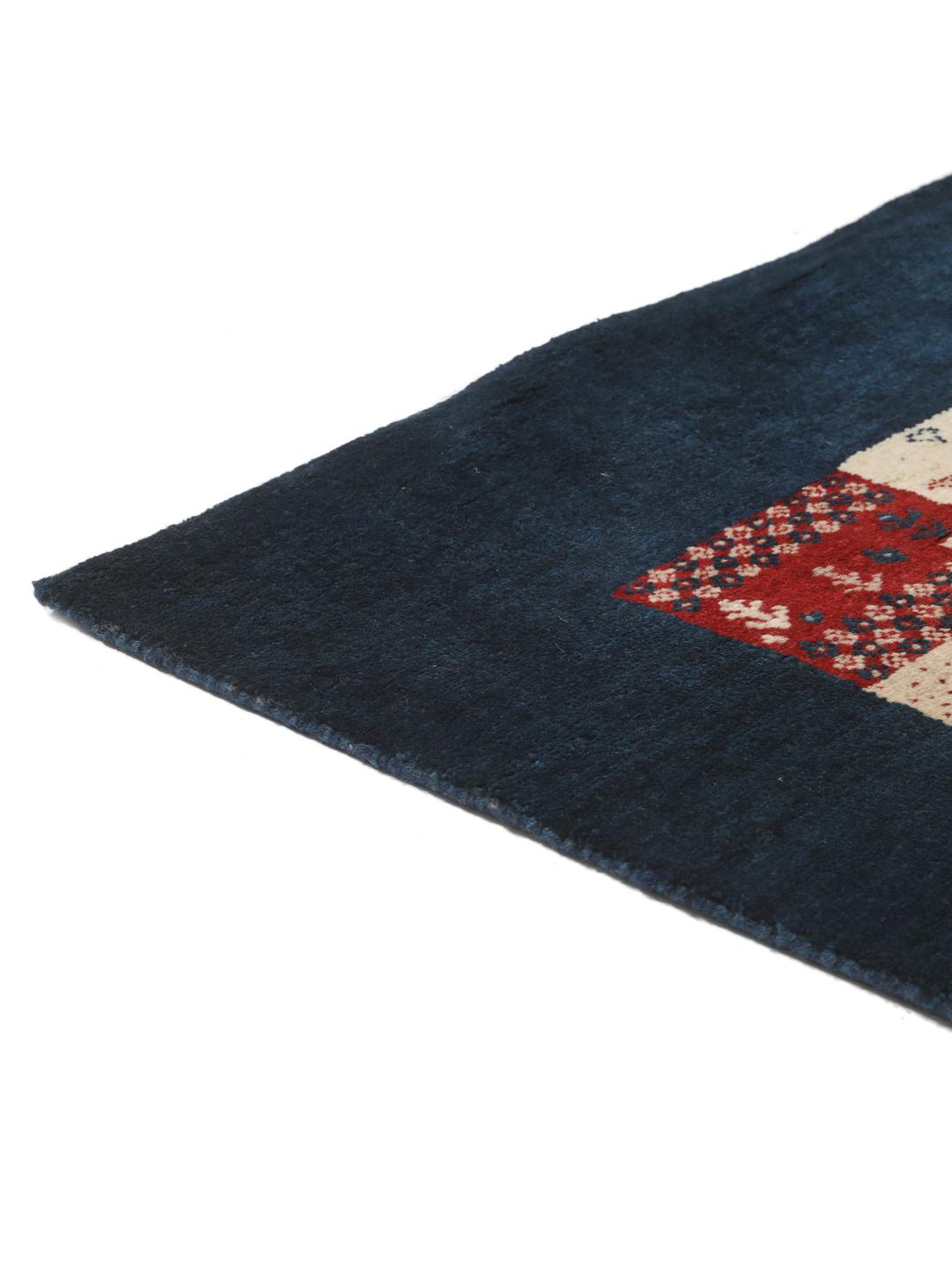
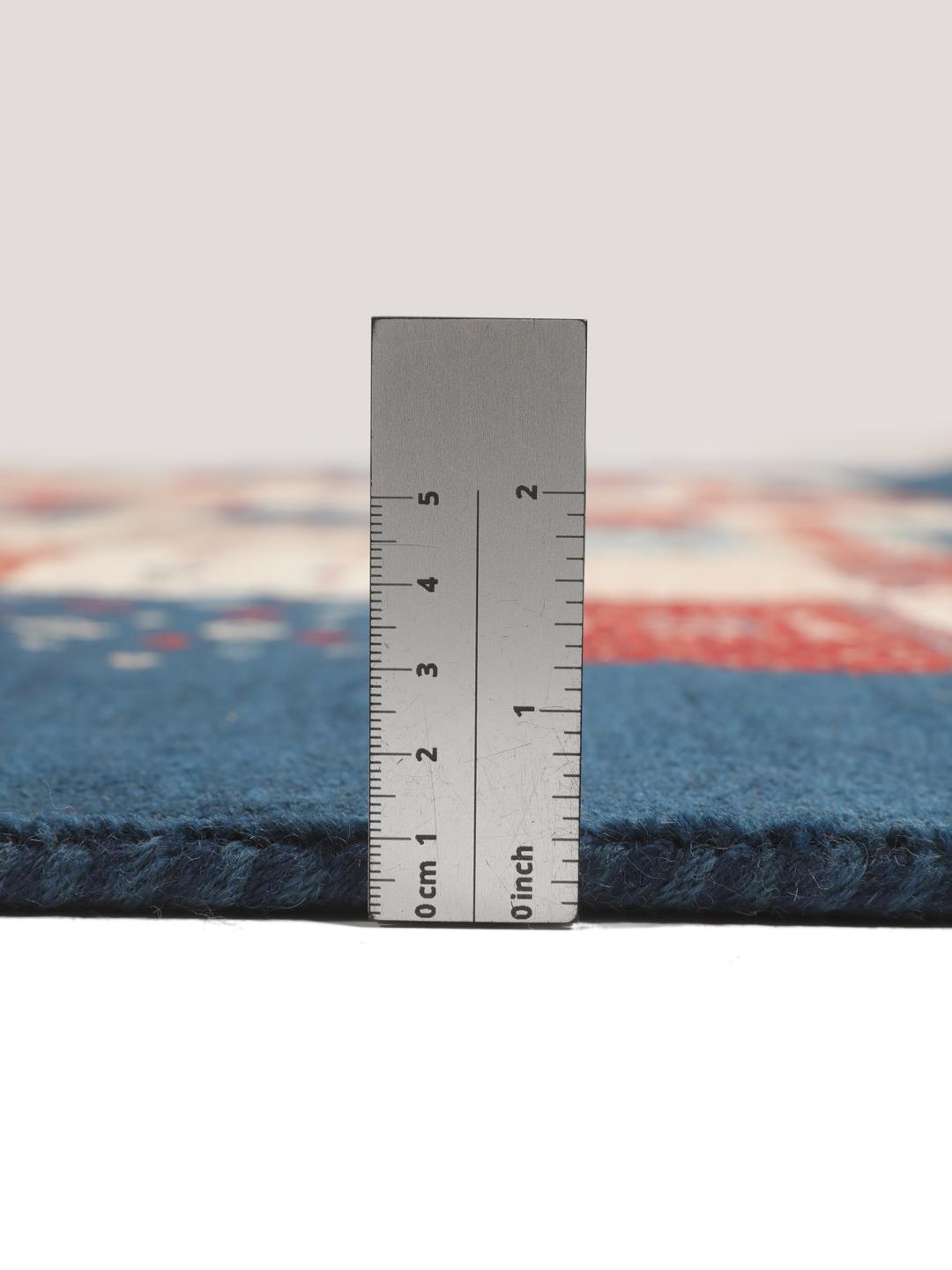
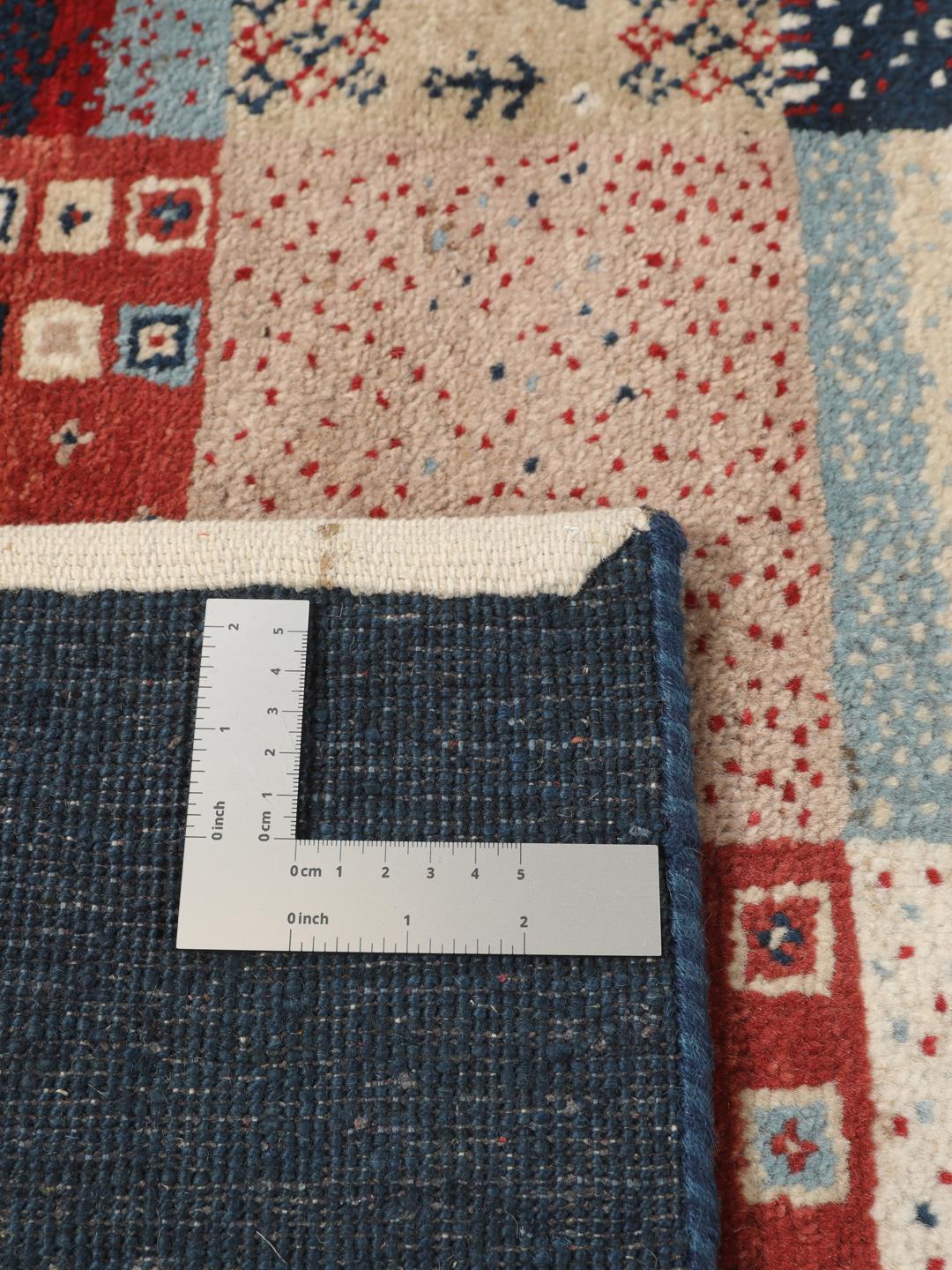
The term 'Loribaft' refers to a specific, high-quality weaving style that emphasises a denser, more refined pile compared to traditional, coarser Gabbeh rugs. This density is achieved through a more precise knotting technique, which allows for finer detail and a smoother, more lustrous finish. For the collector, this means a rug that is not only visually beautiful but also structurally superior, offering a level of durability that stands up to the demands of modern life.
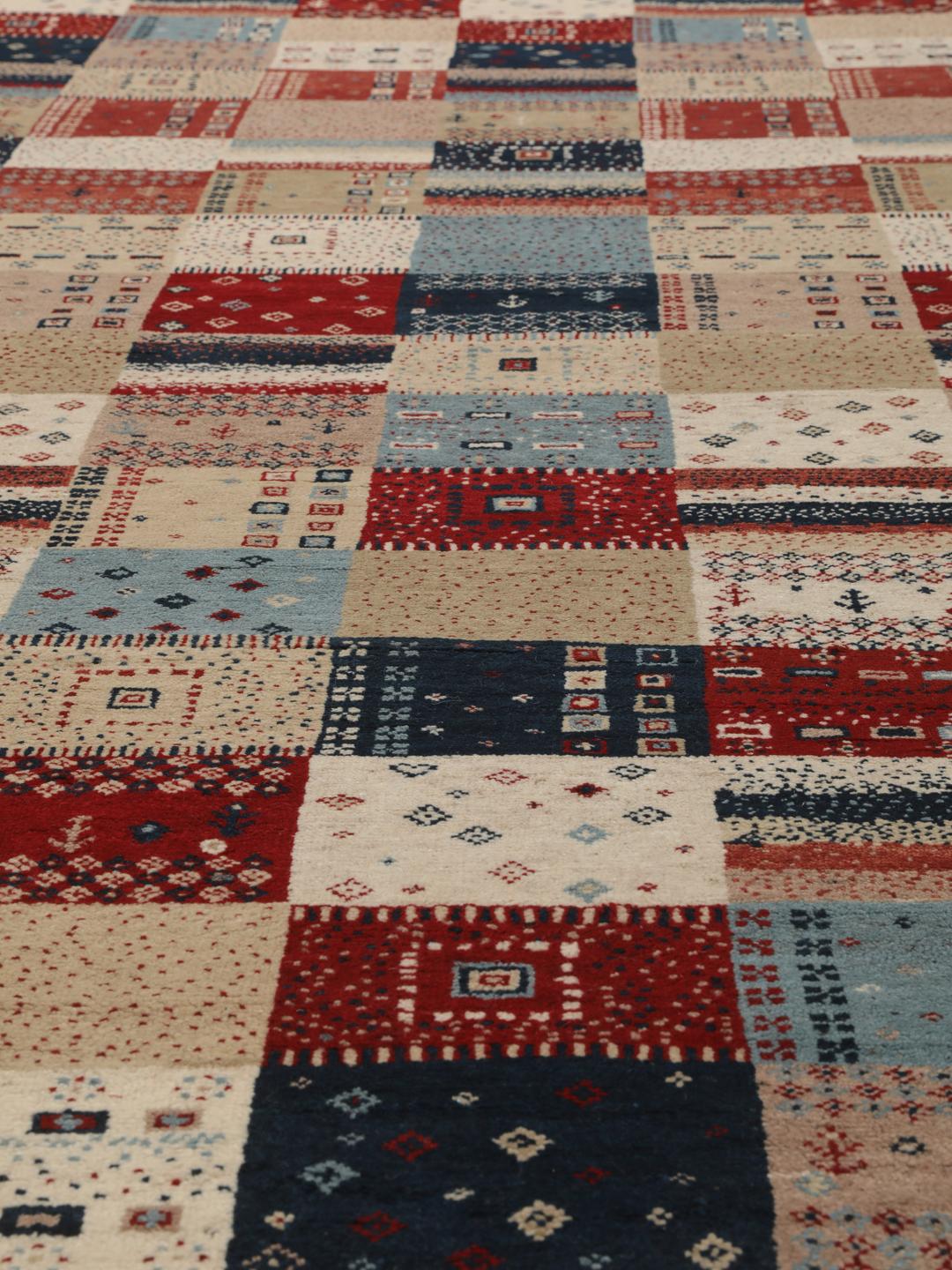
Visually, these rugs are known for their bold, often abstract, or geometric designs that utilise a rich palette of natural dyes. While traditional Gabbehs were often simple, the Loribaft style introduced more intricate patterns and a wider variety of motifs, such as the repeating squares and symbols seen here. This particular piece showcases a masterful use of colour, blending deep blues and reds with softer tones to create a balanced yet vibrant visual language that feels both ancient and contemporary.
Owning a hand-knotted Loribaft is a testament to the appreciation of human skill and cultural heritage. These rugs are highly valued because they represent a direct link to a craft that has been passed down through generations, surviving the shift toward industrialisation. By acquiring this piece, you are preserving a tradition of excellence, ensuring that the artistry of the weavers continues to be honoured and enjoyed in your own living space.