The Gabbeh tradition finds its roots in the nomadic cultures of the Middle East, where weavers historically created these rugs for their own daily use. These pieces were never intended for the commercial market, but rather as functional, warm bedding and floor coverings for family tents. Over time, the style evolved, and today, the finest examples are crafted in regions like India, where artisans have mastered the art of maintaining the rustic, free-spirited aesthetic of the original nomadic designs.
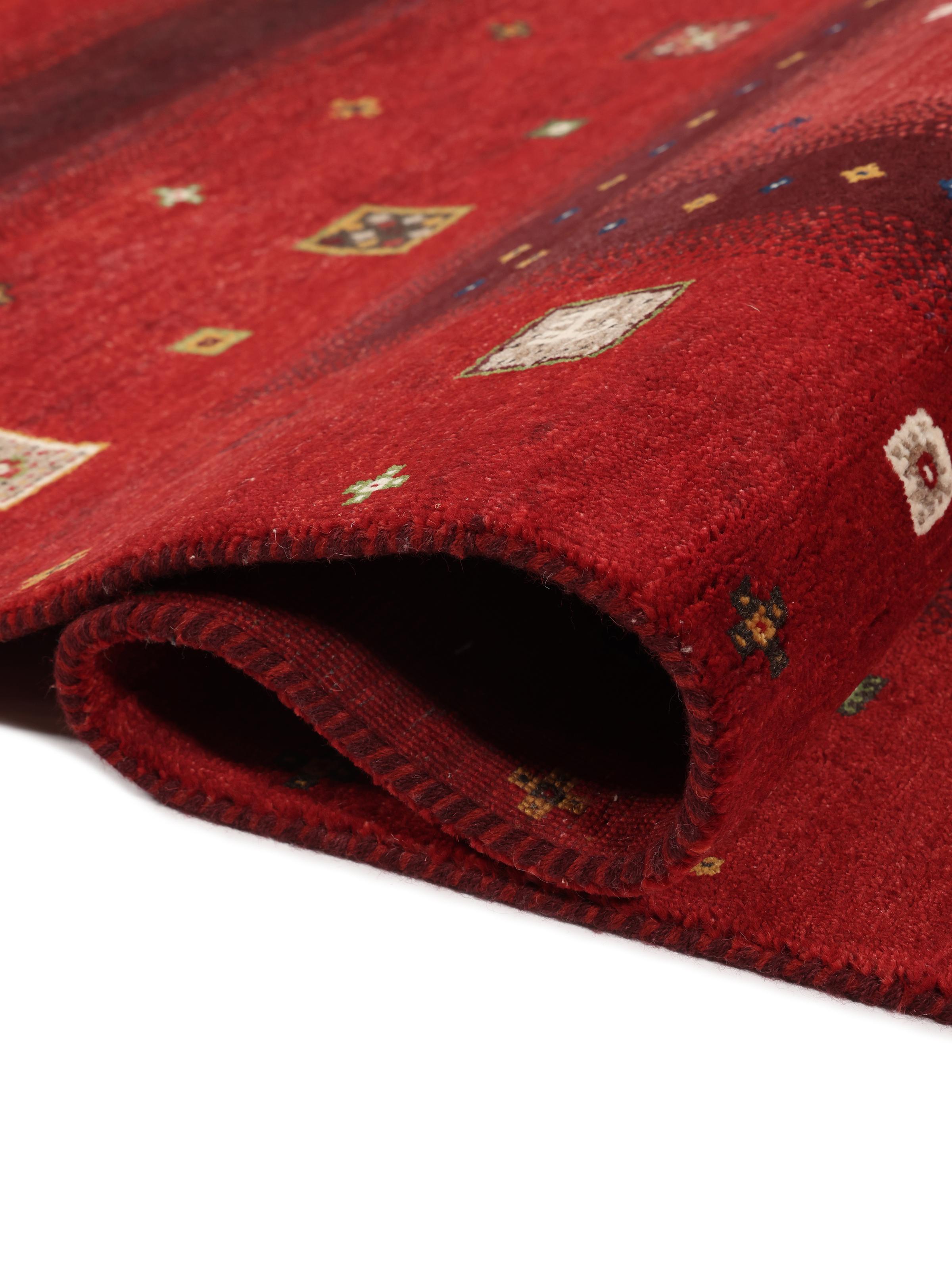
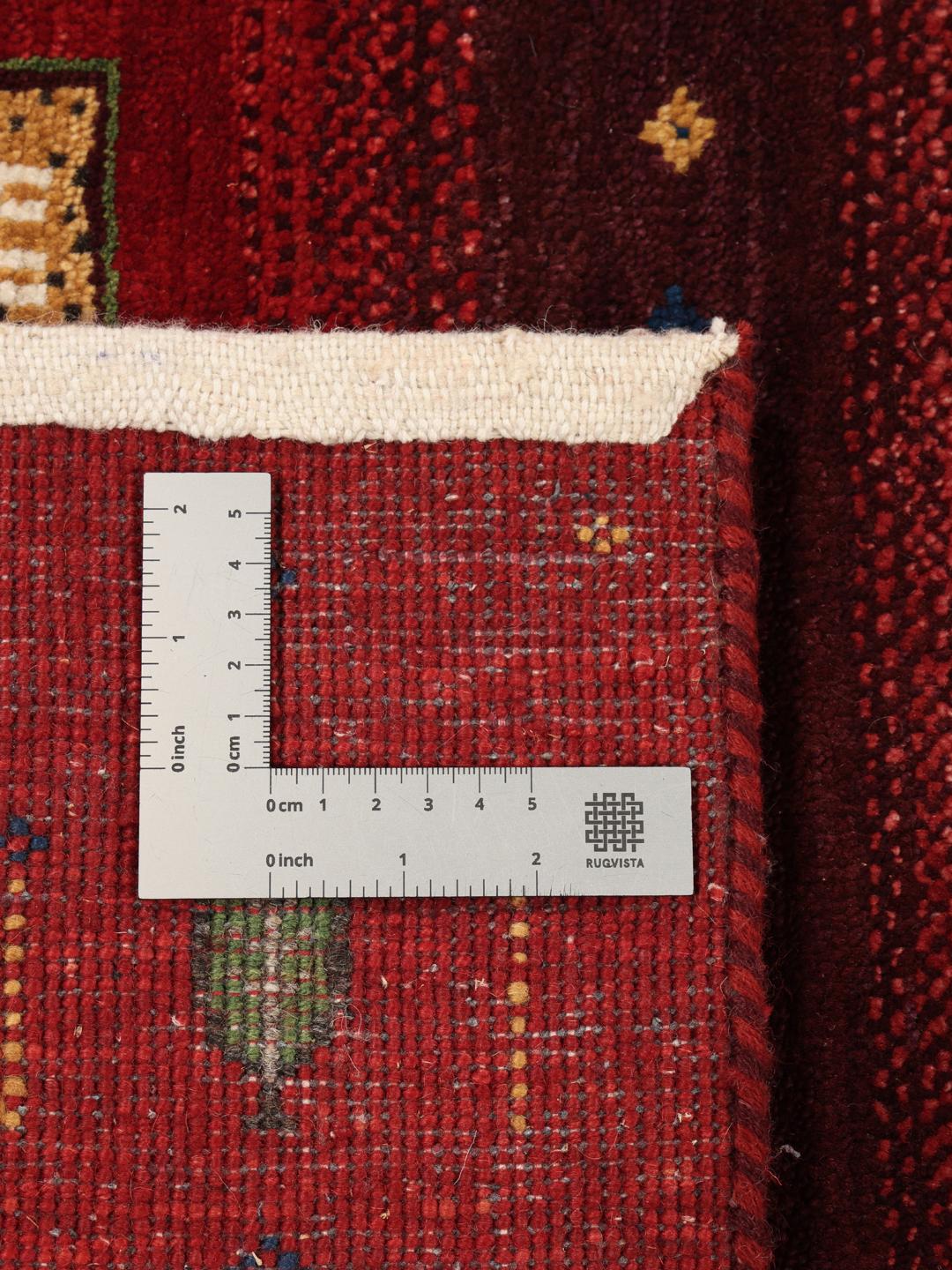
A Loribaft represents a more refined iteration of the traditional Gabbeh. While classic Gabbeh rugs are known for their thick, chunky piles and sparse, abstract designs, a Loribaft uses a much more sophisticated knotting technique. This results in a higher knot density, which allows for more intricate patterns and a smoother, more lustrous surface. It is a perfect bridge between the raw, honest beauty of tribal weaving and the precision of formal rug-making.
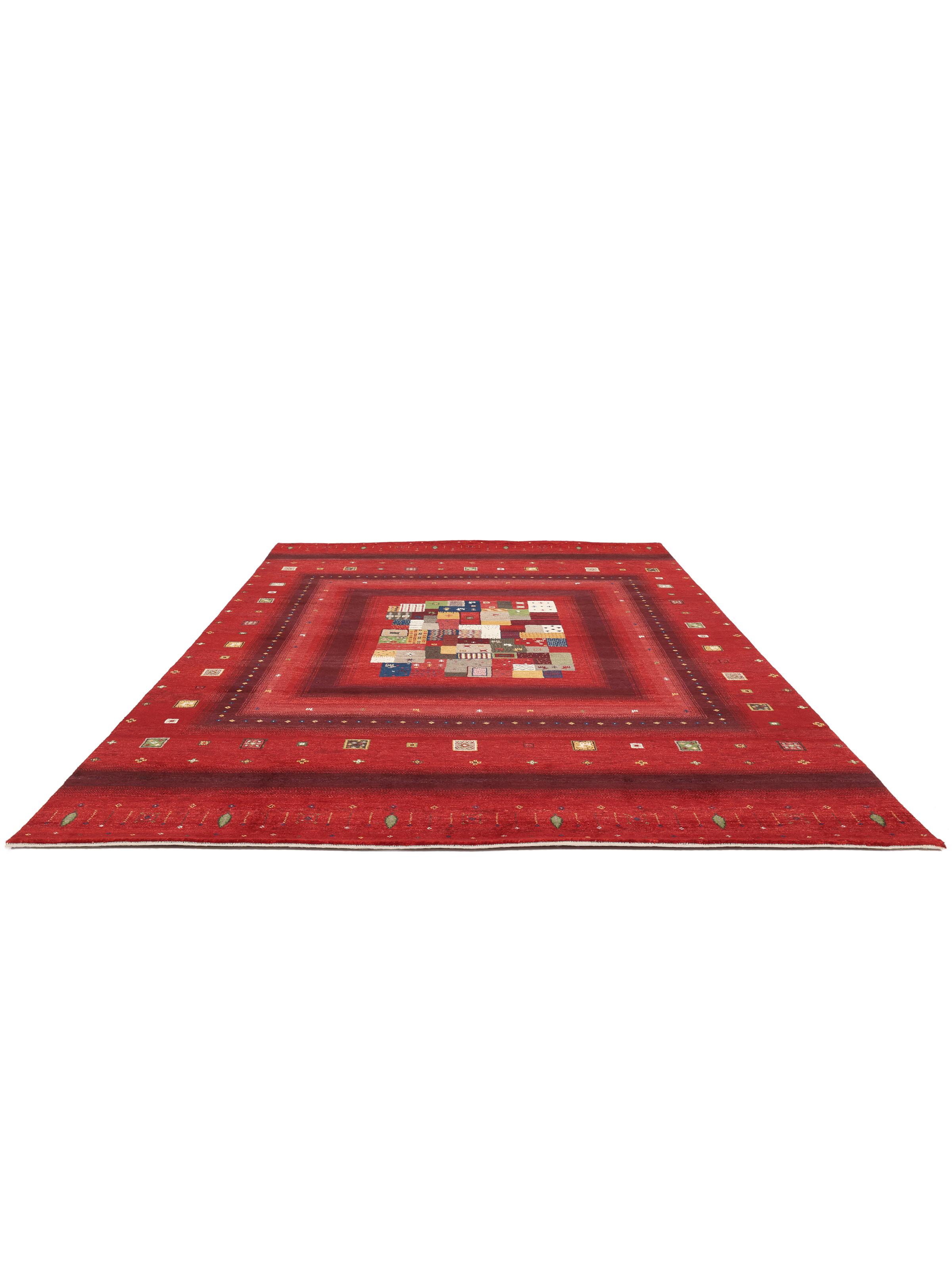
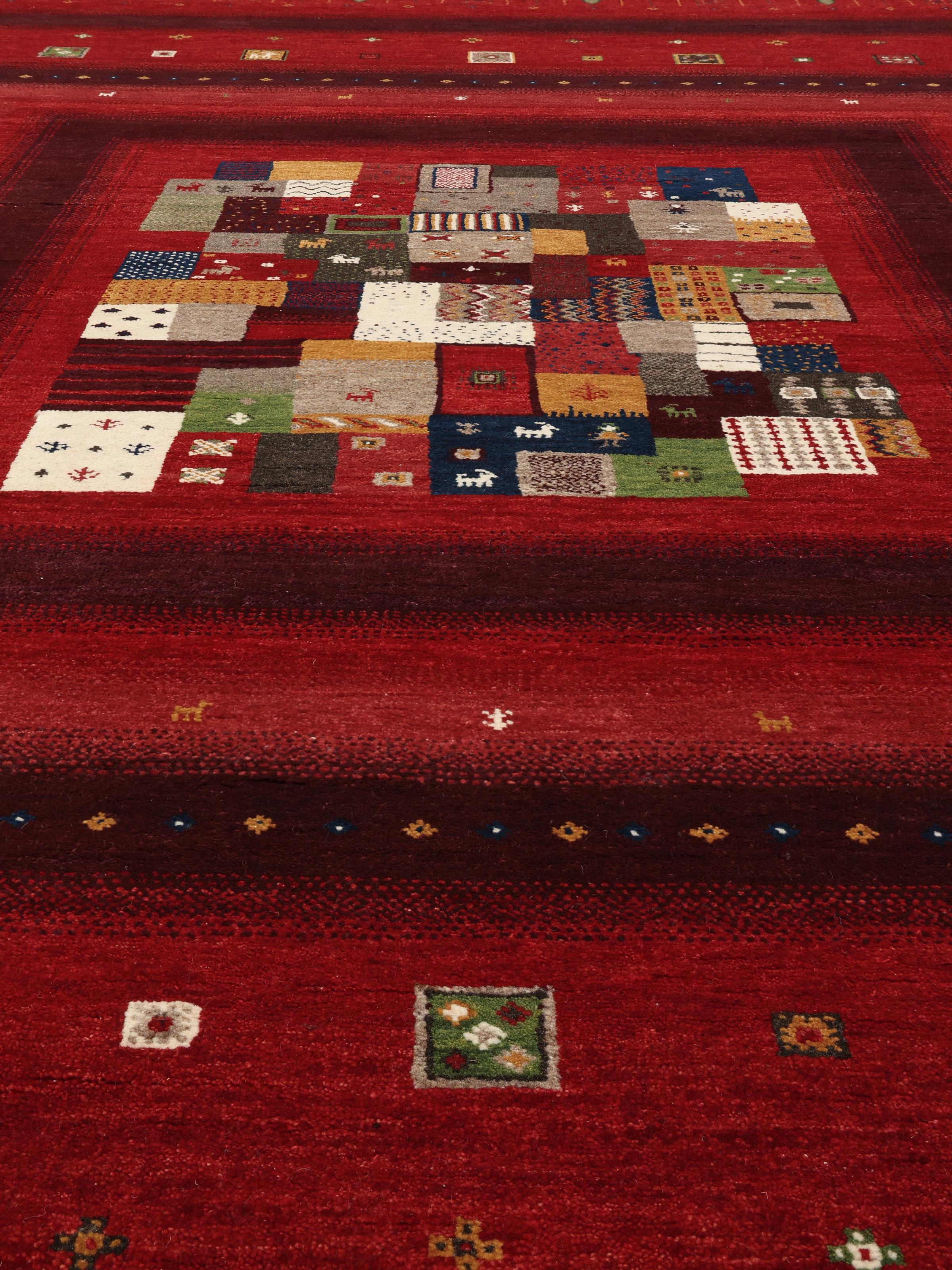
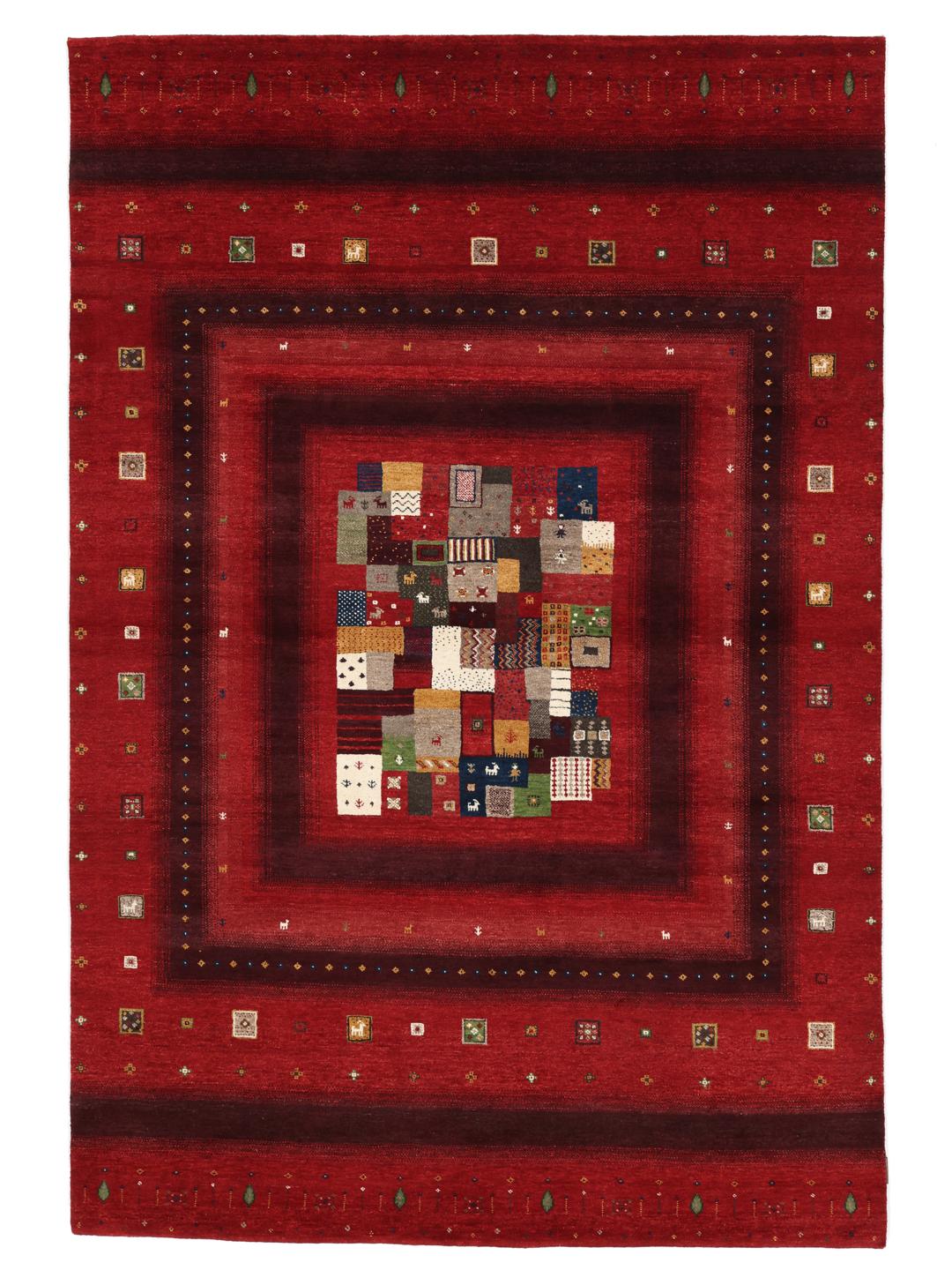
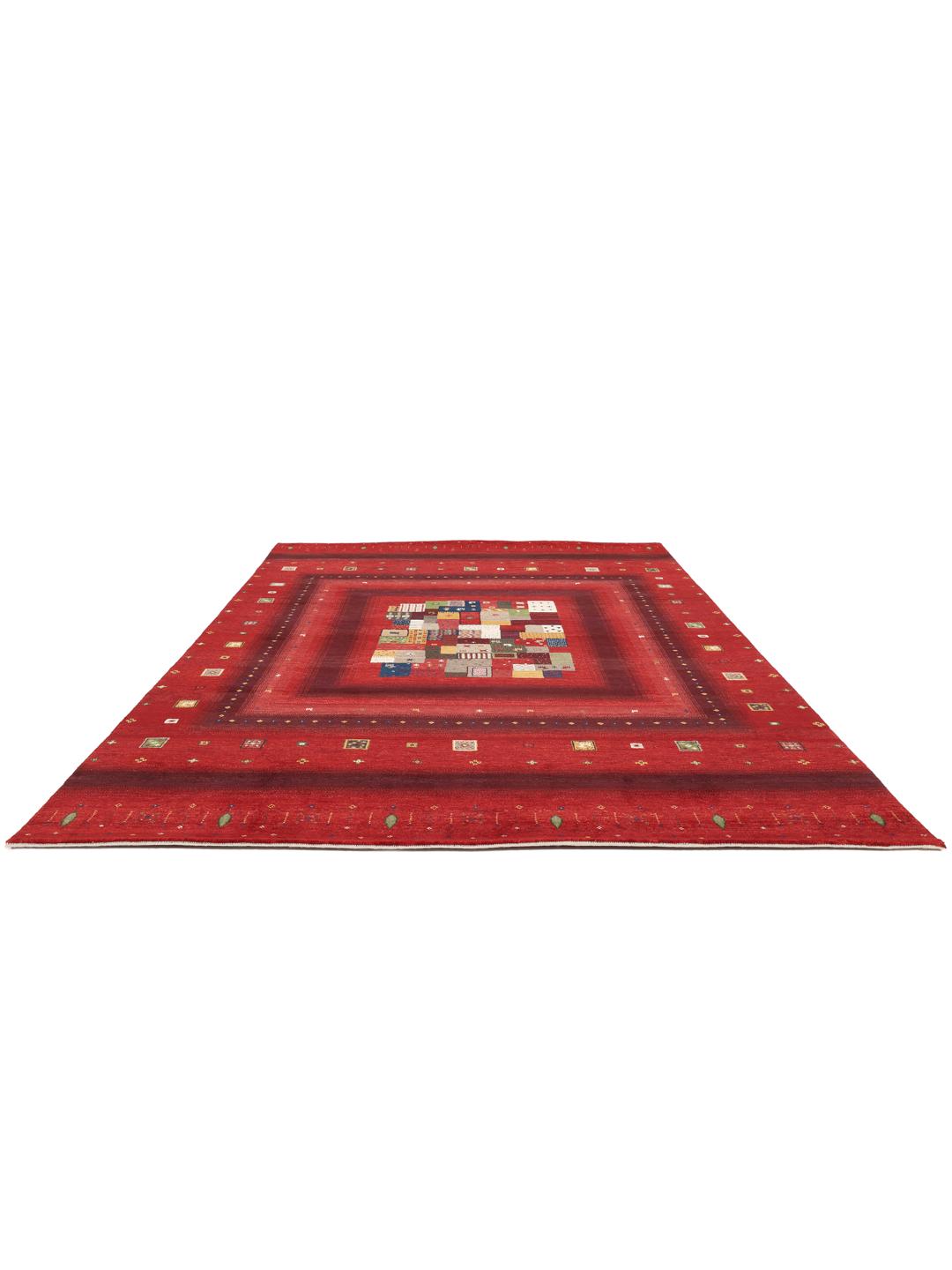
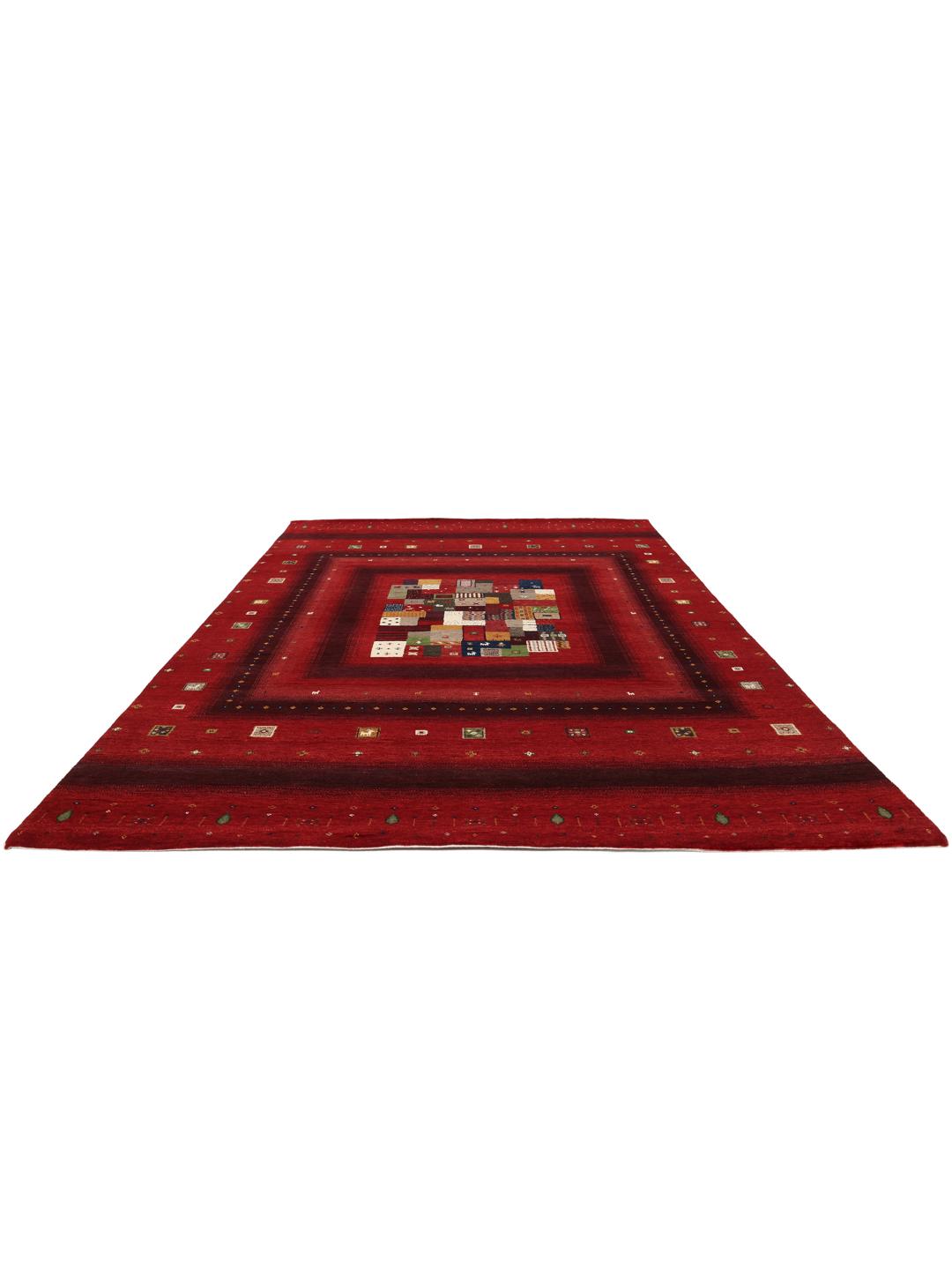
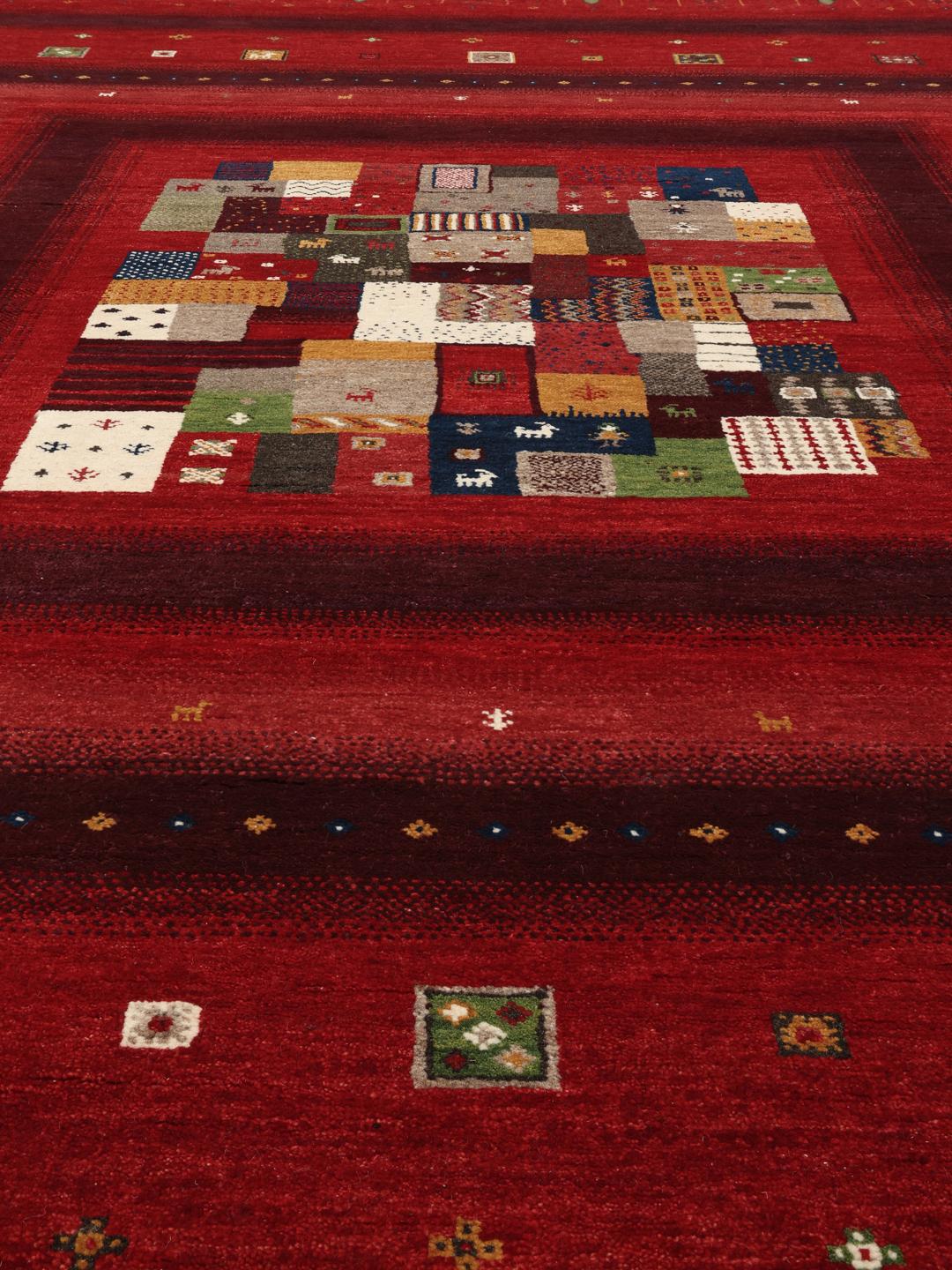
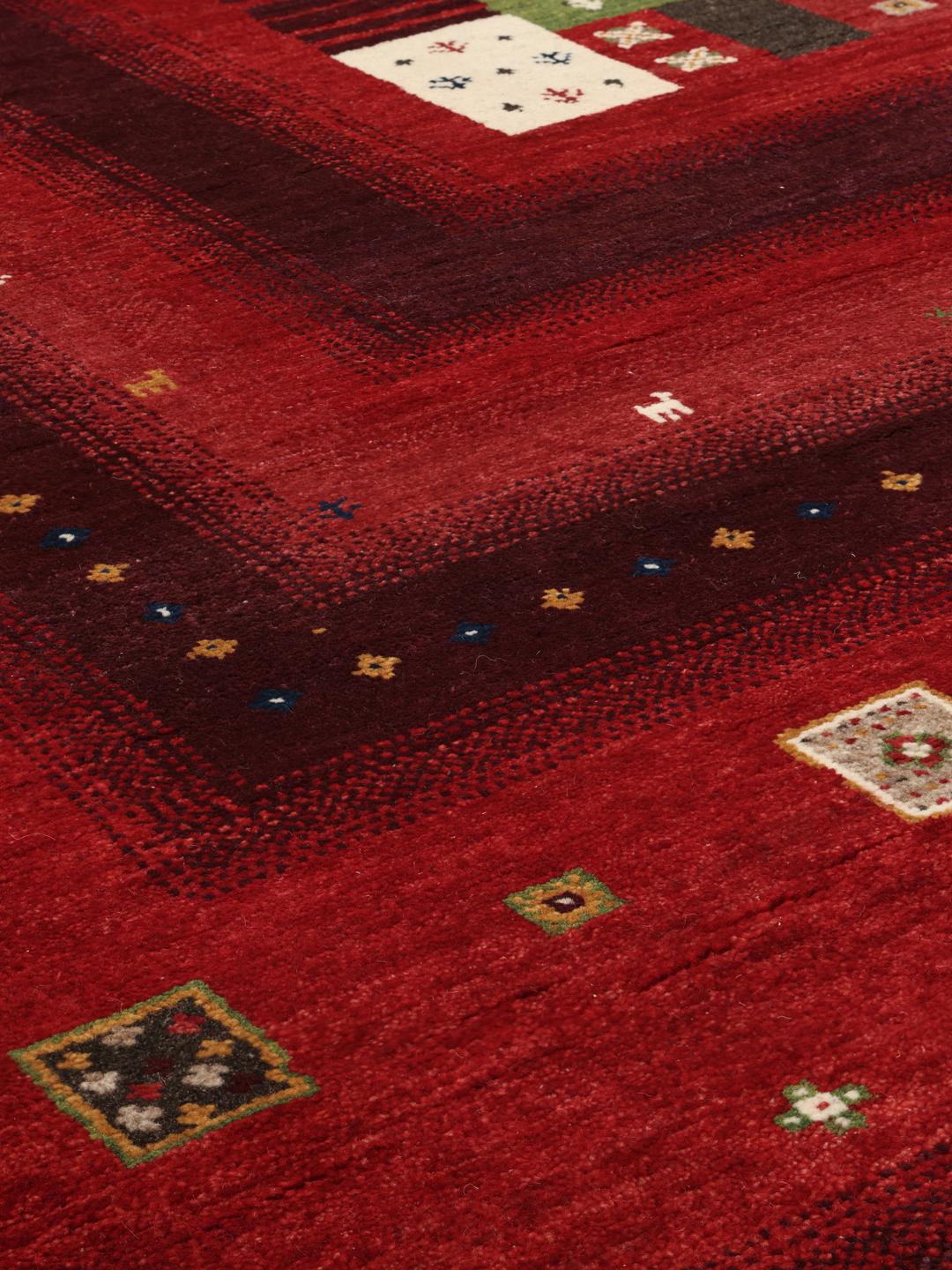
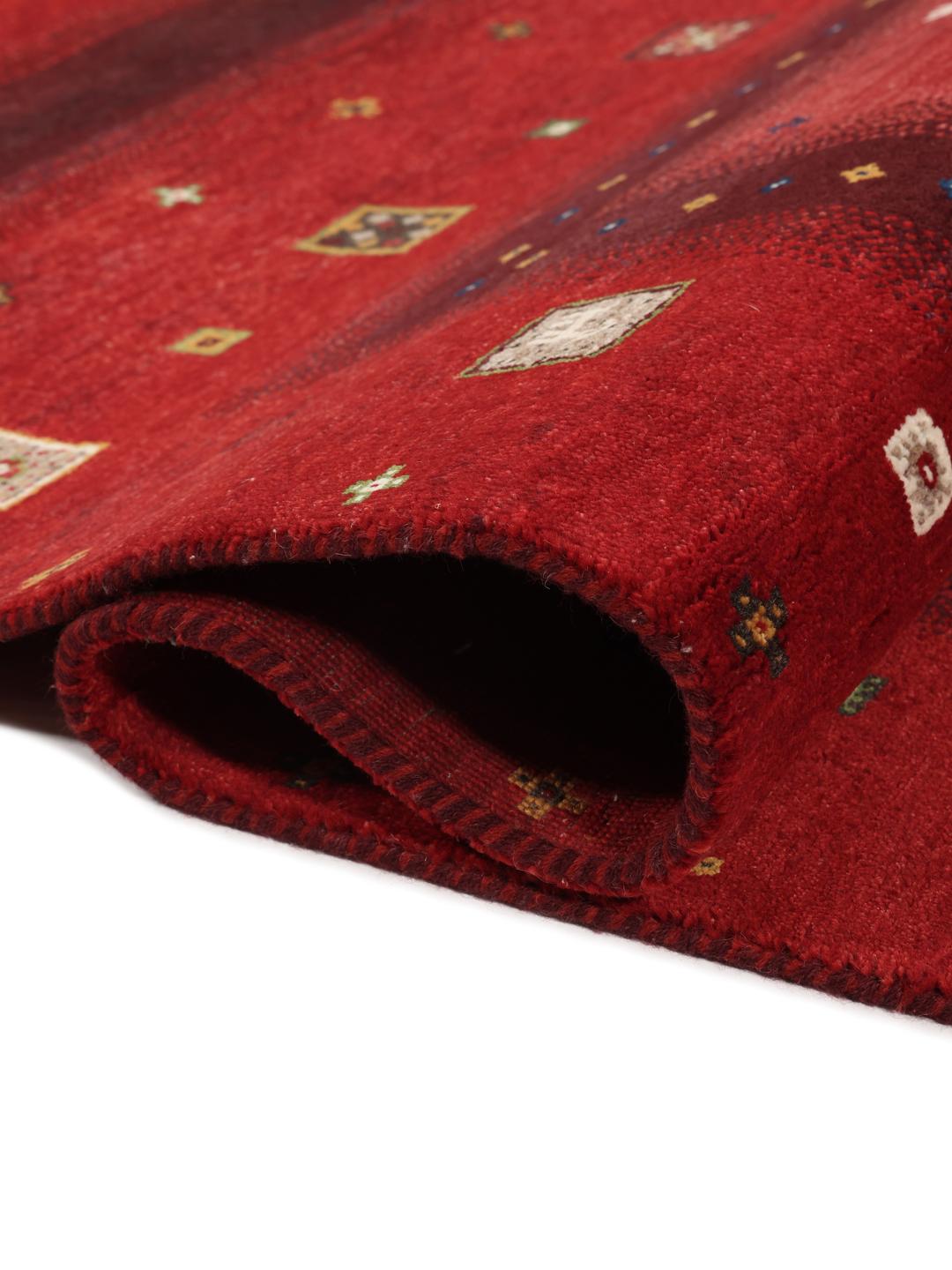
The design language of this rug is deeply symbolic, often featuring small, stylized motifs that represent the weaver’s environment, such as animals, plants, or household objects. In this particular piece, the scattered, playful motifs set against a deep red background are characteristic of the 'Kashkooli' influence, which often introduces more variety and detail than traditional, solid-field Gabbehs. The borders are kept formal to frame these spontaneous designs, balancing the rug's energy with a sense of order.
Collecting a rug from this tradition is an act of preserving a heritage of human creativity. Because these rugs are not mass-produced, they carry the personal touch and the cultural memory of the weavers who made them. Owning a Loribaft is not just about floor decor; it is about appreciating the skill required to translate ancient design motifs into a modern, usable form, ensuring that this craft continues to thrive in contemporary homes.