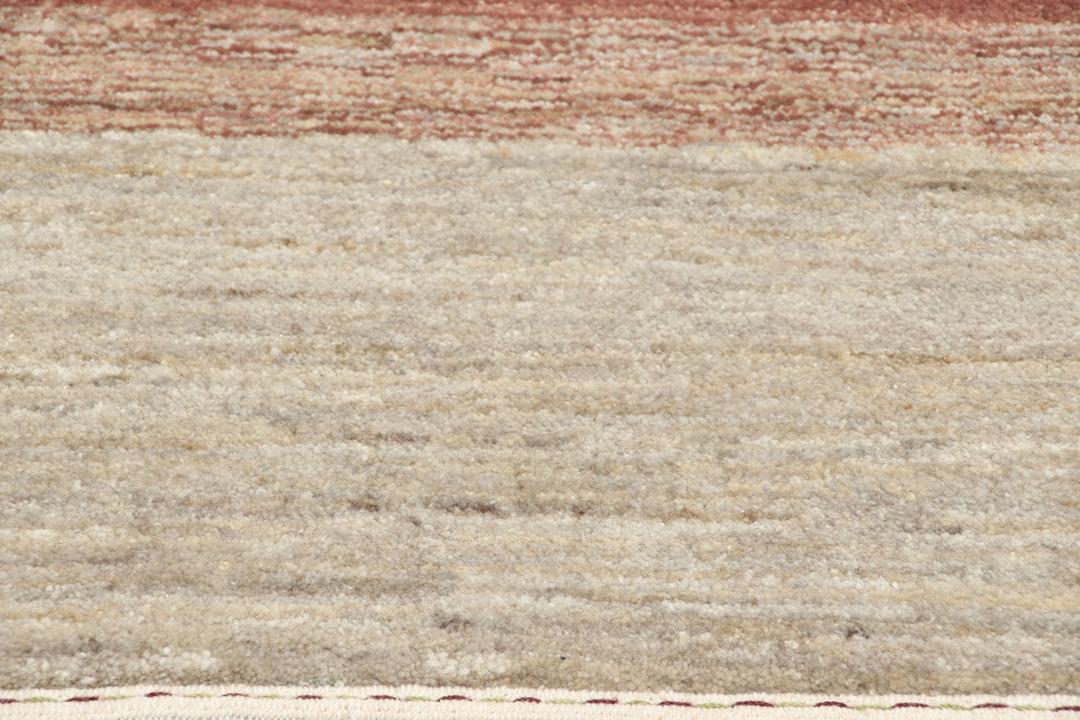
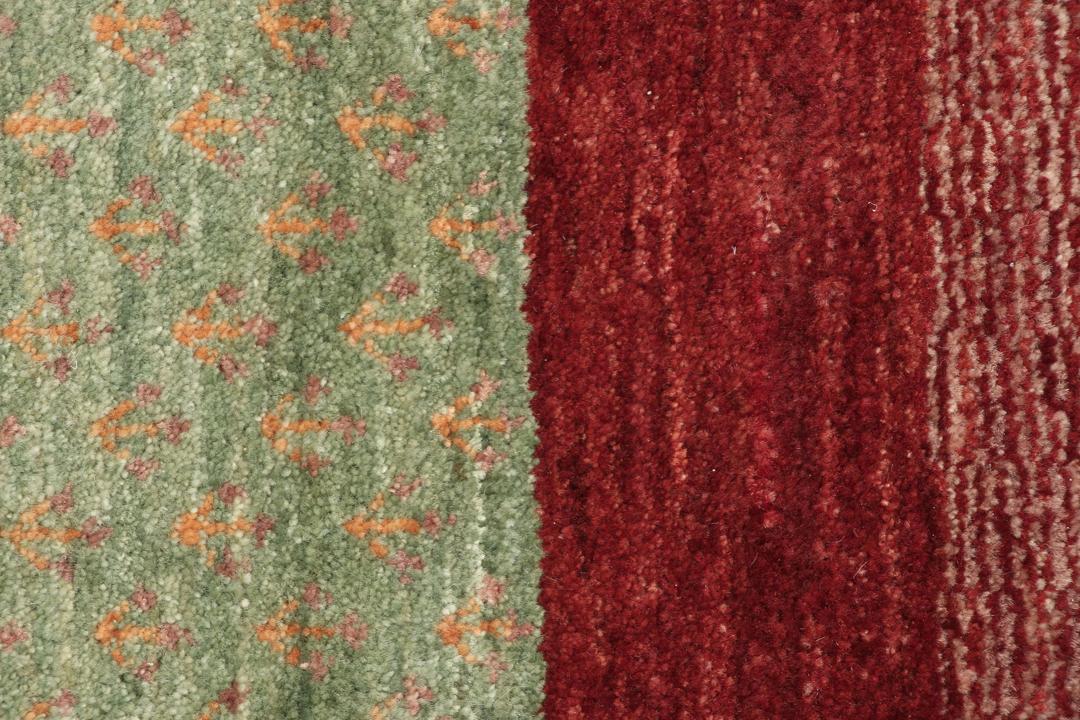
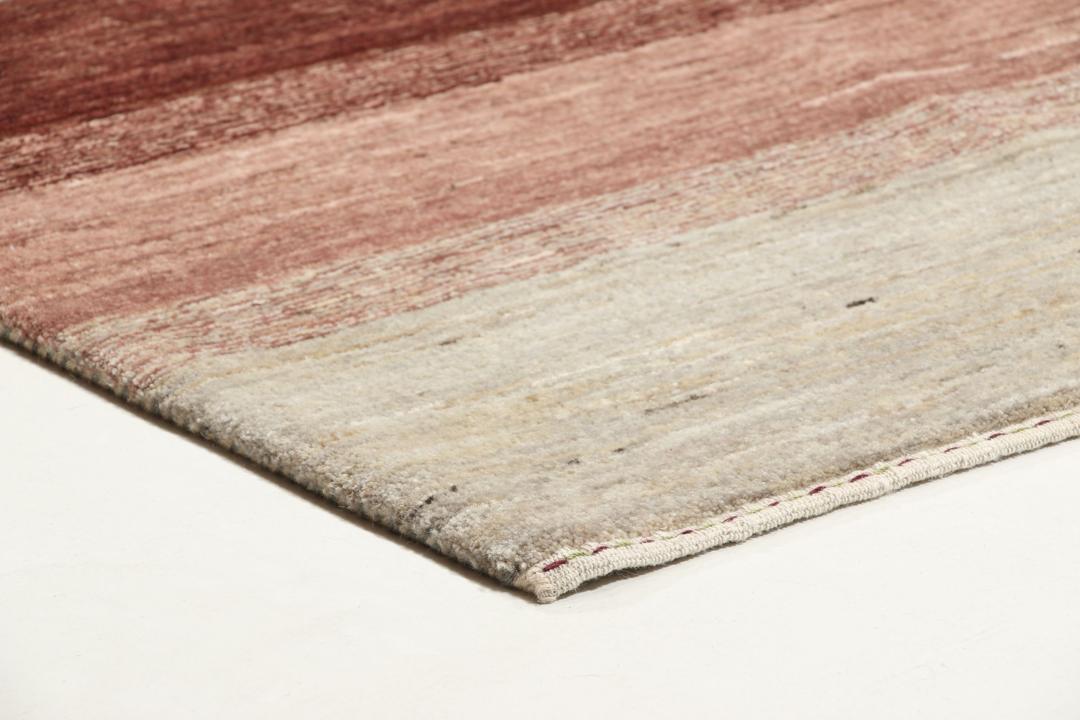
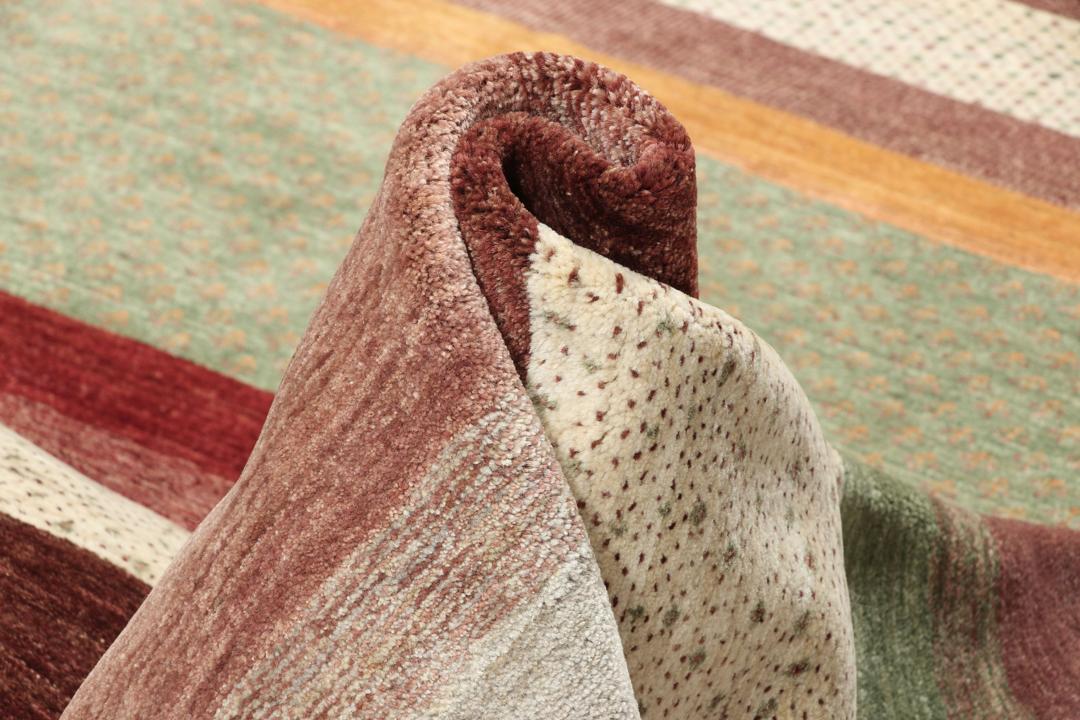
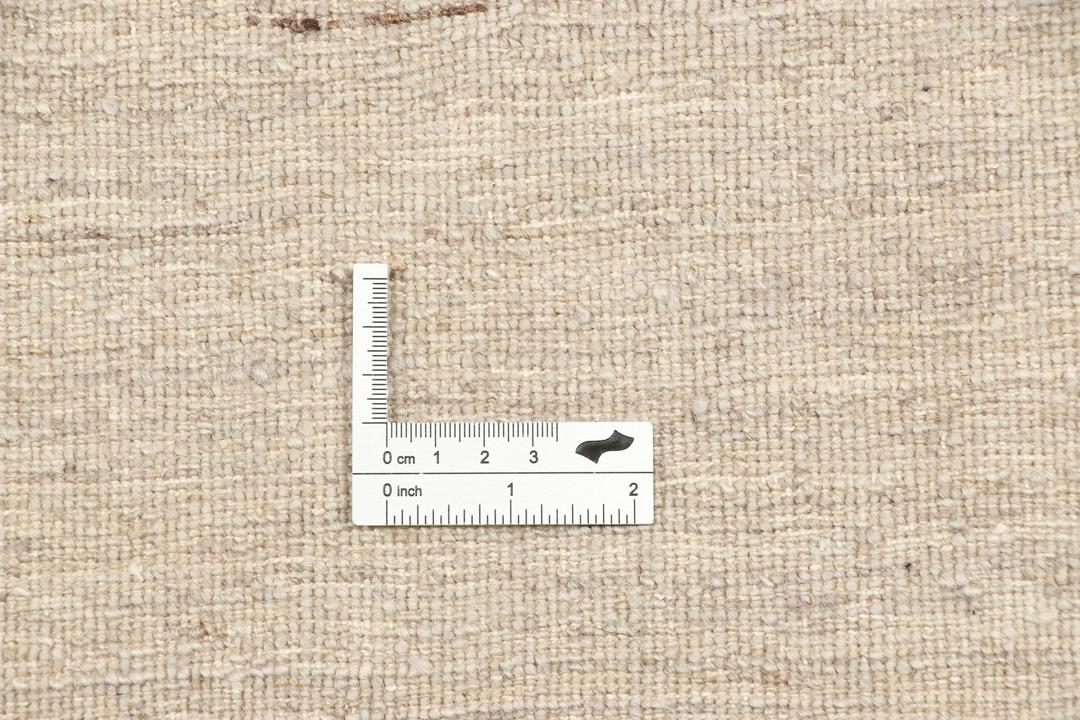
The Gabbeh tradition finds its roots in the nomadic cultures of the Middle East, where weavers created these rugs primarily for personal use and protection against the harsh elements. Unlike more formal, city-woven carpets, Gabbehs were traditionally made with a focus on simplicity, utility, and the personal expression of the weaver's own world, often featuring bold, abstract designs inspired by their surroundings.
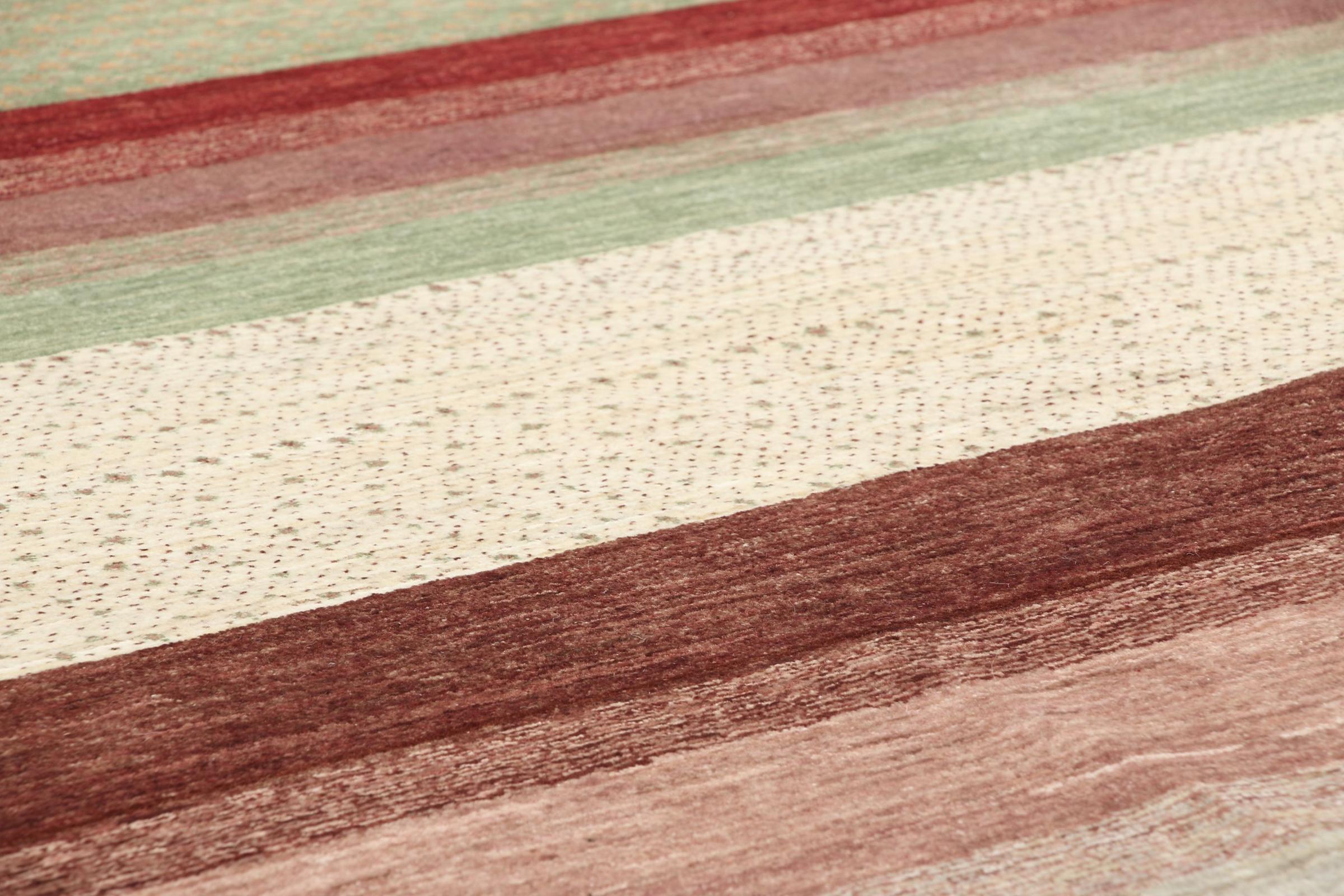
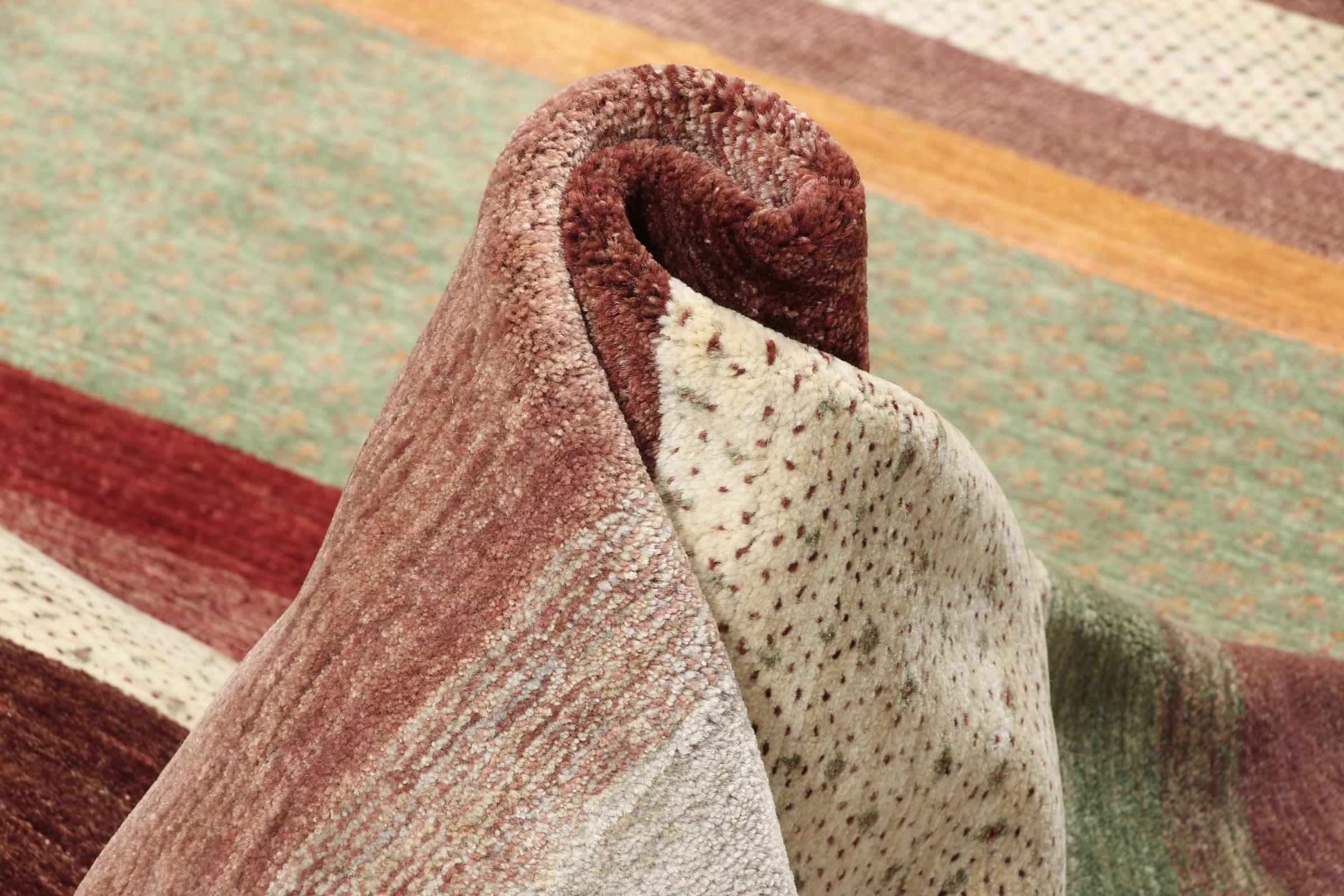
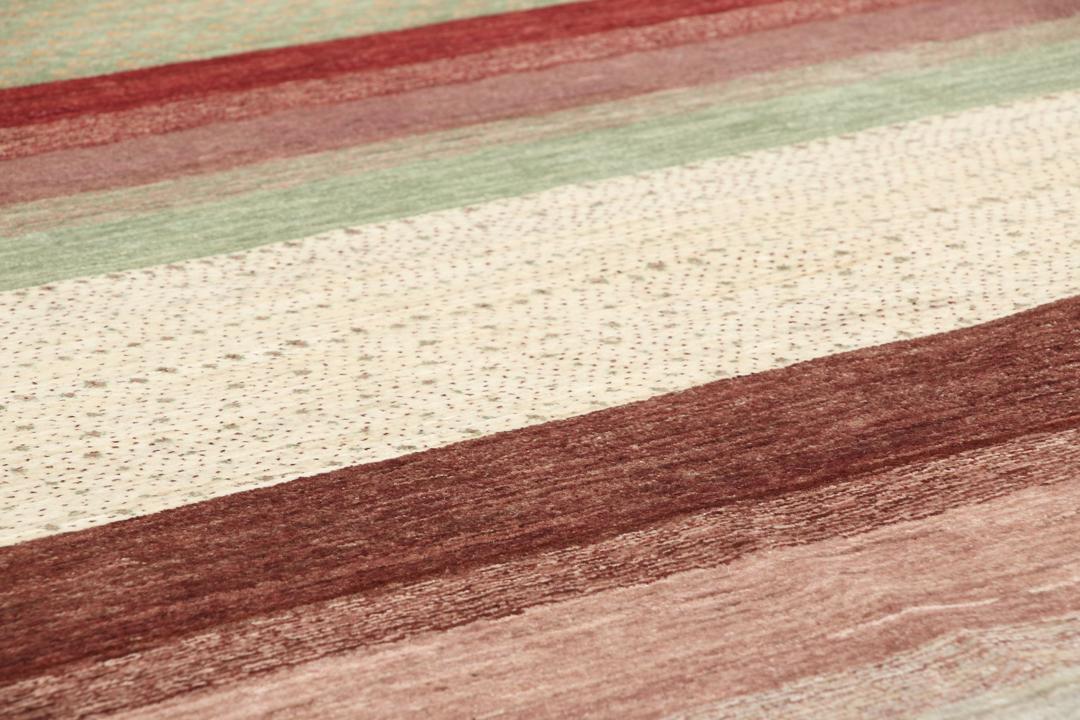
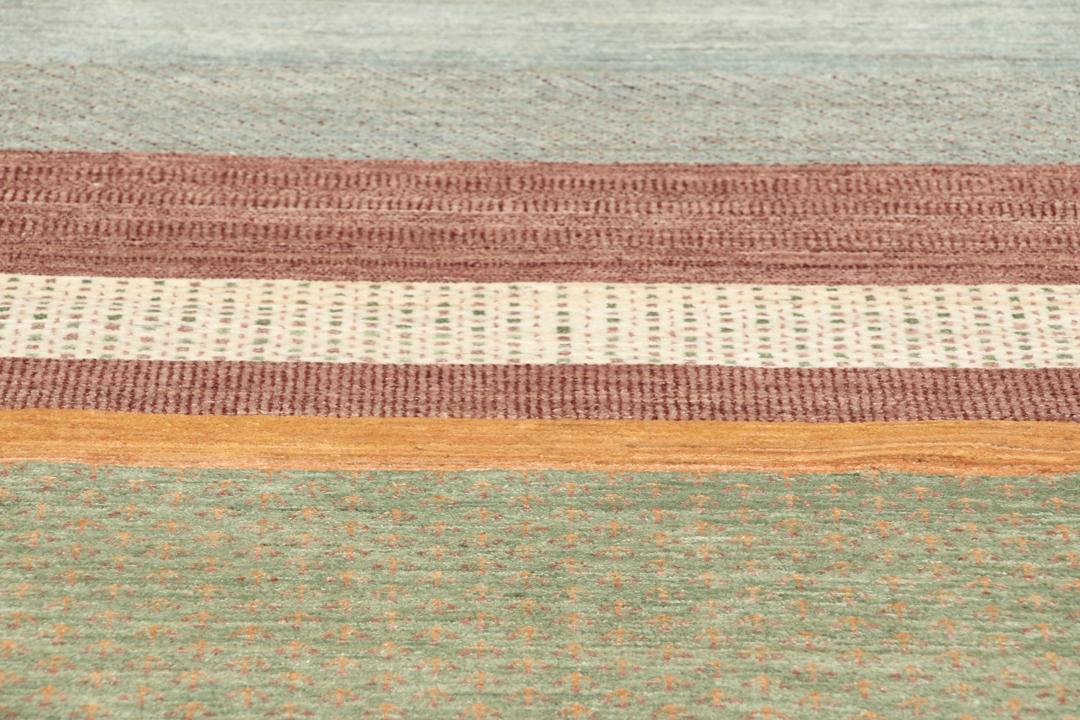
The term 'Loribaft' refers to a specific, elevated style of Gabbeh weaving that is characterised by a higher knot density and a more refined finish. Whilst traditional Gabbehs are known for their thicker, looser pile, the Loribaft approach introduces a finer quality that allows for more detailed patterns and a smoother, more elegant surface, bridging the gap between rustic charm and sophisticated artistry.
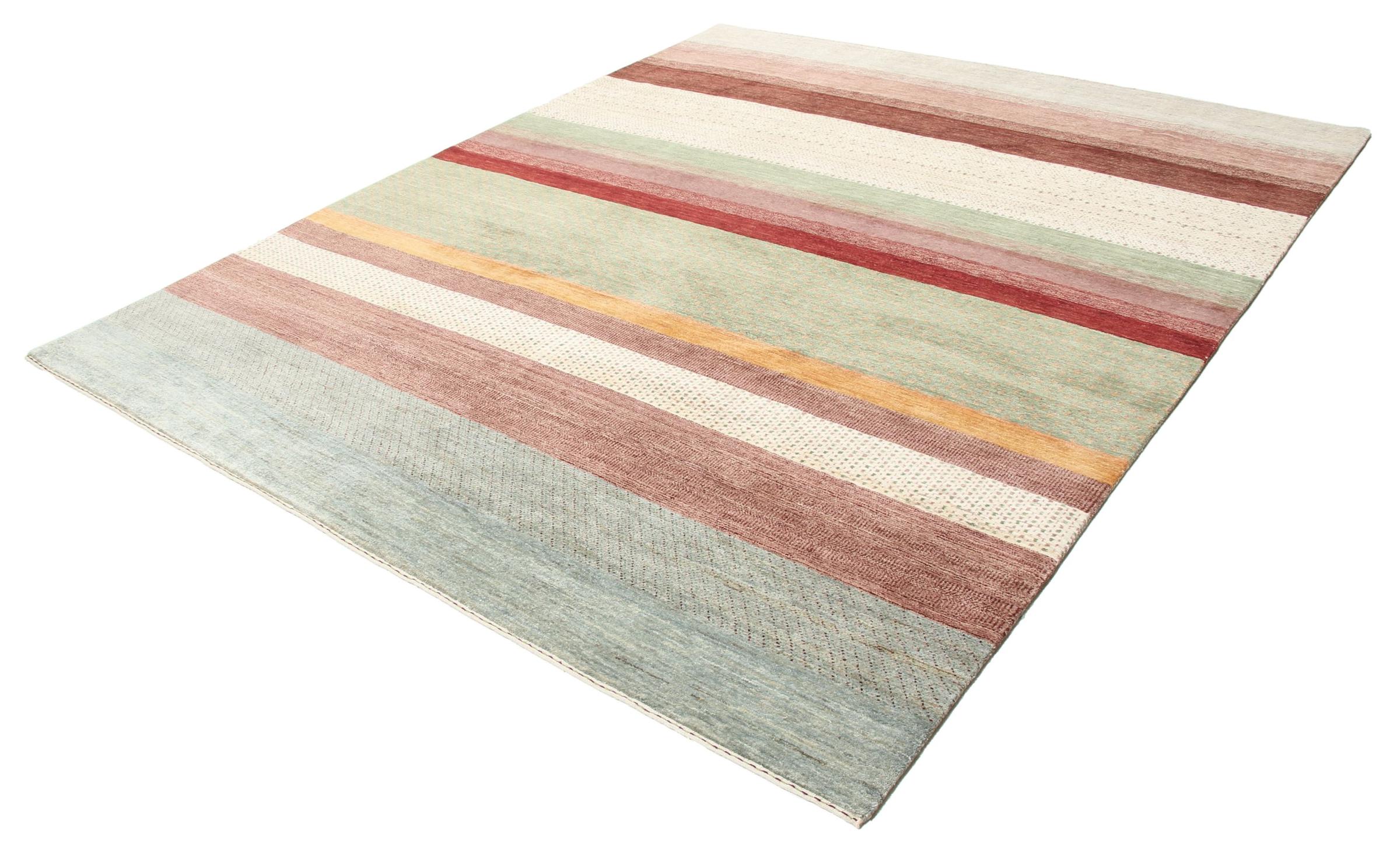
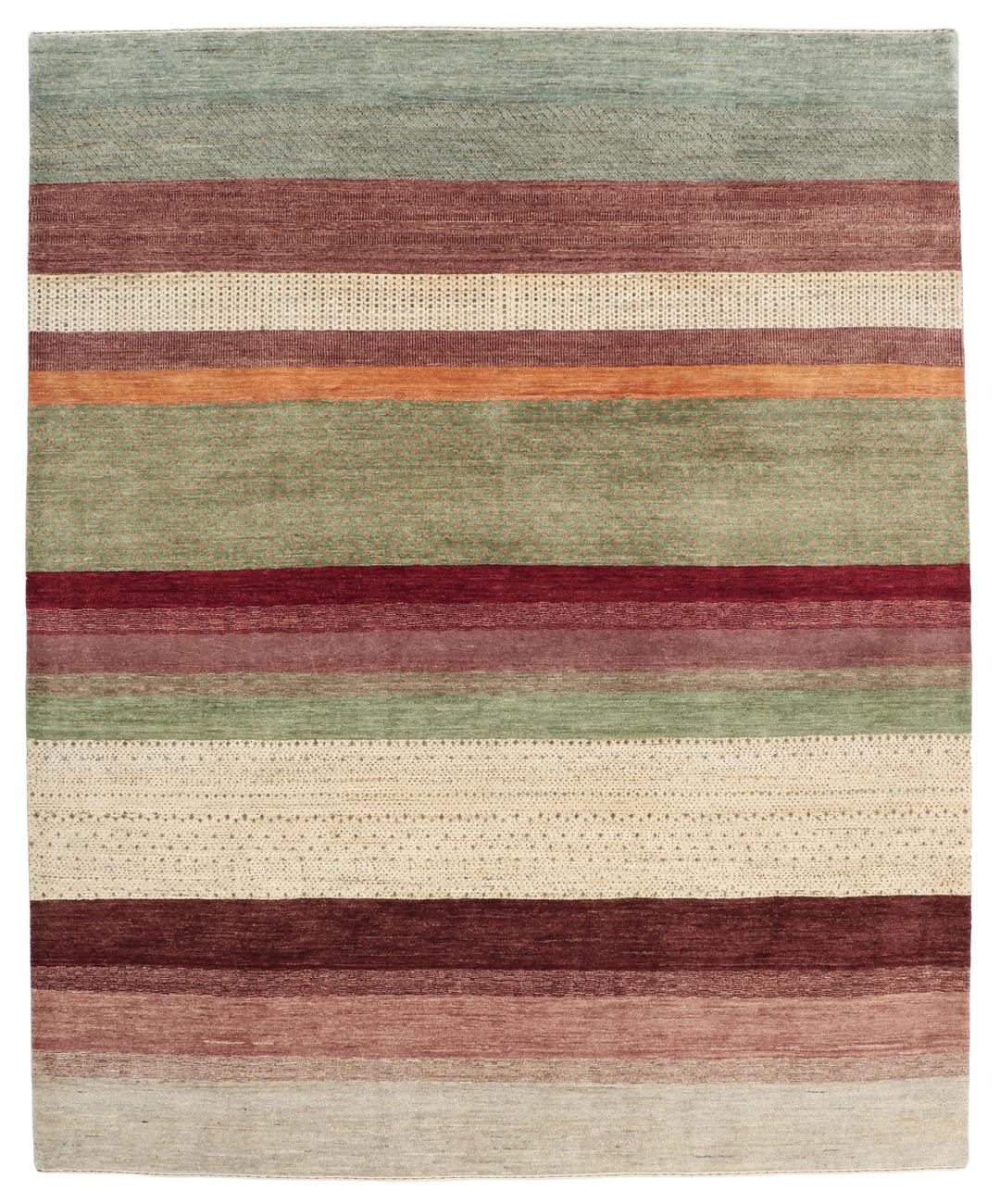
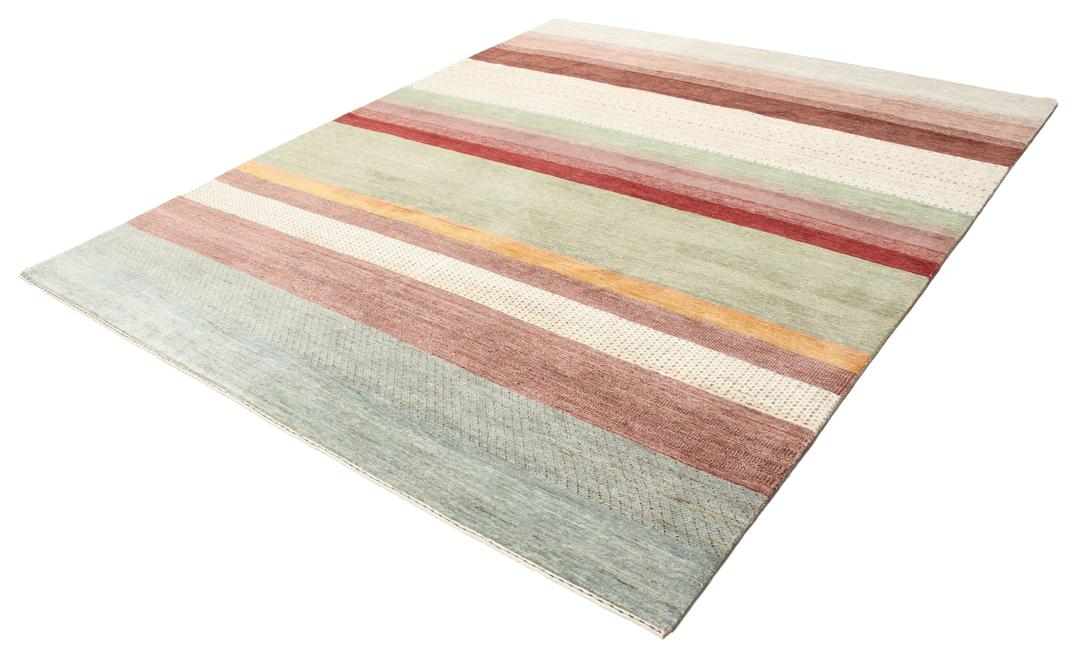
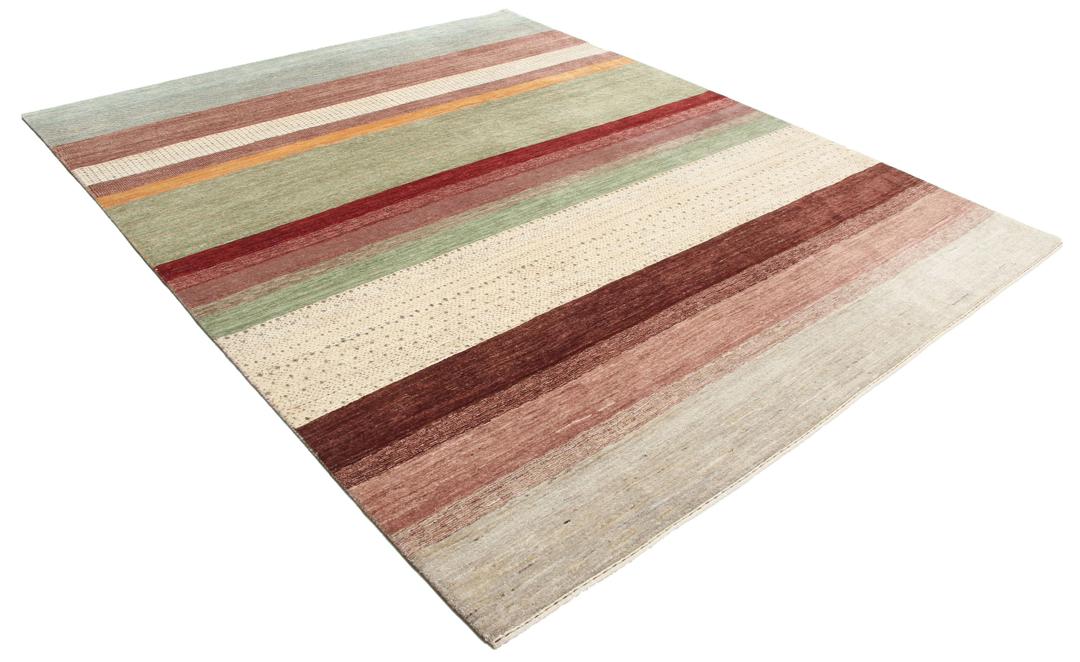
Visually, these rugs are defined by their use of saturated, natural dyes and symbolic geometric motifs that often represent elements of nature, tribal identity, or local folklore. The striped layout seen here is a classic variation, utilising colour to create a sense of movement and depth. The choice of colours often follows regional traditions, with earthy tones and vibrant accents reflecting the landscapes where these rugs were historically produced.
Owning a piece from this tradition is an act of preserving a rich cultural heritage that spans generations. It signifies an appreciation for the human element in home decor, as every slight variation in colour or pattern tells the story of the artisan who made it. These rugs are highly valued by collectors for their authenticity, the warmth they bring to a room, and the enduring skill required to produce them.