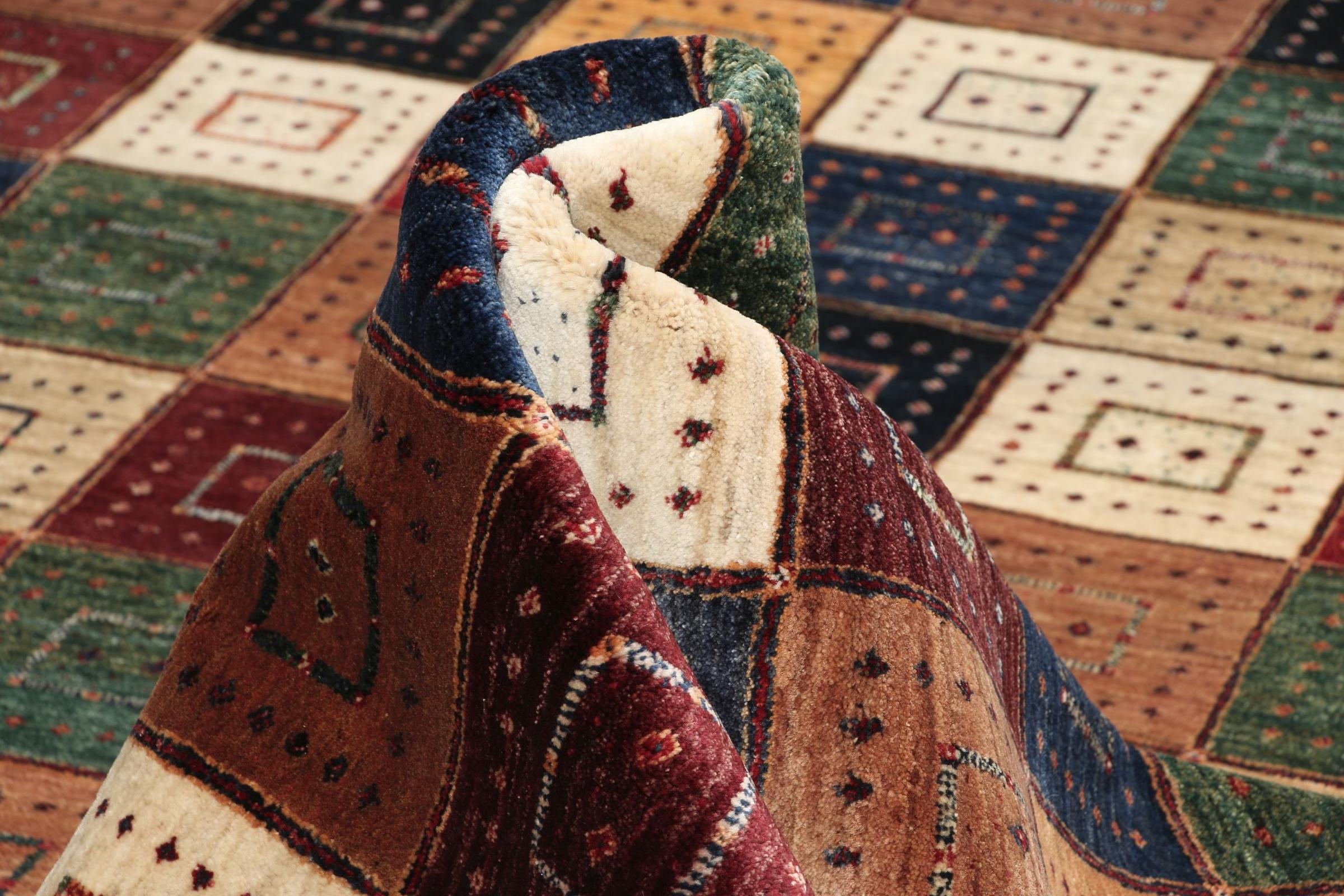
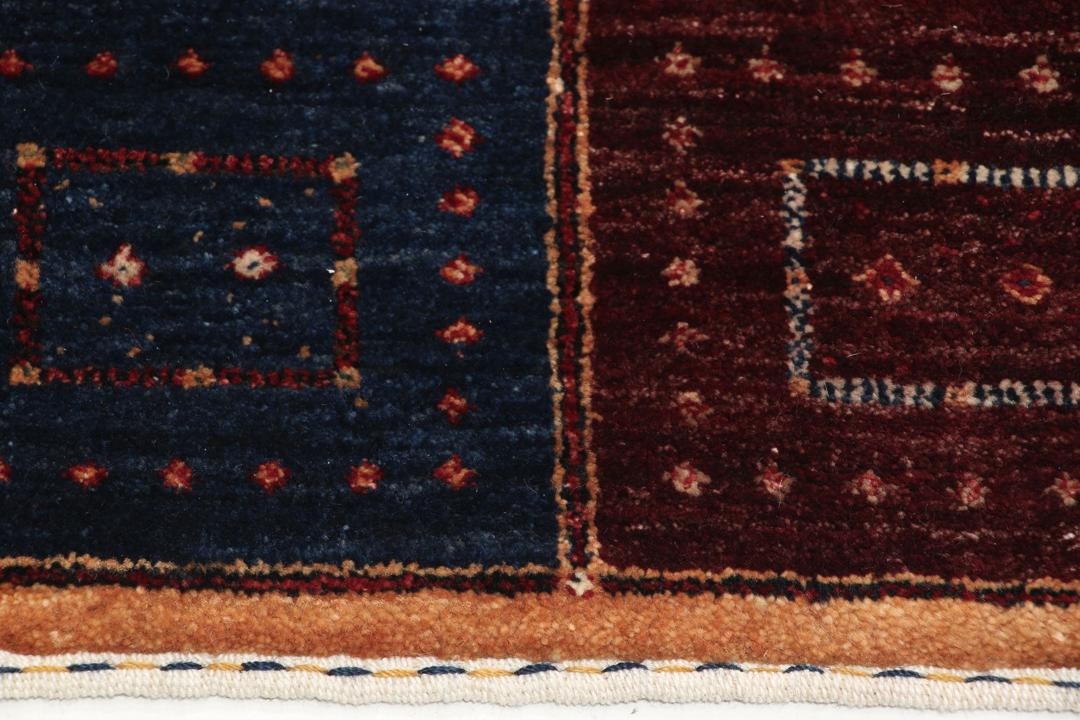
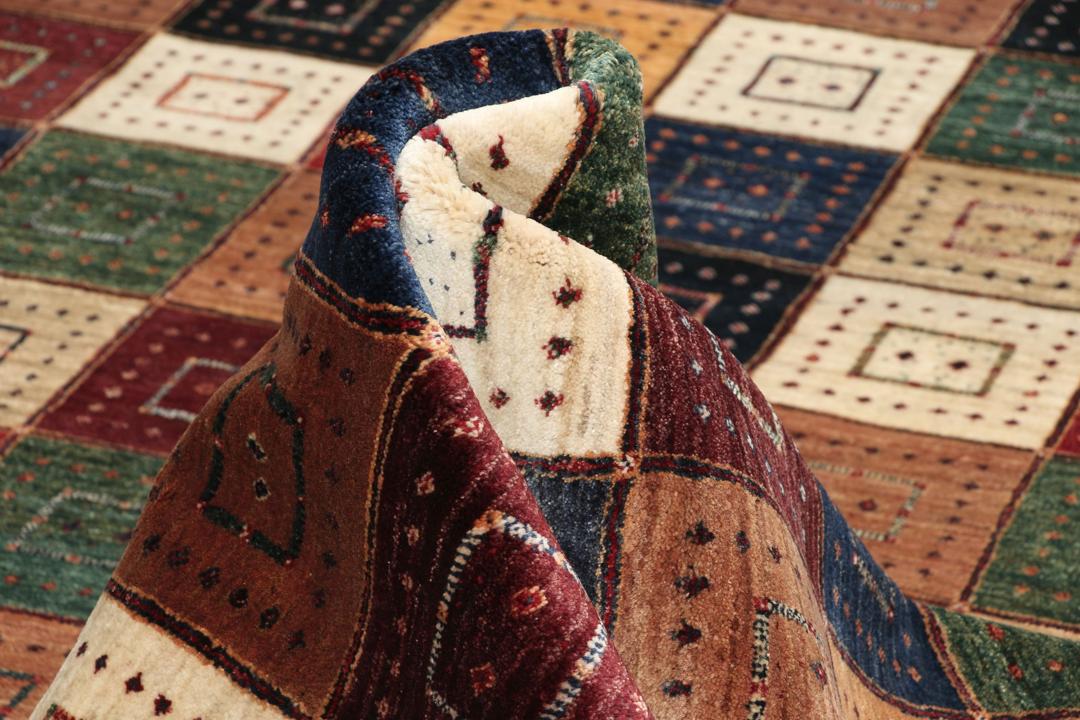
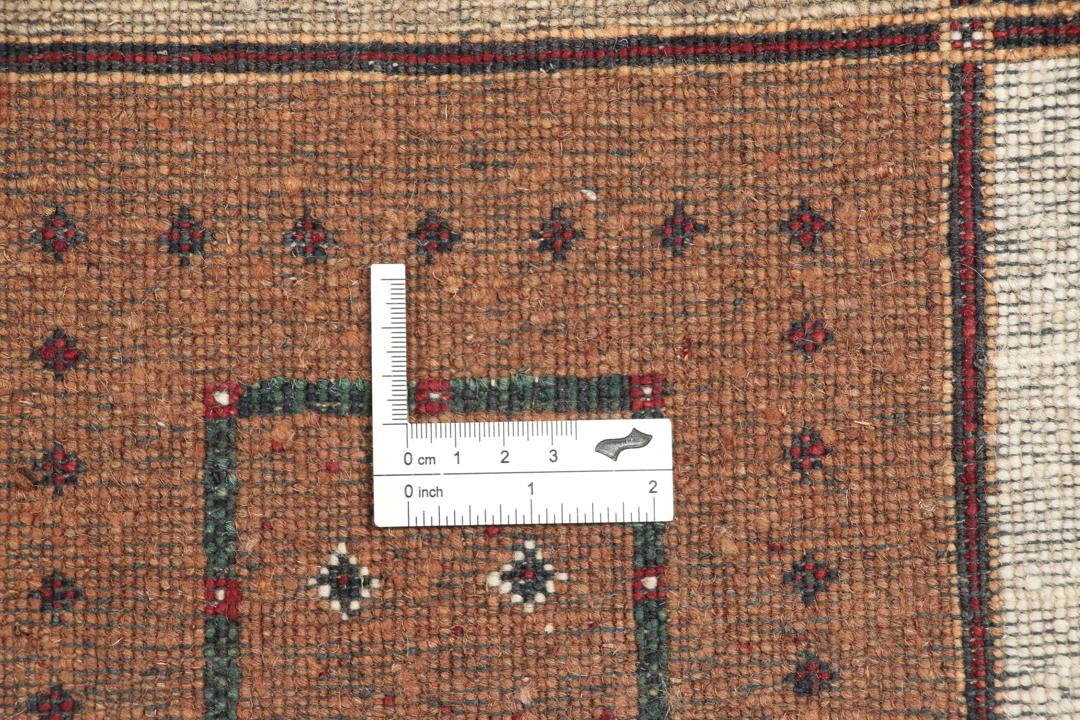
Gabbeh rugs are rooted in the nomadic traditions of the Middle East, originally created by tribal weavers for their own practical use. These rugs were designed to be thick, warm, and durable to protect against cold desert floors. Over generations, the style has evolved, and today, the term Loribaft refers to a specific, finer grade of Gabbeh that incorporates more intricate designs and a higher density of knots.
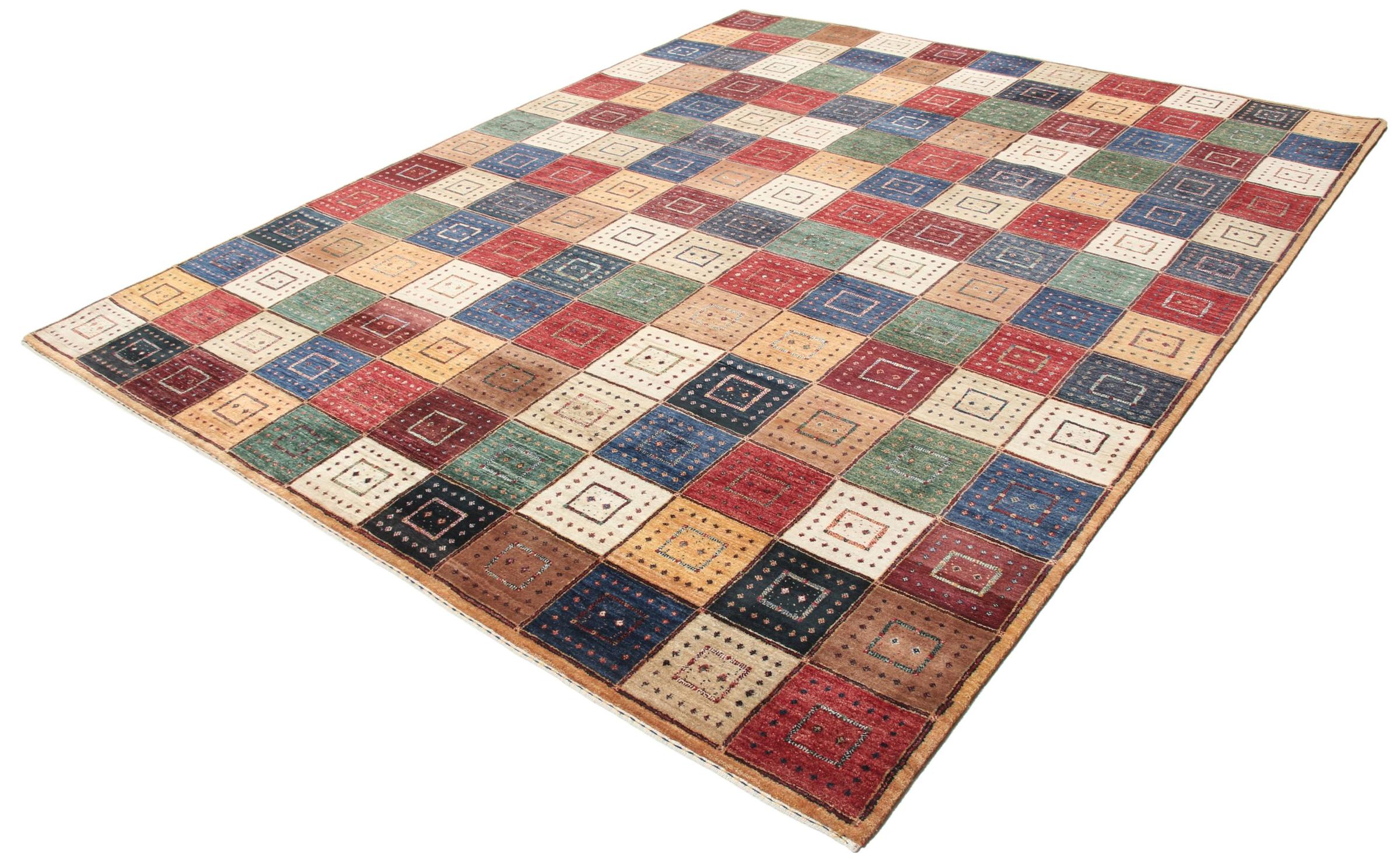
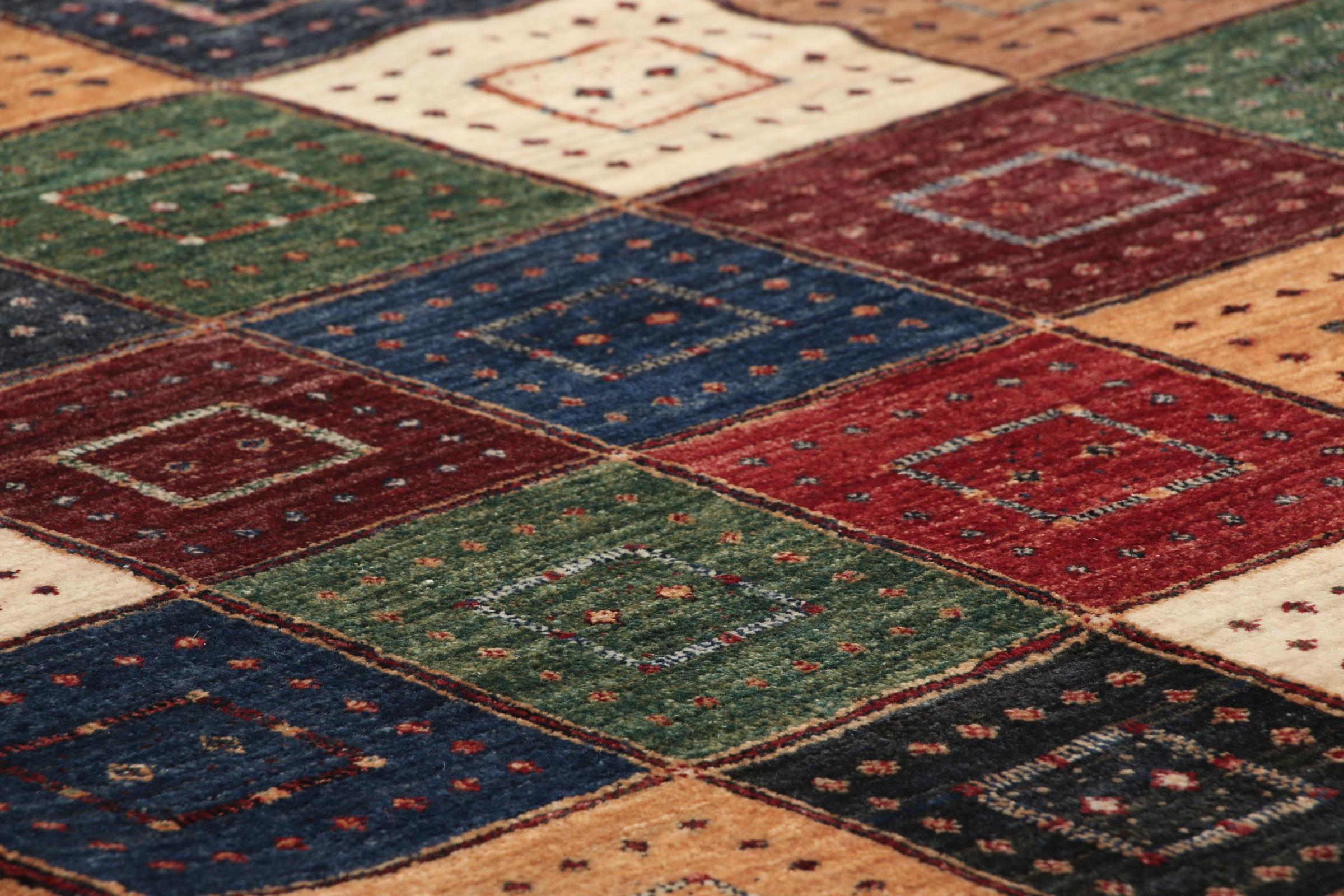
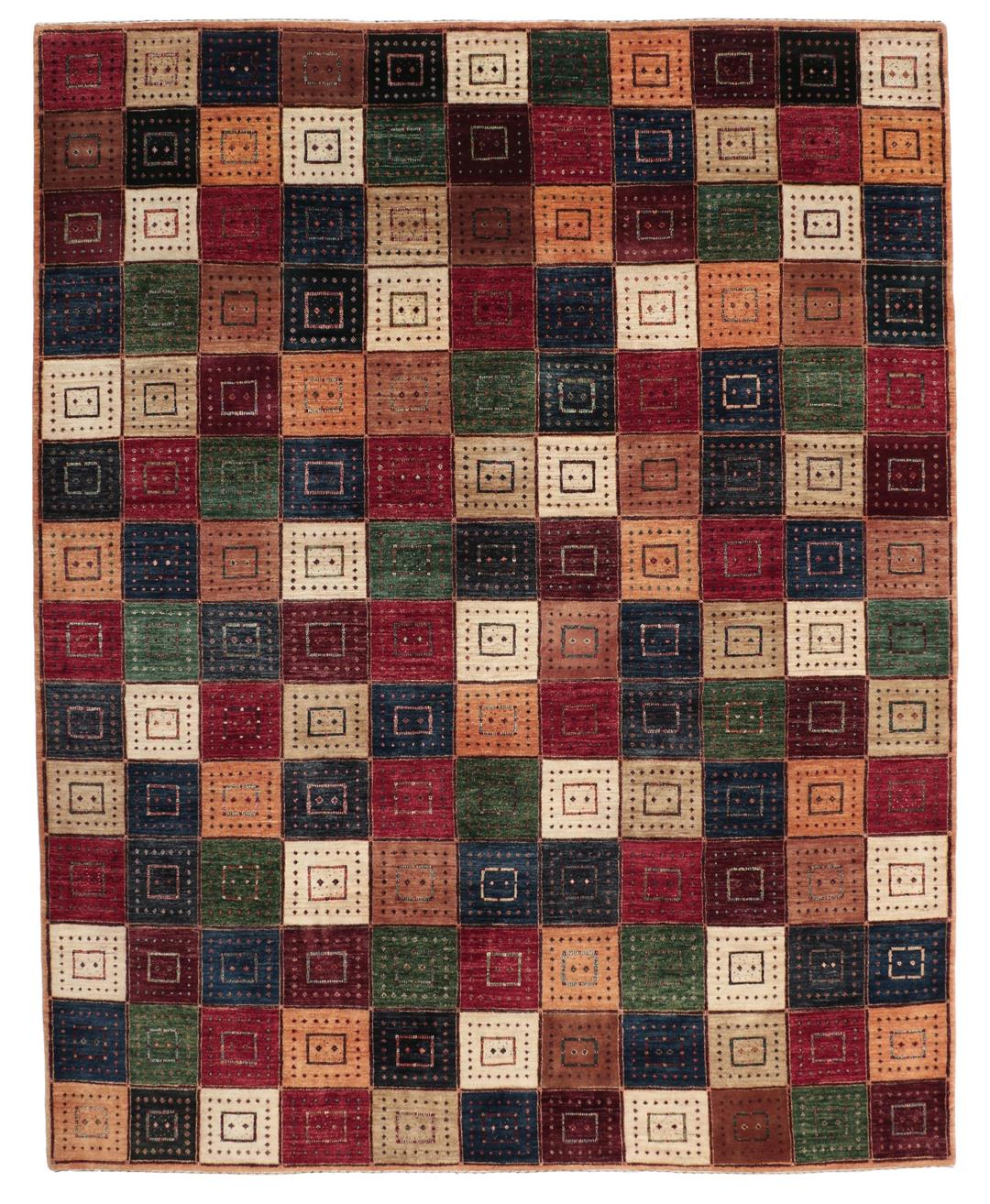
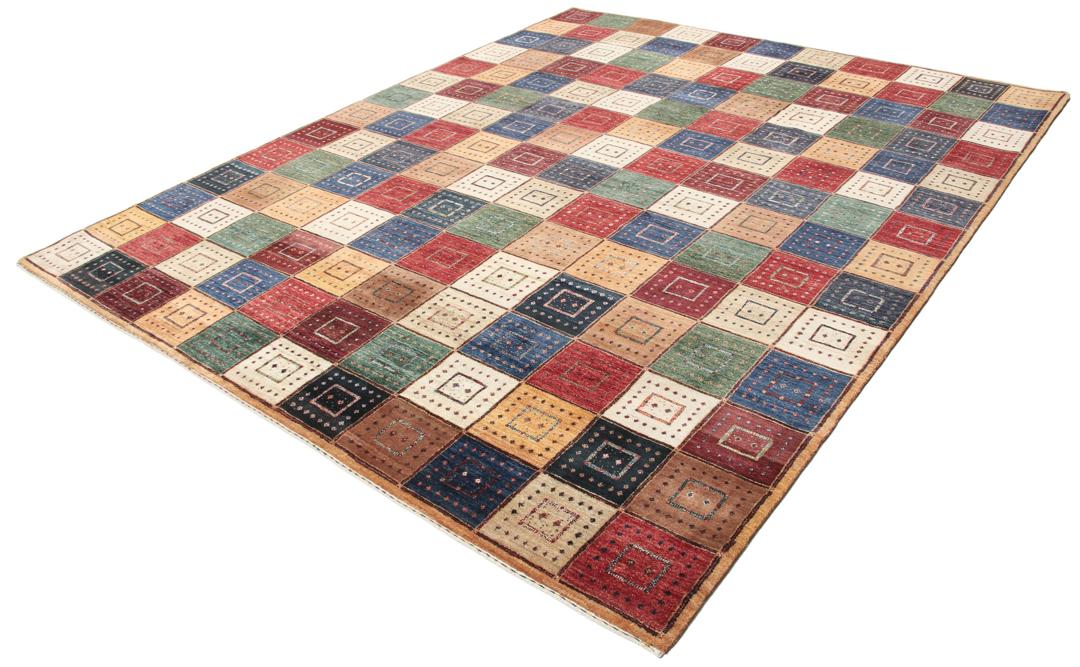
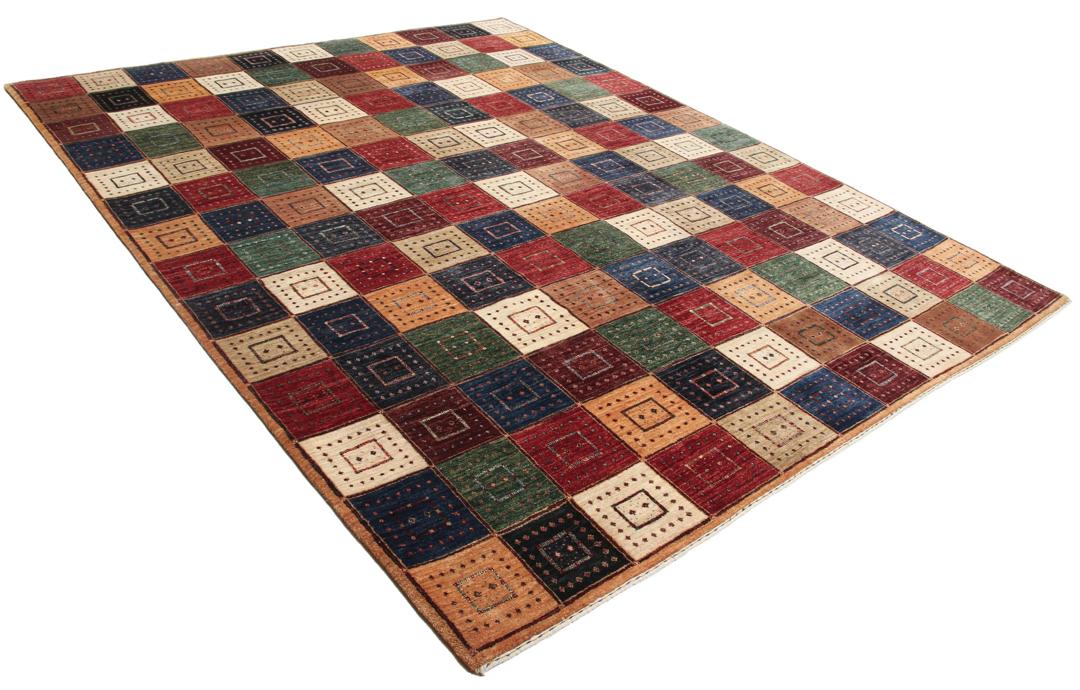
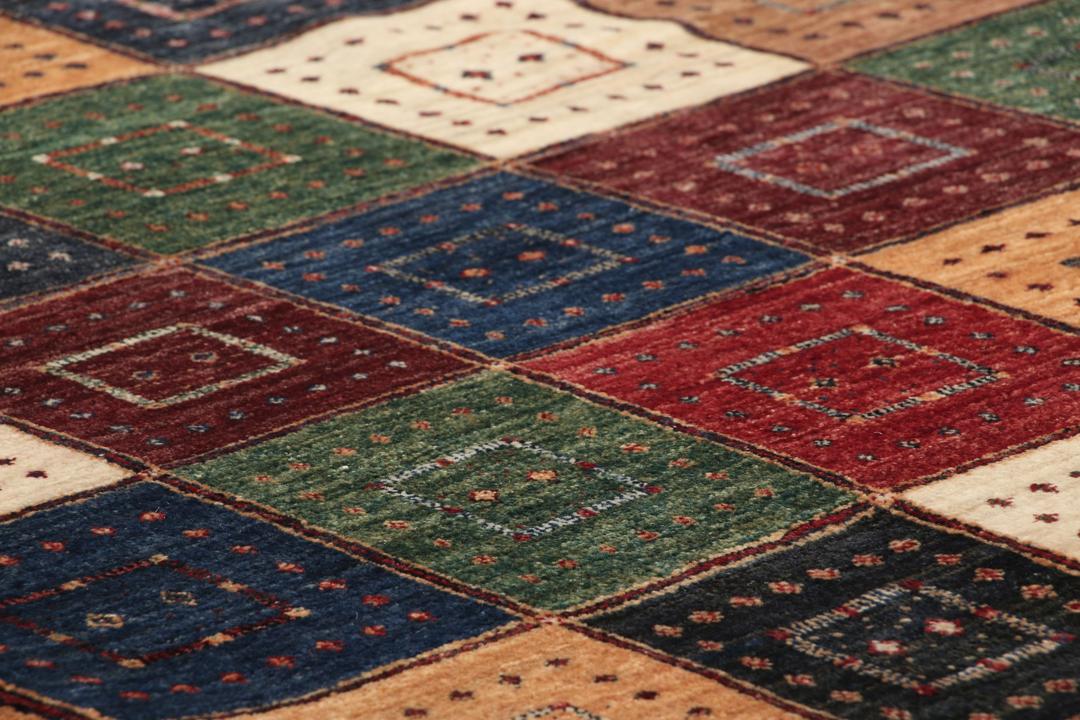
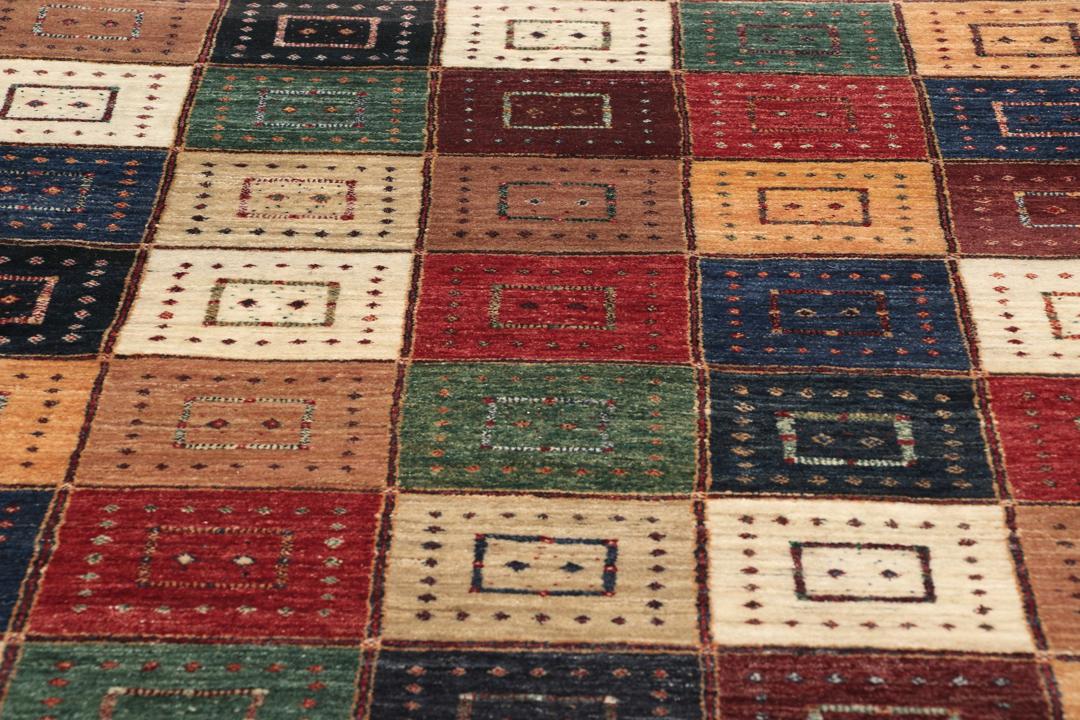
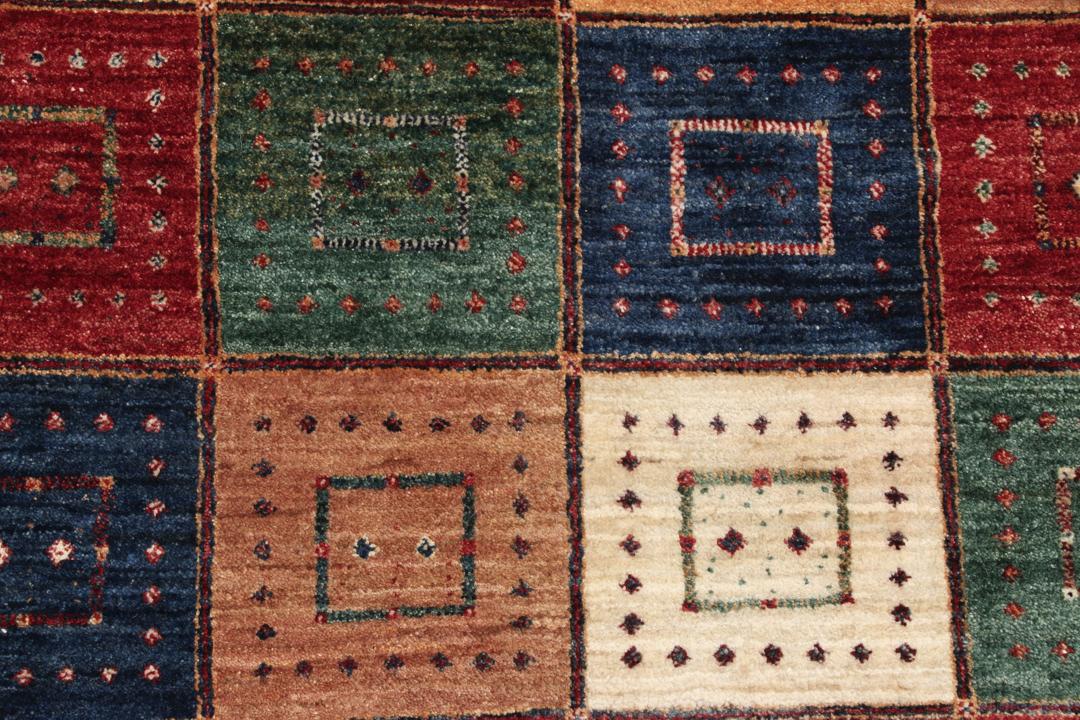
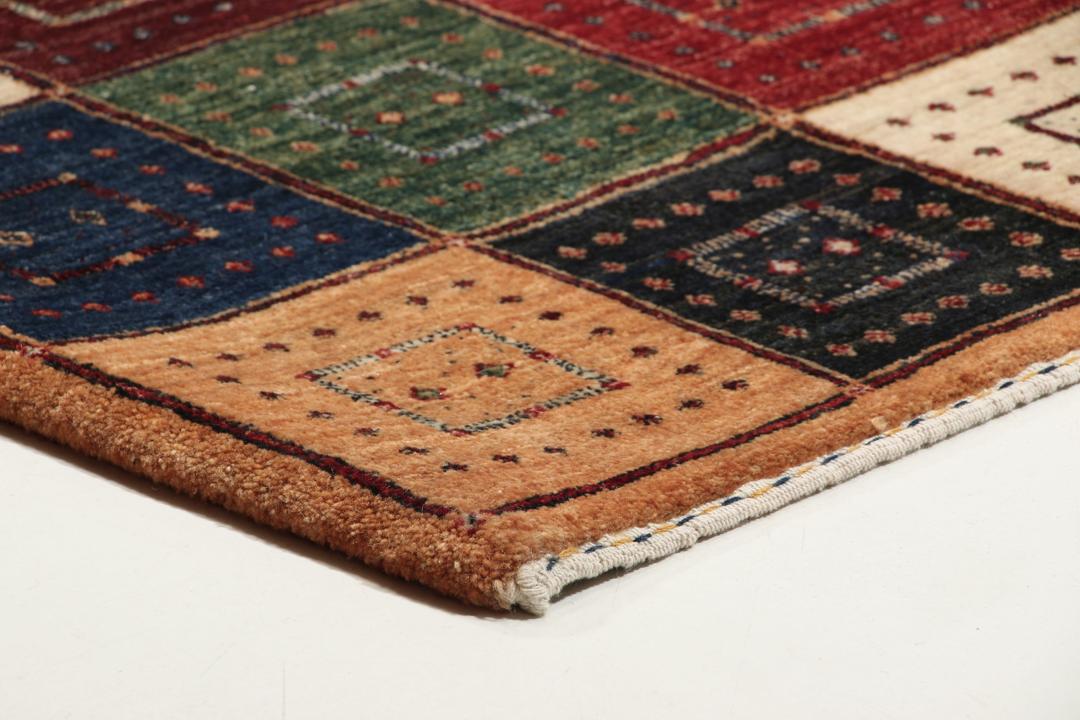
The term 'Loribaft' itself signifies a 'Lori-weave', named after the Lori people who are masters of this craft. This style is distinguished by its use of a finer wool and a more complex knotting structure than standard tribal rugs. This technical evolution allows for more precise patterns, such as the geometric patchwork seen here, while still maintaining the rustic, hand-crafted charm that defines the Gabbeh tradition.
Visually, these rugs are celebrated for their bold use of colour and geometric motifs. While older, more traditional Gabbehs often featured minimalist, open fields, the Loribaft style introduced a more structured approach, often utilising repeating squares or medallions. These patterns are not just decorative; they often carry symbolic meaning, representing the weaver's environment, their family heritage, or stories of tribal life.
Today, rugs from this tradition are highly sought after by collectors who value the intersection of ancestral skill and artistic expression. Owning a Loribaft is an investment in cultural heritage, representing a bridge between the ancient, nomadic lifestyle and contemporary home design. It is a piece that carries the weight of history and the dedication of the hands that brought it to life.