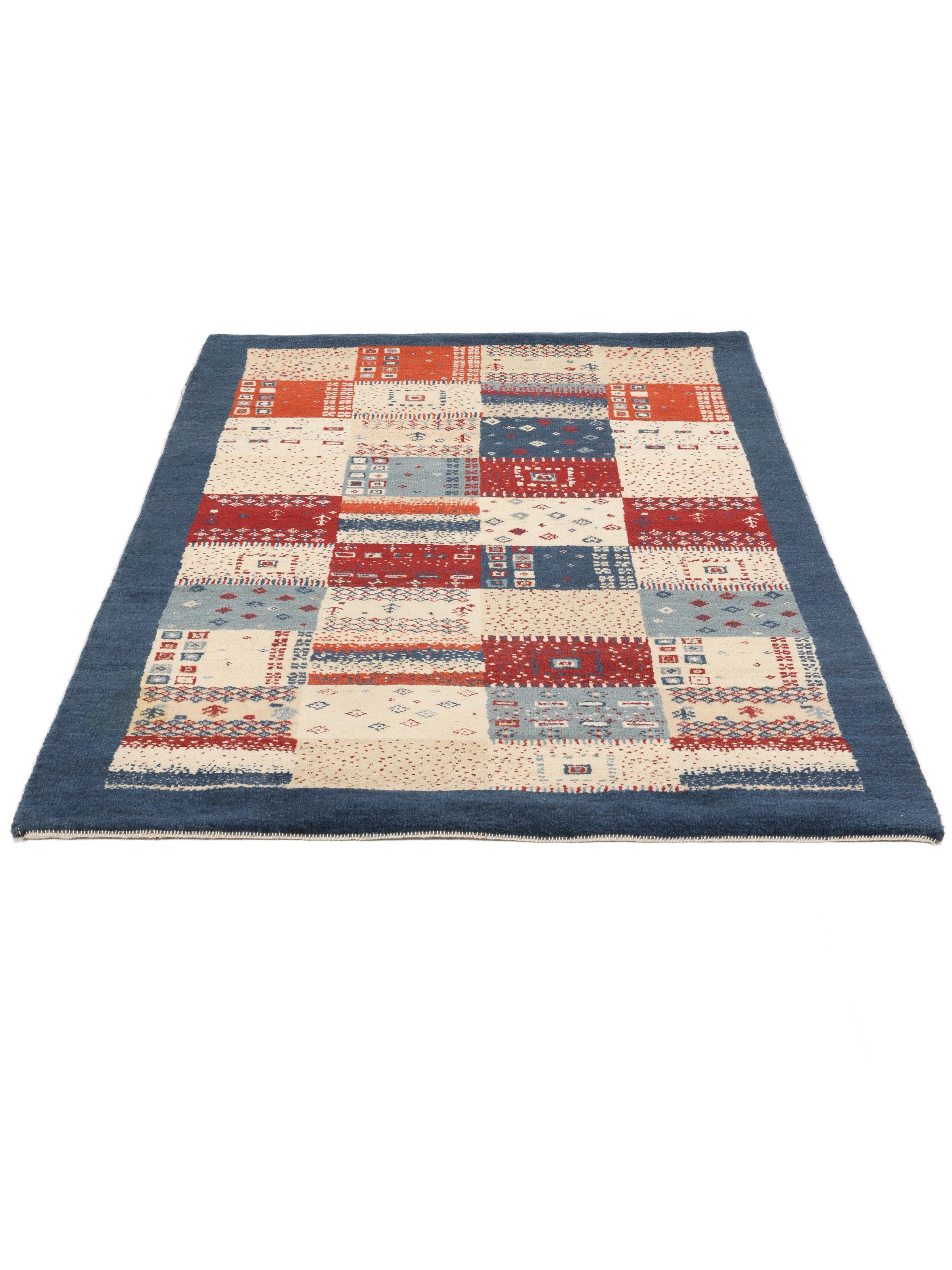
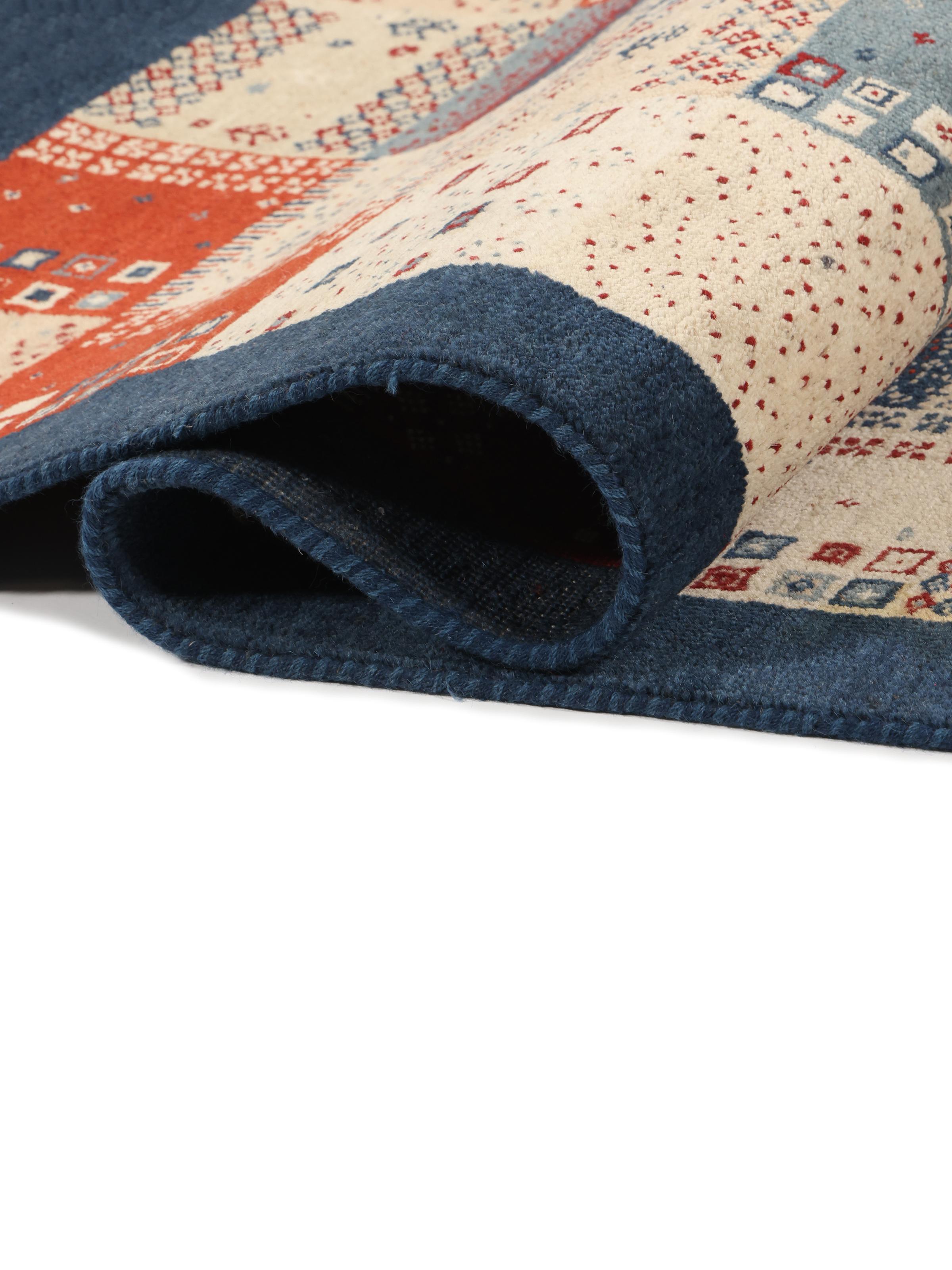
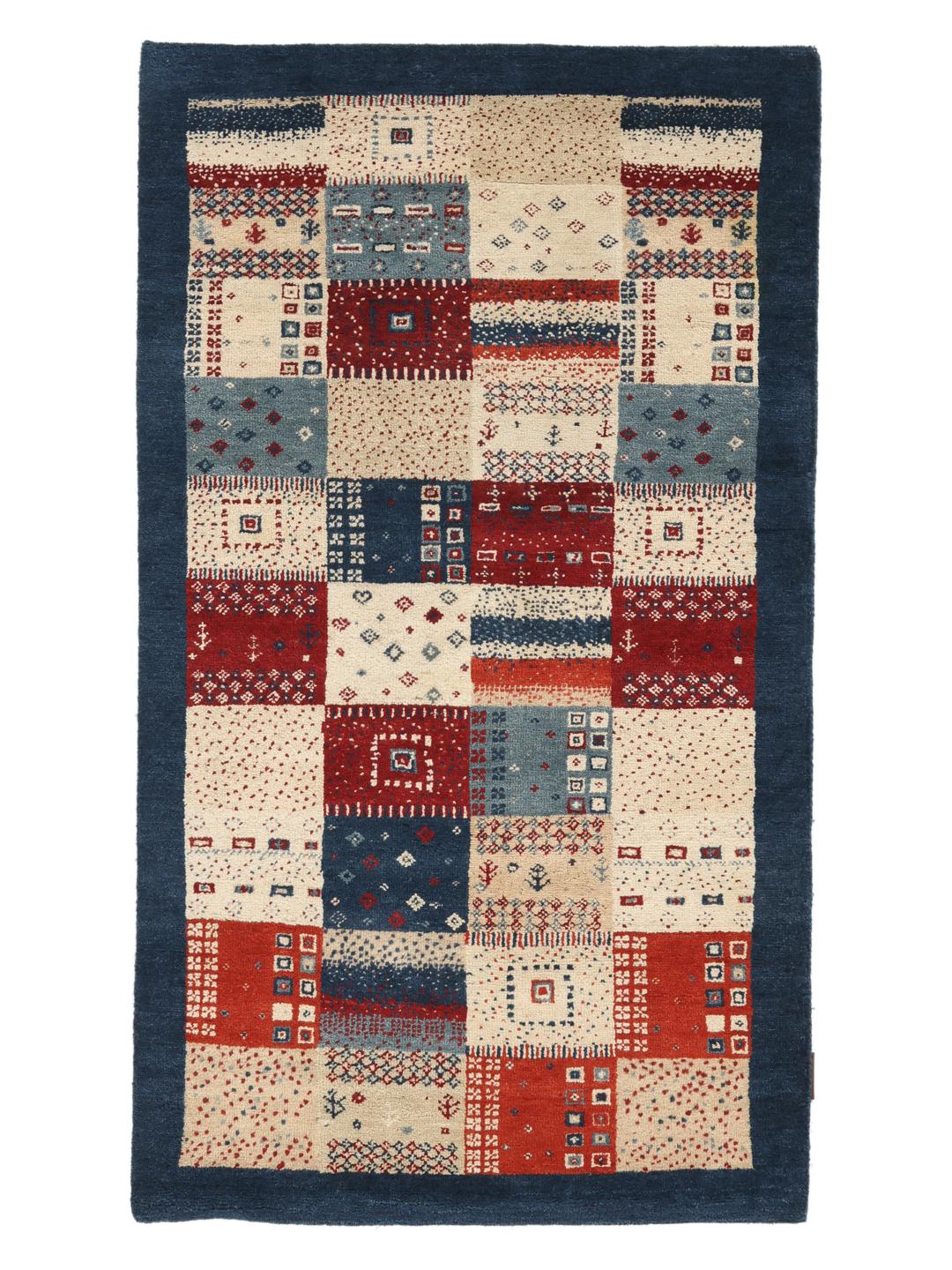
The Gabbeh tradition traces its roots to the nomadic tribes of the Middle East, who originally crafted these rugs for their own daily use as sleeping mats and floor coverings. Over centuries, these rugs evolved from simple, functional items into highly sought-after expressions of artistic freedom, characterised by their thicker pile and bold, imaginative designs.
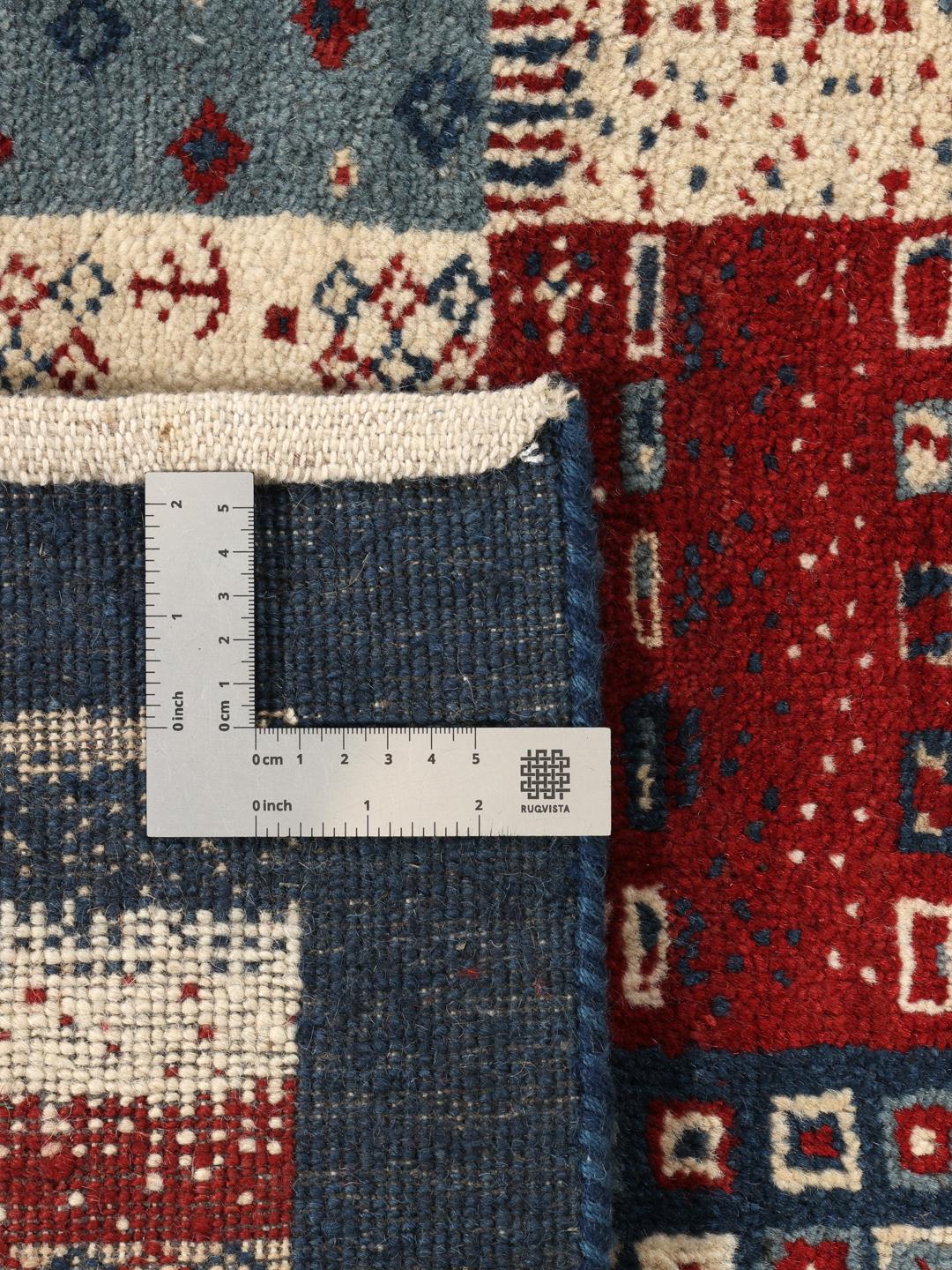
The term 'Loribaft' refers to a specific, high-quality style of weaving inspired by the Lori tribes. Unlike standard Gabbeh rugs, which are often more primitive in design, Loribaft rugs are known for their finer weave and more sophisticated patterns. This style bridges the gap between raw nomadic expression and formal, intricate rug-making traditions.
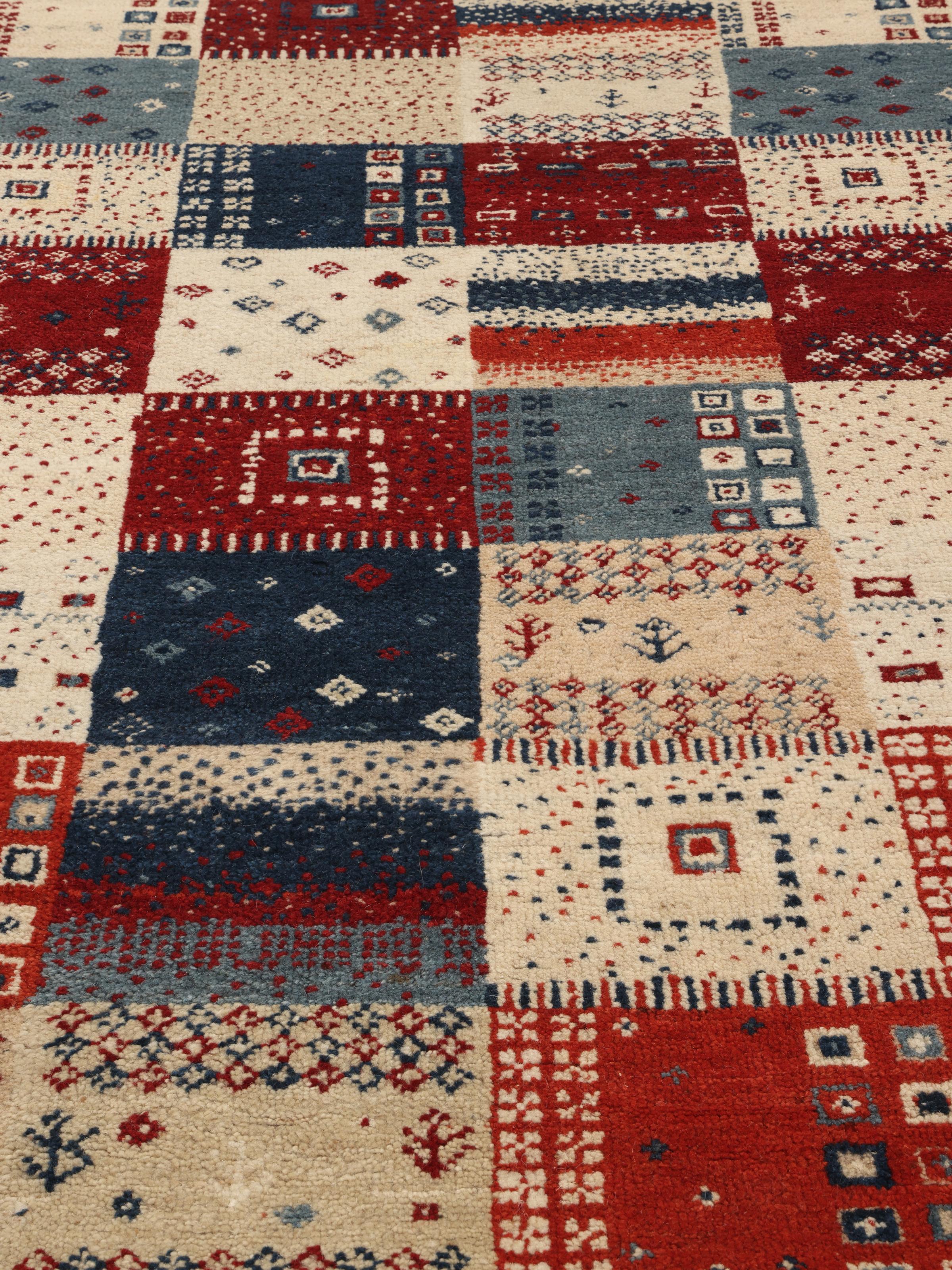
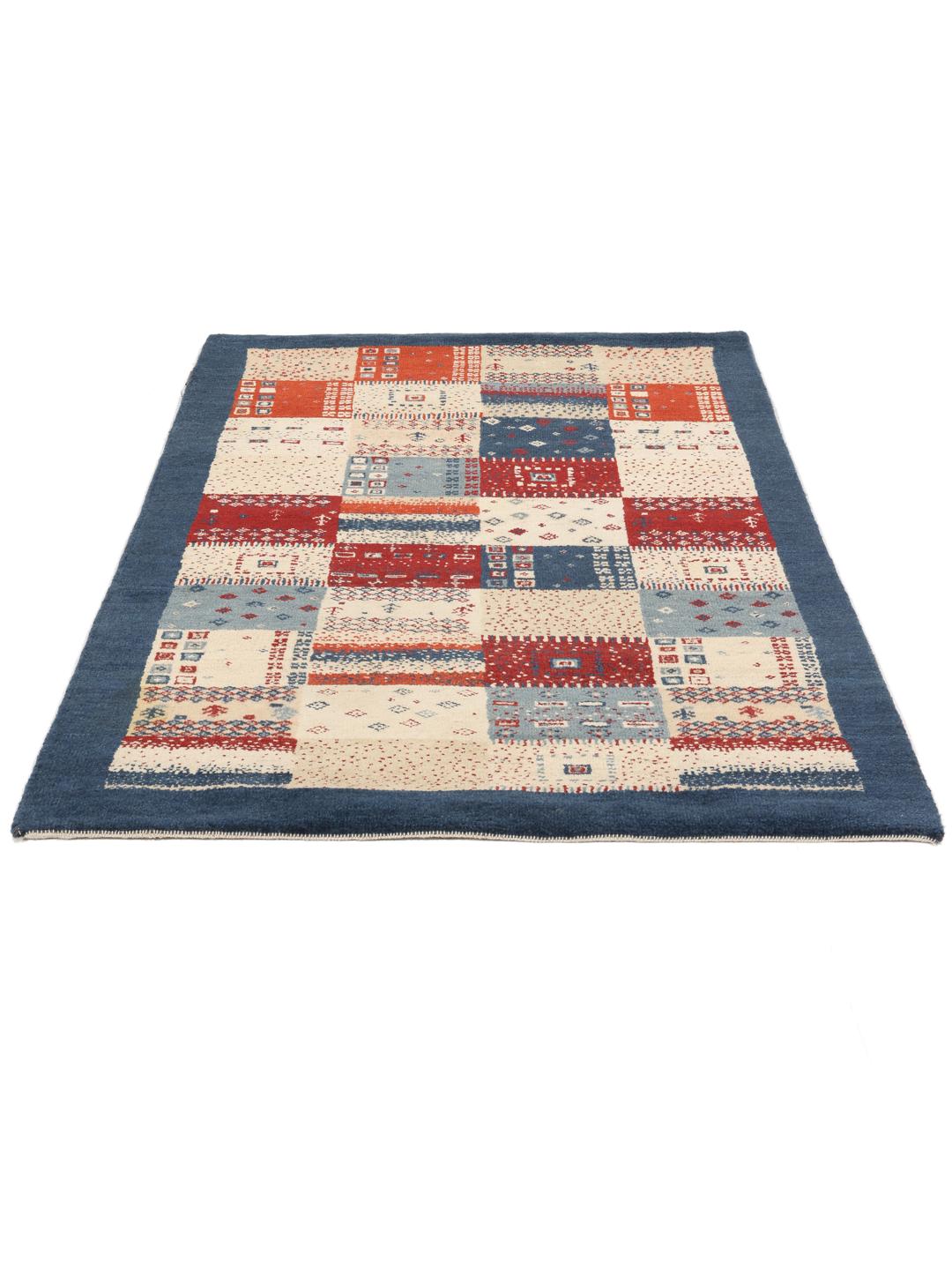
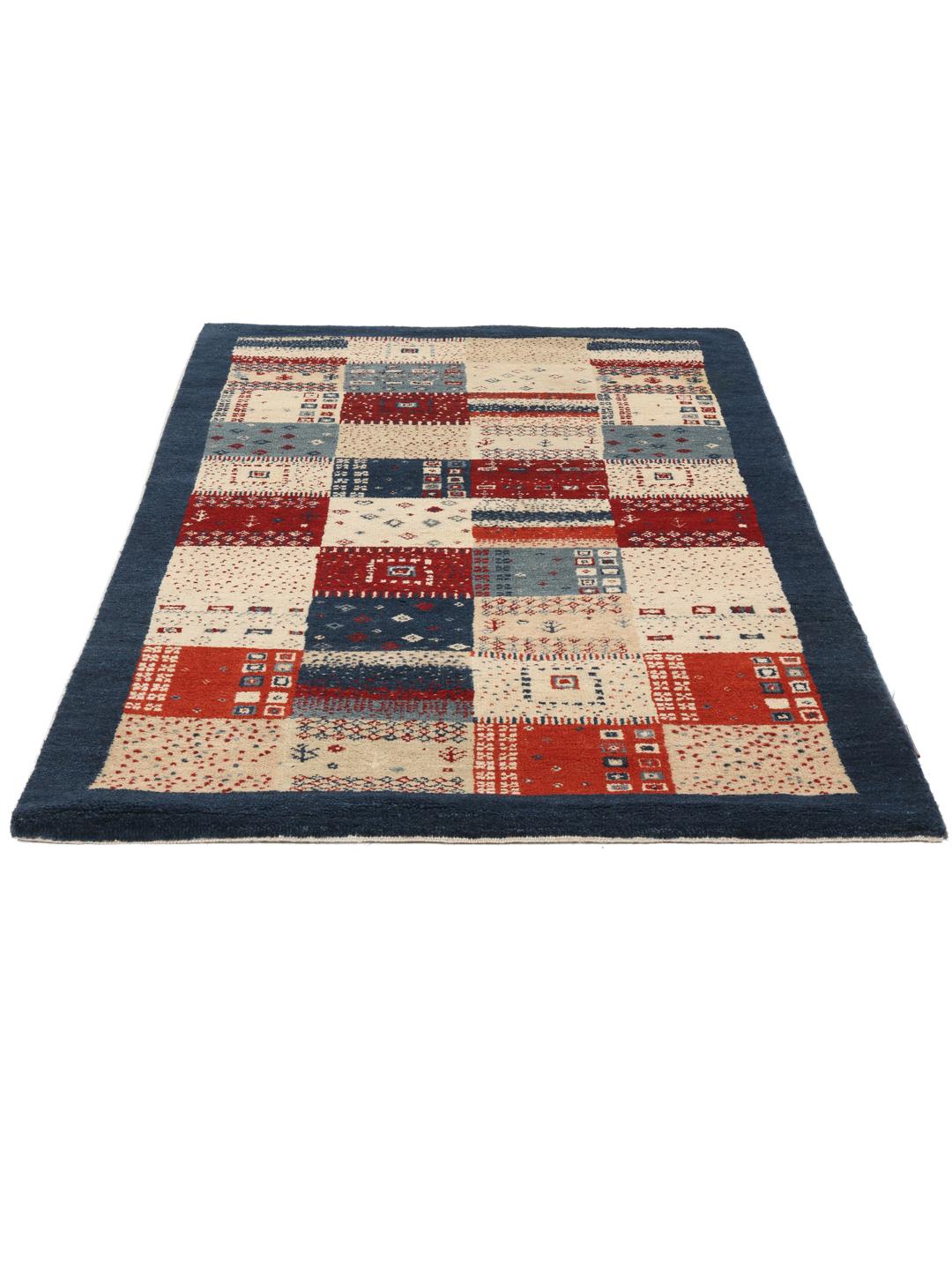
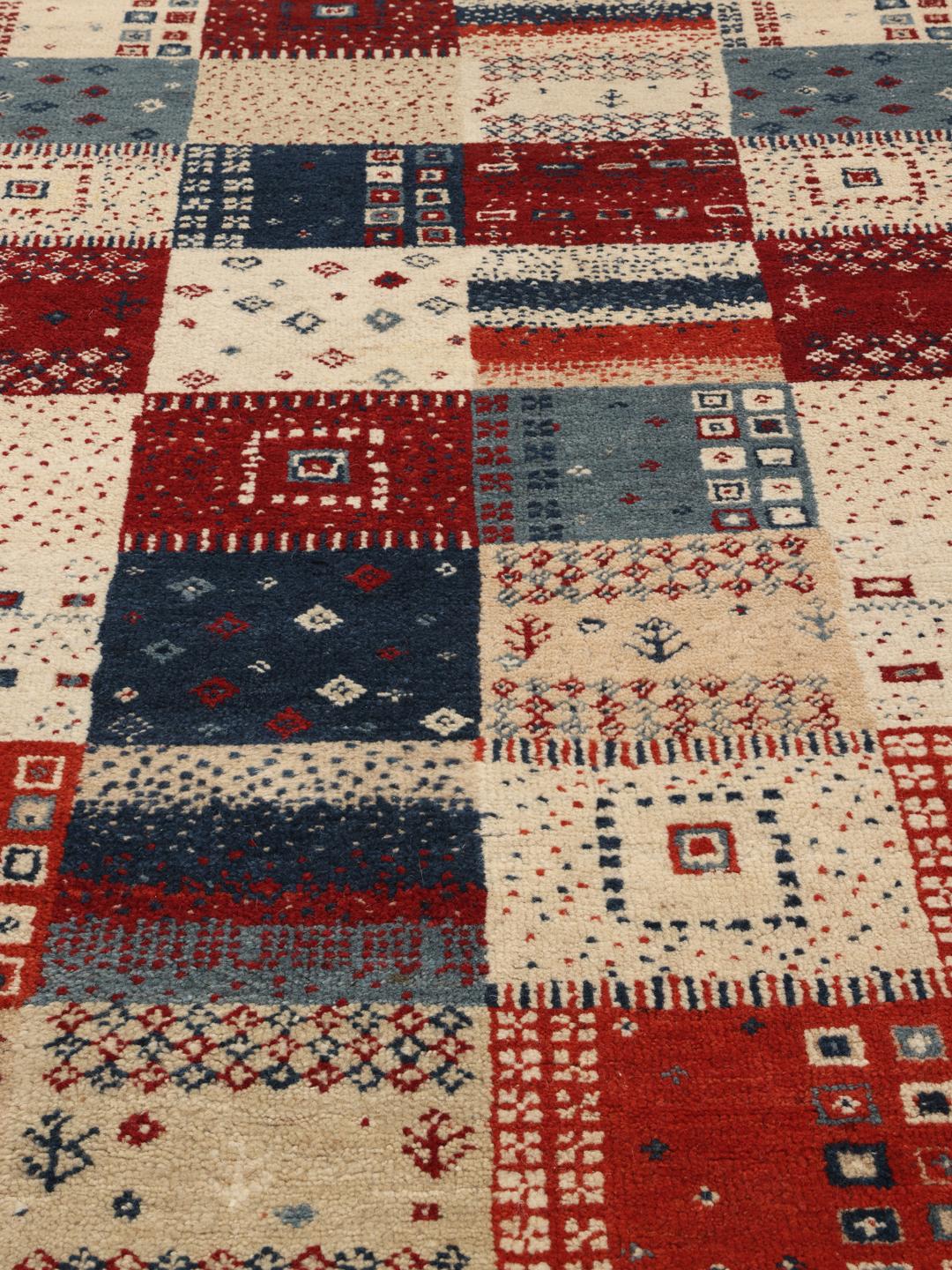
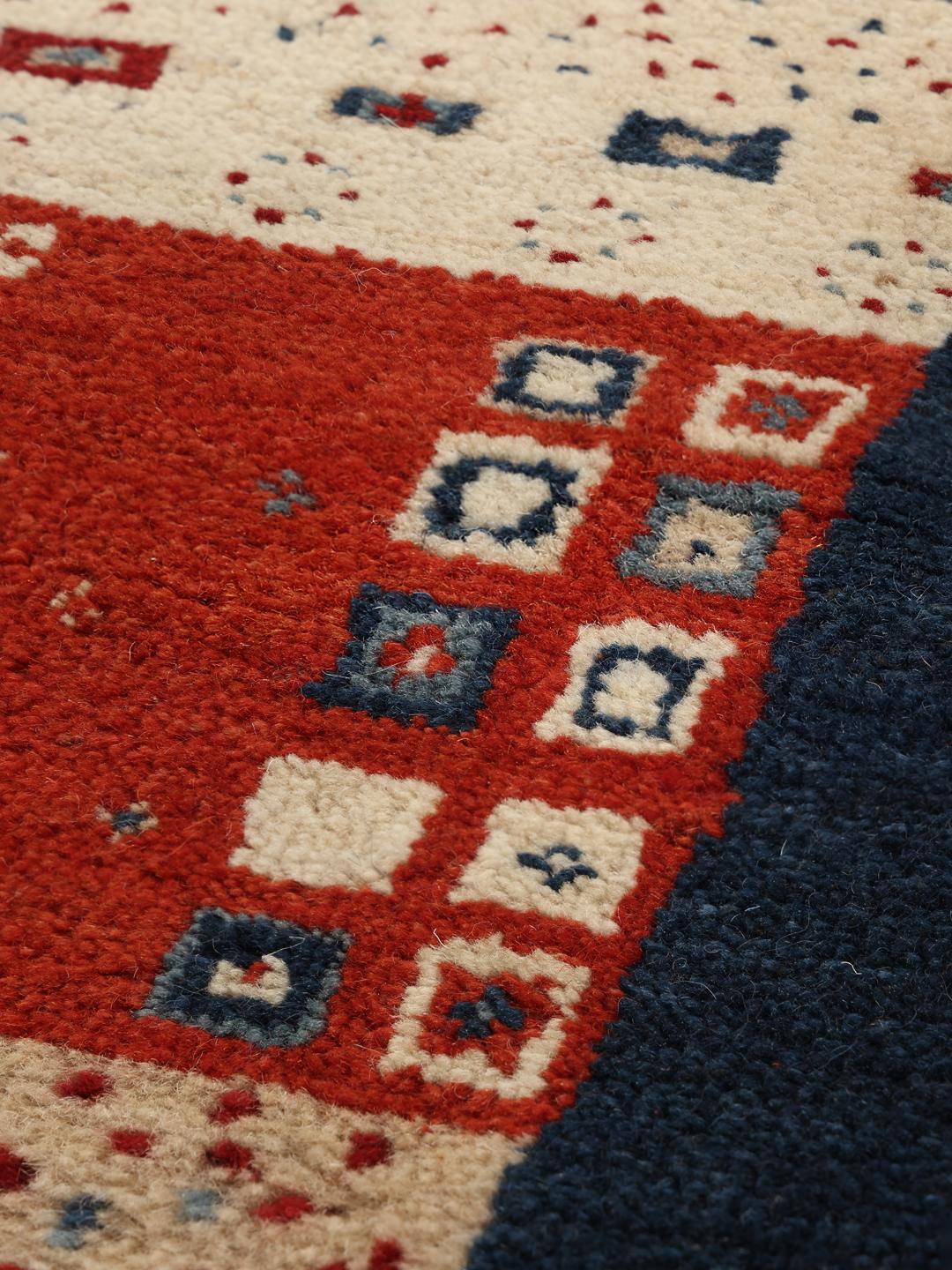
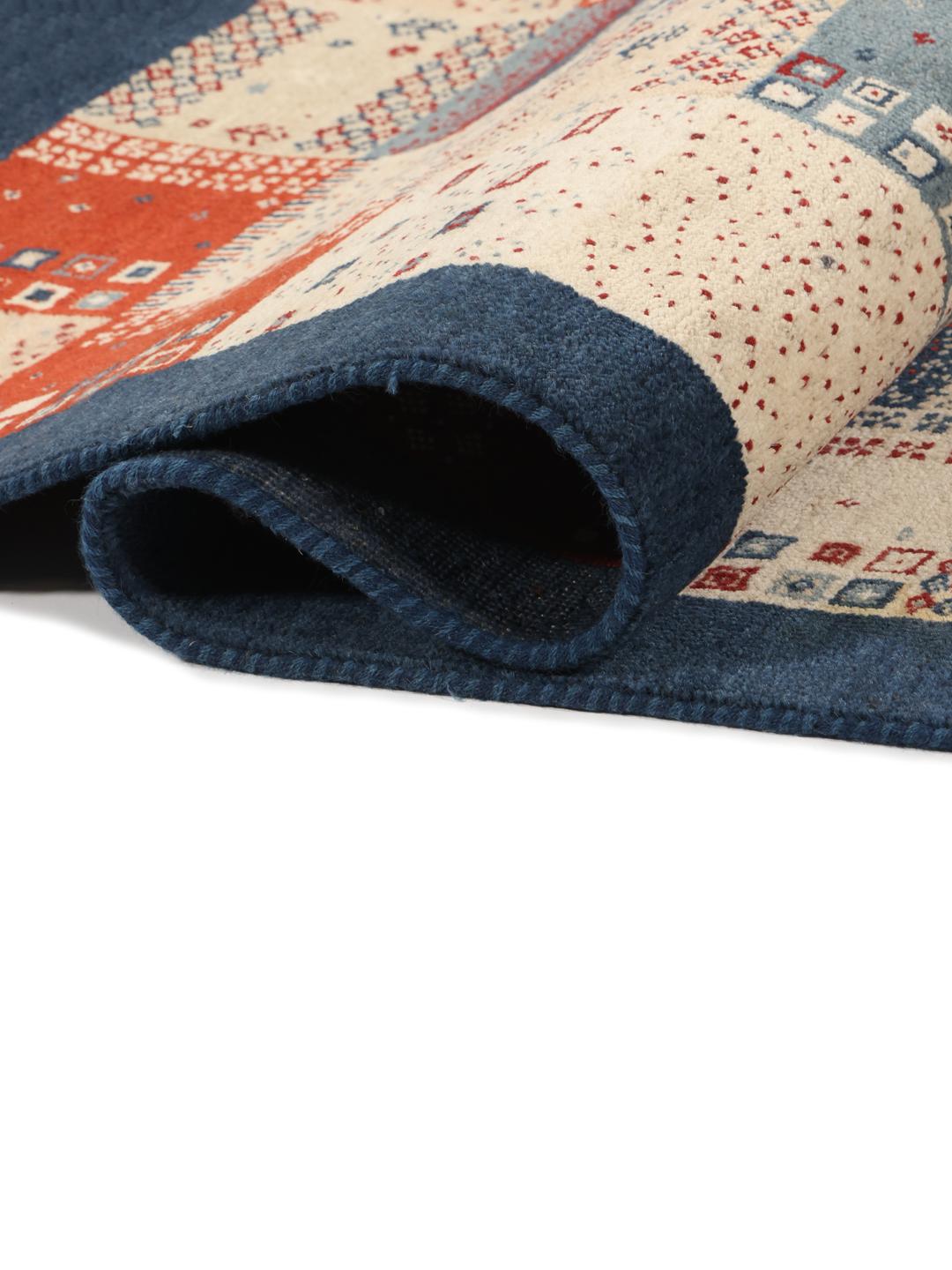
Visually, these rugs are celebrated for their geometric abstraction and use of open space, though this particular piece utilises a complex patchwork layout. The motifs used often represent aspects of tribal life, nature, and mythology, rendered in vibrant colours derived from natural dyes. The juxtaposition of these varied, block-like patterns creates a rhythmic, almost musical quality to the rug's surface.
Owning a Loribaft rug is a way to connect with a long lineage of craft and cultural identity. Because these rugs are handmade by individuals who have inherited these techniques through generations, they carry a sense of human history that factory-made items cannot replicate. They are valued by collectors and homeowners alike for their authenticity, lasting quality, and the way they transform a space into a warm, lived-in sanctuary.