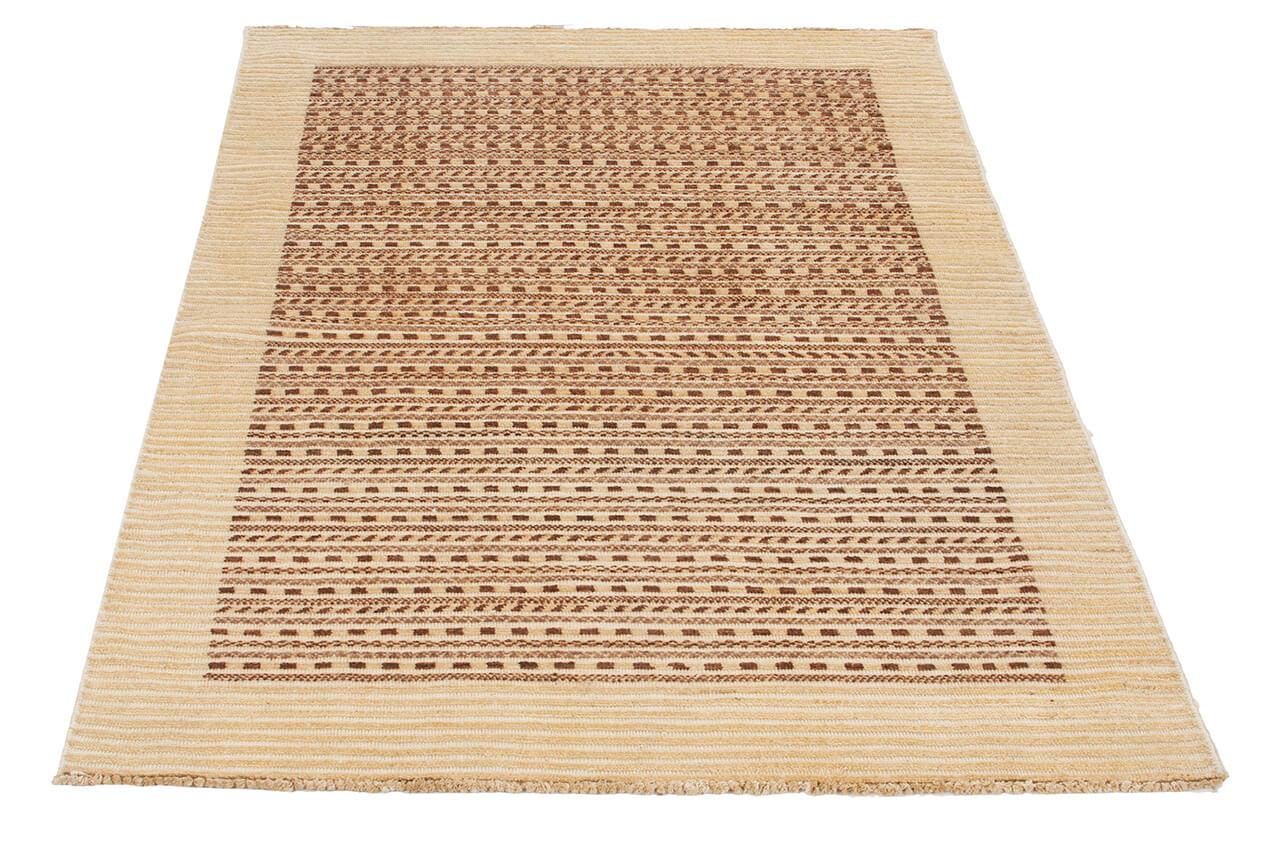
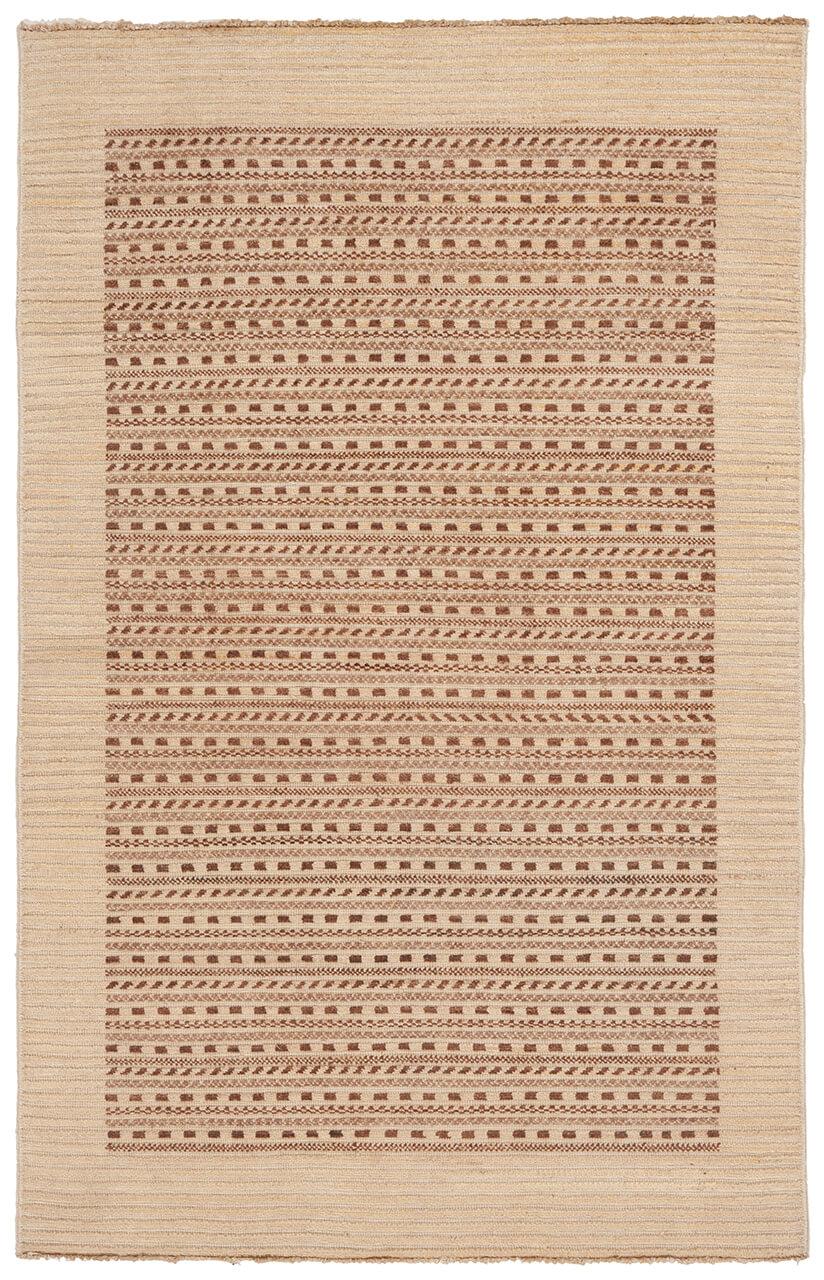
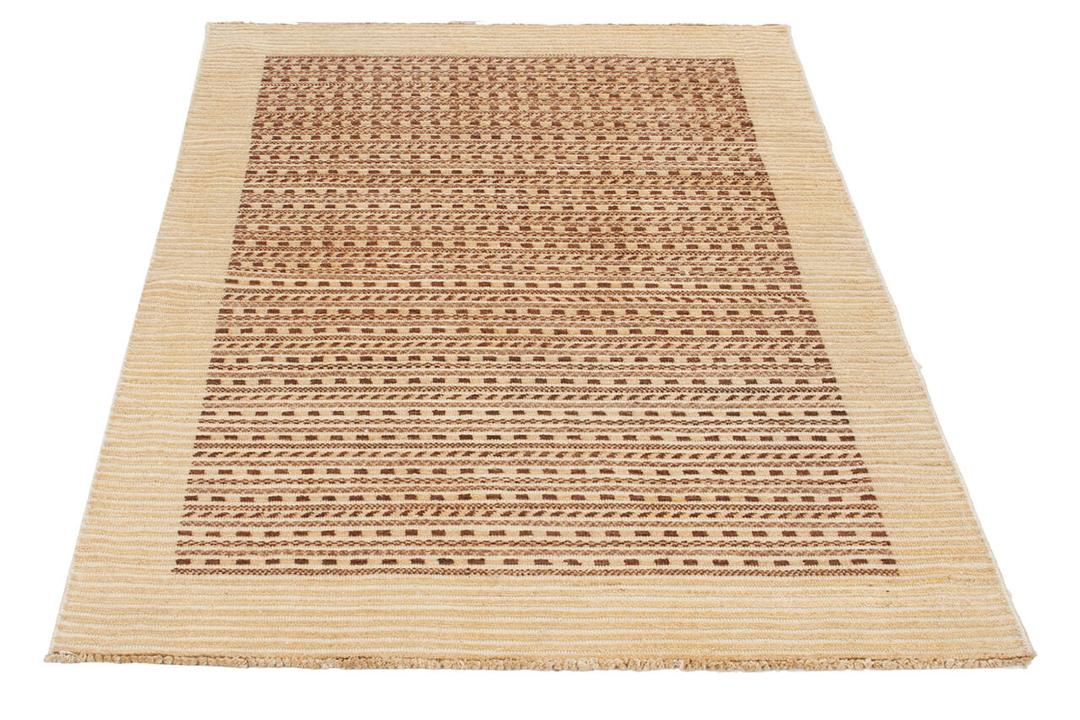
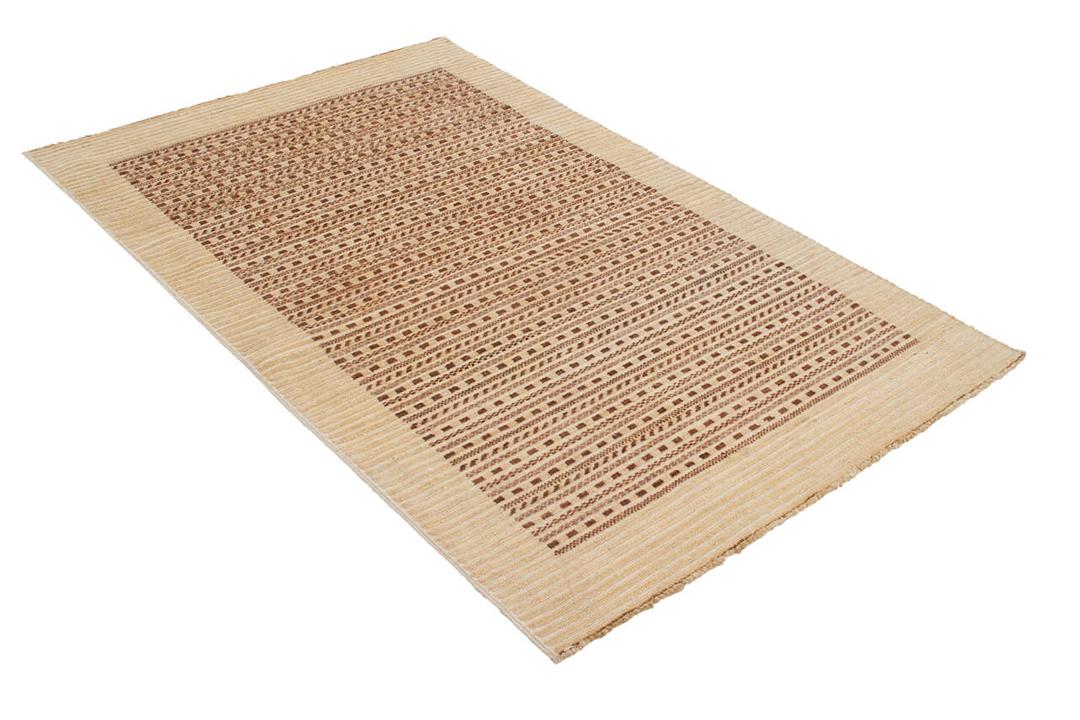
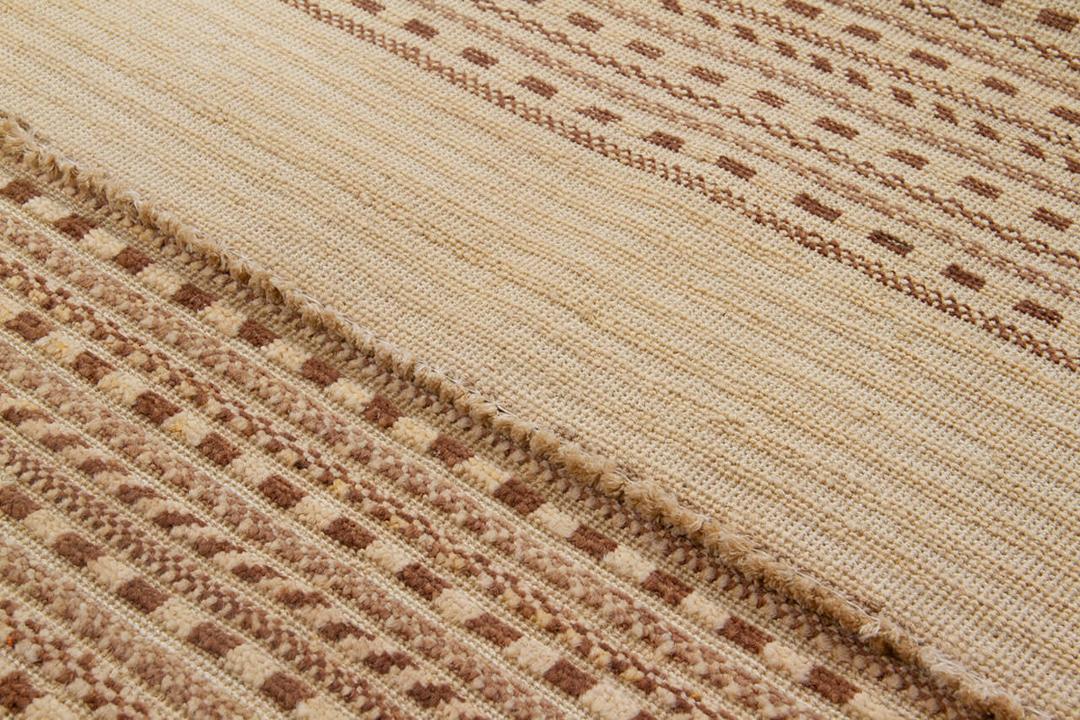
Gabbeh rugs represent a fascinating evolution in the history of Middle Eastern textile arts. Traditionally woven by nomadic tribes as functional bedding and floor coverings, these rugs were designed for practical use in harsh environments, often featuring simple, bold designs that reflected the weaver's personal expression rather than rigid, pre-planned patterns.
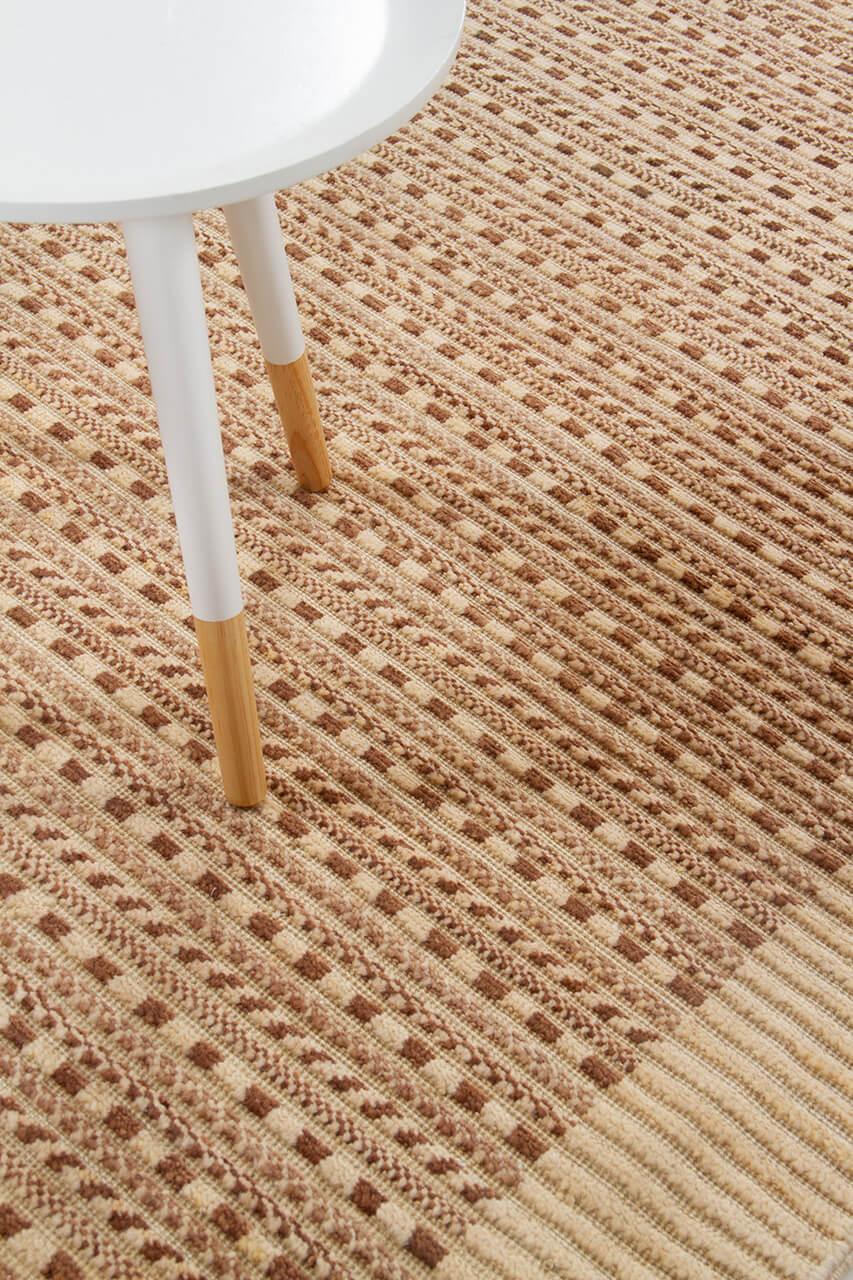
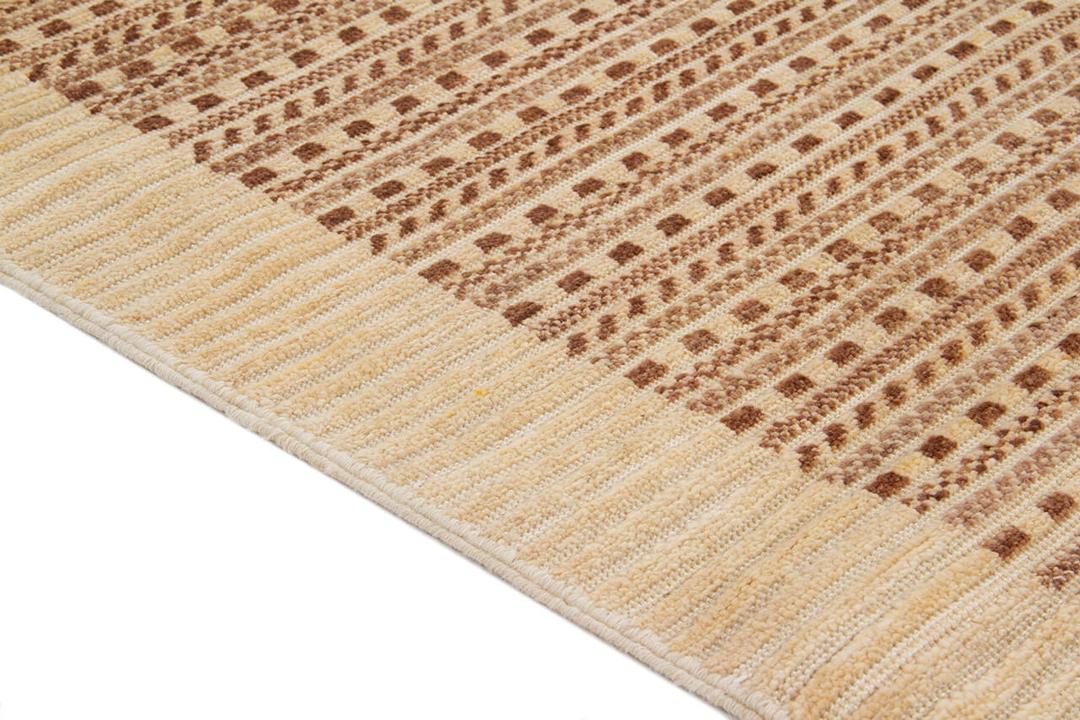
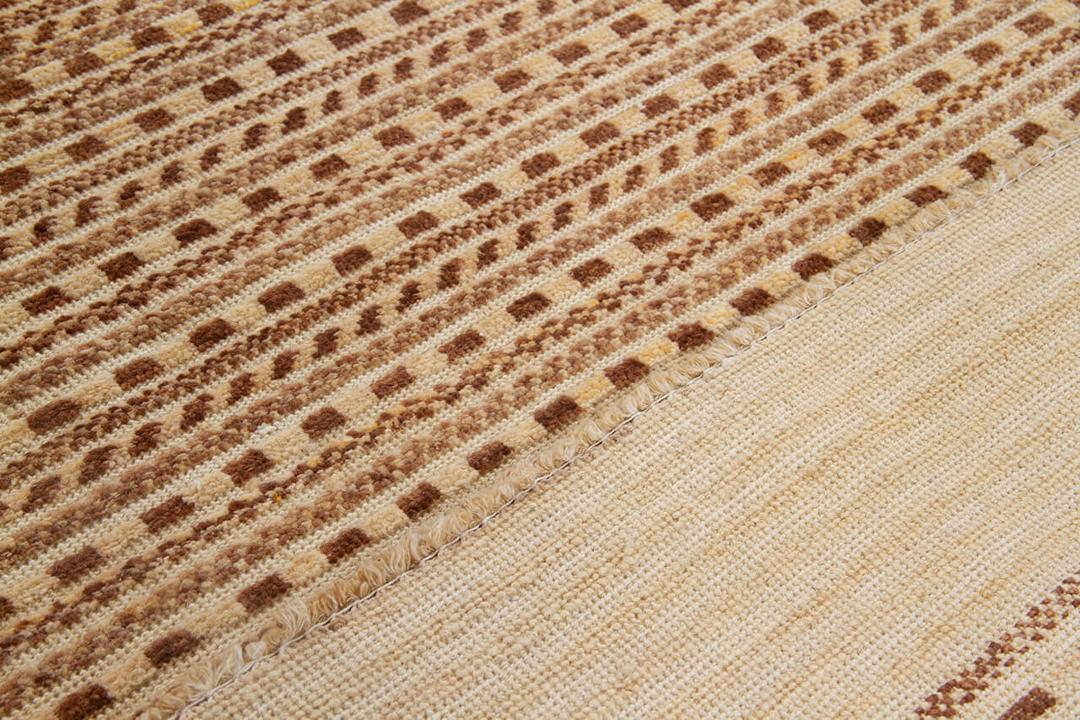
The term Gabbeh essentially means raw or natural, referring to the use of hand-spun, thick Wool that retains its natural character. In modern times, this tradition has been refined, with artisans in Afghanistan continuing to embrace the use of natural dyes and hand-spun materials to produce rugs that feel organic and tactile while offering a more contemporary aesthetic.
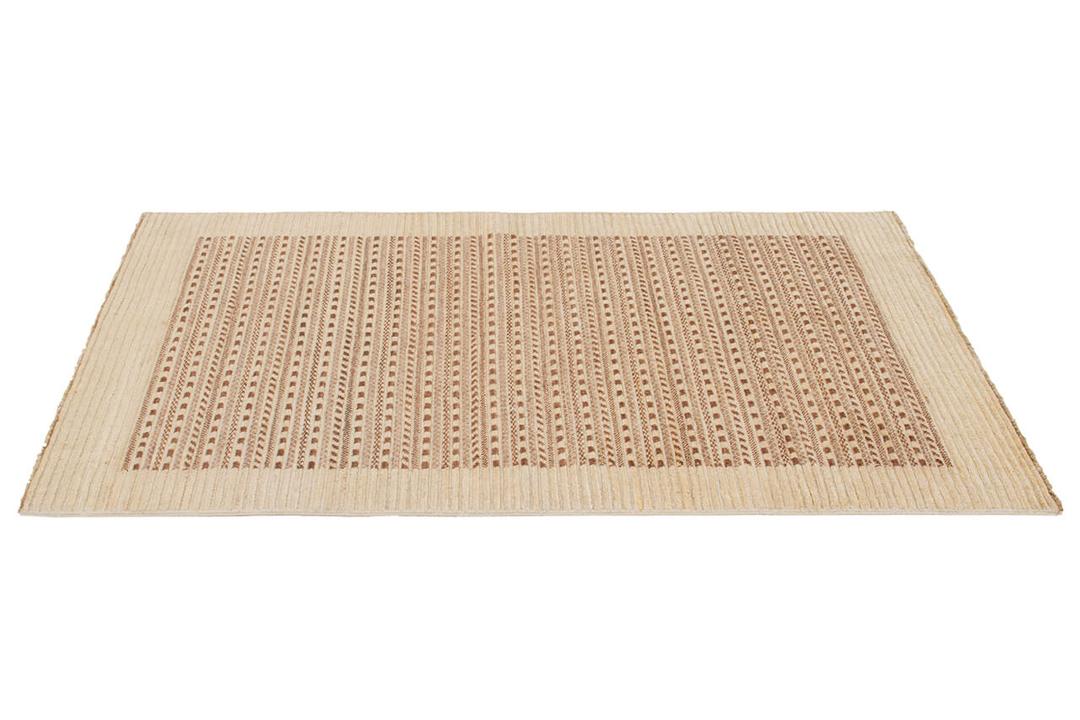
The visual language of the Gabbeh is defined by its simplicity. While traditional versions often featured sparse, geometric motifs or solid fields, the modern interpretation seen here uses rhythmic, subtle patterning to create a sense of movement. The focus remains on the quality of the Wool and the depth of the colour, which is often achieved through traditional dyeing techniques that result in beautiful, varied tones.
Collectors value these rugs for their honesty and the human story behind every knot. Owning a Gabbeh is not just about acquiring a floor covering, but about connecting with a long-standing tradition of nomadic craft. These pieces are celebrated for their durability and their ability to bring a sense of warmth and history into modern homes, serving as a testament to the enduring appeal of hand-made textiles.