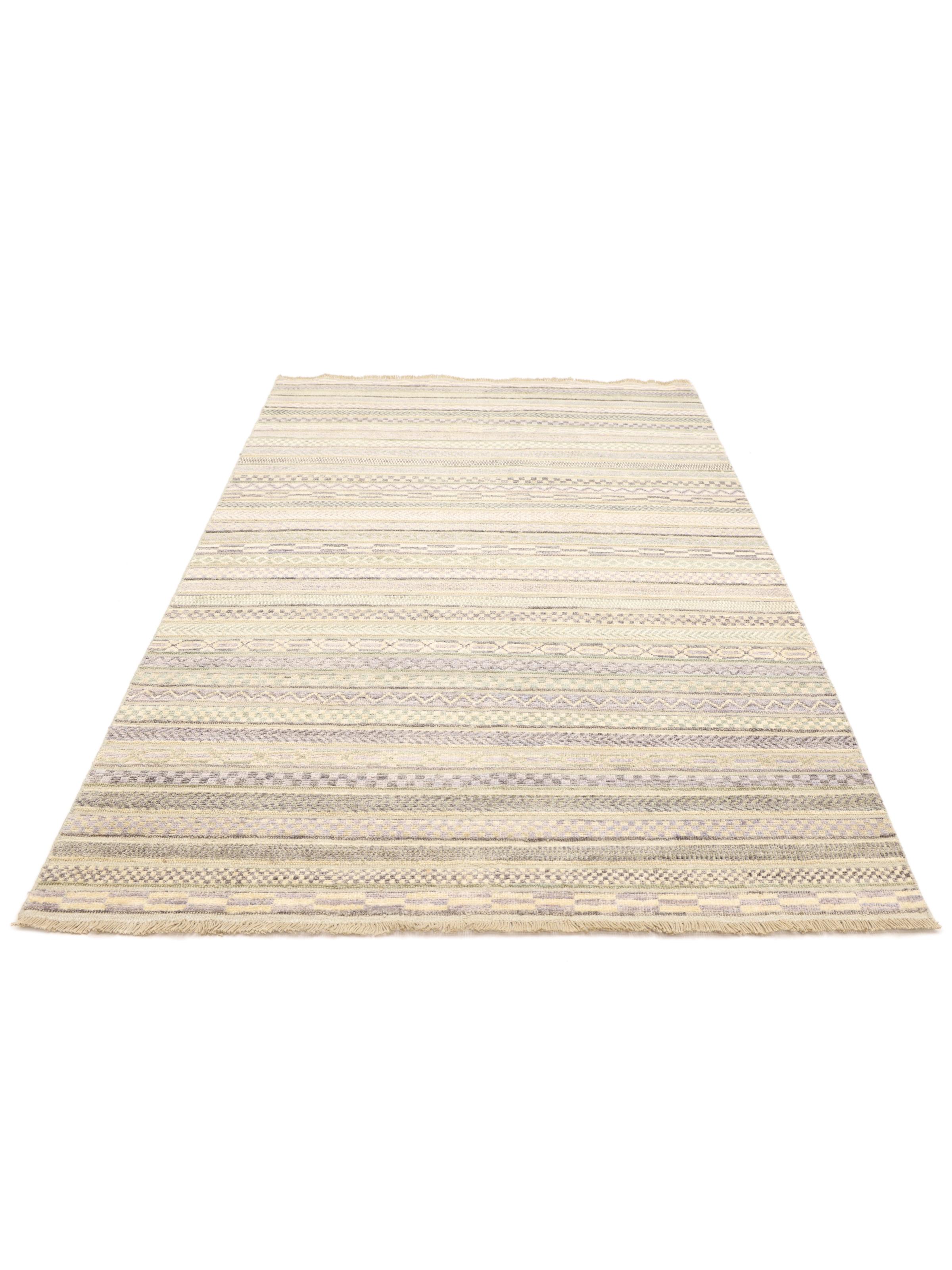
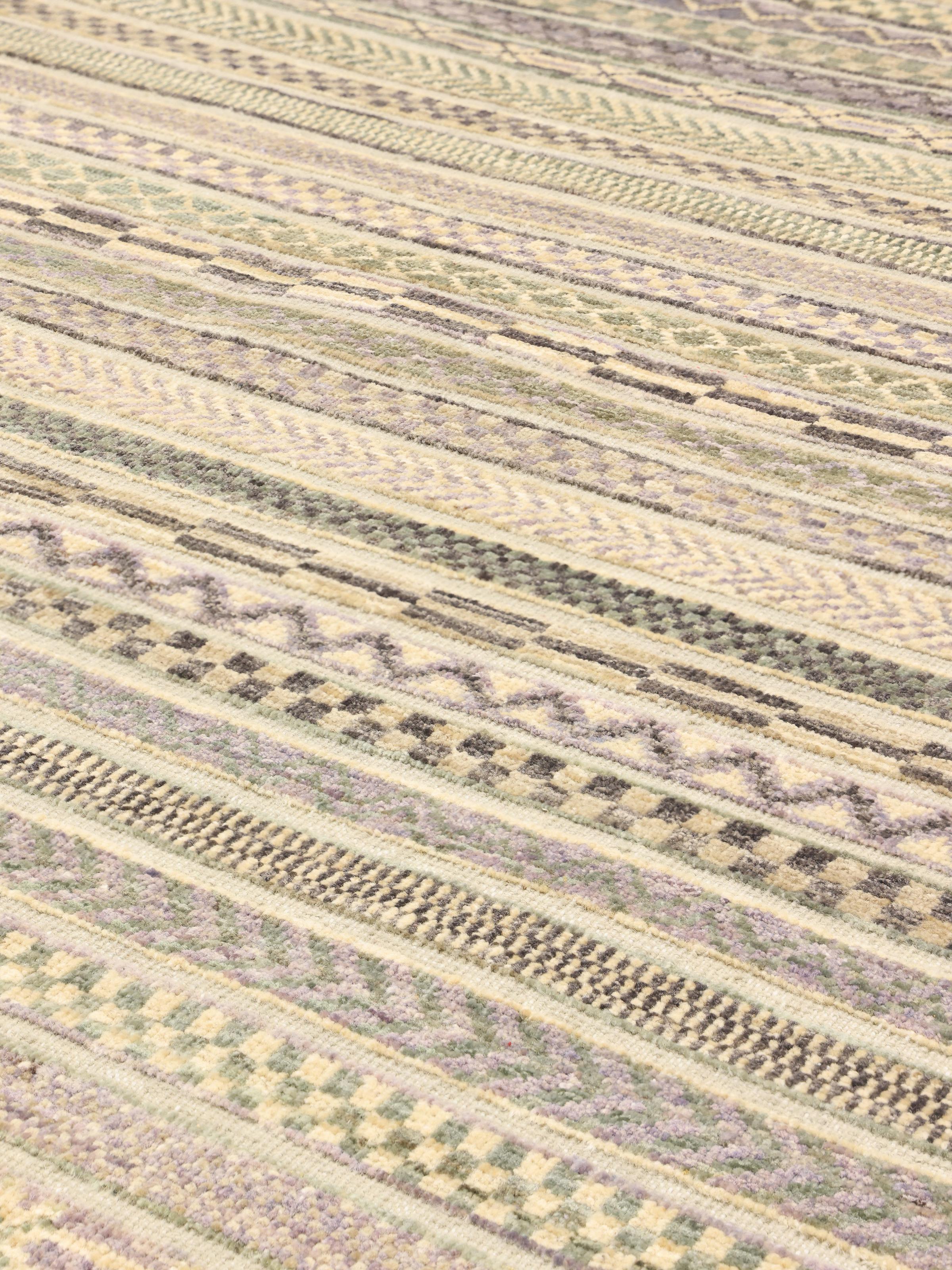
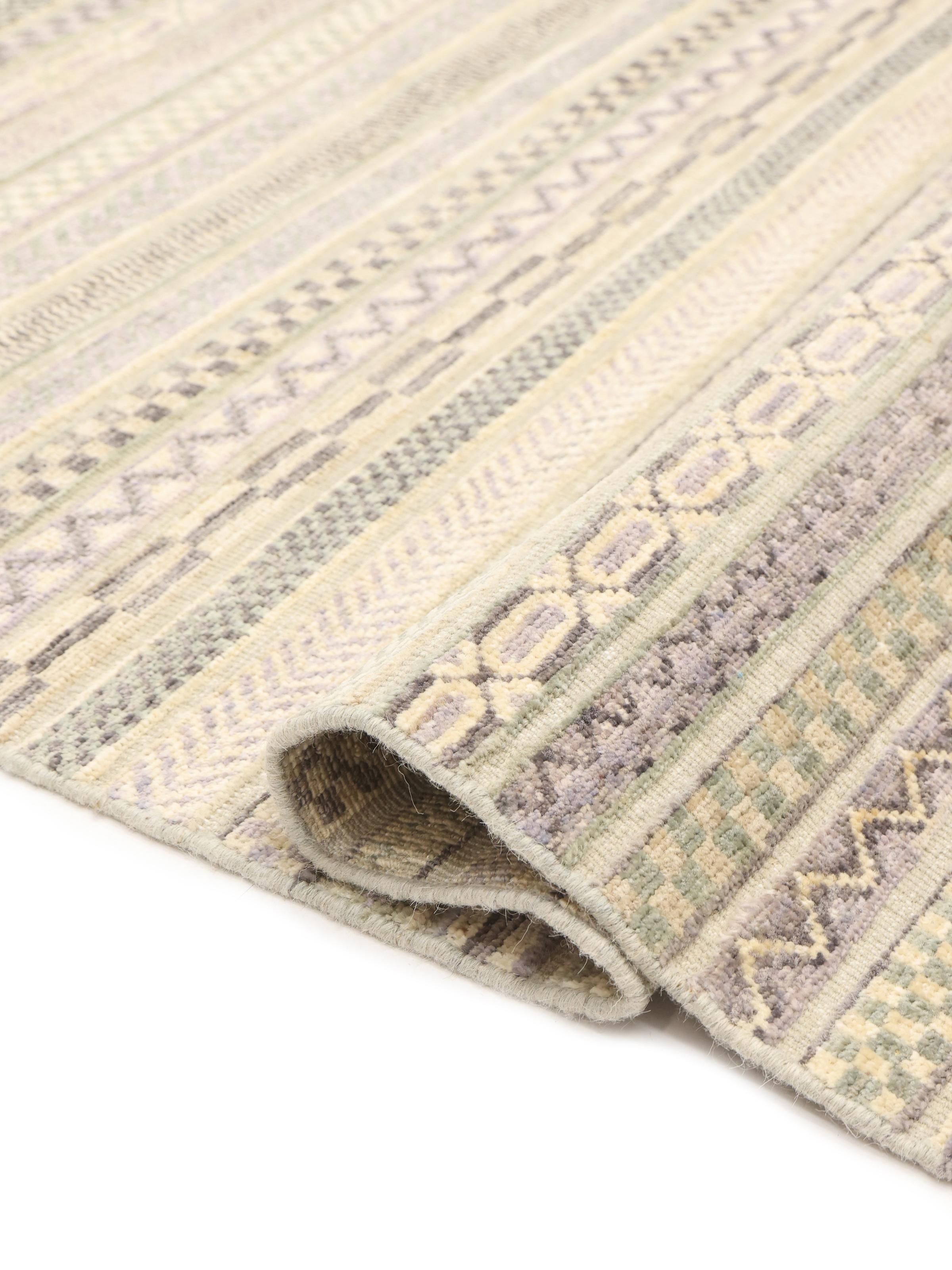
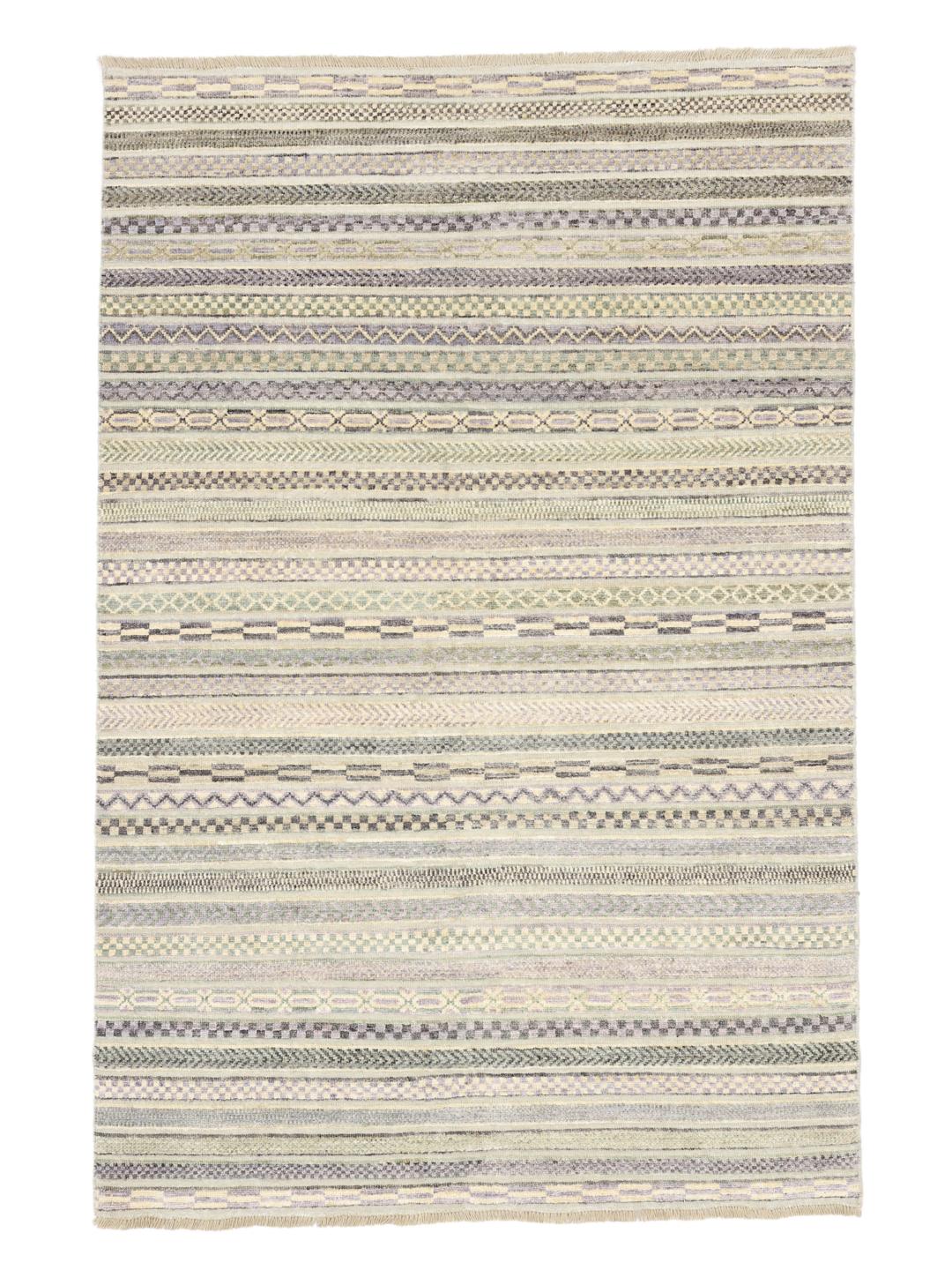
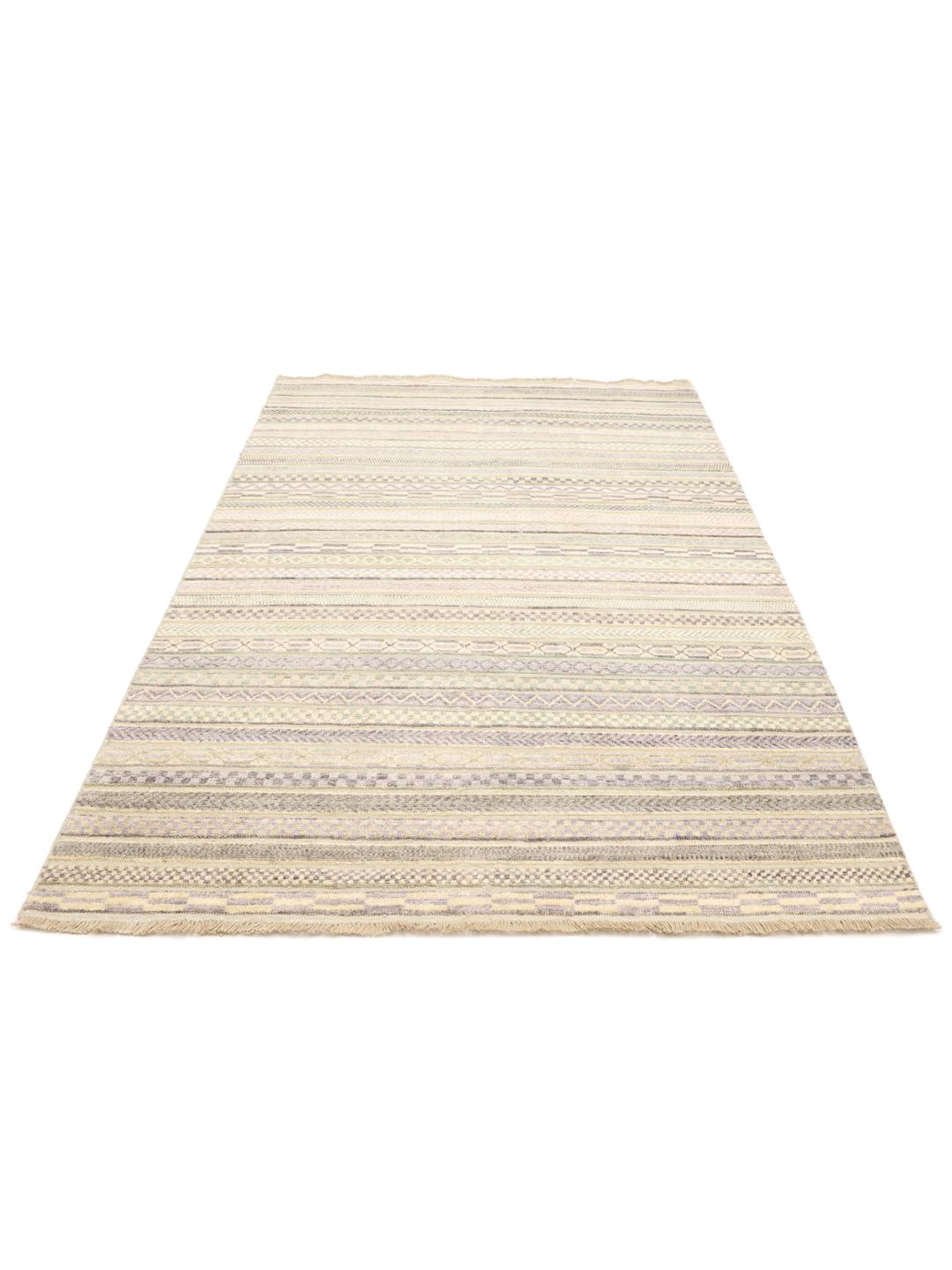
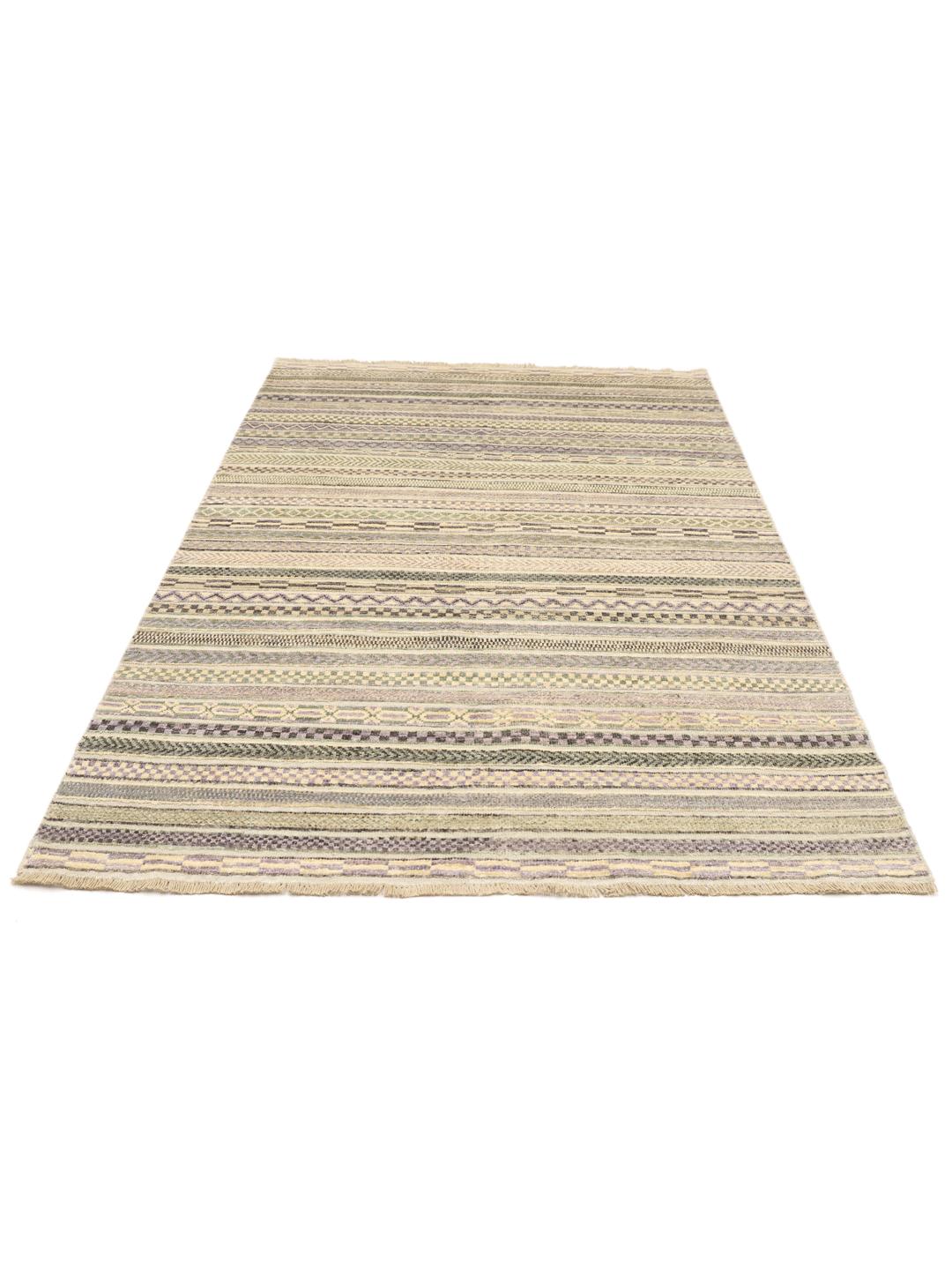
Gabbeh rugs are deeply rooted in the nomadic traditions of the Middle East, historically woven by tribal groups who used them primarily for personal comfort and warmth within their tents. Unlike more formal or court-style rugs, the Gabbeh was originally a utilitarian object, designed to provide a soft, insulating layer against the cold ground.
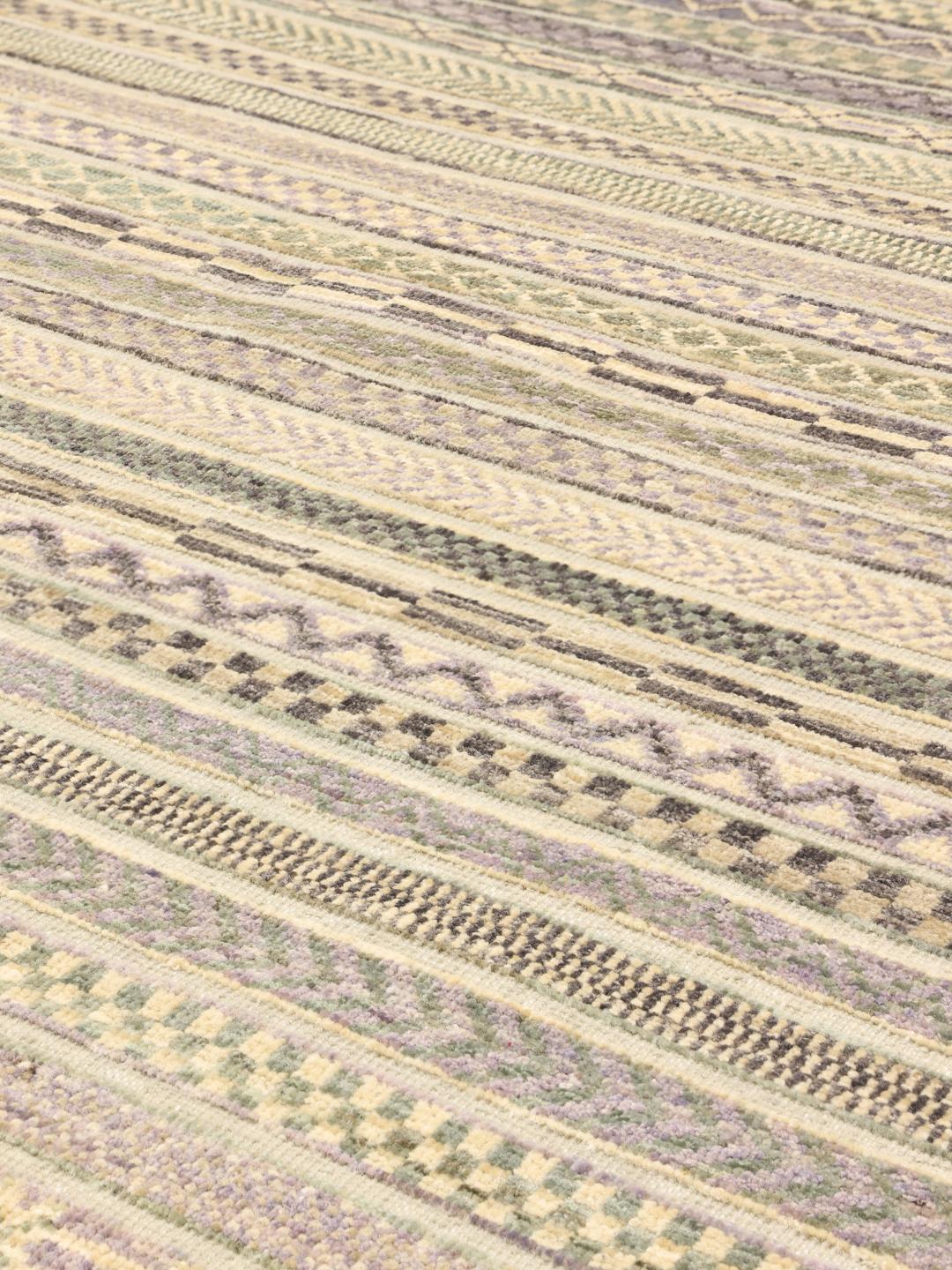
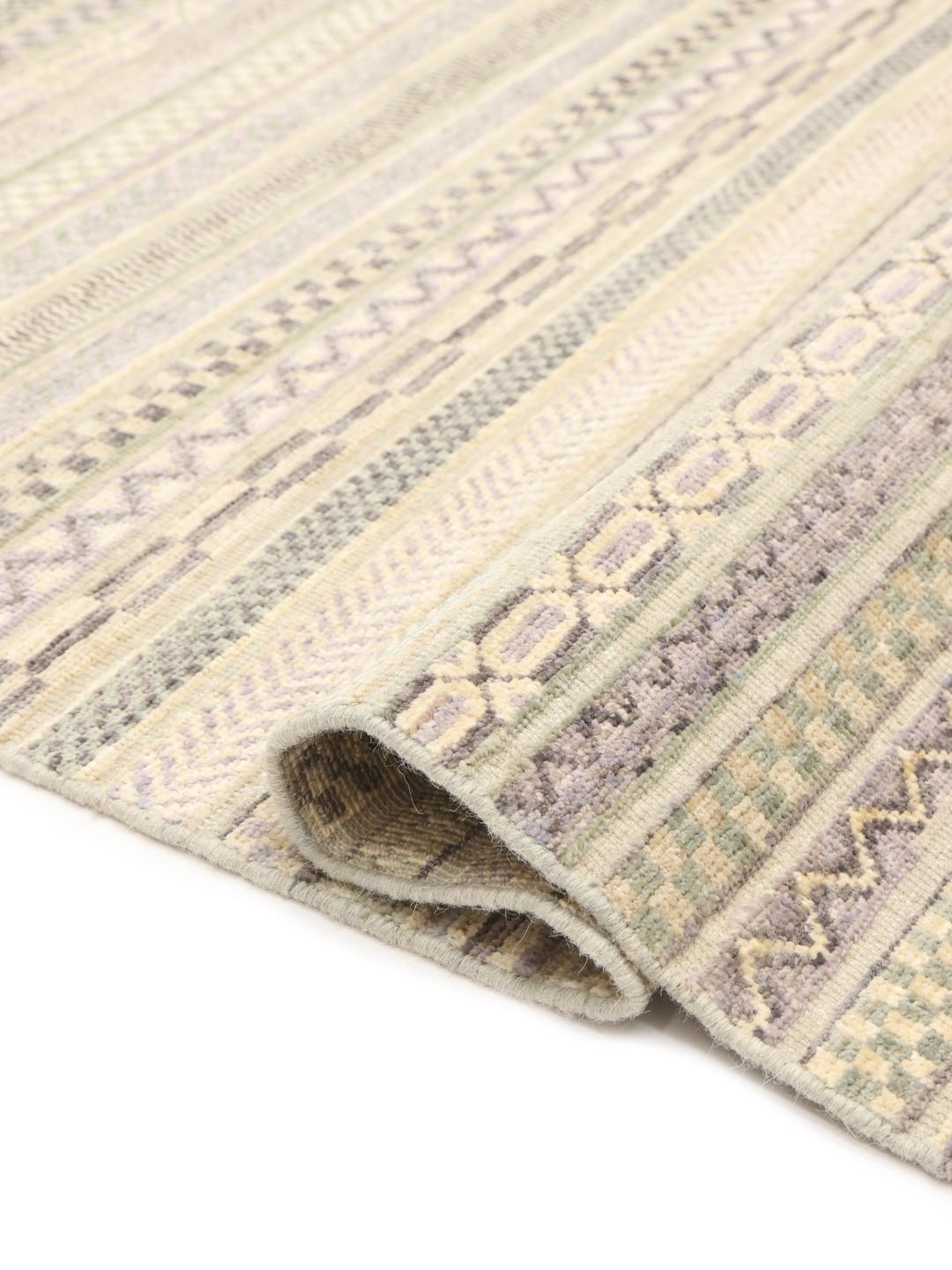
The evolution of the Gabbeh has seen it transition from a purely functional item to a celebrated form of artistic expression. Modern iterations, such as this piece from Afghanistan, continue to honour these roots by maintaining the use of hand-spun Wool and traditional knotting techniques, while embracing a more refined aesthetic that appeals to contemporary design sensibilities.
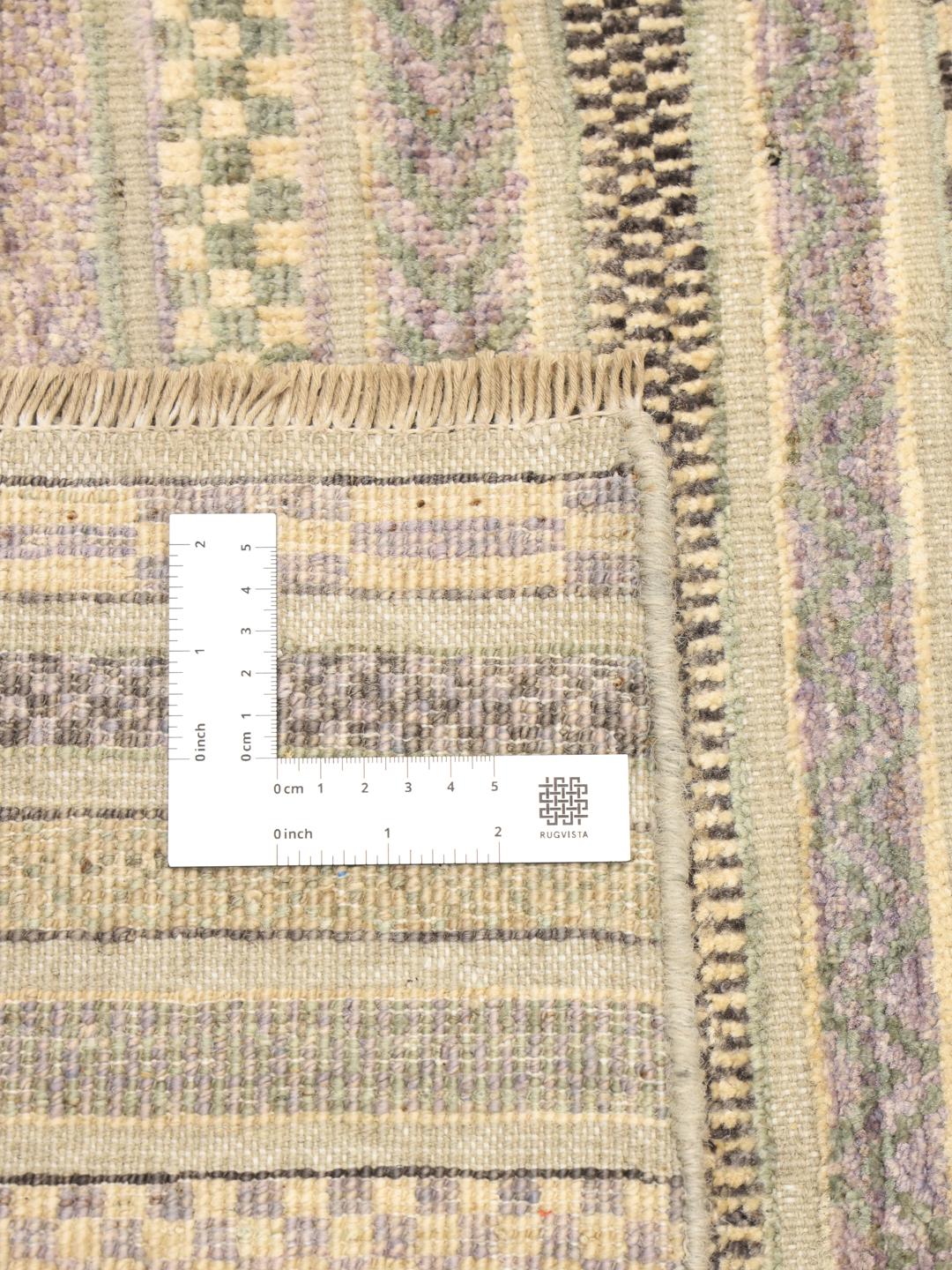
The signature design elements of these rugs often include bold, simplified geometric shapes and a focus on the natural beauty of the Wool. While traditional Gabbehs were known for their vibrant, saturated hues derived from natural dyes, contemporary versions often explore more muted, sophisticated palettes that highlight the intricate, hand-drawn nature of the patterns.
Today, these rugs are highly valued by collectors for their authentic connection to craft and cultural heritage. Owning a Gabbeh is a way to preserve a link to the nomadic weaving traditions of the past, while the unique, one-of-a-kind nature of each rug serves as a reminder of the human skill and time dedicated to its creation.