Gabbeh rugs trace their origins to the nomadic tribes of the Middle East, particularly woven by women who expressed their surrounding landscapes, stories, and daily lives through simple yet striking wool creations. Unlike formal city carpets, traditional Gabbehs were originally crafted for personal use within nomadic tents, serving as warm, thick bedding and floor coverings against cold ground.
The term Gabbeh itself translates loosely to raw, uncut, or natural, reflecting an aesthetic that values unpretentious simplicity over rigid symmetry. Over time, this nomadic craft evolved into the Gabbeh Modern style, blending ancient weaving traditions with contemporary design sensibilities while retaining the honest, handmade spirit of its origins.
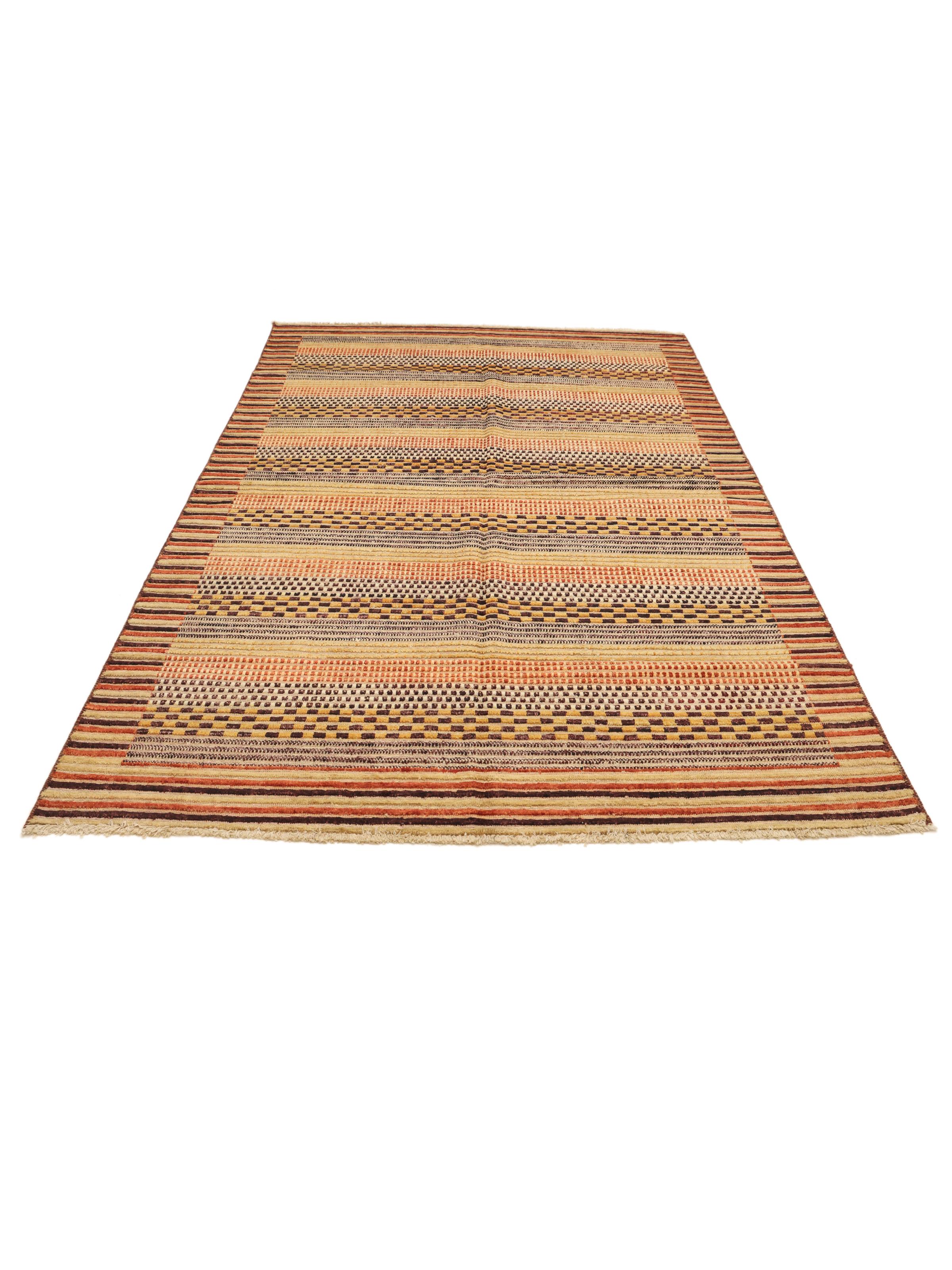
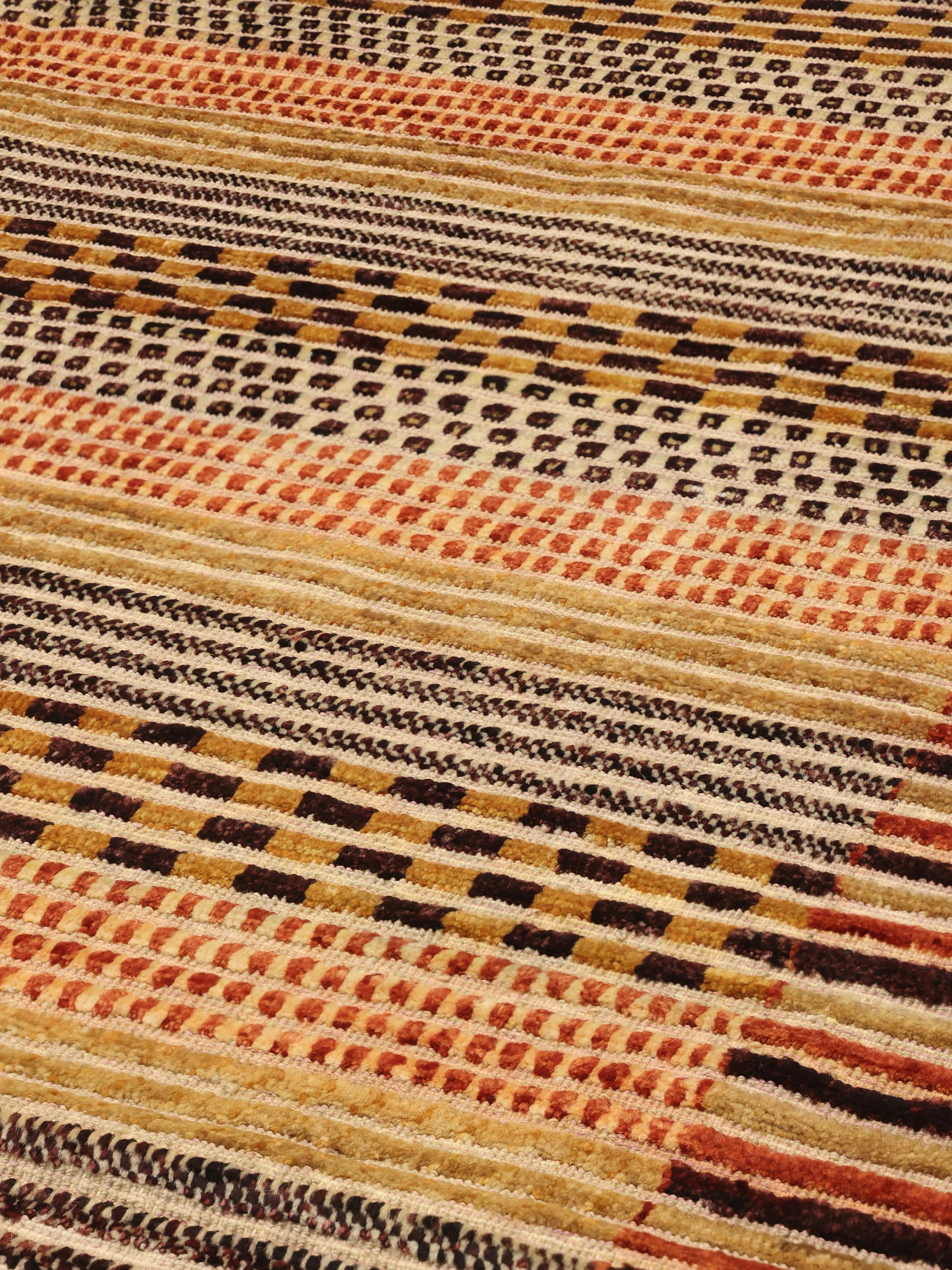
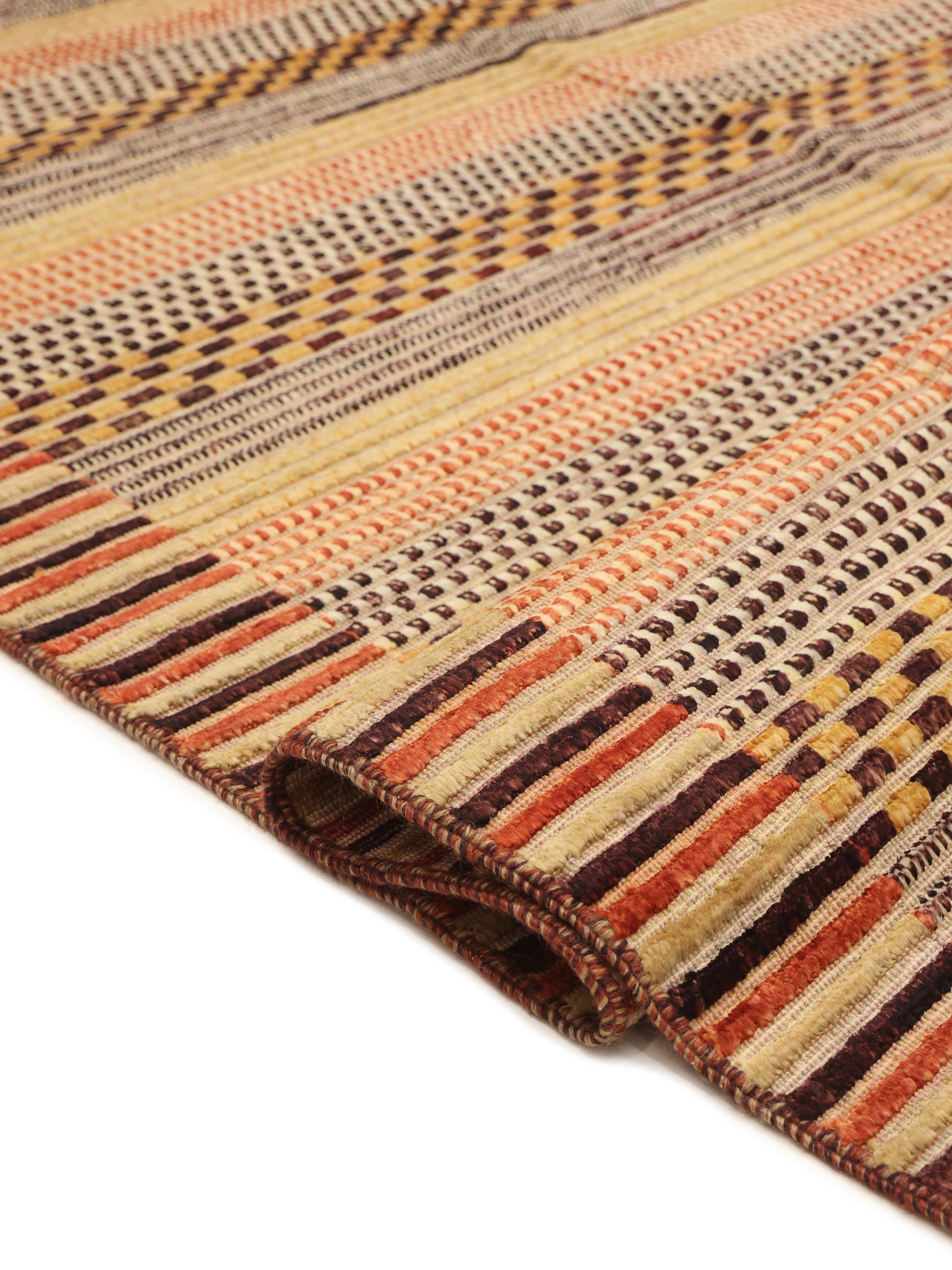
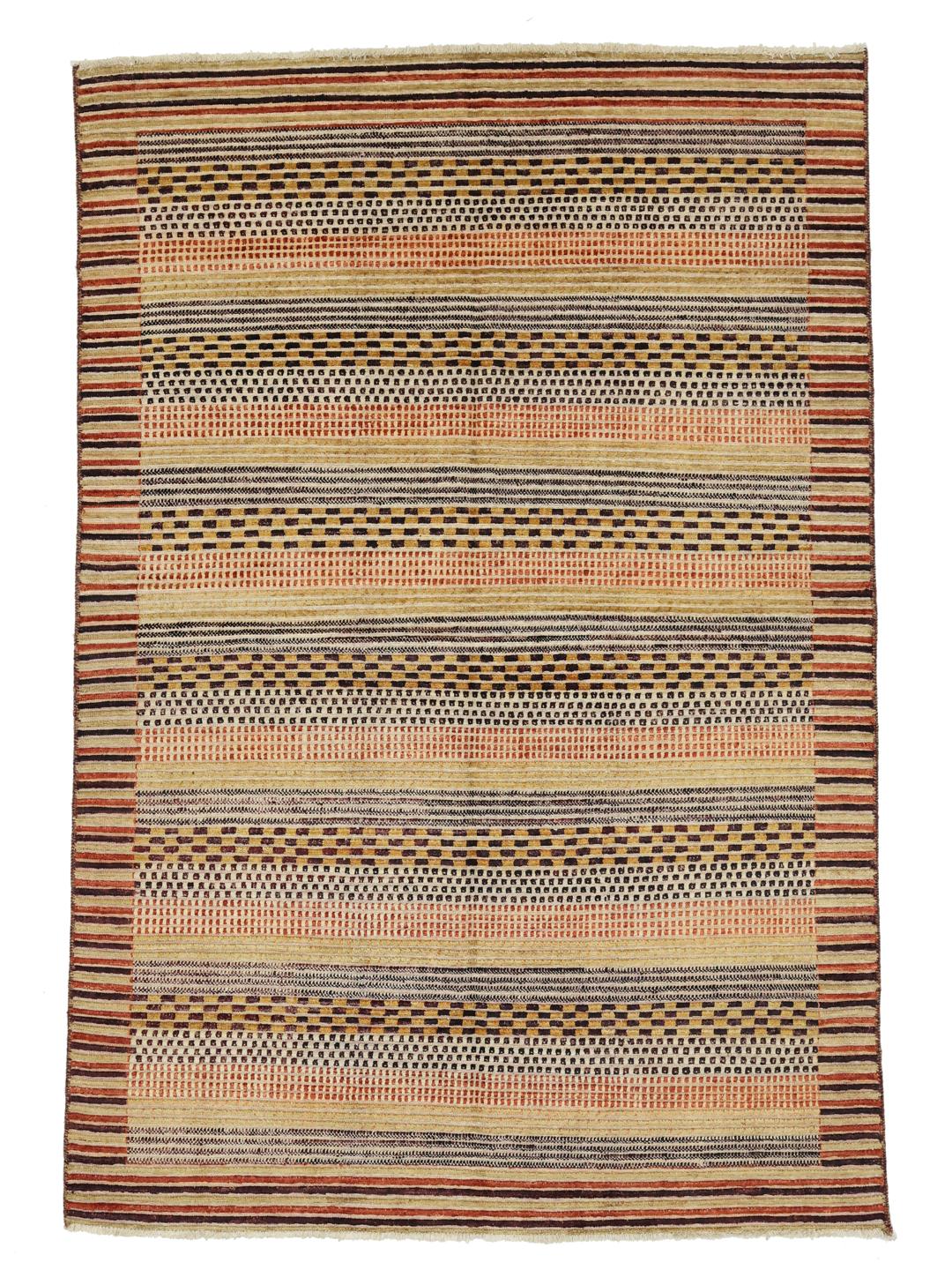
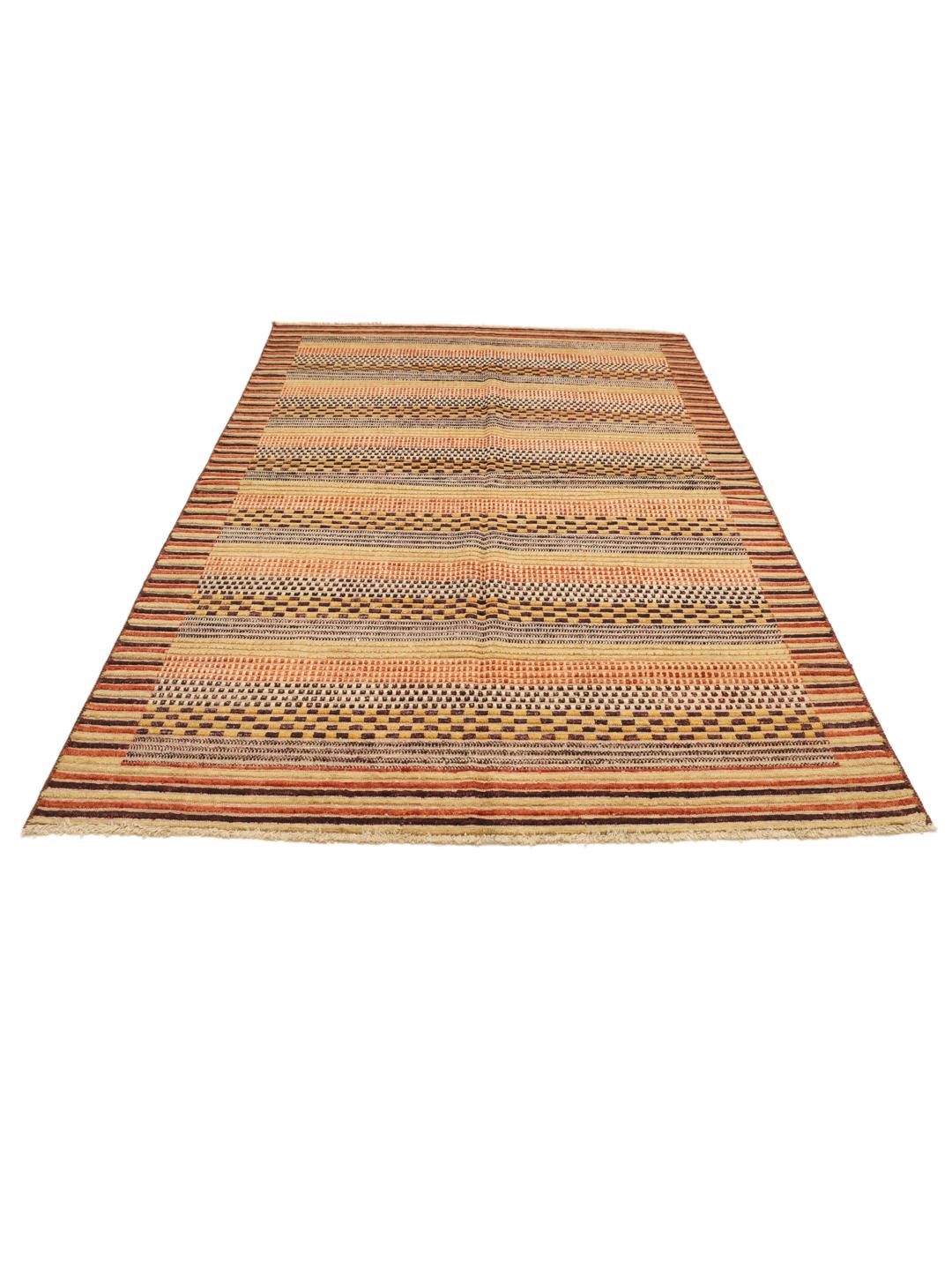
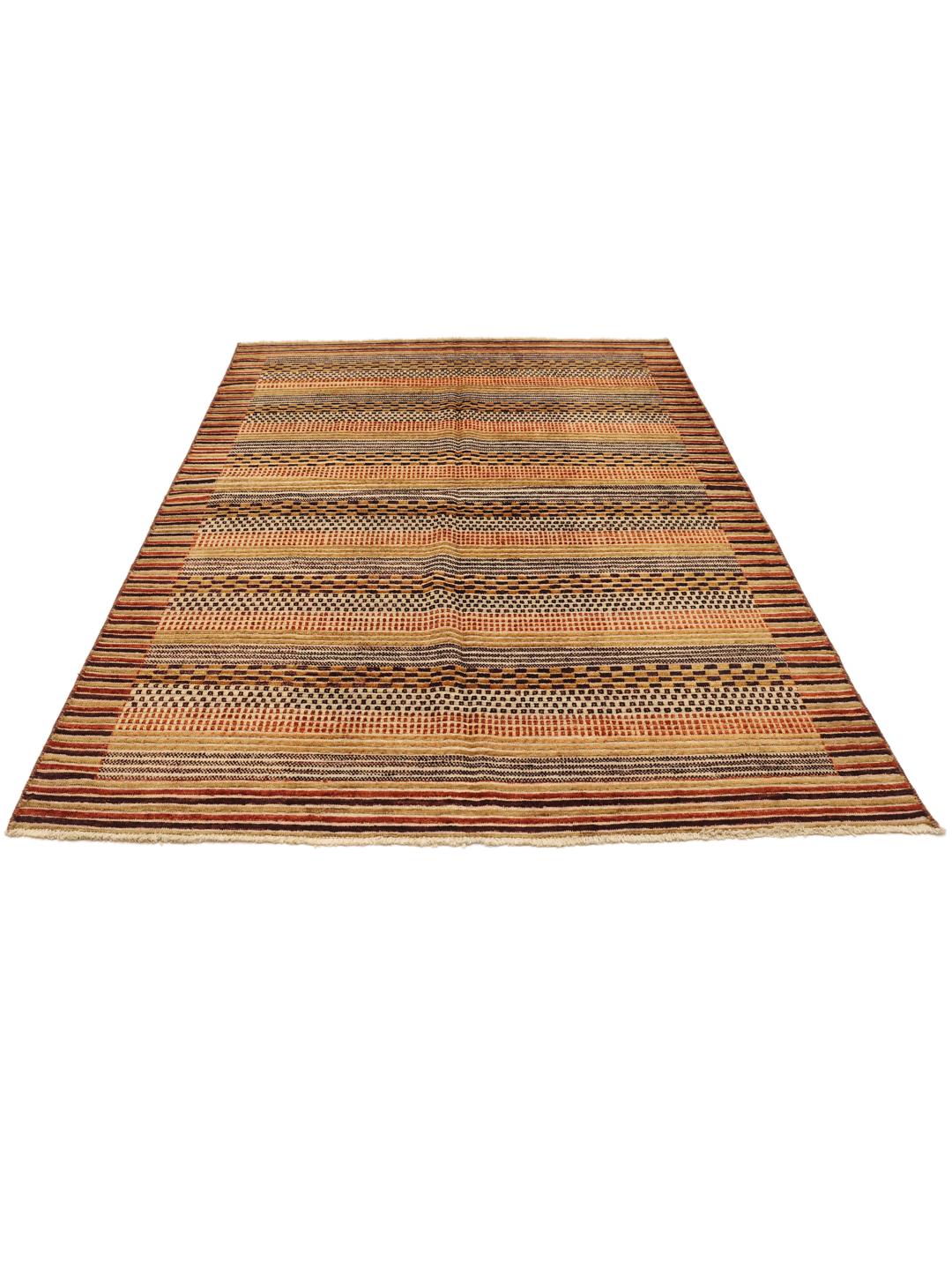
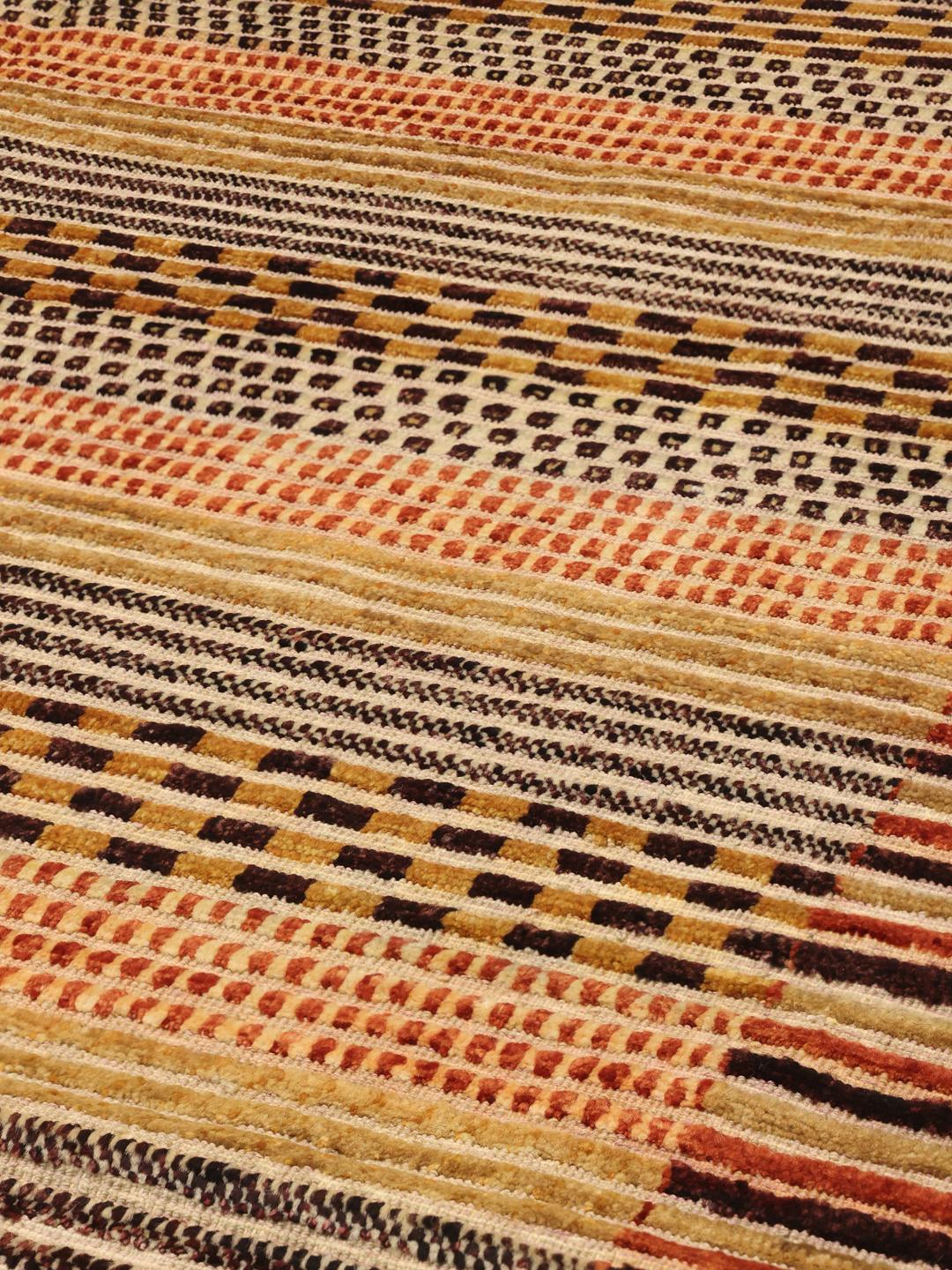
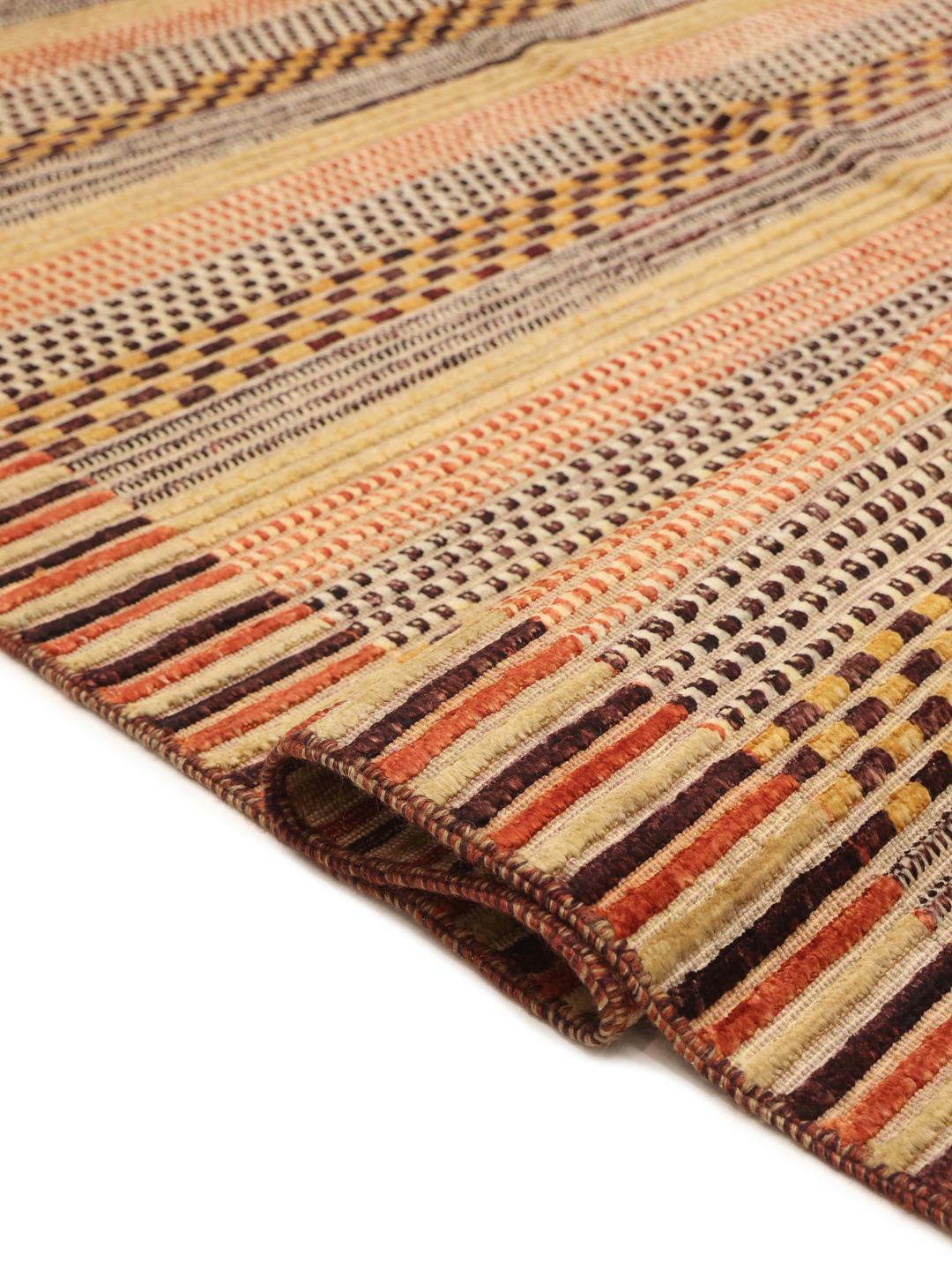
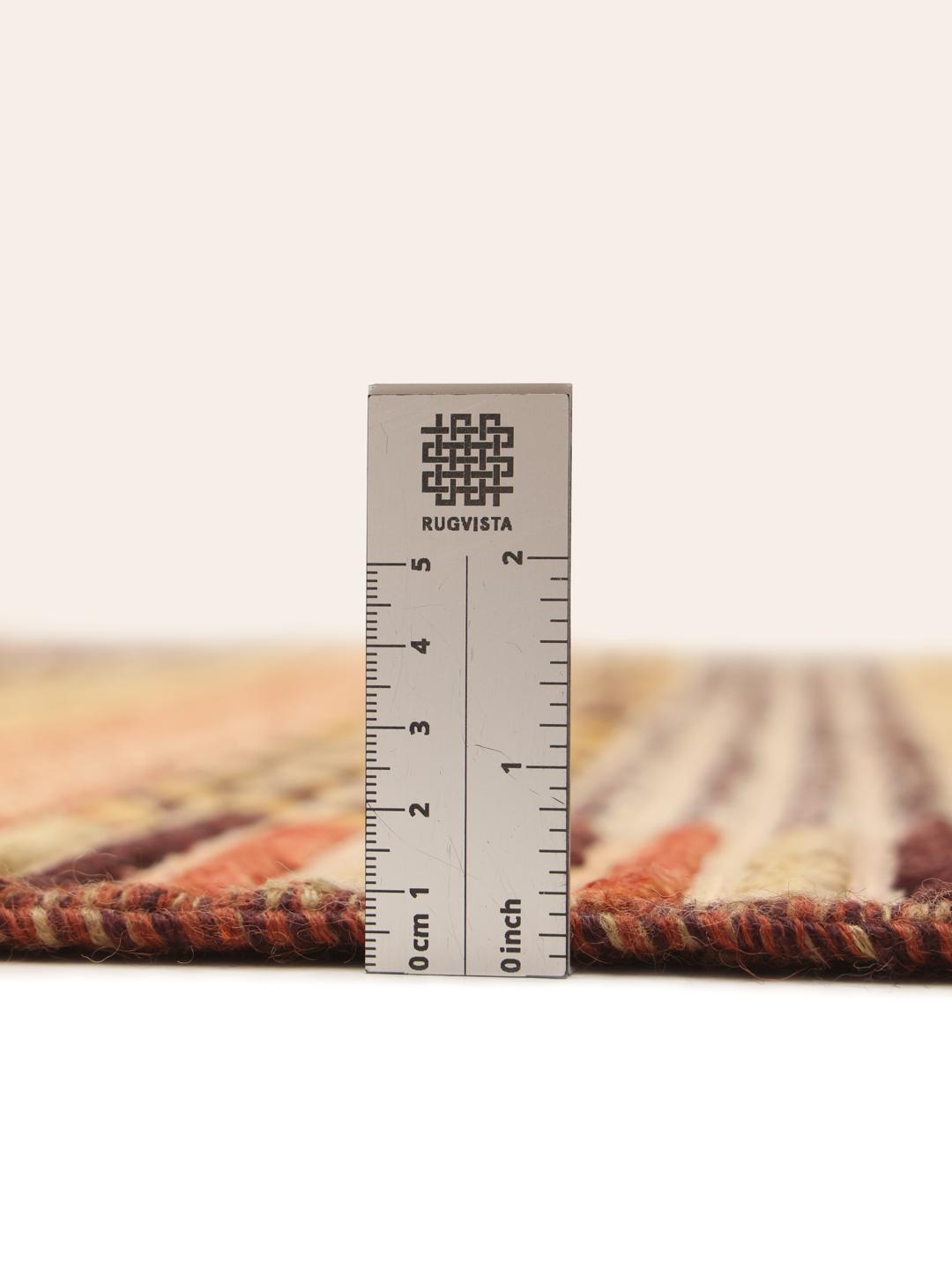
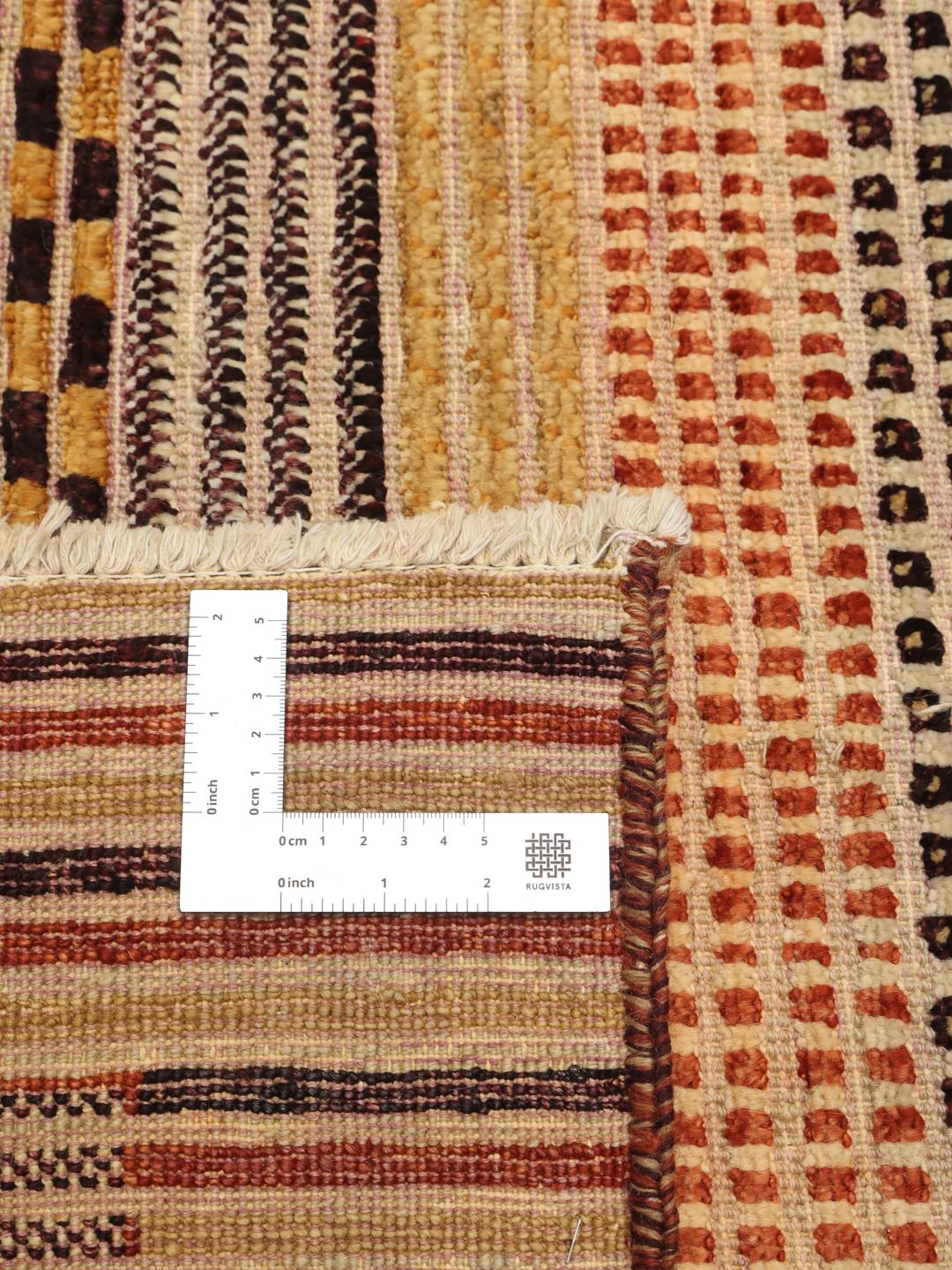
The visual language of Gabbeh rugs is traditionally characterised by open fields of colour, subtle tonal variations, and minimalist motifs inspired by nature, animals, or daily life. In this particular piece, the striped pattern demonstrates a modern interpretation of tribal weaving, where restrained geometric bands create a calm, orderly rhythm across the surface.
Owning a Gabbeh rug means preserving a living craft tradition that values patience, natural materials, and personal expression over mass production. Collectors and interior enthusiasts value these pieces for their authenticity, cultural depth, and the rare human connection embedded in every single knot.