Gabbeh rugs originate from the nomadic tribes of Persia, most notably the Qashqai people, who wove them primarily for their own daily use rather than for trade. The word gabbeh itself means raw, natural, or uncut in Persian, reflecting the unpretentious and spontaneous nature of these traditional floor coverings. Over time, this rustic folk art evolved into a distinct style cherished worldwide for its honesty and artistic freedom.
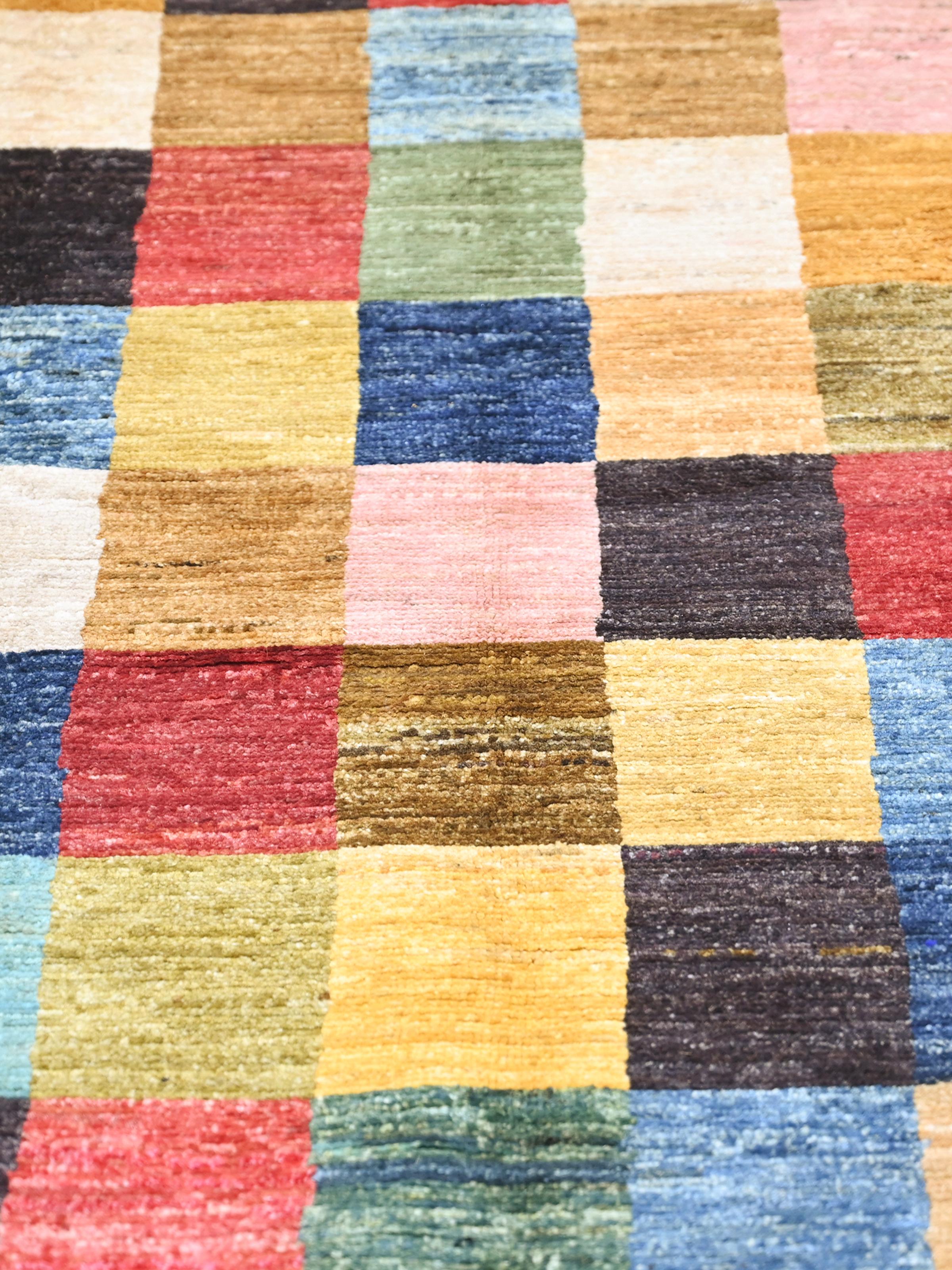
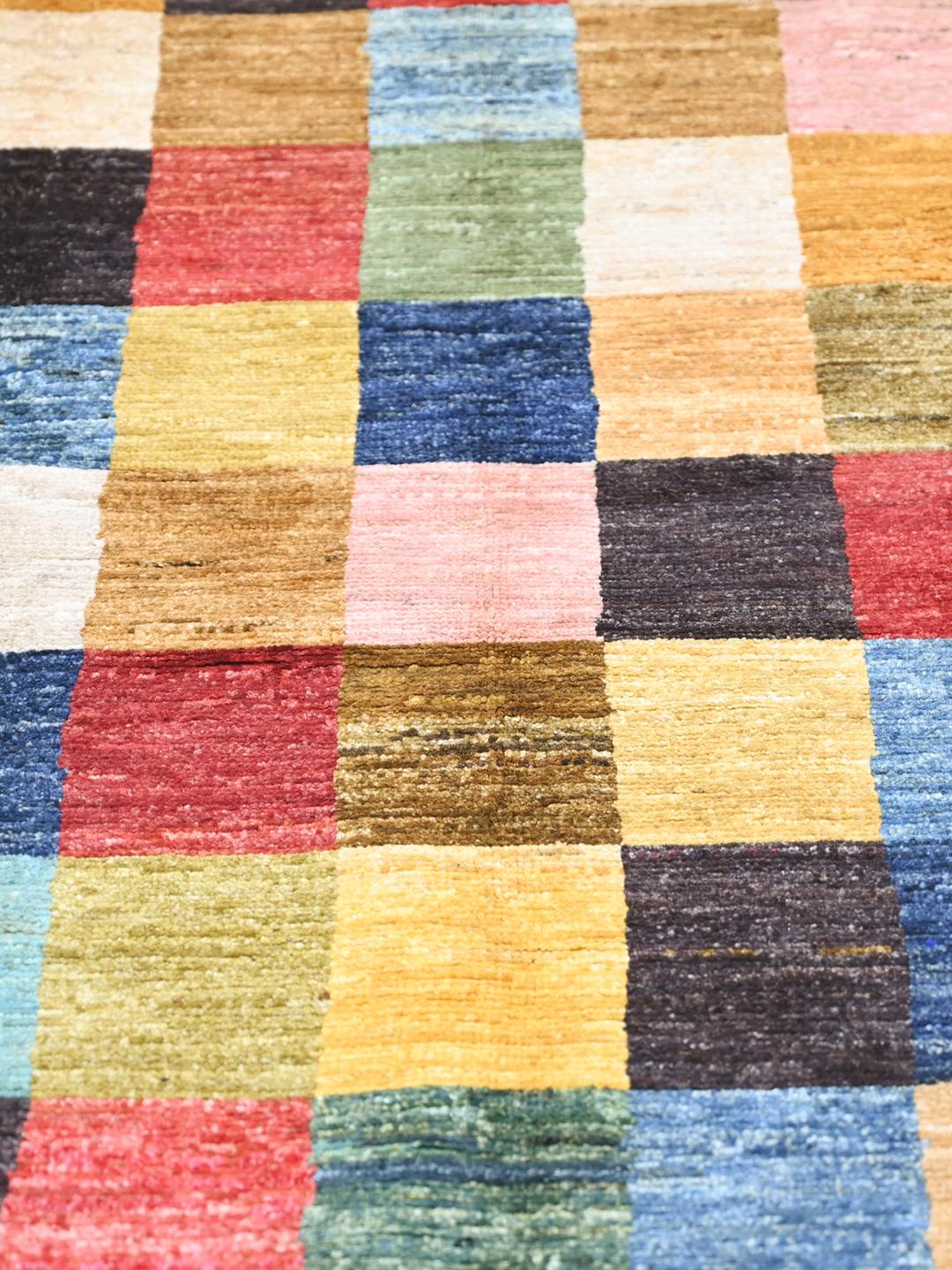
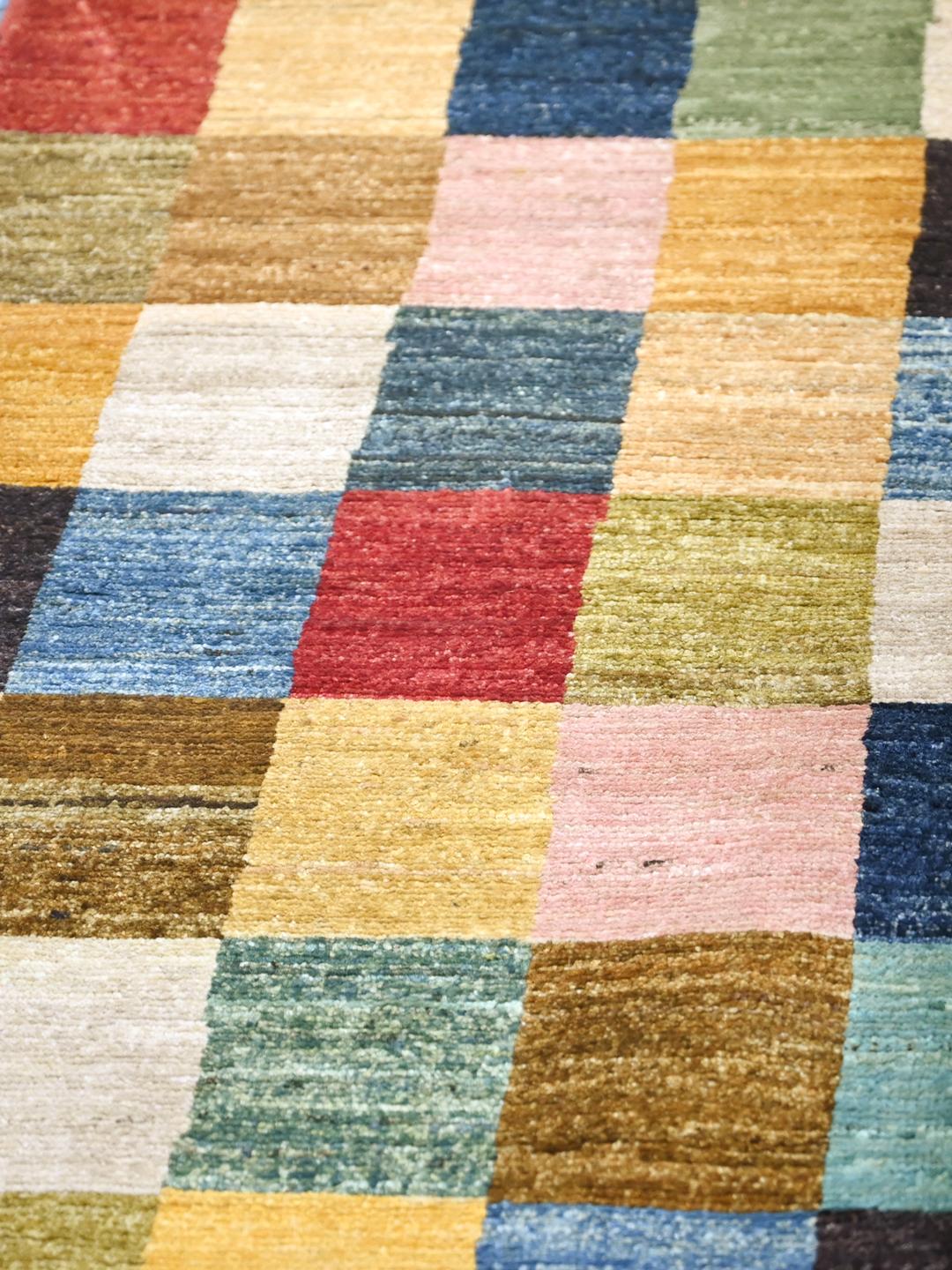
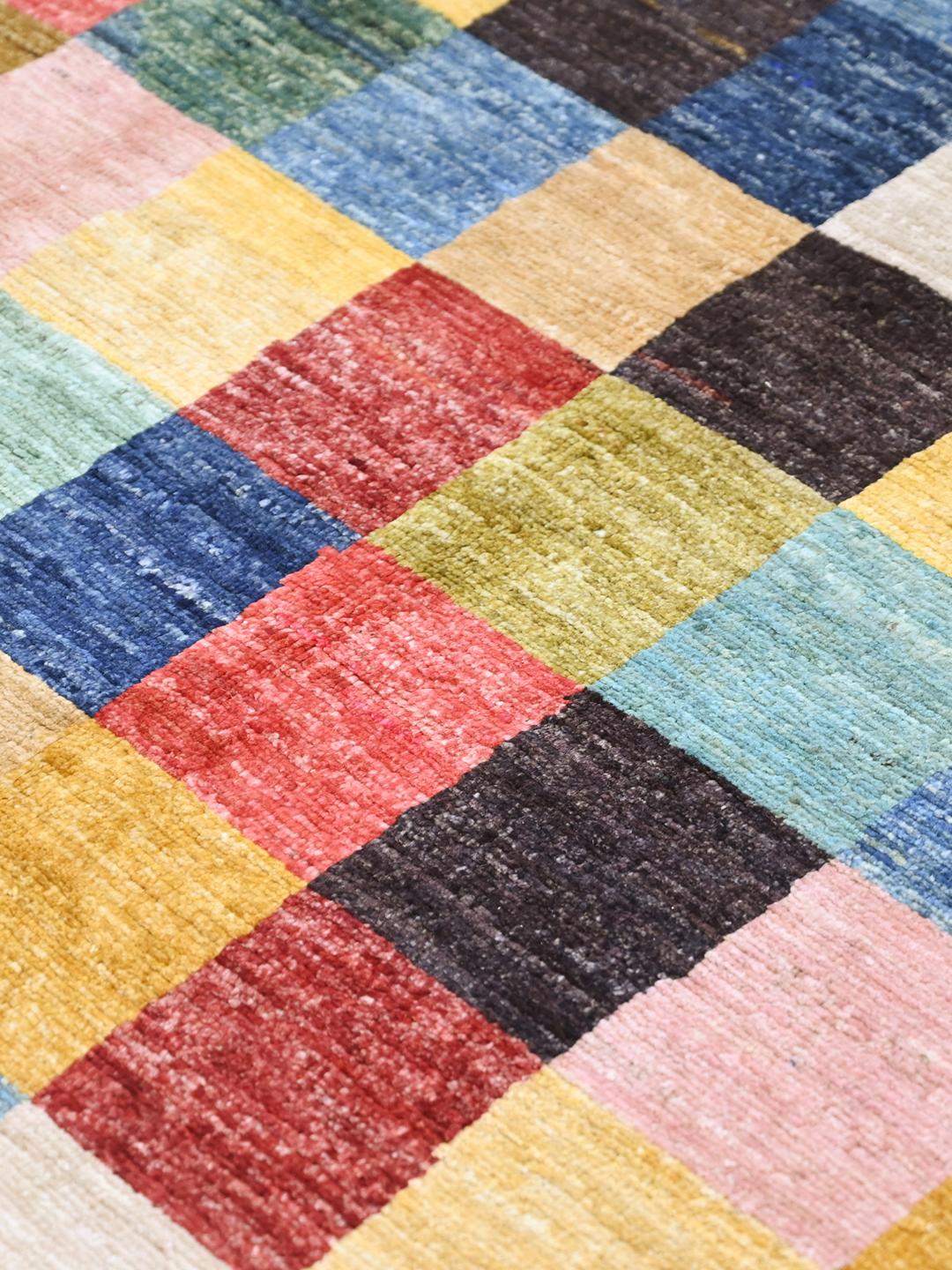
Unlike formal urban carpets with intricate floral symmetry, traditional Gabbeh weaving relies on simplified, abstract designs inspired by the daily life, nature, and imagination of the weaver. Artisans traditionally used handspun wool dyed with natural plant extracts, creating subtle tonal variations known as ablak, where the colour shifts gently across the surface.
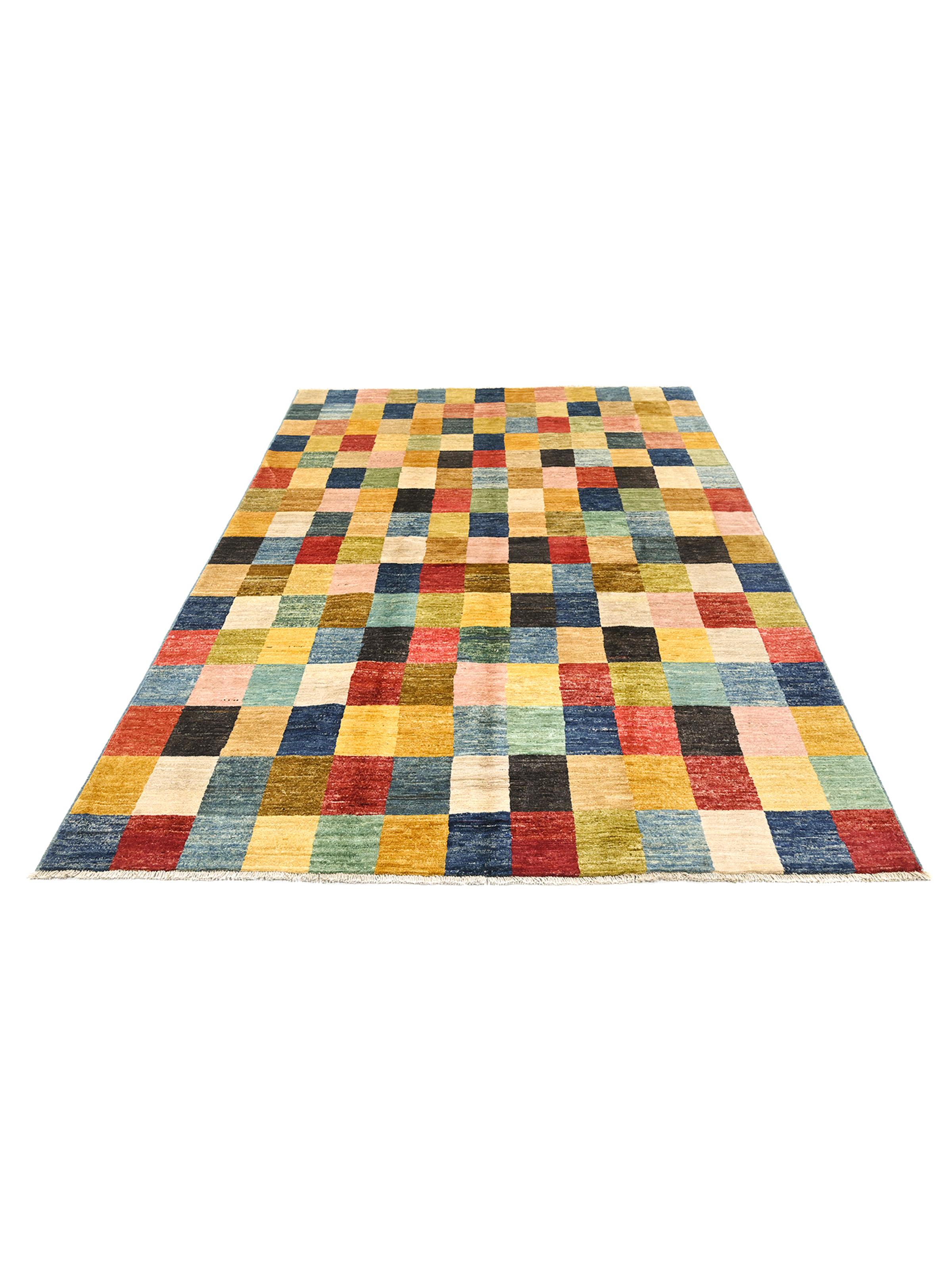
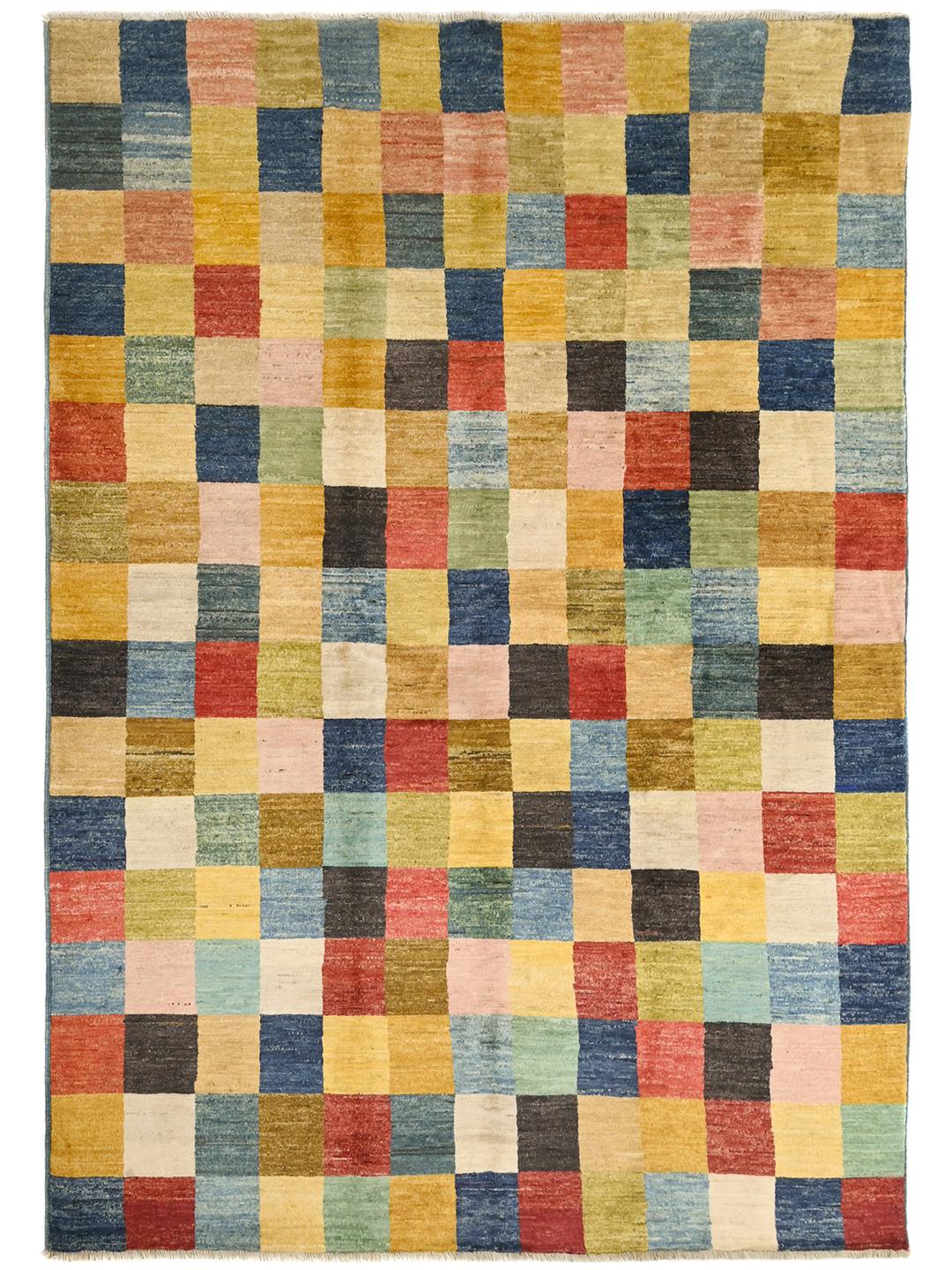
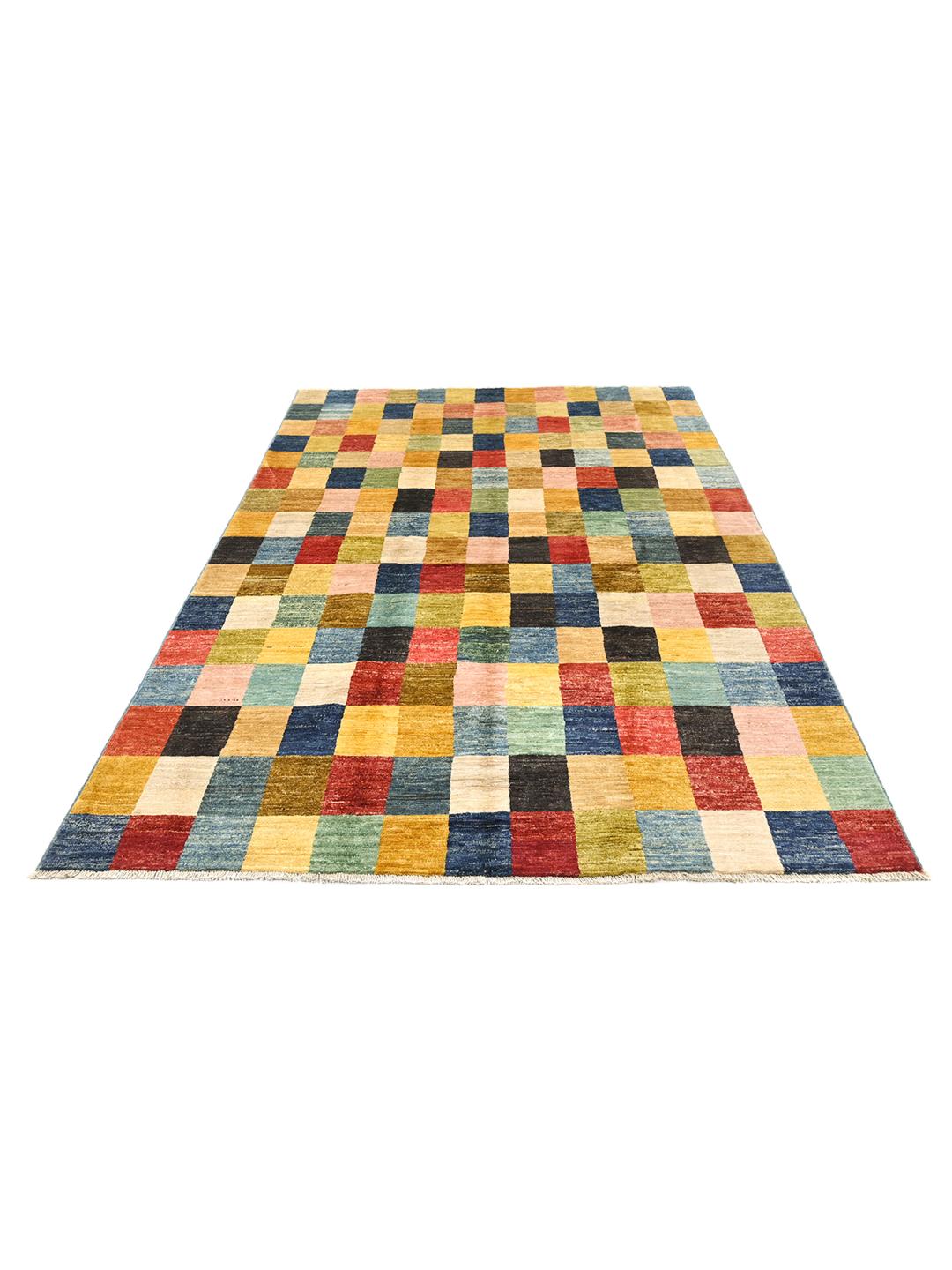
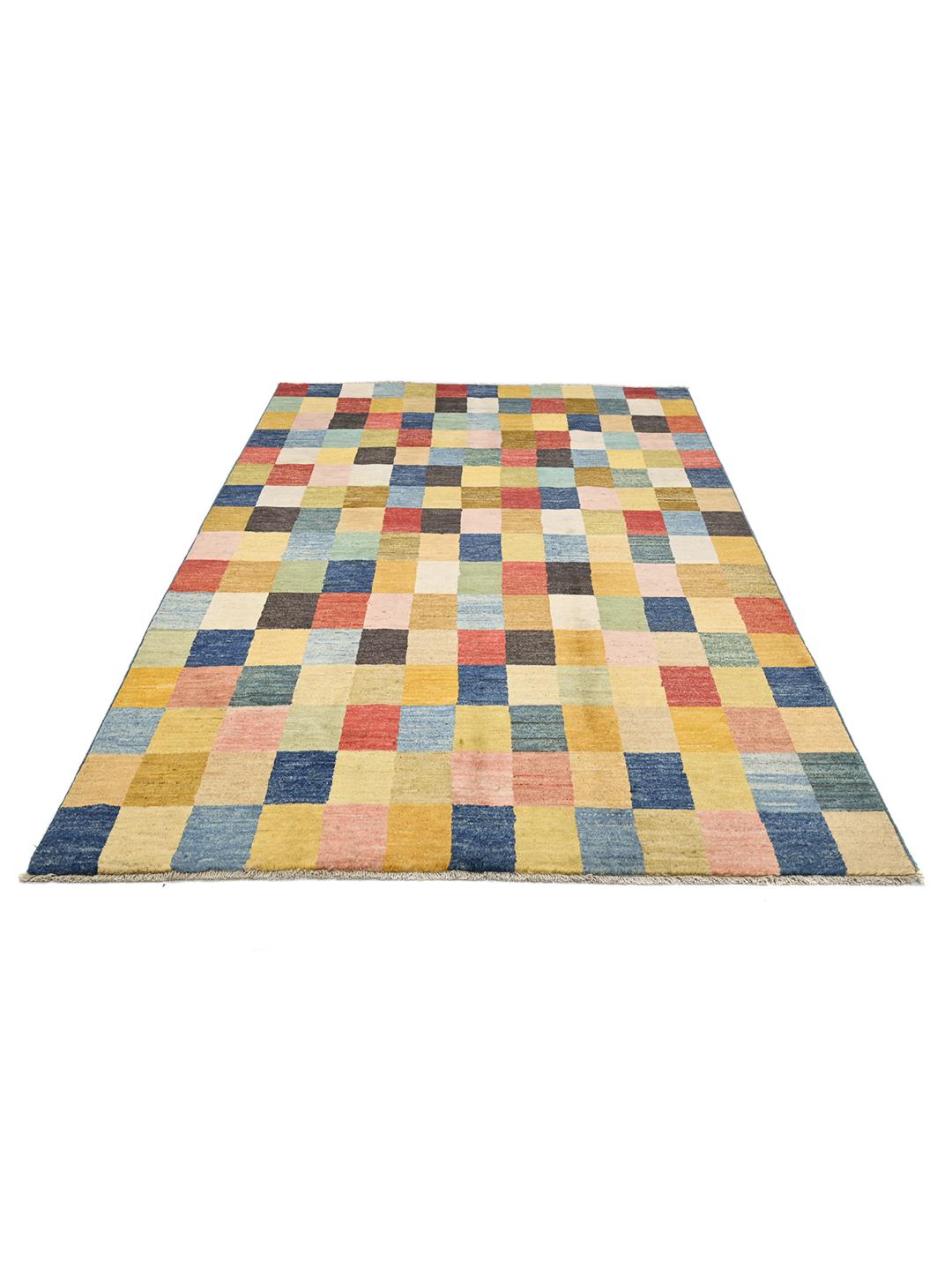
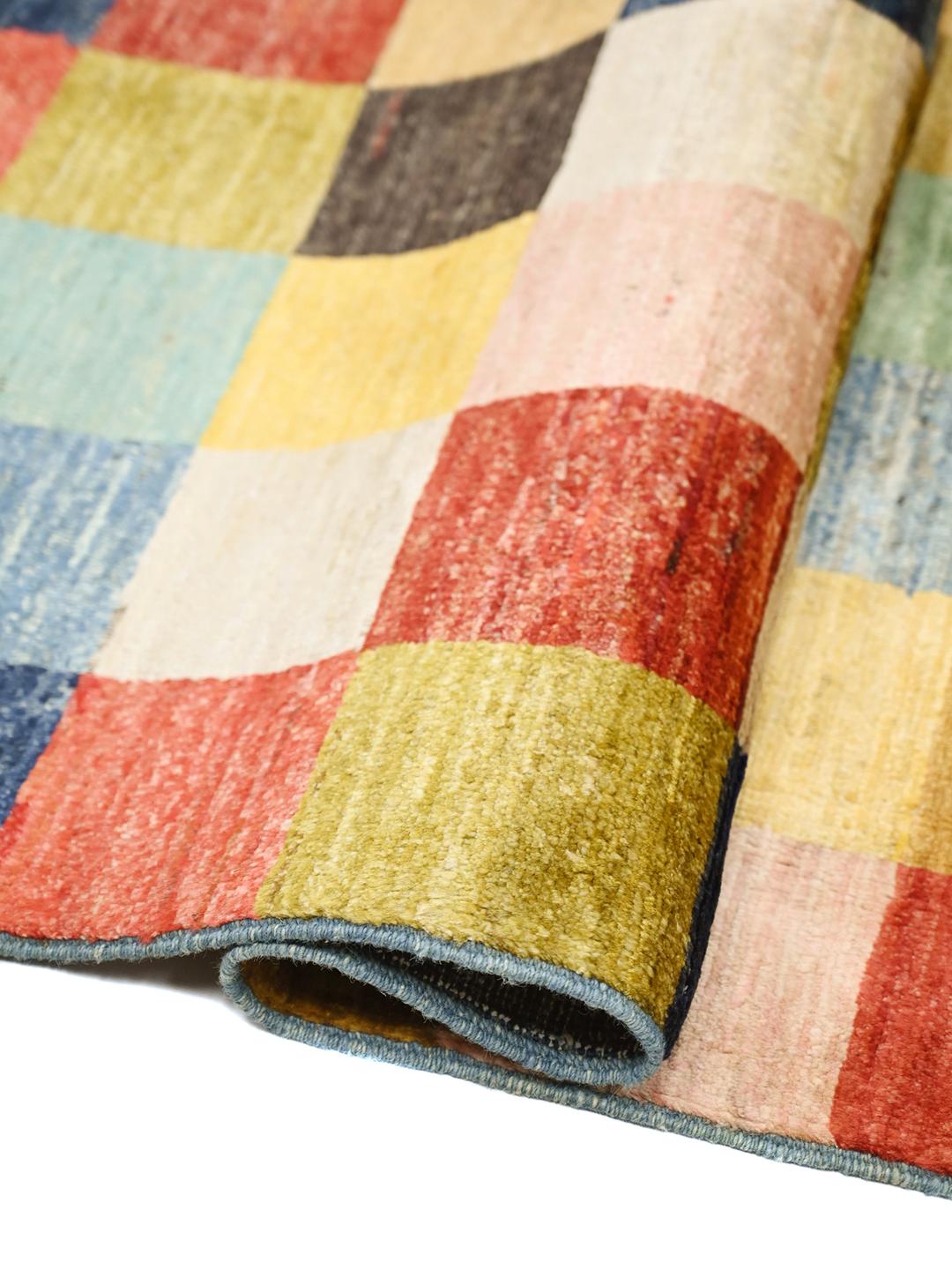
The design of this specific rug features a structured grid of colourful squares, offering a modern interpretation of ancient tribal aesthetics. While retaining the deep cultural roots of traditional nomadic weaving, this contemporary expression demonstrates how the Gabbeh tradition continues to adapt and thrive in modern interiors.
Owning a Gabbeh rug connects your home to a long lineage of nomadic artistry and storytelling. Each piece stands as a testament to the patience, skill, and creative intuition of the artisan who brought it to life, making it a valued possession for those who appreciate authentic craft.