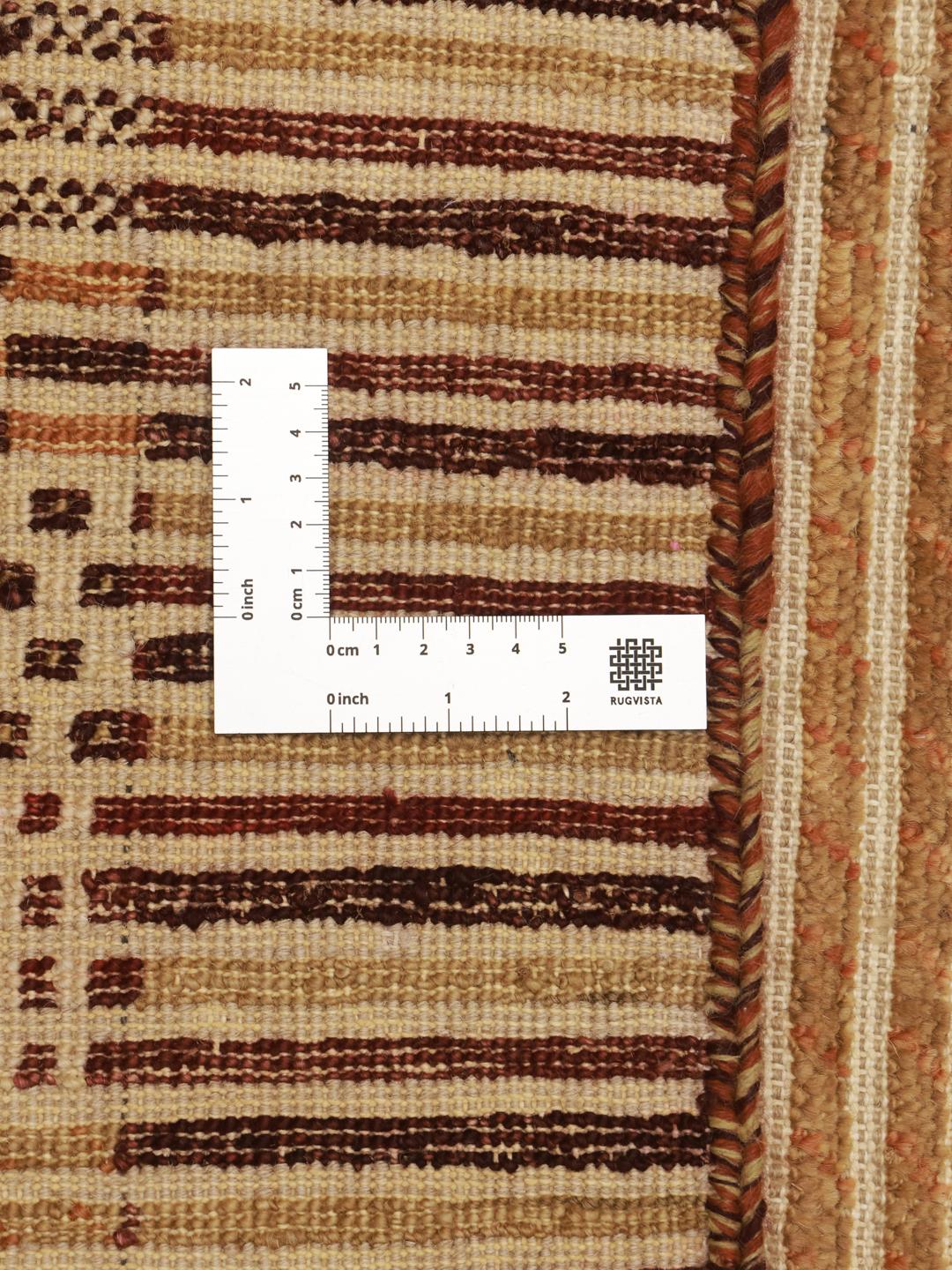
Gabbeh rugs trace their origins back to the nomadic pastoralist tribes of the Middle East, particularly the Qashqai and related tribal groups who wove them primarily for their own daily use rather than for trade. The word Gabbeh itself means raw, natural, or uncut in Persian, perfectly describing the unpretentious, straightforward character of these traditional floor coverings. Unlike formal city carpets with intricate, pre-planned floral designs, nomadic weavers created Gabbehs spontaneously, drawing inspiration from their immediate surroundings, daily life, and personal experiences in the open landscape.
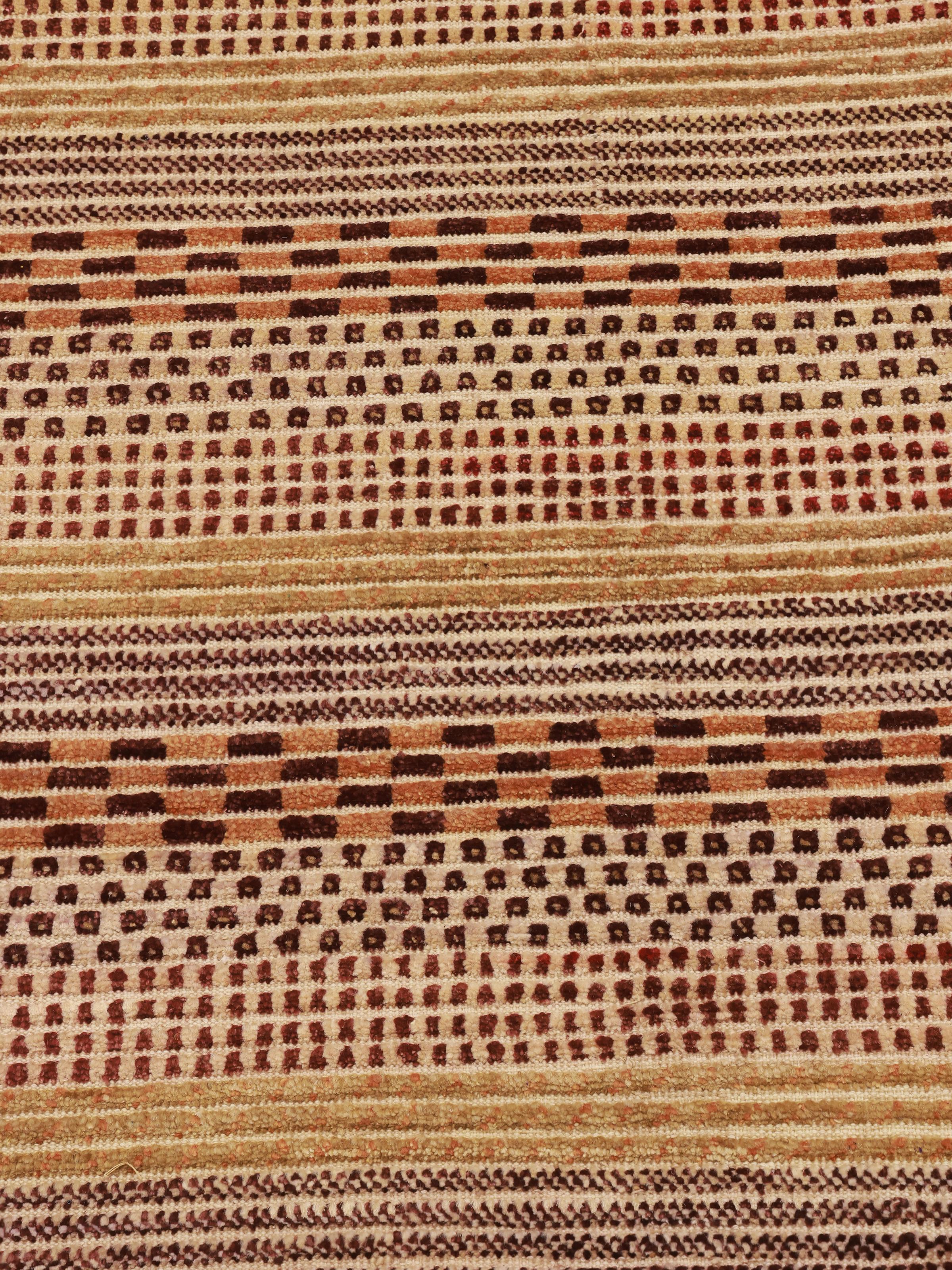
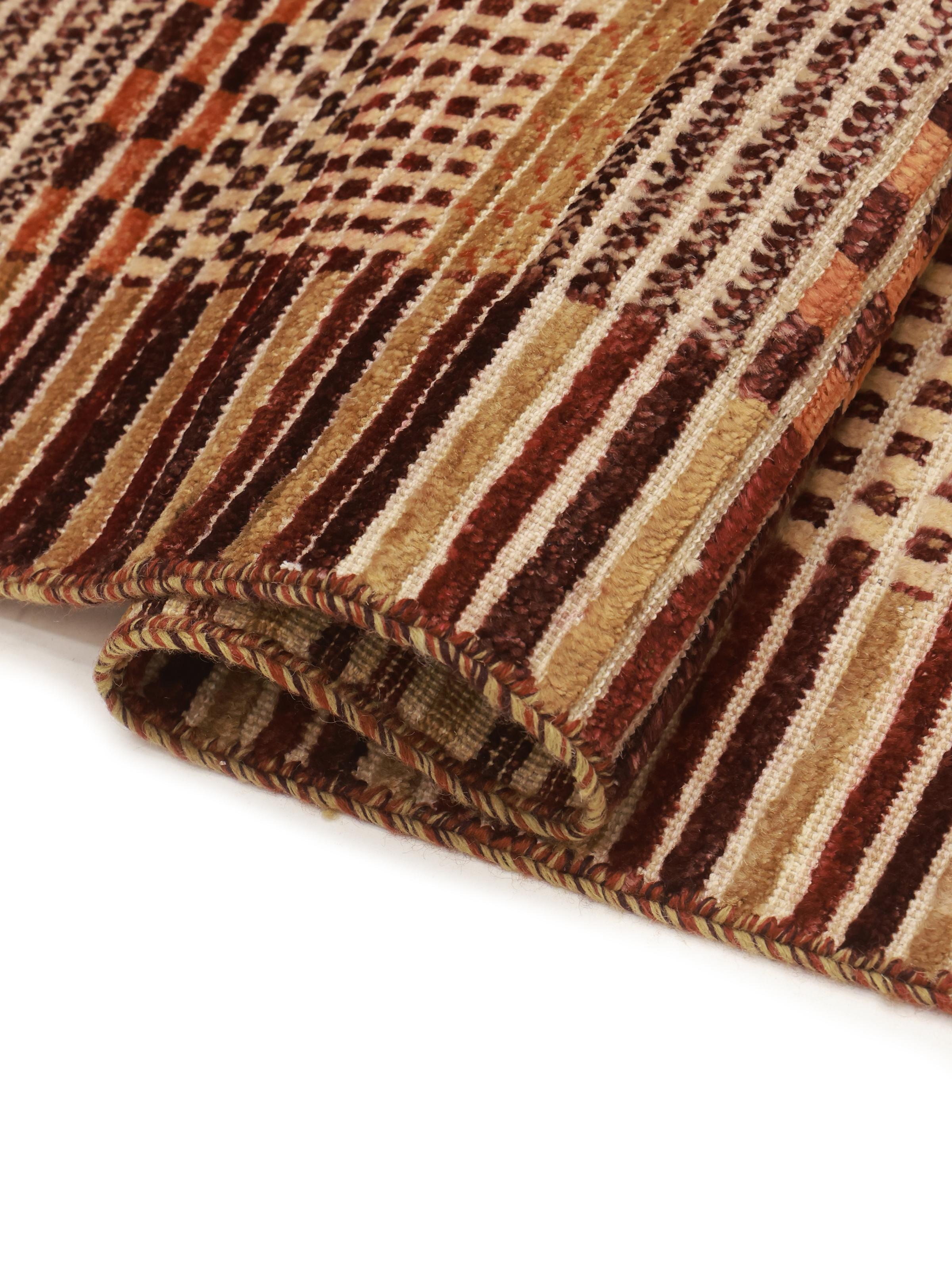
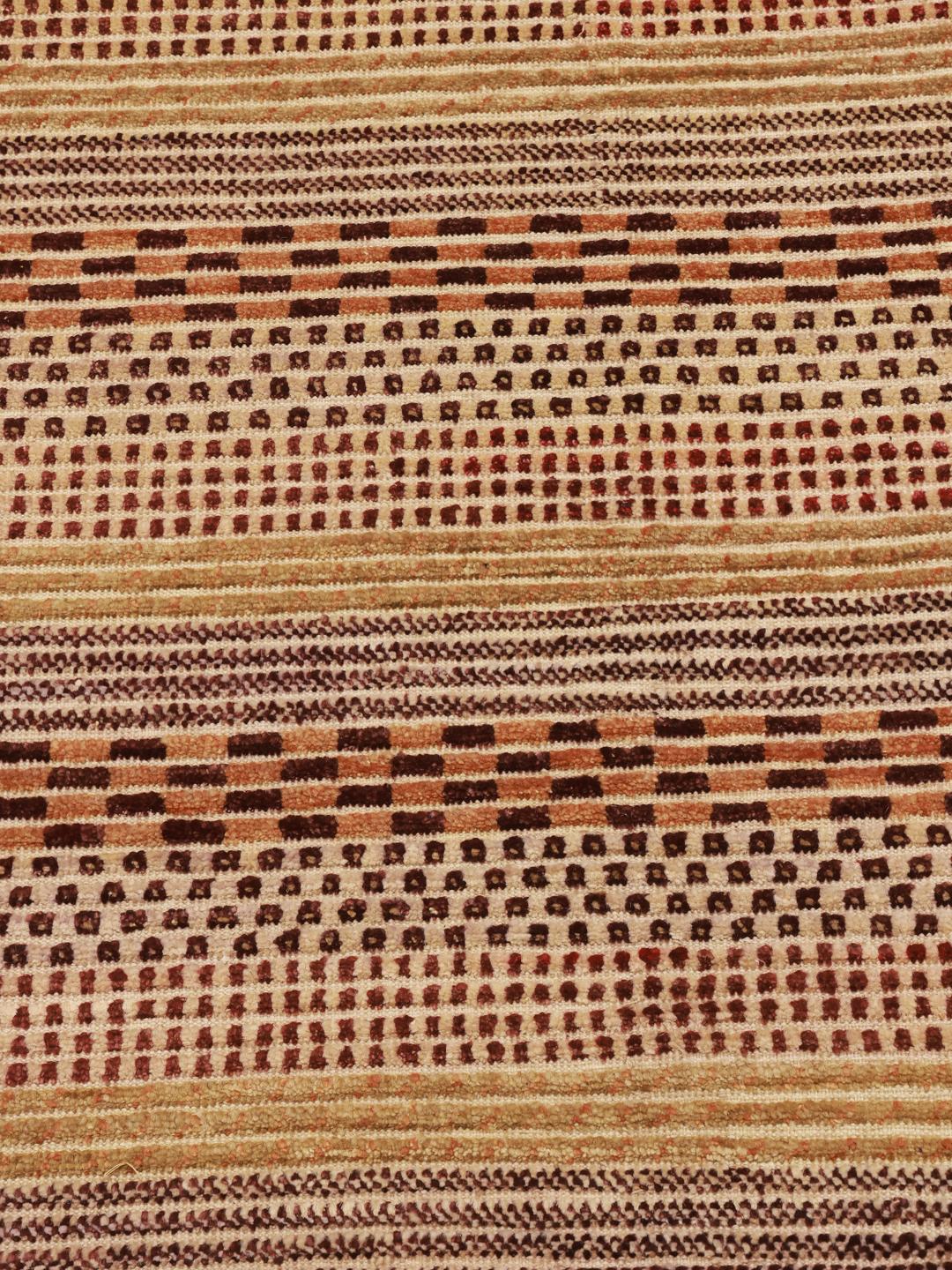
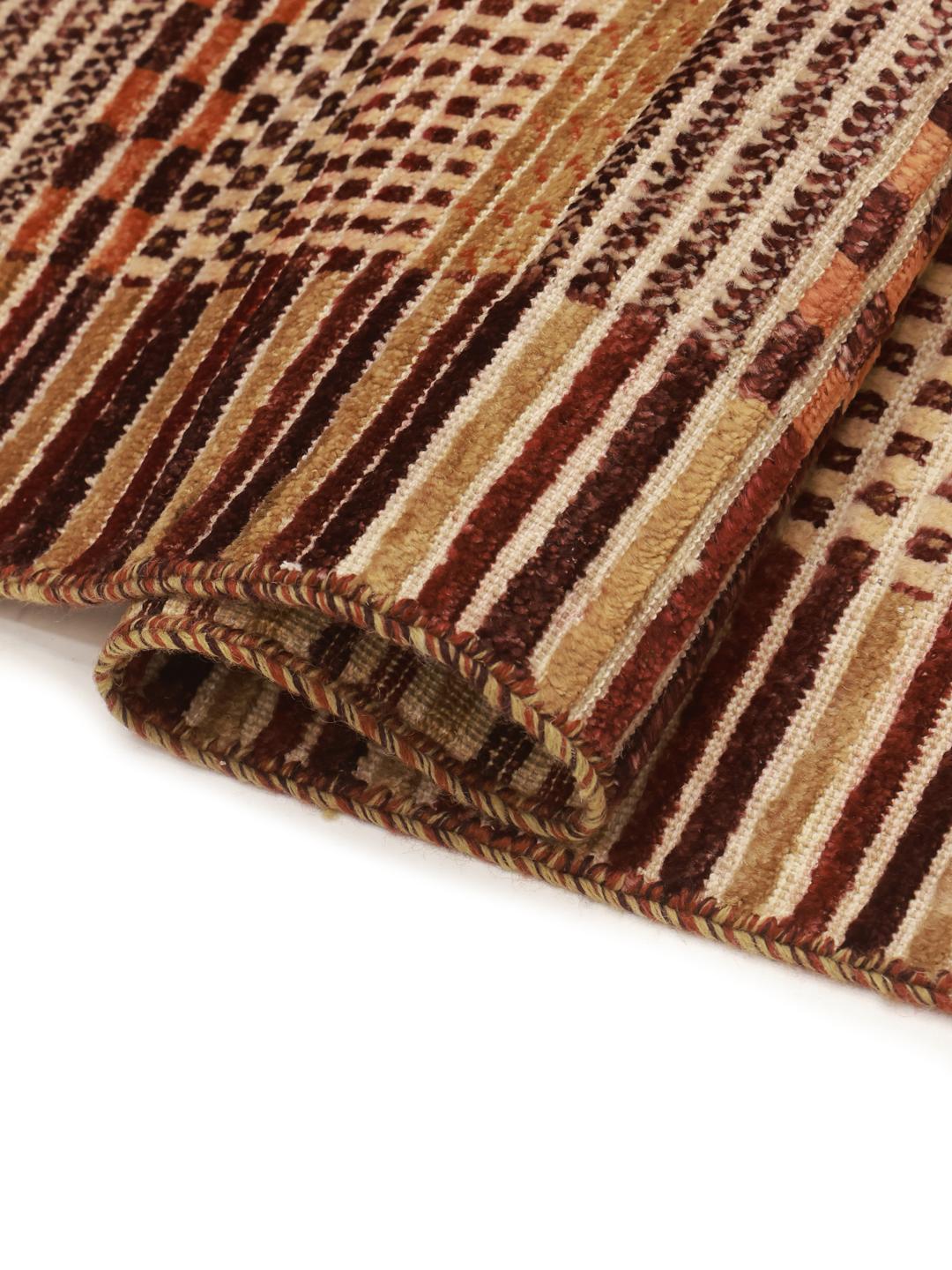
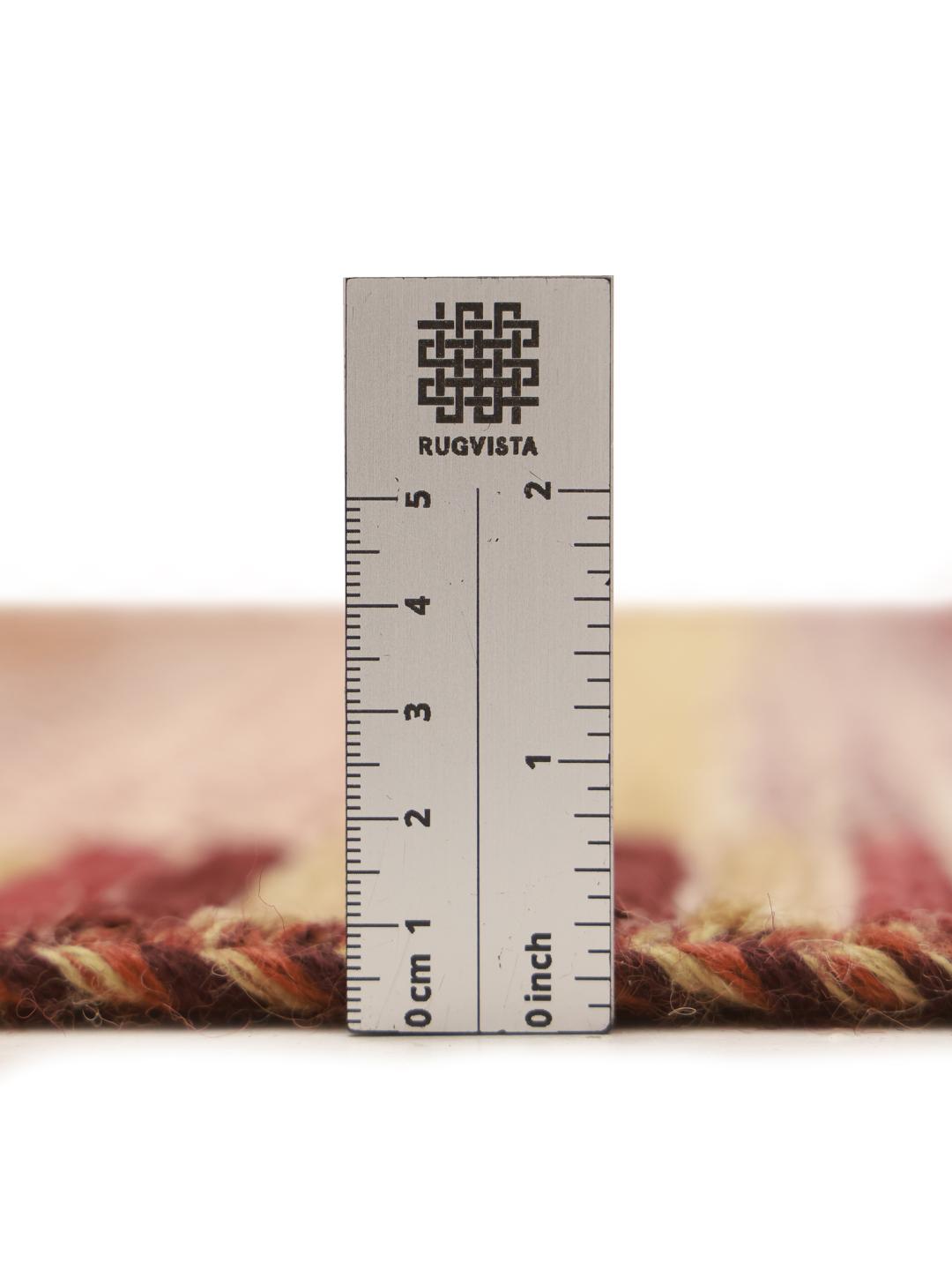
The traditional craft relies on hand-spun 100% wool dyed using natural materials such as roots, leaves, and plant extracts, which yields rich, earthy tones that develop a beautiful patina over time. The wool is typically prepared using a multi-ply twist, meaning the yarn is spun with multiple strands to produce a thicker, heavier, and more resilient pile. This traditional spinning method helps the wool retain its natural lanolin, providing a soft, protective coating that naturally resists everyday dirt and moisture.
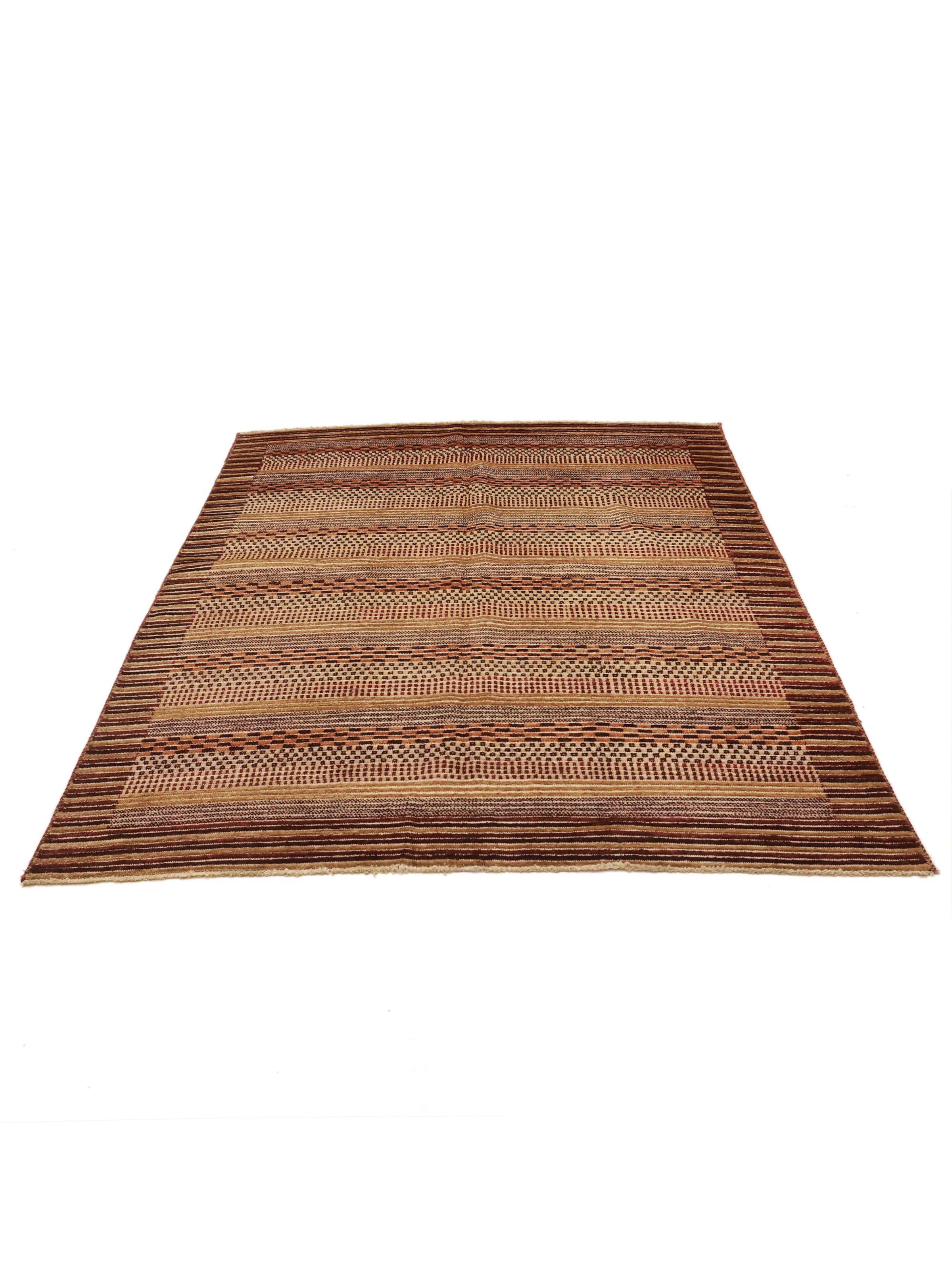
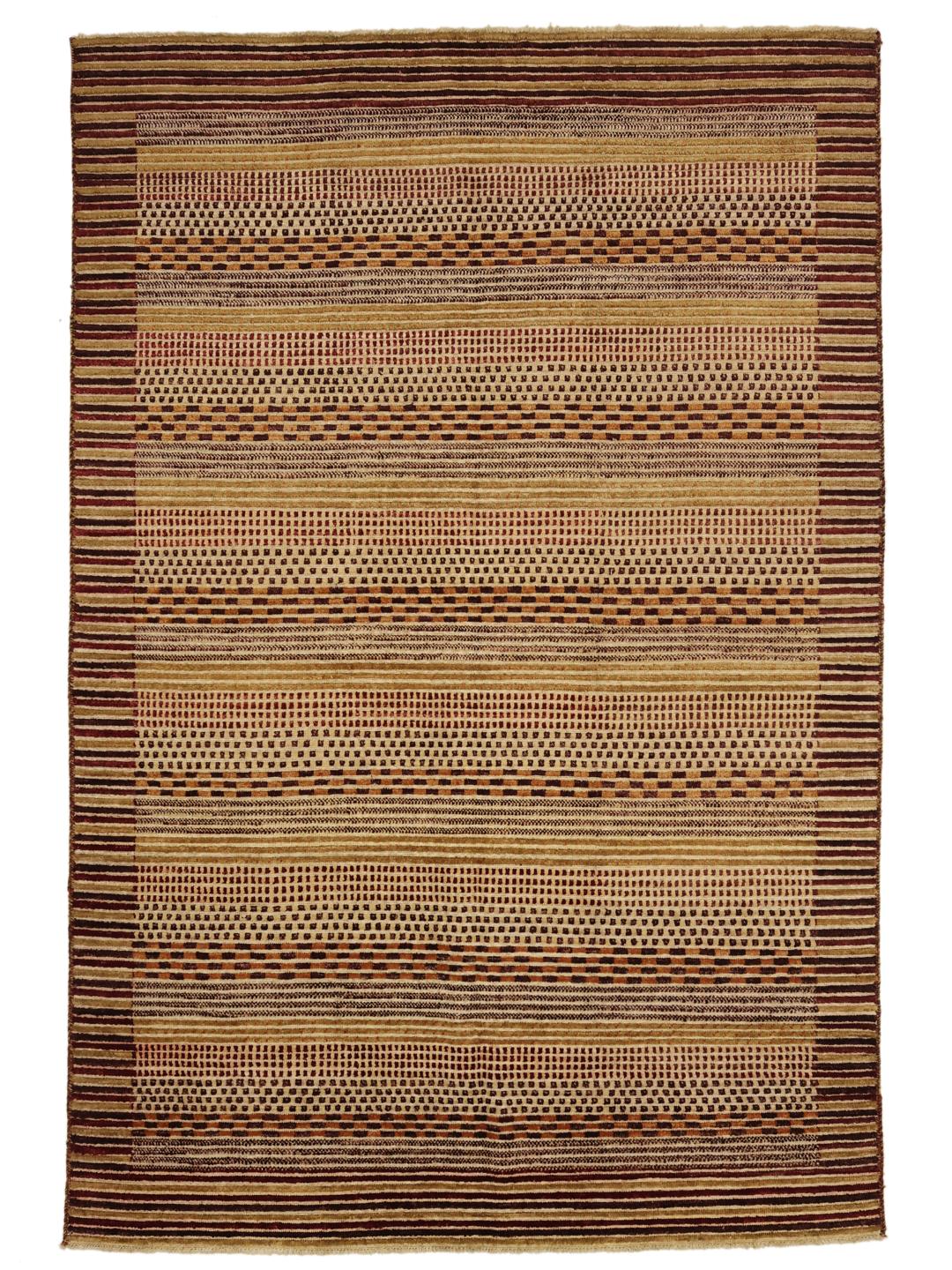
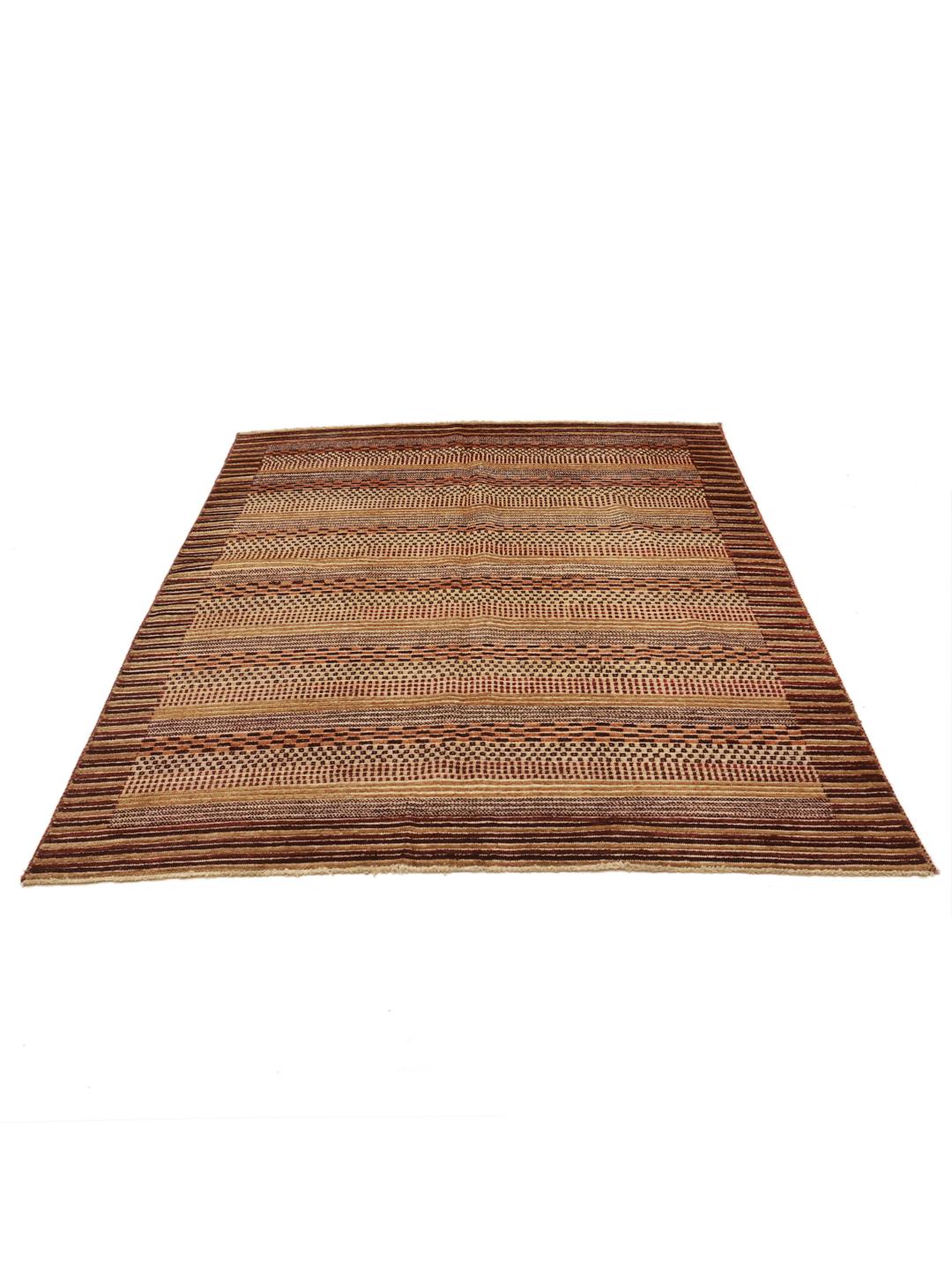
Visually, traditional Gabbehs are celebrated for their minimalist fields, often featuring large expanses of solid or subtly shaded colour accented by sparse geometric motifs, stylised animal figures, or simple striped borders. Modern interpretations like this Afghan piece build upon that ancient aesthetic by incorporating contemporary colour combinations and clean striped patterns while staying true to the fundamental techniques passed down through generations of tribal artisans.
Today, owning a genuine Gabbeh is a way to connect with a living nomadic heritage and bring authentic artisan skill into modern interiors. Collectors and design enthusiasts value these rugs not only for their robust practicality and warming comfort, but for the quiet artistic expression found in every handmade piece, representing a timeless tradition of craft that values human touch over uniformity.