Gabbeh rugs originate from the nomadic tribes of the Zagros Mountains in the Middle East, traditionally woven by women for their own families' daily use. Unlike formal city carpets with rigid floral layouts, traditional Gabbehs were spontaneous artistic expressions reflecting the weaver's surroundings, daily life, and quiet moments in nature.
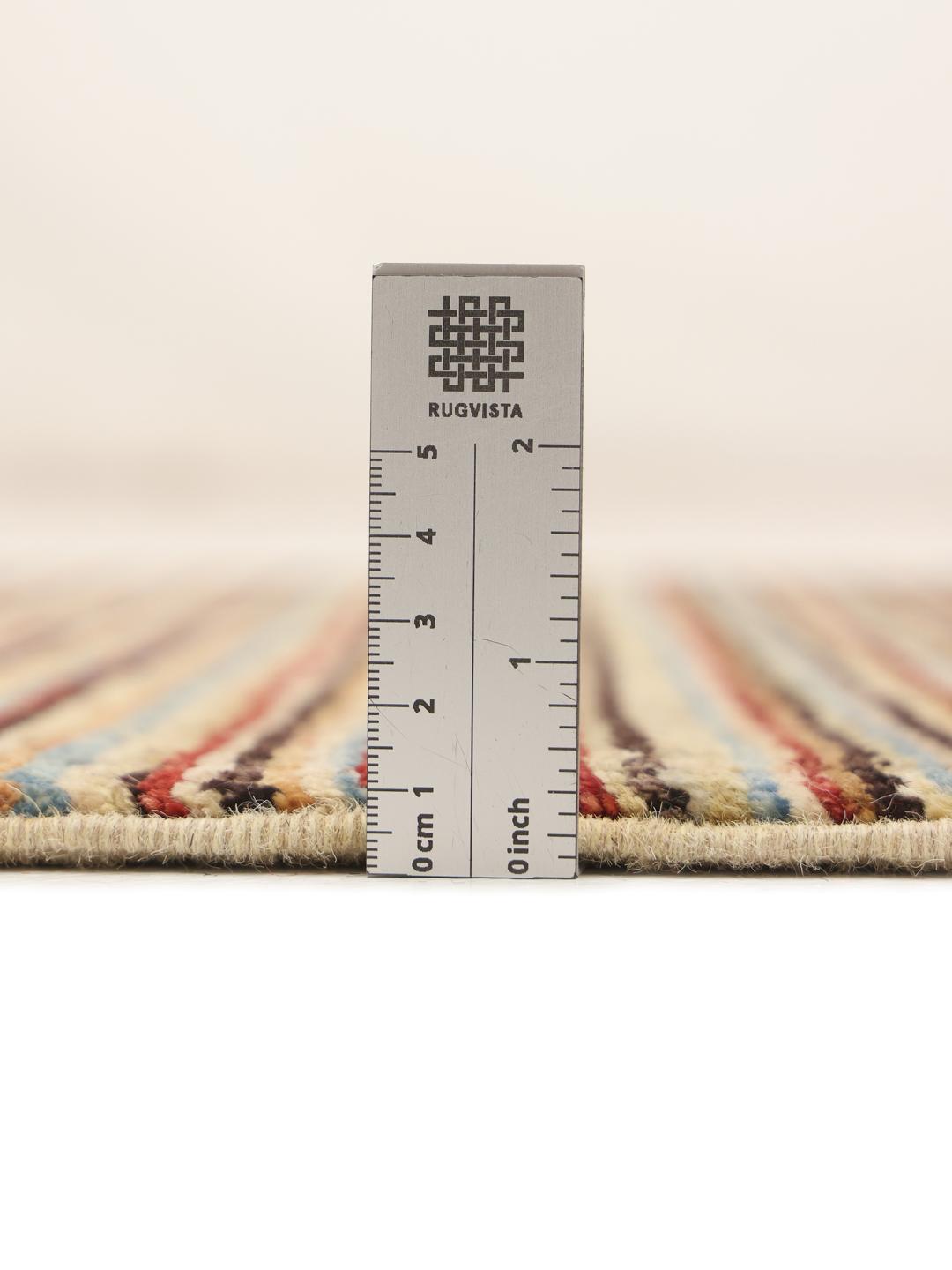
The term Gabbeh itself translates to raw, natural, or uncut, referring to the thick, long pile and simplified designs that distinguish these pieces. Over generations, the tradition evolved into the modern Gabbeh style, which pairs the iconic plush wool texture with minimalist fields and contemporary color palettes while preserving the heritage of hand-knotting.
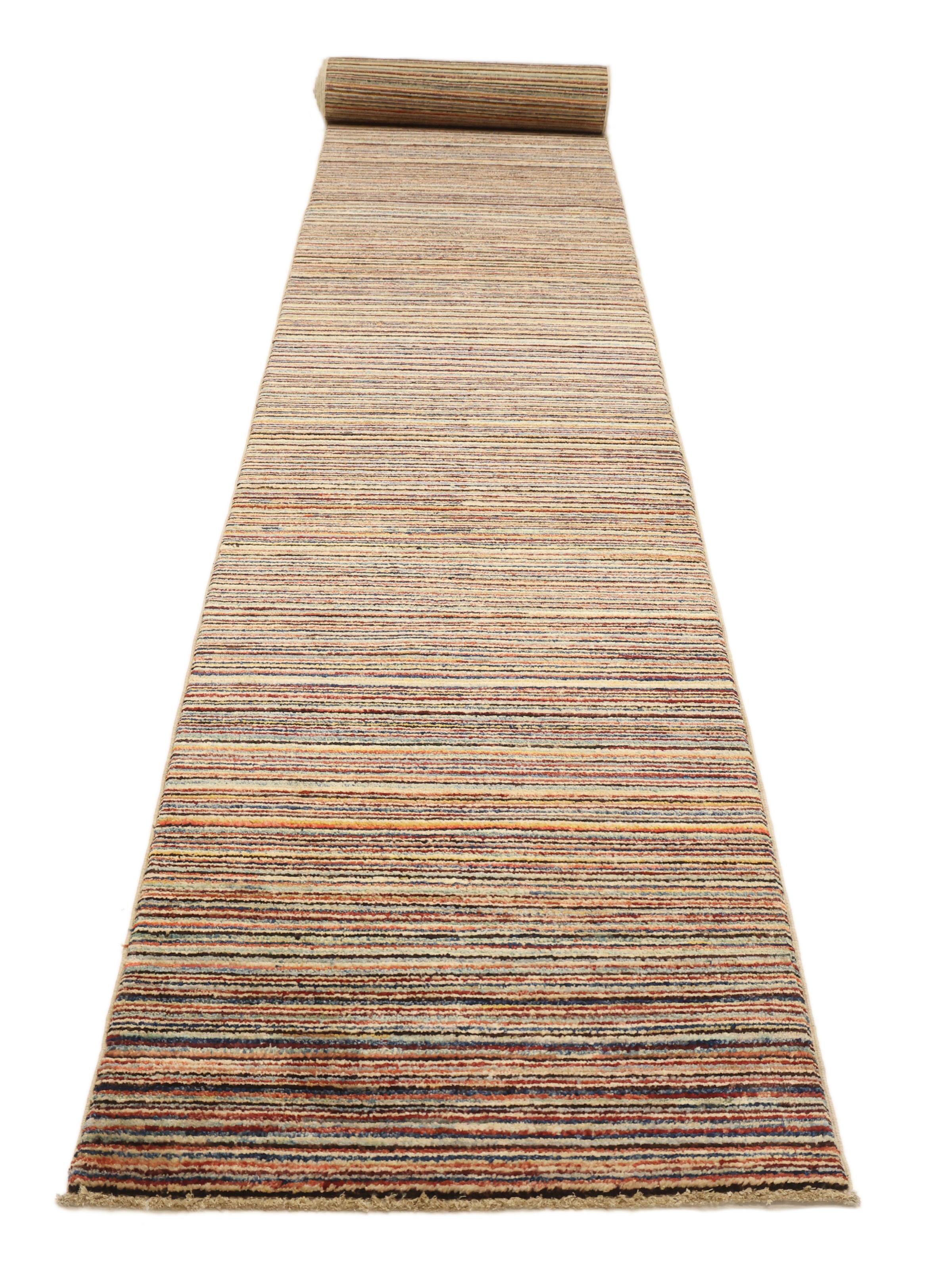
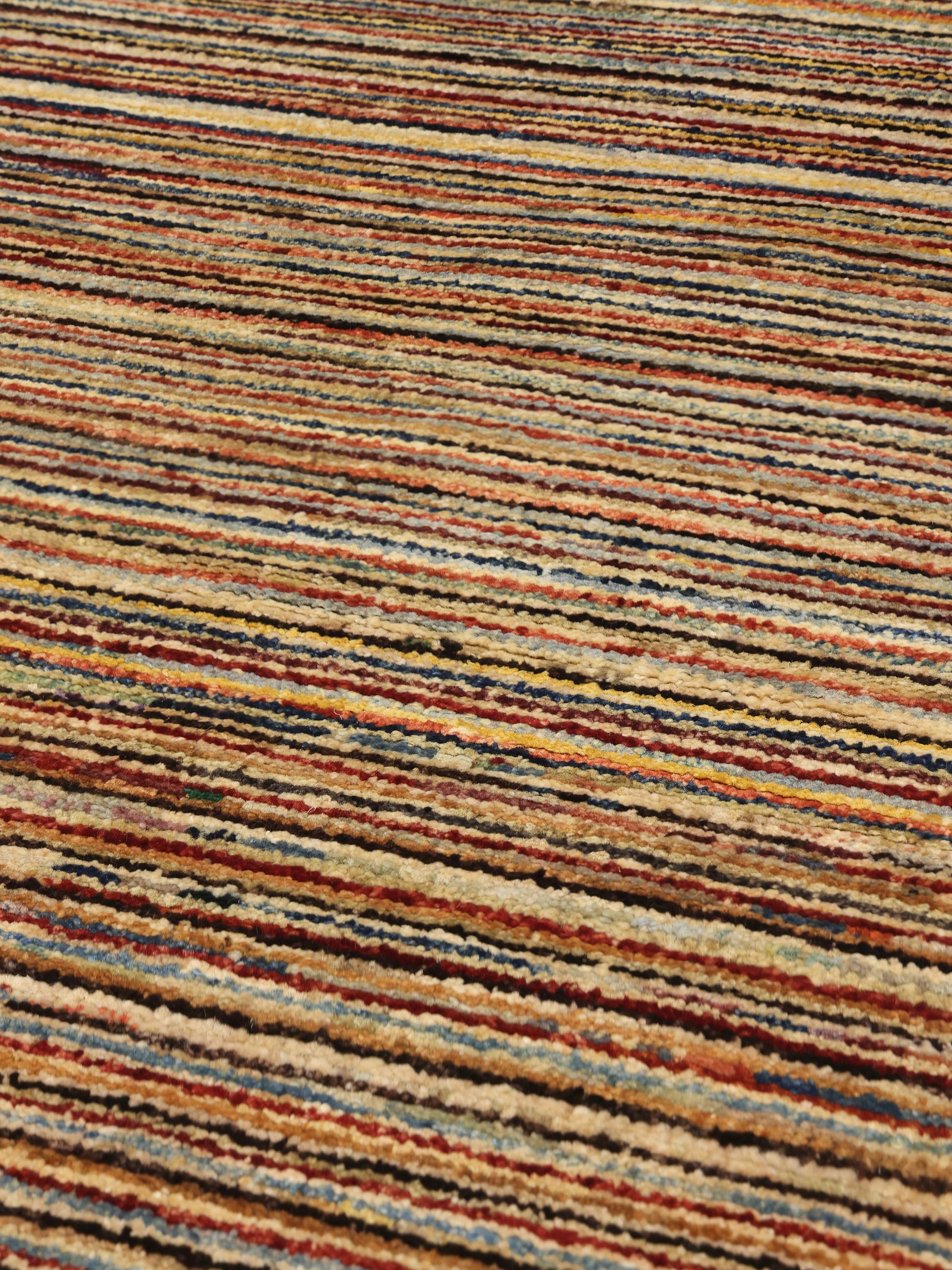
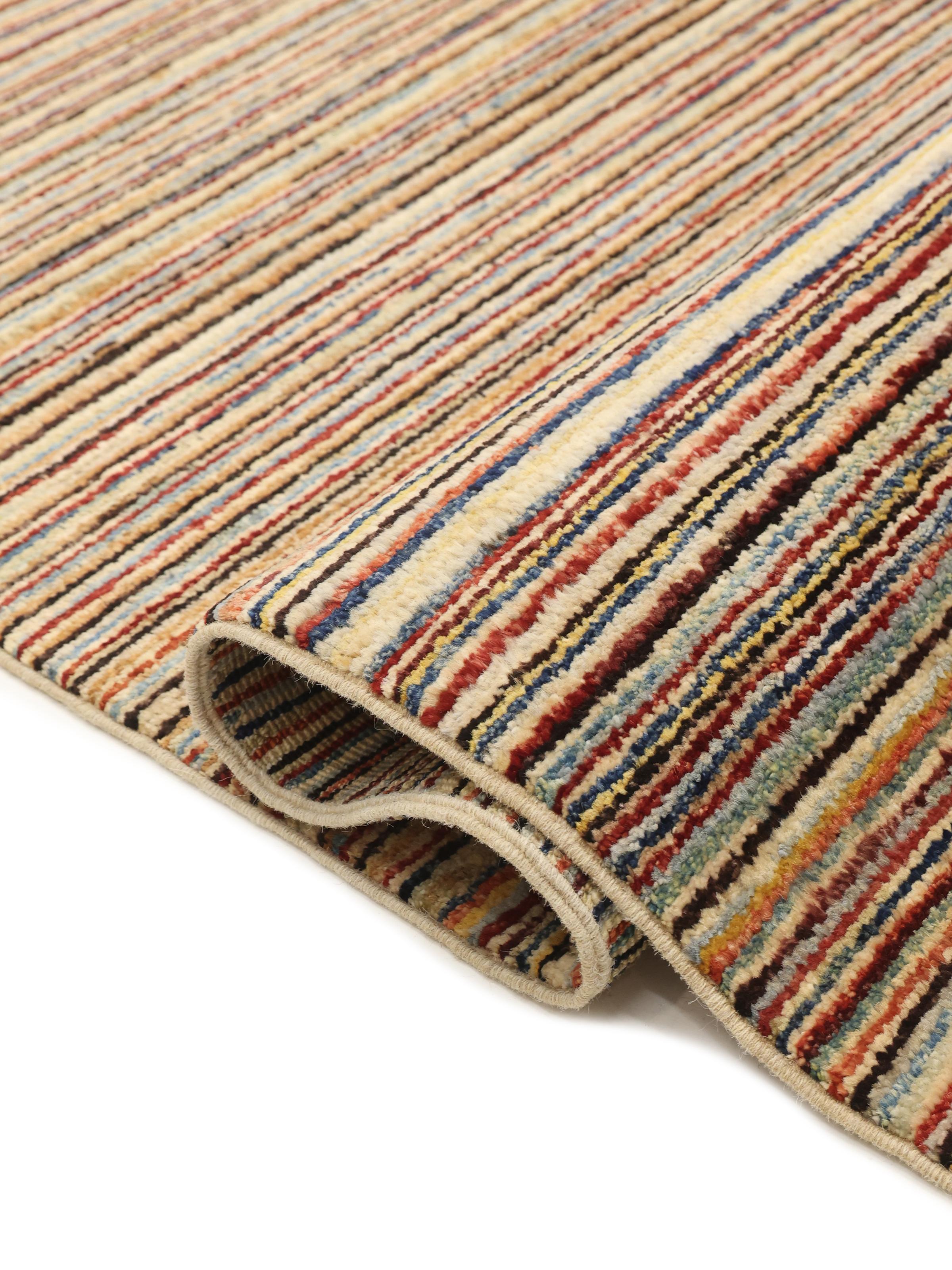
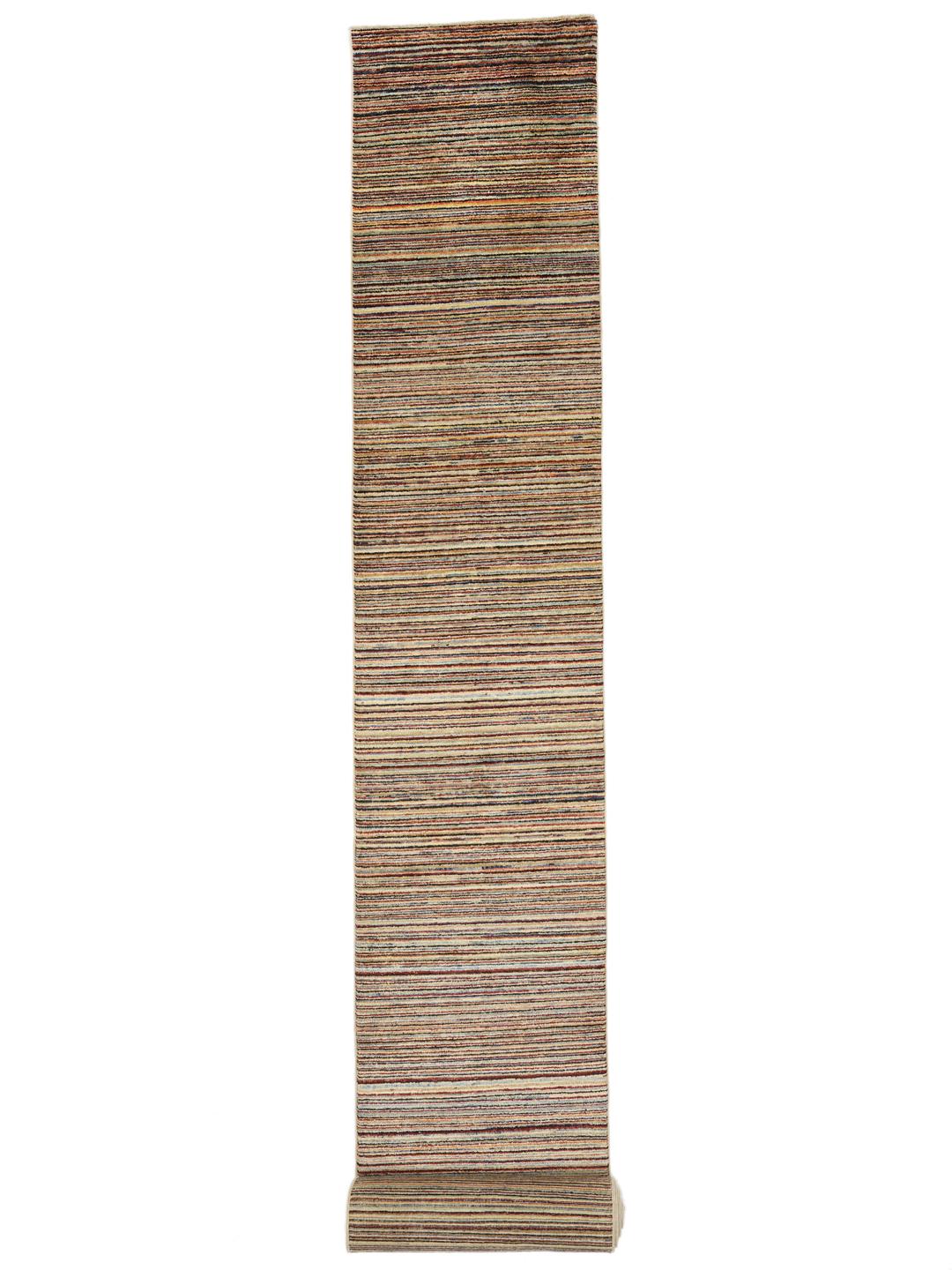
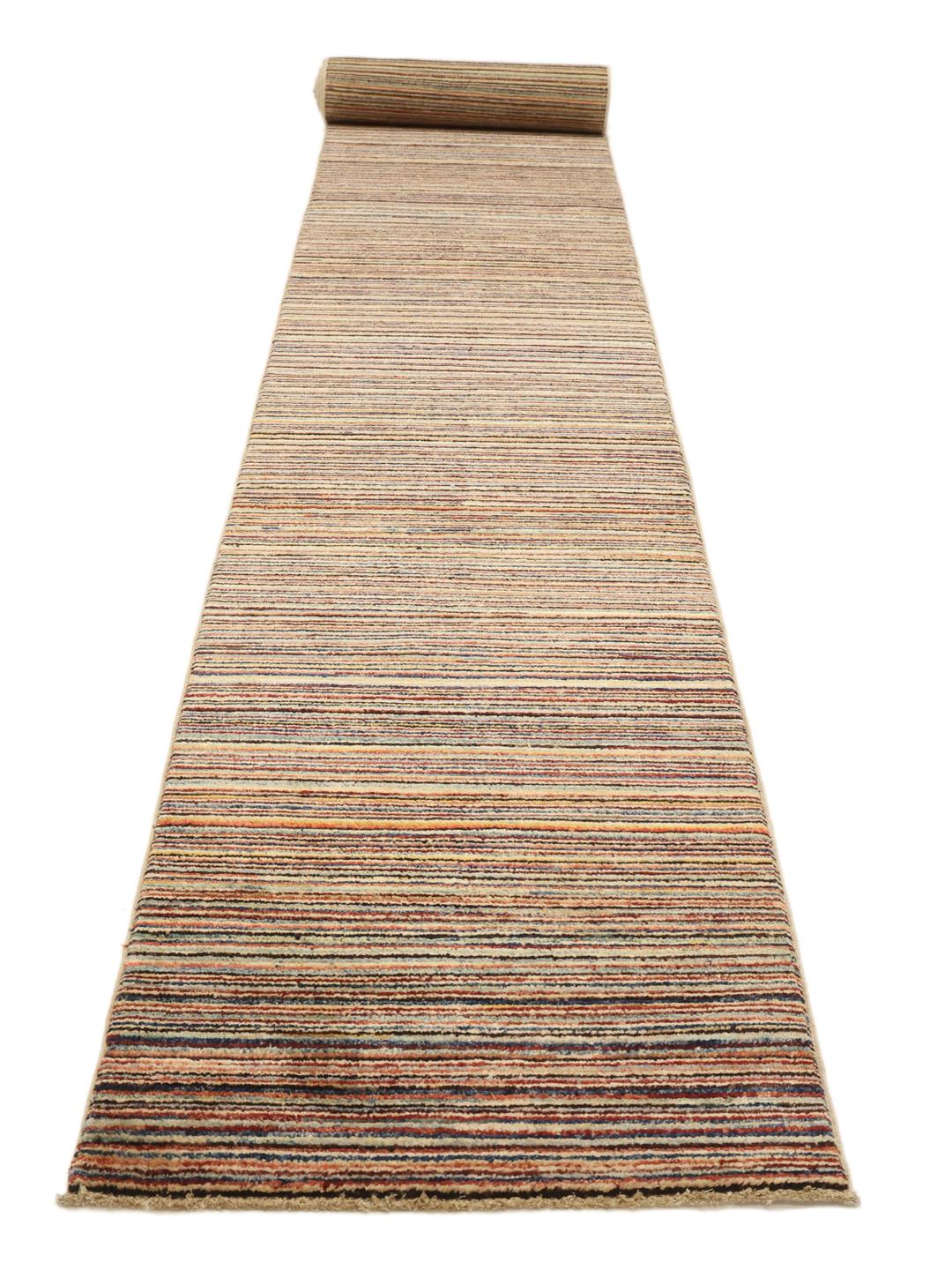
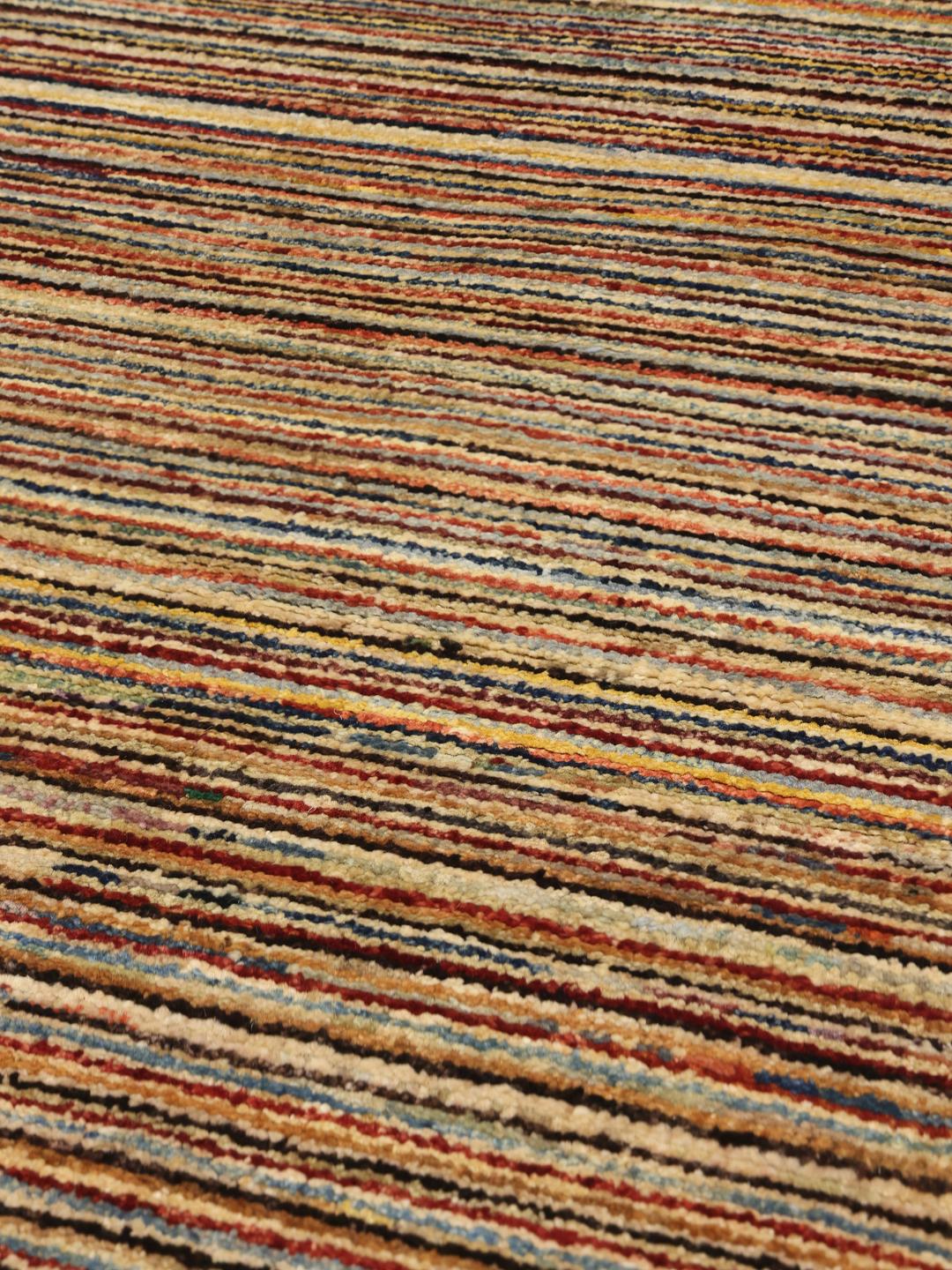
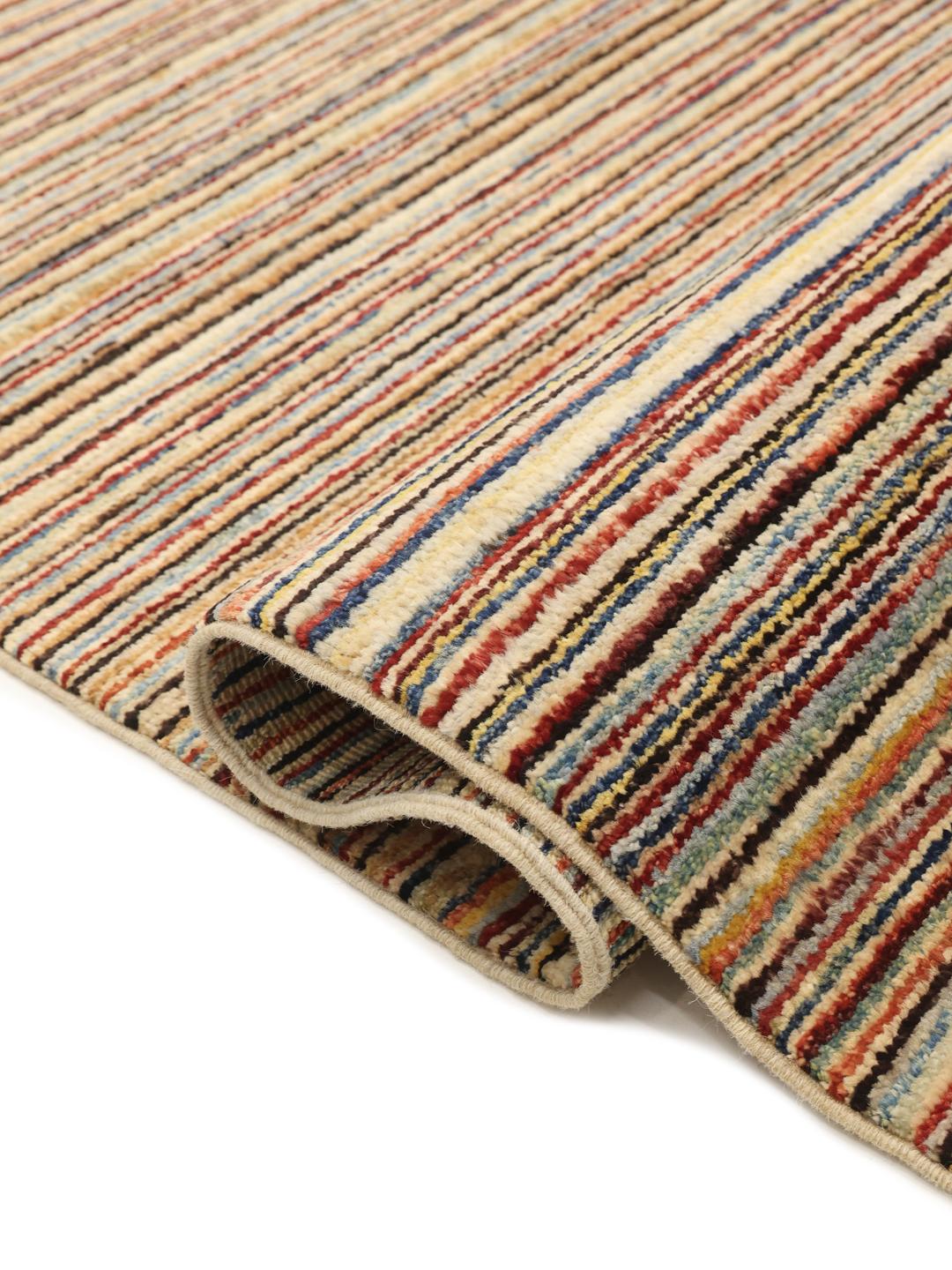
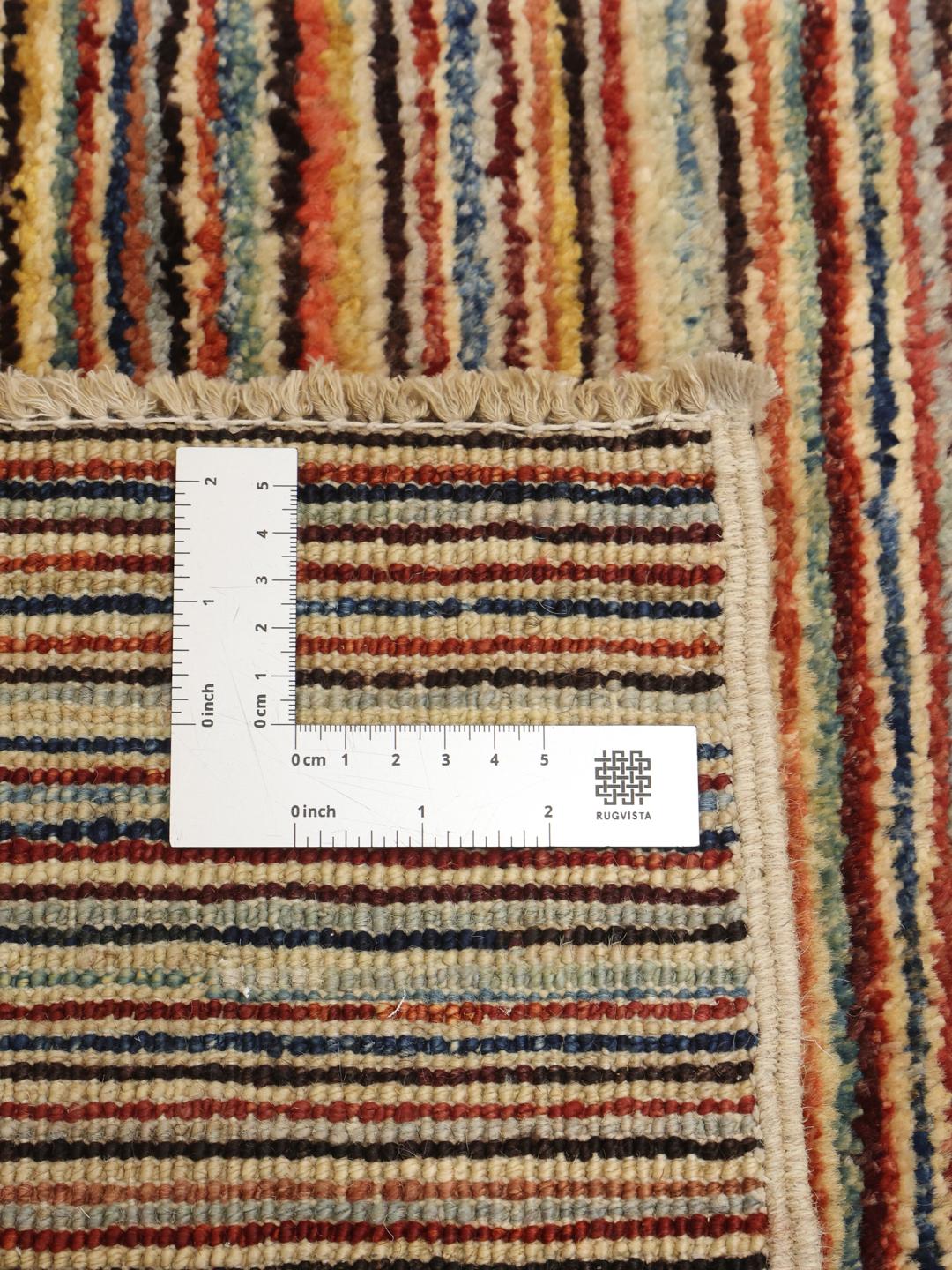
Signature design elements of modern Gabbehs often include vast open fields, subtle abrash color gradations created by hand-dyed wools, and minimalist motifs like simple stripes or geometric blocks. This specific runner utilizes a restrained striped pattern, allowing the natural tonal variations of the wool to take center stage.
Collecting a Gabbeh means acquiring a genuine piece of tribal craft history that bridges ancient nomadic traditions with contemporary interior aesthetics. Each rug carries the quiet dedication of its maker, offering a lasting connection to centuries-old textile heritage.