Gabbeh rugs trace their origins to the nomadic tribes of the Middle East, particularly regions spanning Persia and Afghanistan, where weavers created textiles primarily for personal use and domestic warmth.
Unlike formal city carpets with elaborate floral layouts, traditional Gabbehs were spontaneous expressions of daily life, drawing inspiration from the surrounding landscape, local flora, and tribal folklore.
Over time, this rural weaving tradition evolved into a distinct style cherished worldwide for its unpretentious charm and connection to nomadic heritage.
The term Gabbeh itself translates from Persian as raw, natural, or uncut, reflecting the rustic simplicity that defines the style.
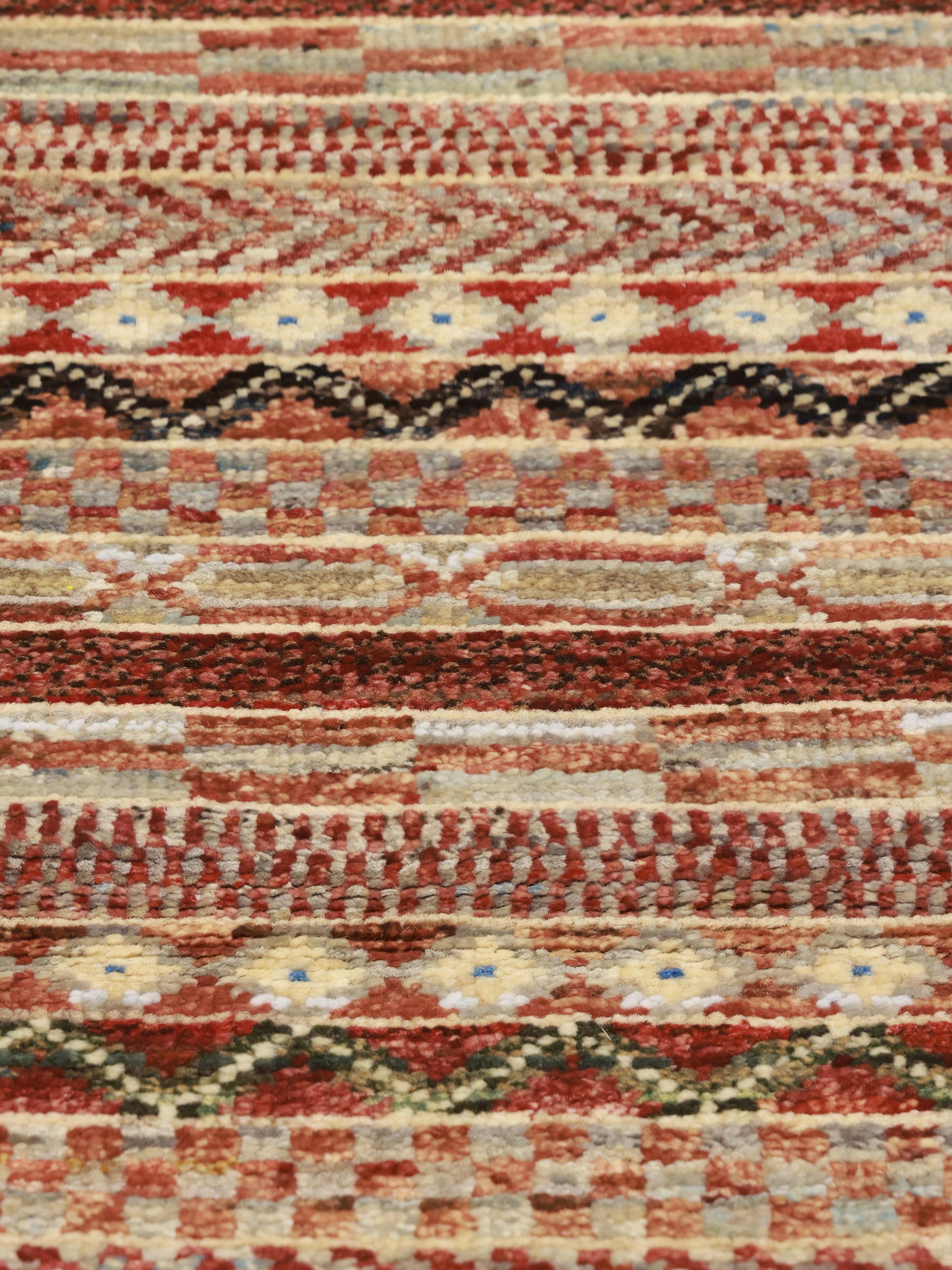
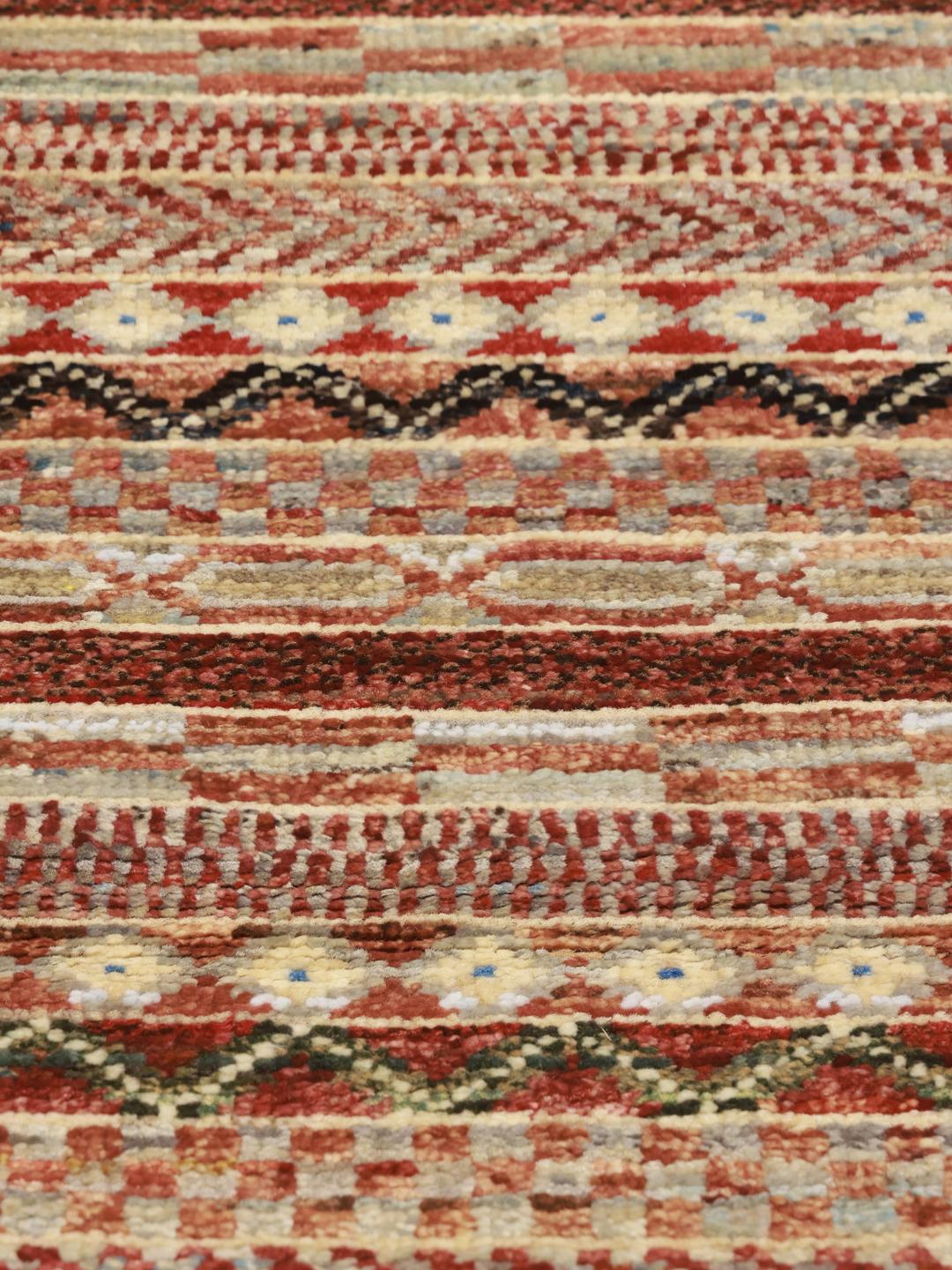
Traditionally, these rugs utilised hand-spun sheep wool dyed with natural plant extracts, resulting in subtle tonal variations known as abrage.
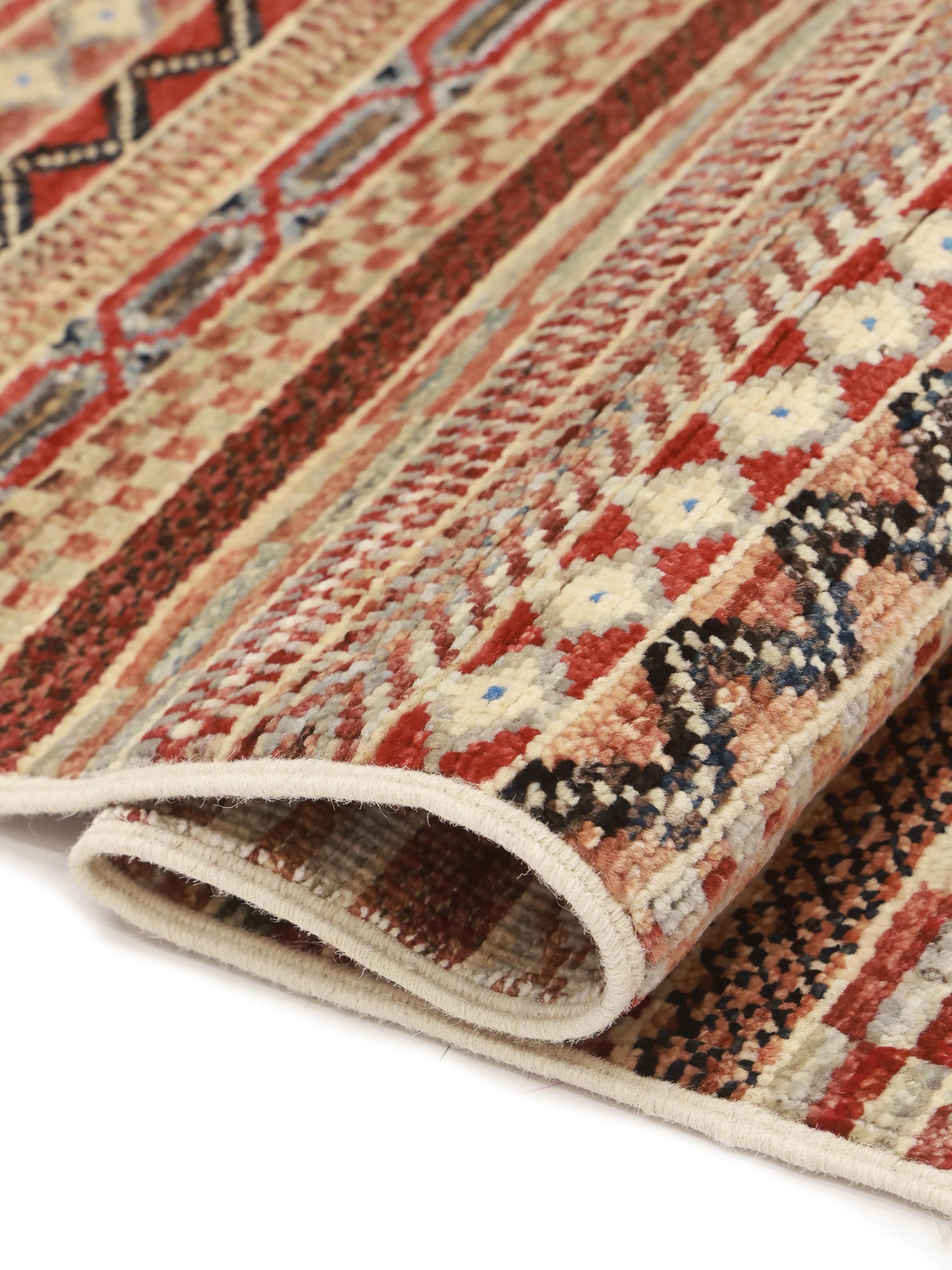
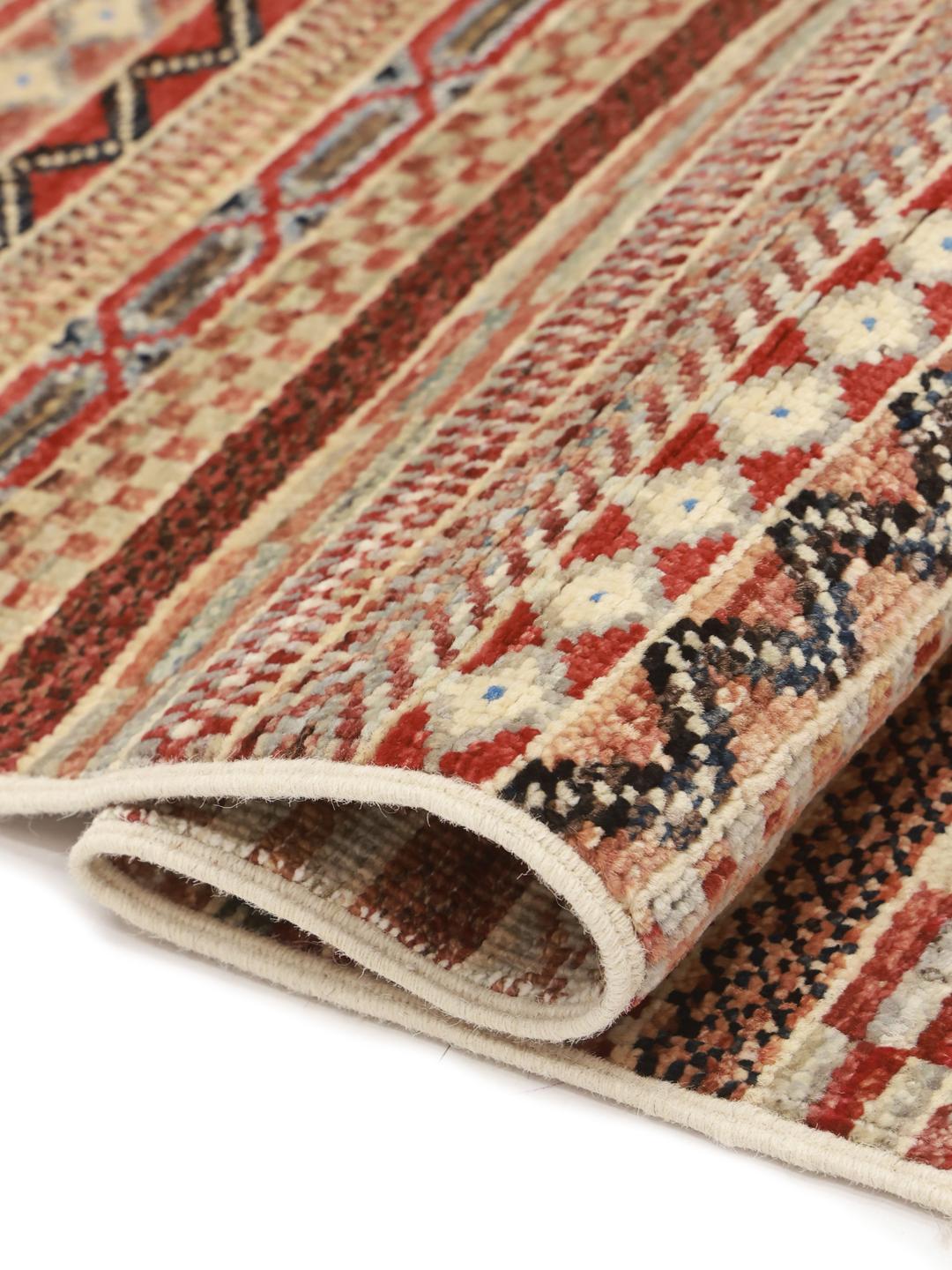
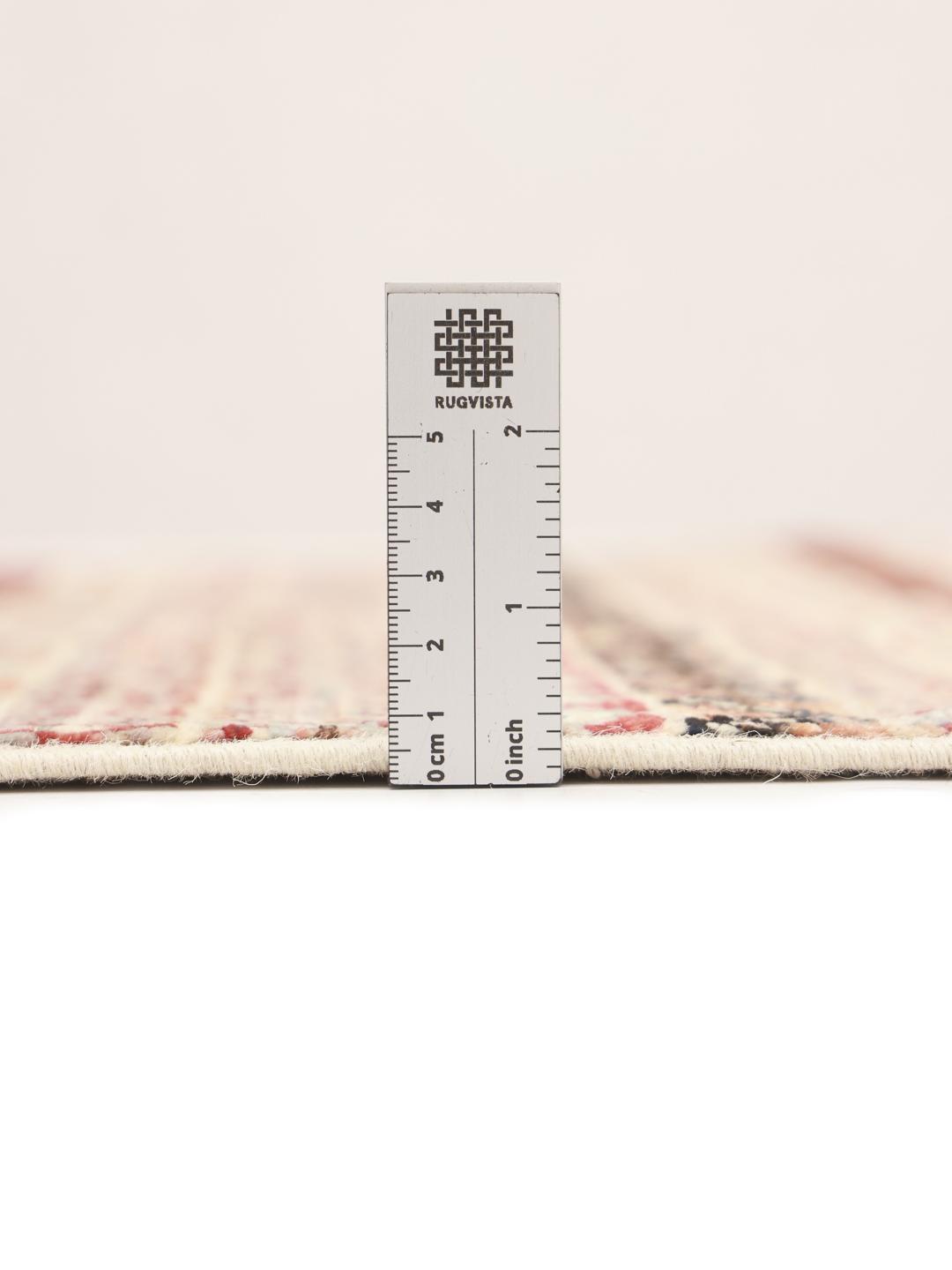
The use of a dense pile combined with straightforward knotting techniques produces a heavy, durable fabric designed to withstand harsh nomadic conditions, translating into exceptional longevity for modern homes.
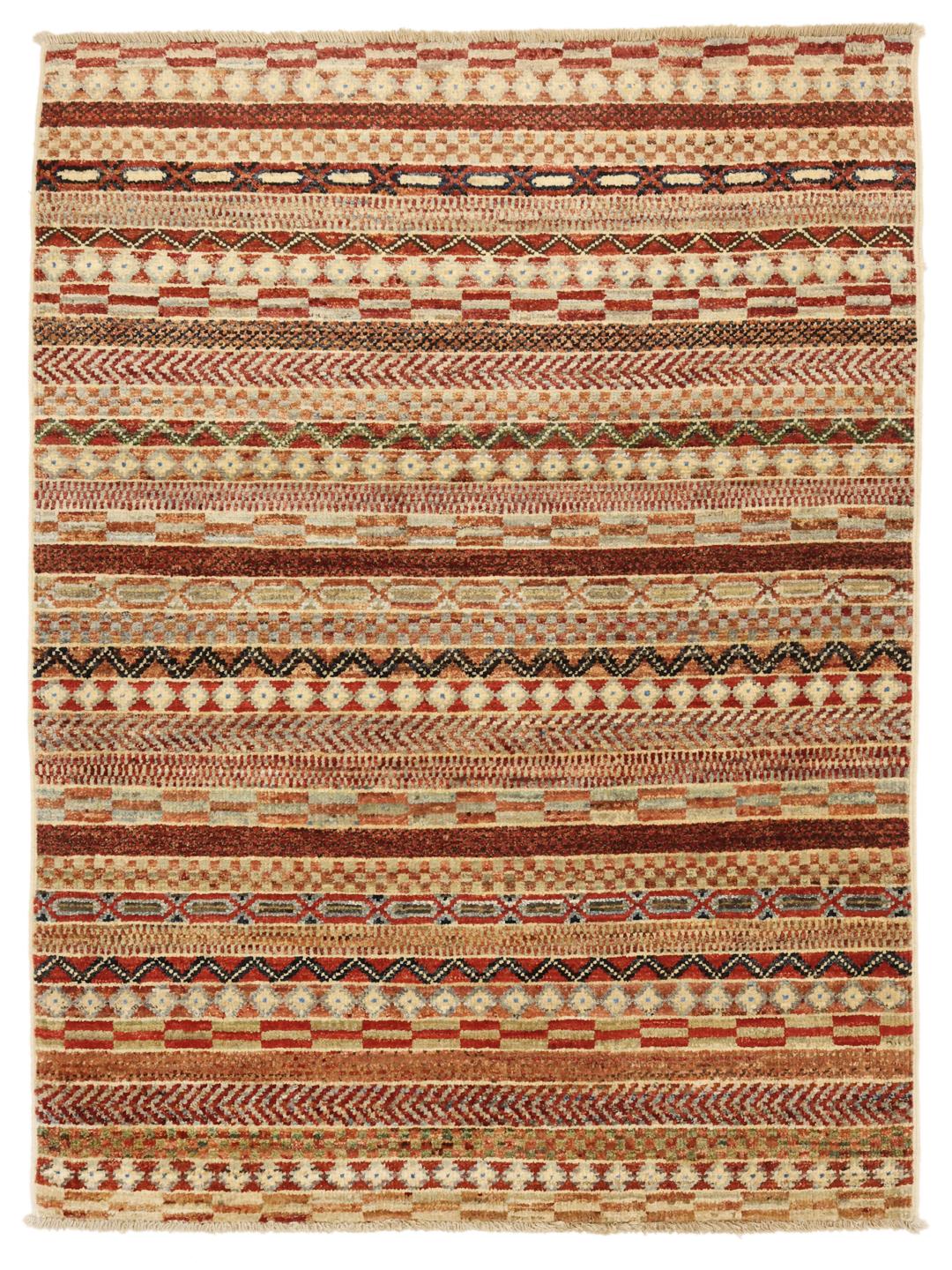
Visually, Gabbeh rugs are celebrated for their open fields and minimalist compositions, often featuring sparse geometric motifs, stylised animal figures, or horizontal bands of colour.
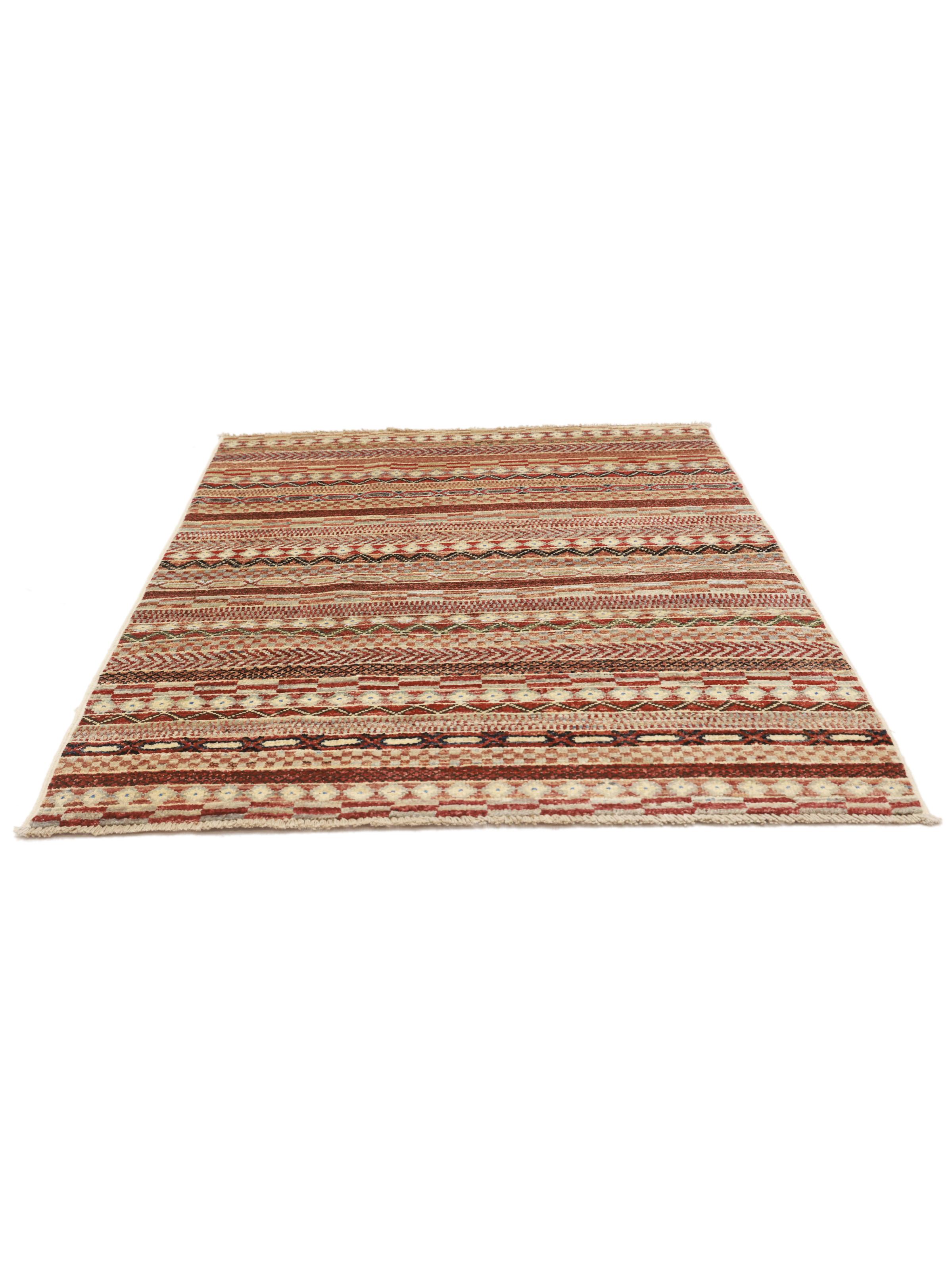
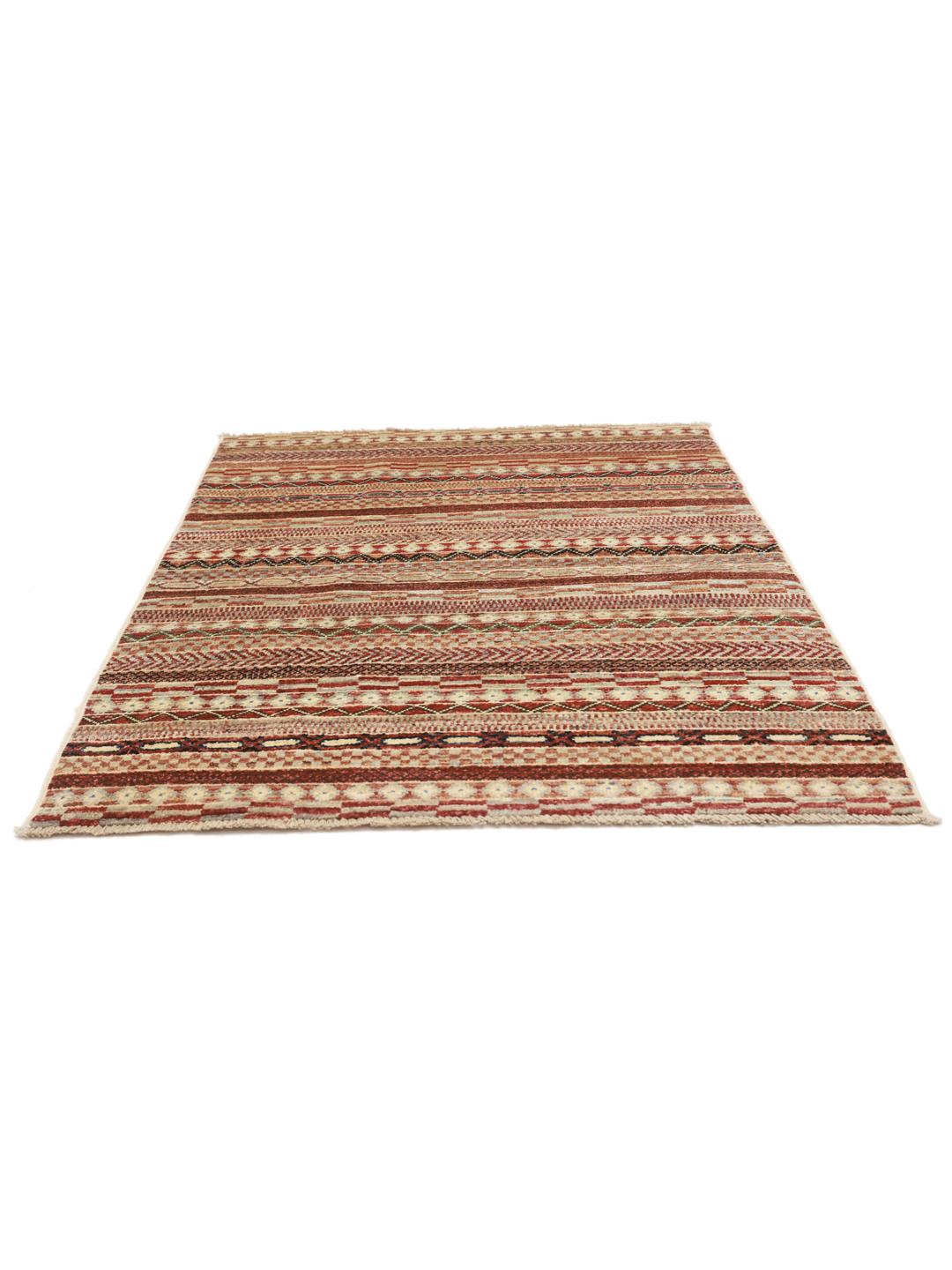
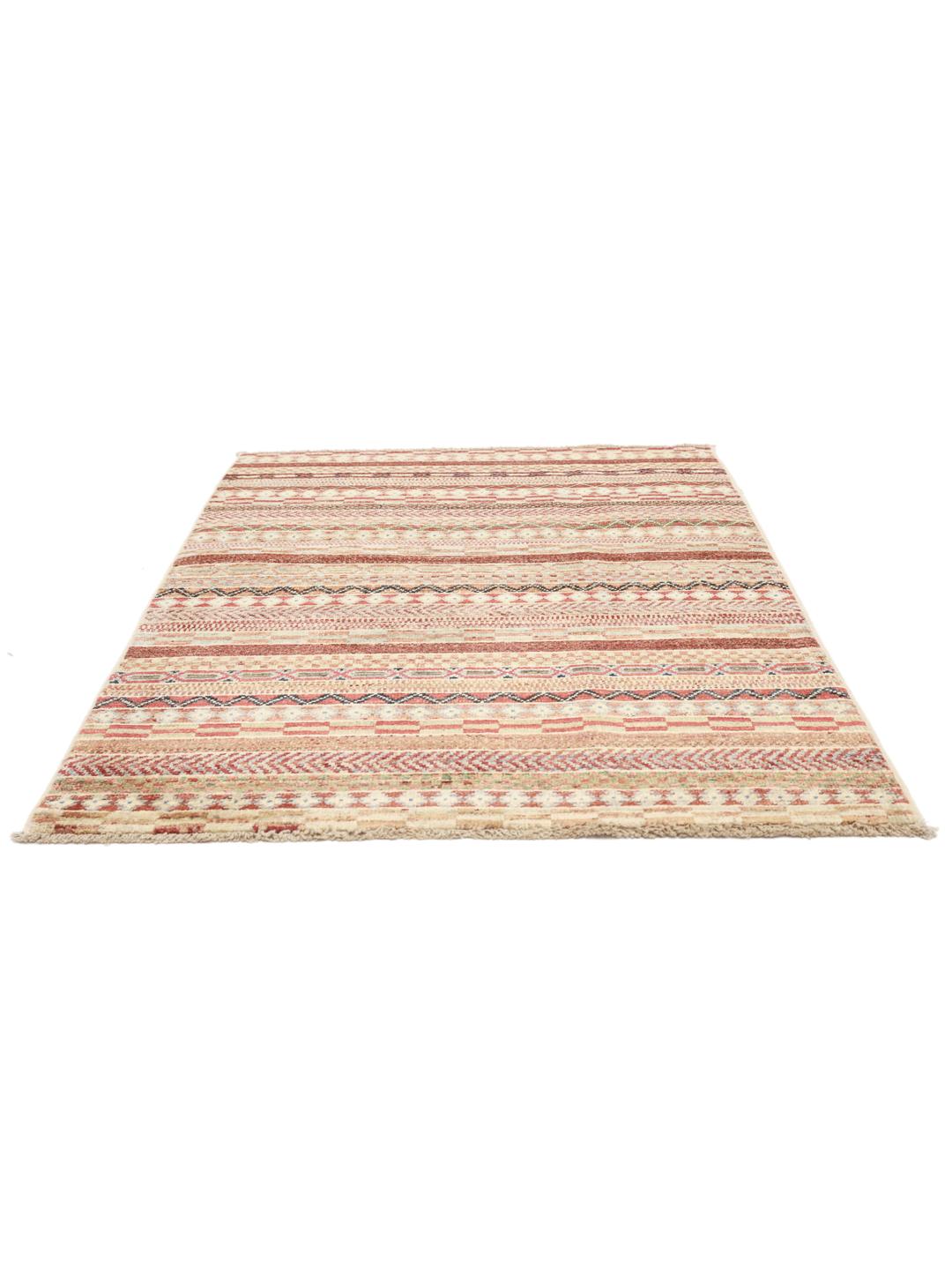
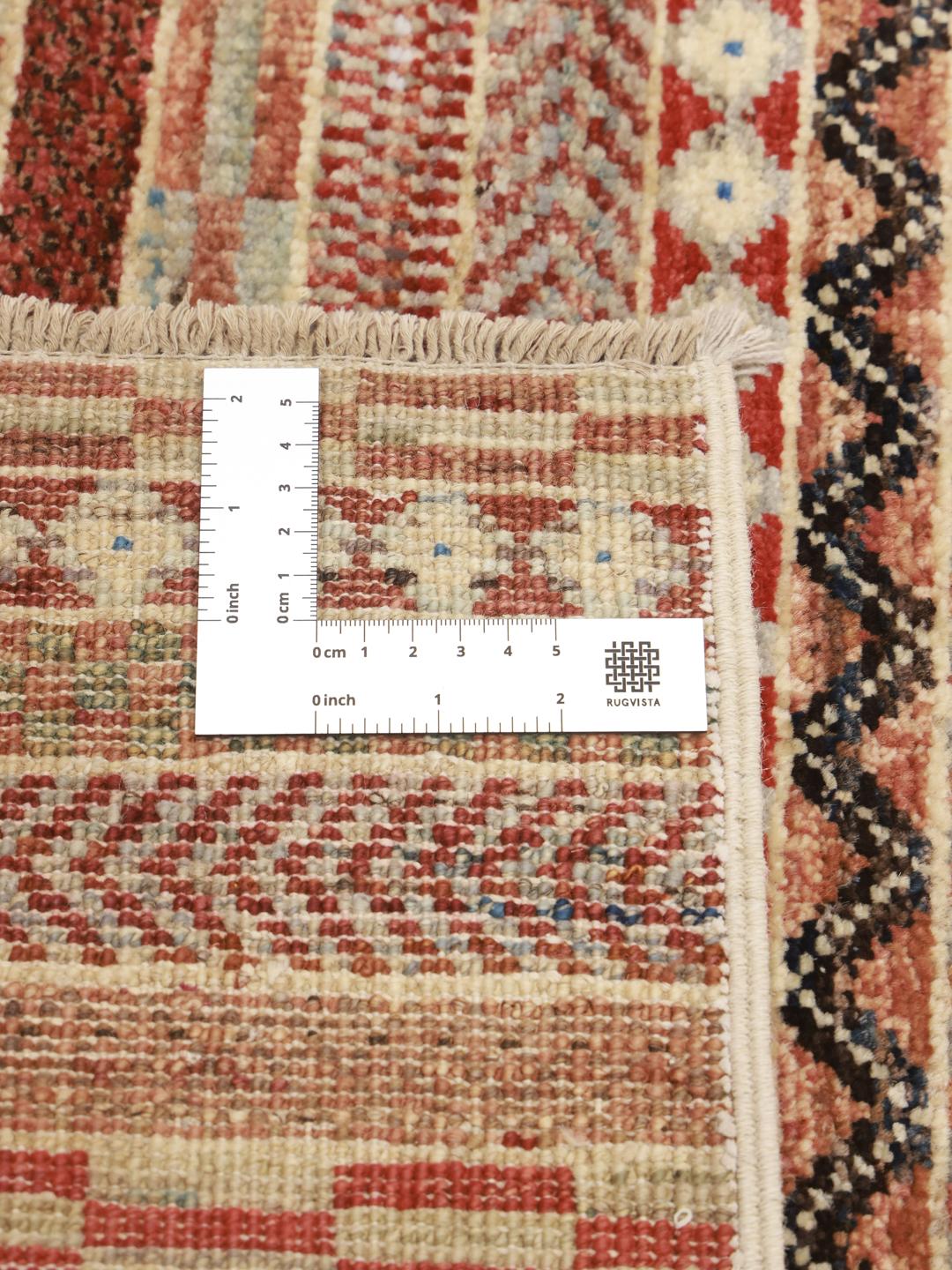
This particular Gabbeh Modern piece showcases a series of rhythmic horizontal bands filled with small geometric patterns and earthy tones, offering a contemporary interpretation of traditional tribal aesthetics while maintaining the graphic clarity characteristic of the style.
Collecting a genuine Gabbeh means acquiring a tangible piece of cultural history shaped by individual artisans rather than industrial looms.
Each rug preserves ancient knotting techniques passed down through generations, making ownership a meaningful way to support living craft traditions and bring authentic human storytelling into everyday living spaces.