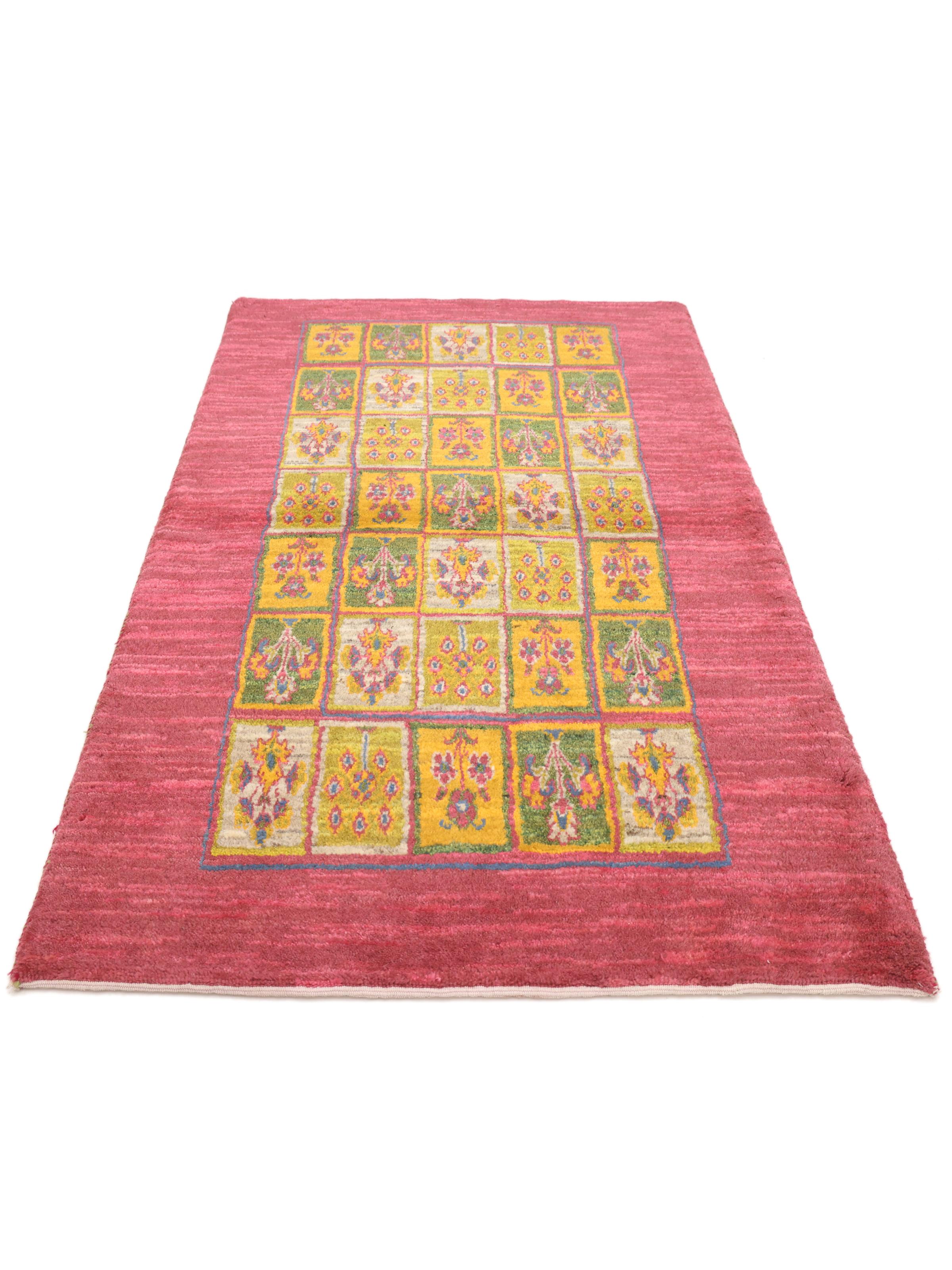
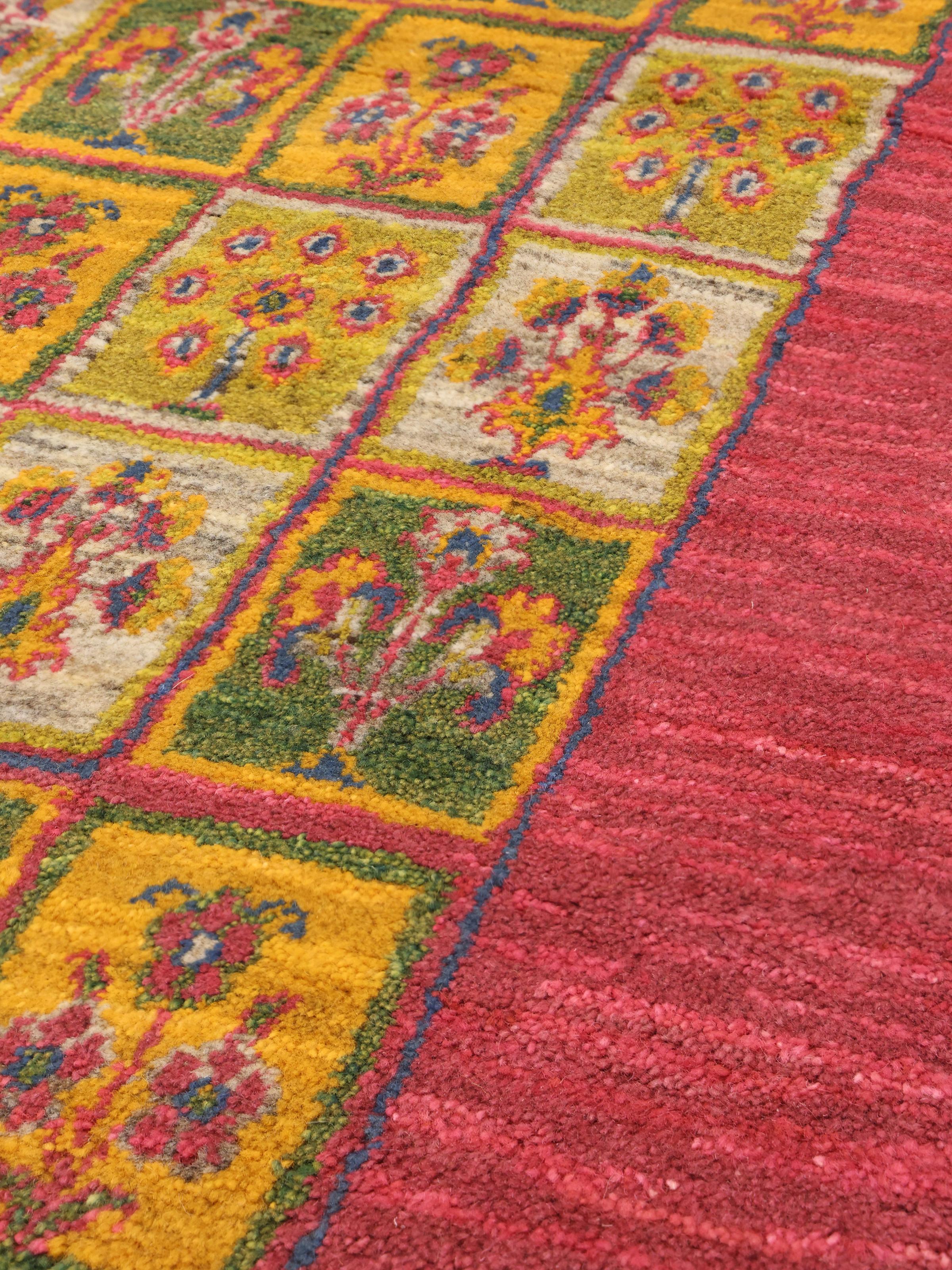
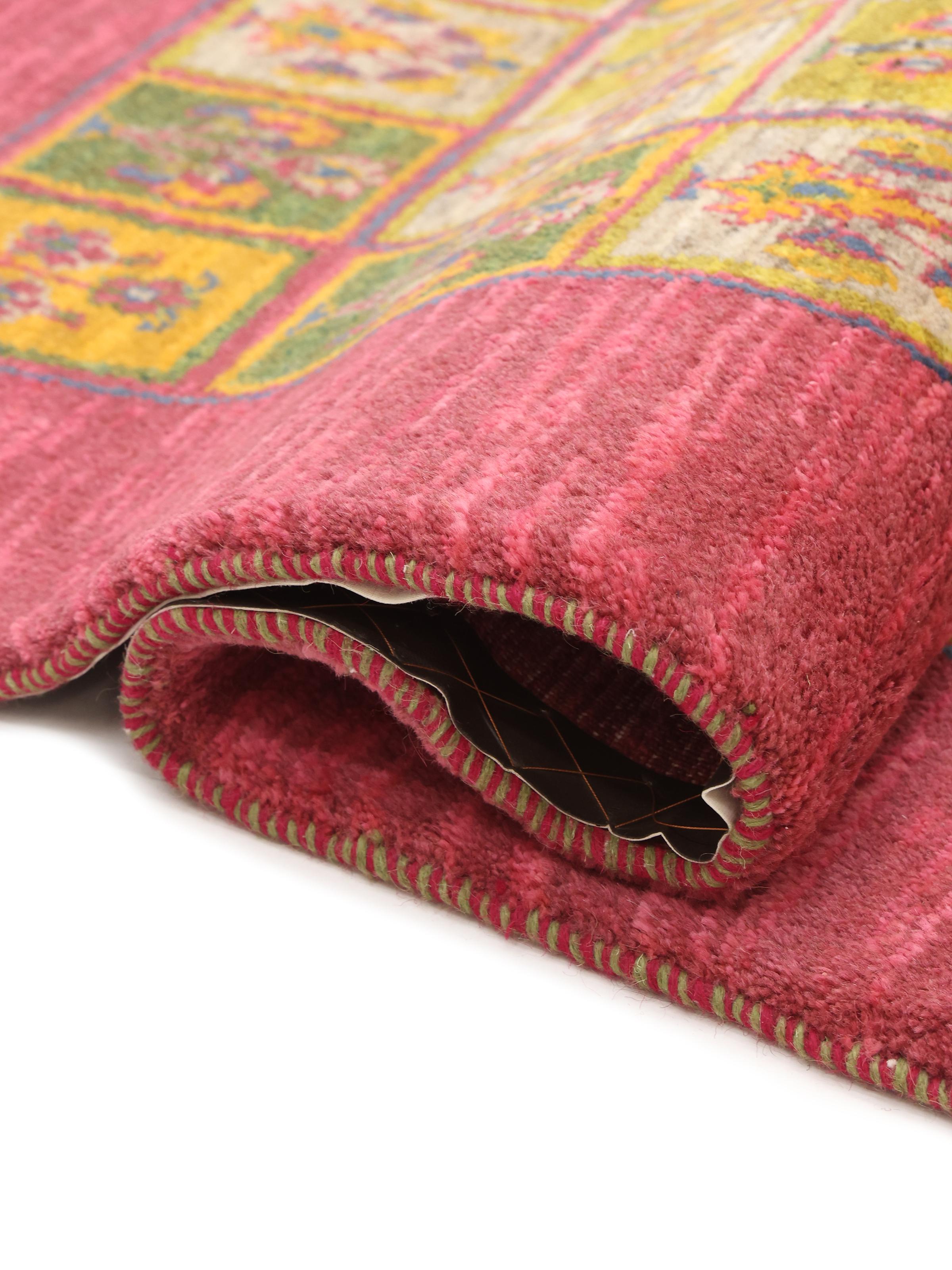
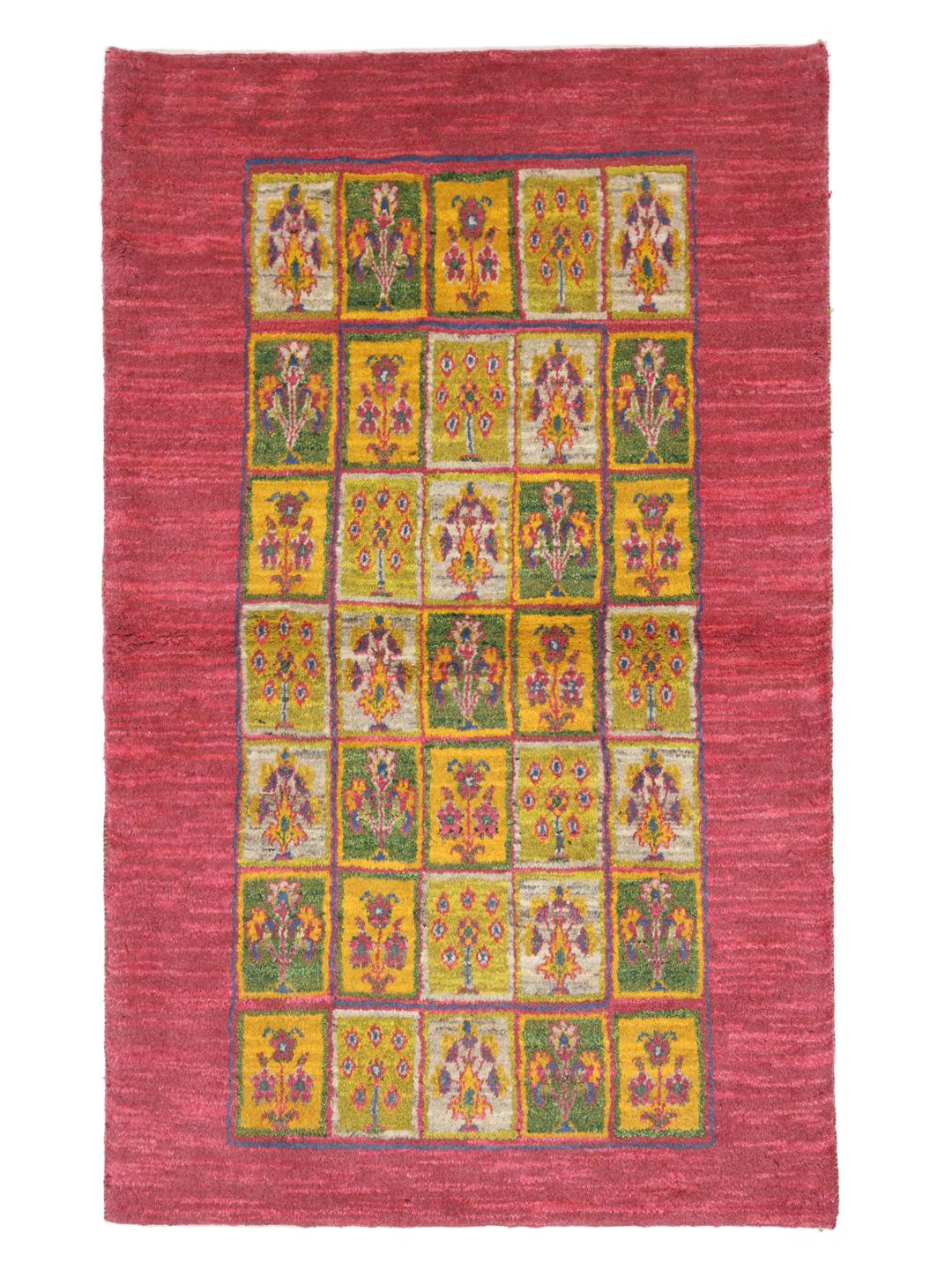
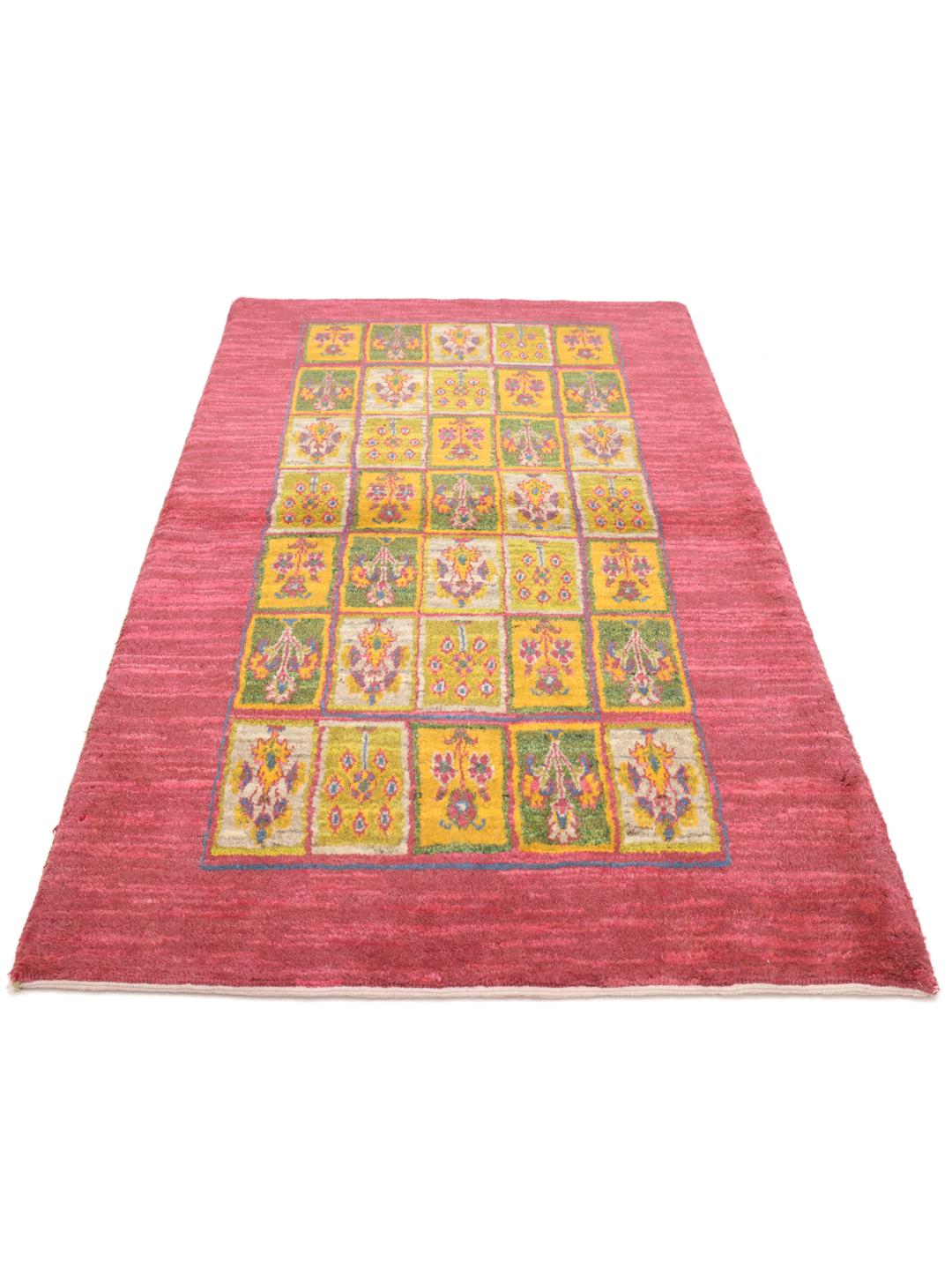
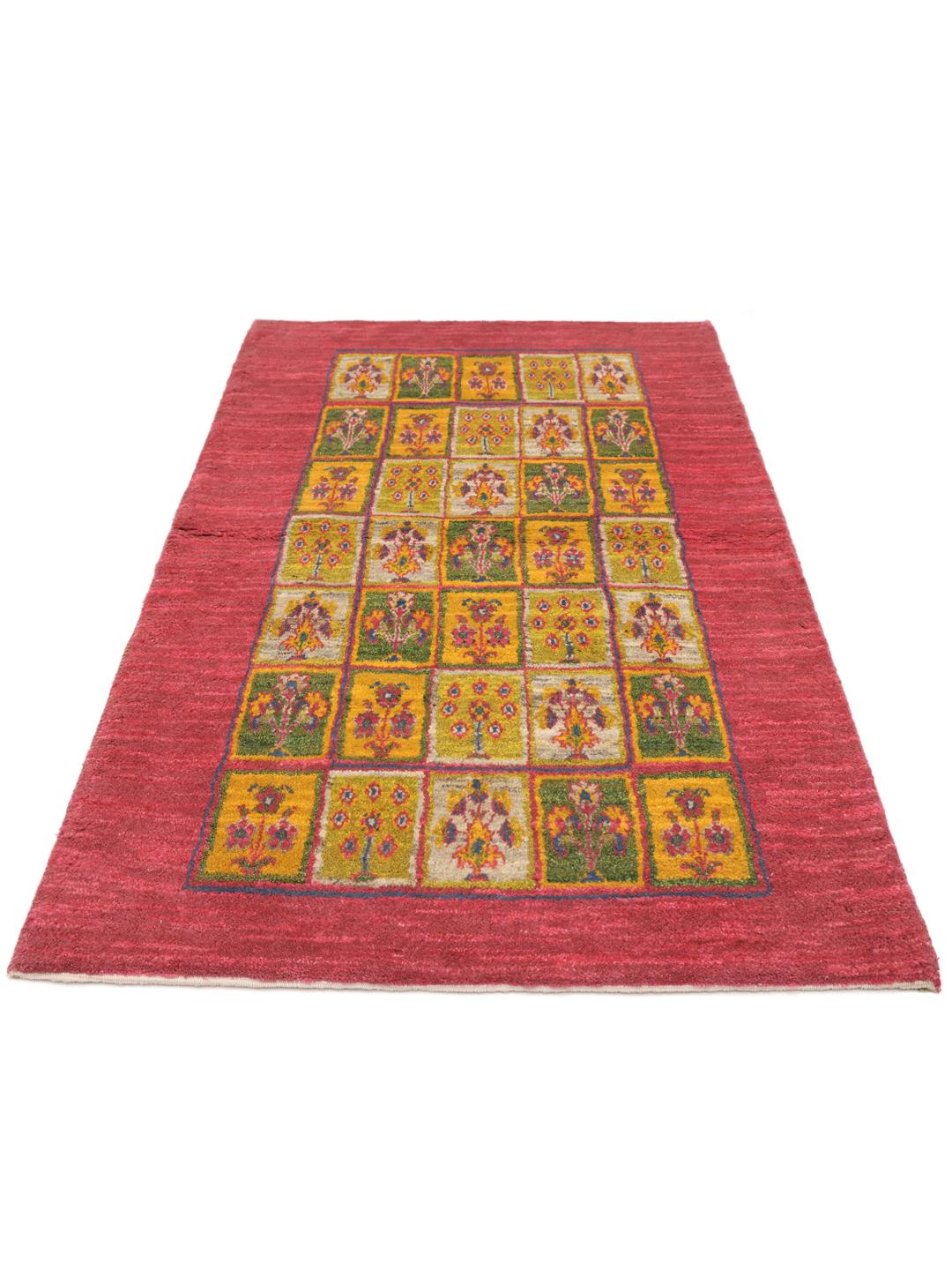
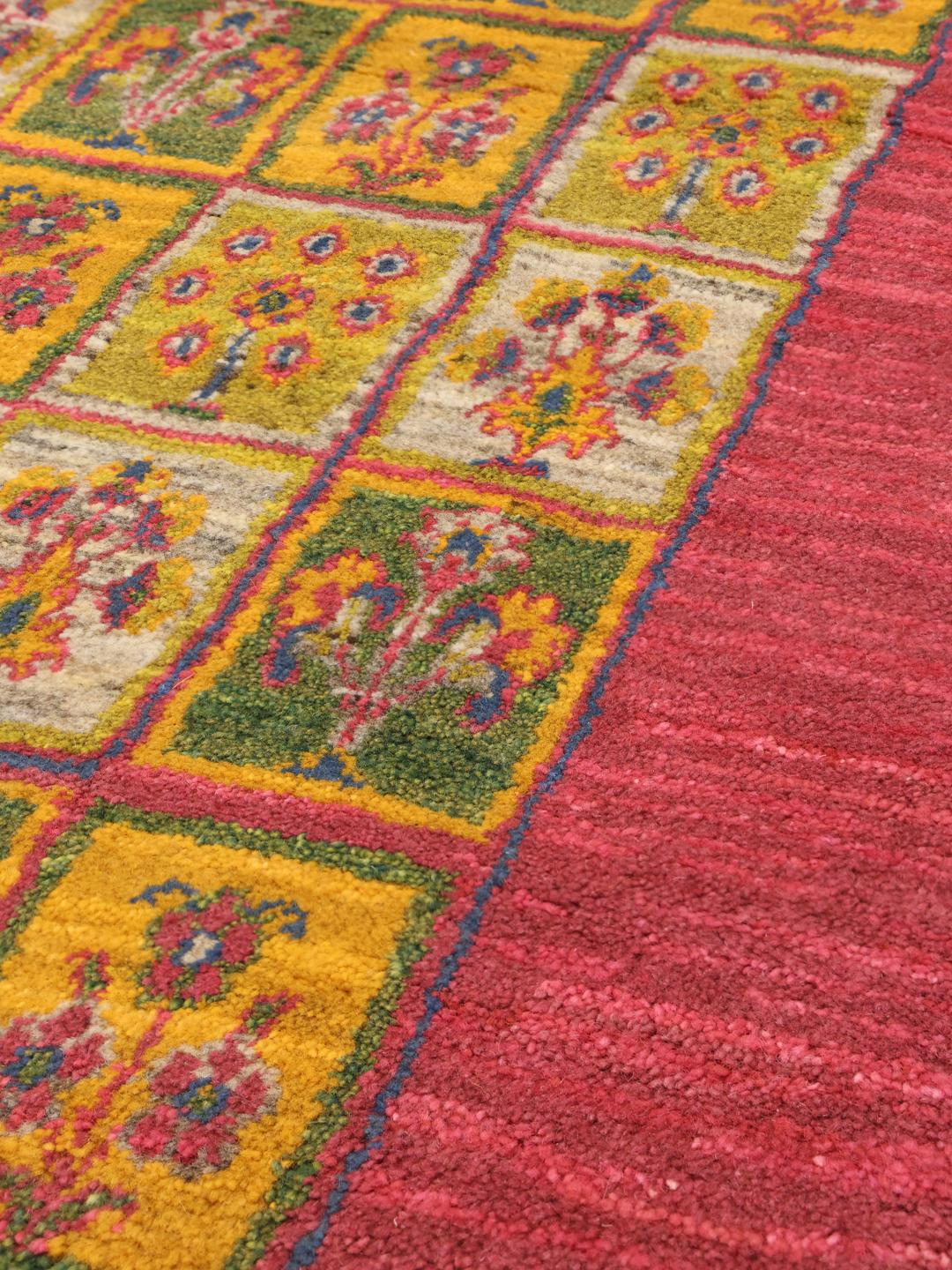
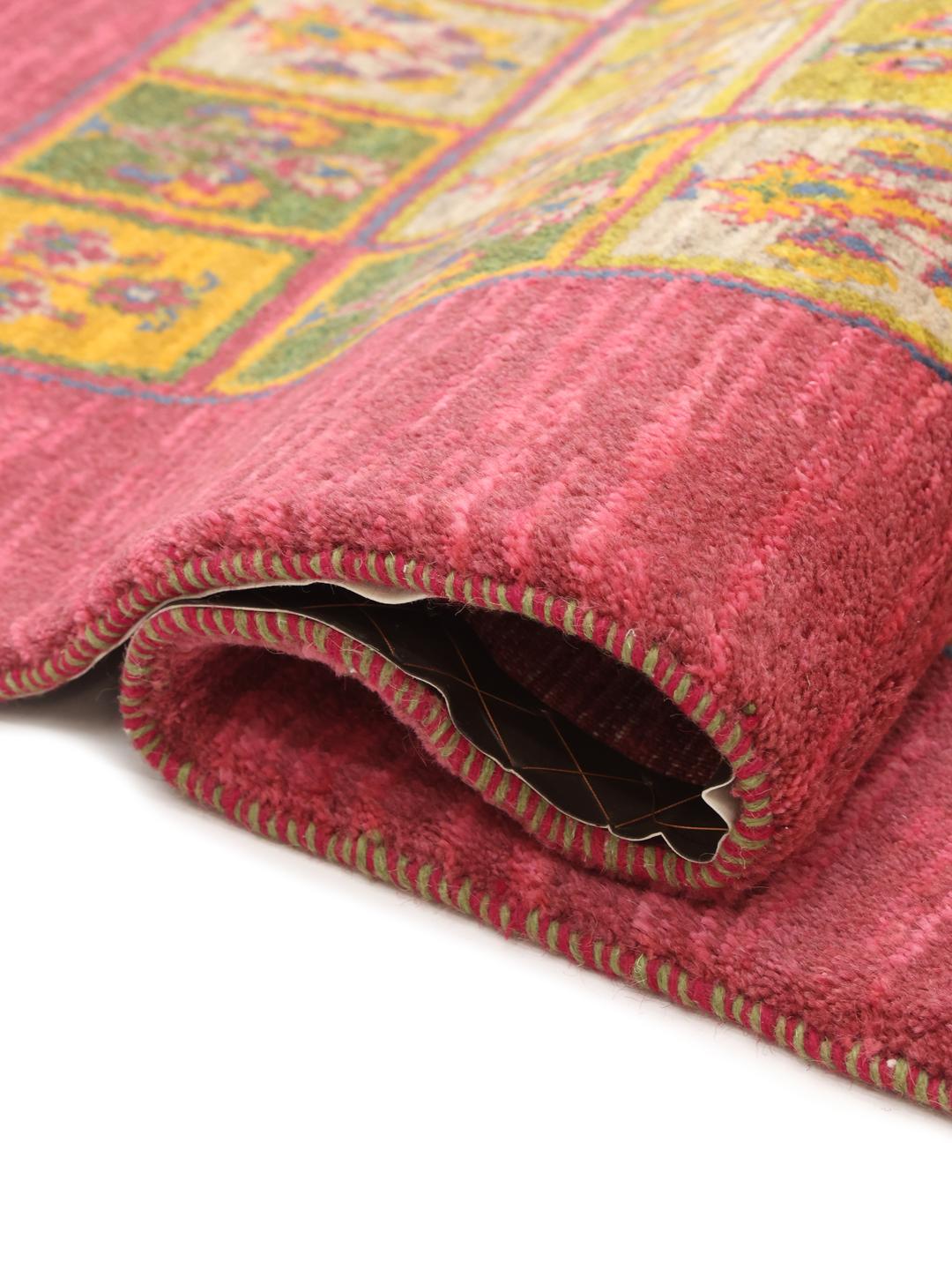
The Gabbeh tradition hails from the nomadic tribes of the Middle East, where weavers developed a style known for its thick, plush pile and expressive, minimalist designs. Originally intended for practical use as bedding and floor coverings, these rugs have evolved into celebrated works of art that reflect the weaver's personal vision and environment.
The term Gabbeh itself refers to a 'natural' or 'raw' style, distinguishing these rugs from the more formal, court-style carpets. This tradition emphasises a softer, more free-form approach to design, allowing for the inclusion of vibrant, saturated colours and spontaneous patterns that deviate from rigid, geometric rules.
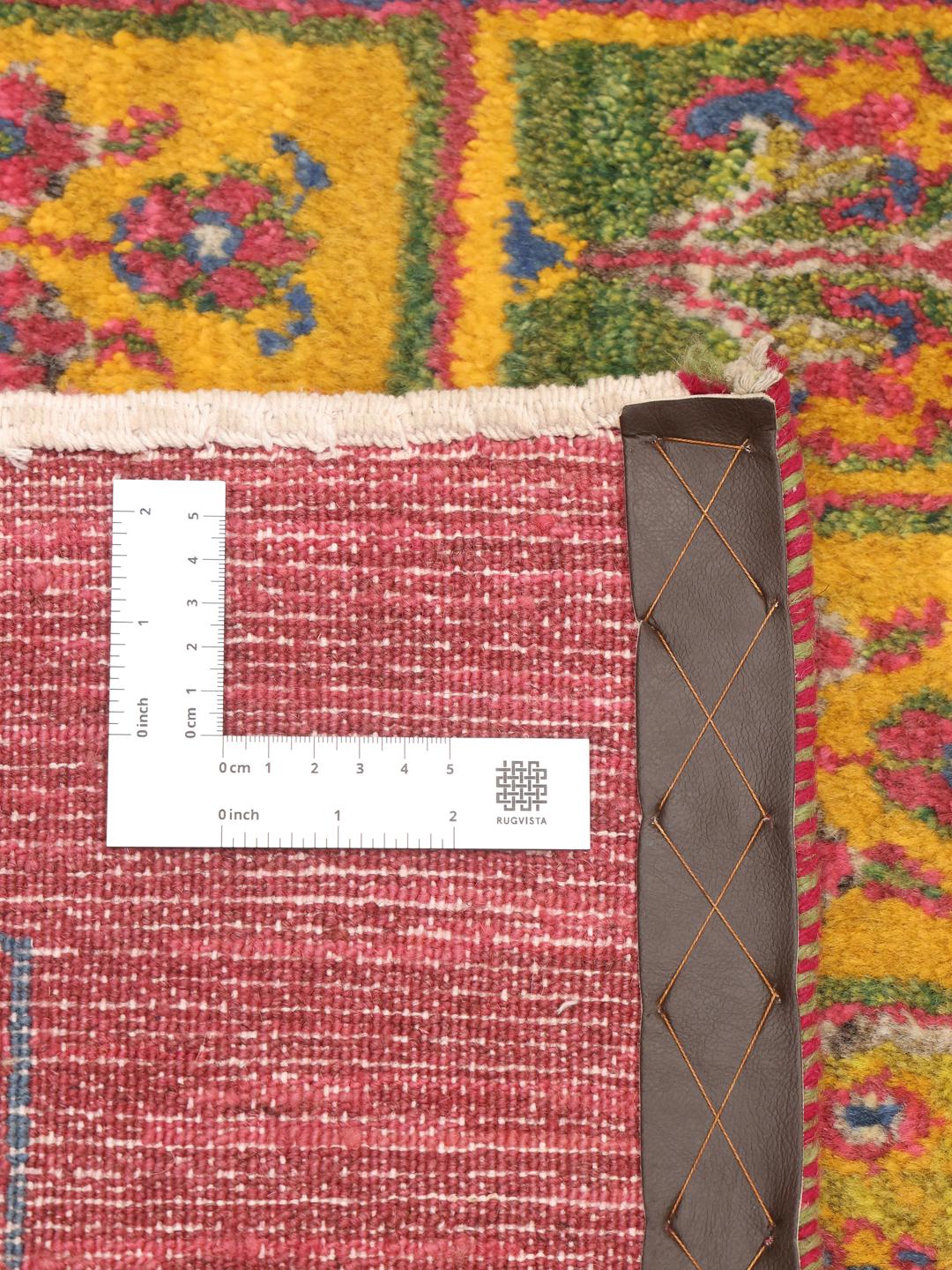
The visual language of this rug is deeply rooted in the natural world. The repeating floral motifs seen here are common in the Shabargan style, which often incorporates symbolic representations of gardens and nature. These designs act as a storytelling medium, preserving ancestral motifs while allowing for modern artistic interpretation.
Collecting a Gabbeh is an investment in human skill and cultural history. These rugs are highly valued for their ability to bridge the gap between traditional nomadic craft and contemporary interior design. Owning one means connecting to a lineage of weavers who have practised this art for generations, bringing a piece of living history into your own home.