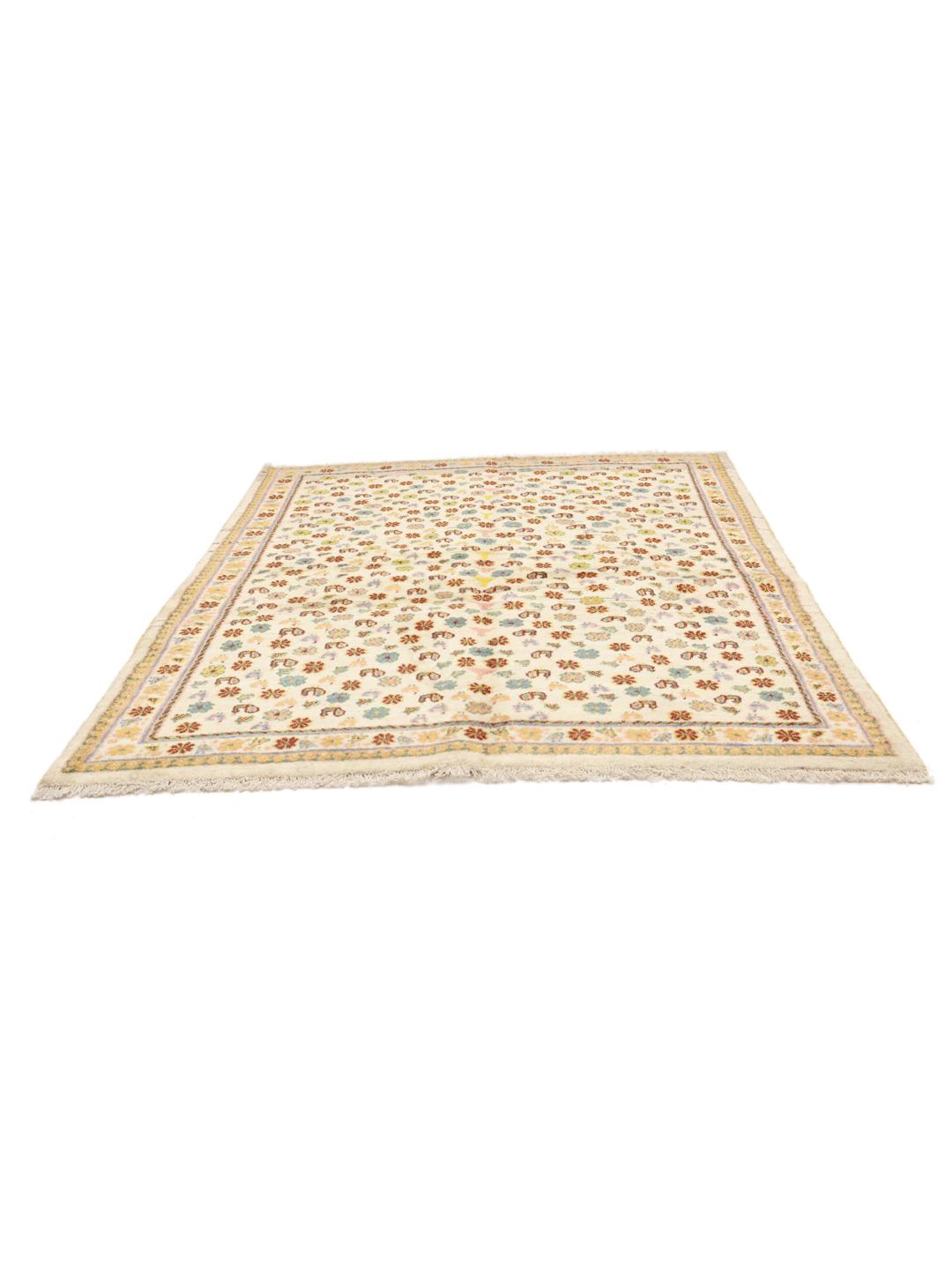
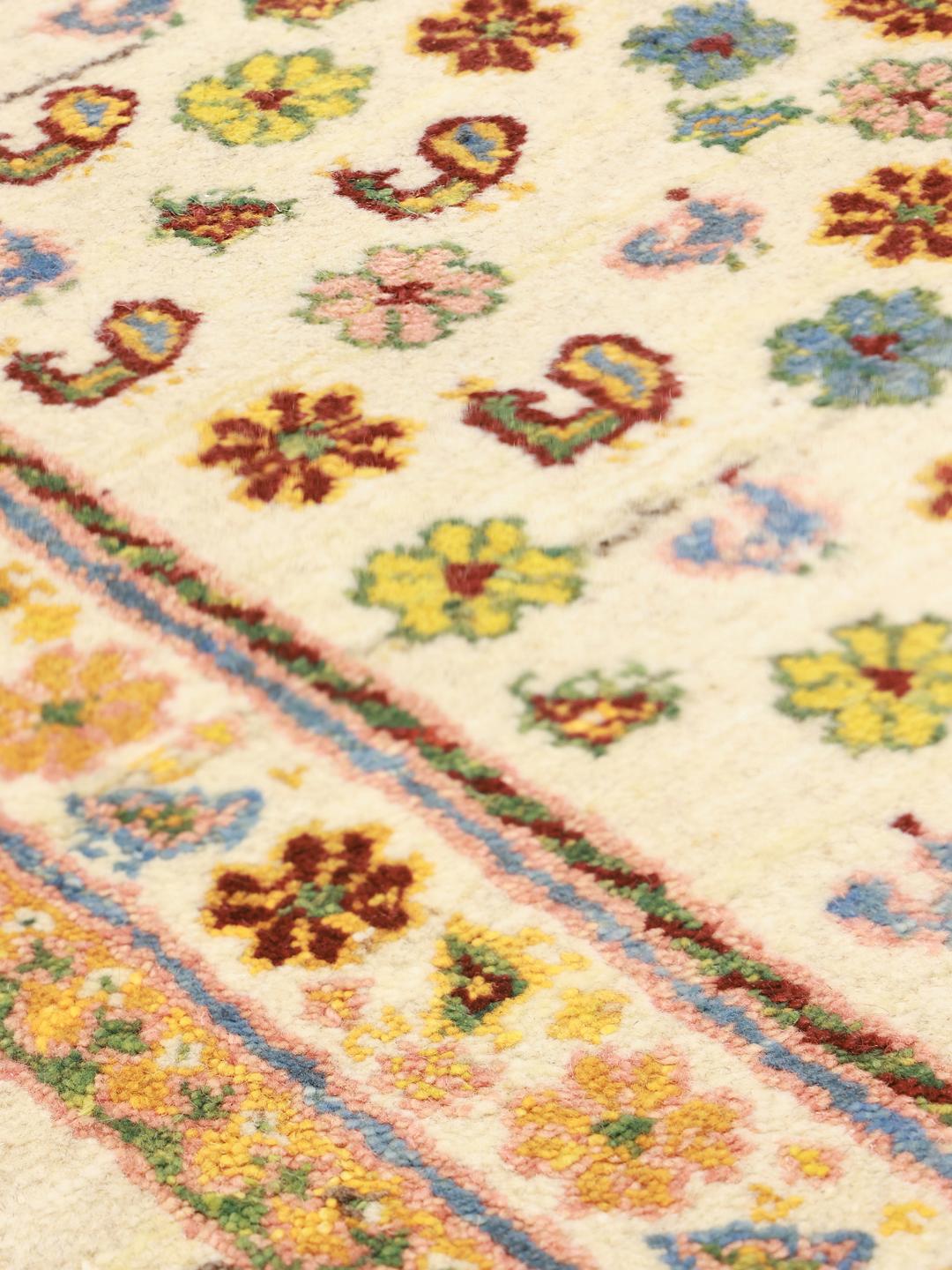
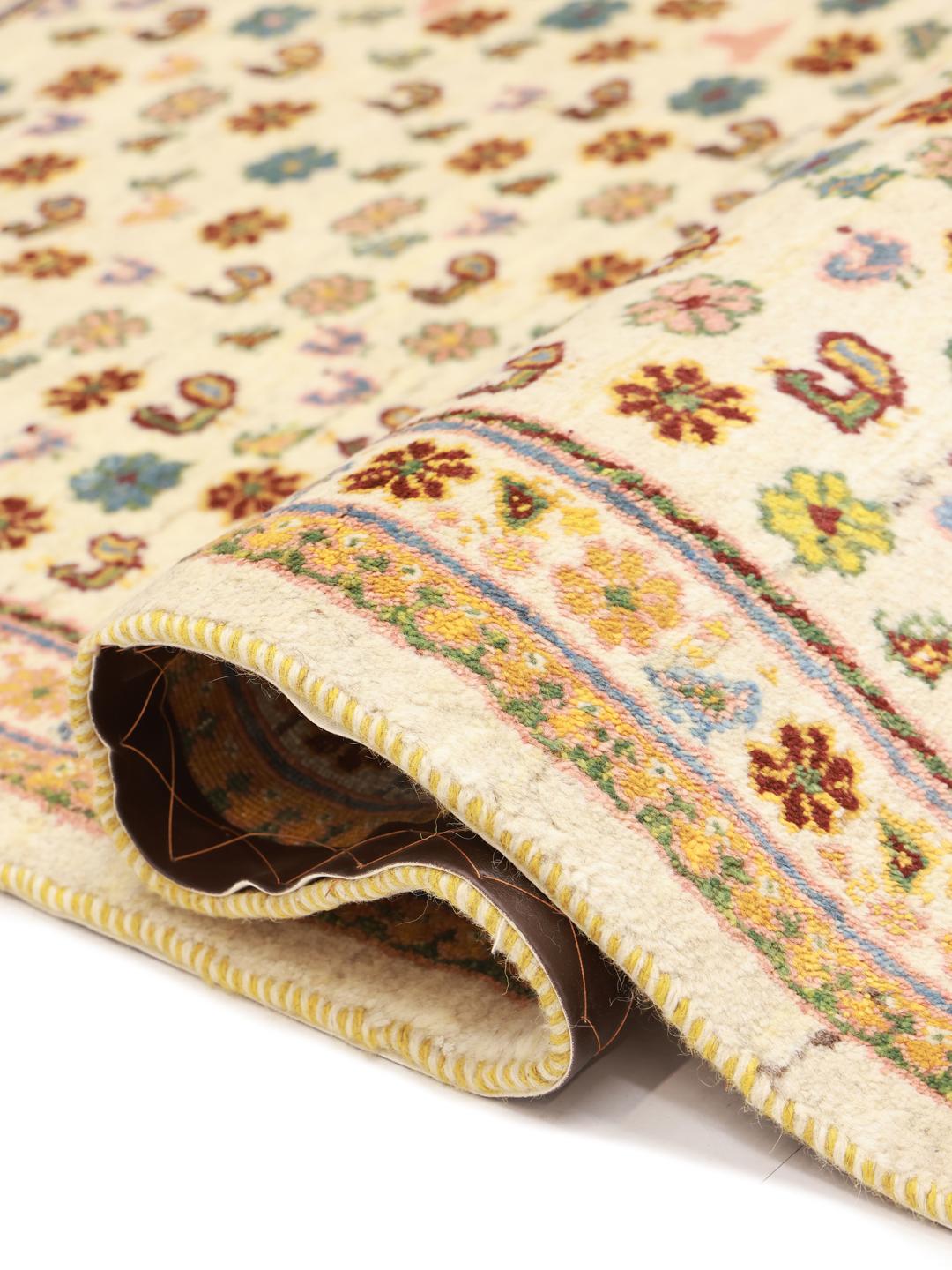
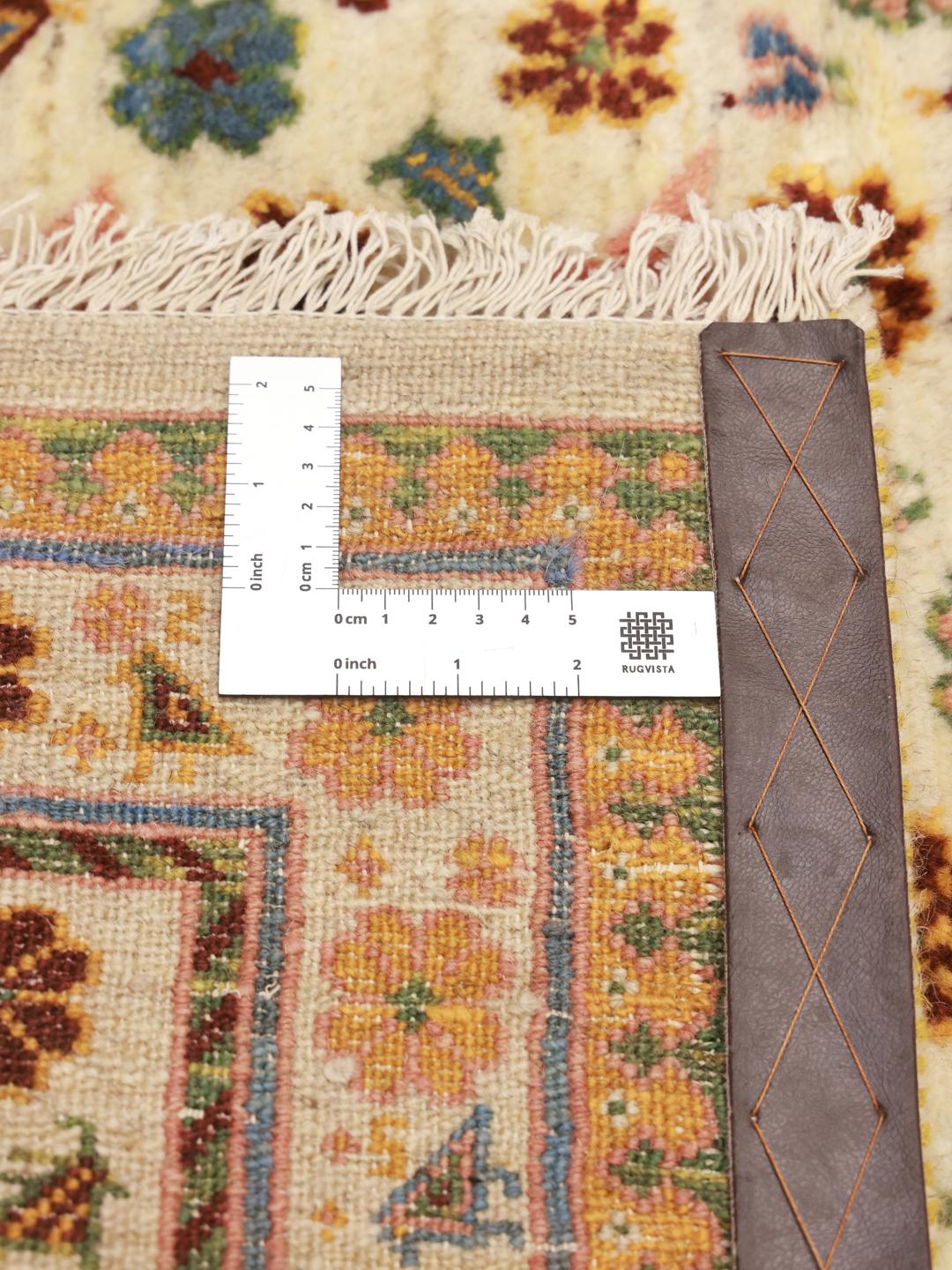
Gabbeh rugs originally developed among nomadic and semi-nomadic tribes across the Middle East, crafted primarily for practical household warmth rather than commercial trade. Over time, master weavers in Pakistan adopted and refined these traditions, creating finely executed versions that retain the primitive charm of tribal art while enhancing pile consistency and structural clarity.
The word Gabbeh translates loosely to raw or natural, referencing the thick pile and unpretentious spirit of the weave. Unlike formal court rugs that rely on strict symmetry, traditional Gabbeh weaving leaves room for folk storytelling, allowing weavers to translate everyday observations of nature directly onto the loom.
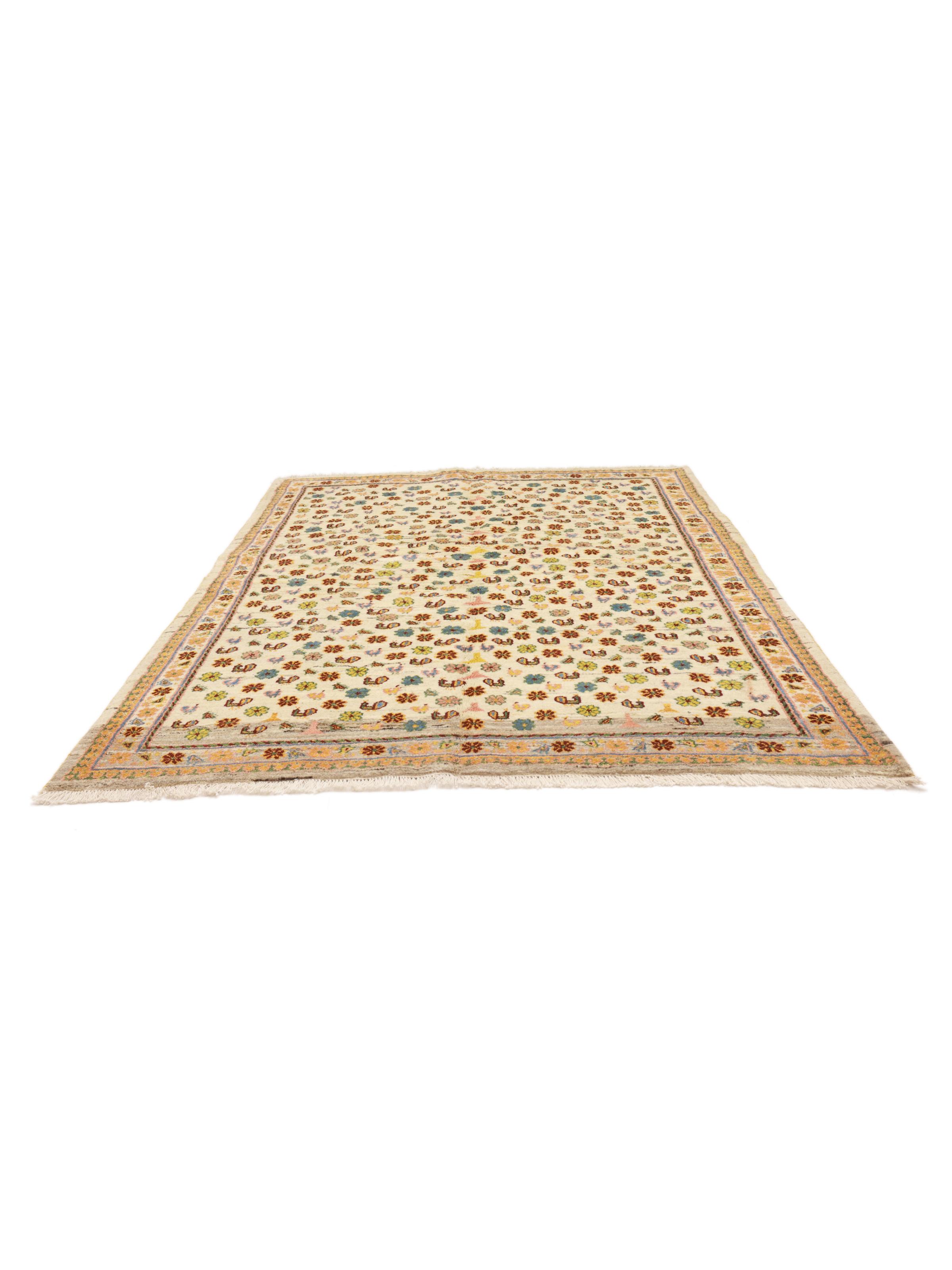
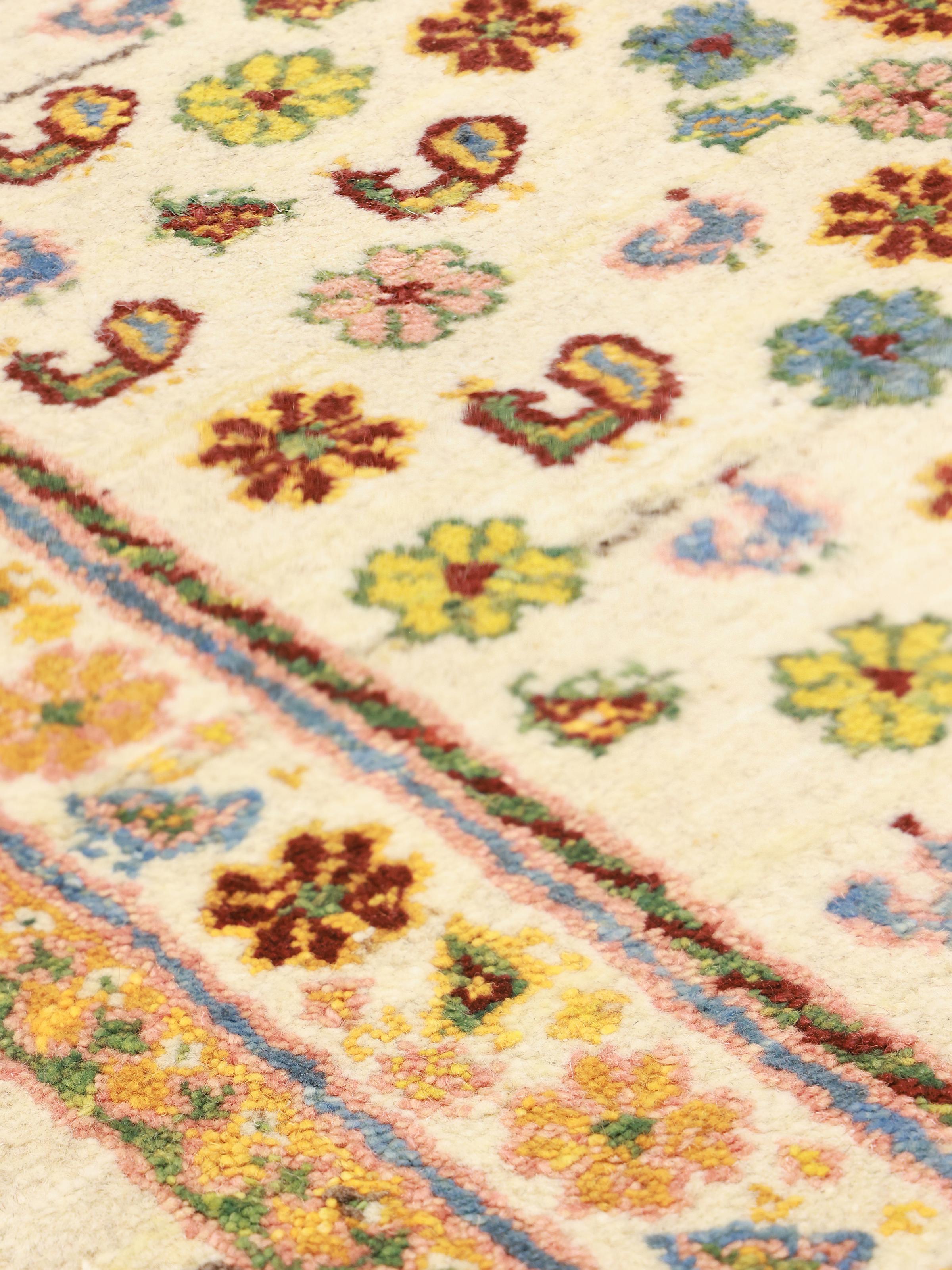
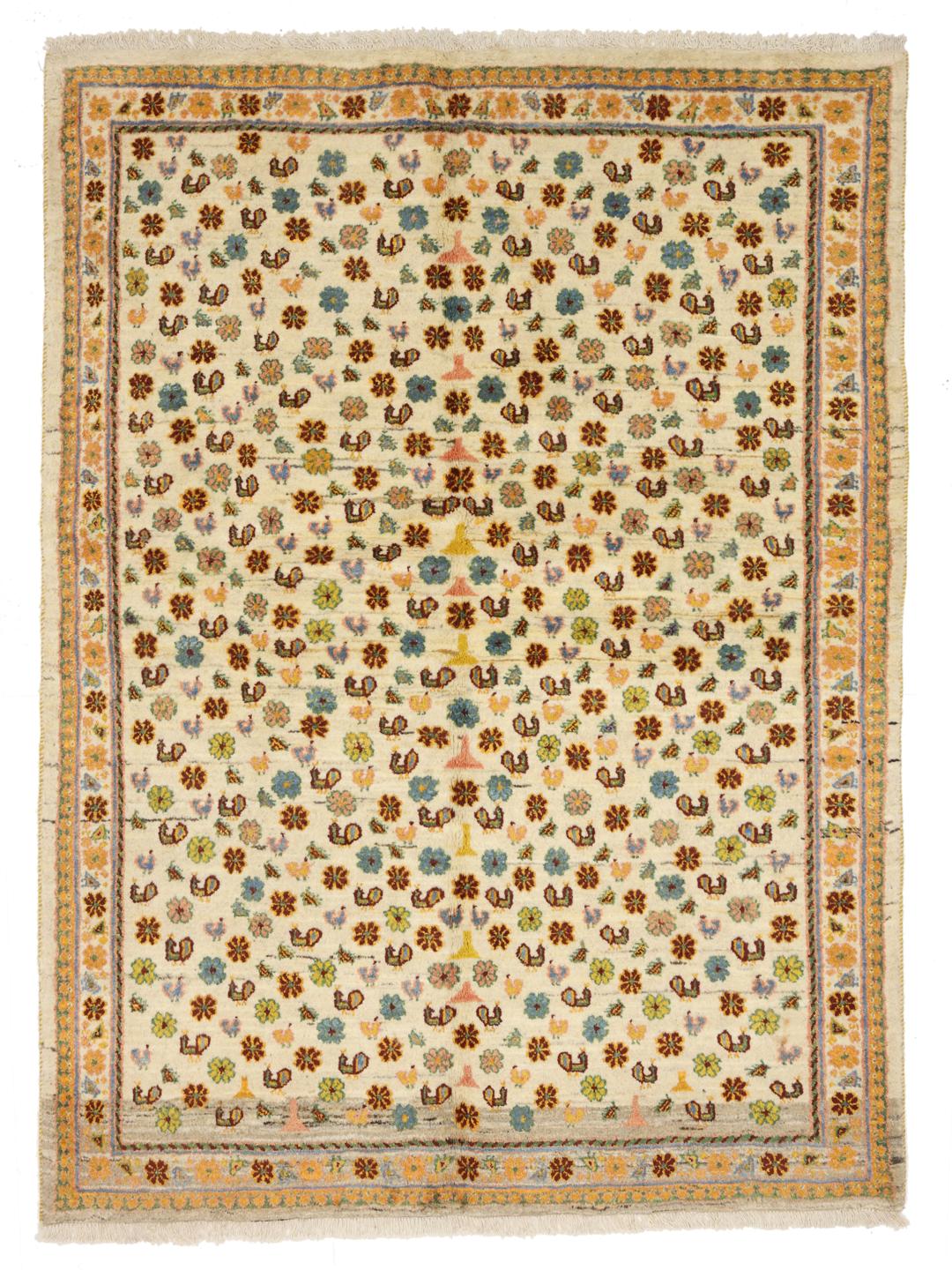
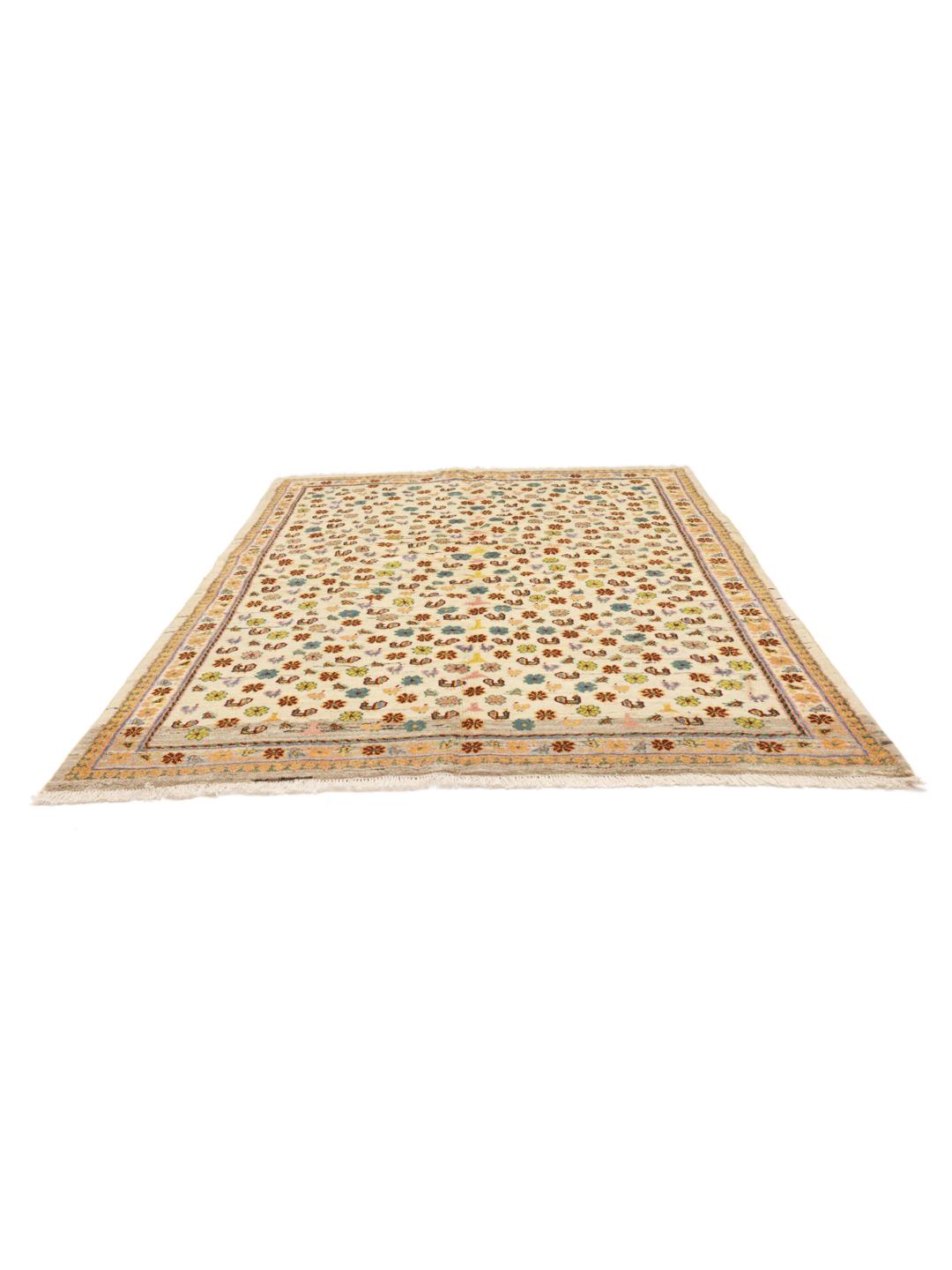
The visual identity of this rug centers on small figurative motifs scattered across the main field, enclosed by a structured decorative border. Small animal figures, stylized trees, and geometric floral elements serve as historical symbols for good health, family protection, and prosperity, turning the floor covering into a narrative canvas.
Today, Pakistani Gabbeh rugs are widely appreciated by collectors and interior enthusiasts for their warm aesthetic and artistic individuality. Acquiring an original hand-knotted piece ensures you bring an authentic tradition into your living space, preserving a piece of world craft heritage.