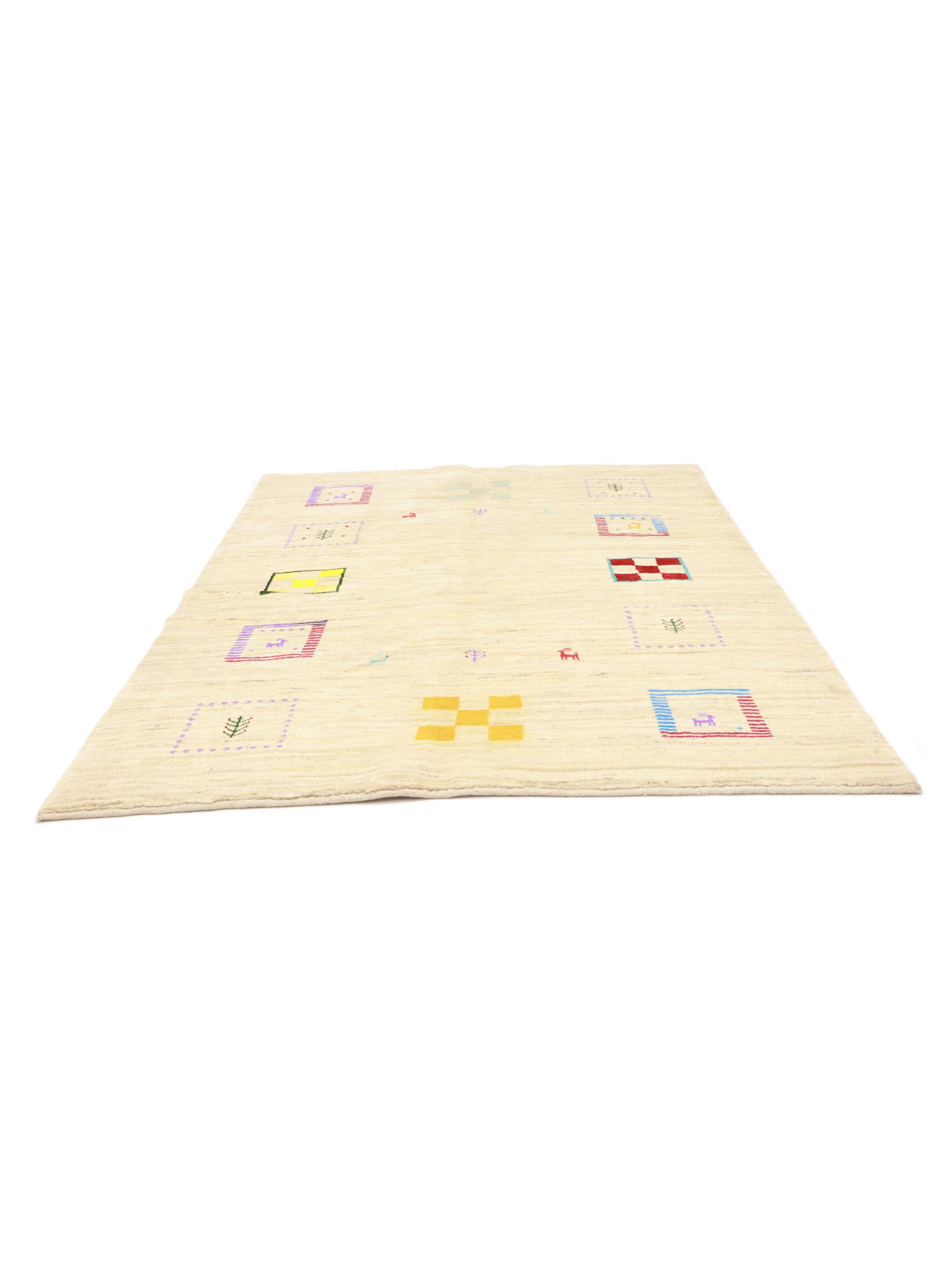
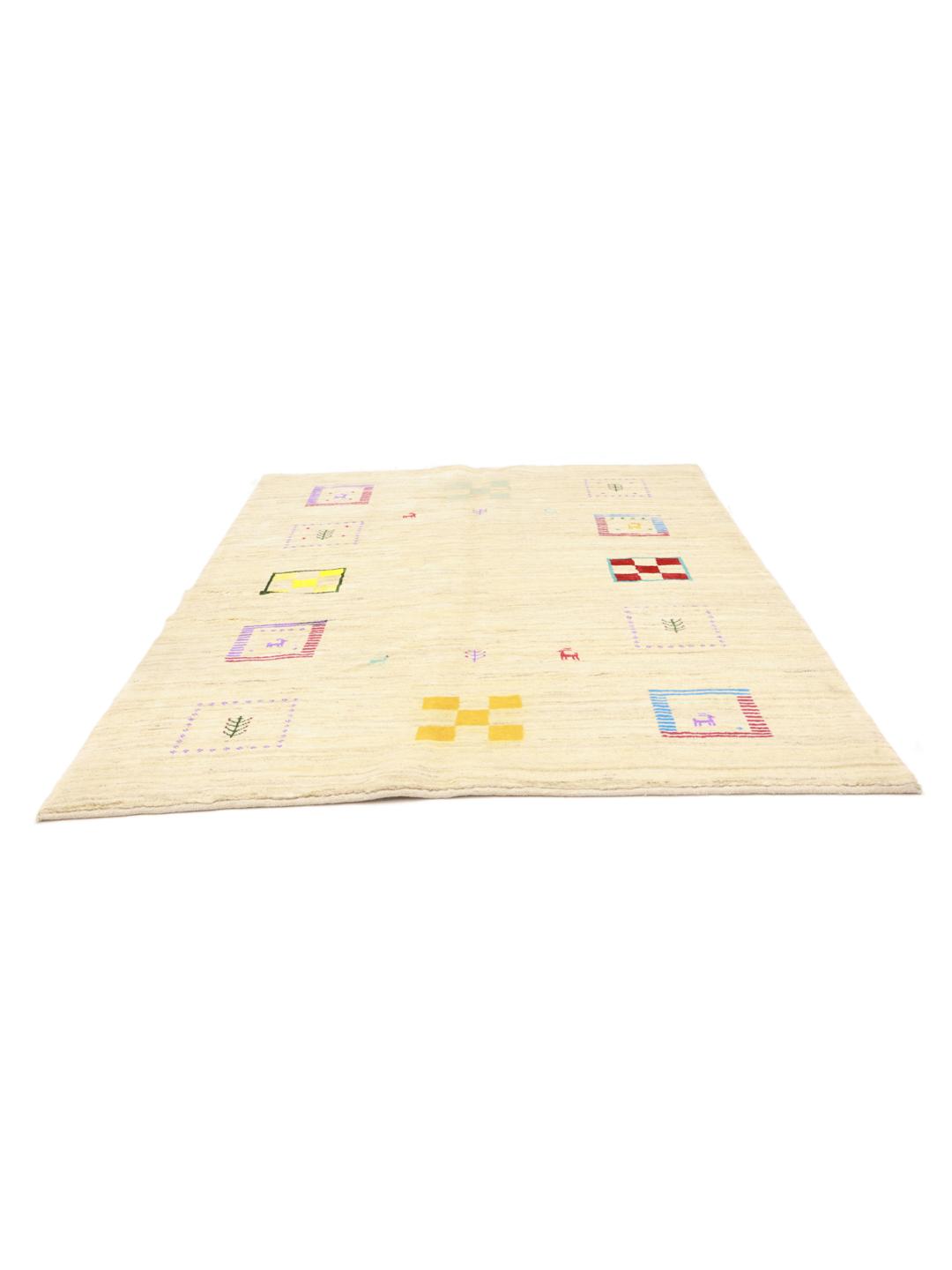
Gabbeh rugs trace their origins back to nomadic tribes in the Middle East, where they were originally woven as thick, practical bedspreads and floor coverings to protect against harsh climate conditions. The word Gabbeh translates roughly to raw or natural, referencing the simple, unpretentious nature of early designs. Over time, this rustic aesthetic migrated to skilled weaving regions in Pakistan, where artisans adapted the tradition into refined floor coverings.
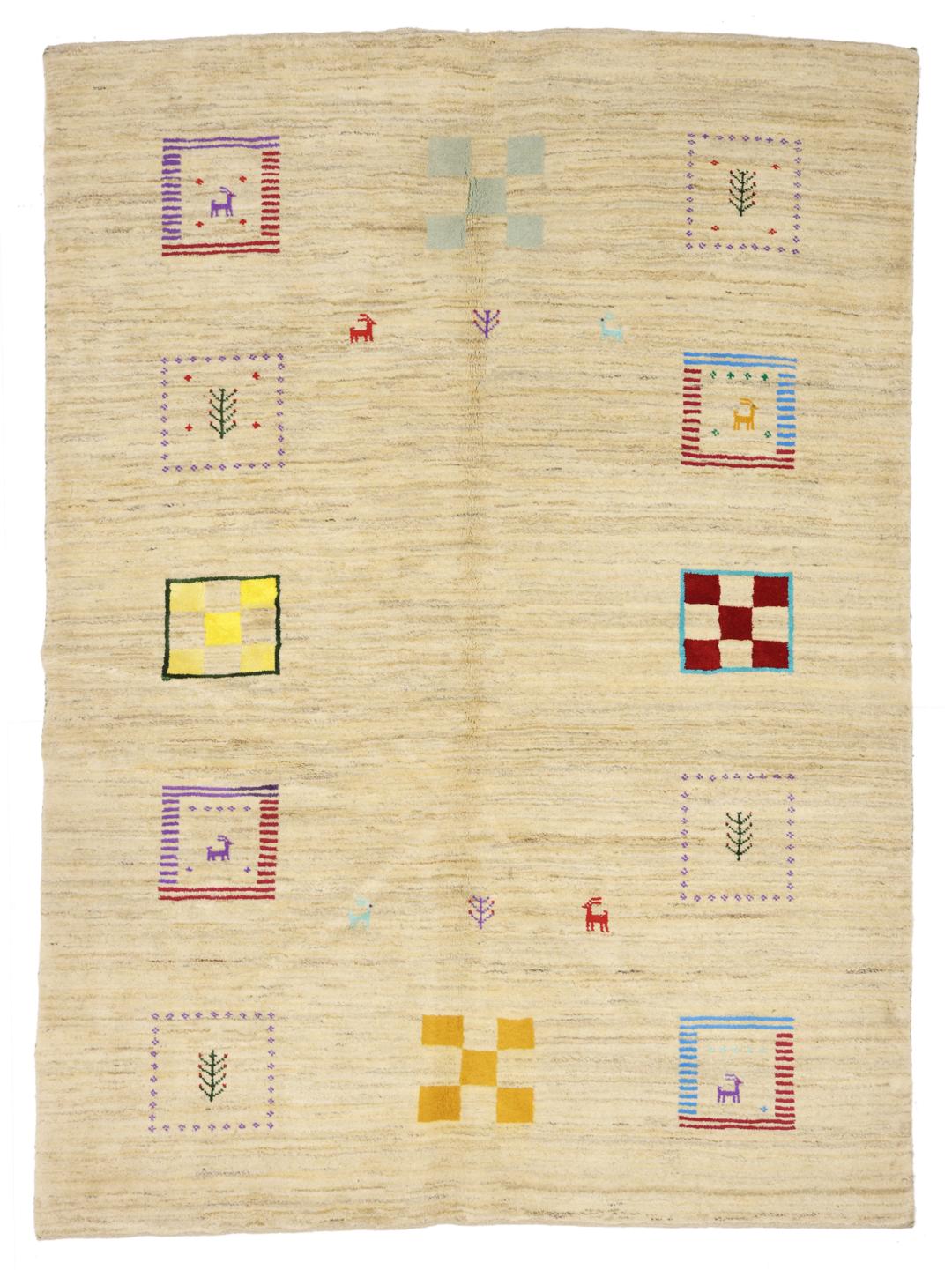
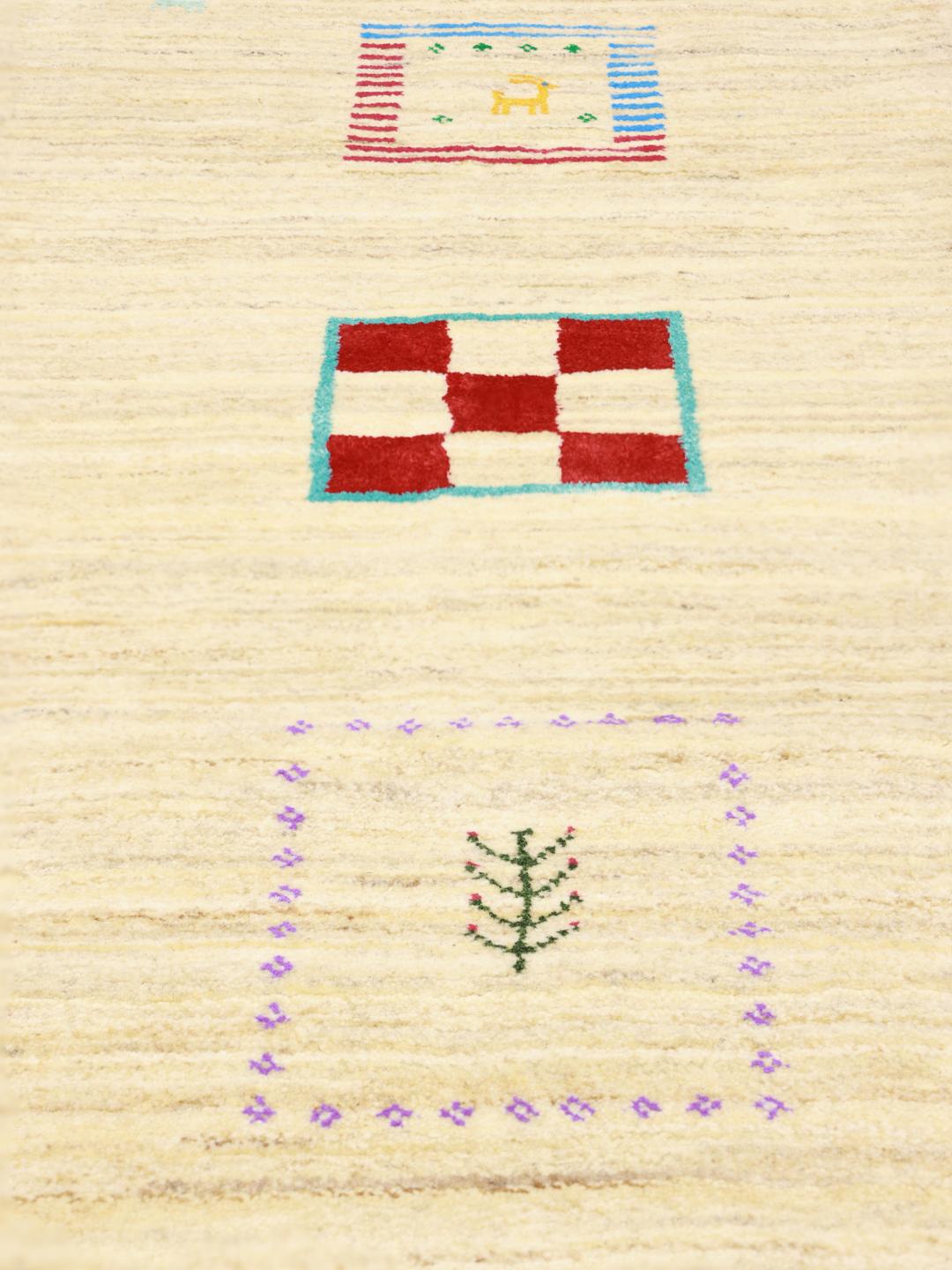
Unlike formal city rugs that rely on complex, symmetrical blueprints, Gabbeh weaving is defined by creative freedom. Weavers use their own artistic judgment to place traditional motifs across the field, making each rug an expressive snapshot of local culture rather than a rigid pattern execution. This tradition prioritises texture, solid fields of colour, and spontaneous narrative elements.
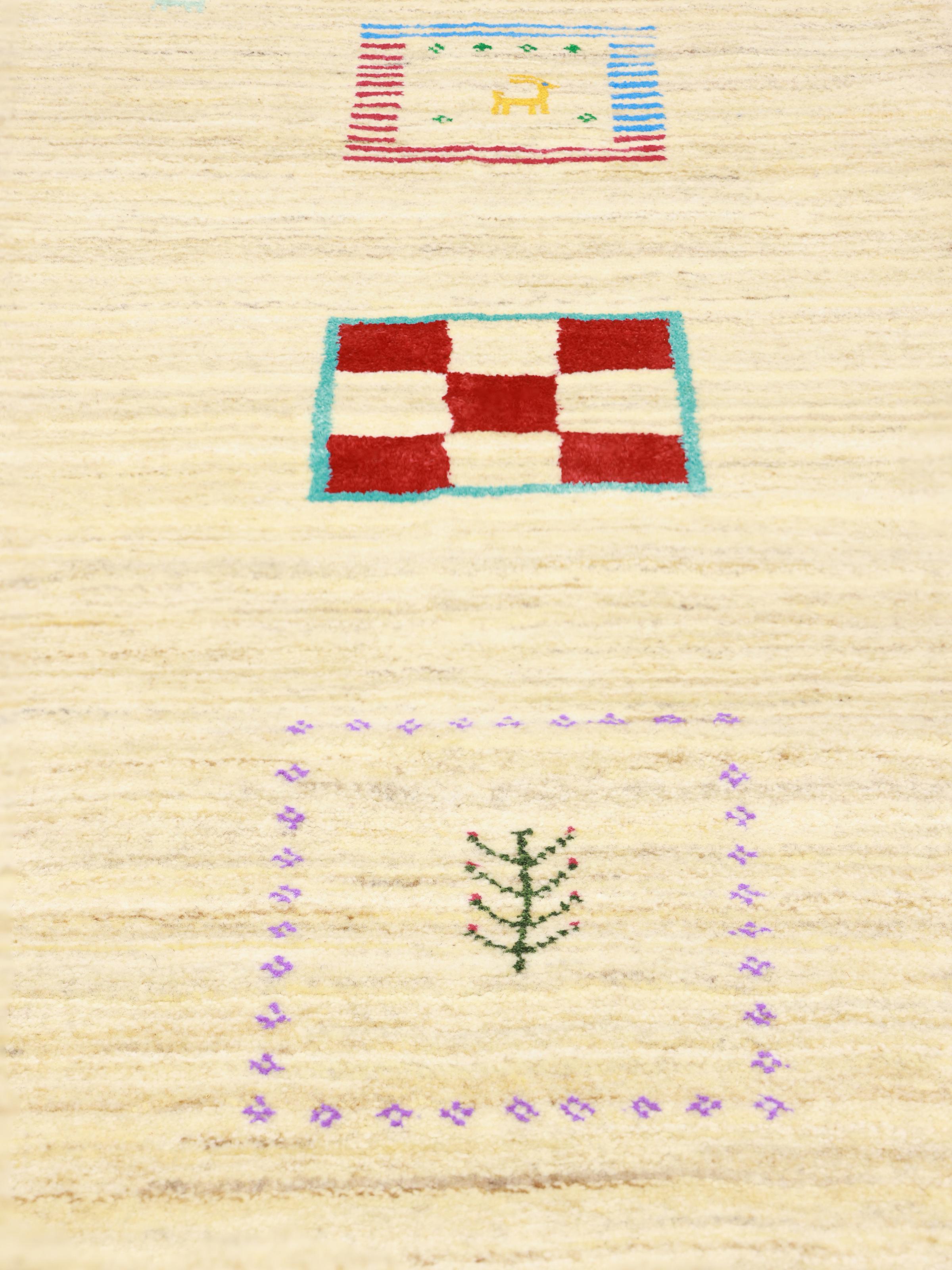
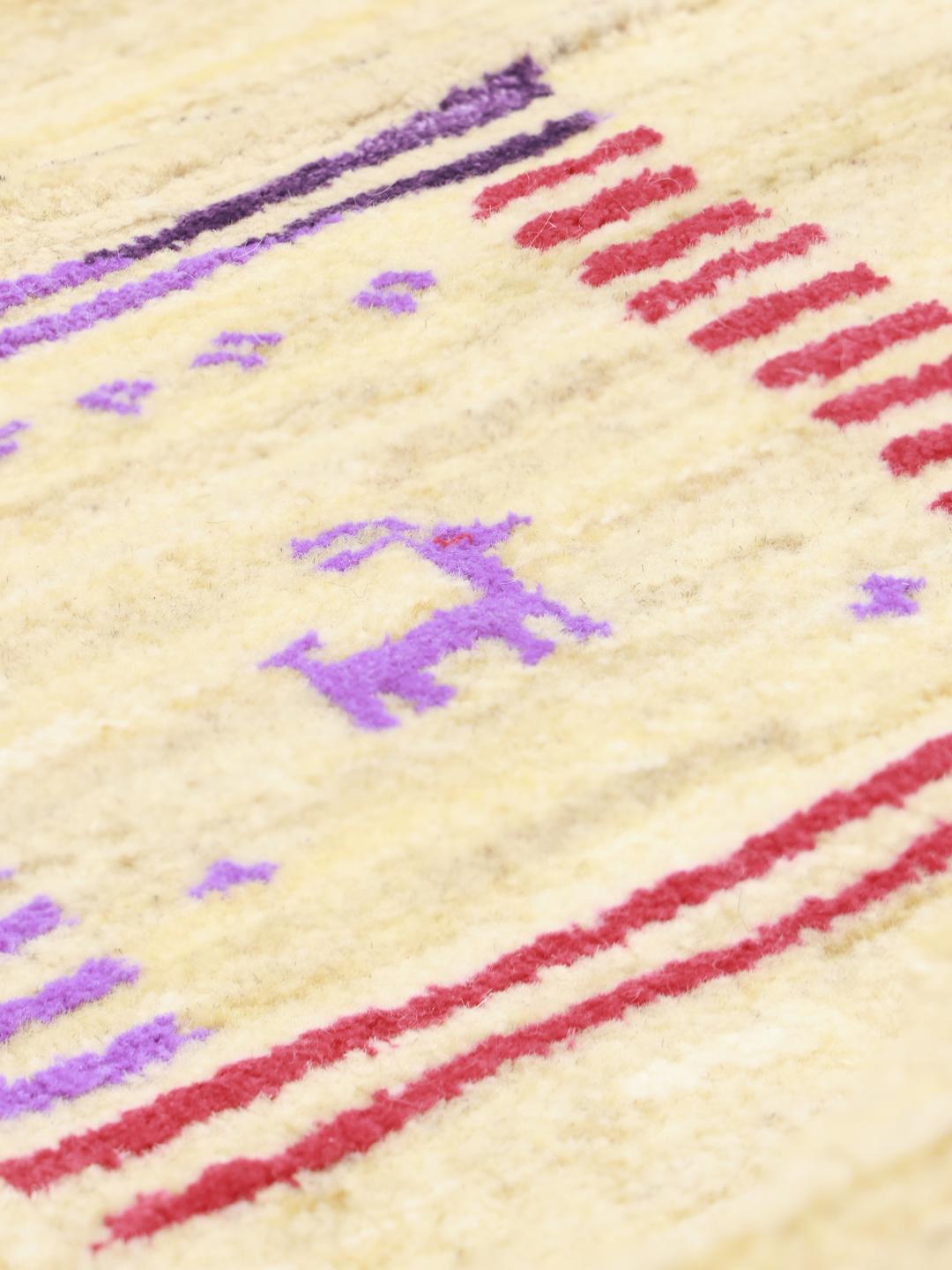
The visual language of Gabbeh textiles relies heavily on symbolic shorthand. Stylised animals represent luck and prosperity, while small tree figures often symbolise life and endurance. The simple geometric shapes and colourful accents contrast beautifully against neutral grounds, establishing a modern visual balance that feels completely relevant in contemporary settings.
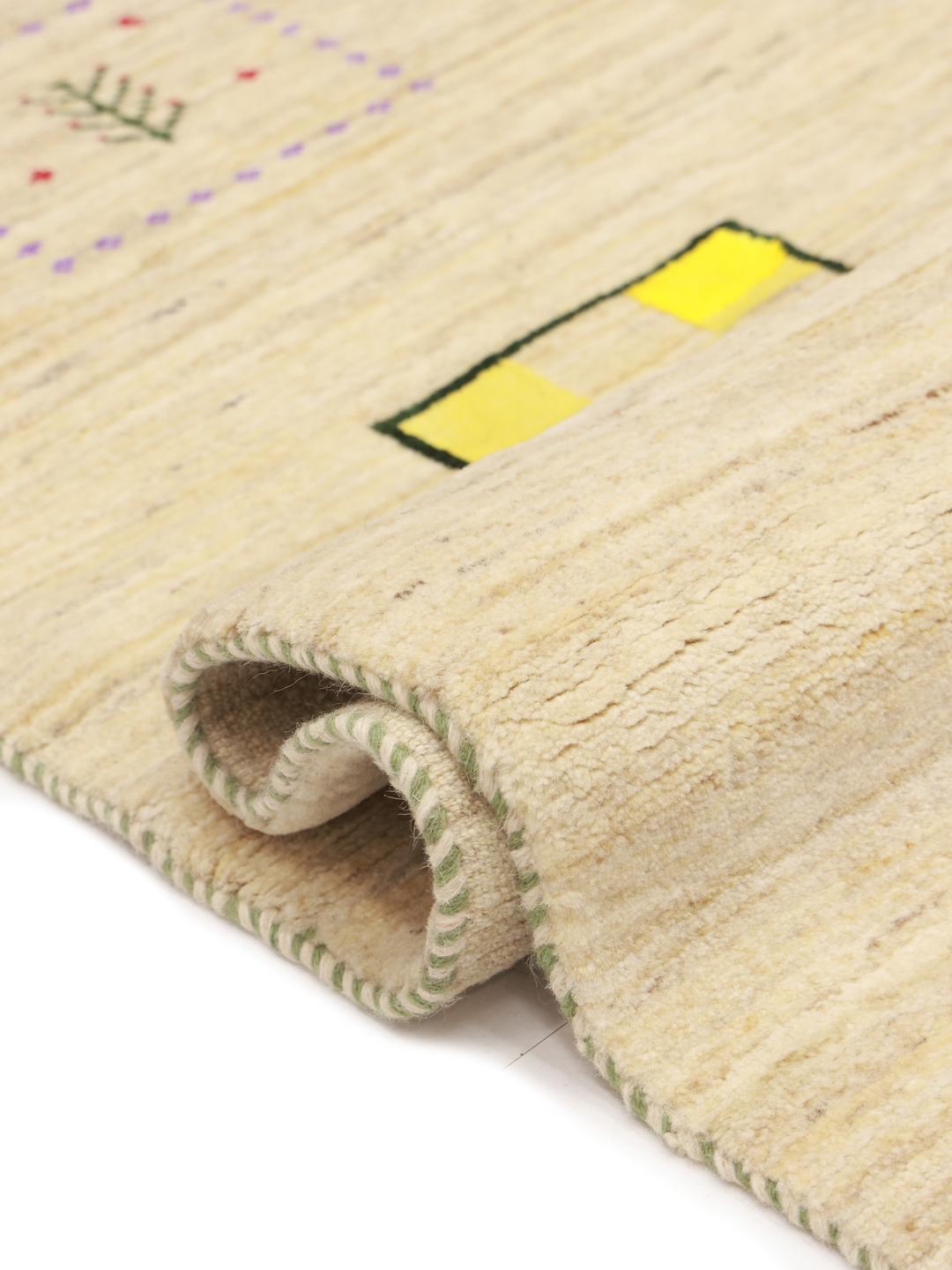
Today, hand-knotted Gabbehs are valued globally by design enthusiasts and collectors alike. Acquiring a vintage or modern Gabbeh means bringing a piece of genuine tribal history into your space, appreciating the tactile comfort of thick wool while celebrating an unbroken tradition of human craft.