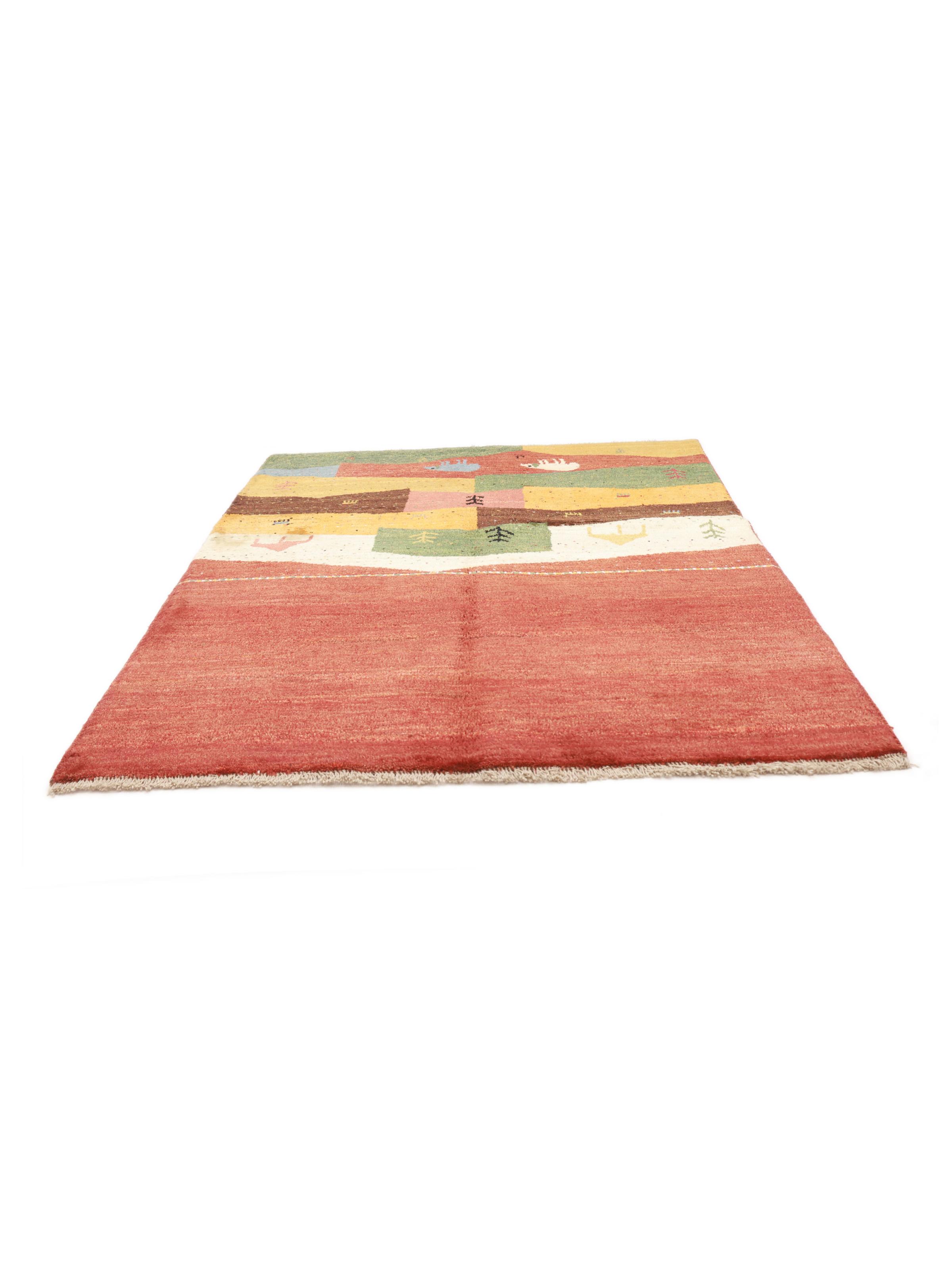
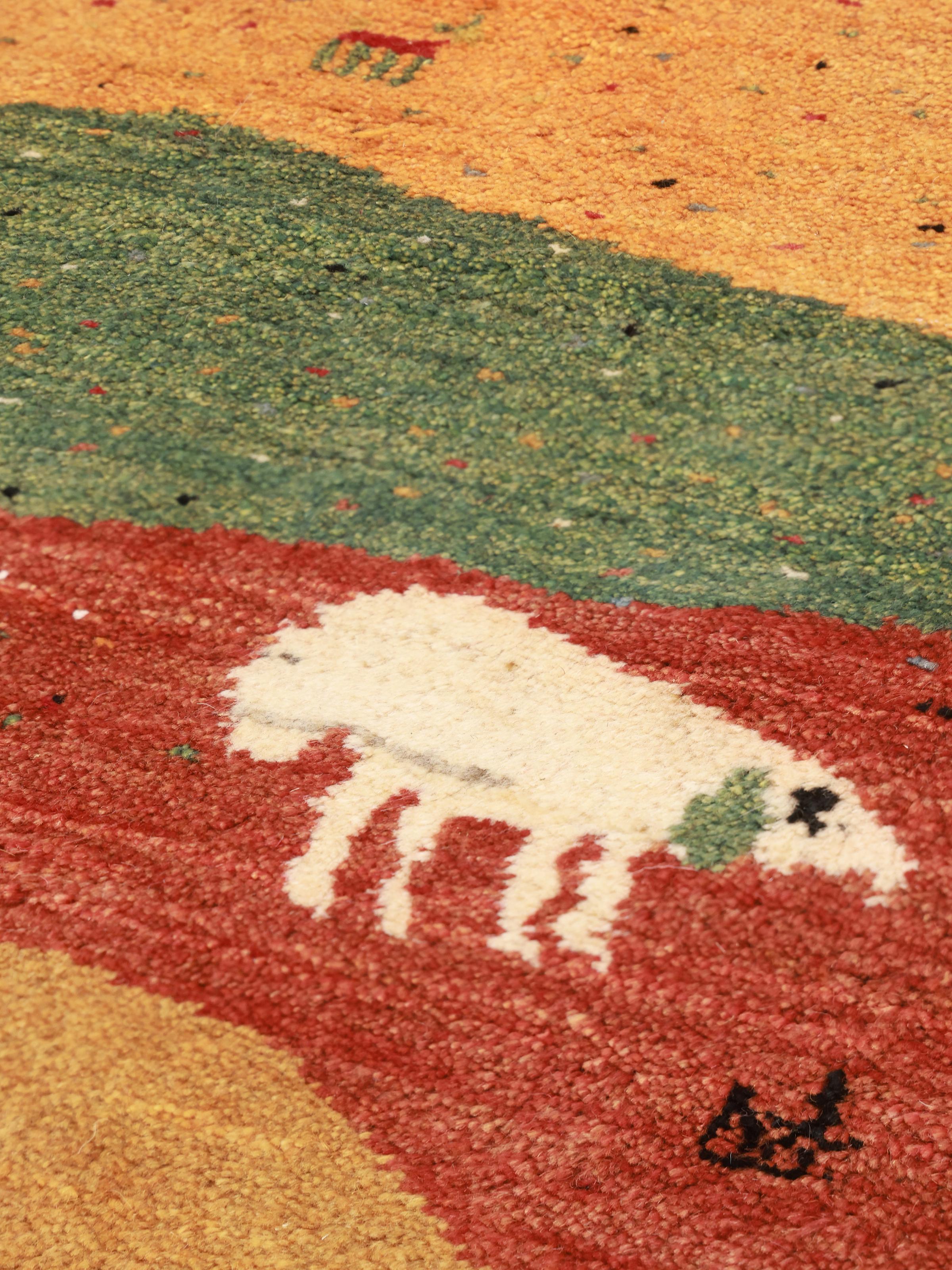
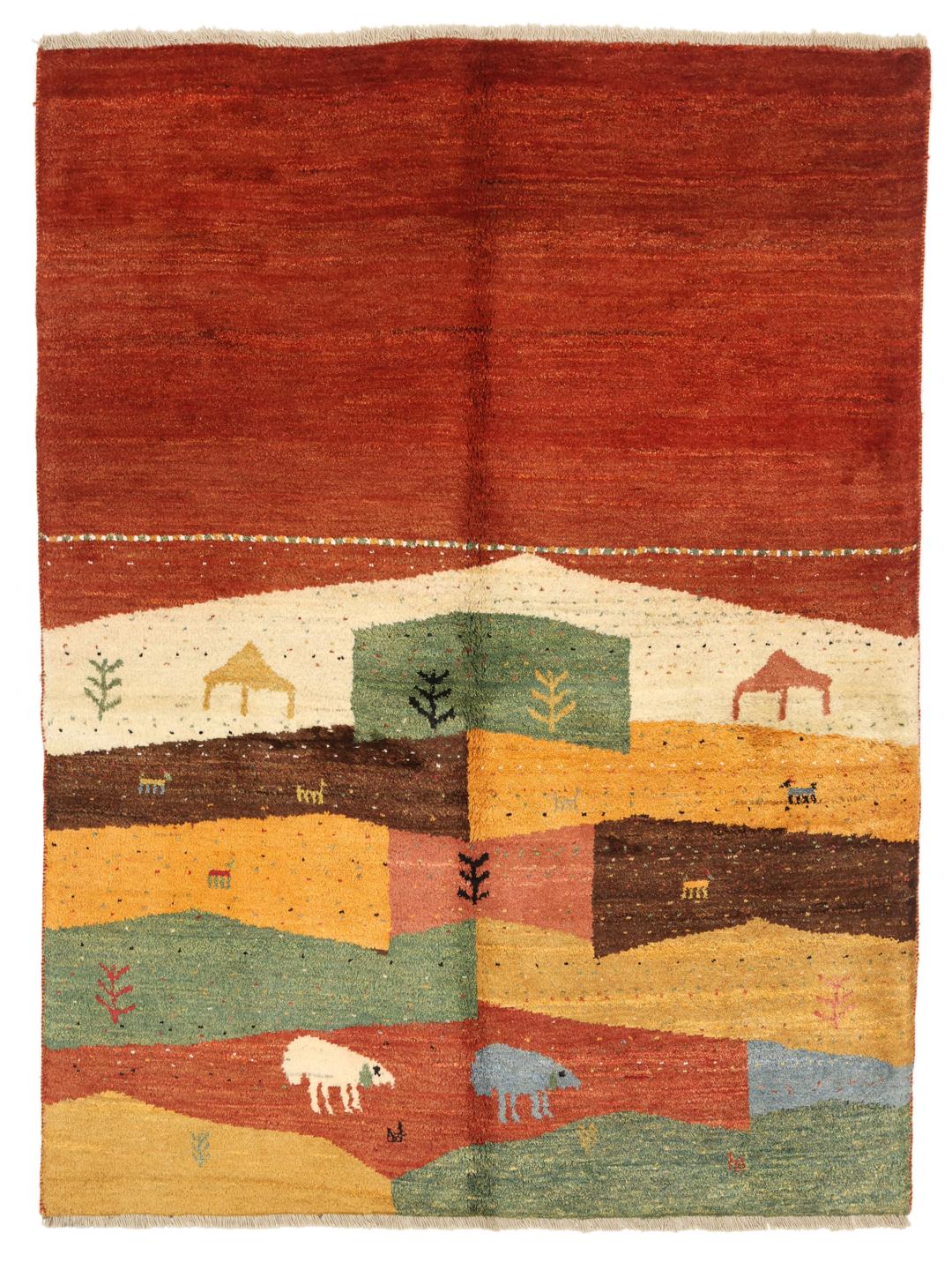
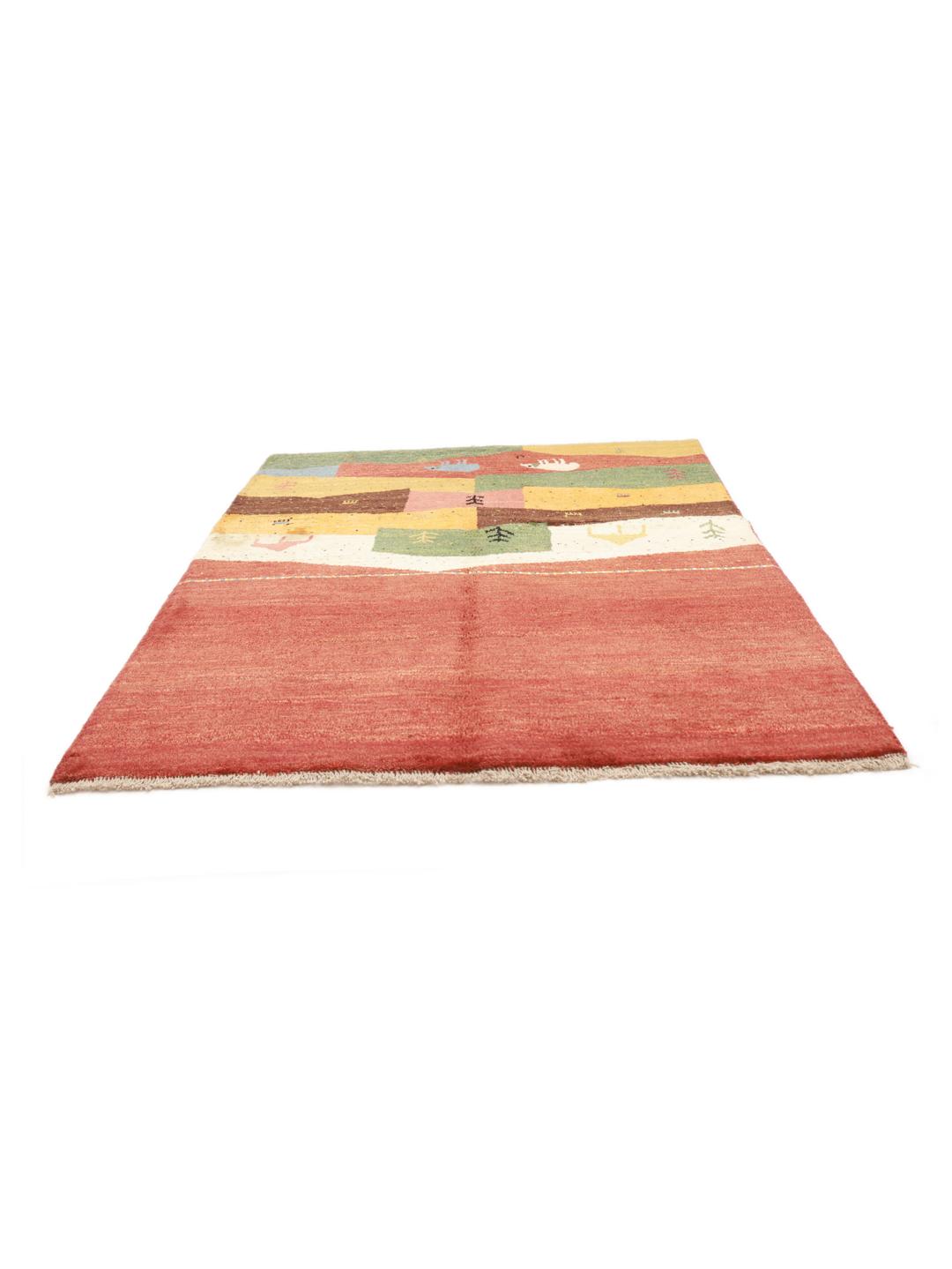
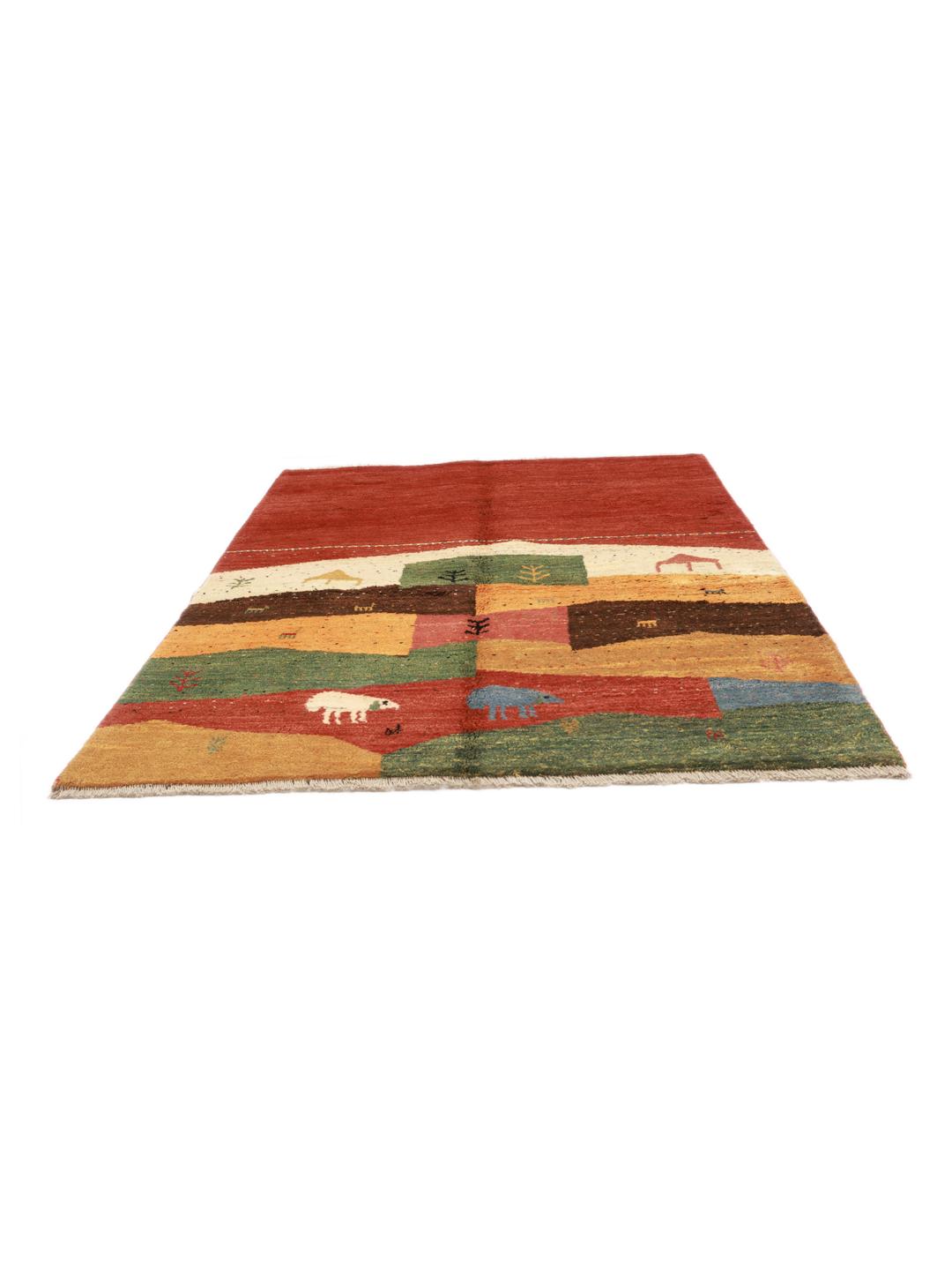
Gabbeh rugs trace their roots to the nomadic tribes of the Middle East, where weavers created them primarily for personal use rather than for trade. Unlike formal, city-made rugs, these pieces were expressions of the weaver's own world, often depicting the animals, people, and landscapes of their daily lives in a simplified, abstract style.
The term Shabargan refers to a specific regional style of these nomadic carpets, known for their focus on storytelling and bold, imaginative compositions. In this tradition, the weaver is not bound by rigid patterns but is encouraged to improvise, resulting in a spontaneous and organic design language that feels deeply authentic and personal.
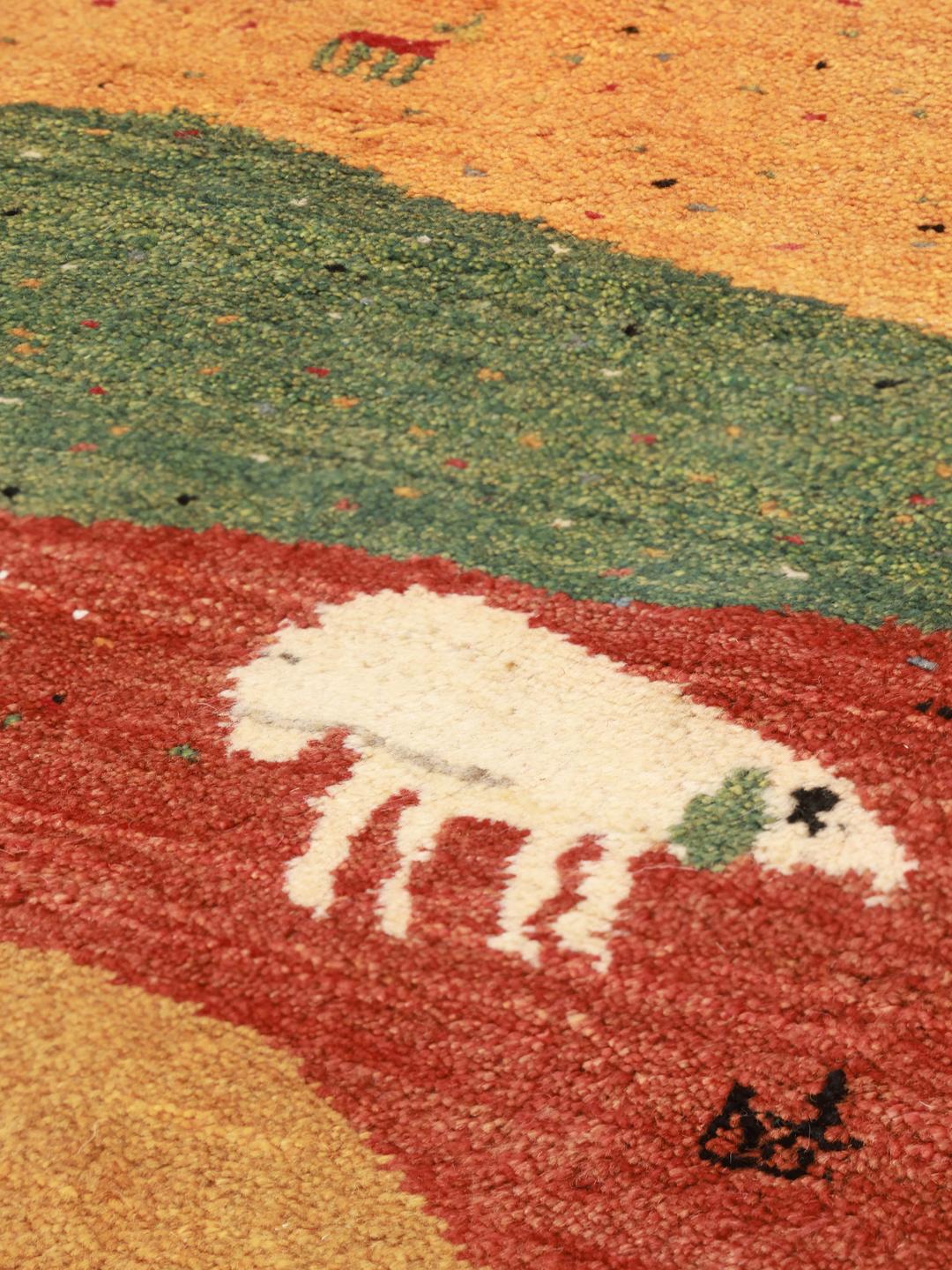
Signature elements of these rugs often include wide, open fields of rich, saturated colour, punctuated by small, stylized motifs of sheep, trees, or geometric shapes. These figures are not just decorative; they are symbols representing the weaver's environment, intended to bring the vitality and spirit of the outdoors into the home.
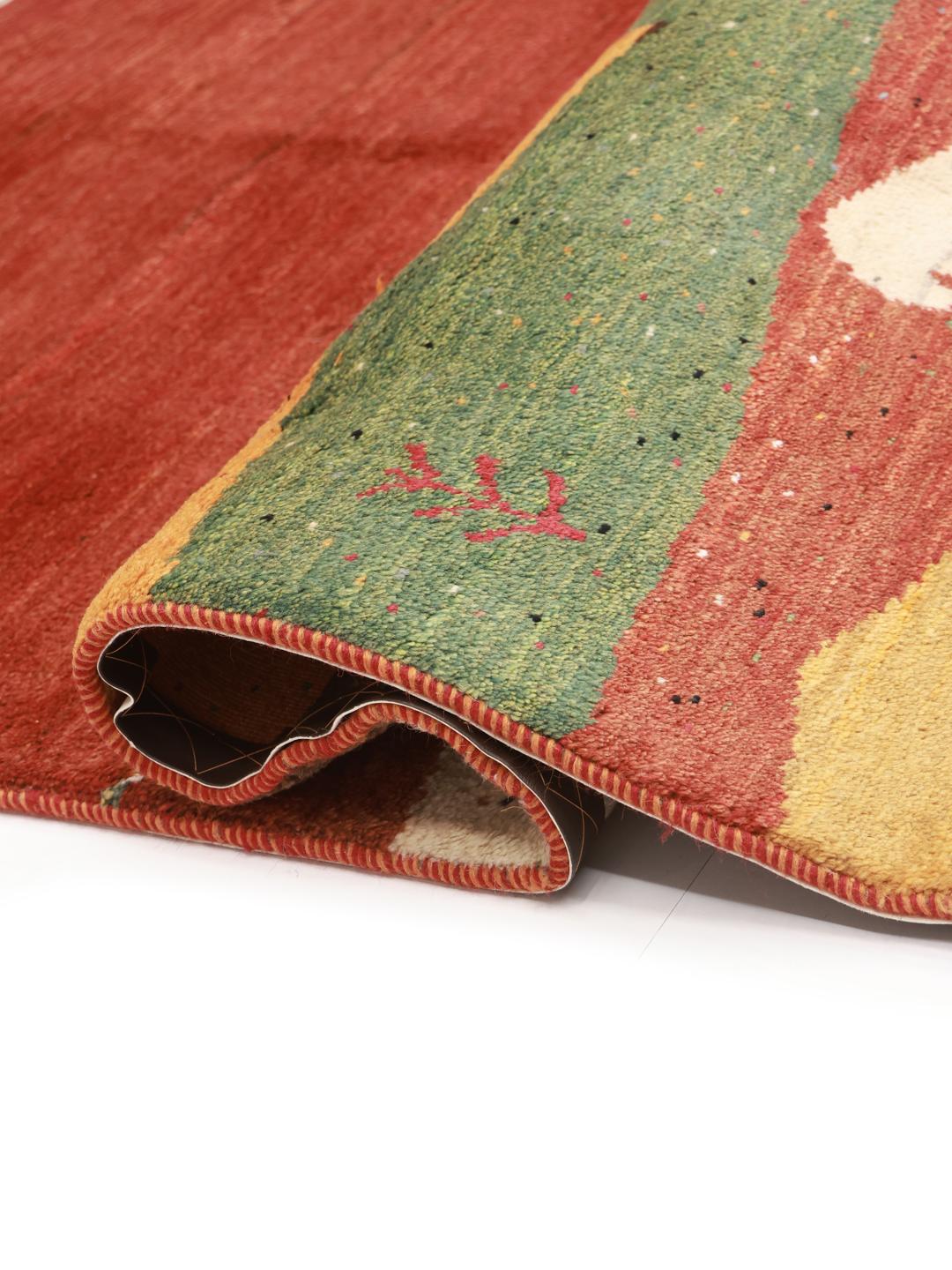
Today, these rugs are highly sought after by collectors who value their historical authenticity and the raw, unrefined beauty of their construction. Owning a piece from this tradition is an act of preserving a nomadic heritage, connecting your modern living space to the timeless stories of the people who first imagined these designs.