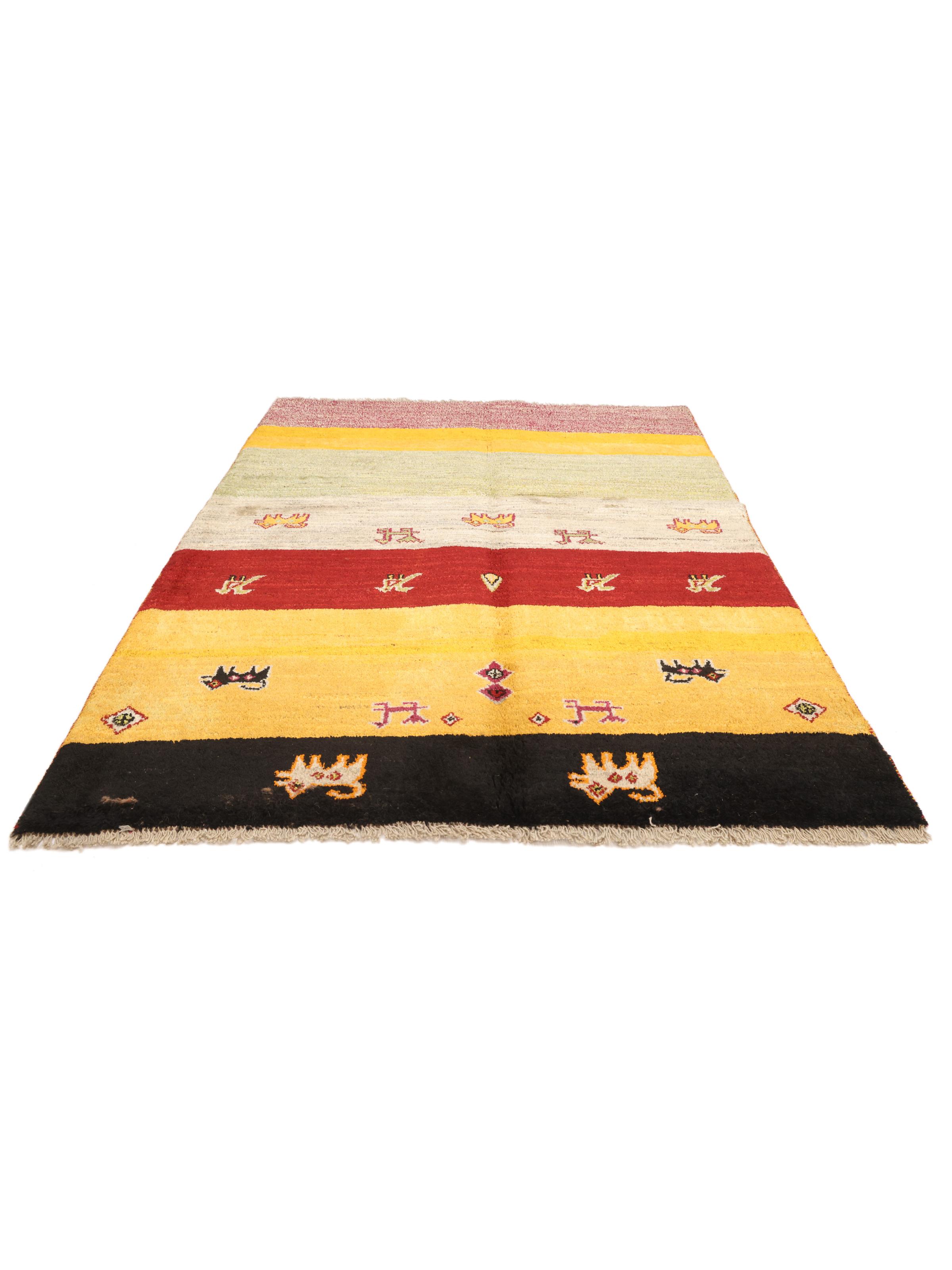
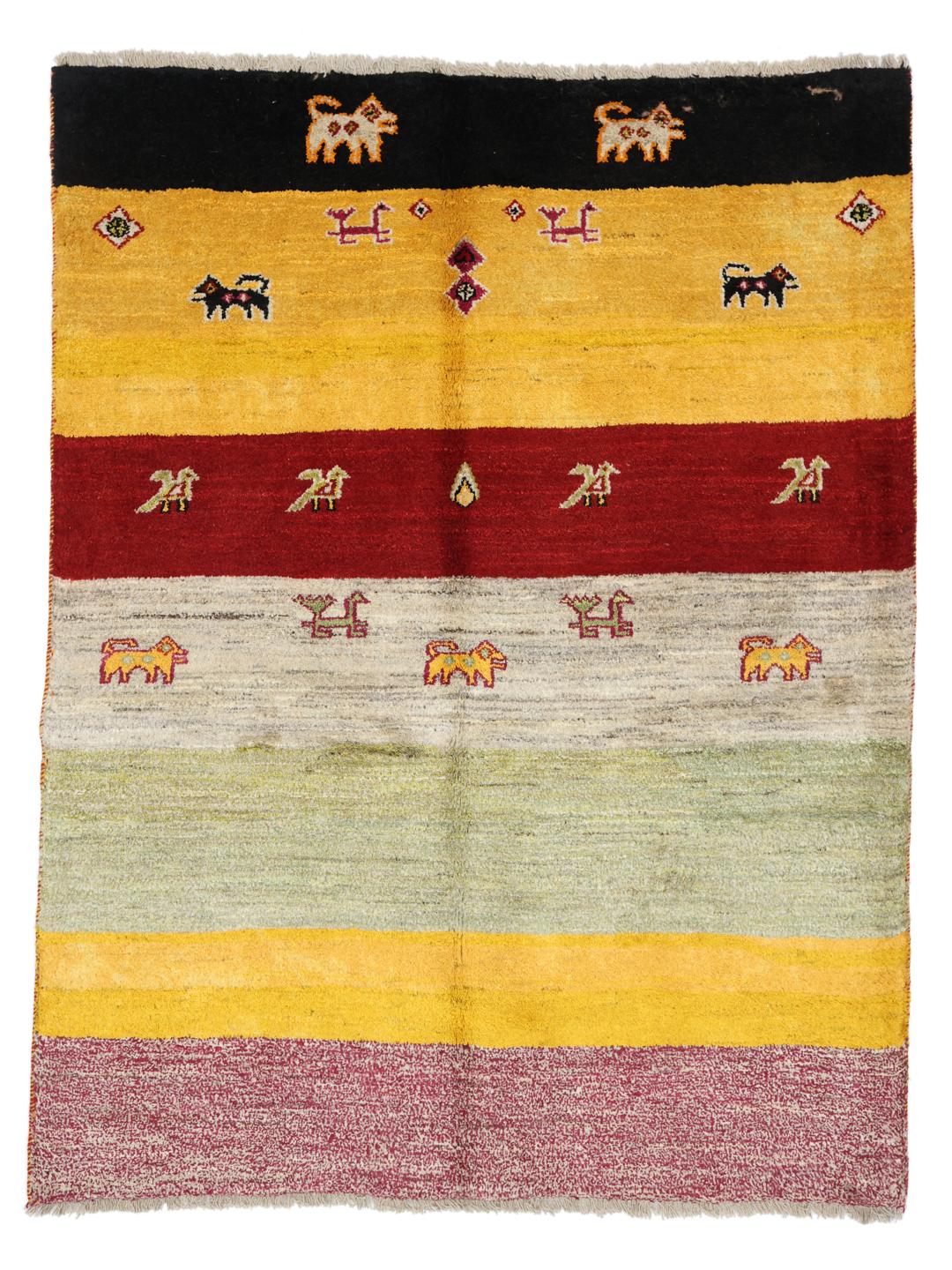
Gabbeh rugs are deeply rooted in the nomadic traditions of the Middle Eastern countryside, where they were originally created by tribal weavers for practical use within the home. Unlike formal, city-made rugs, these pieces were designed to provide warmth and protection from the cold, often serving as bedding or floor coverings in tents.
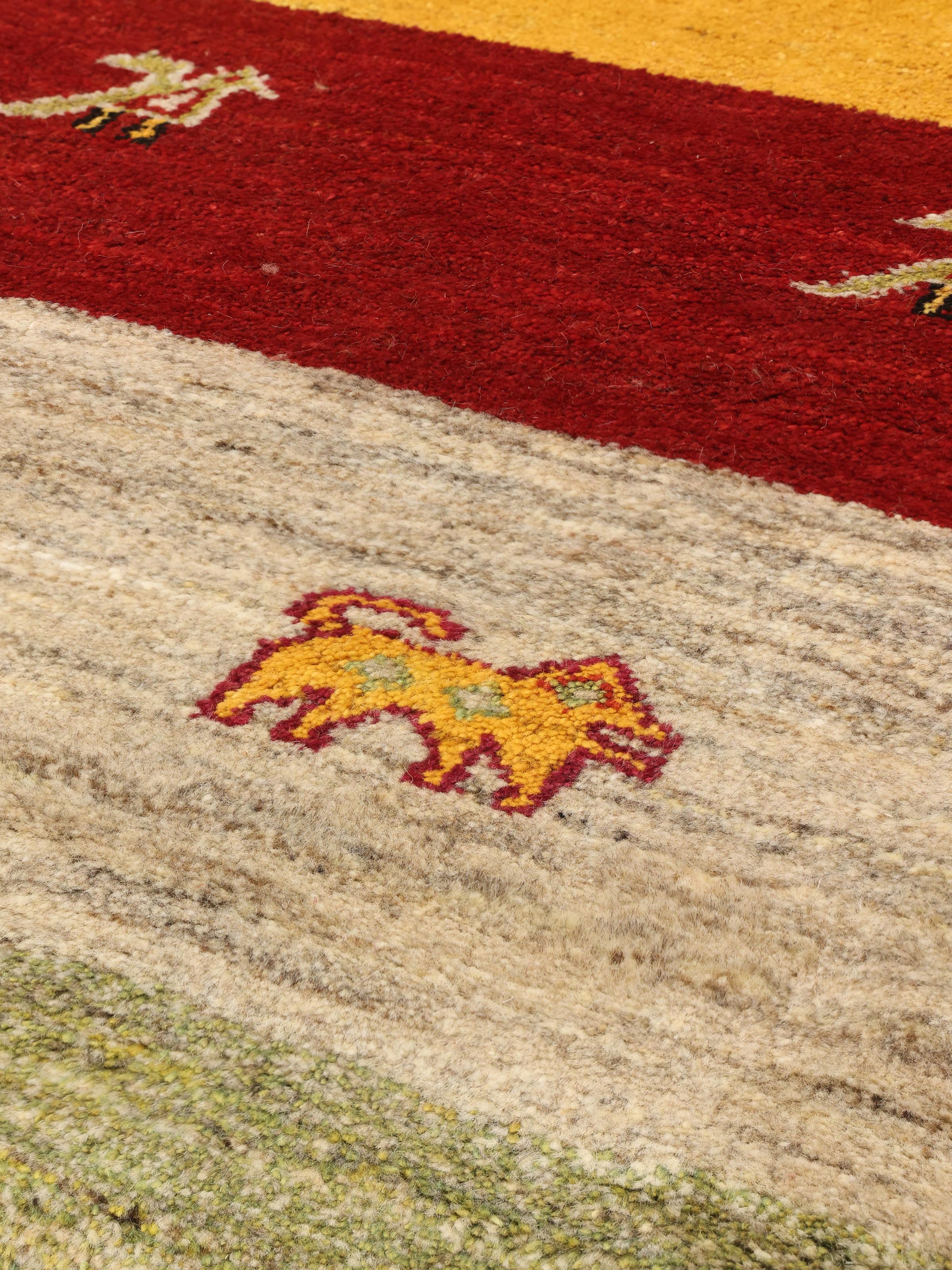
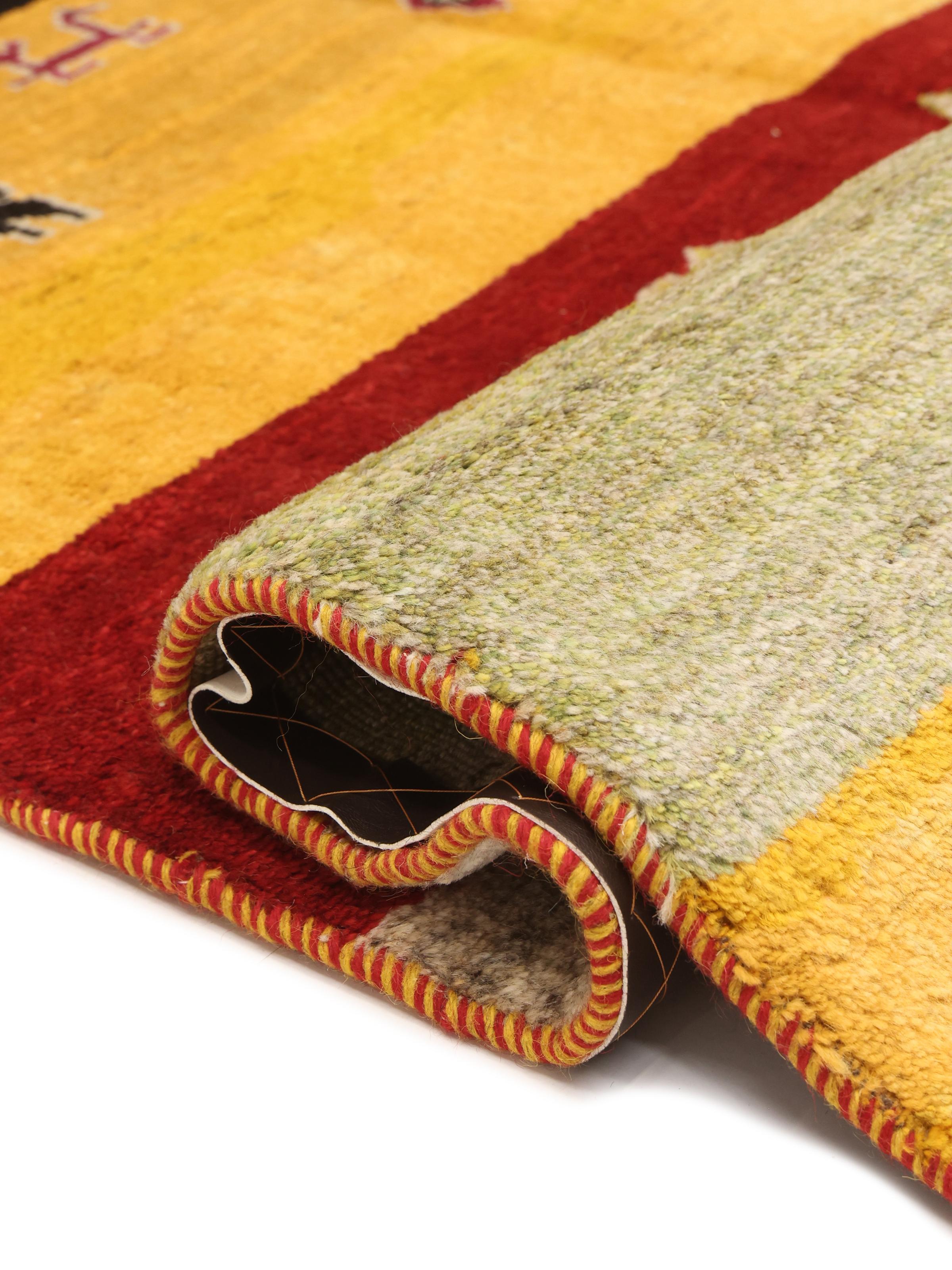
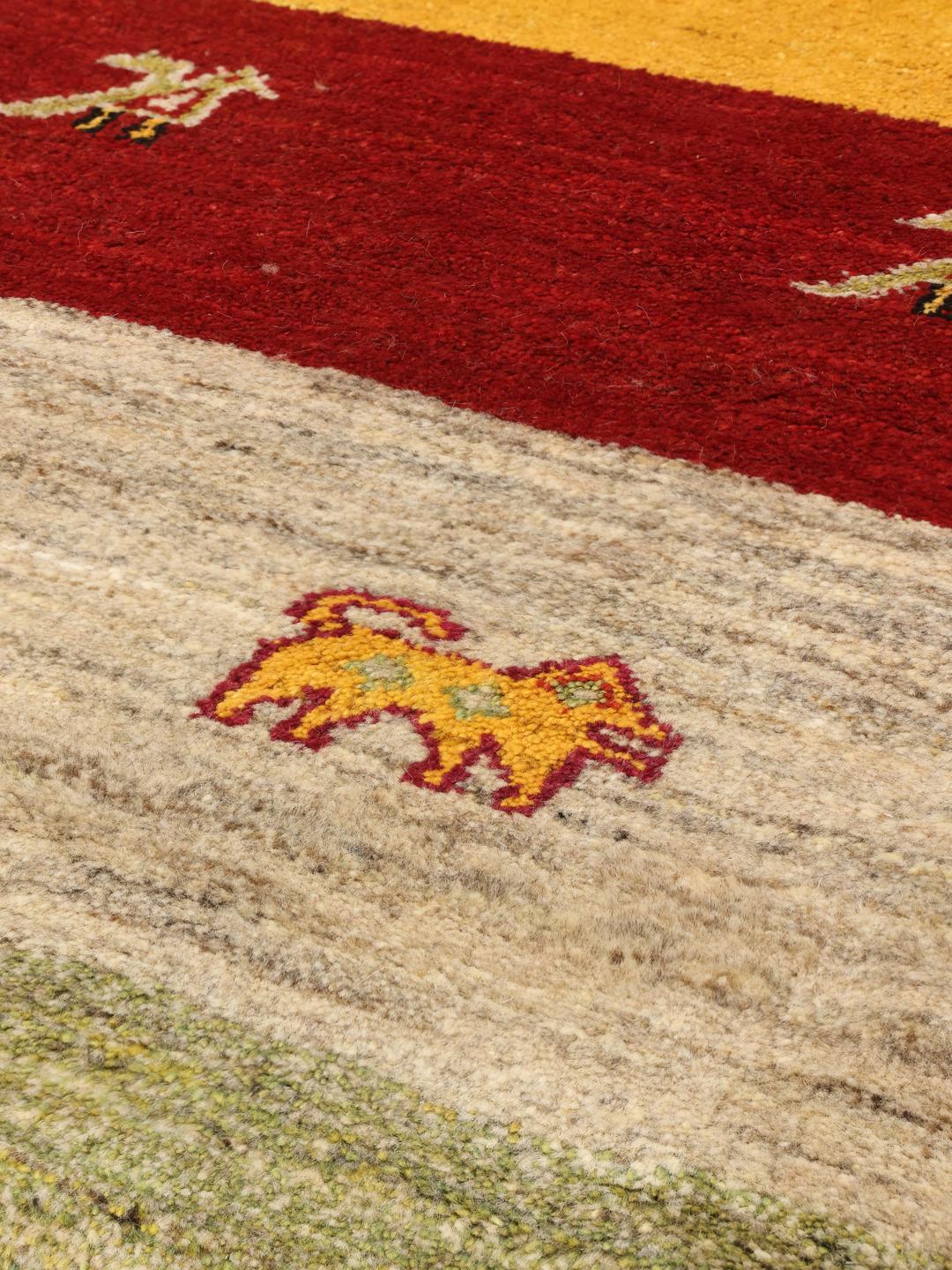
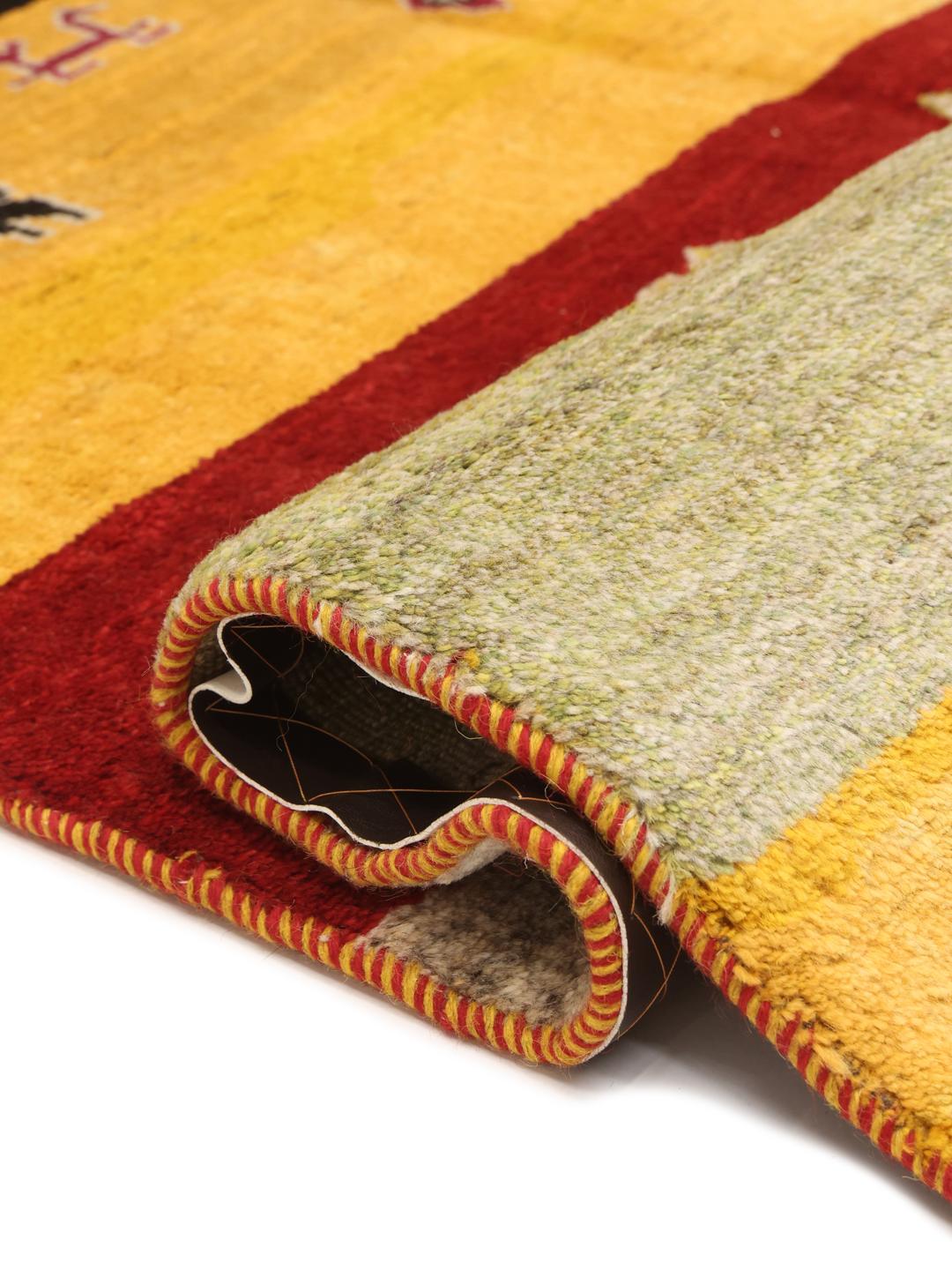
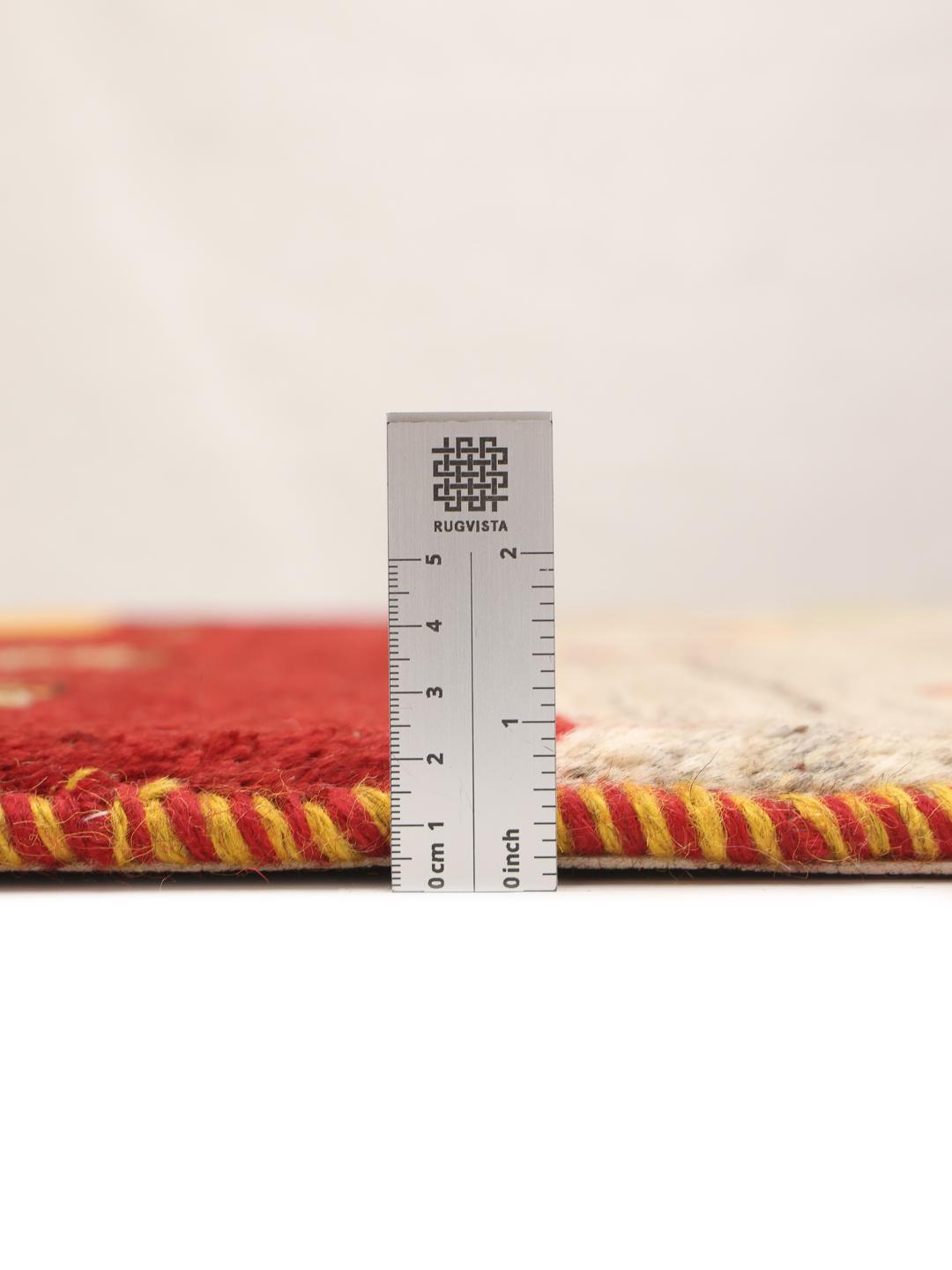
The term 'Gabbeh' itself translates to raw or natural, reflecting the unrefined and spontaneous nature of the designs. These rugs are traditionally woven with a thicker, coarser pile compared to other regional styles, which is achieved through a simplified, yet highly effective, knotting technique that emphasises durability and a plush, luxurious feel.
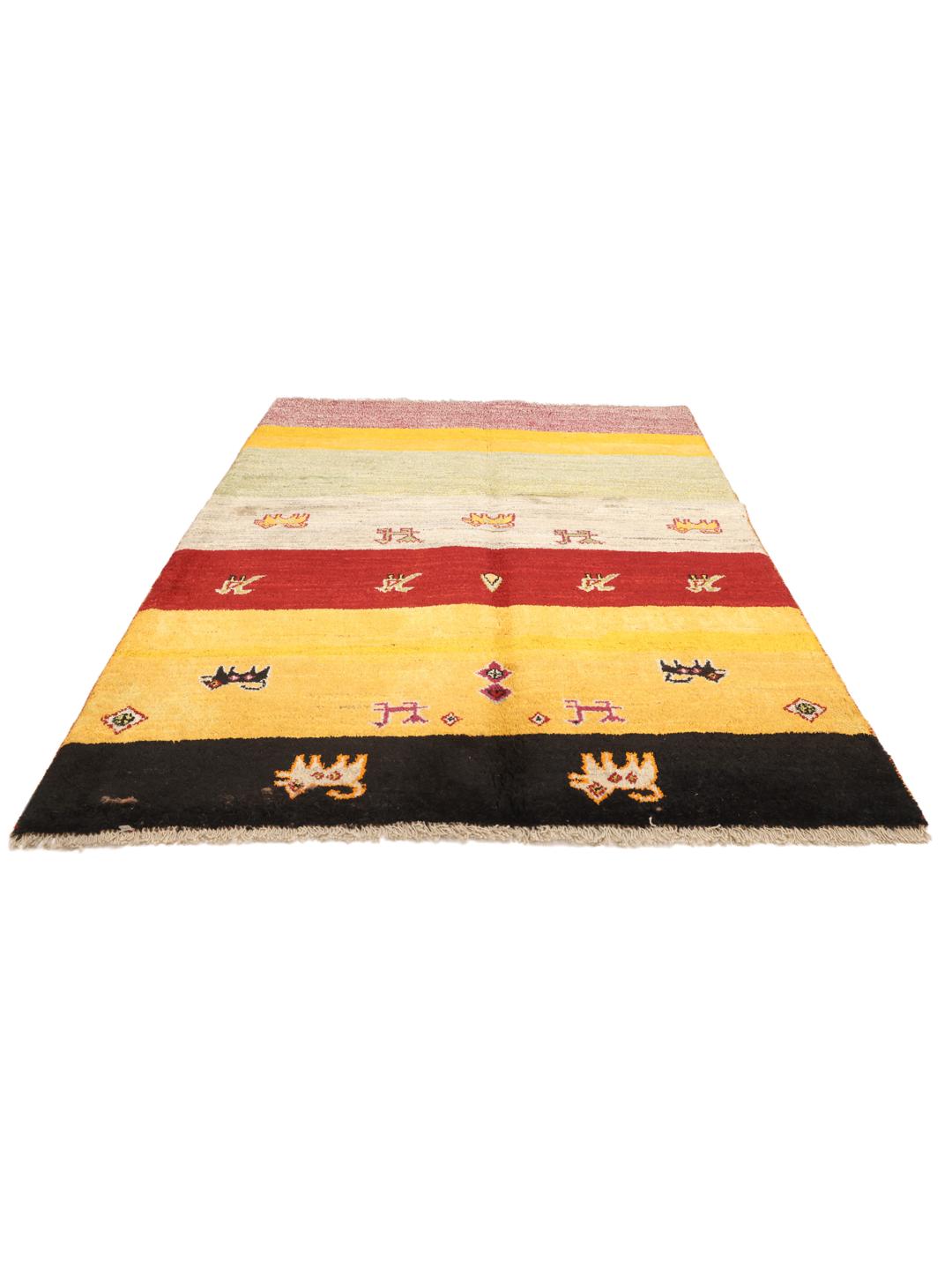
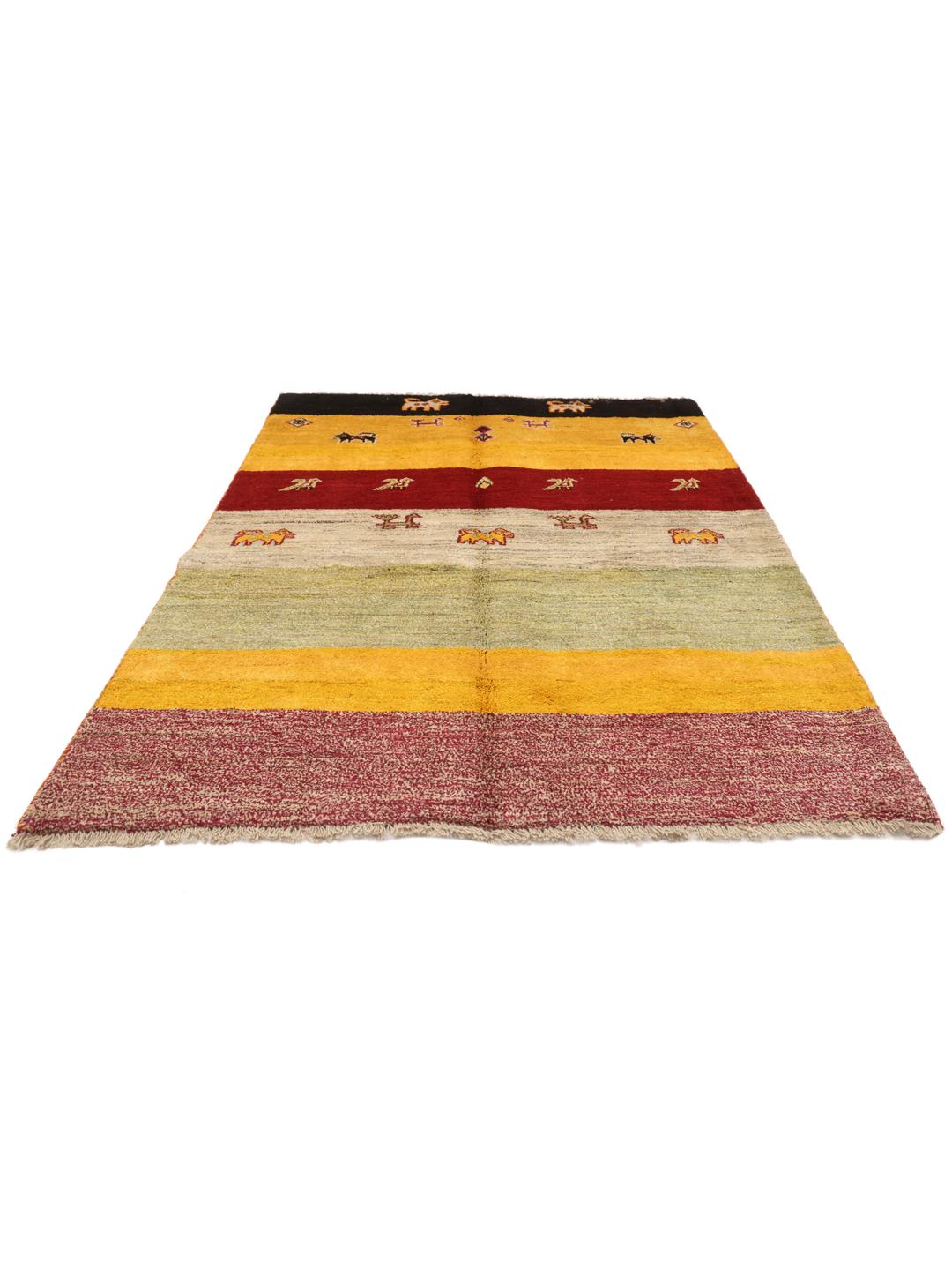
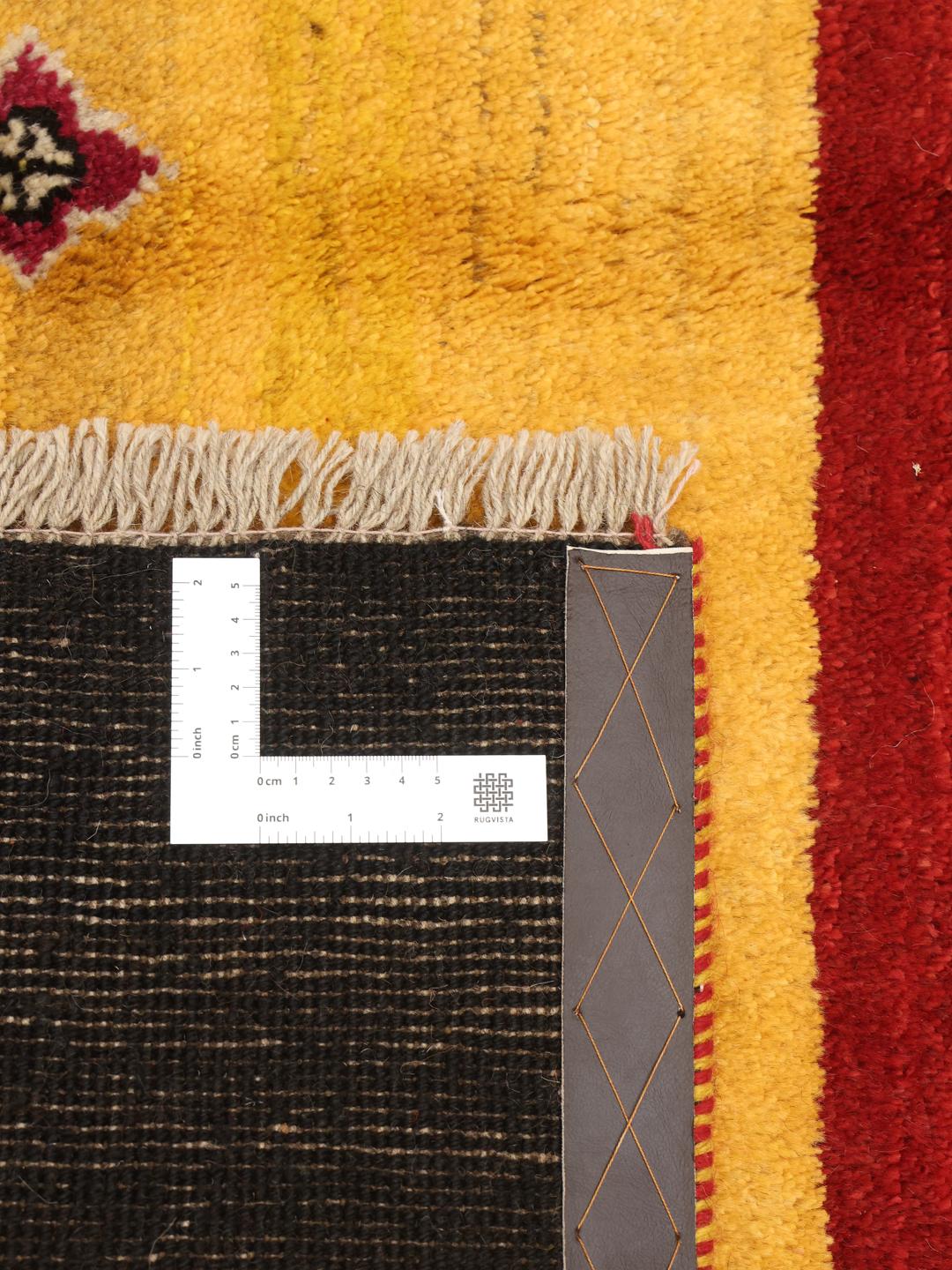
Visually, these rugs are celebrated for their artistic freedom. The field is often characterised by open areas of rich, saturated colour, punctuated by abstract or stylized animal motifs, geometric shapes, and symbols that hold personal or tribal significance. This specific piece draws on those classic elements, utilising a bold, striped layout that highlights the natural variations in the wool's tone.
Today, these rugs are highly prized by collectors for their authentic, soulful quality and their departure from rigid, symmetrical patterns. Owning a piece like this is more than just a decor choice; it is an appreciation of a craft heritage that values individual creativity and the preservation of ancient, nomadic artistic languages.