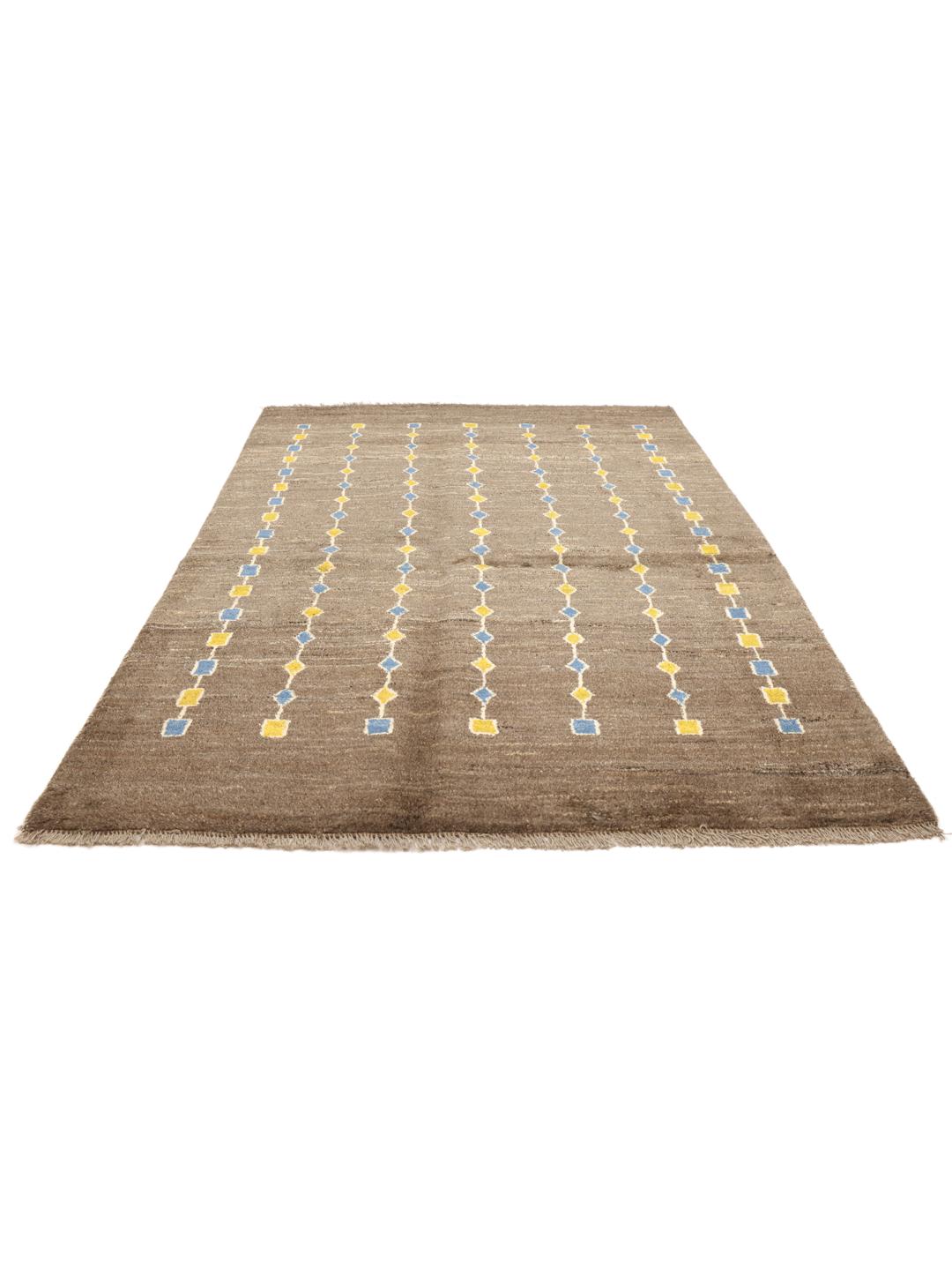
Gabbeh rugs originate from the tribal traditions of the Middle East, where they were traditionally woven by nomadic groups for personal use and comfort. Unlike more formal, city-made rugs, these pieces were designed with a focus on simplicity and utility, often reflecting the natural landscape and the weaver's personal expression.
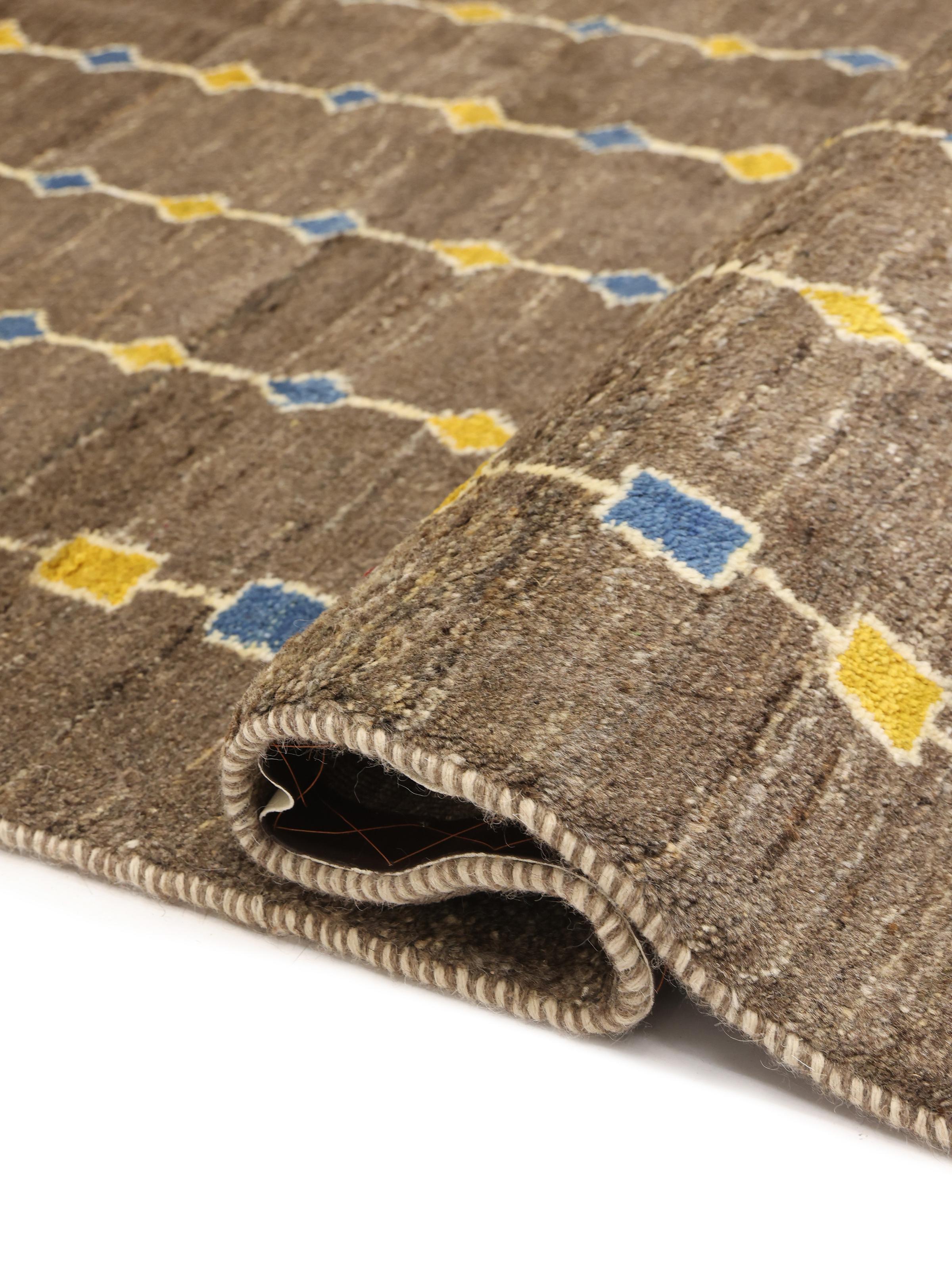
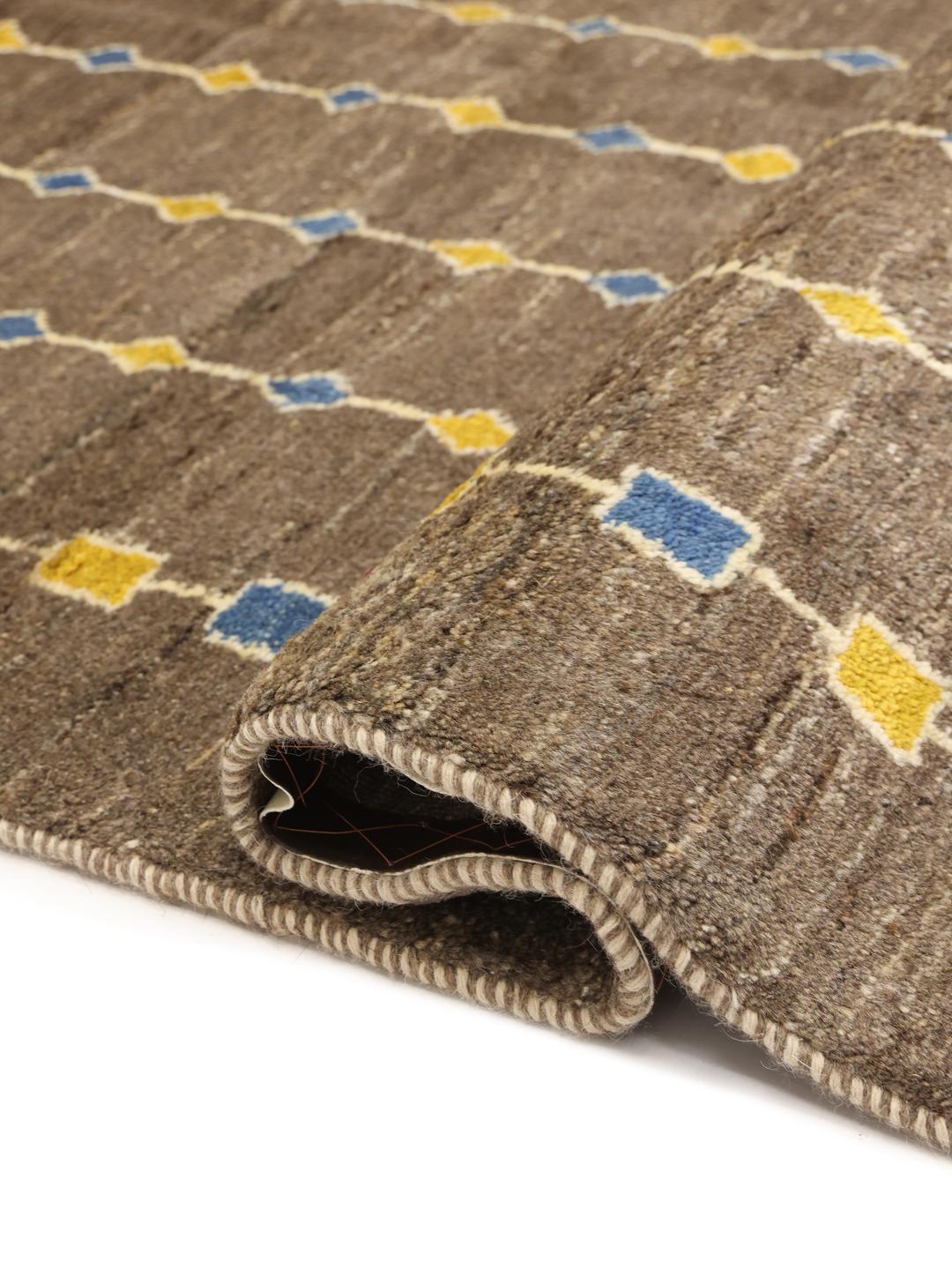
The term Gabbeh itself means raw or natural, which perfectly describes their aesthetic approach. Traditionally, these rugs were characterised by a thick, heavy pile and a more relaxed approach to geometry, often featuring bold, simplified motifs that tell stories of the weaver’s surroundings.
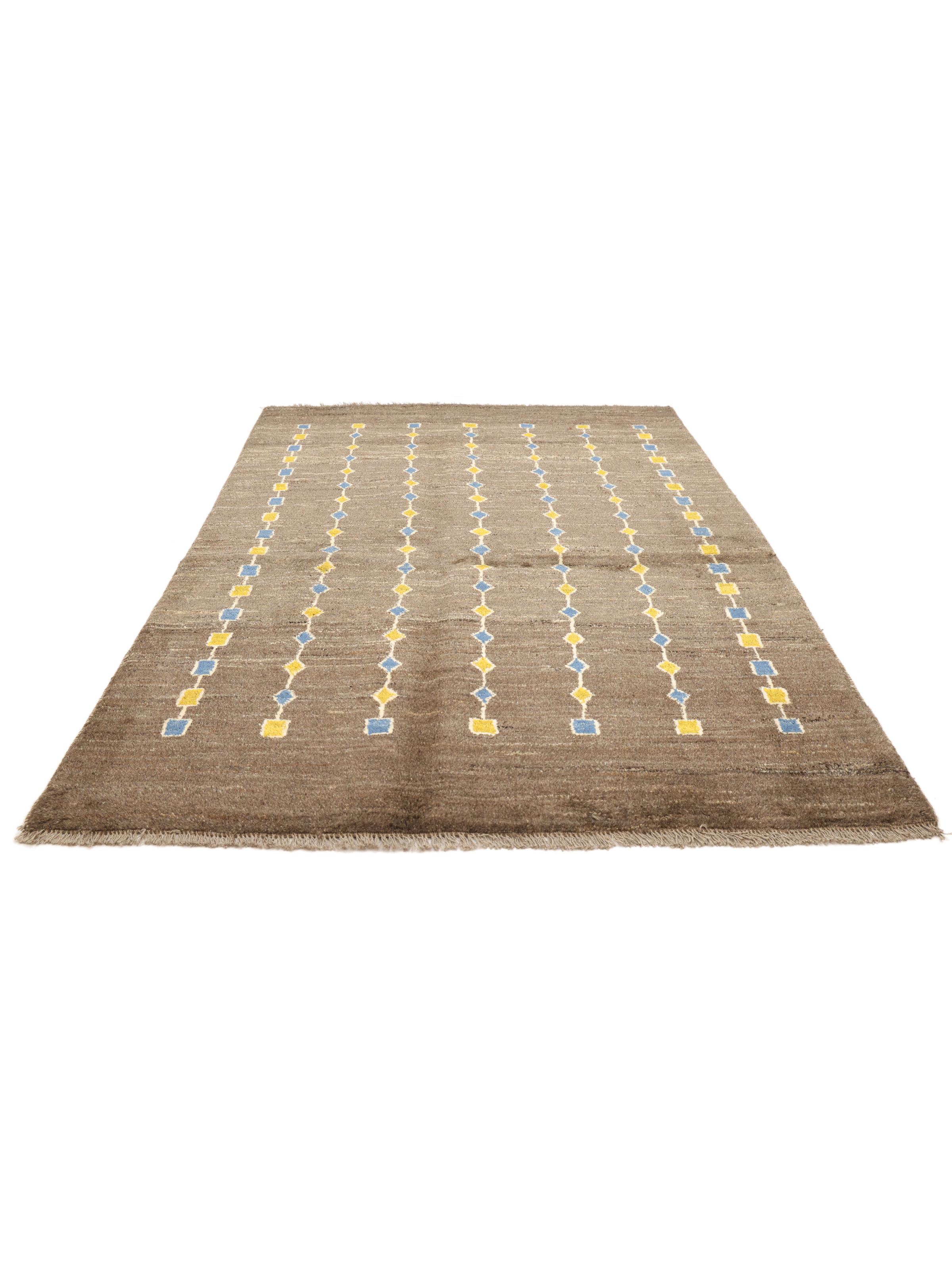
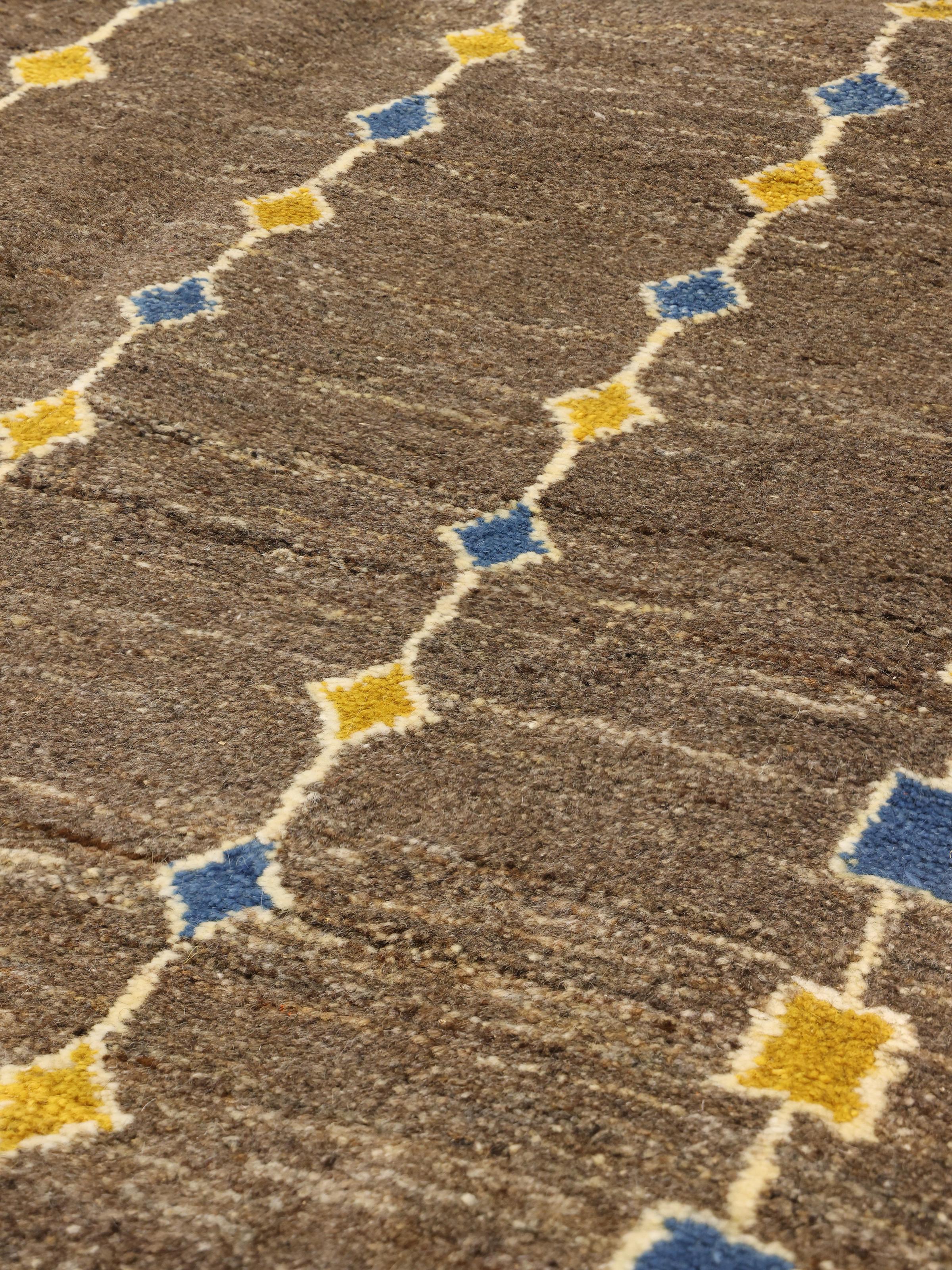
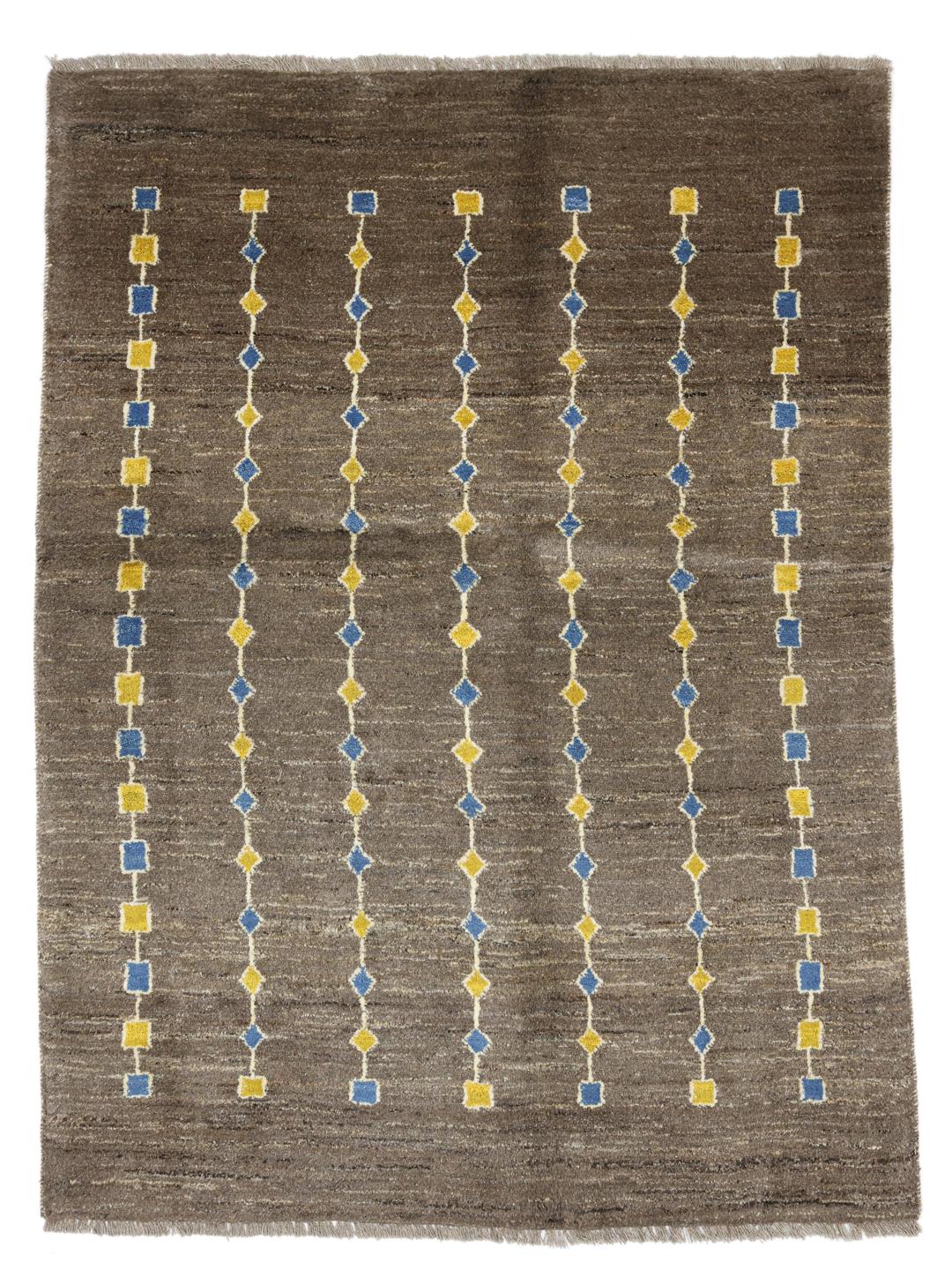
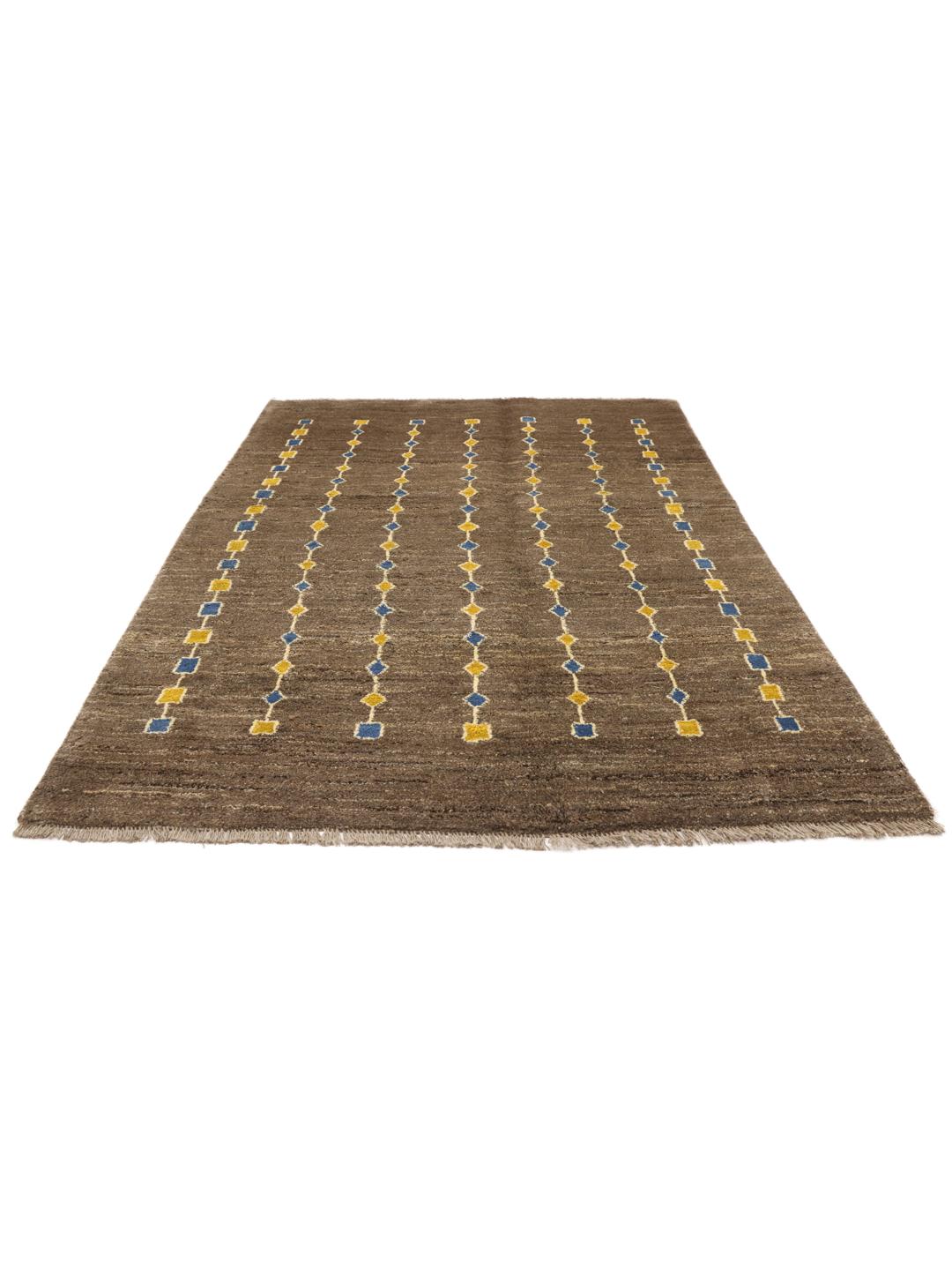
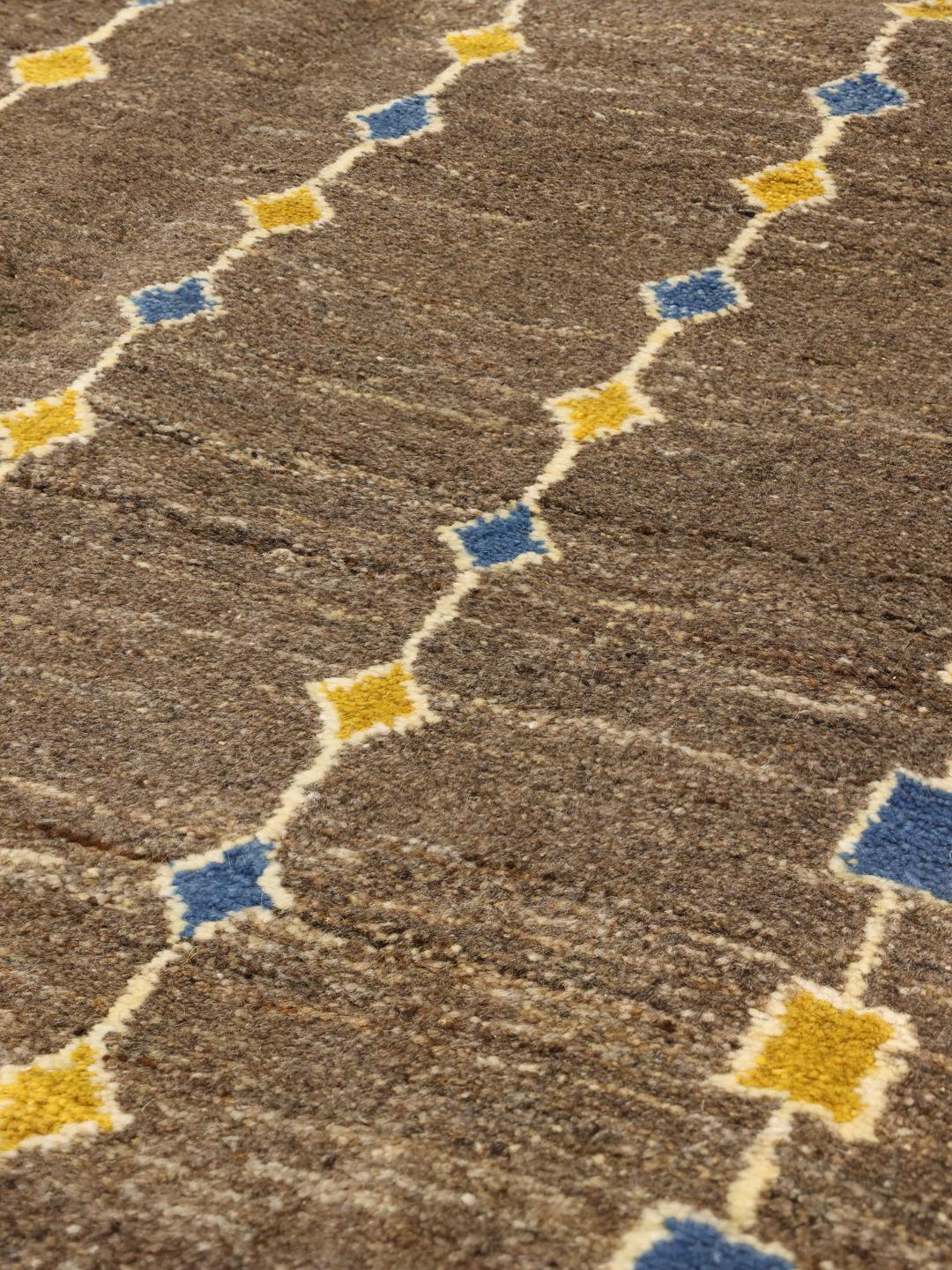
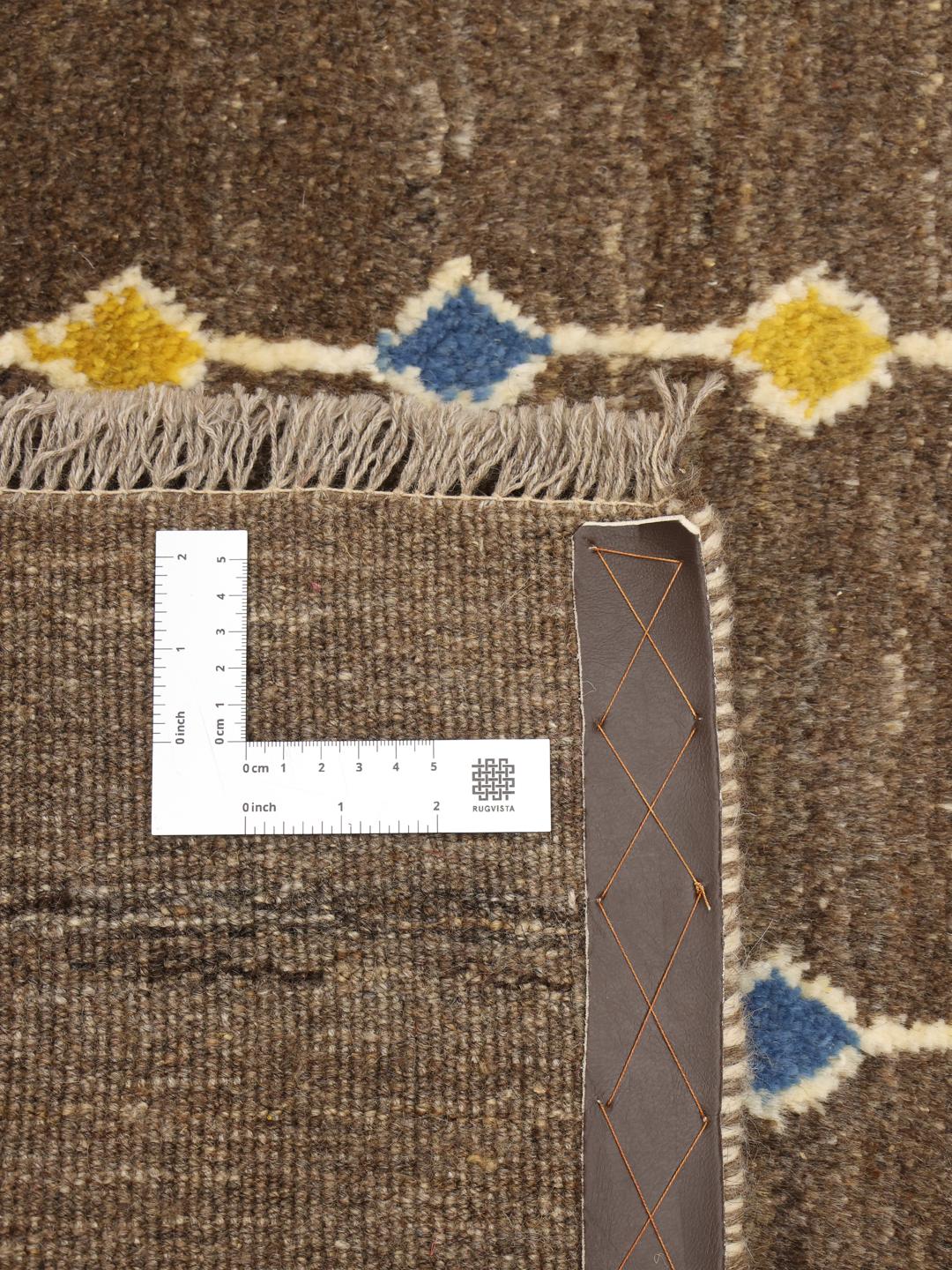
The design of this particular piece features striking geometric lines, a common motif in many nomadic traditions. These patterns were not merely decorative but often held symbolic meanings, representing protection, fertility, or the natural world. The use of vibrant yellow and blue against an earthy brown field is a beautiful evolution of this style, blending traditional techniques with a more contemporary visual language.
Today, these rugs are highly valued by collectors for their authenticity and the human story behind every knot. Owning a piece of this heritage is an investment in a craft that has survived for centuries, bringing a sense of history and warmth into the modern home.