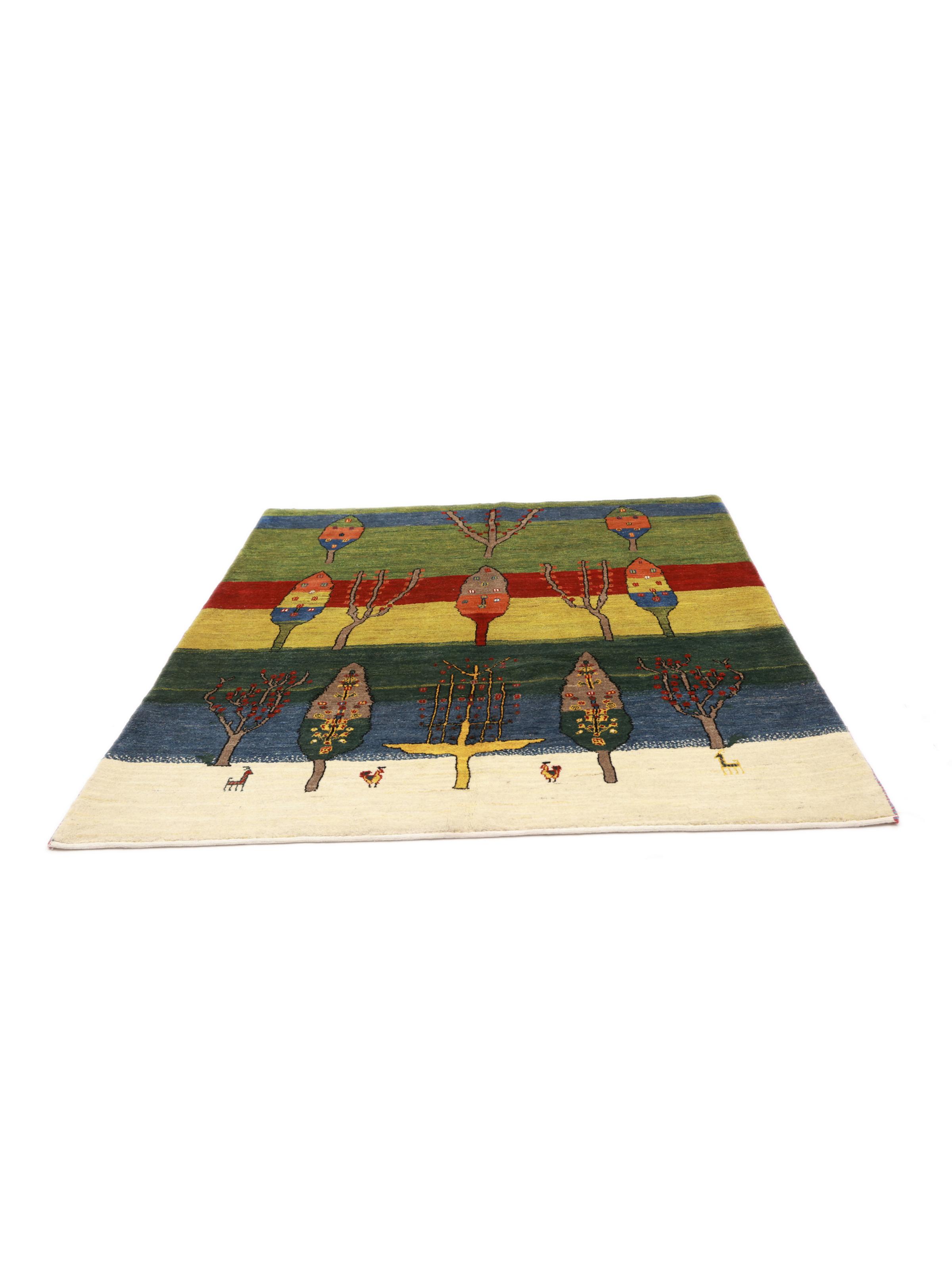
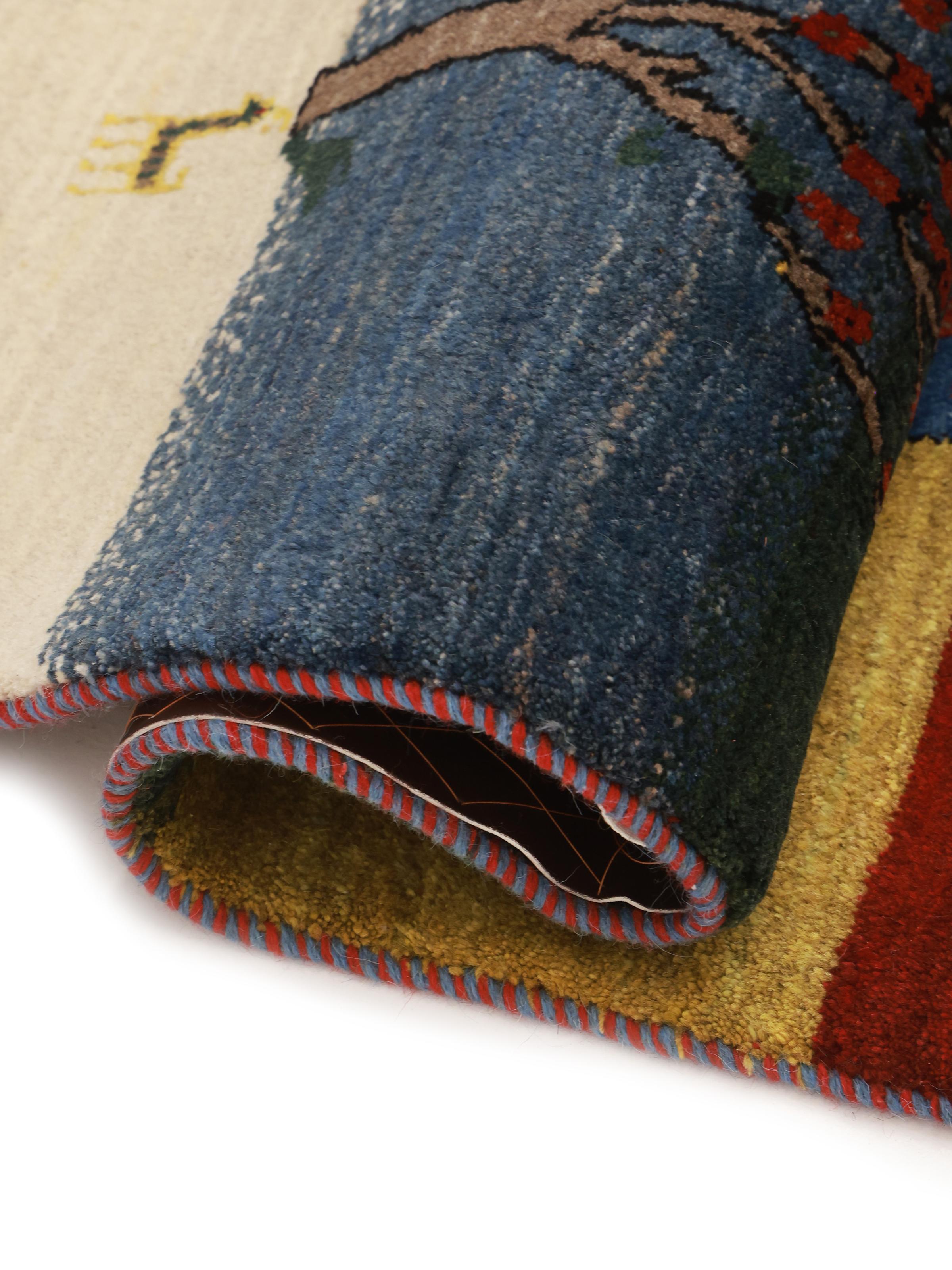
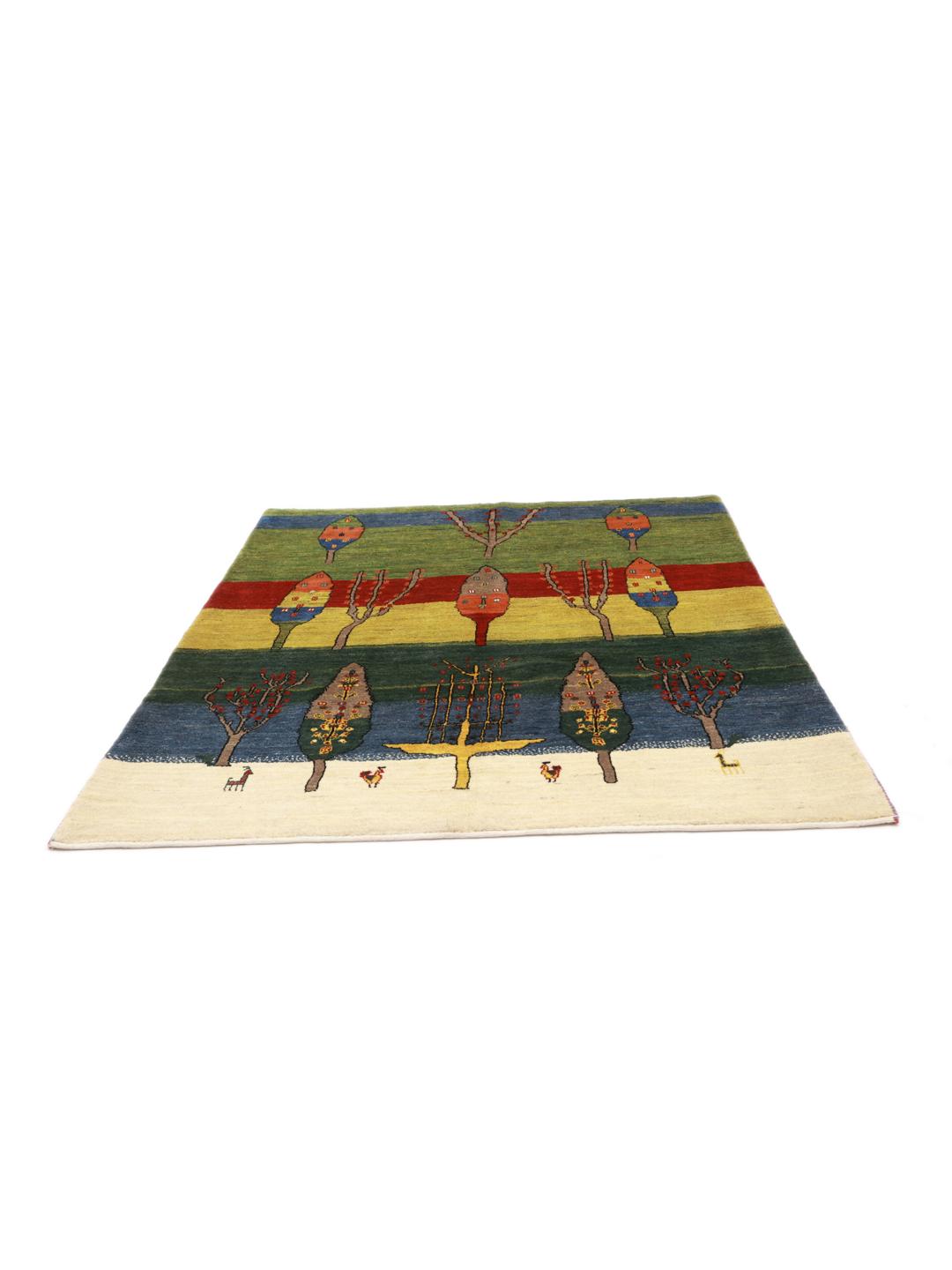
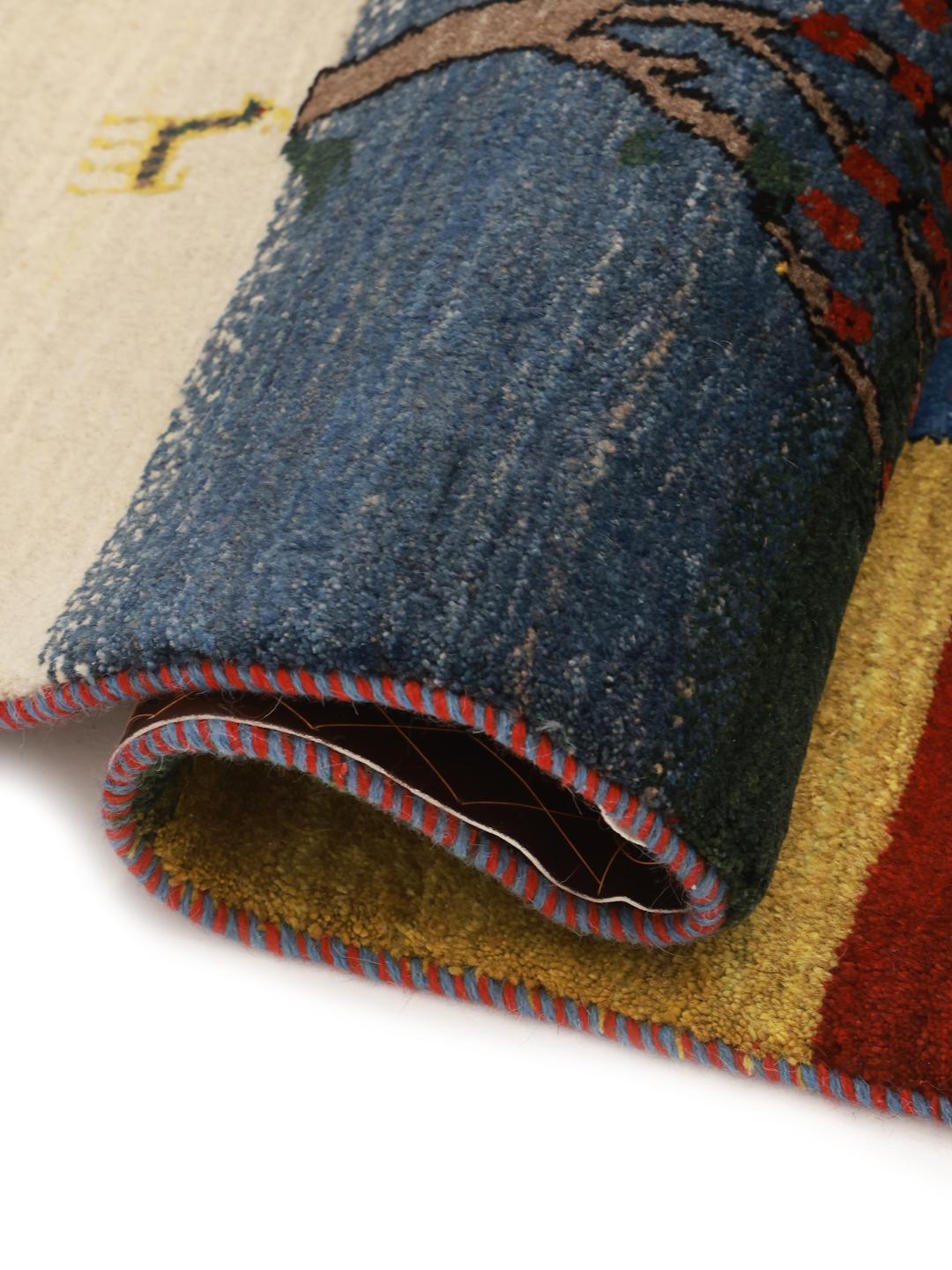
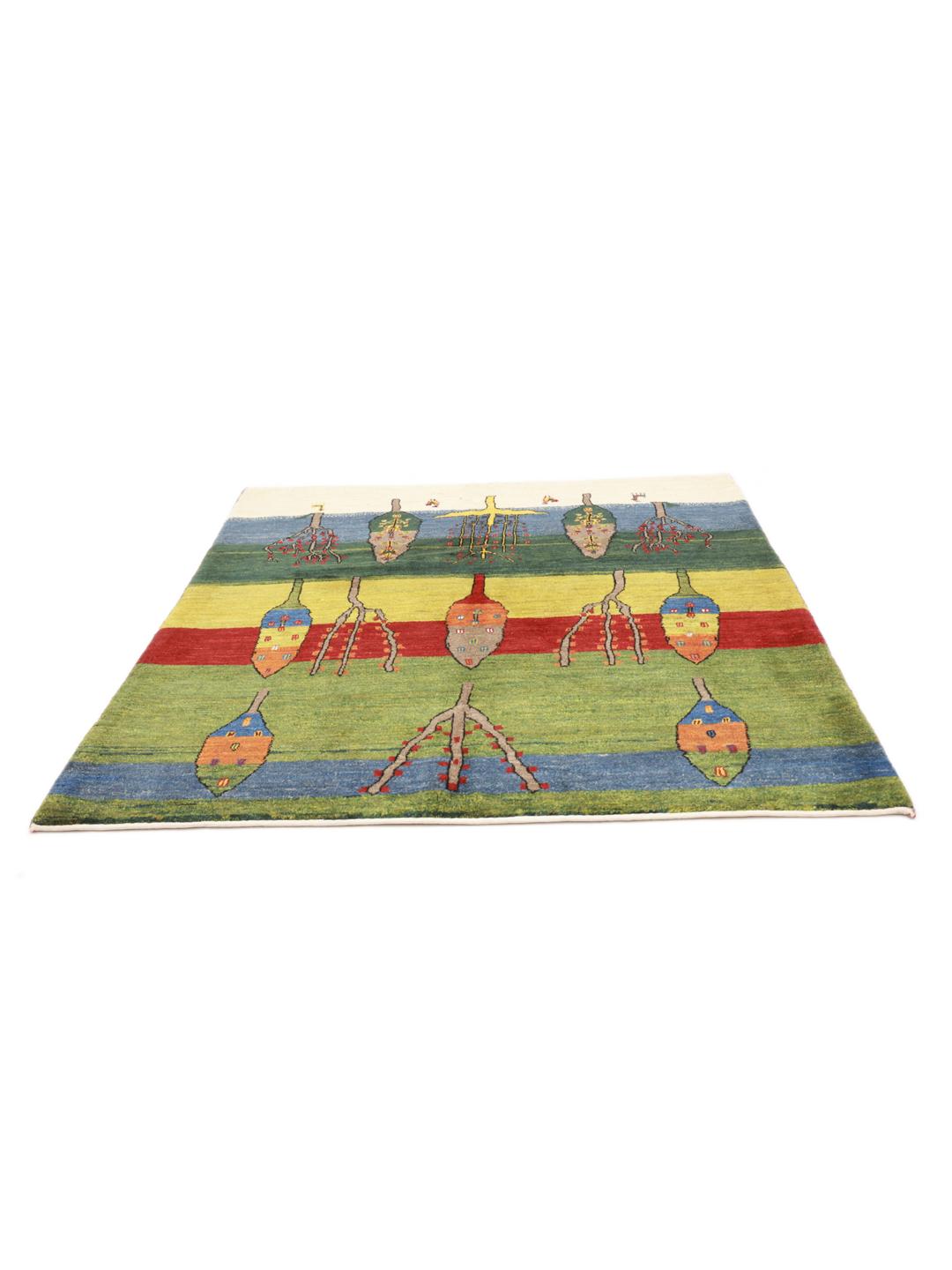
The Gabbeh tradition finds its roots in the nomadic cultures of the Middle East, where weavers historically created these rugs for their own personal use rather than for trade. Unlike formal, city-made carpets, Gabbehs were designed to be thick, comfortable, and deeply personal, often serving as bedding or blankets for protection against the cold desert nights.
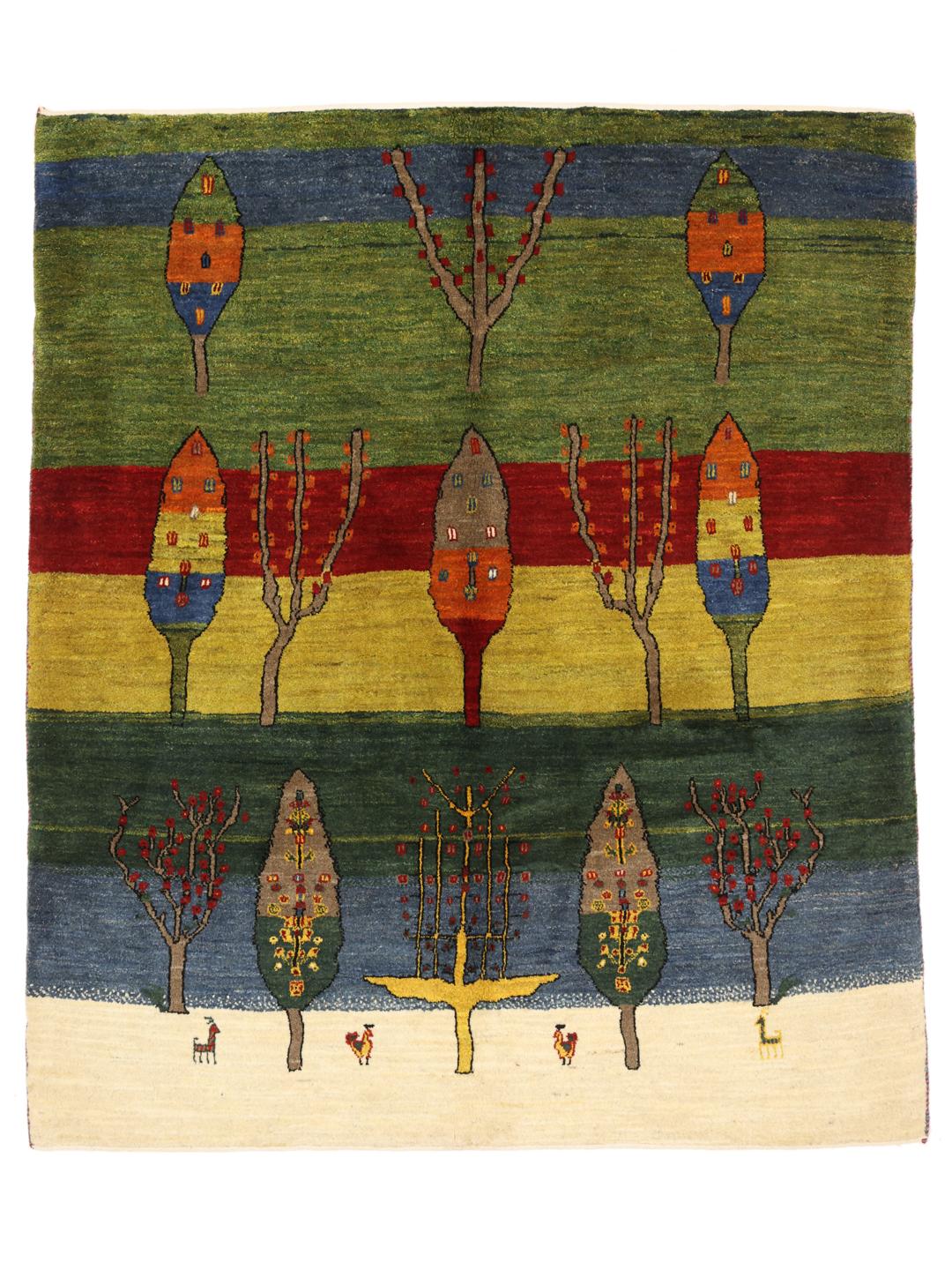
The name itself is derived from a term meaning raw, natural, or unclipped, which reflects the tradition's emphasis on simplicity and tactile quality. While modern versions like this Shabargan piece have evolved to include more intricate pictorial motifs, they remain true to the original spirit of spontaneous, creative expression that defined the early nomadic style.
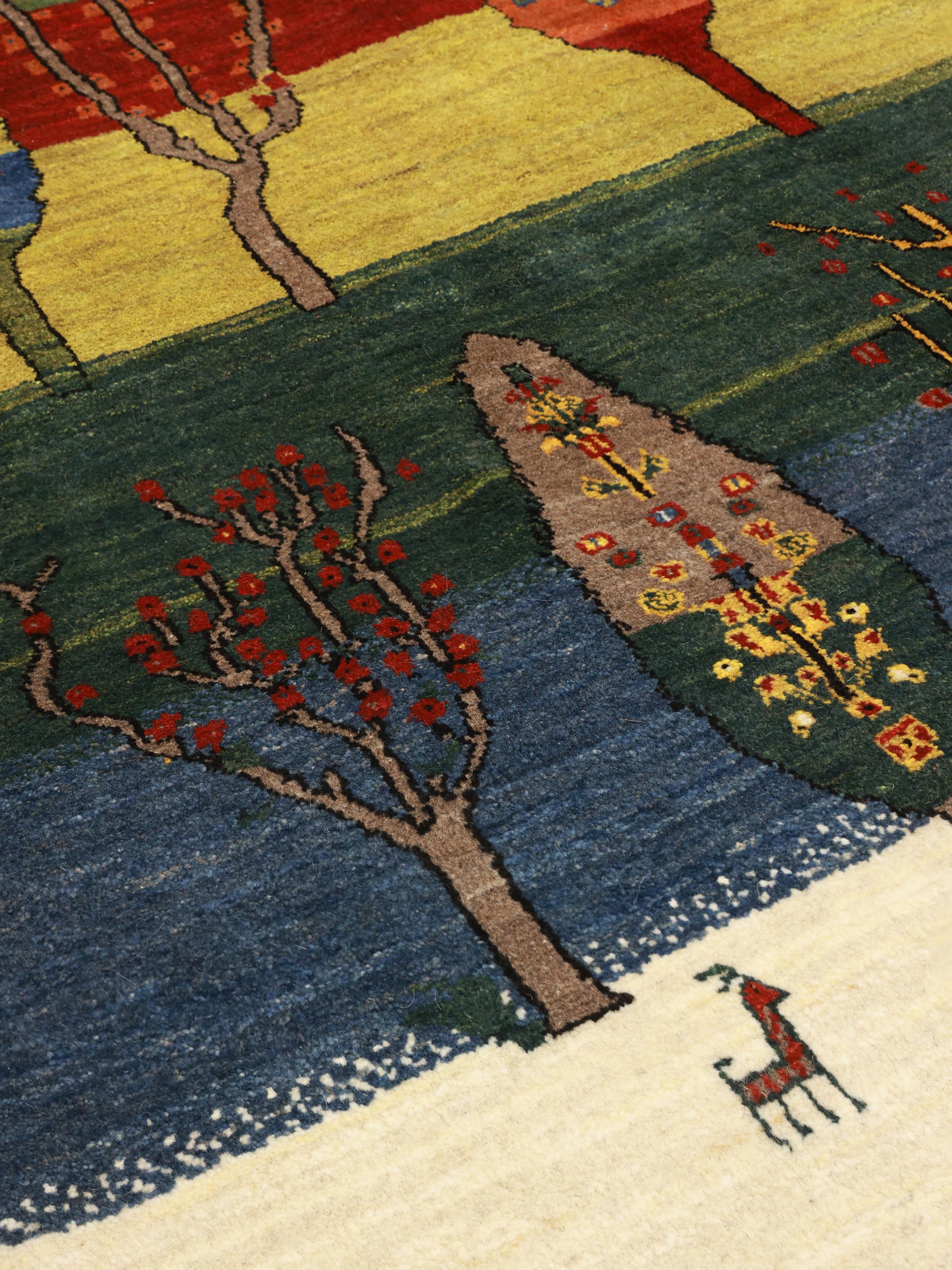
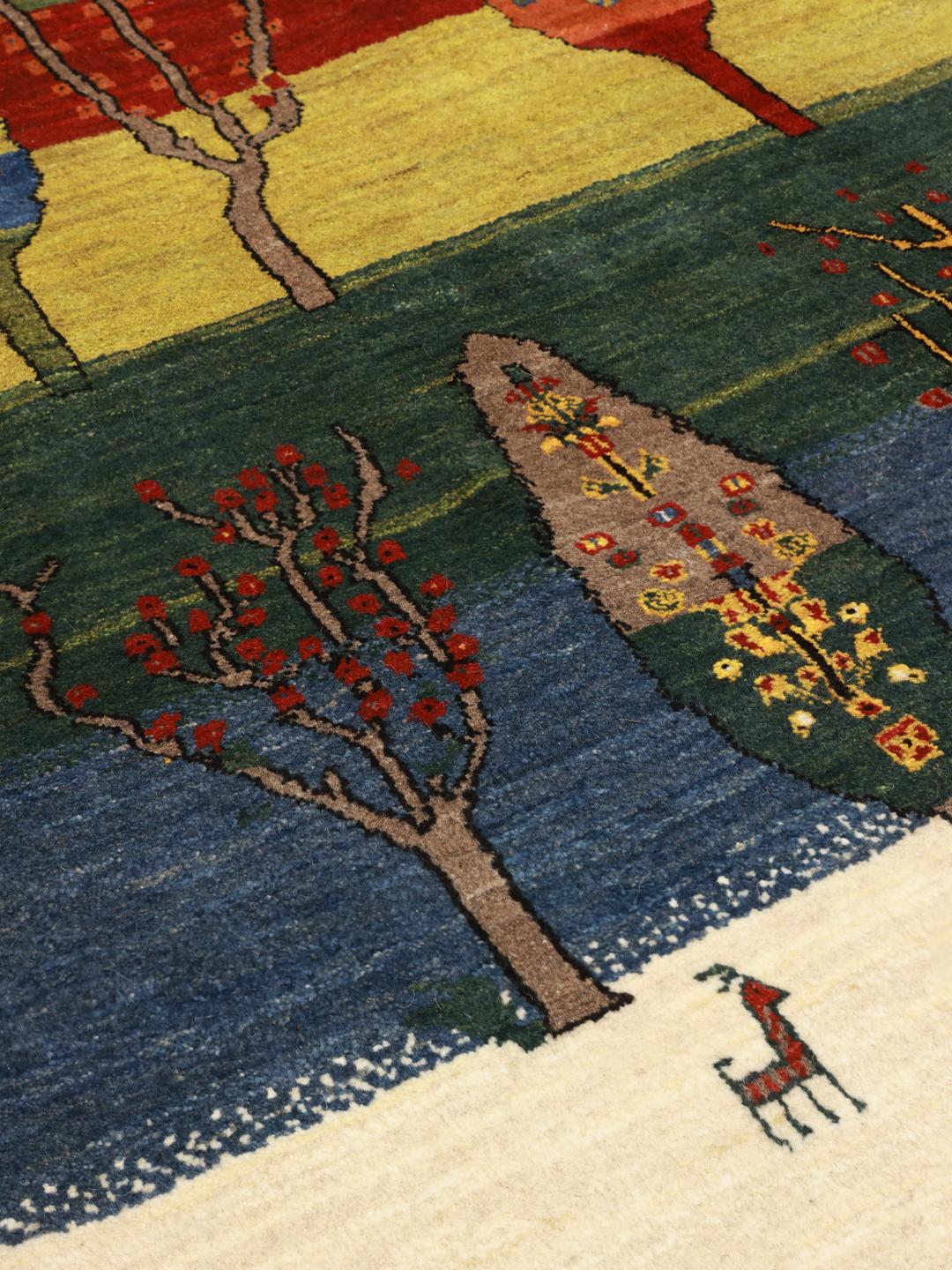
Signature elements of this tradition include the use of bold, saturated colours and large, open fields that allow the weaver's imagination to take centre stage. Trees, animals, and geometric symbols are common themes, often representing the weaver's environment and their connection to the natural world. This particular piece stands out for its vibrant colour blocking and the charming inclusion of small, detailed figures.
Owning a Gabbeh is an opportunity to connect with a legacy of independent artistry and heritage. Because they are not produced from rigid, pre-set patterns, these rugs are highly prized by collectors for their individuality and the way they showcase the distinct 'handwriting' of the person who crafted them.