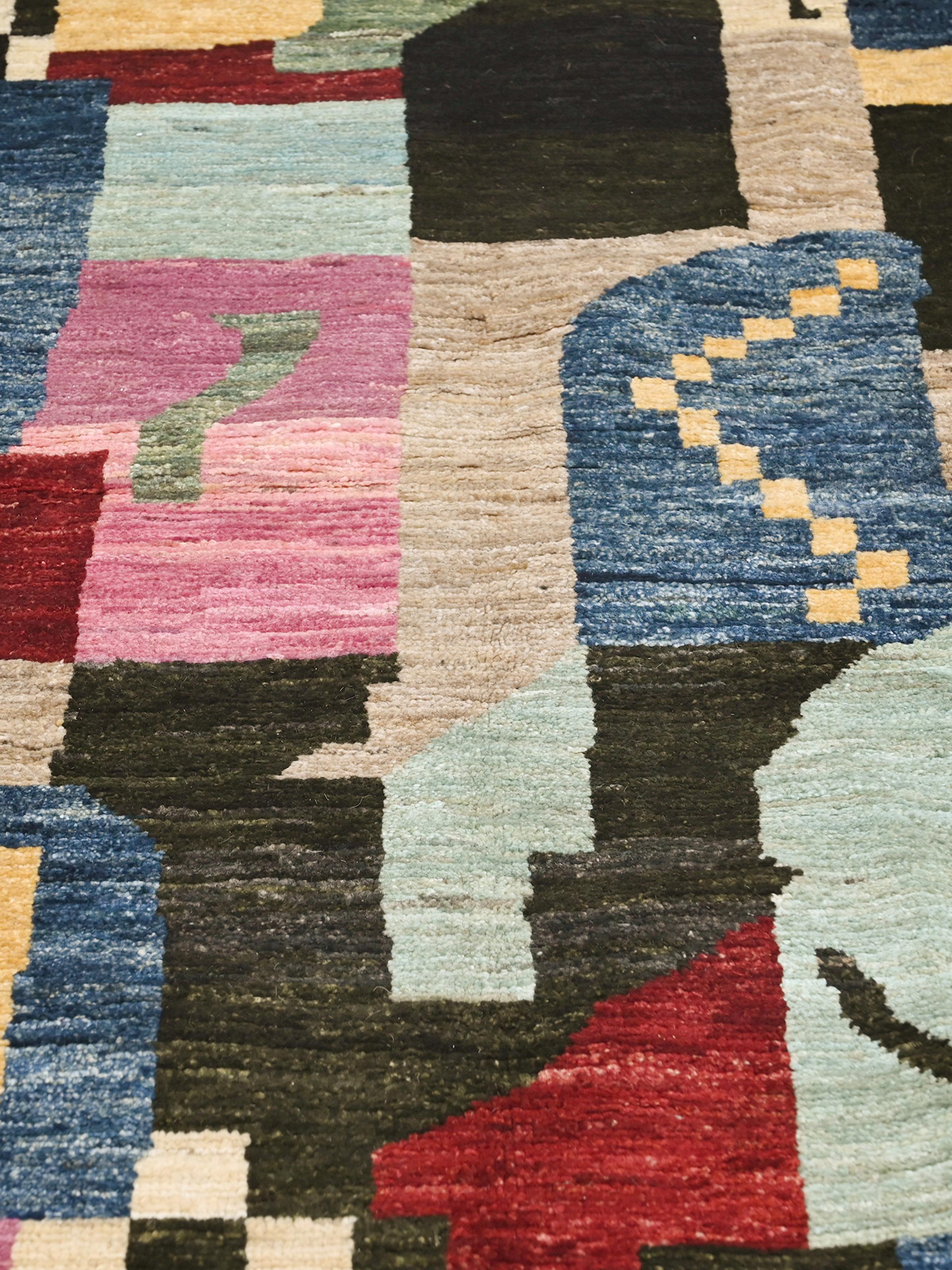
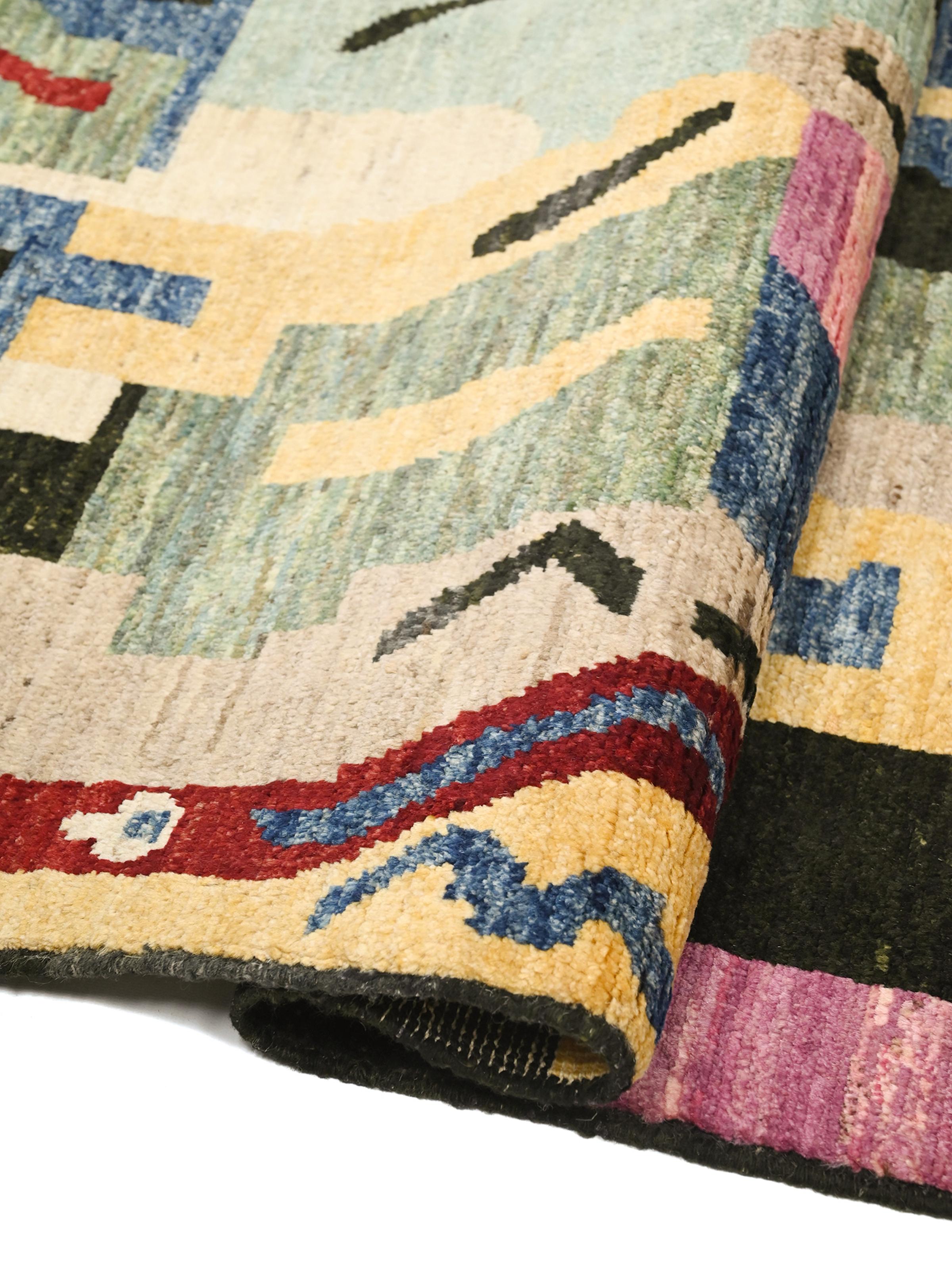
Gabbeh rugs traditionally originated among nomadic tribes of the Middle East. Characterised by their thick pile, rustic charm, and minimalist or abstract designs, these rugs were originally crafted for personal use as warm sleeping blankets rather than decorative floor coverings. Over time, this expressive weaving tradition has spread, with talented weavers in Pakistan adapting the style to create contemporary interpretations.
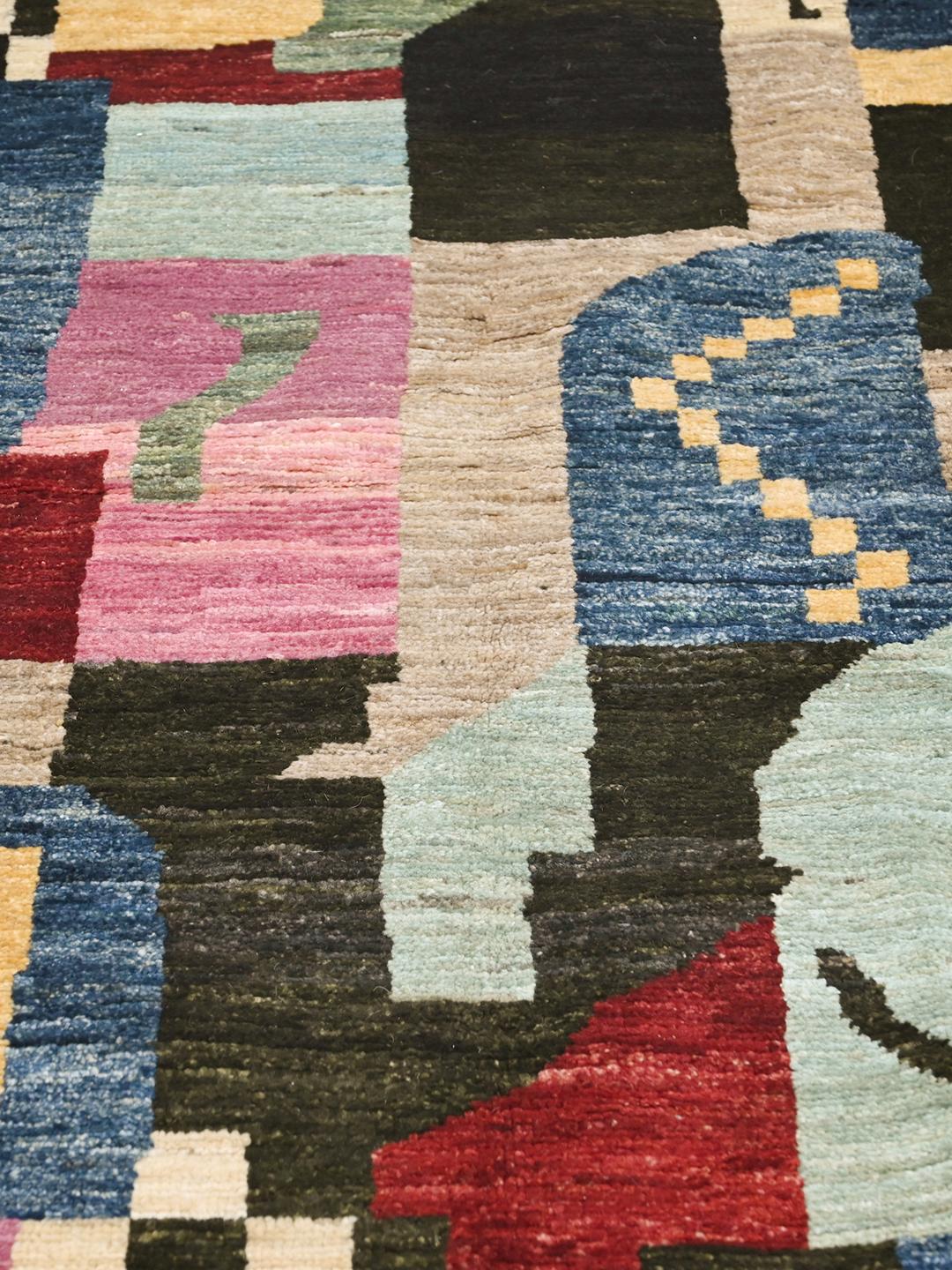
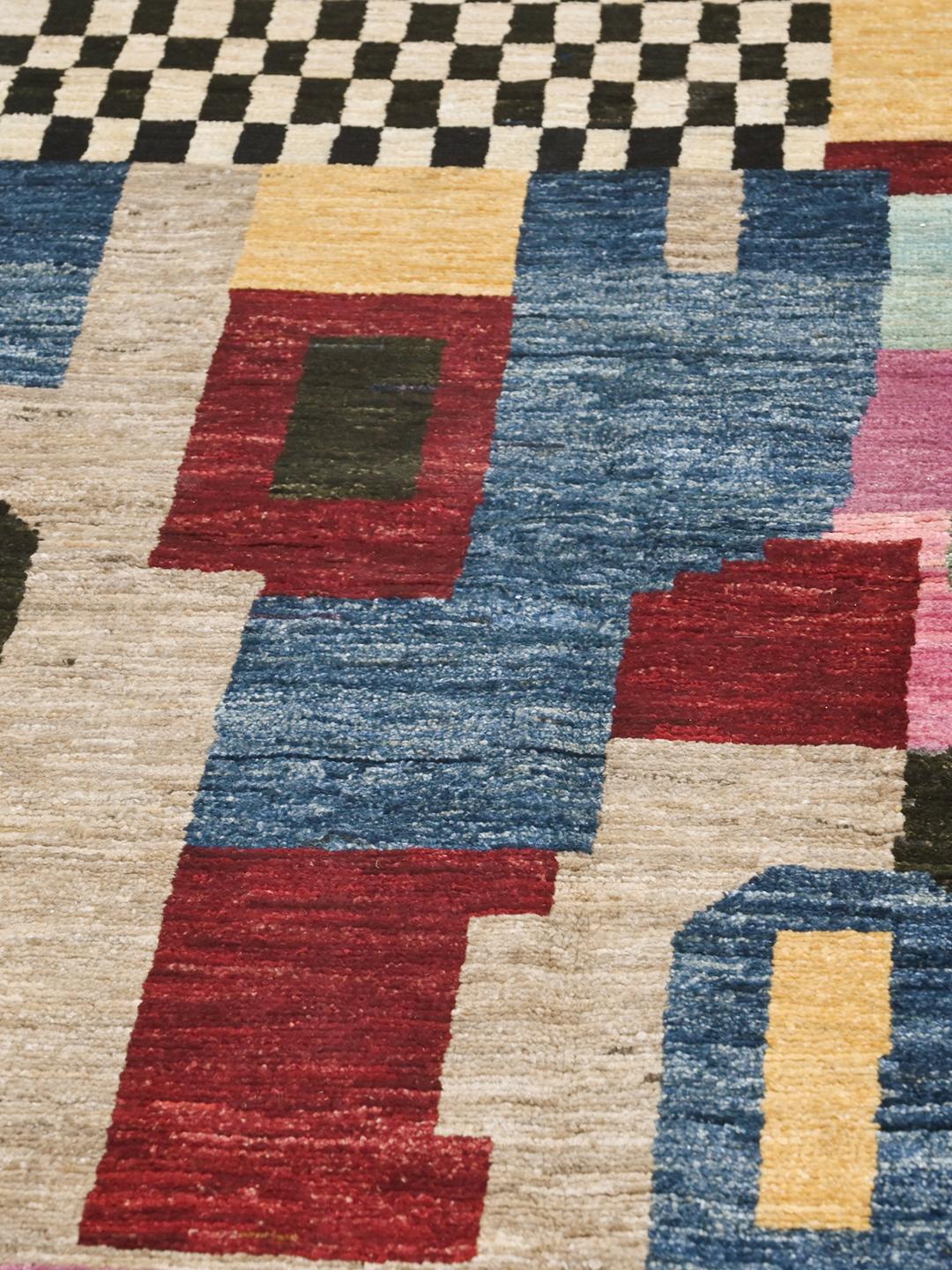
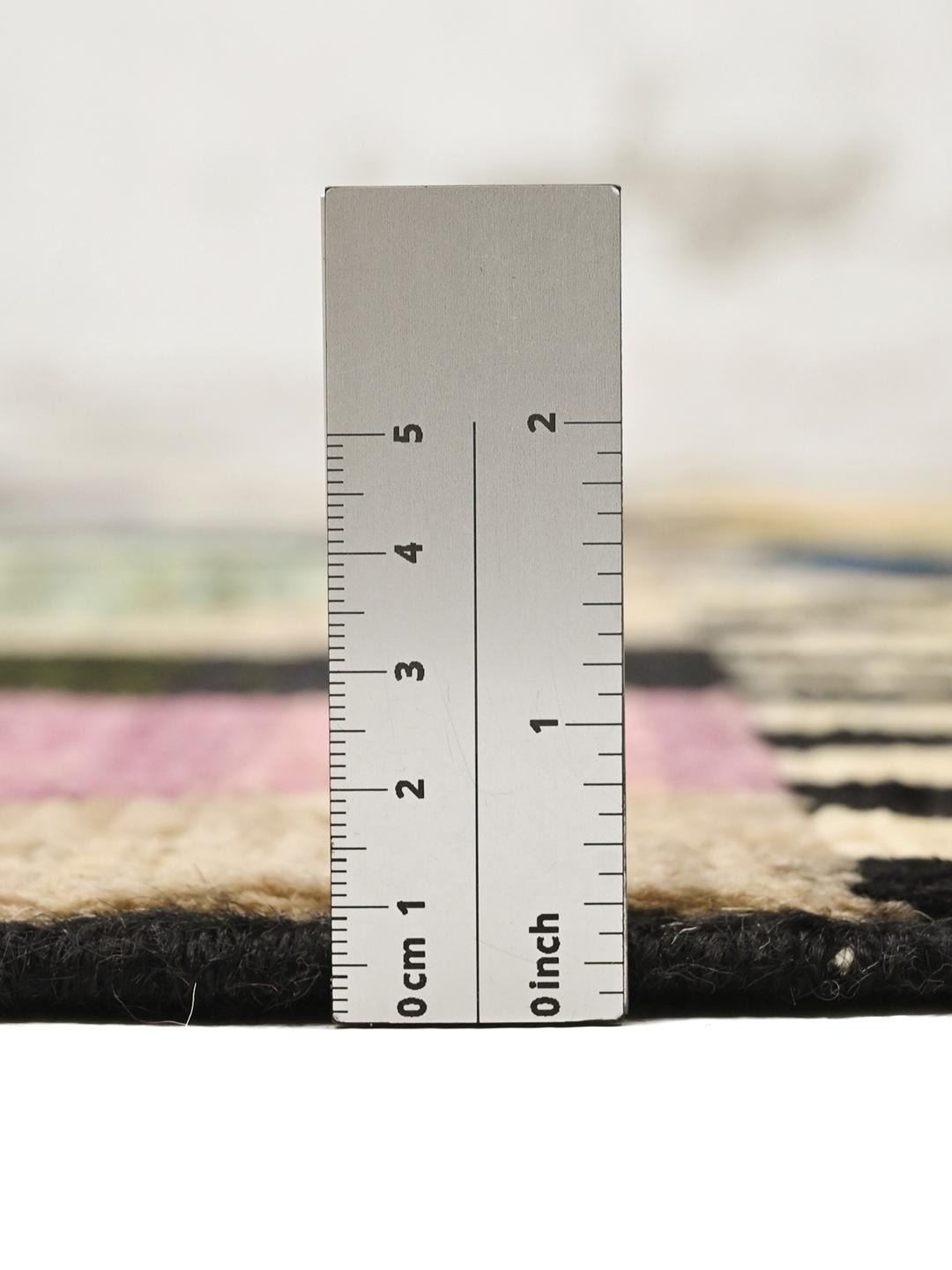
The term Gabbeh translates roughly to raw, natural, or uncut, reflecting the thick pile and informal designs that define the category. Unlike highly formal city rugs, Gabbeh designs are intuitive and spontaneous, allowing the weaver to express personal stories, landscapes, or tribal symbols directly through the wool.
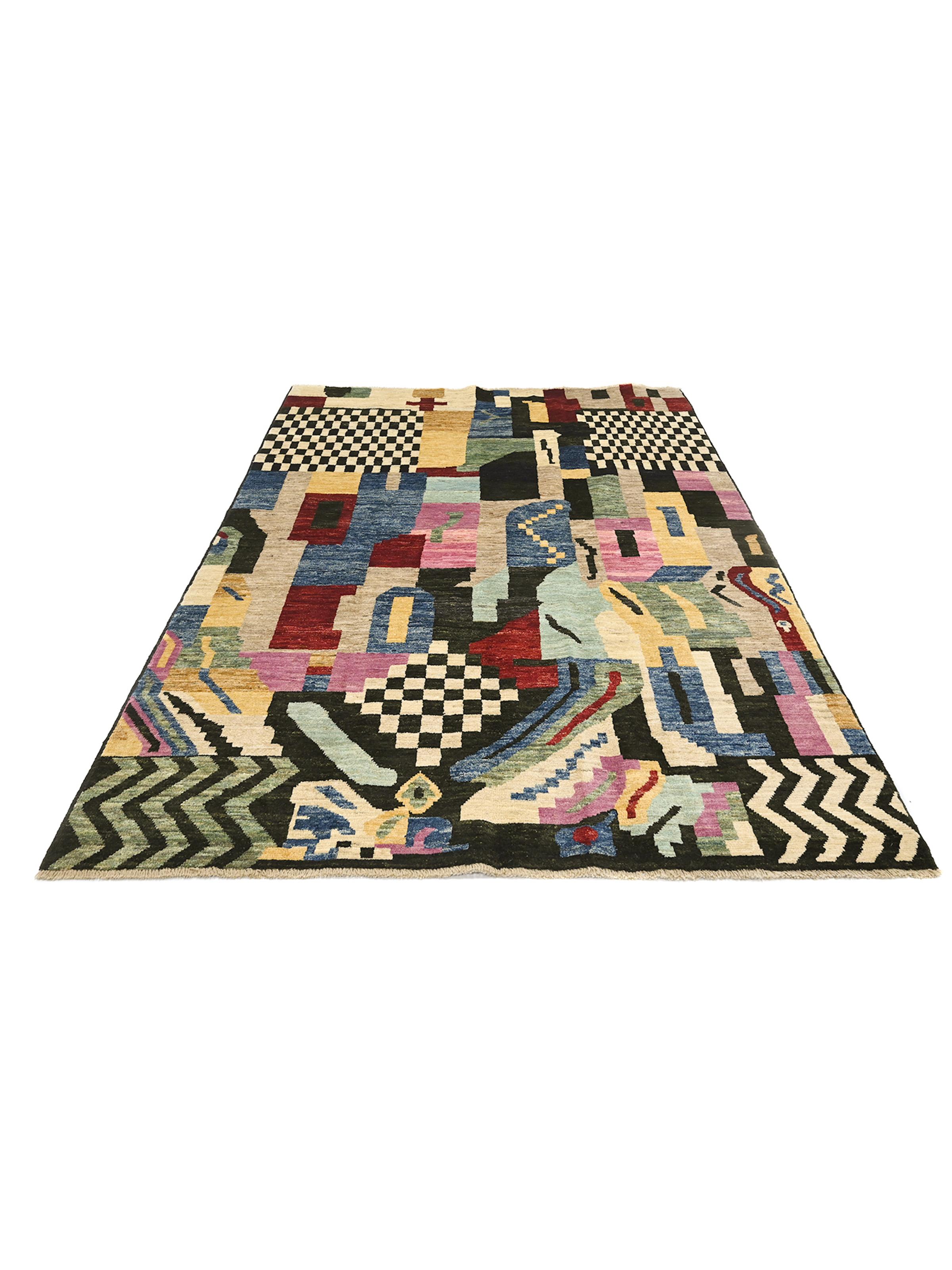
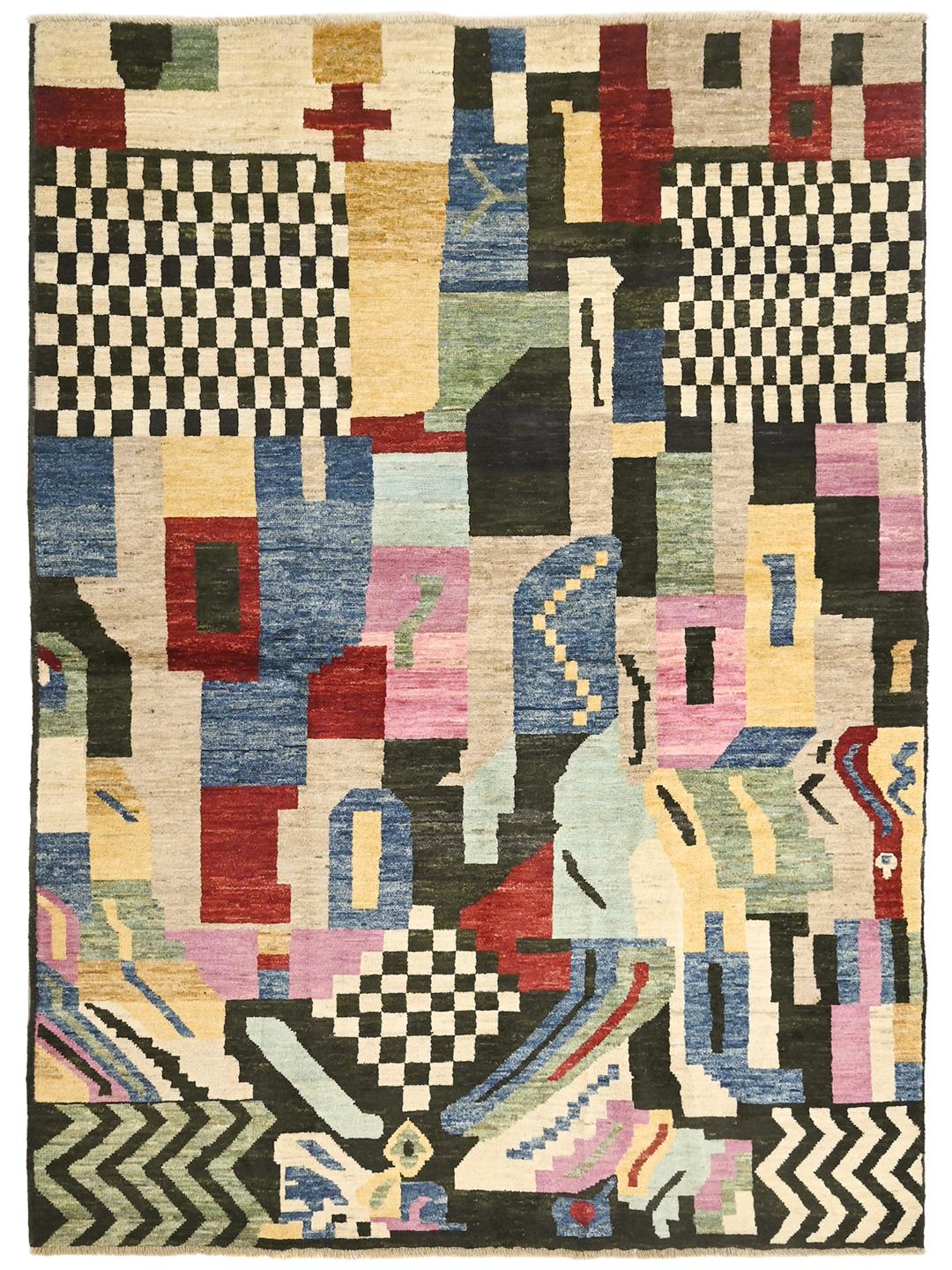
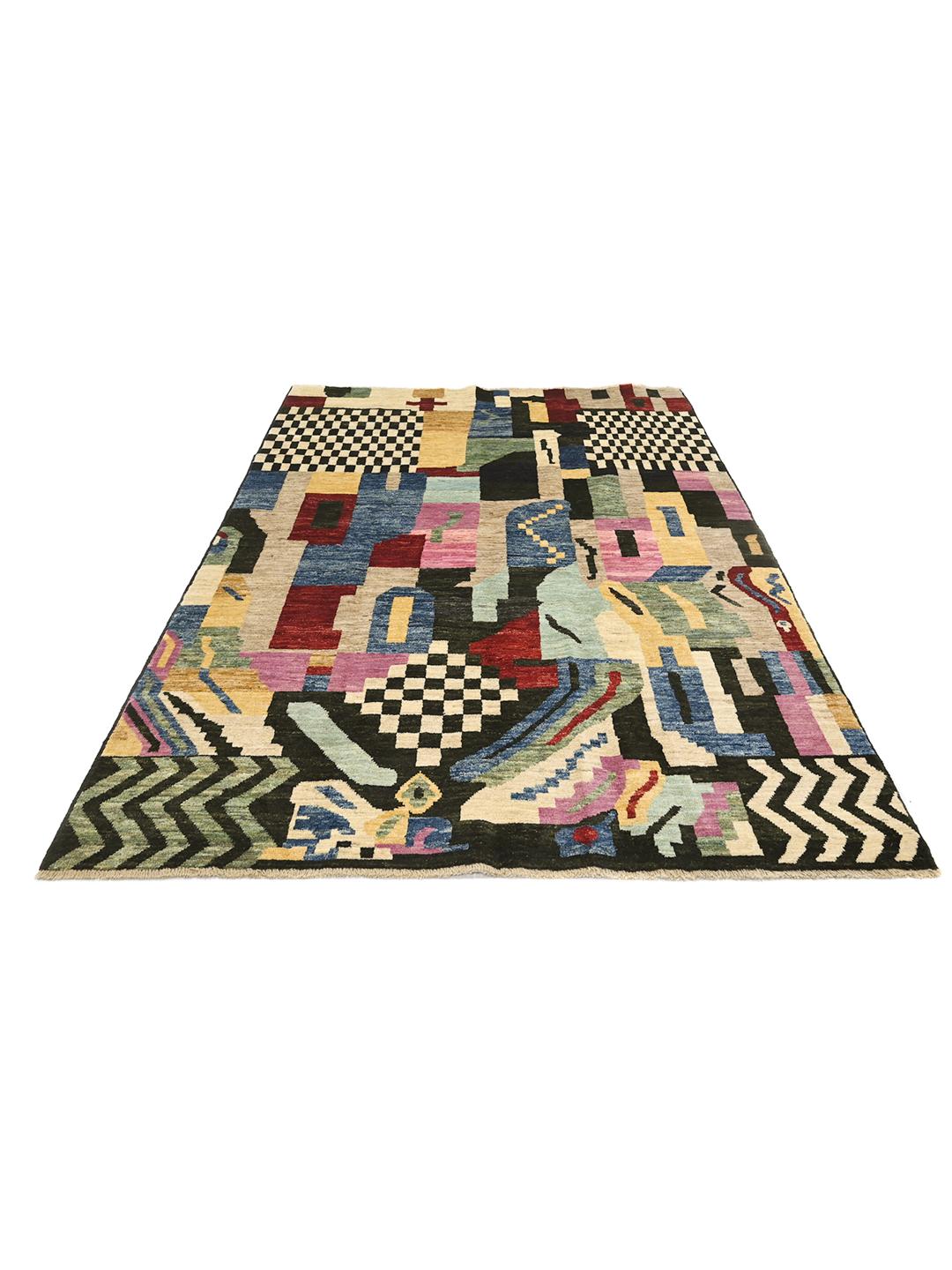
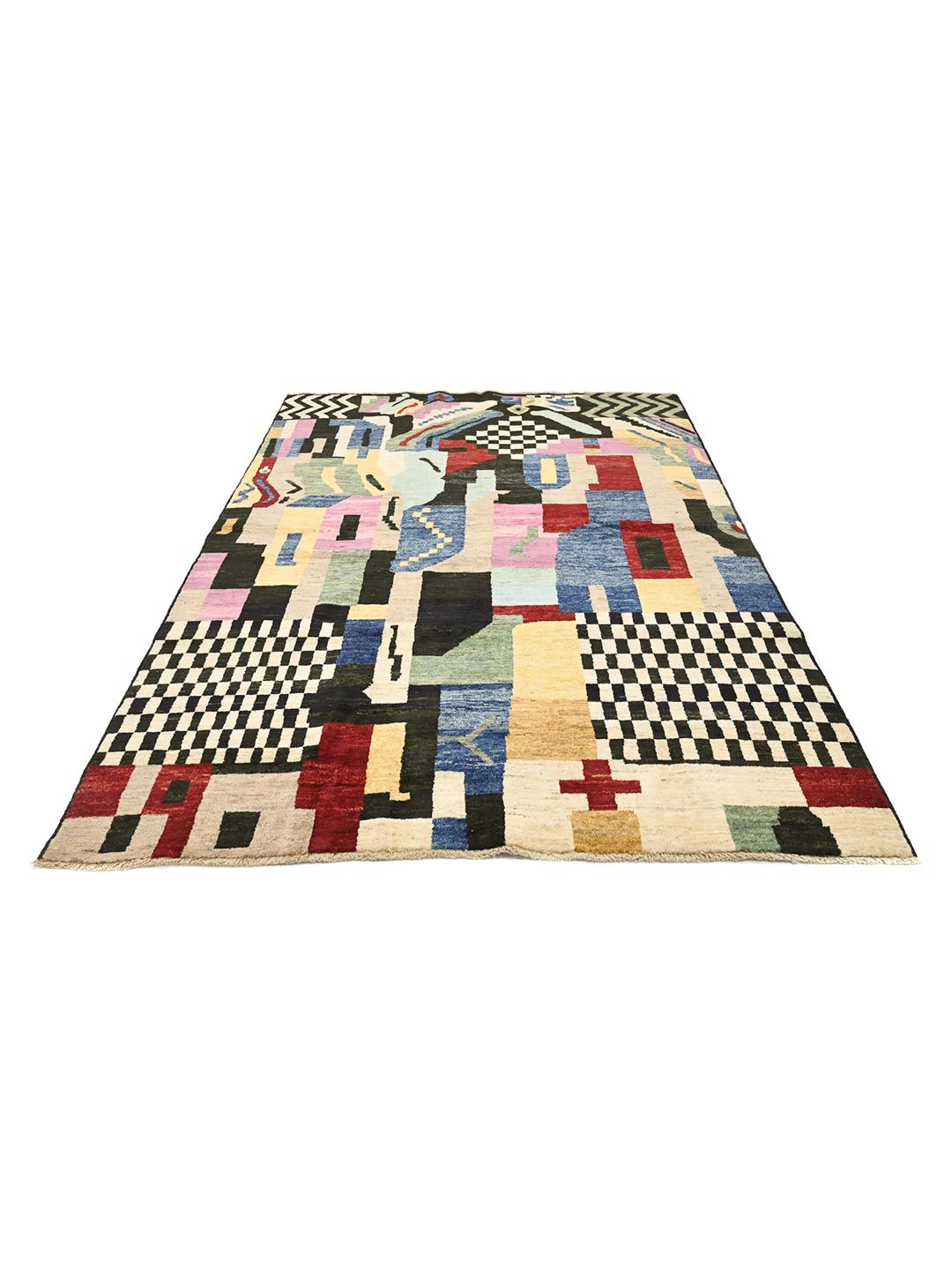
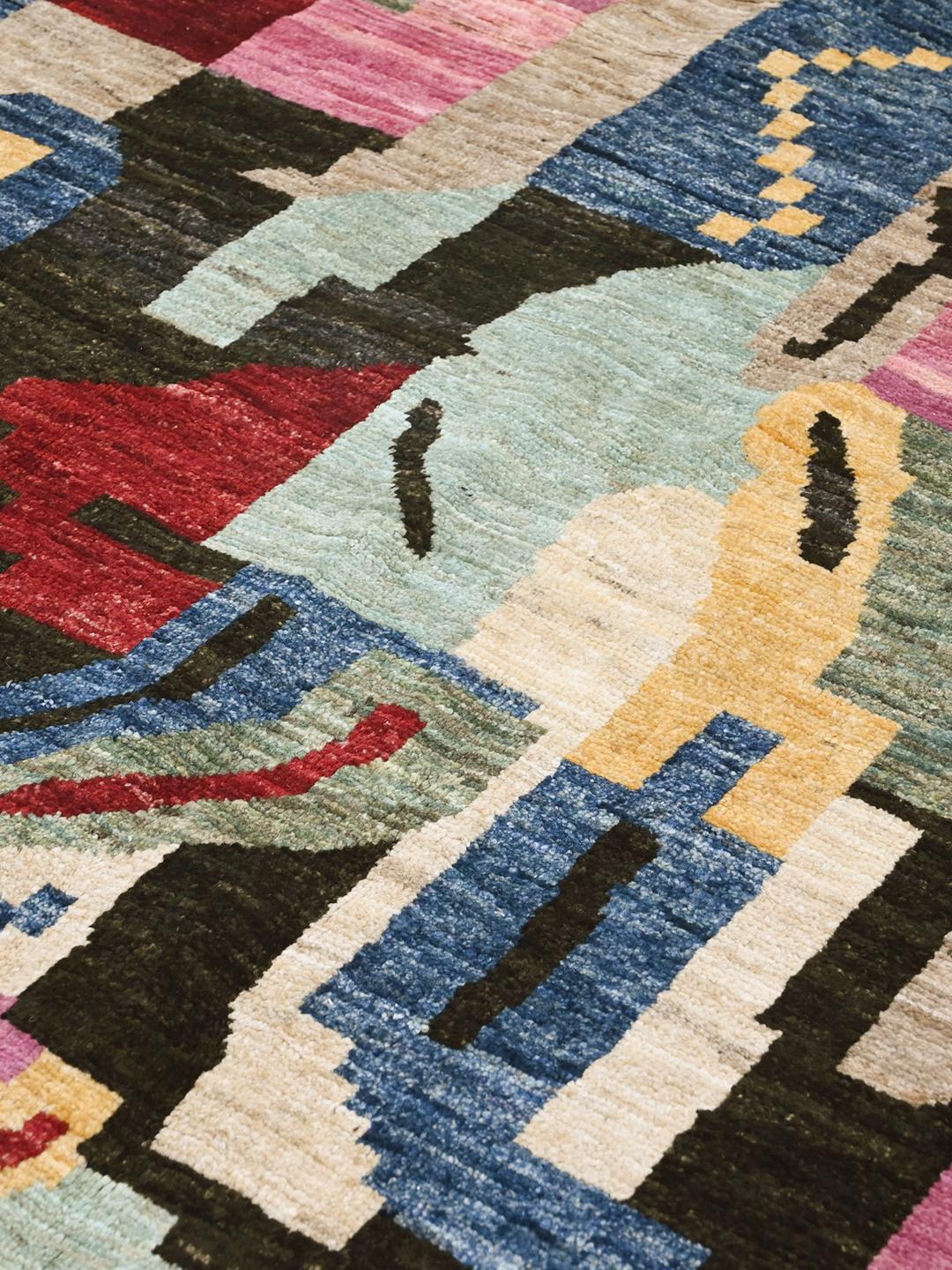
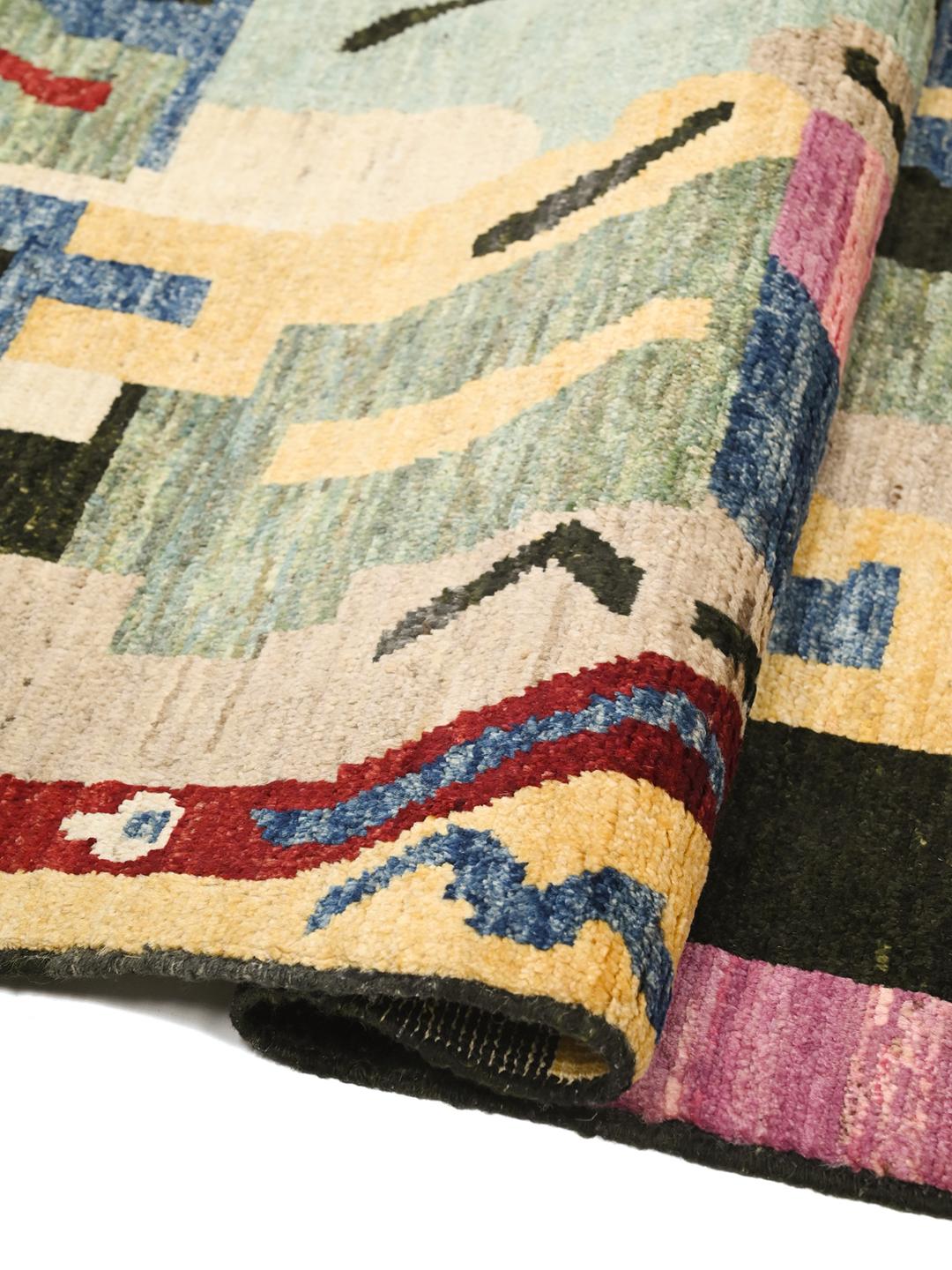
Visually, Gabbeh rugs are celebrated for their bold use of colour and geometric simplicity. This particular piece showcases a playful collage of abstract shapes, checkered patterns, and geometric borders, creating a lively visual rhythm. The combination of beige and multicolour blocks offers a modern twist on traditional nomadic motifs.
Today, Gabbeh rugs are highly valued by collectors and homeowners alike for their artistic freedom and tactile warmth. Owning a hand-knotted Gabbeh means bringing a piece of living textile history into your home, celebrating a craft tradition that values individual expression and enduring quality.