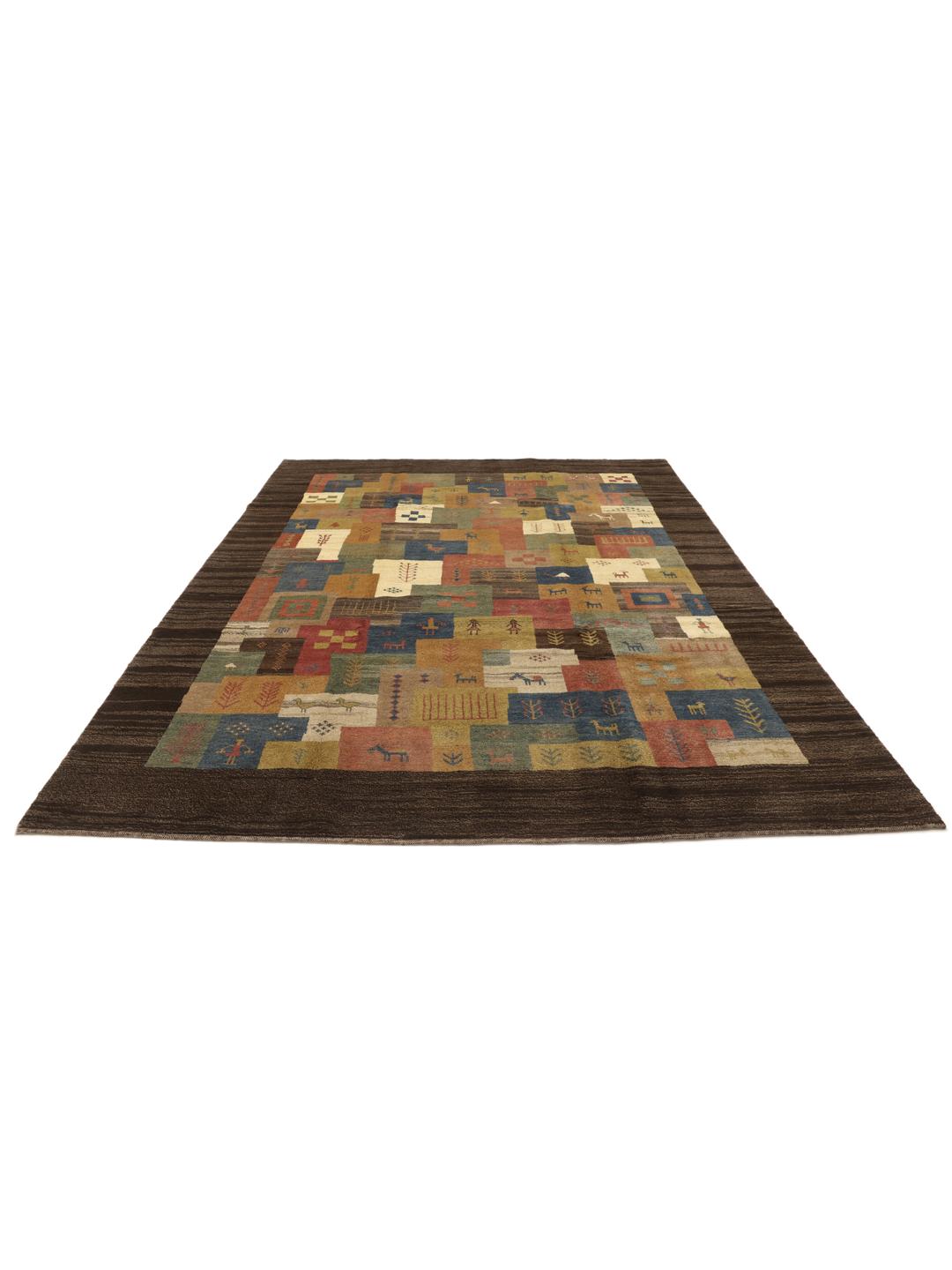
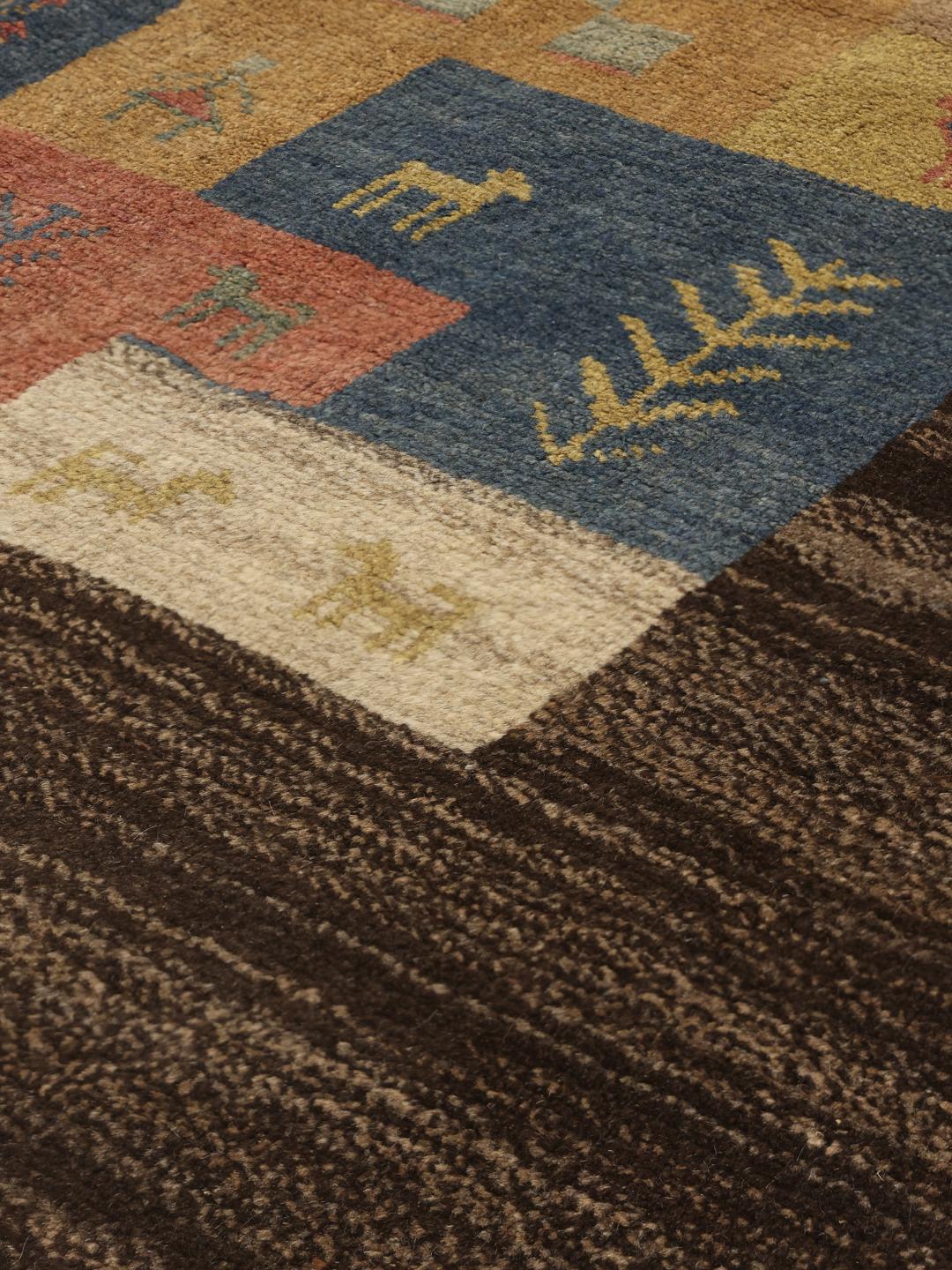
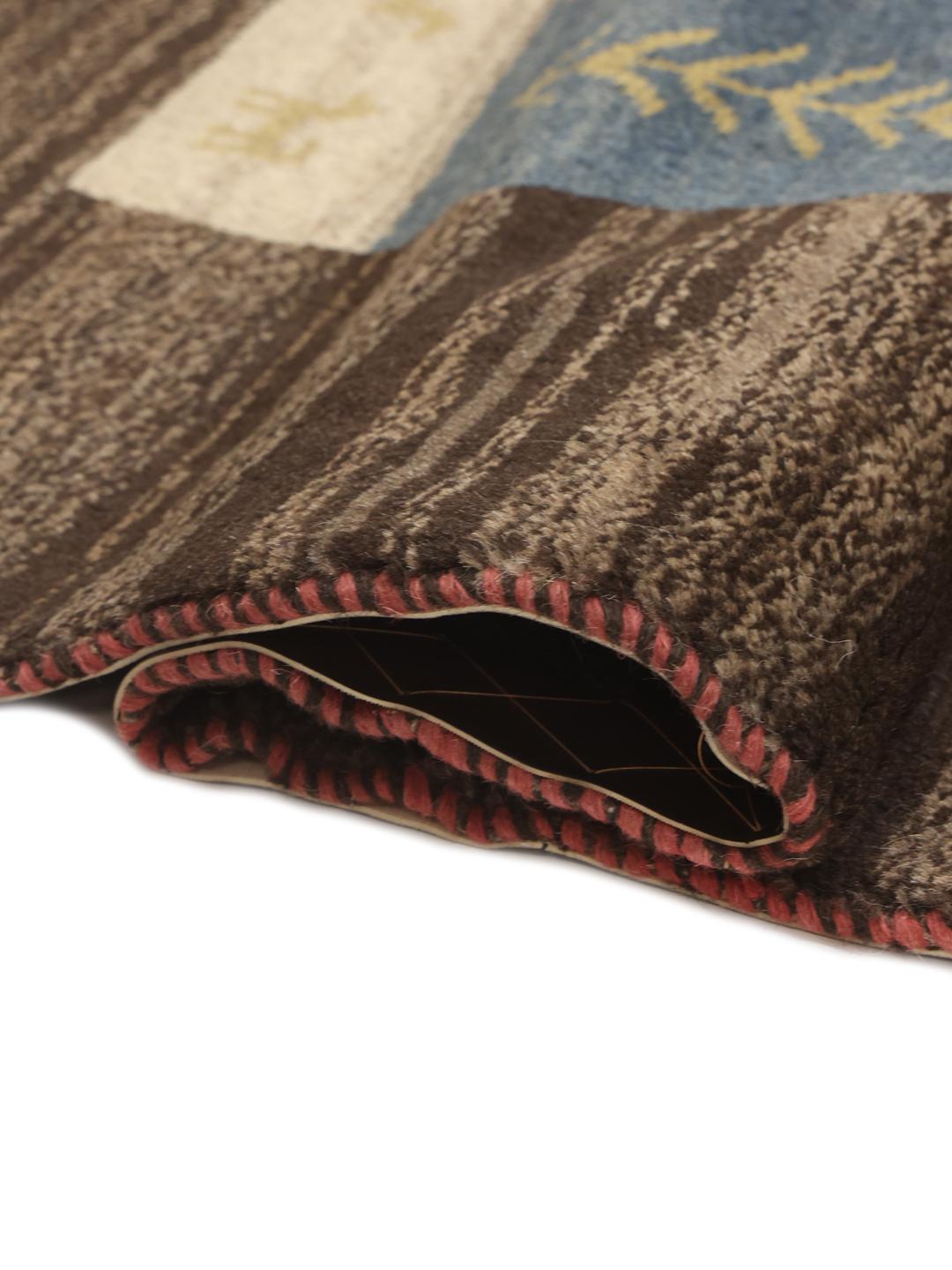
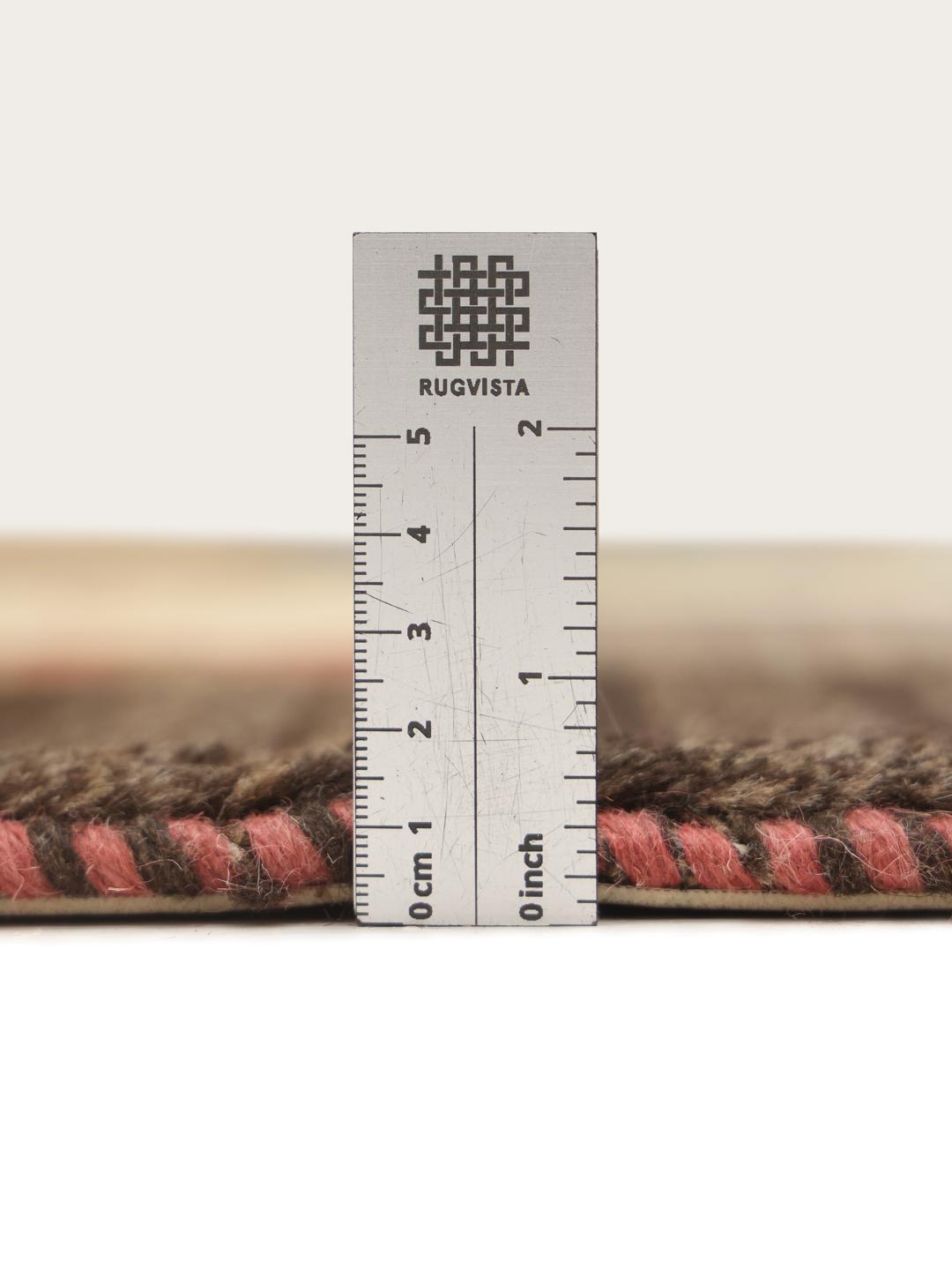
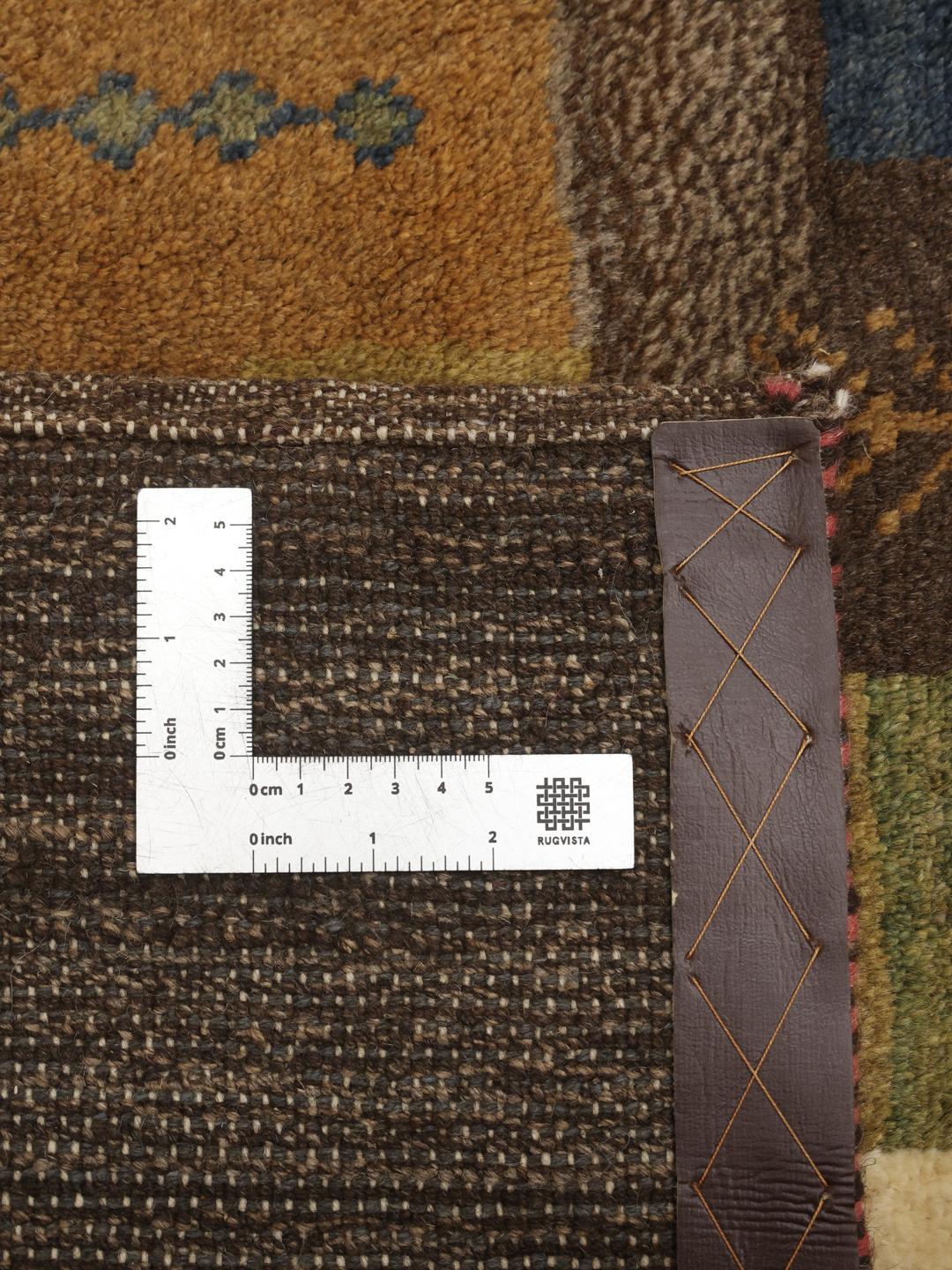
Gabbeh rugs are deeply rooted in the nomadic traditions of the Middle East, originating from the tribal weavers who created these pieces primarily for their own domestic use. Unlike more formal, city-woven rugs, Gabbeh rugs were historically designed to provide warmth and comfort in harsh, rugged environments, leading to their characteristic thick, soft pile.
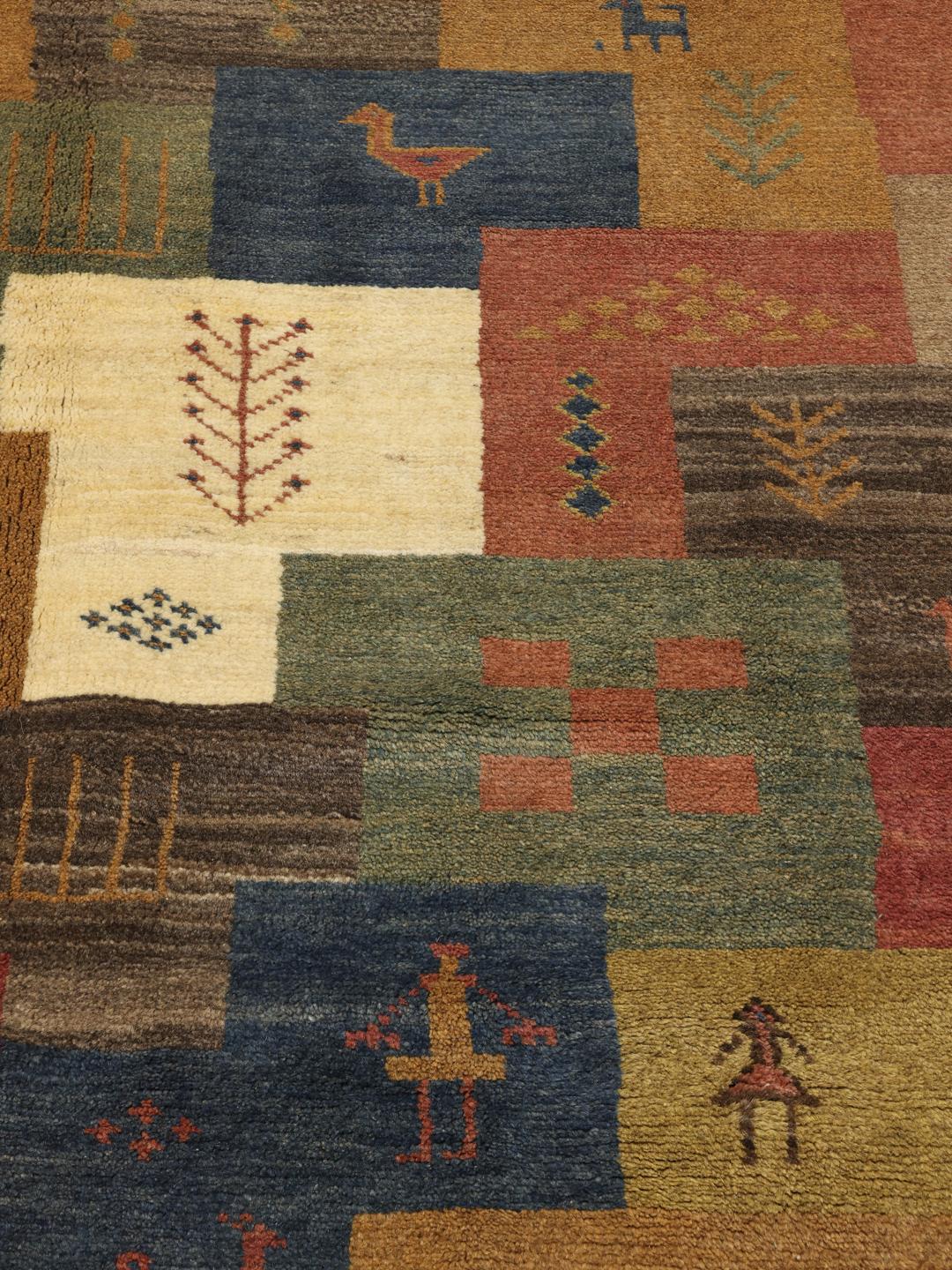
The term 'Gabbeh' itself translates to 'raw' or 'natural', reflecting the unrefined and spontaneous nature of their design. These rugs are celebrated for their artistic freedom, where weavers often interpret the world around them through stylised symbols rather than rigid, pre-planned patterns. This approach allows for a highly individual expression that captures the weaver's personal narrative.
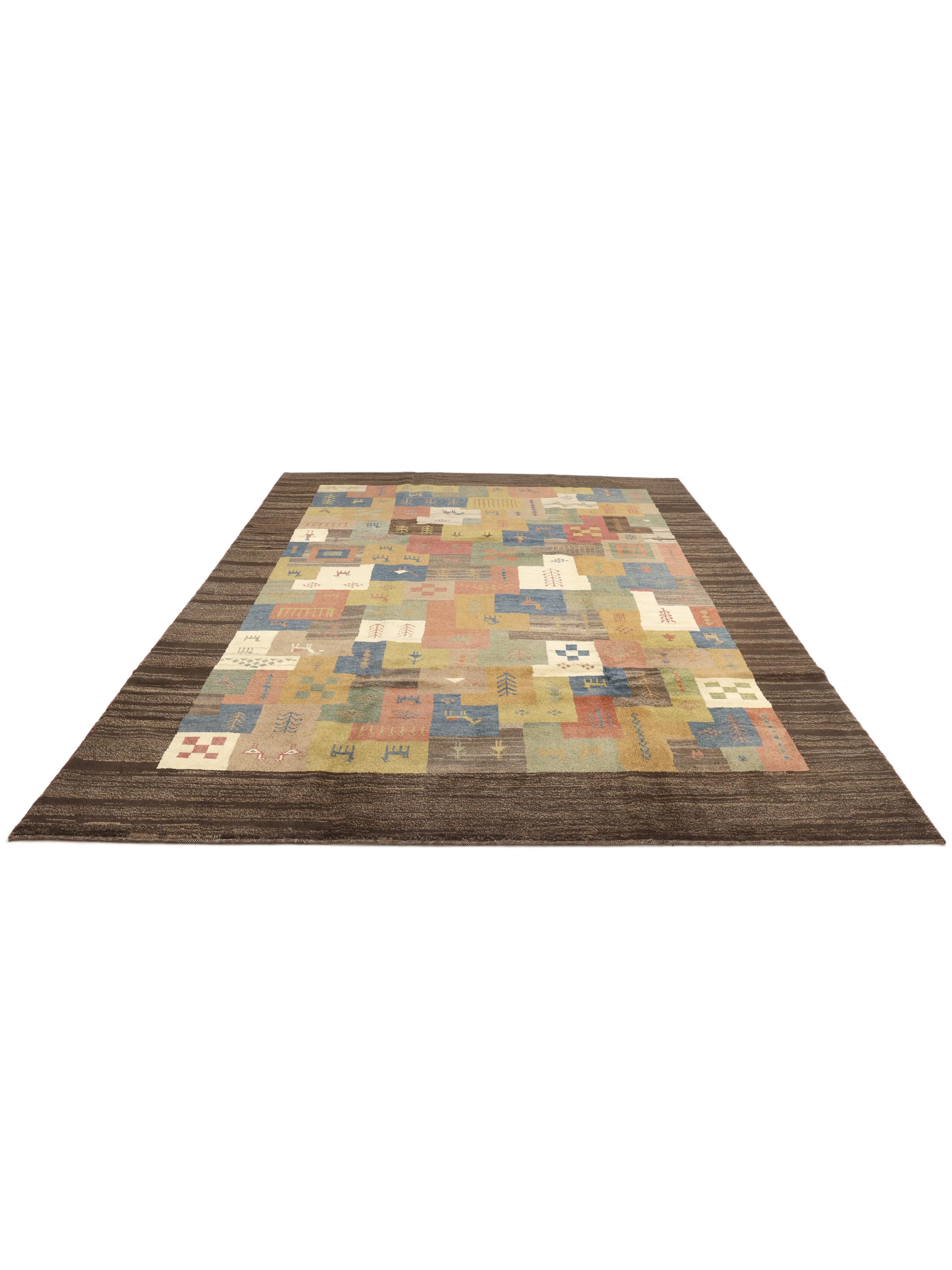
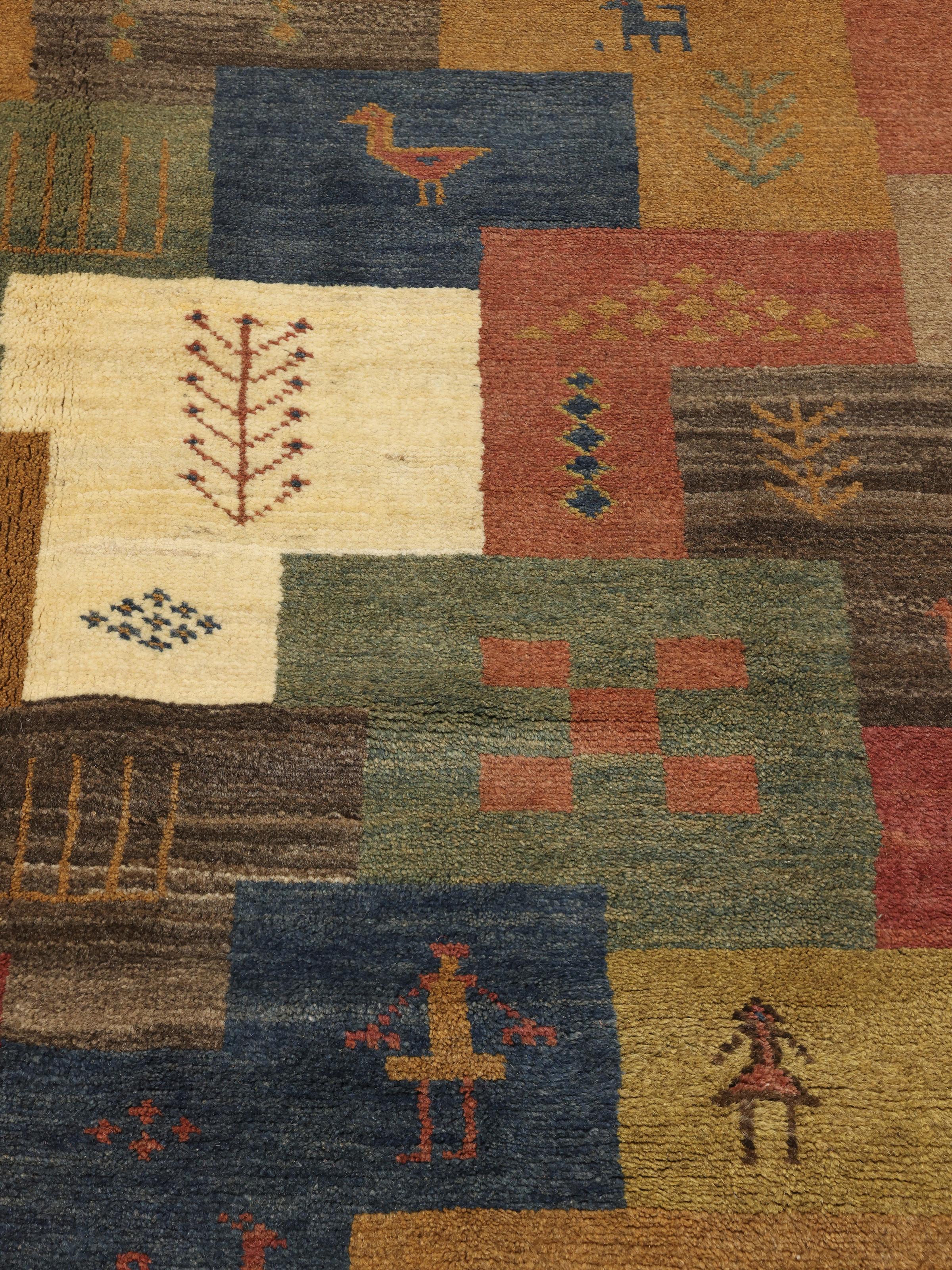
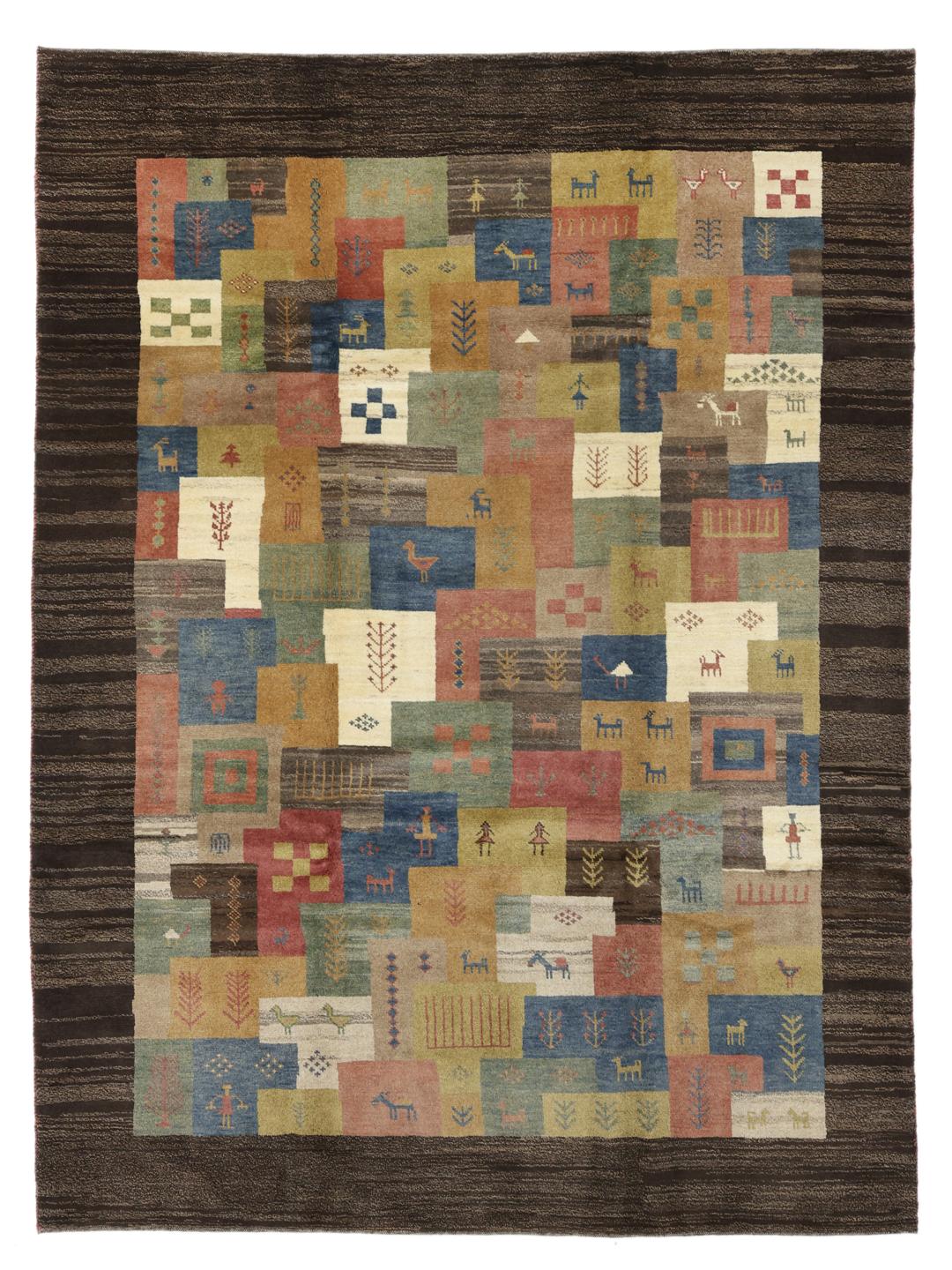
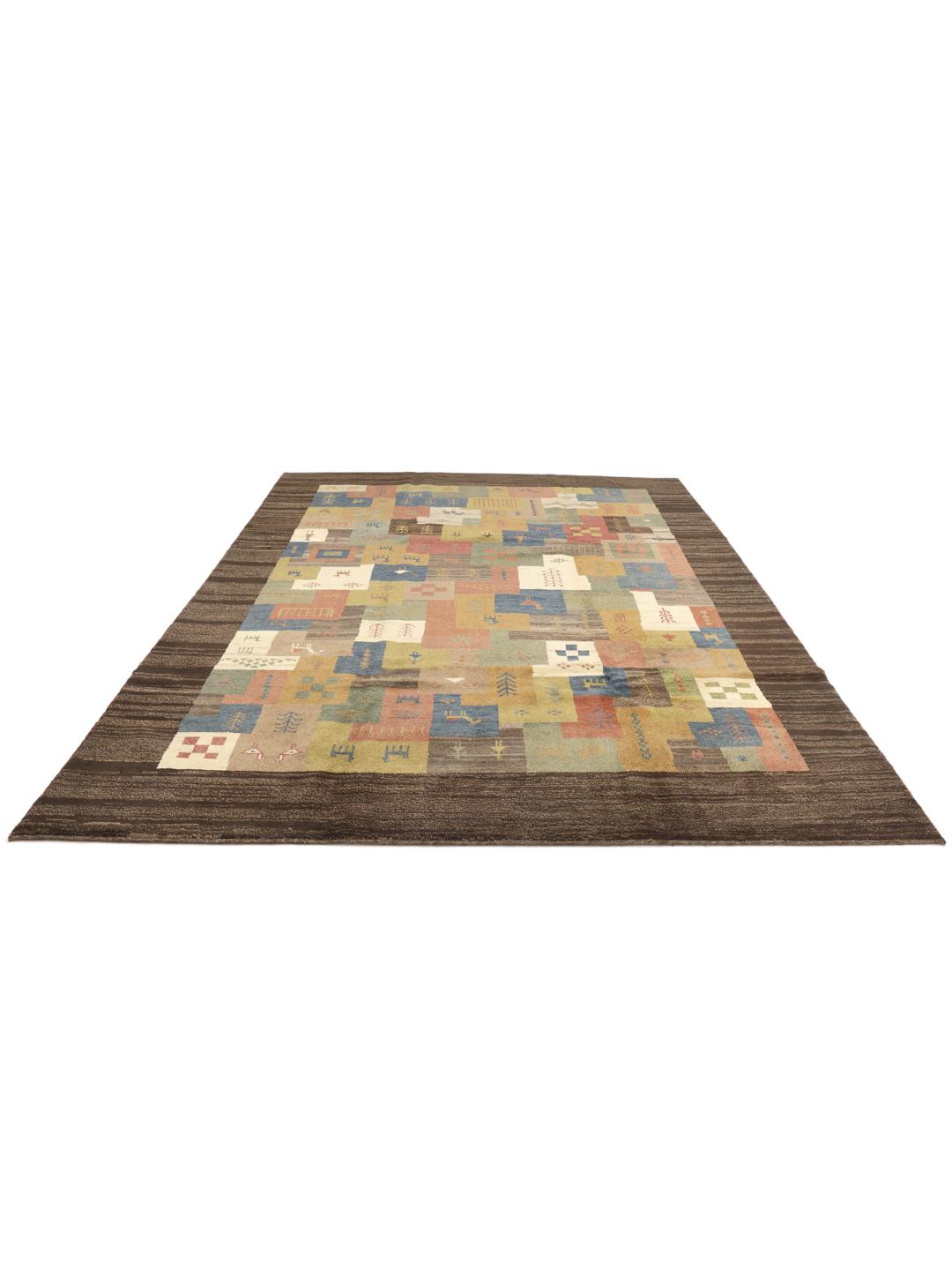
Signature design elements in these rugs often include simplified, geometric representations of animals, plants, and human figures, which are rendered with a charming, almost primitive aesthetic. The blocks seen in this piece are a classic layout, allowing the weaver to experiment with different motifs within each section, creating a visual mosaic that feels both structured and wildly creative.
Today, these rugs are highly prized by collectors for their cultural significance and the skill required to weave them without a traditional cartoon or pattern guide. Owning a Gabbeh is a way to connect with a long-standing lineage of craft, where each rug serves as a tangible record of tribal heritage and individual creativity.