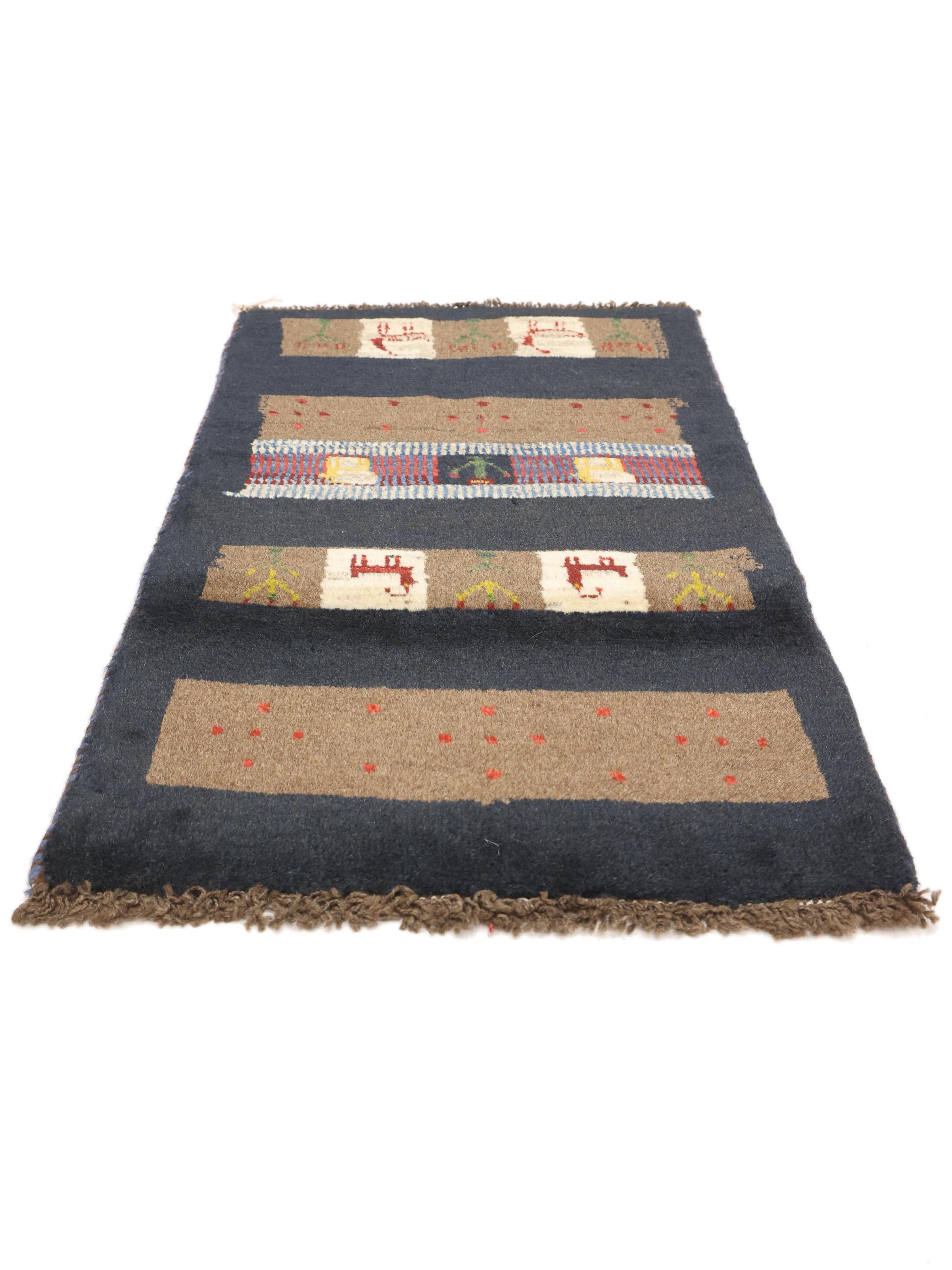
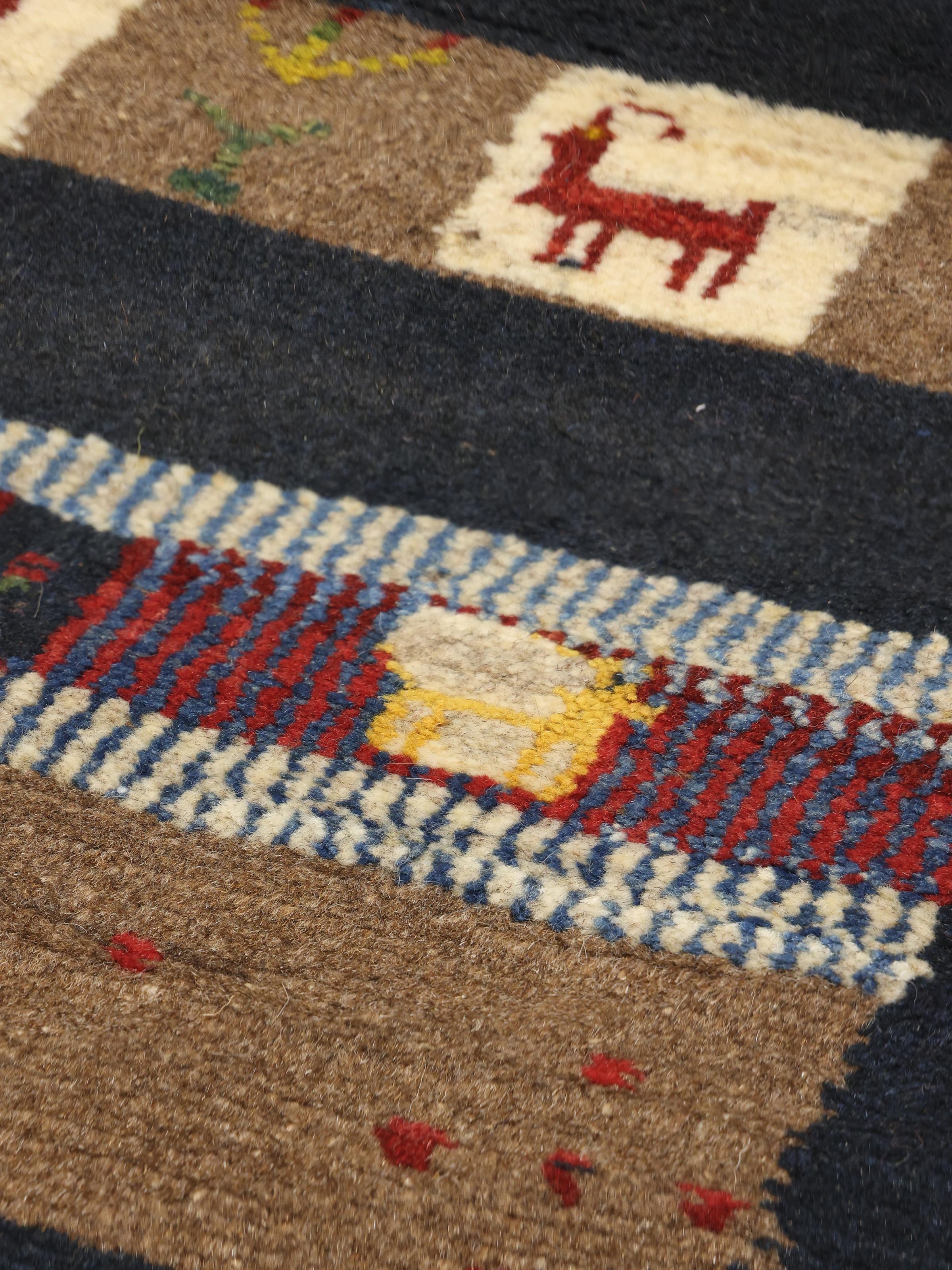
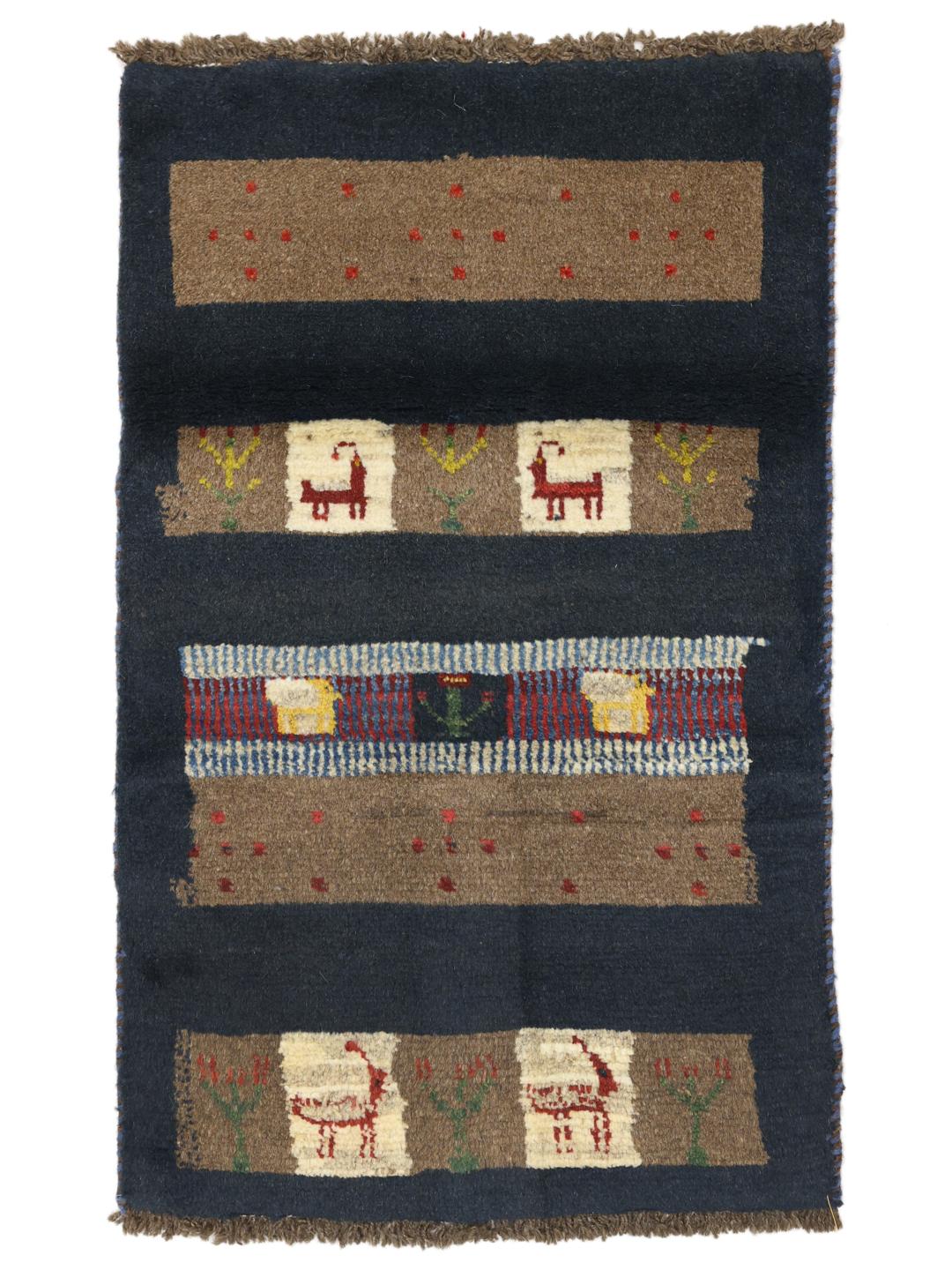
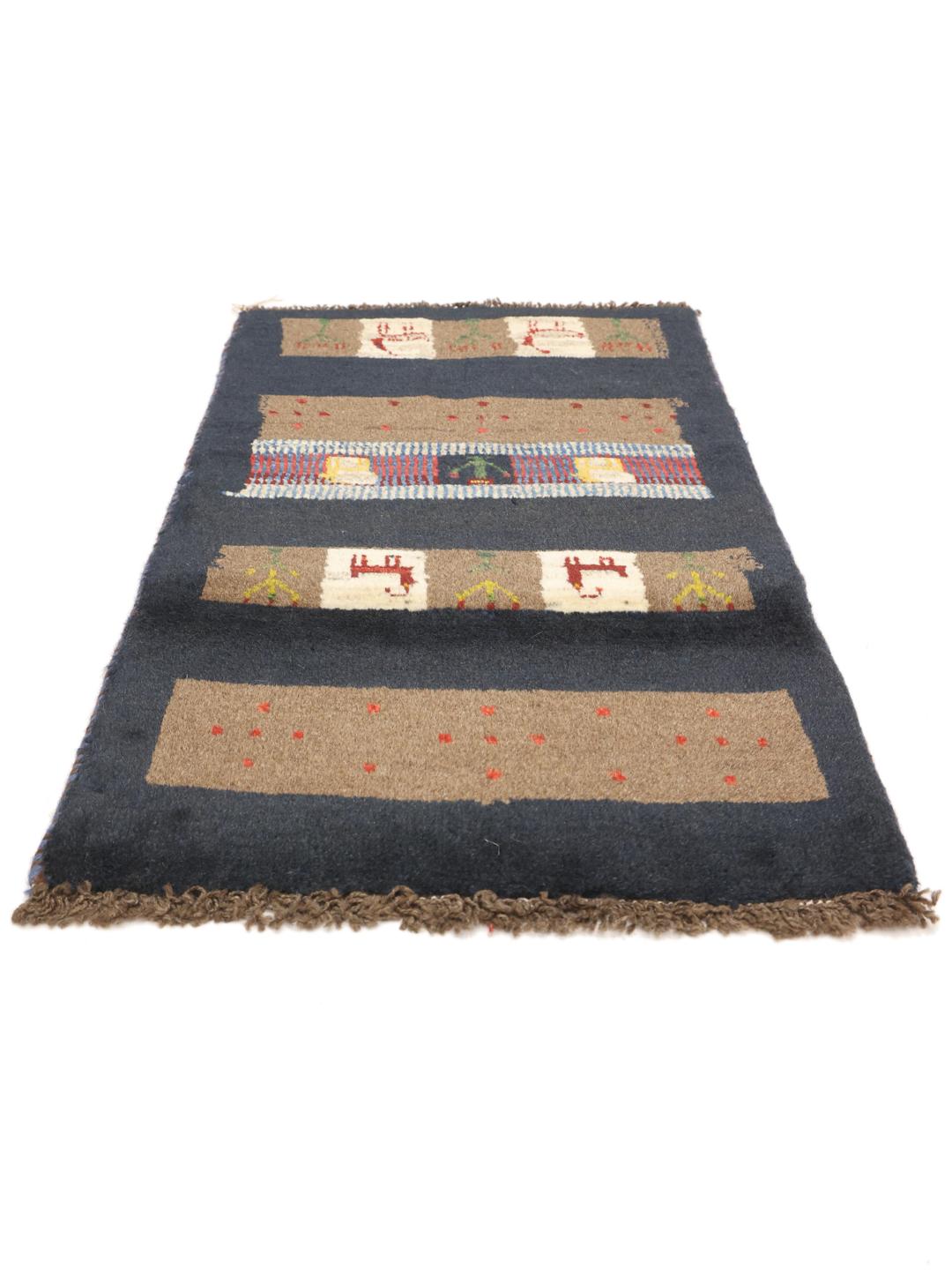
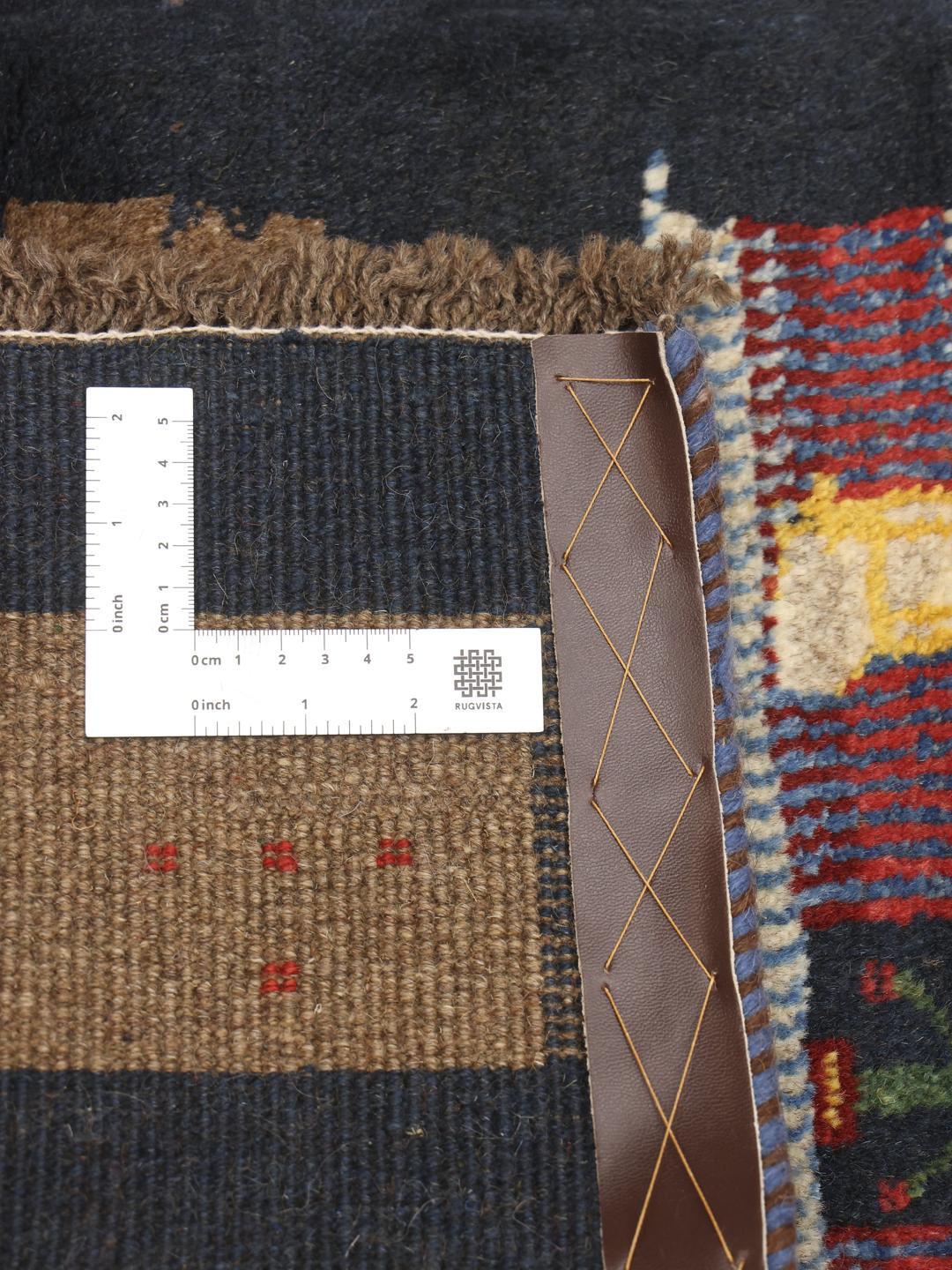
Gabbeh rugs trace their origins back to nomadic tribes across the Middle East, where they were originally woven for practical daily use rather than decoration. Woven as thick blankets and floor mats to protect families against cold ground, these rugs were celebrated for their deep pile, simple layouts, and vibrant storytelling motifs.
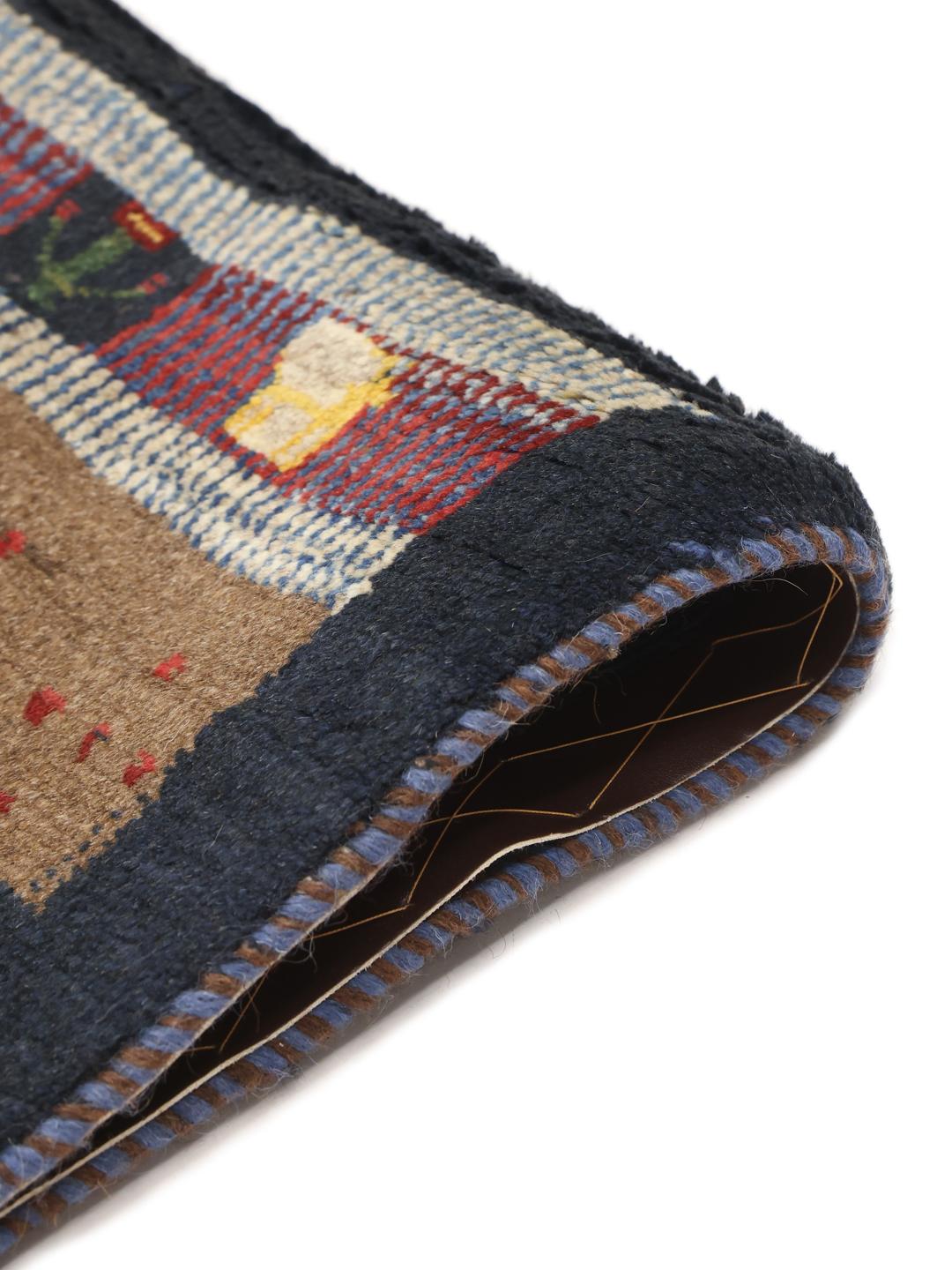
Over time, the popularity of the Gabbeh aesthetic spread beyond its original nomadic origins to weaving centers across Pakistan. Pakistani artisans adapted the tradition, employing fine wool and careful hand-knotting techniques to refine the texture while preserving the naive, expressive character that makes Gabbeh pieces so distinct.
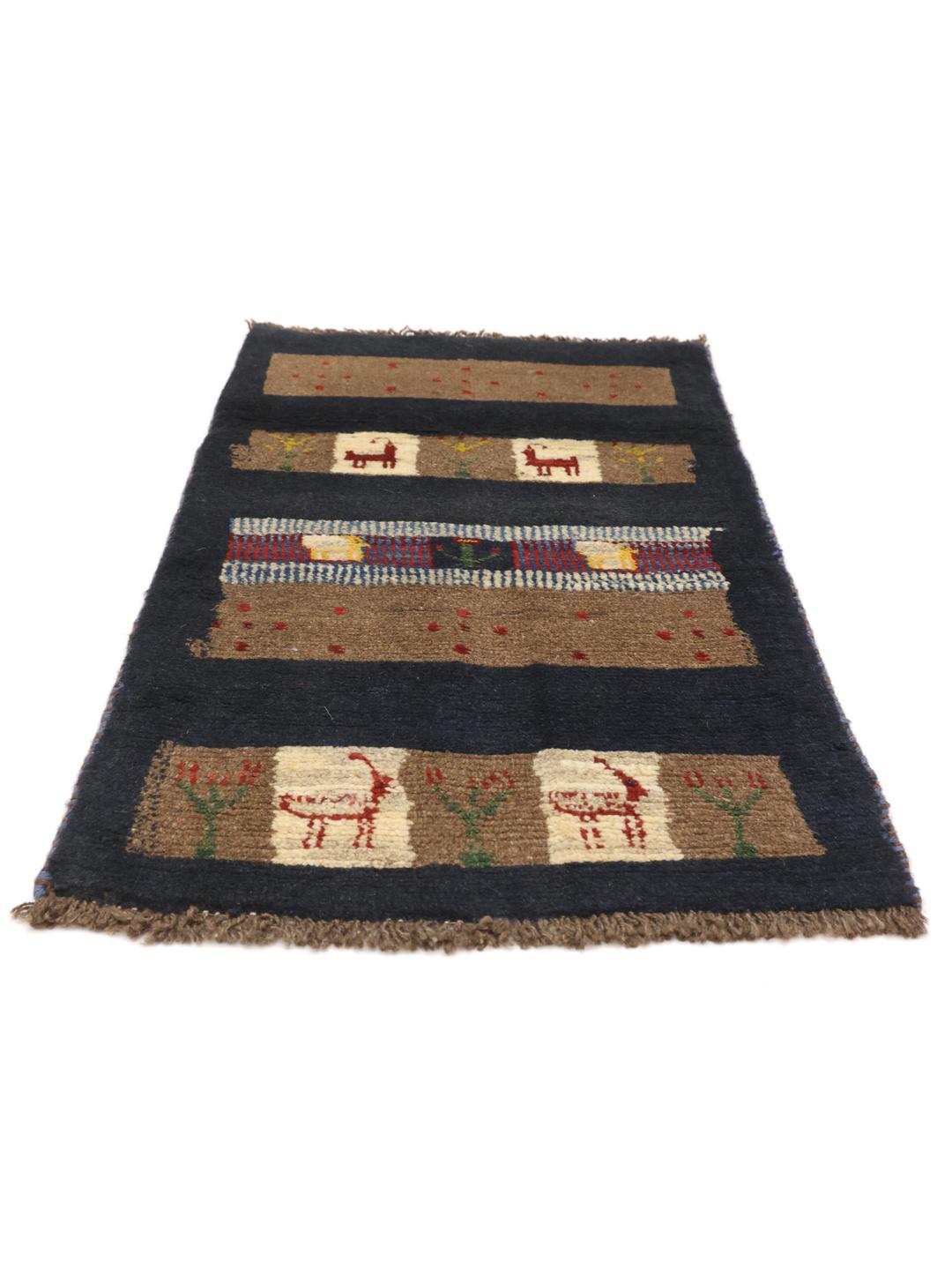
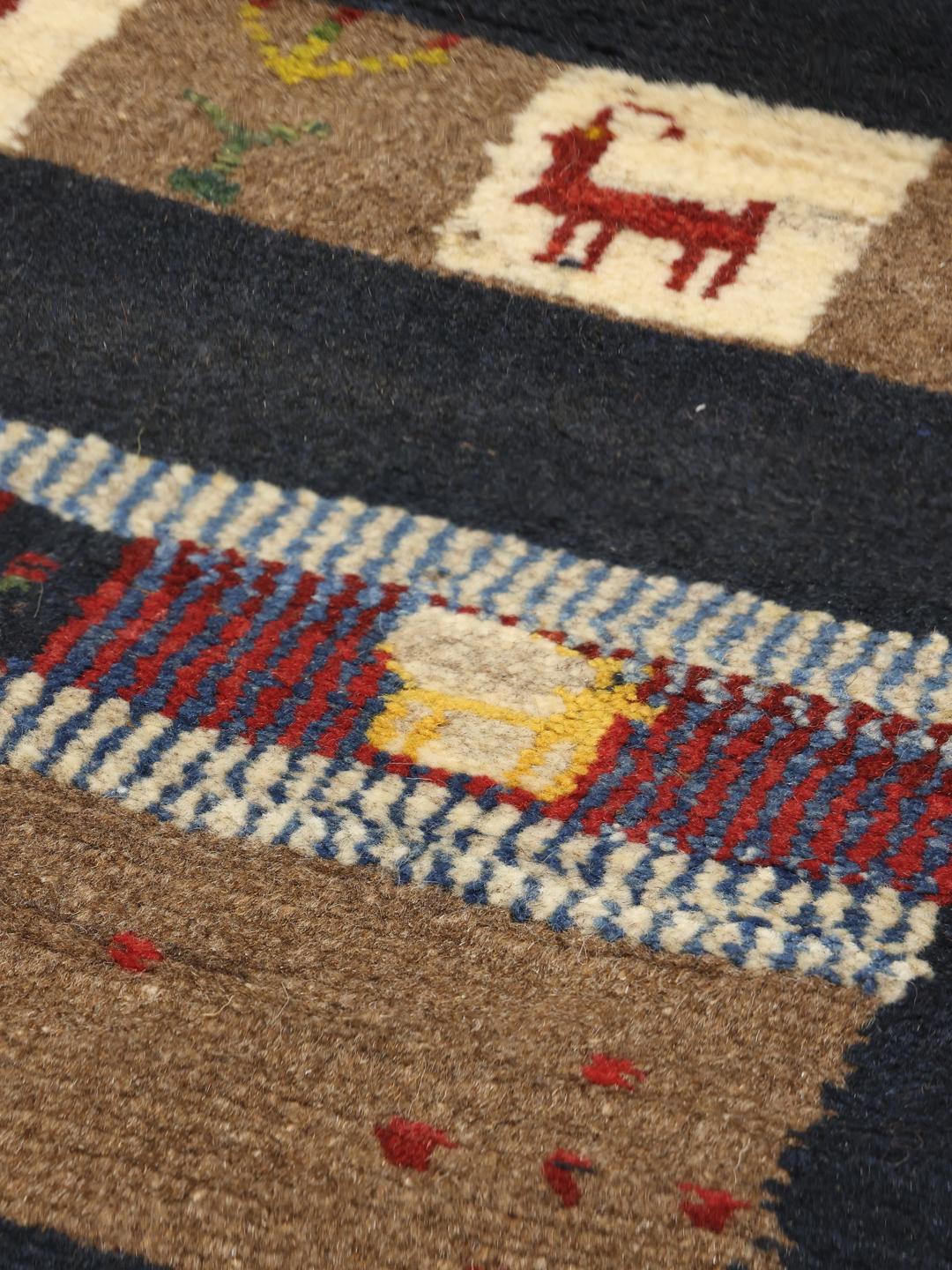
Visually, traditional Gabbeh designs stand out for their minimalist fields, bold blocks of color, and small pictorial motifs depicting animals, trees, or human figures. Rather than following rigid drawn cartoons, weavers often knot these motifs from memory or personal inspiration, giving each completed piece a spontaneous and deeply individual quality.
Today, Gabbeh rugs are highly prized by interior enthusiasts and collectors alike for their balance of rustic charm and artistic freedom. Owning a hand-knotted Gabbeh means bringing a piece of living folk art into your home, backed by centuries of tribal weaving history.