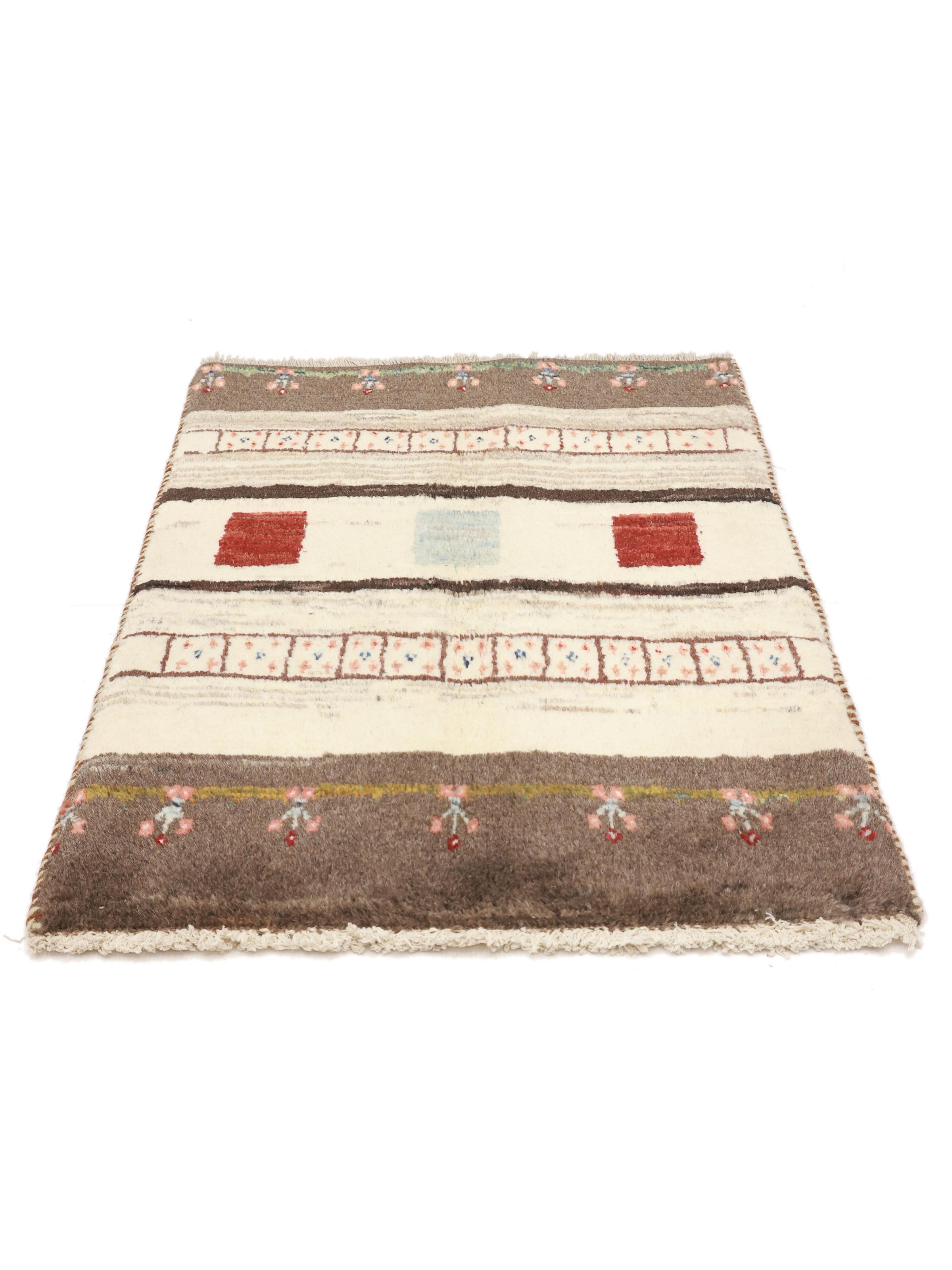
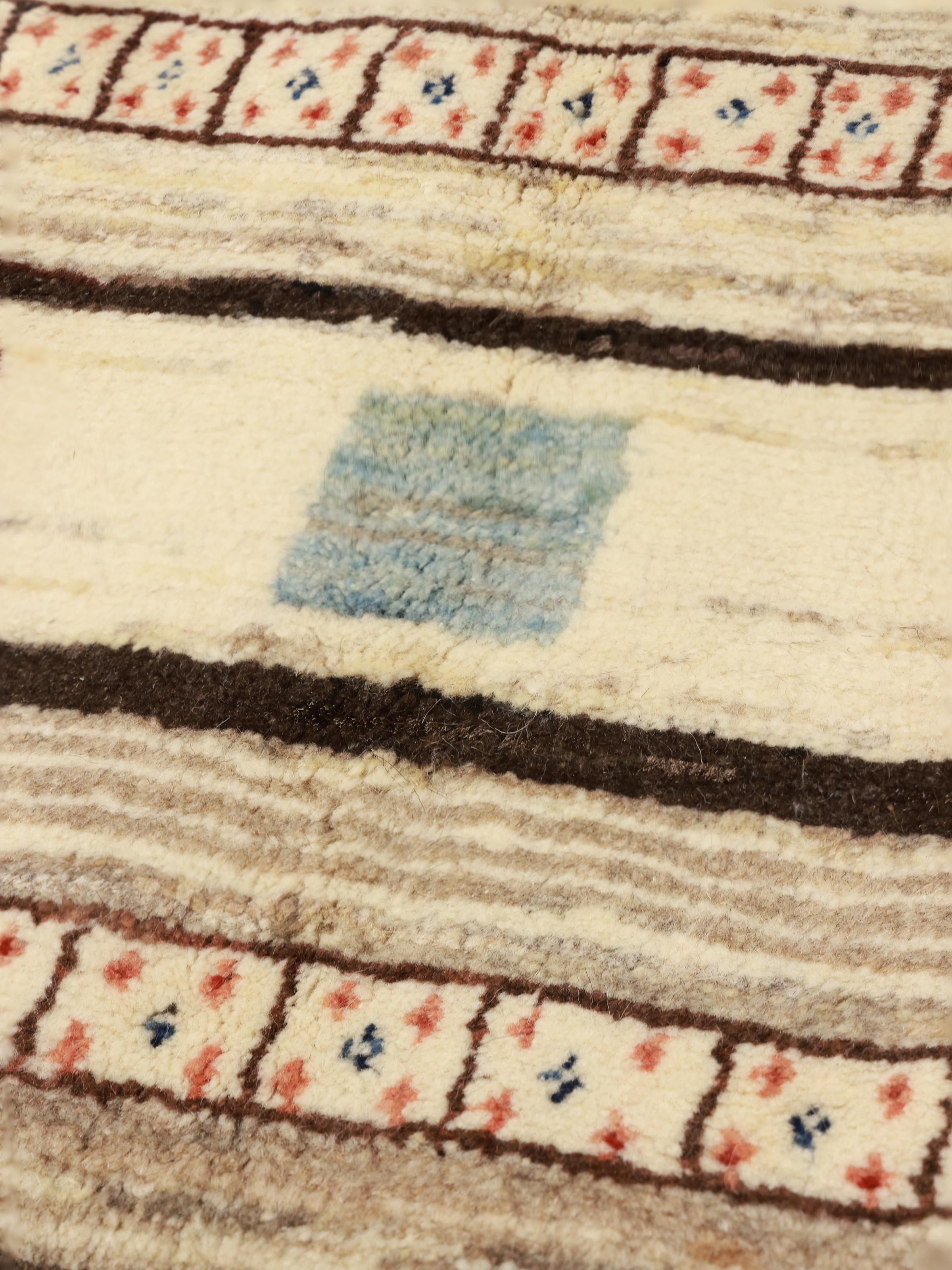
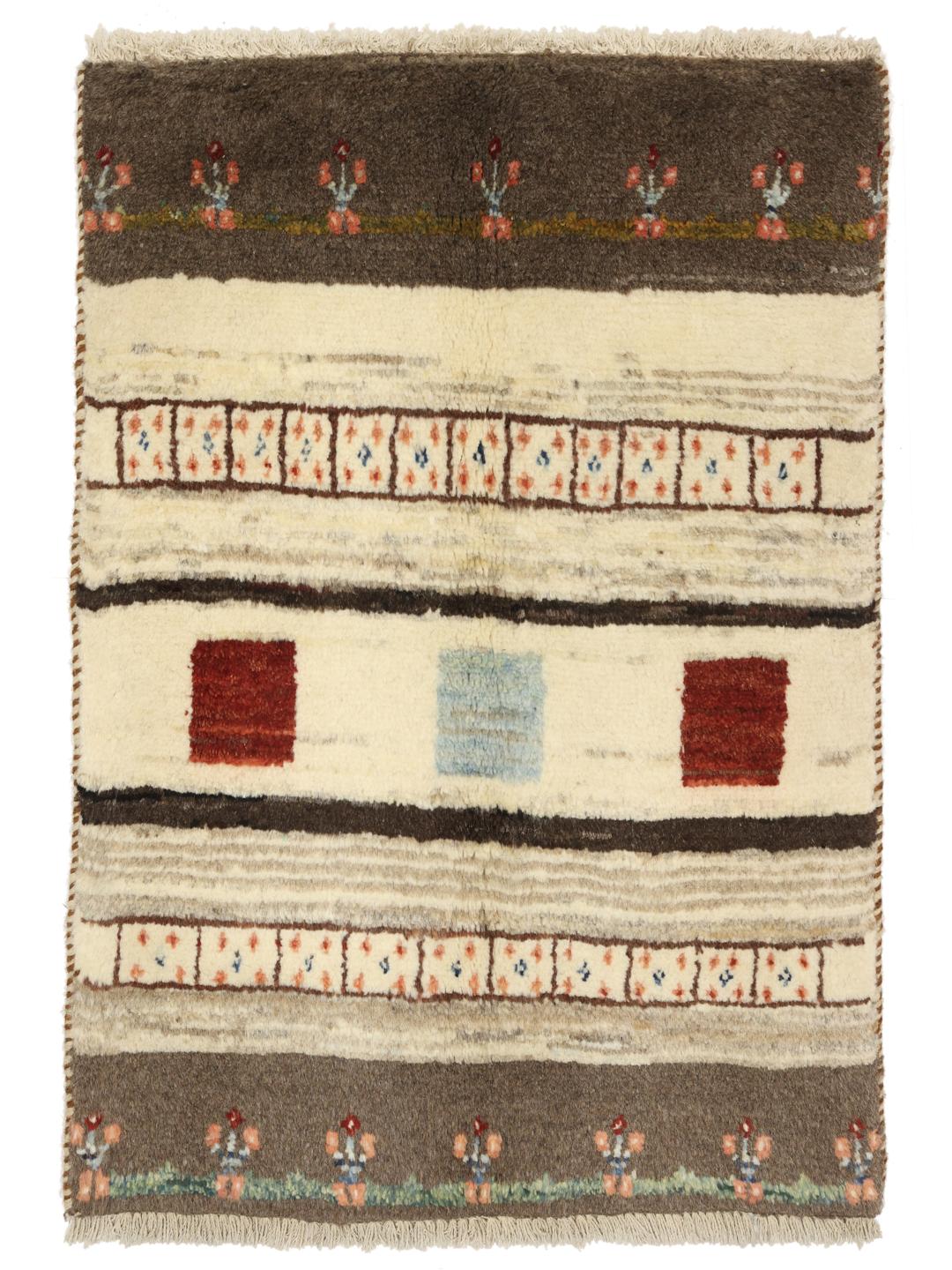
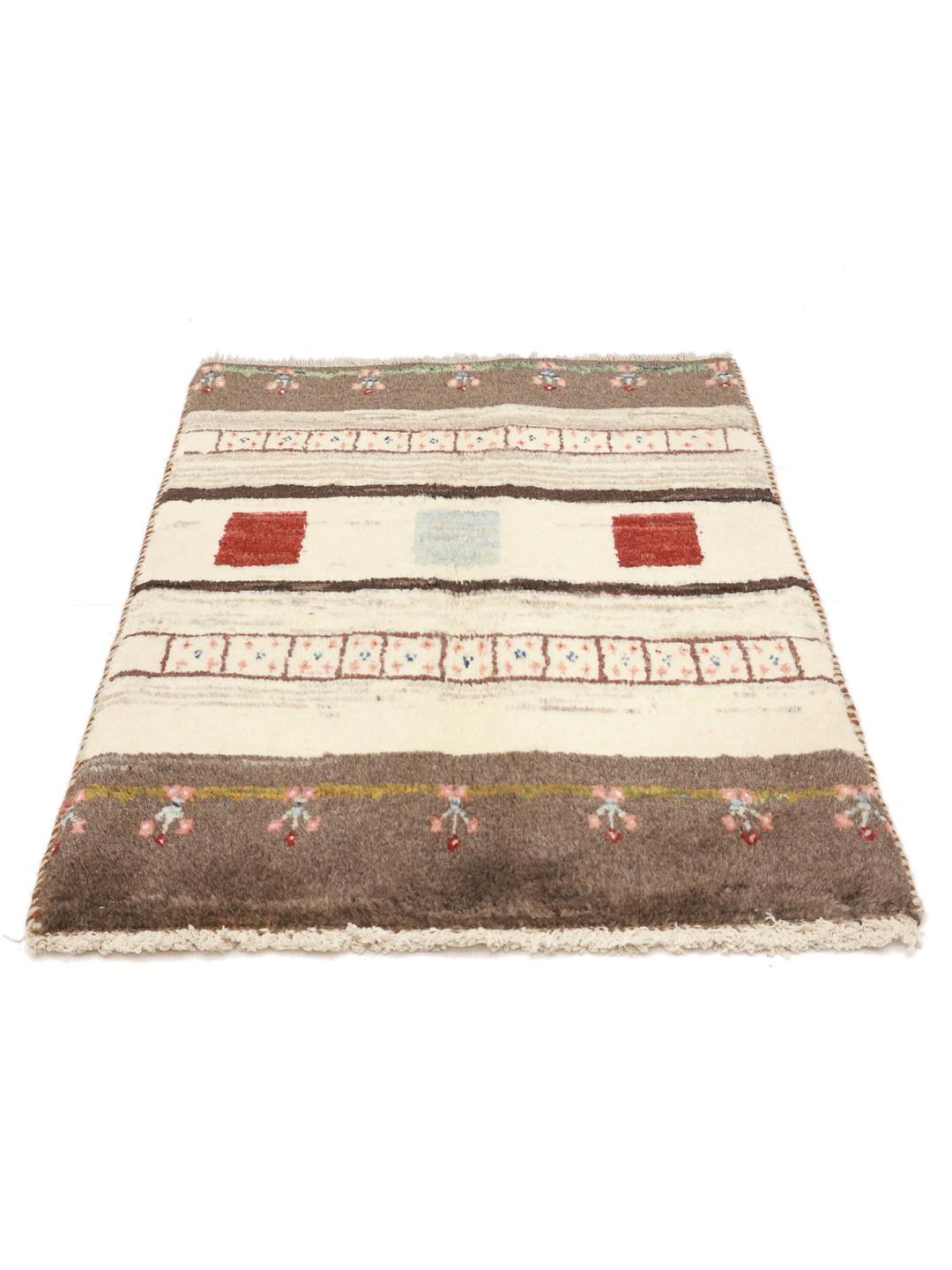
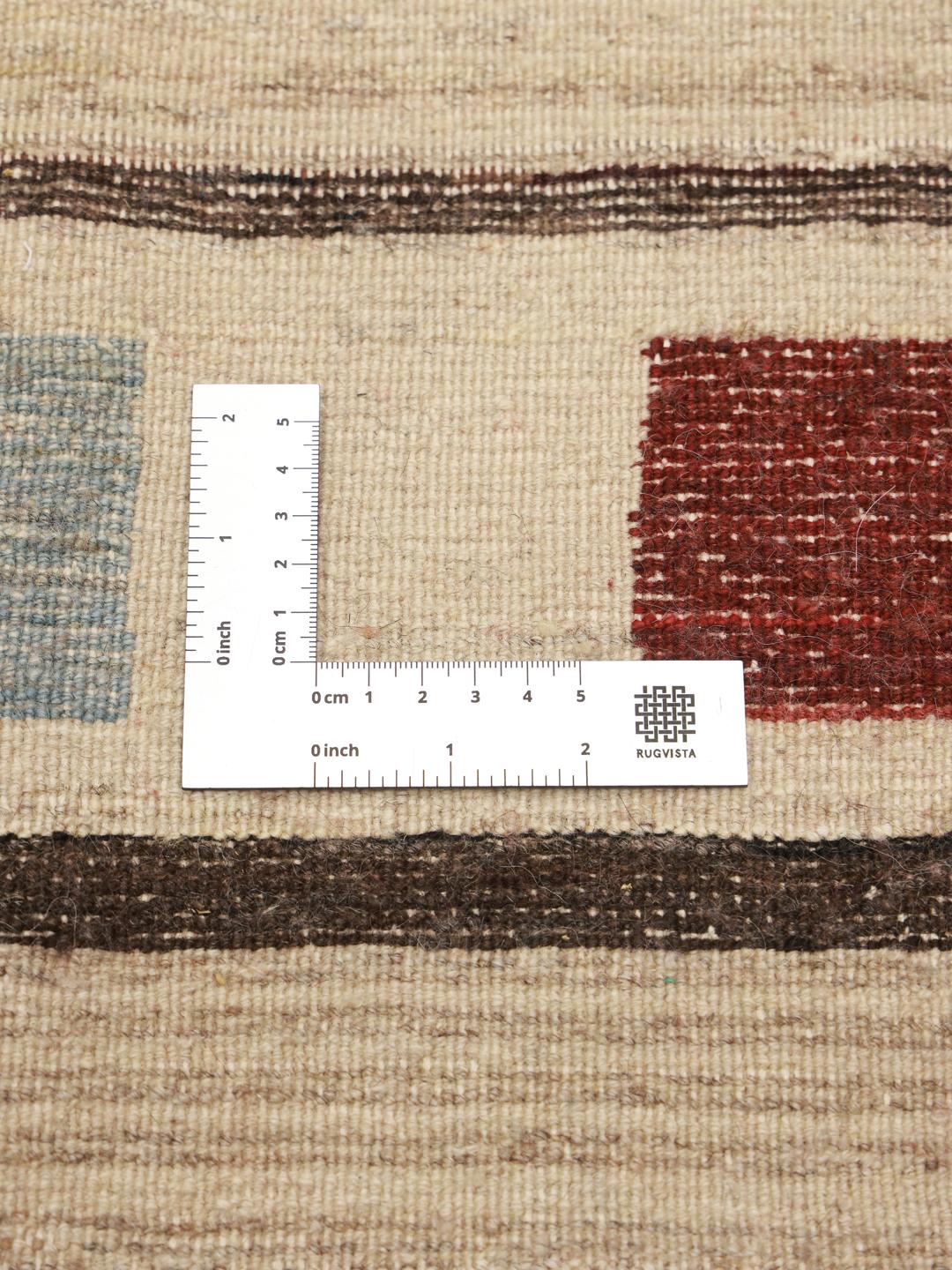
Gabbeh rugs trace their origins back to nomadic tribes across the Middle East, where they were originally created as thick, practical floor coverings and bed blankets for everyday family life. While traditional weaving centers established the style, the craft expanded into specialized workshops in Pakistan, where weavers adapted the iconic design language while maintaining authentic knotting techniques.
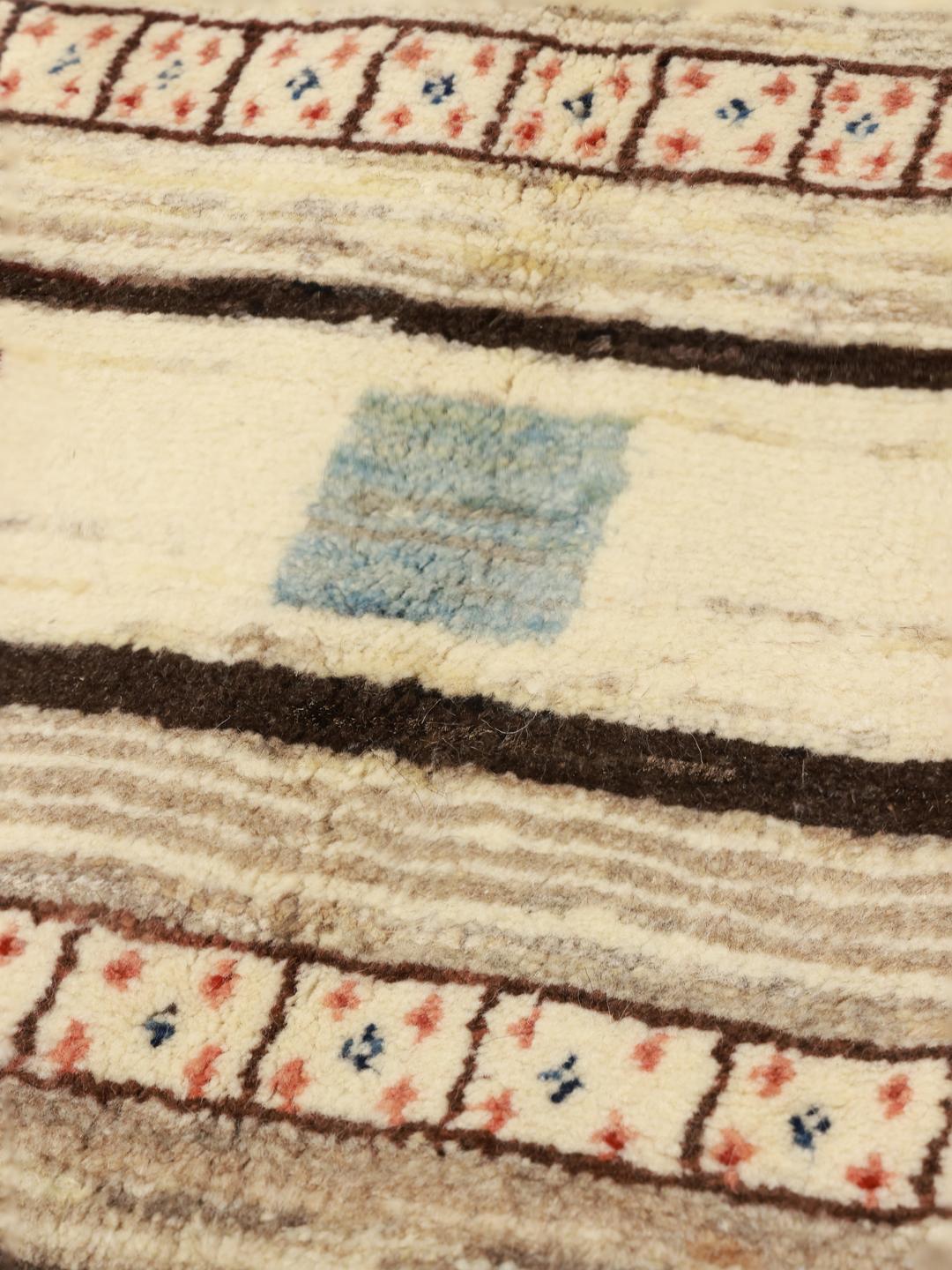
The word Gabbeh translates to raw, natural, or unclipped, pointing to the thick, plush pile and spontaneous designs that define the category. Unlike formal court rugs with precise symmetric maps, Gabbeh weavers traditionally interpret their surroundings directly onto the loom, resulting in open fields and minimalist geometric figures.
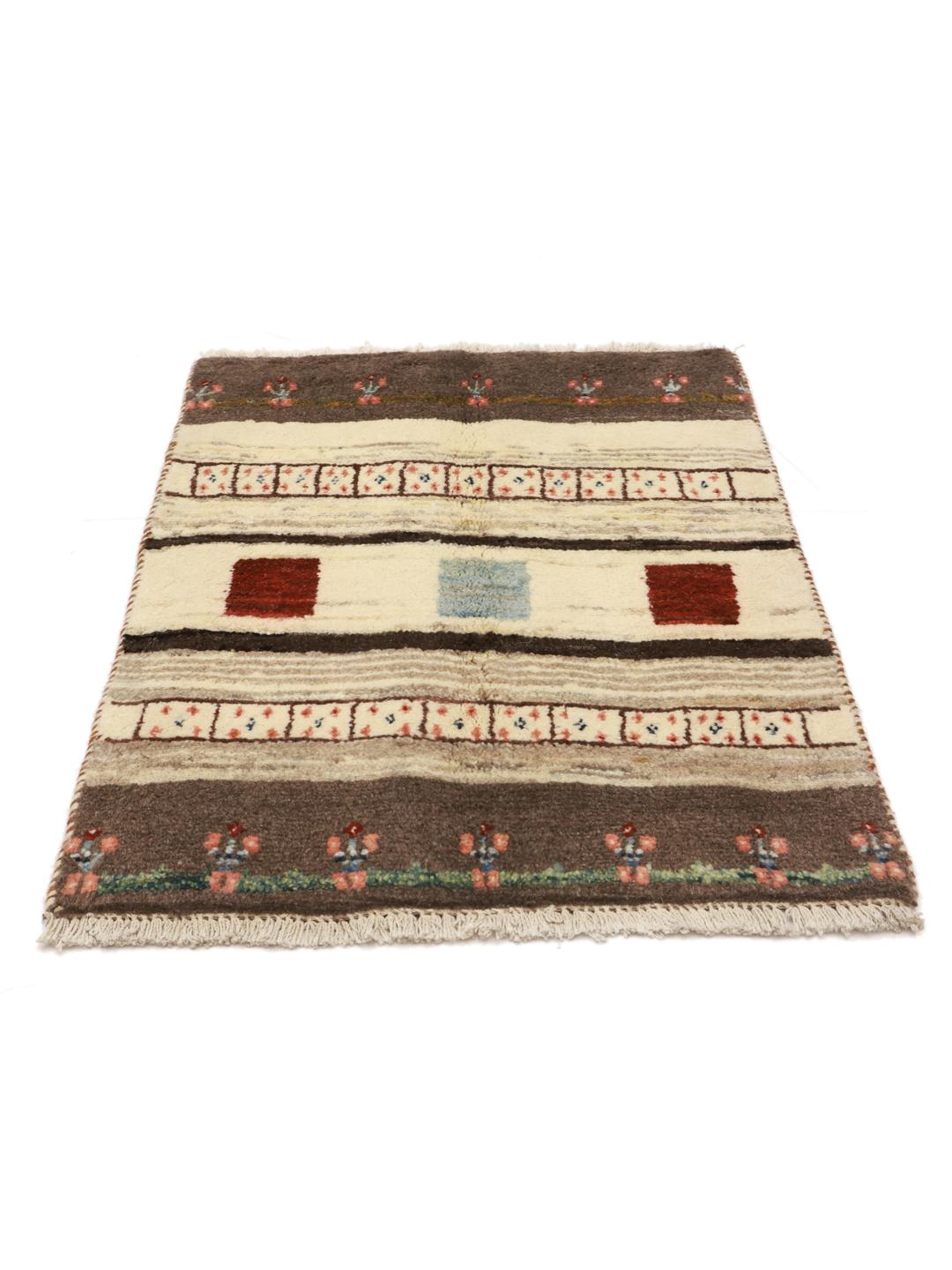
Signature elements of the tradition include horizontal colour bands, scattered animal or plant motifs, and central block shapes. These motifs often carry symbolic meanings related to daily life, nature, and fortune, giving each finished piece a distinct narrative quality alongside its visual texture.
Today, vintage and modern Gabbeh rugs are highly prized by collectors and homeowners alike for their modern artistic appeal and sturdy construction. Owning a piece from this tradition means bringing a tactile piece of nomadic heritage into a contemporary living space.