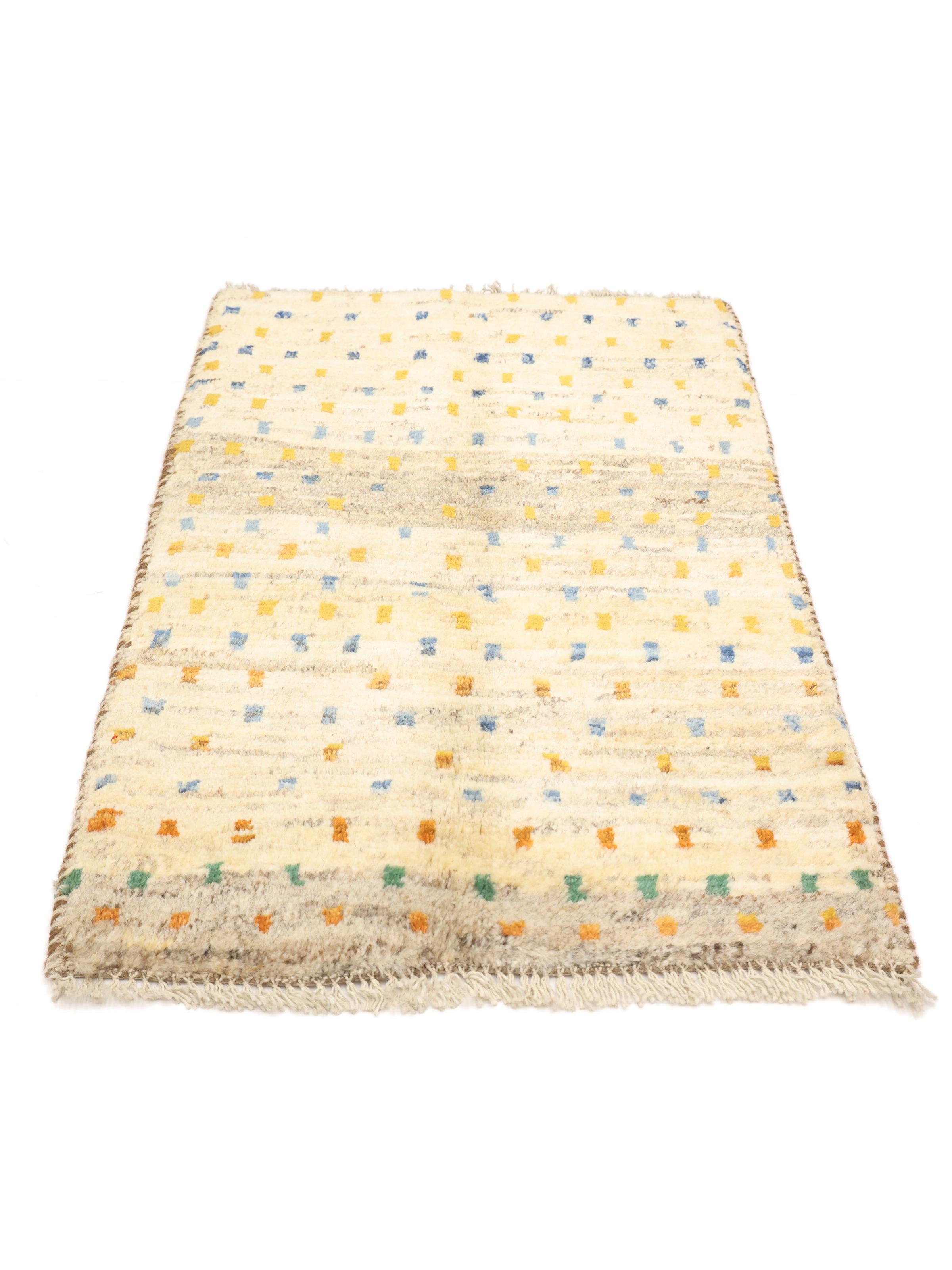
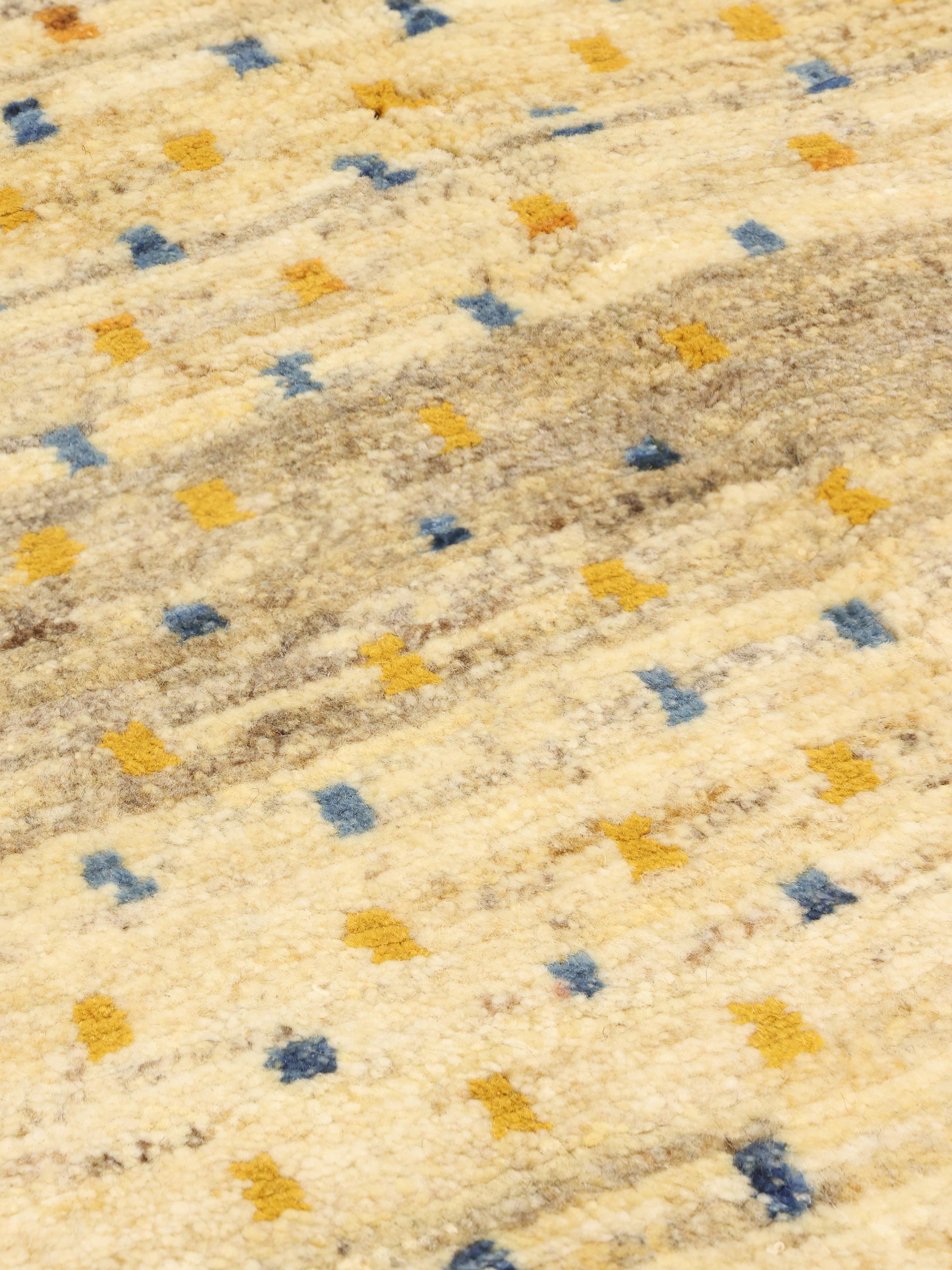
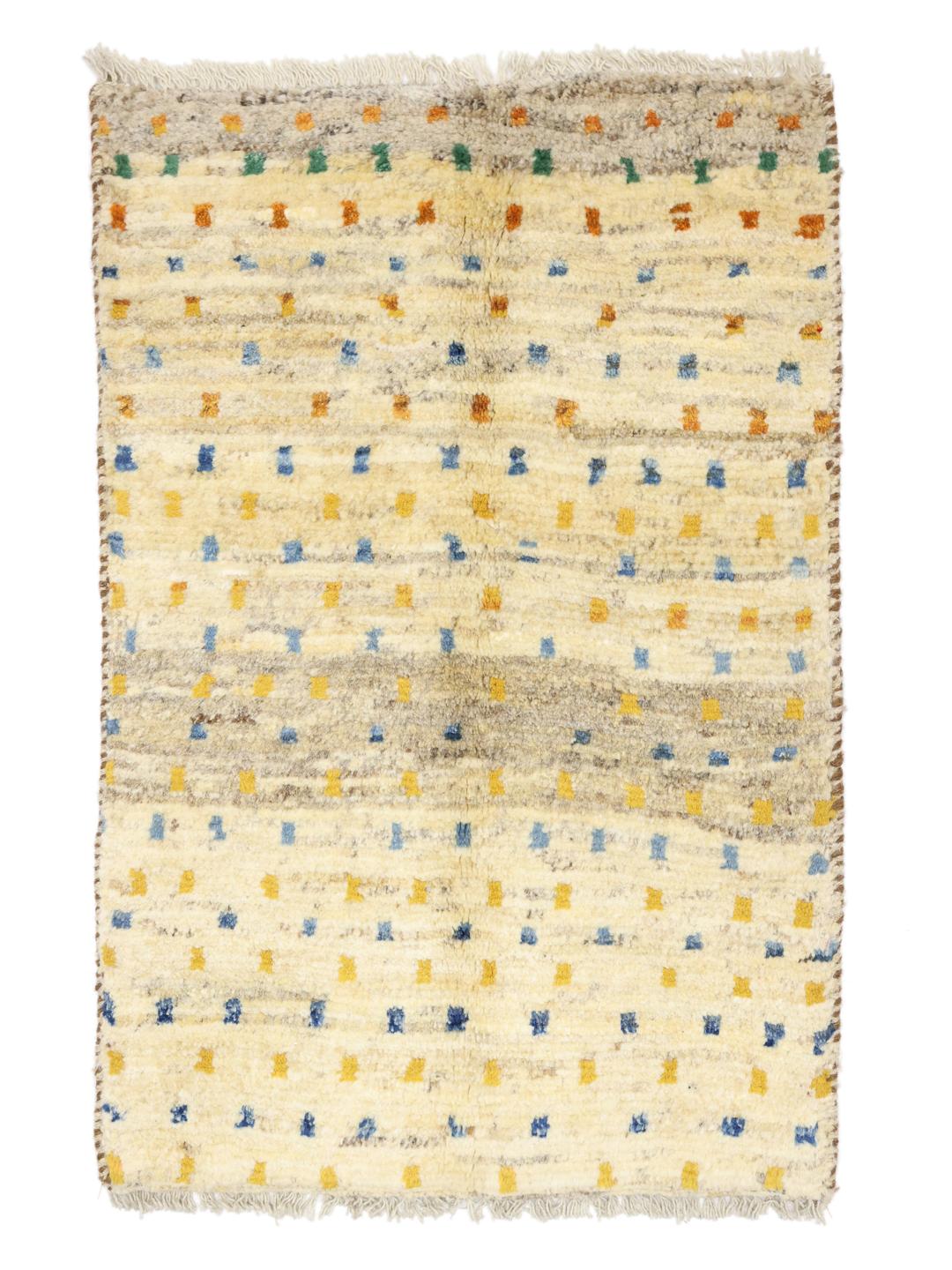
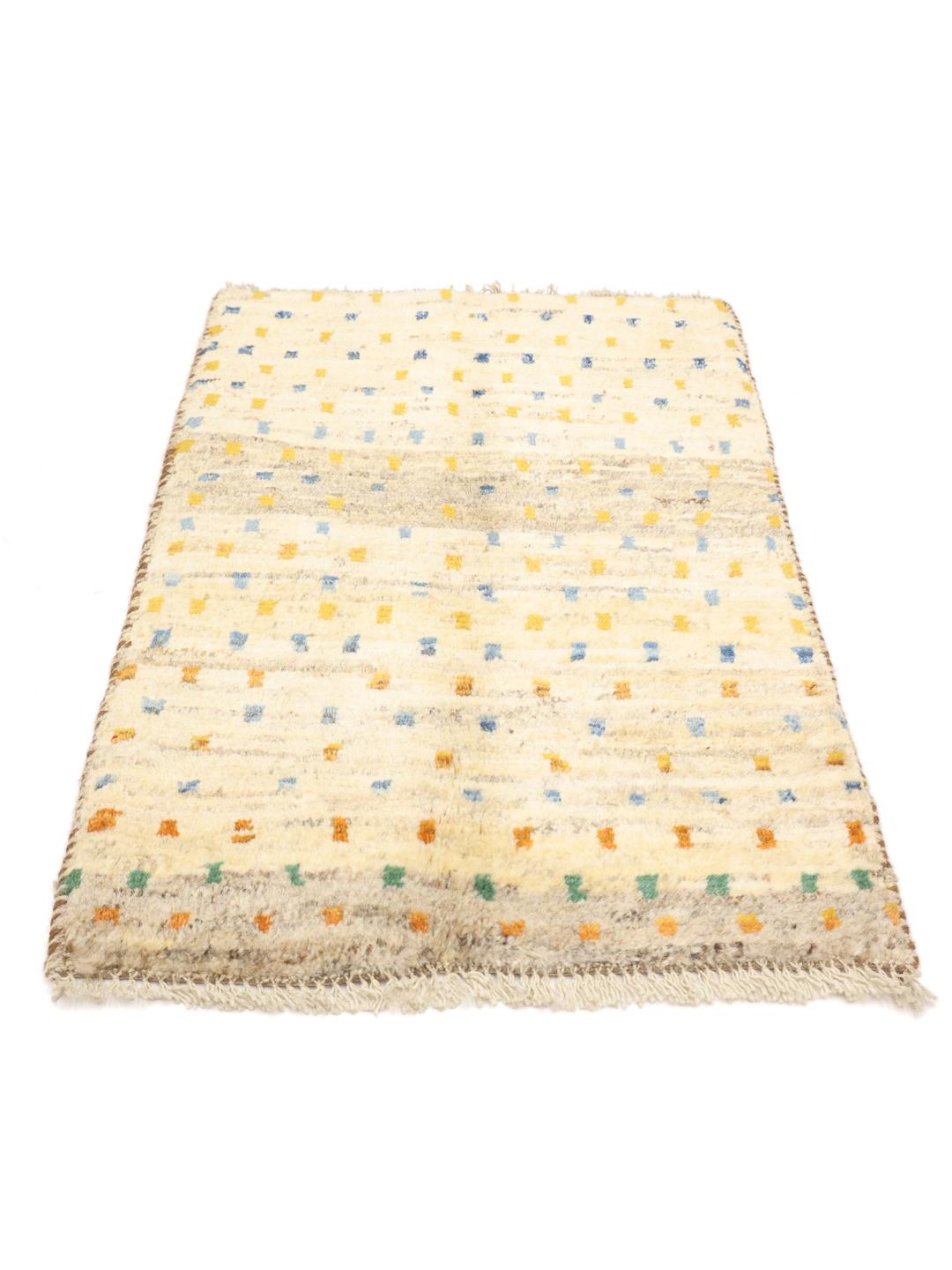
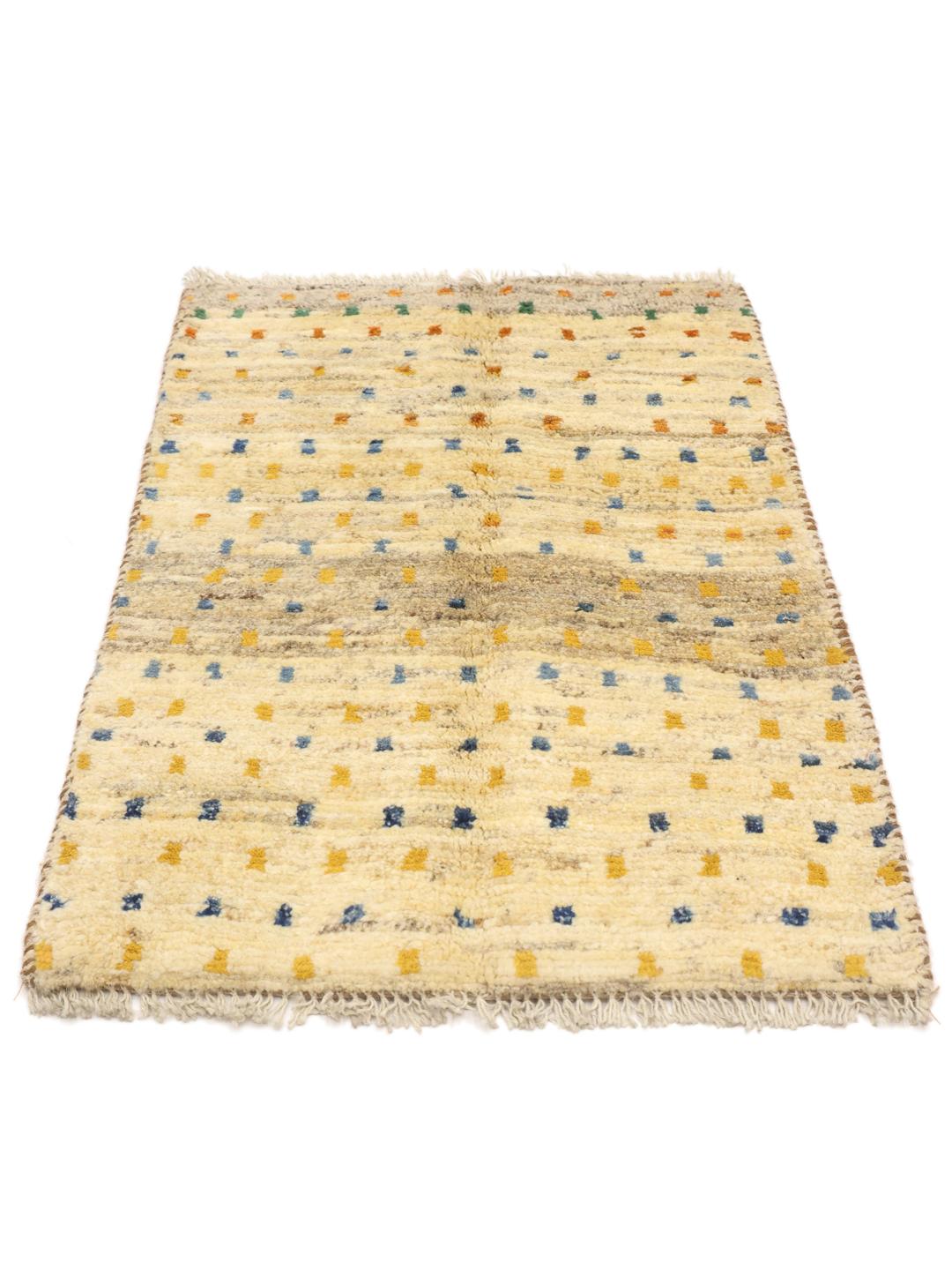
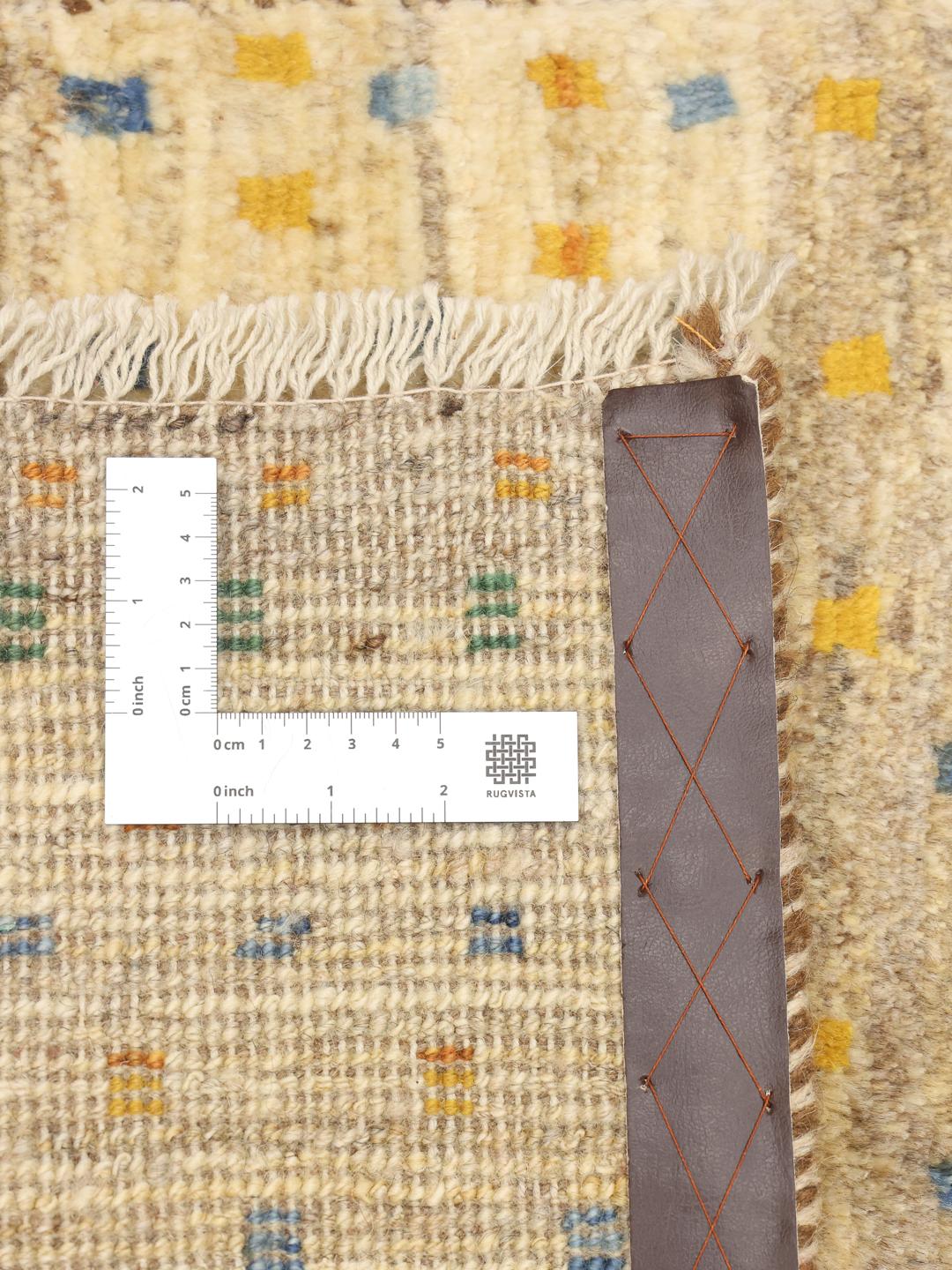
Gabbeh rugs originate from the nomadic tribes of the Middle East, specifically the Gashgai people. Historically, these rugs were woven primarily for personal use within the family, serving as thick, protective floor coverings that provided insulation against the cold ground in traditional tents.
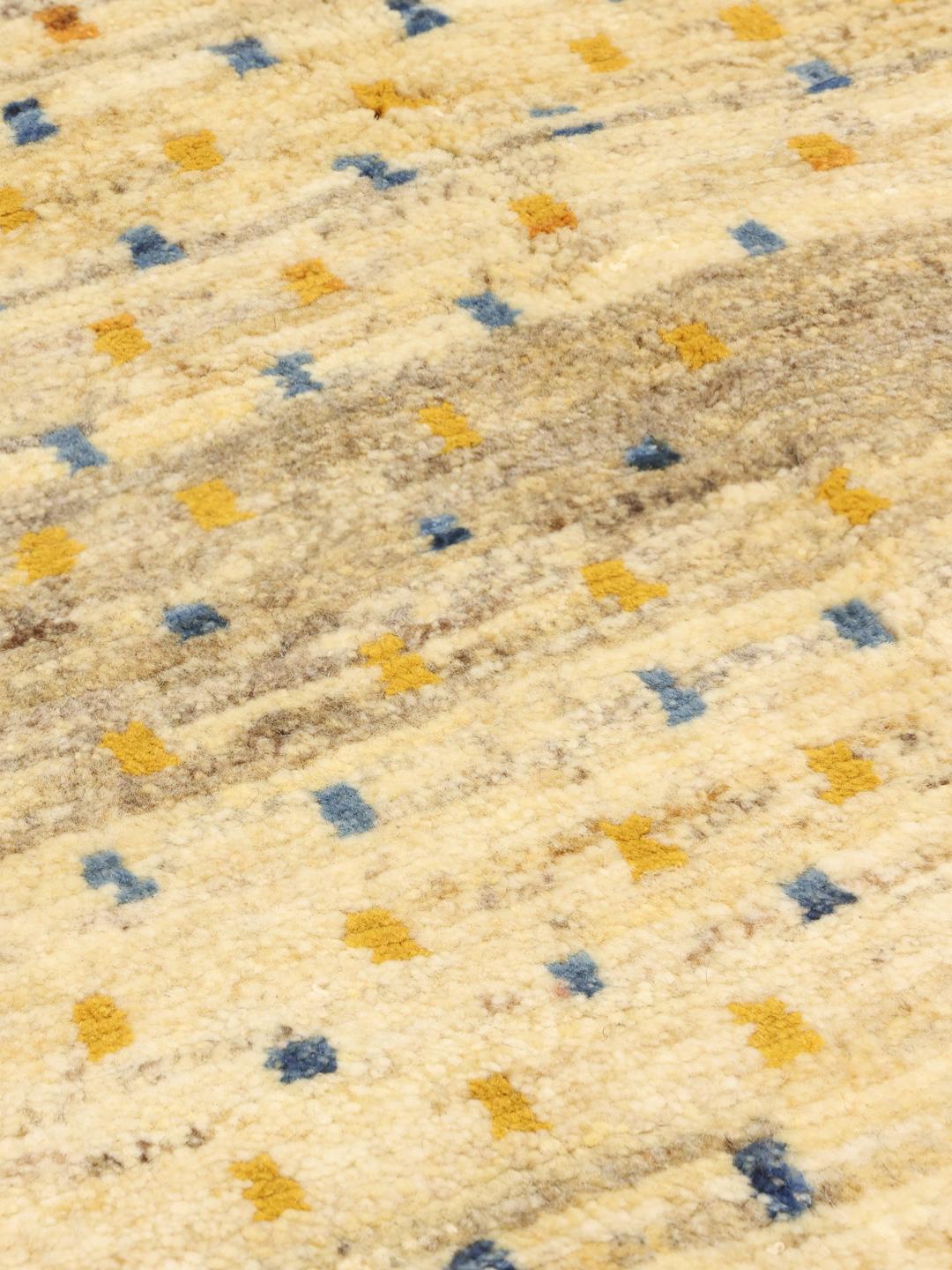
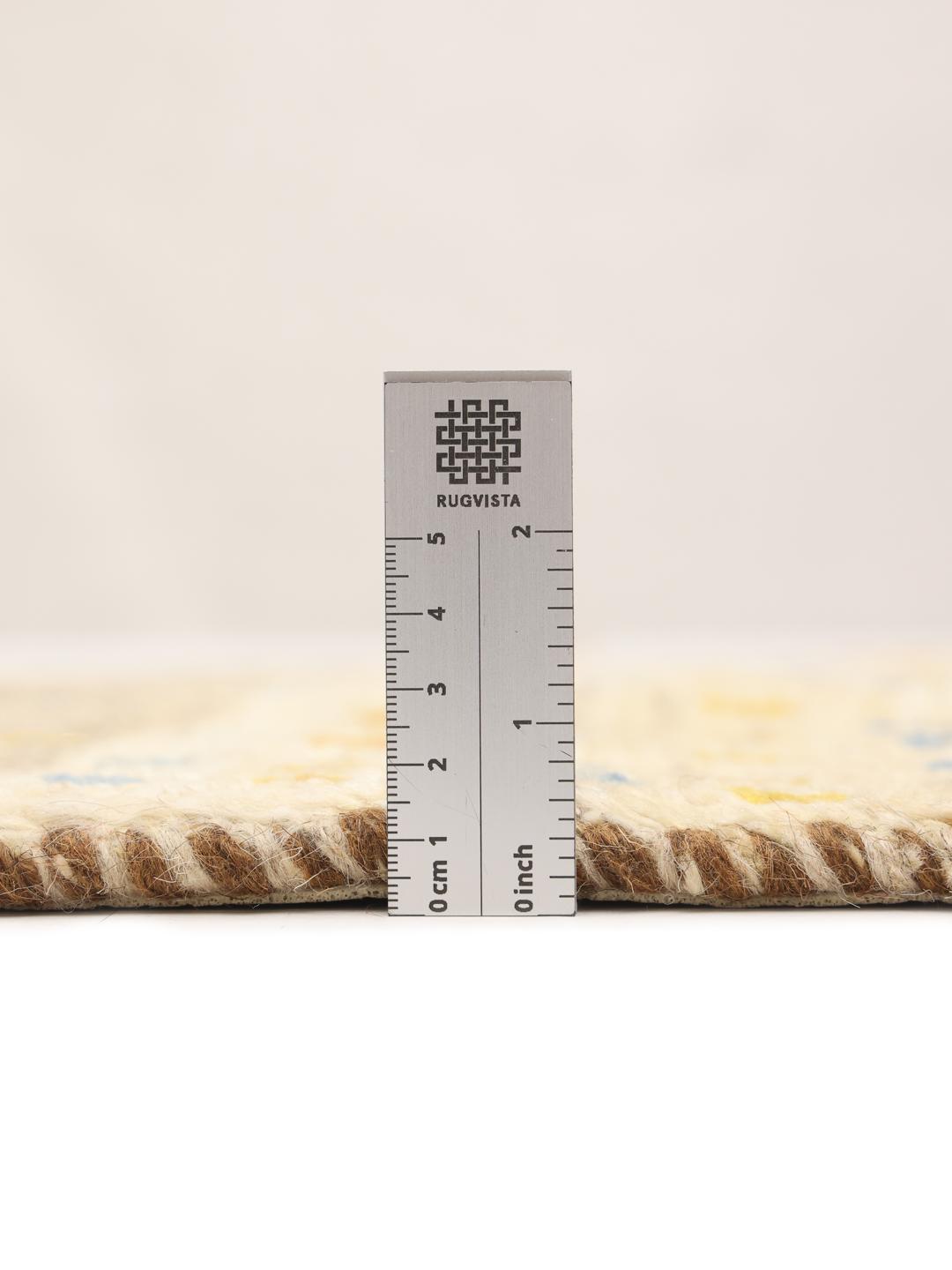
The term Gabbeh essentially means raw, natural, or unclipped, which reflects the rug's most defining technical feature: a long, thick pile. This construction method allows for a softer, more luxurious feel compared to finer, flatter rugs, making them a favourite for those who prioritise comfort and tactile warmth in their home decor.
Design-wise, Gabbeh rugs are celebrated for their artistic simplicity. While more formal rugs follow strict, symmetrical patterns, Gabbeh designs are often abstract, featuring playful motifs, geometric shapes, and wide fields of colour inspired by the weaver's own surroundings and imagination. This rug continues that tradition with its charming, irregular pattern that feels both modern and deeply rooted in history.
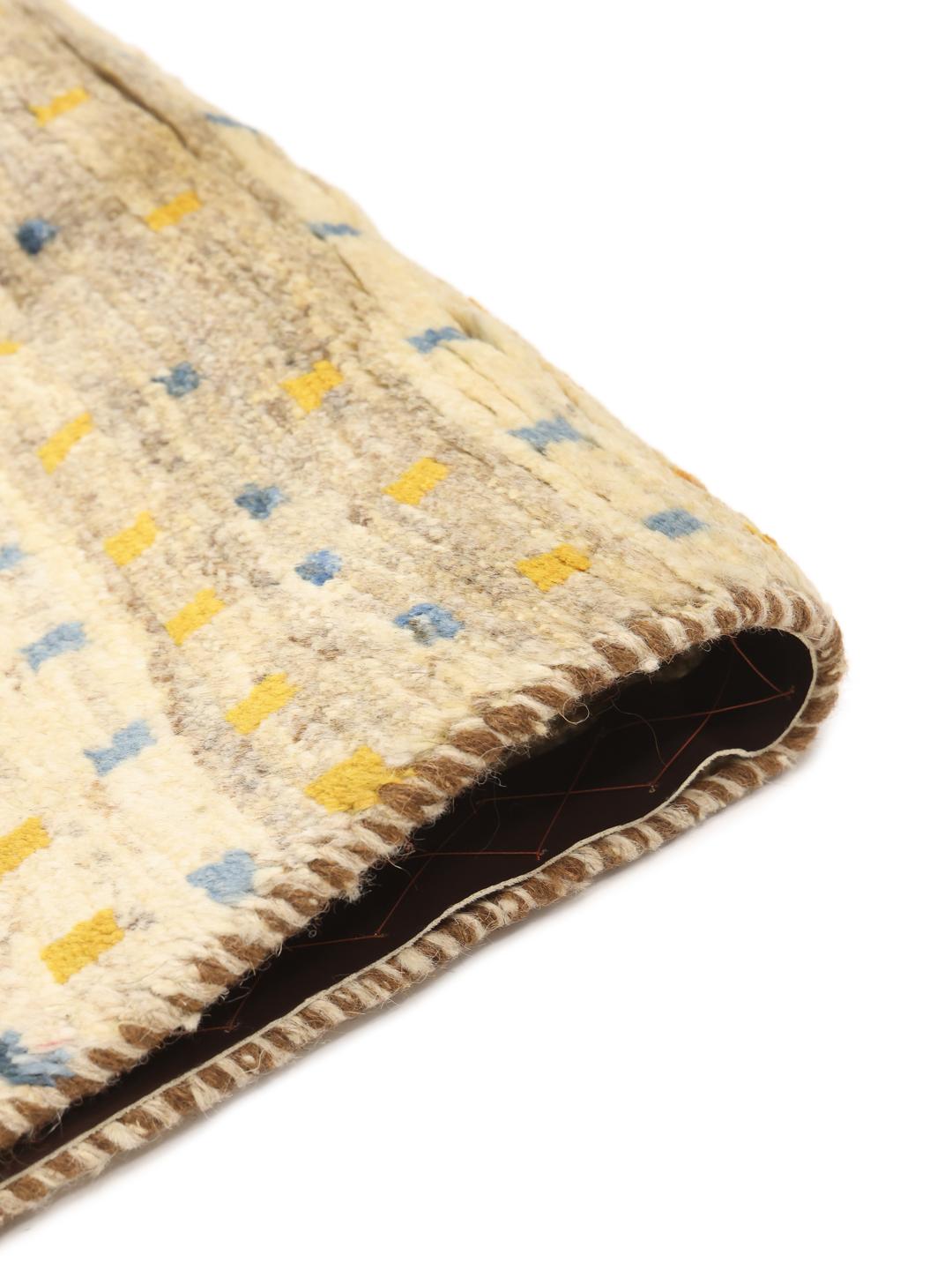
Today, these rugs are highly prized by collectors for their authenticity and the human story behind every knot. Owning a Gabbeh is not just about buying a floor covering; it is about acquiring a piece of cultural heritage that honours the skill of the weaver and the lasting quality of traditional hand-knotting techniques.