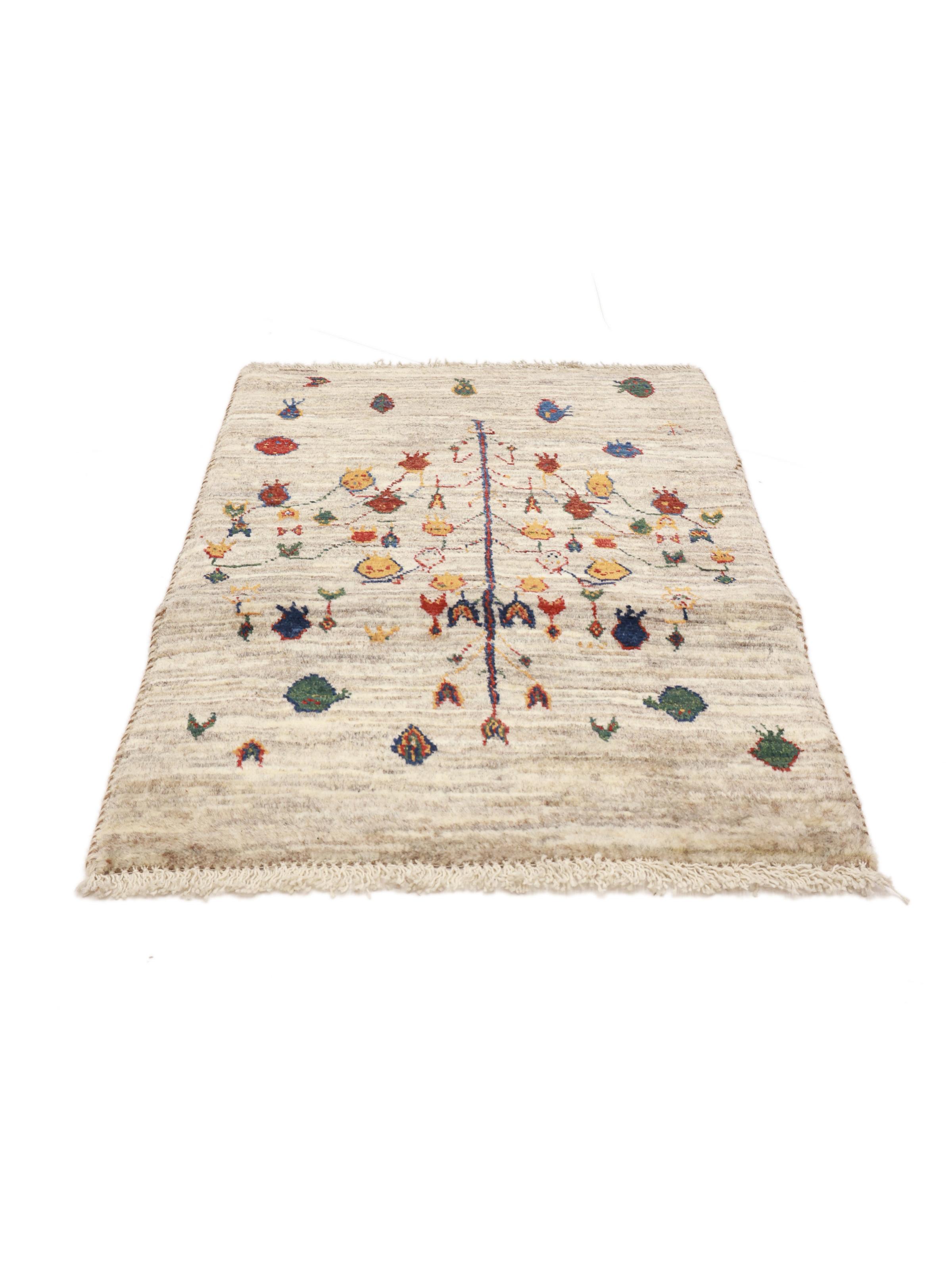
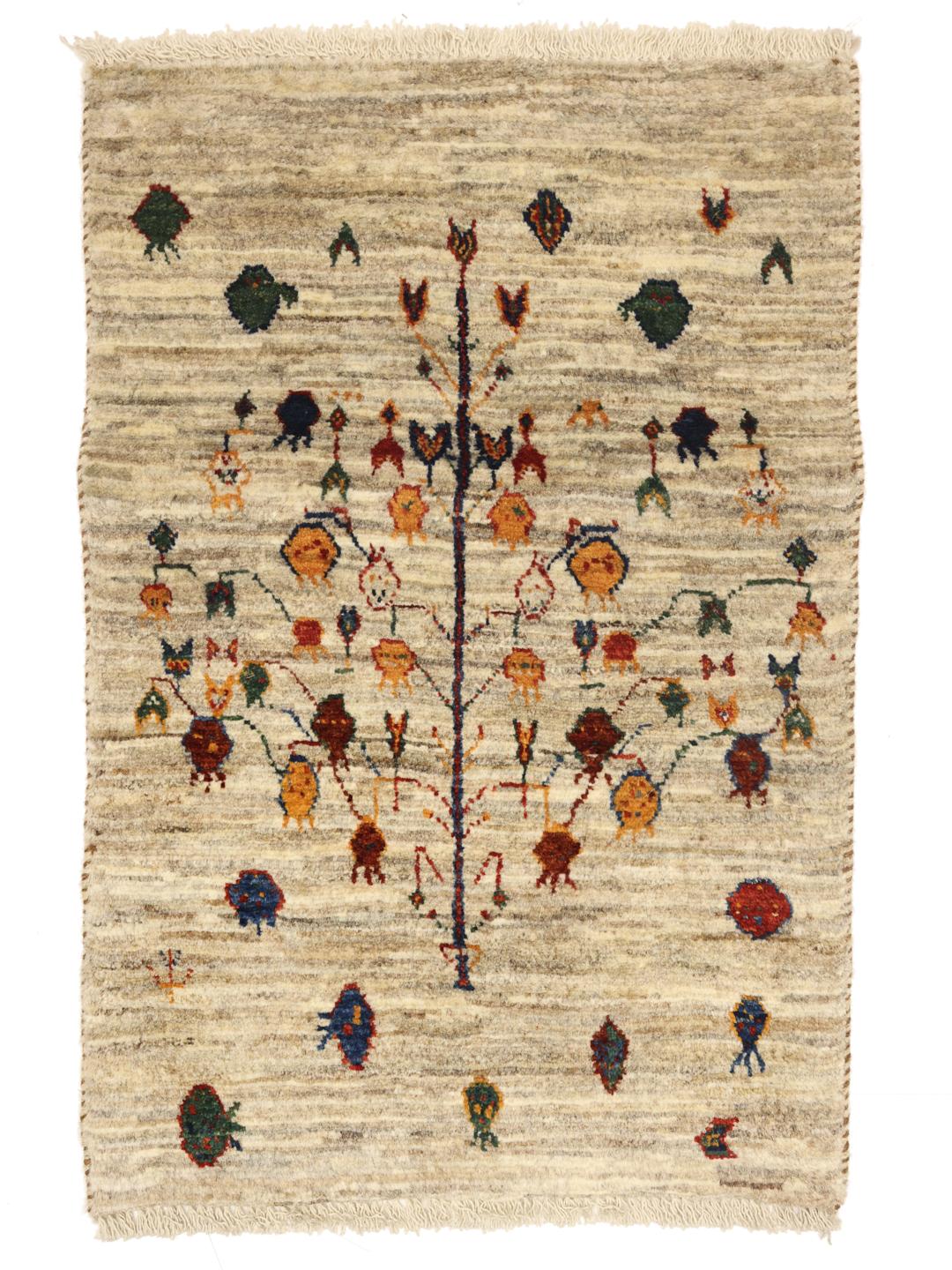
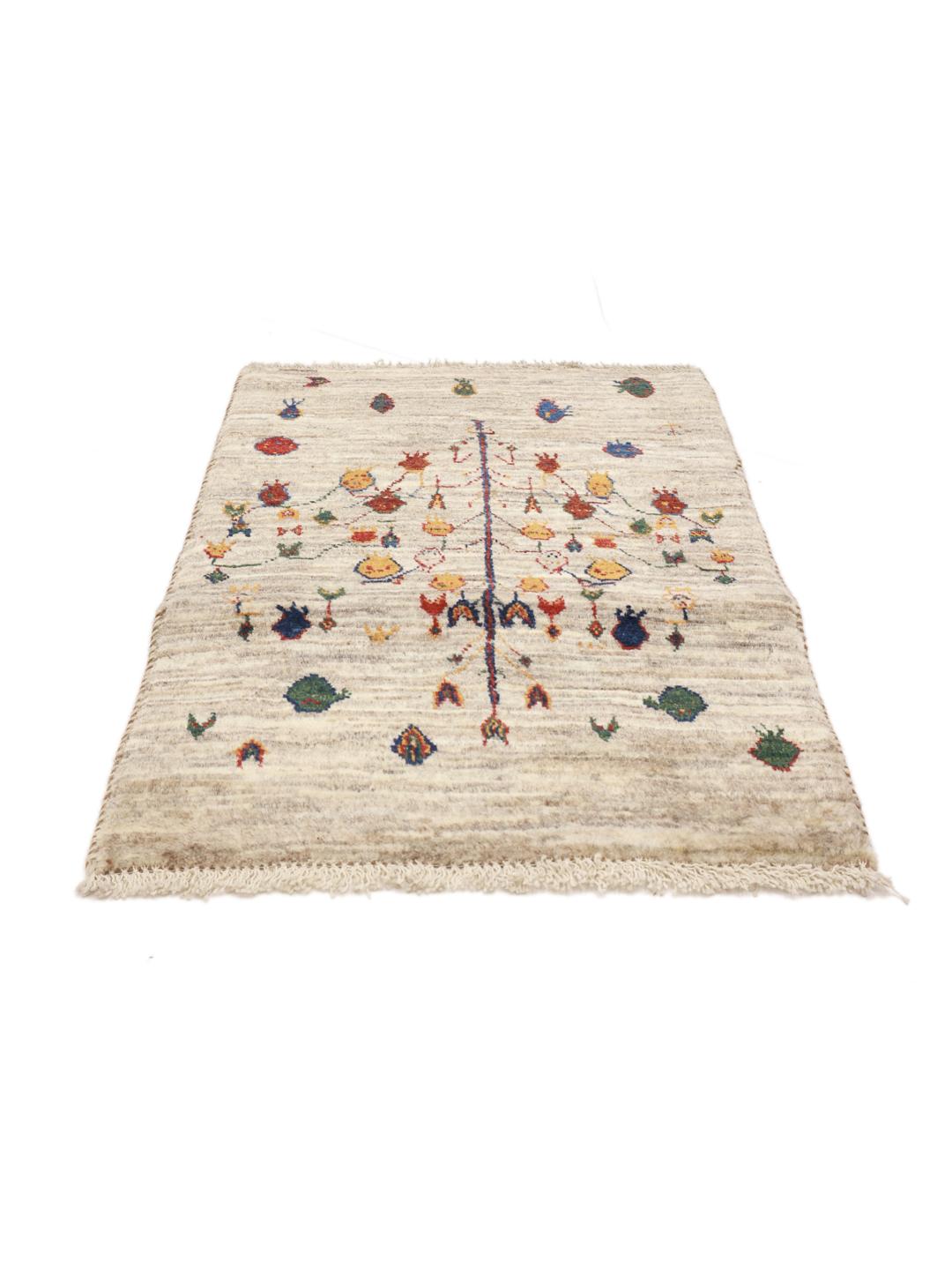
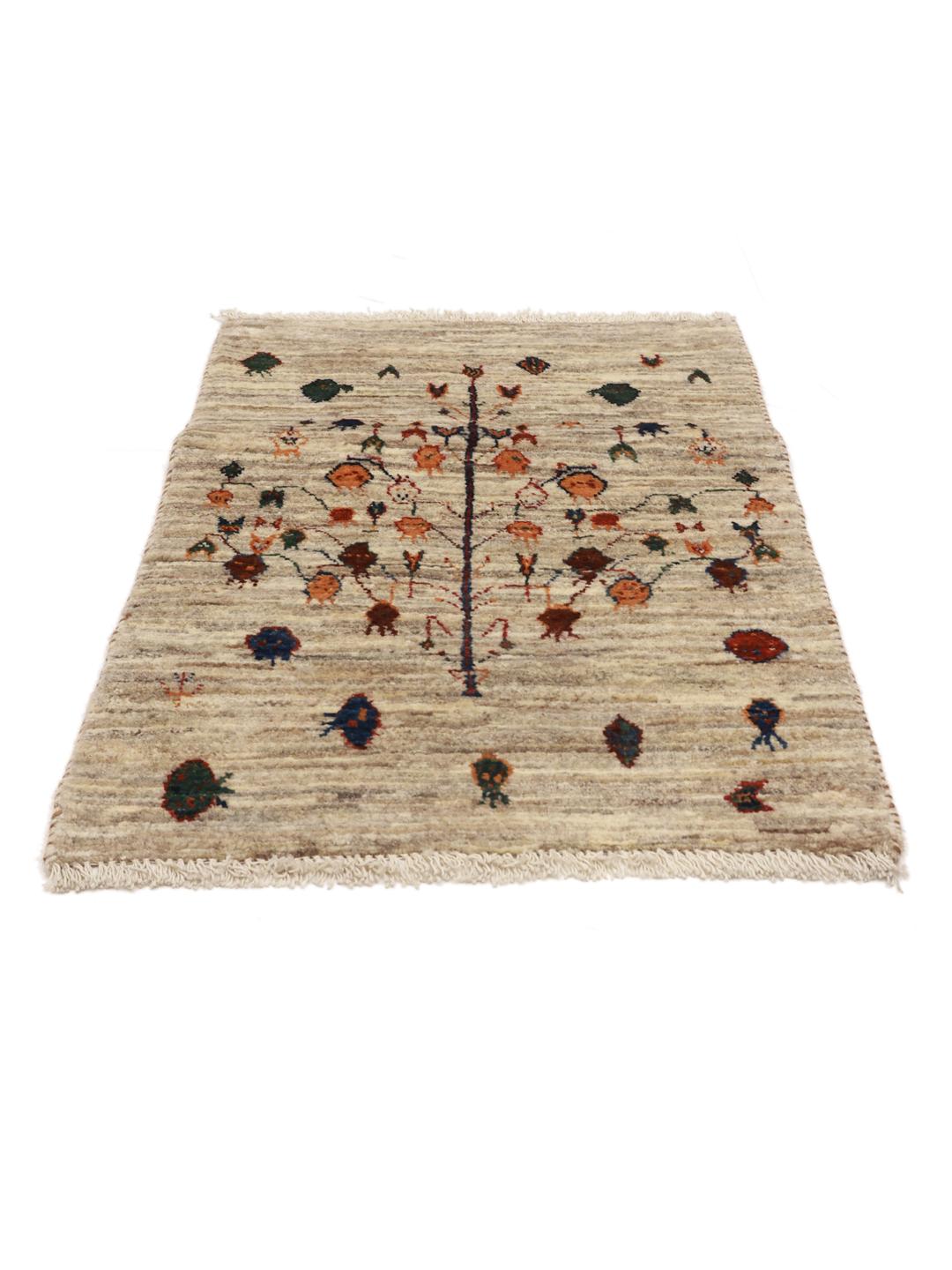
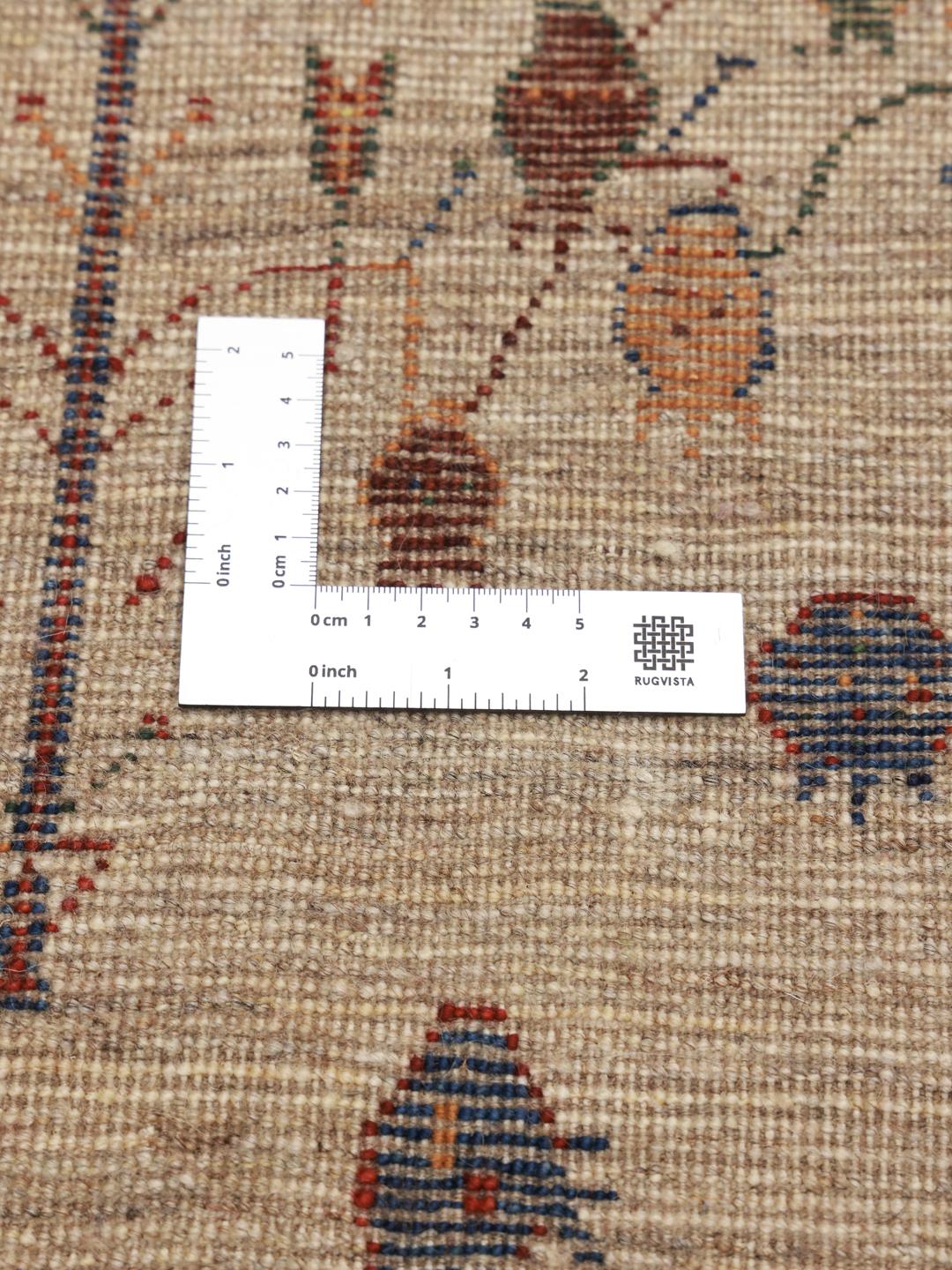
Gabbeh rugs originated among nomadic tribal weavers in the Zagros mountains of the Middle East. Traditionally crafted for personal everyday use within family tents, these rugs were made to offer warmth and comfort rather than serve as formal decorative pieces. Over time, the style expanded across regional borders, with weavers in Pakistan embracing the tradition and adapting it to regional materials.
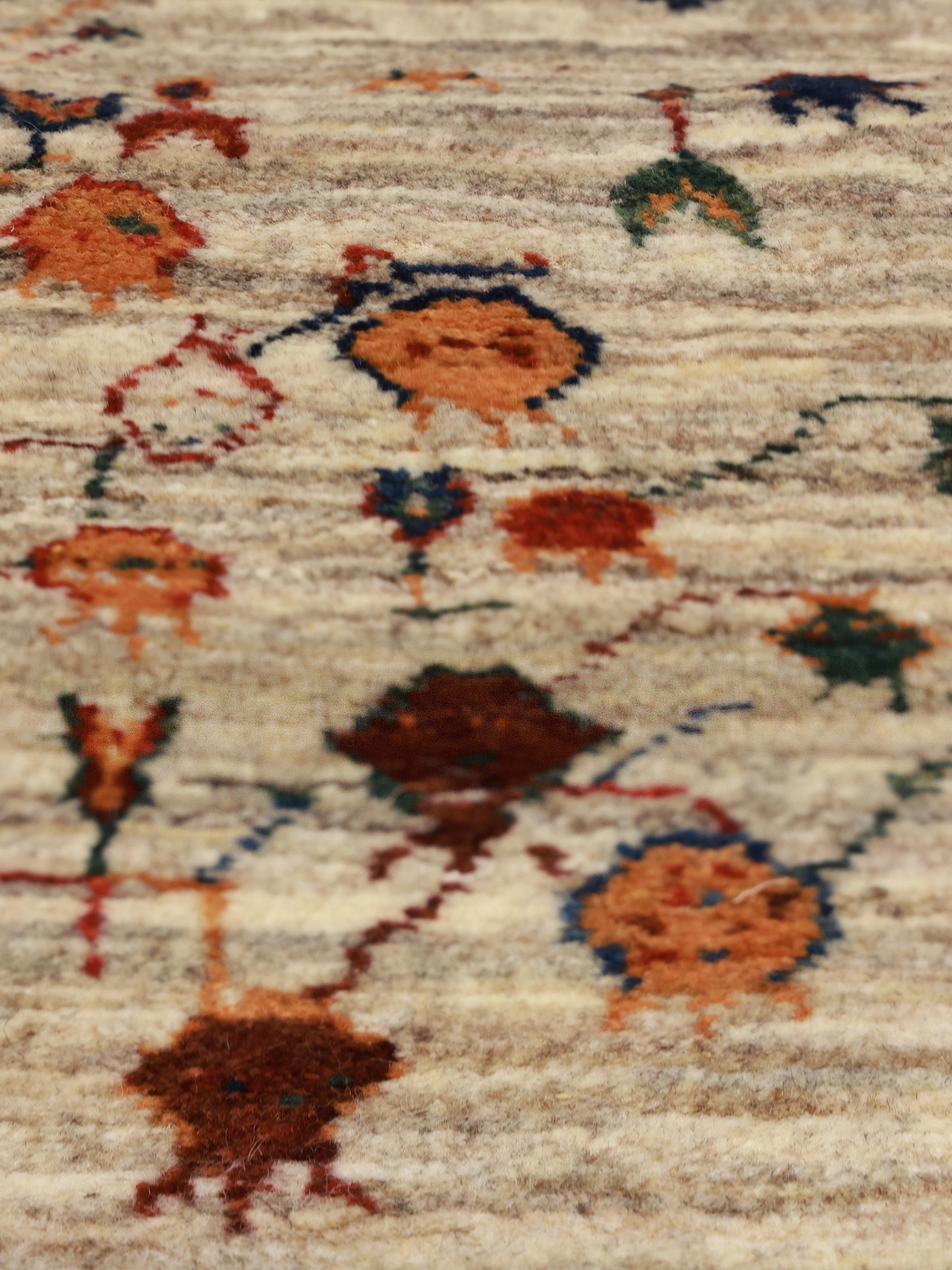
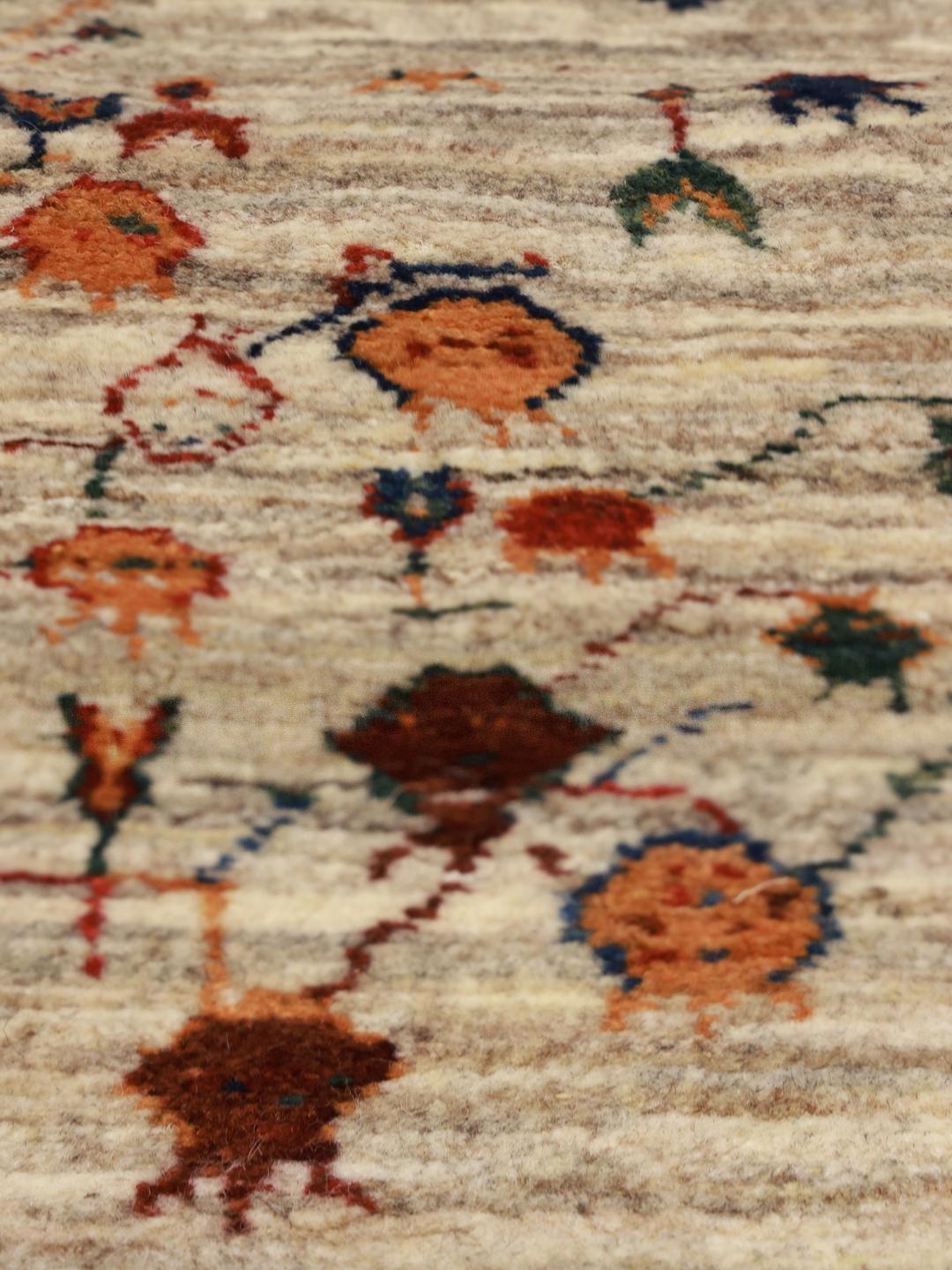
The term Gabbeh translates roughly to raw, natural, or unclipped, referring to the soft, thick pile and relaxed knotting style that defines the genre. Unlike formal city carpets with strict symmetry, a Gabbeh is prized for its spontaneous expression. The loose structure creates a flexible, cosy texture that feels delightfully tactile underfoot.
Signature design elements of traditional Gabbeh weaving include simple geometric shapes, stylized animal figures, and central tree-of-life motifs. The stylized flora and fauna represent protection, life, and connection to nature. The natural beige field combined with multicolor narrative accents makes each carpet a personal storytelling canvas.
Today, vintage and modern Gabbehs are valued by collectors and homeowners alike for their authentic folk art appeal. Owning a traditional hand-knotted Gabbeh brings a piece of history and human warmth into modern interiors, making it far more than just a functional floor covering.