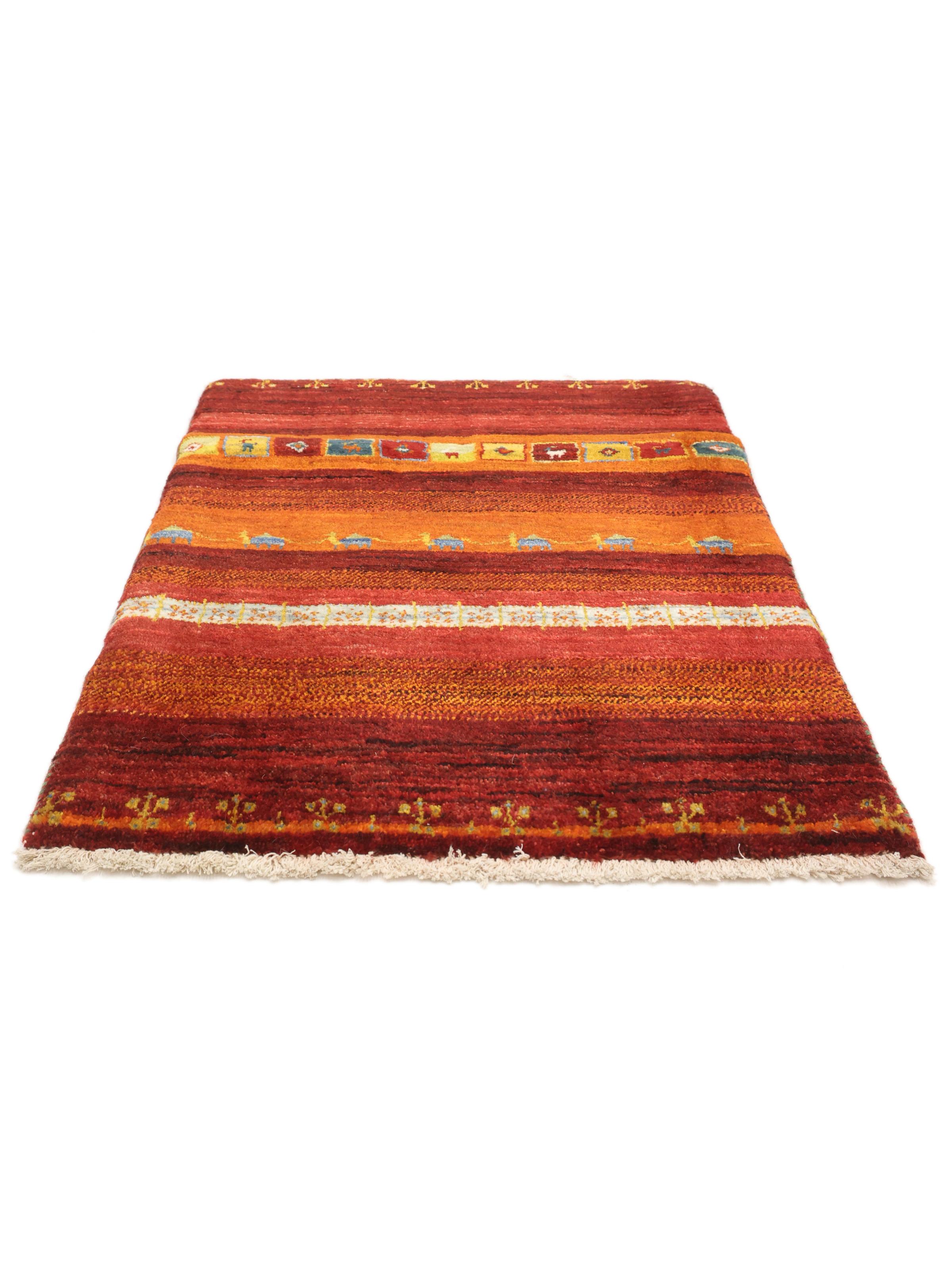
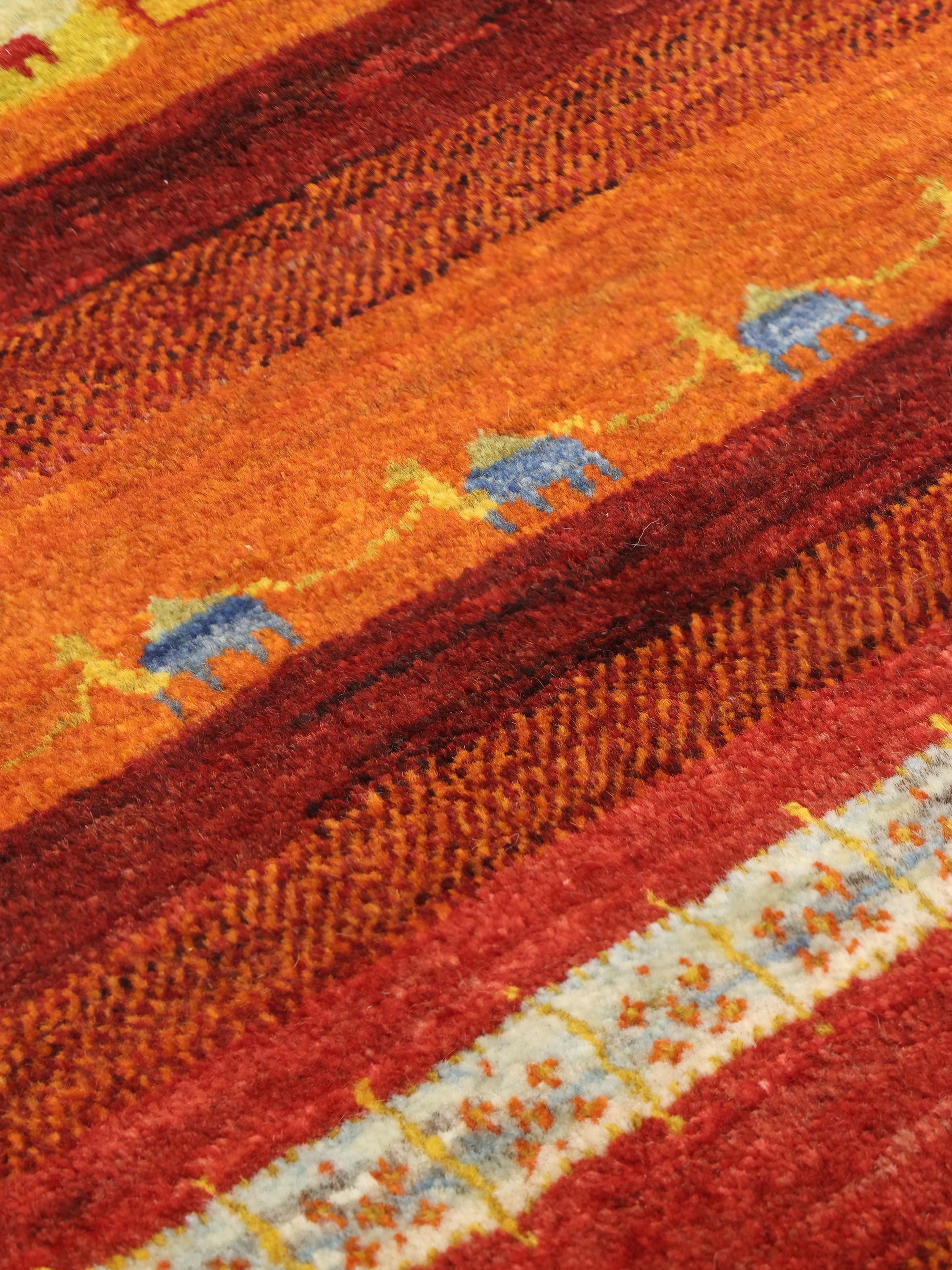
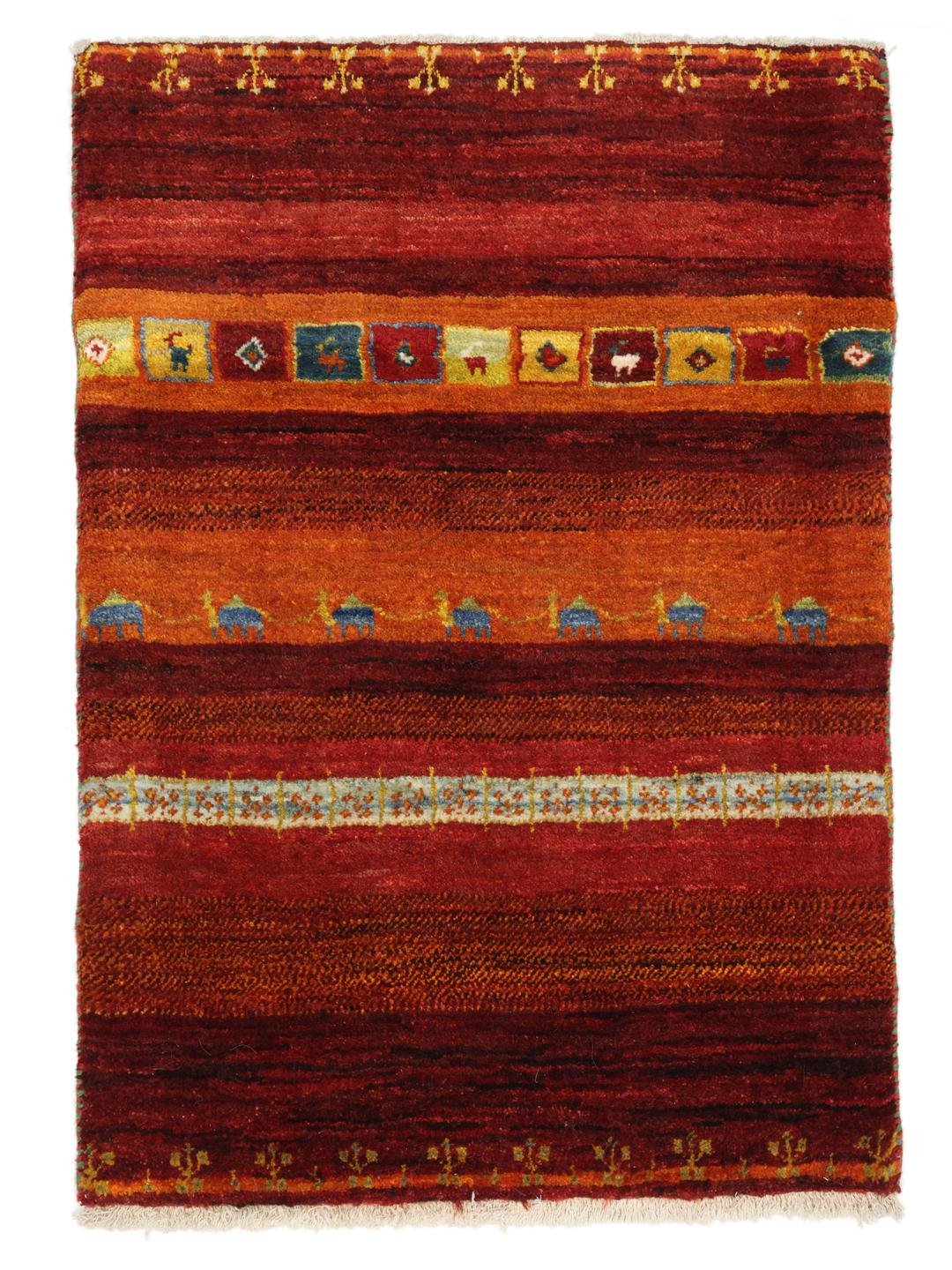
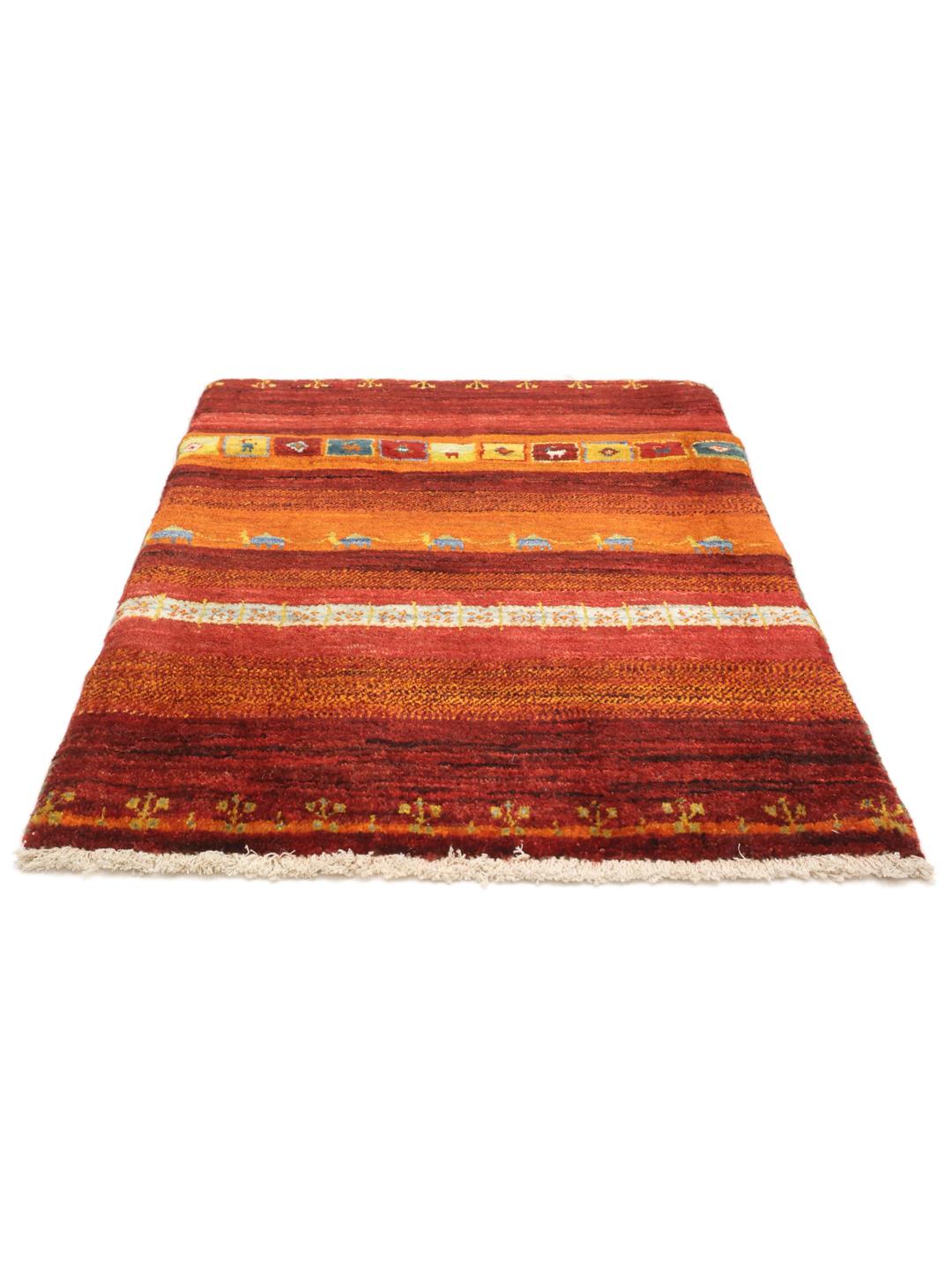
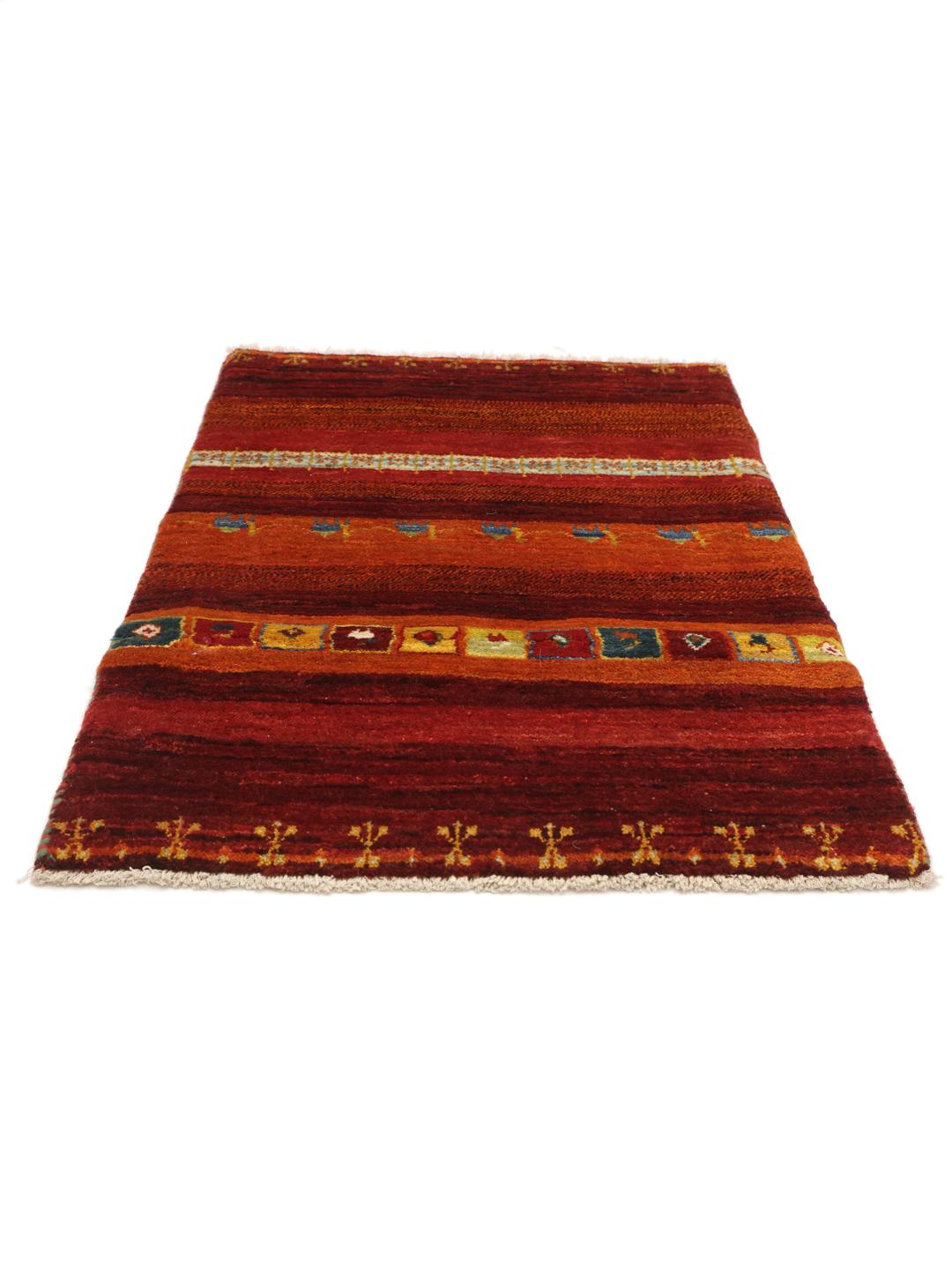
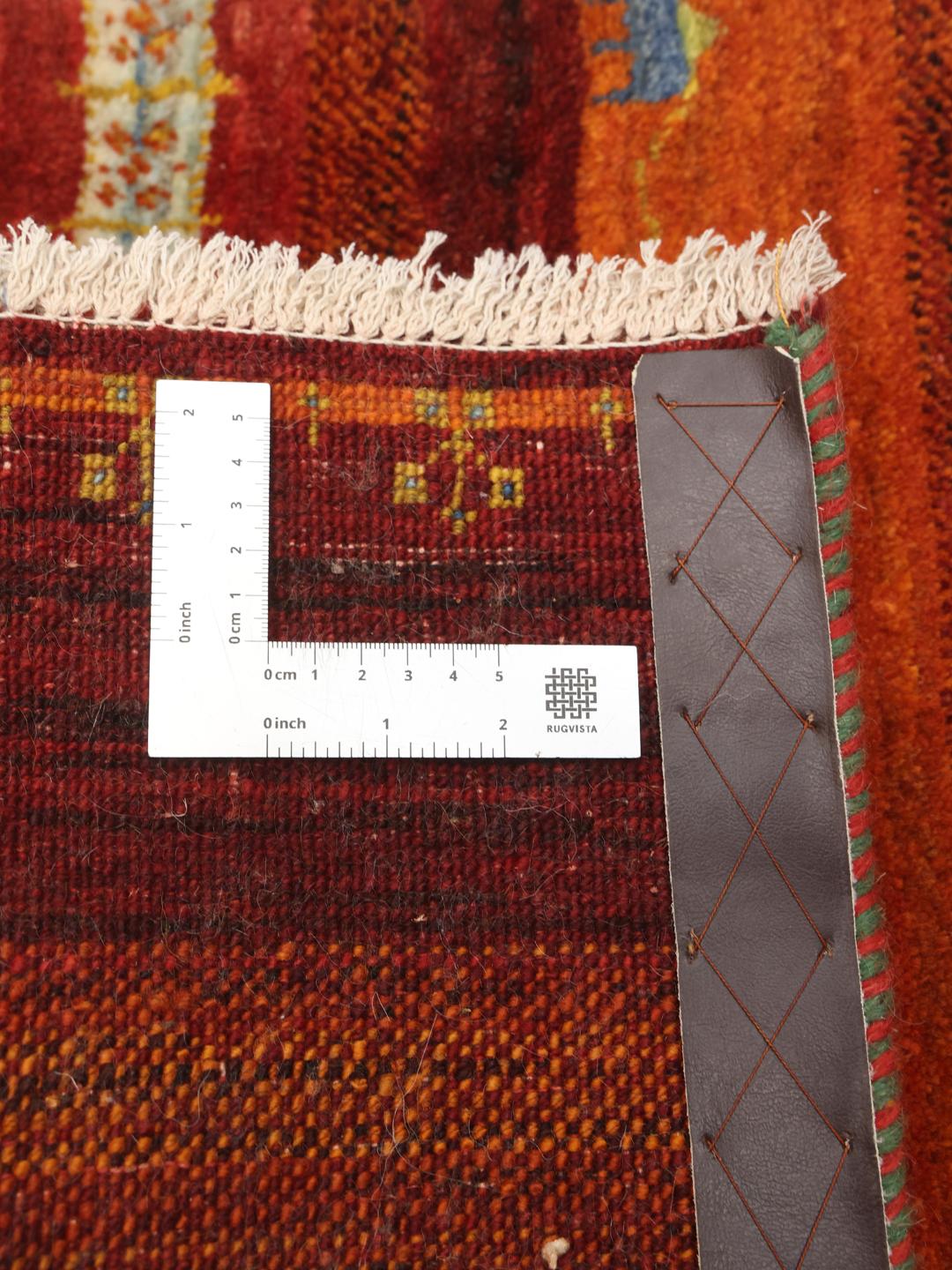
Gabbeh rugs were originally woven by nomadic tribes across the Middle East as functional floor coverings and warm bedding. Traditionally crafted using hand-spun wool and natural dyes, these rugs were prized for their thick pile and expressive, minimalist designs that reflected the weaver's everyday surroundings.
Over time, the popularity of the Gabbeh style led skilled weaving communities in Pakistan to adapt the tradition. Pakistani artisans brought their own refined knotting expertise to the style while preserving the characteristic thick pile, rustic imagery, and warm color palette that define the category.
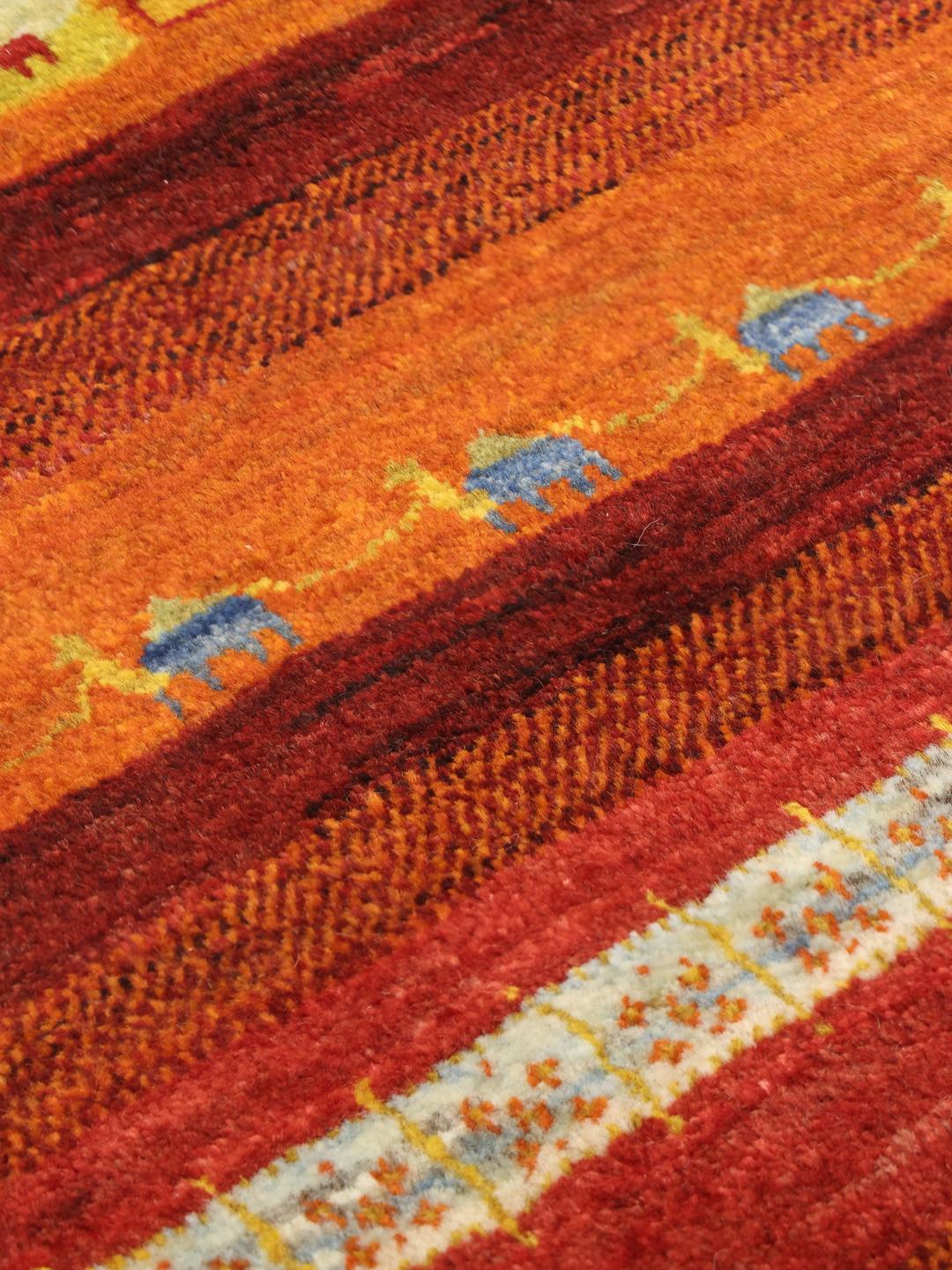
The visual language of a Gabbeh rug centers on simplicity and storytelling. Instead of intricate central medallions, the field often features broad panels of shaded color paired with simple tribal motifs, such as camels, goats, or stylized trees. These small symbols carry historical associations with good fortune, family, and nature.
Today, traditional Gabbeh rugs are appreciated worldwide for their authentic artistic expression. Because each rug is woven based on the weaver's personal creative decisions rather than a rigid pattern template, every completed piece remains a individual work of textile history.